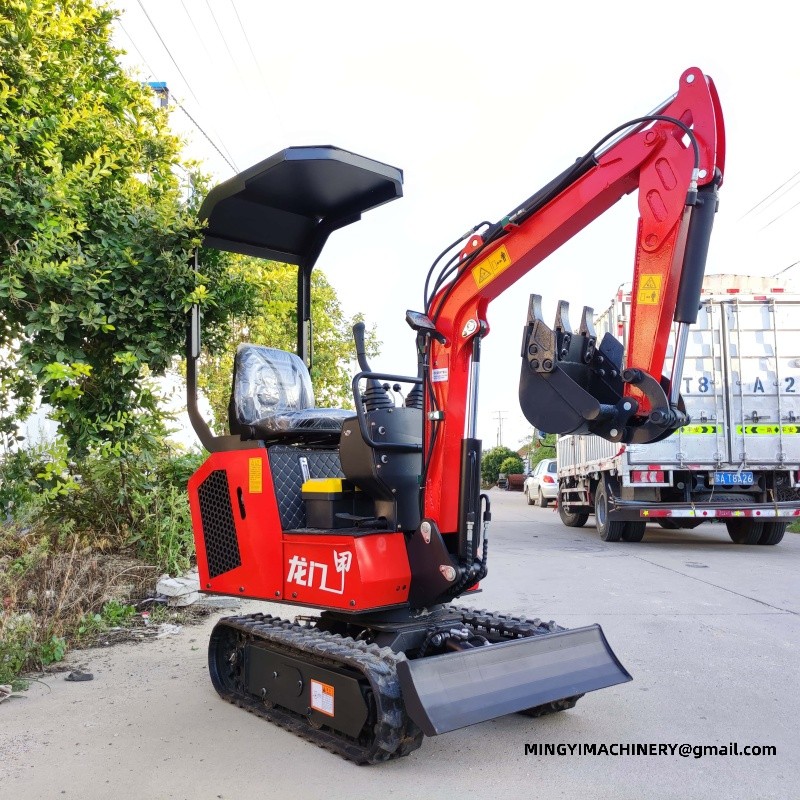
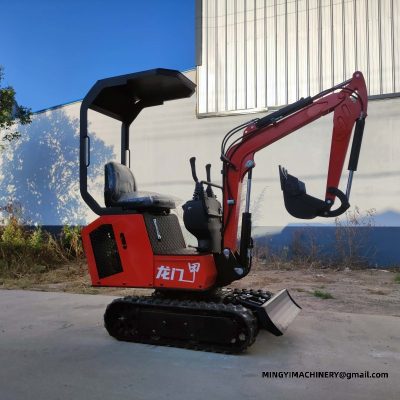
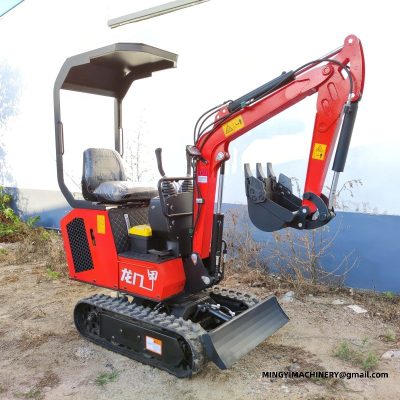
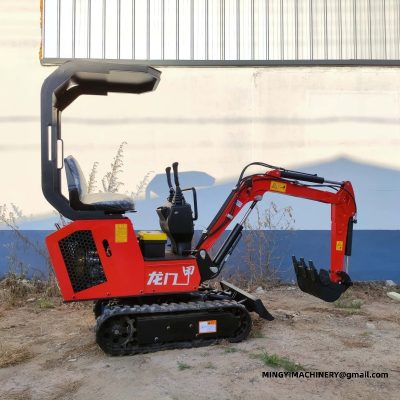
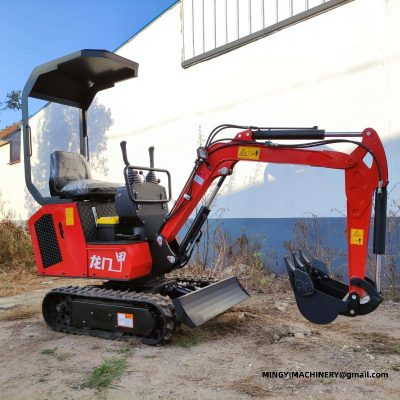
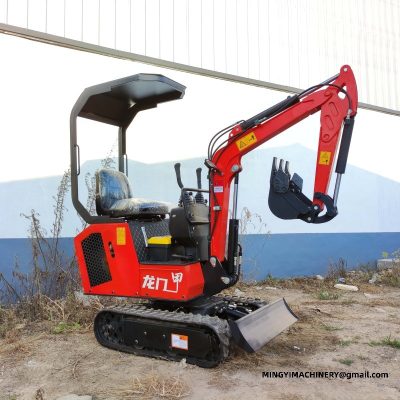
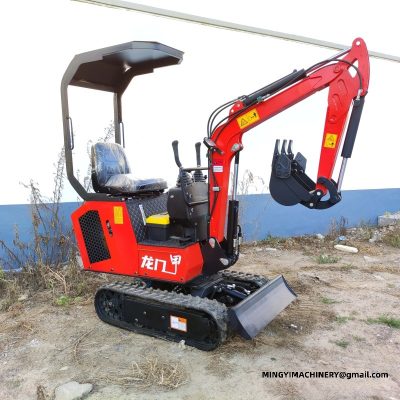
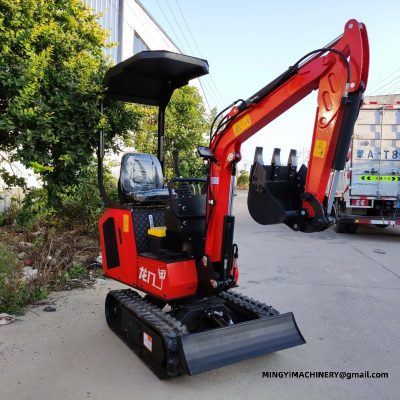
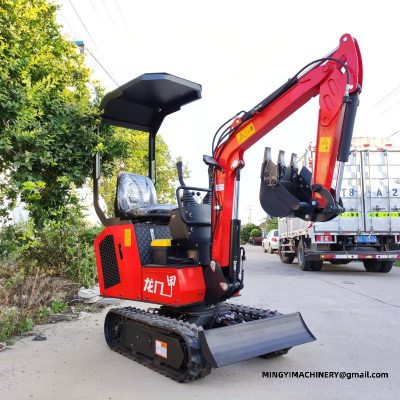
Concrete slabs, footings and rock layers stop a bucket fast, and hand breaking them is not a plan. MINGYI supplies breaker hammers sized for its mini excavator range, so the same machine that dug the trench can also demolish the old slab sitting in it.
The breaker hammers run on the carrier hydraulics of the 08, 12 and 18 series and mount through the quick coupler. For contractors handling indoor demolition, road patching and foundation removal, this removes the need for a separate demolition machine on small jobs.
Breaking is specified against the material rather than bought as an accessory.
| Checkpoint | What to settle for this machine |
|---|---|
| Carrier machine | MINGYI mini excavator range, with the hammer sized for the machine that dug the trench |
| Work it takes on | Removing floor slabs, kerbs and old footings, and breaking concrete slabs, footings and rock layers |
| Ground and material | Concrete slabs, footings and rock layers that stop a bucket |
| Mounting and hydraulics | Hammer carried on the excavator arm, sized to the carrier |
| Confirmed at order stage | Hammer sized to the machine at the ordering stage |
| Handover and upkeep | Breaker wear parts, tie rods and the matching service information come with the tool, and documents come with the keys |
Breaking work the hammer takes over
On renovation sites the breaker removes floor slabs, kerbs and old footings where a bucket would only ride over the surface. In rock, it opens working room for grading or trenching lines that would otherwise need to be redesigned around the ground.
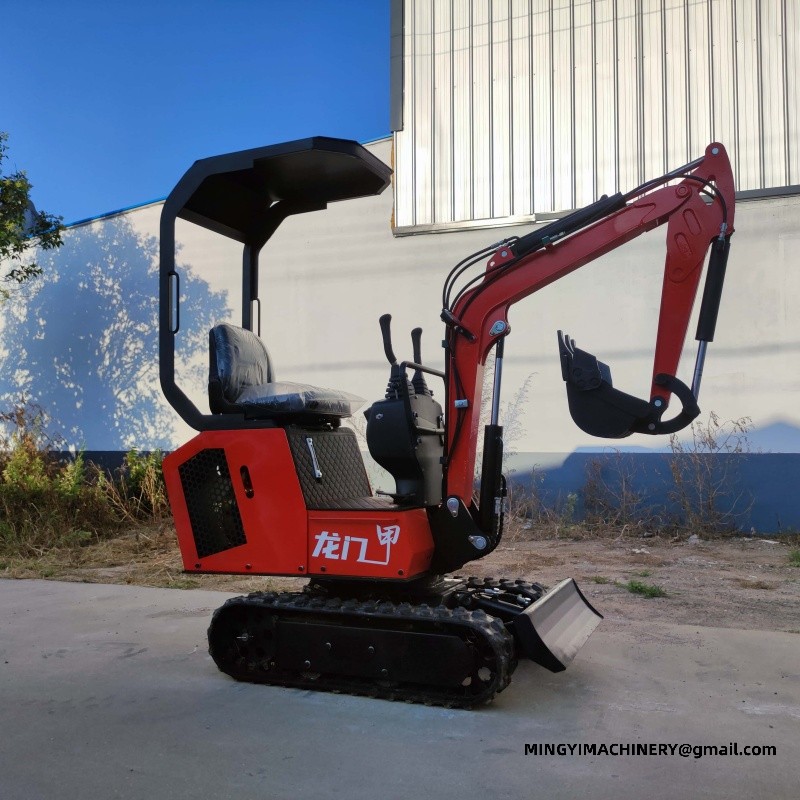
Used with a crusher hammer for secondary sizing, the broken material can be left on site as fill or loaded out with the digging bucket. That pairing suits demolition crews who control both steps on confined sites.
Ordering and running a breaker on a MINGYI carrier
The carrier configuration is recorded when the breaker is ordered, so the tool is matched to the machine flow rather than supplied as a generic head. A hydraulic thumb or bucket can sit alongside the breaker in the same package for sorting rebar and rubble.
Breaker wear parts, tie rods and the matching service information come with the tool. Buyers should state their typical material, from paving slabs to layered rock, so the hammer matches the duty.
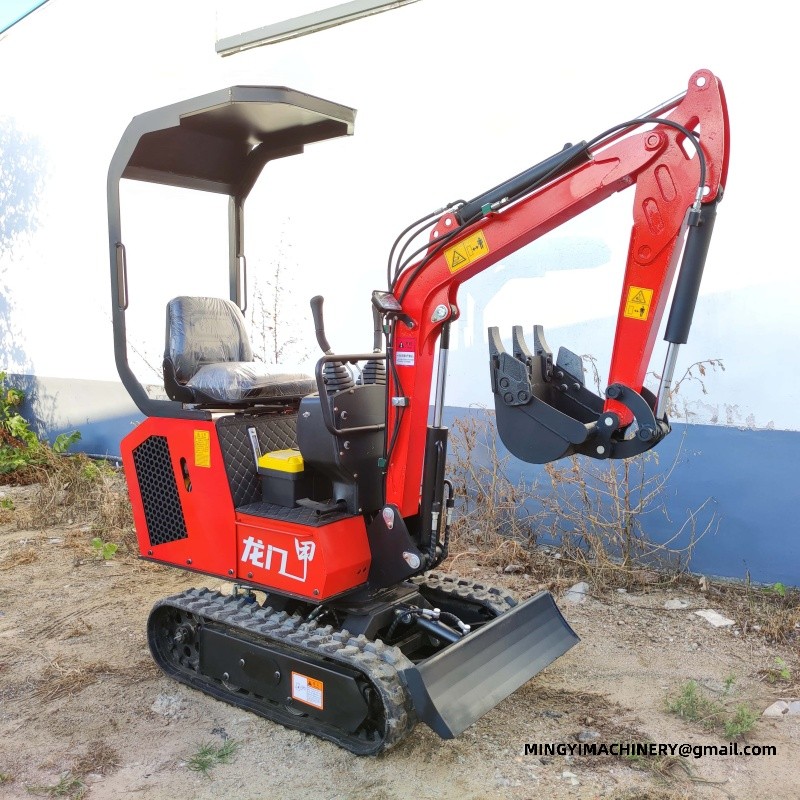
Adding a breaker hammer to a mini excavator package is usually the step that turns it from a digging machine into a demolition and rock unit. MINGYI can review the demolition scope with the buyer and match the breaker to the chosen excavator and coupler.
Upgrading and reconfiguring breaker hammer for concrete breaking Reconfiguration can extend the useful life of a machine. The excavator that no longer suits the current work may suit it again with a different attachment, guarding or control arrangement. Upgrades should be checked against the base machine. Hydraulic capacity, mounting interface and stability all limit what can reasonably be added to this class of machine, and confirming those limits avoids an unsatisfactory result. Wear items and life of breaker hammer for concrete breaking Certain parts are designed to be consumed. Knowing which items on the unit in daily use are wearing parts, and roughly how long they last in the duty the machine sees, turns replacement into a plan rather than a breakdown. Wear rate follows conditions far more than hours. A machine of this size working on abrasive ground or in mud will consume undercarriage or tyre life much faster than the same machine on clean ground. Fitting breaker hammer for concrete breaking into the wider site plan Machine productivity depends on what happens around it. Deliveries, other trades and the sequence of work decide how much of the shift the equipment on site spends actually working rather than waiting. Access and storage are worth settling early. Where the machine itself will be parked, refuelled and serviced on site affects the working day more than most specification details, and it takes nothing to plan. Working hours and duty cycle of breaker hammer for concrete breaking Seasonal work changes the maintenance calendar. Machines that work hard for two months and stand for ten need preparation before storage and a check before returning to work, and both are simpler than the repairs they prevent. Hour planning helps at resale as well. The model in question with a recorded service history and a sensible hour count is easier to sell than one with the same hours and no records, whatever its condition. Resale value and replacement planning Resale starts at purchase. Specification choices, service records and the condition of wearing parts are what a buyer looks at, and the machine in that duty that has been maintained on schedule is worth more than one that merely looks clean. Records are part of the asset. Keeping the service history and the hour records with the unit on the job makes it easier to sell, easier to insure and easier to justify the replacement machine internally. Handover and documentation for breaker hammer for concrete breaking Handover should include the documents as well as the keys. Parts list, service schedule and the operator notes for a machine built for the work are what the workshop needs in month six, and they are much harder to obtain later. A short familiarisation session prevents the early faults. Most first-month problems on the equipment in service come from unfamiliarity with controls, limits or checks rather than from the machine itself. Running the excavator in a mixed fleet Fleet value comes from interchangeability. Operators who can step between machines without retraining, and a workshop that stocks one set of filters, keep utilisation higher than a fleet of individually optimised units. Utilisation matters more than the purchase decision over a few years. This class of machine that sits idle ties up the same yard space standing still as one that earns, so the buying decision should follow the hours the machine will realistically work. Cold weather and low temperature work with the unit in daily use Cold changes how a machine starts and how it warms up. Allowing a machine of this size to reach operating temperature before loading it, and using the correct grade of oil and fuel for the season, prevents most cold-start problems. Low temperatures also make materials behave differently. Ground that is frozen hard in the morning can be soft by midday, and planning the sequence around that is easier than fighting it with the equipment on site. Operator technique and familiarisation Familiarisation should cover the limits as well as the controls. Knowing where the machine itself loses stability, how it behaves at full reach, and what the warning lights mean prevents the incidents that are put down to bad luck. A short handover pays for itself. Operators who understand why the model in question is set up the way it is will report a change in behaviour early, which is usually the point where a repair is simplest. Matching the machine in that duty to ground conditions Ground decides more of the outcome than power does. Soft, wet or loose surfaces call for a wider footprint and lower ground pressure, while hard standing allows a narrower machine that turns in less space and travels faster between tasks. The working surface should be surveyed before the unit on the job is specified. A machine that is stable on compacted gravel can be unusable on the same site after rain, and the difference shows up as lost days rather than as a fault. Safe working practice around a machine built for the work Most incidents around machinery come from the space rather than the machine. Exclusion zones, a clear signal person and a check on what is behind the excavator before it moves cover the large majority of the risk on a working site. Personal protective equipment and a stop rule are simple controls. Agreeing before work starts that anyone can stop the job is the single measure that most often prevents a serious incident near the equipment in service. Customisation and build options for this class of machine Build options are where a standard machine becomes the right machine. Colour, guarding, lighting, seating and hydraulic provisions can usually be set at build time on the unit in daily use, and are far simpler then than as a retrofit. Customisation should still be limited to what the work needs. Each addition to a machine of this size is another item to maintain, so the useful question is not what can be added but what the job list actually requires. Specifying the equipment on site against the job list The specification should be written from the job backwards. Listing the loads, the ground and the hours first, then matching the machine itself to that list, avoids buying capacity the work never uses and avoids discovering a shortfall in the first week. Buyers who specify the model in question on paper before enquiring get specifications that can be compared. Without that list, two suppliers will propose two different machines and the simpler one is usually the smaller one, not the better value.
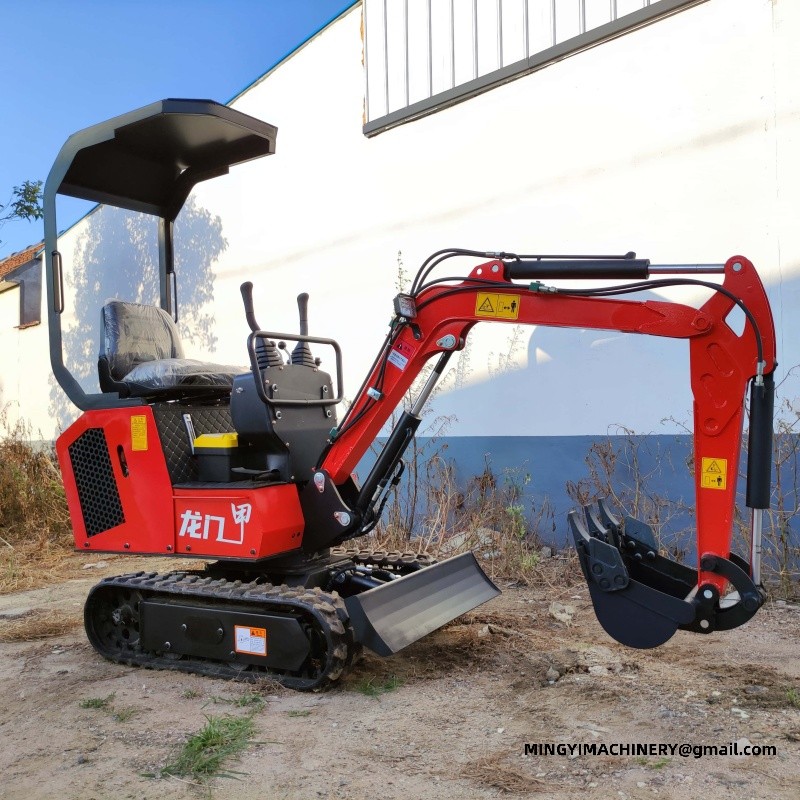
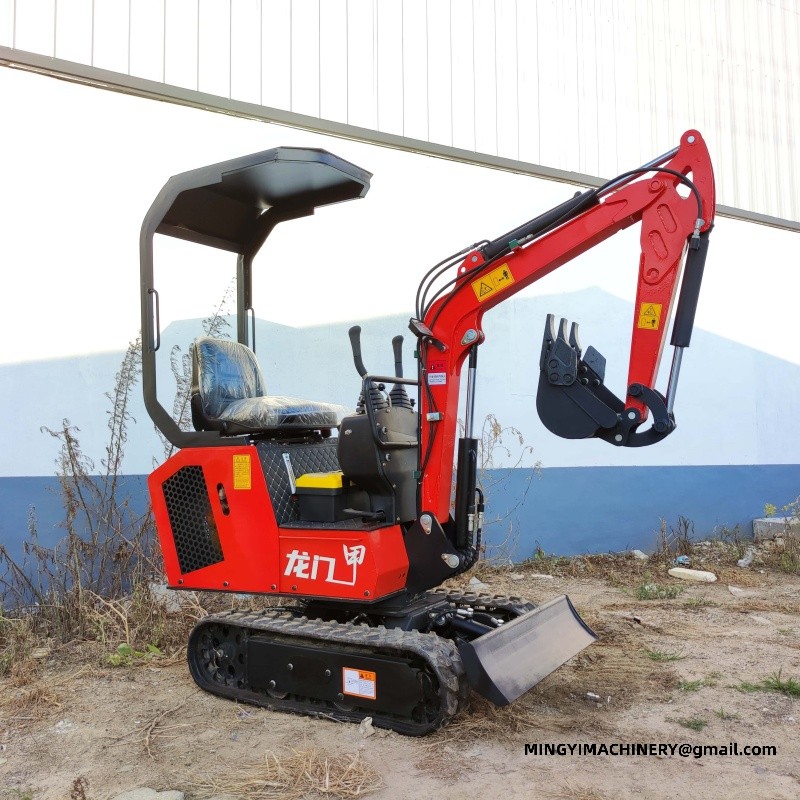
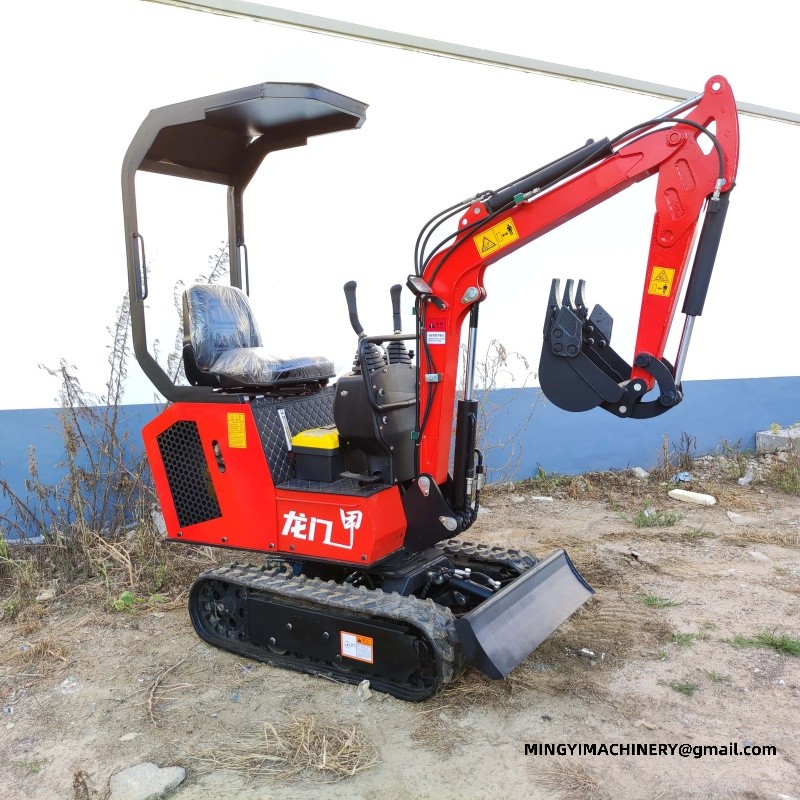
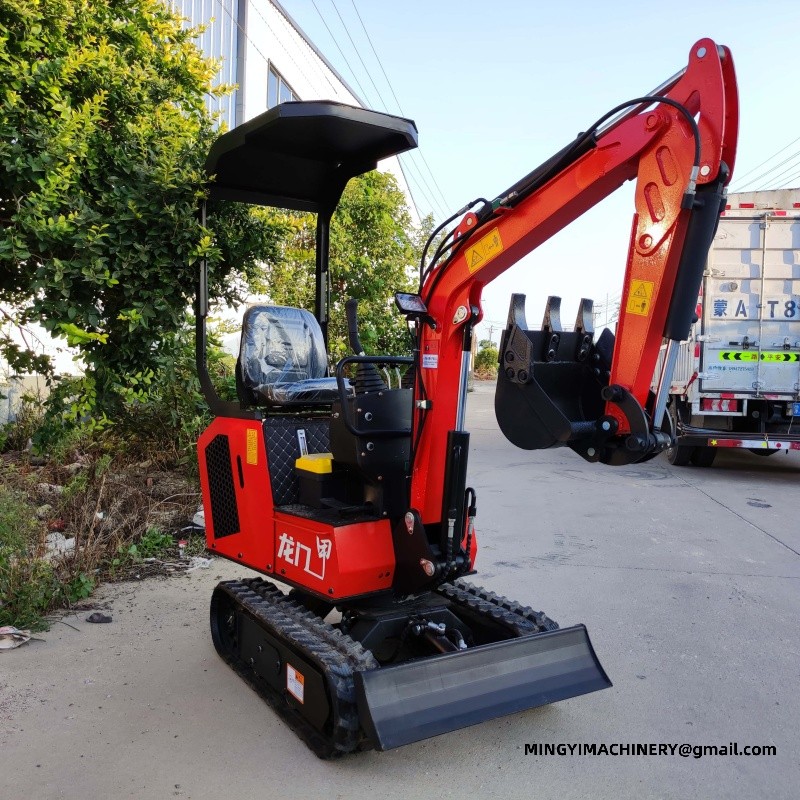
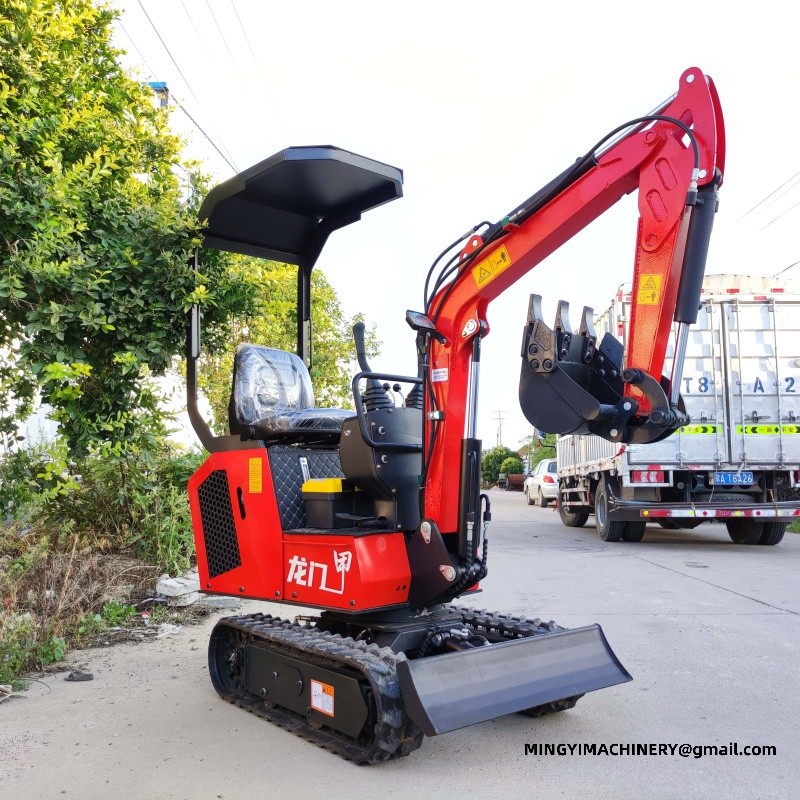
Q. What is the machine in that duty?
A. The attachment story on a compact digger is about earning across trades: one carrier, one trailer, and a quick coupler that swaps tools in about a minute. The quick coupler makes the changeover a minute job at the trench edge, and mechanical tools need no hydraulic lines at all. For concrete breaking applications the practical route is to send the job list to the factory and let the build sheet answer it - which is exactly what this page invites.
Q. How do I know which attachment my machine can run?
A. Compare the carrier hydraulic flow with what the attachment asks for, and the lifting moment with what it weighs at full reach. Lower-flow carriers still run buckets, rakes and mechanical tools; hungry attachments call for the high-flow option, and MINGYI confirms the pairing before the order ships.
Q. What about colours and branding?
A. OEM colours and decals are part of the build: private-label machines carry the buyer brand on the standard MINGYI platform, and the concrete breaking order confirms colours, marks and documents before production starts.
A second operator for the unit on the job
Shared machines need shared habits. Two operators on a machine built for the work should do the same daily checks in the same order, because the check that one person skips is the check that eventually matters.
Pre-delivery inspection before the equipment in service leaves the shop
What the customer sees on arrival is decided before departure. The walk-around given to the excavator covers the same points the operator will check on day one, so there are no surprises when the crate is opened at the destination.
Moving this class of machine between sites
A machine that works on one site still has to reach the next. The overall dimensions and the operating weight of the unit in daily use decide what trailer or truck is needed, and that decision belongs before the job is booked.
Hot, humid and dusty conditions around a machine of this size
Heat and dust shorten service intervals rather than machine life. In these conditions the filters on the equipment on site need attention more often, and the cooling surfaces need to be kept clear to hold the working temperature.
Documents that travel with the machine itself
Documentation should match the machine that was actually built. The sheet supplied with the model in question records the configuration as delivered, because the generic catalogue description is not what the customer needs when ordering a part.
Wear items and spares worth holding for the machine in that duty
A spares list should follow the duty cycle. The unit on the job working every day in abrasive dust consumes filters and cutting edges far faster than the same machine used once a week, and the shelf should be stocked for the harder case.
Fuel, oil and fluid quality for a machine built for the work
Most engine trouble starts with what went into the tank. Clean fuel, stored properly and filtered before it reaches the equipment in service, prevents more downtime than any other single habit an owner can adopt.
Later additions and retrofits on the excavator
Most additions are easier to plan than to add. Hydraulic services, mounting brackets and electrical capacity on this class of machine are build items, and deciding them at the specification stage is far easier than doing it later.
E-mail : sales@mingycn.com
LINE ( ID ): mingyicn
Slope working and stability with breaker hammer for concrete breaking
Turning on a side slope is where most instability starts, so the route and the turning points are chosen before the first load is moved.
Working up and down the fall line rather than across it keeps the load predictable, and where that is impossible the load is reduced.
A machine parked on a gradient needs the parking brake applied, the attachment lowered and, where the ground allows, chocks under the wheels or tracks.
Related pages
small crawler excavator · compact excavator for confined sites · Earthmoving Wheel Loader: Boom Geometry and Breakout Behaviour · Mini Excavators









