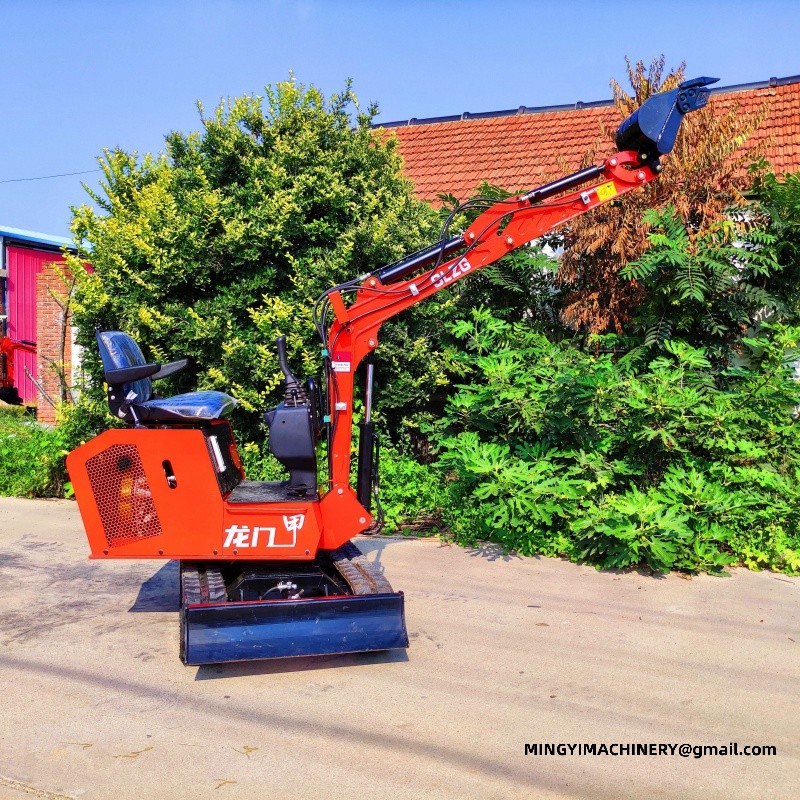
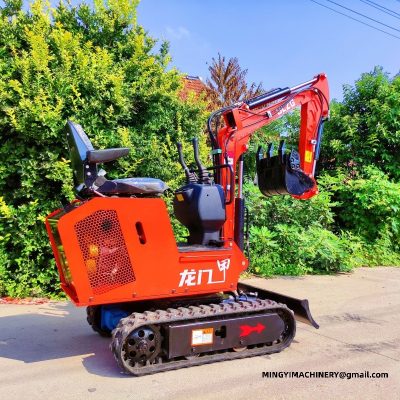
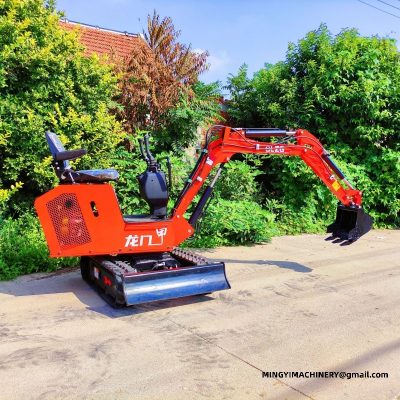
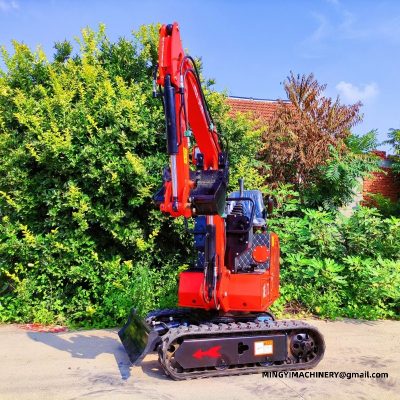
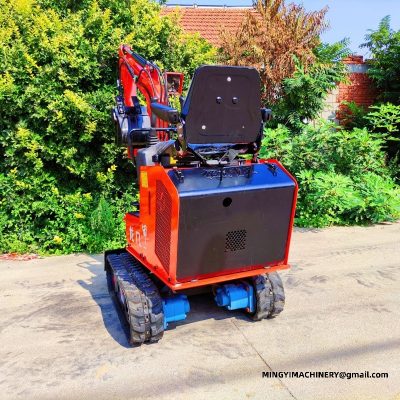
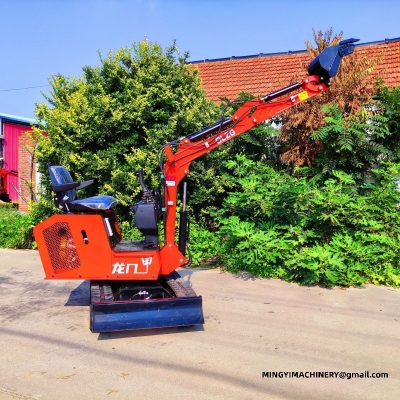
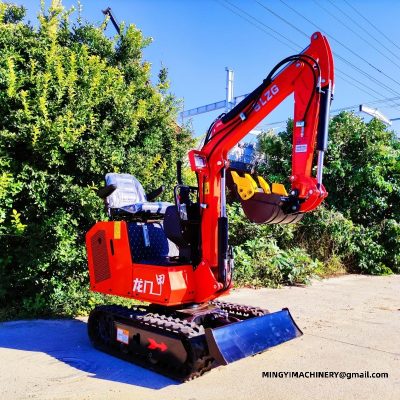
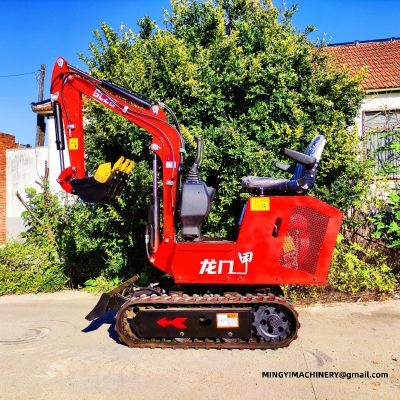
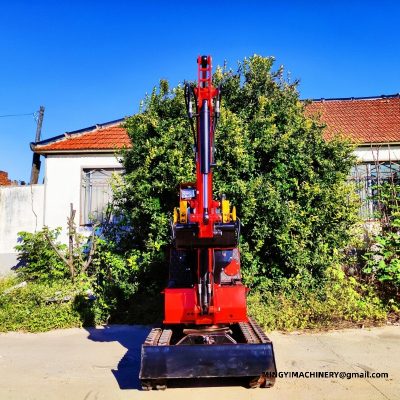
Rear gardens, courtyards and service yards often sit behind a gate the delivery lorry cannot pass. The work still has to happen, so the machine must be small enough to walk through and strong enough once it is inside.
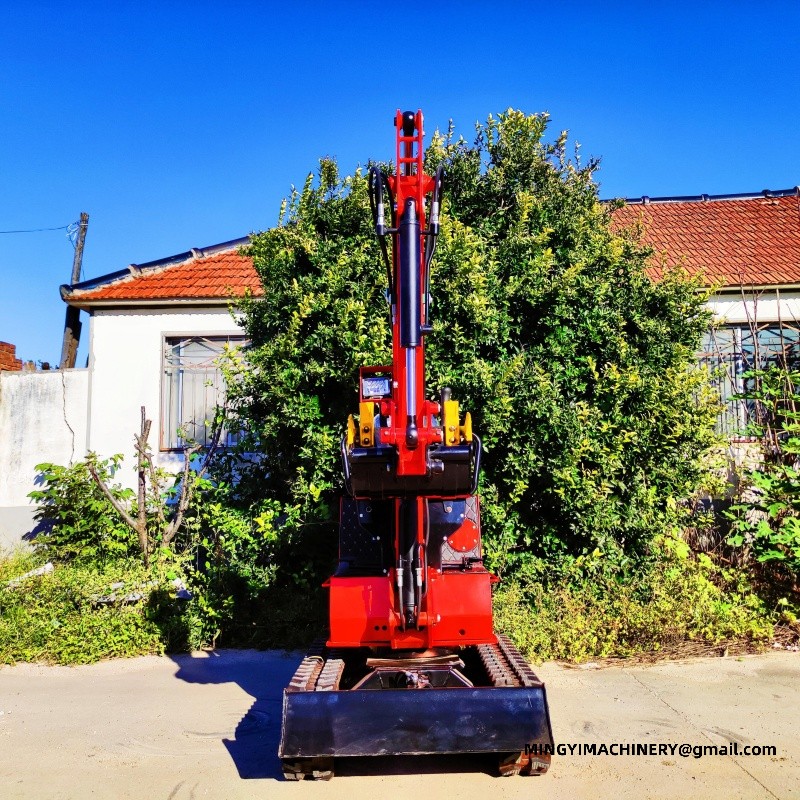
MINGYI compact crawler excavators are built to that constraint. Buyers can specify rubber tracks for finished paving and a canopy or enclosed cab depending on headroom, with a retractable undercarriage where the opening is critical.
Getting a mini excavator through a tight access point
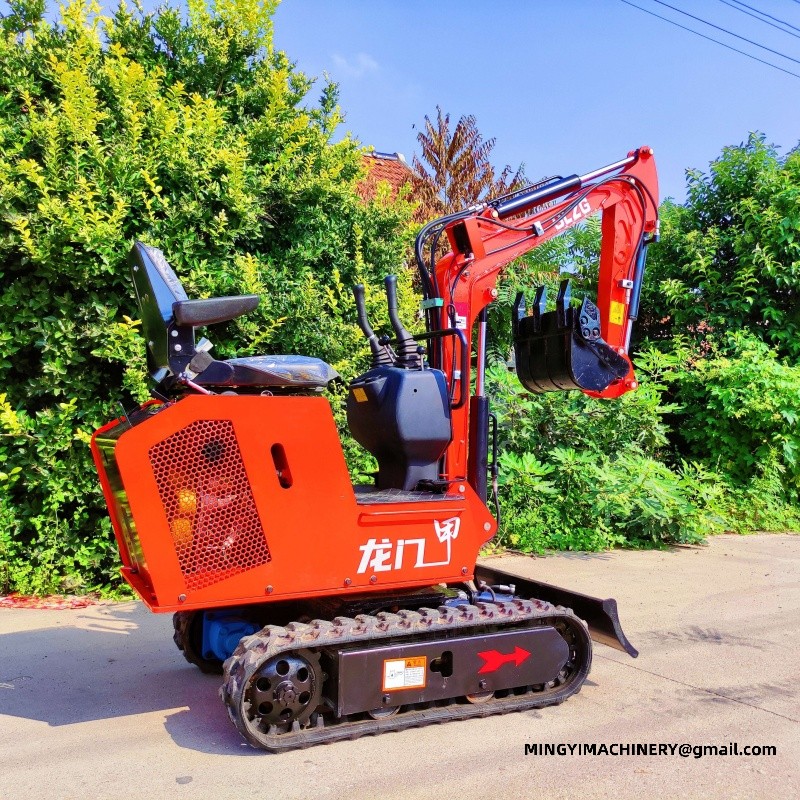
The gate or doorway is the measure that decides the machine class. A retractable undercarriage lets the tracks pull in for the approach and open again on the work face, which protects both the tracks and the frame.
Rubber tracks reduce marking on block paving and tarmac, so a plot can often be handed back without re-laying the surface. Where the route crosses soft ground, the same track choice keeps the machine from sinking at the entrance.
Working productively inside a confined site
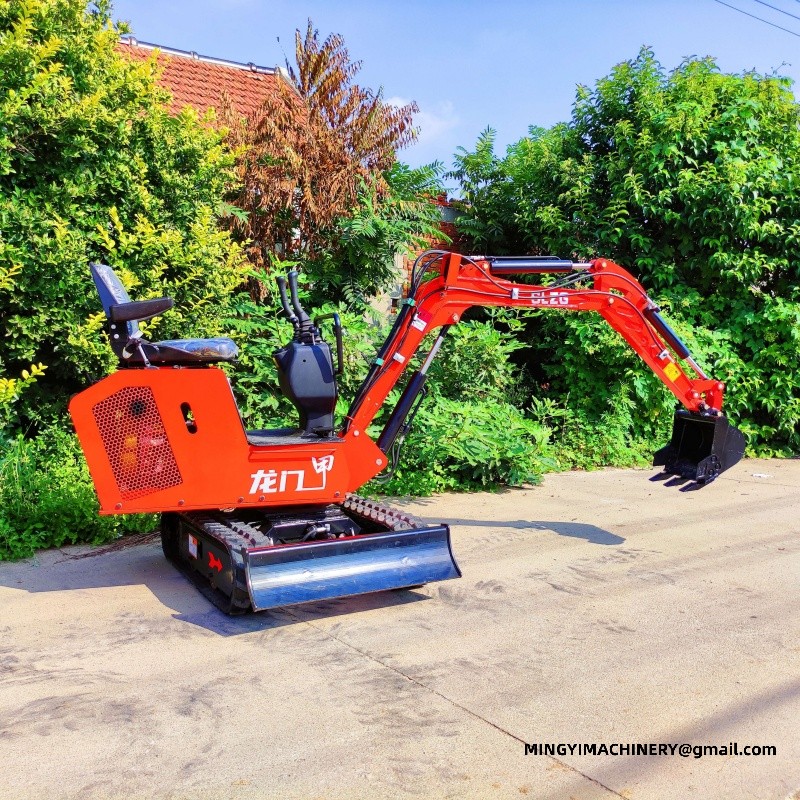
Once inside, reach and swing clearance matter more than digging force. A swing boom lets the operator work parallel to a wall and place spoil to one side instead of turning into it, which suits narrow strips between buildings.
Attachments extend the value of a machine kept to tight access work. A breaker hammer handles concrete and a soil loosener prepares ground in one pass, which reduces the number of tools carried through the same narrow entry.
Minimum transport width, track type and machine height with the cab fitted are the figures a buyer should pin down. MINGYI takes those decisions at the ordering stage so the delivered unit suits the access it has to pass.
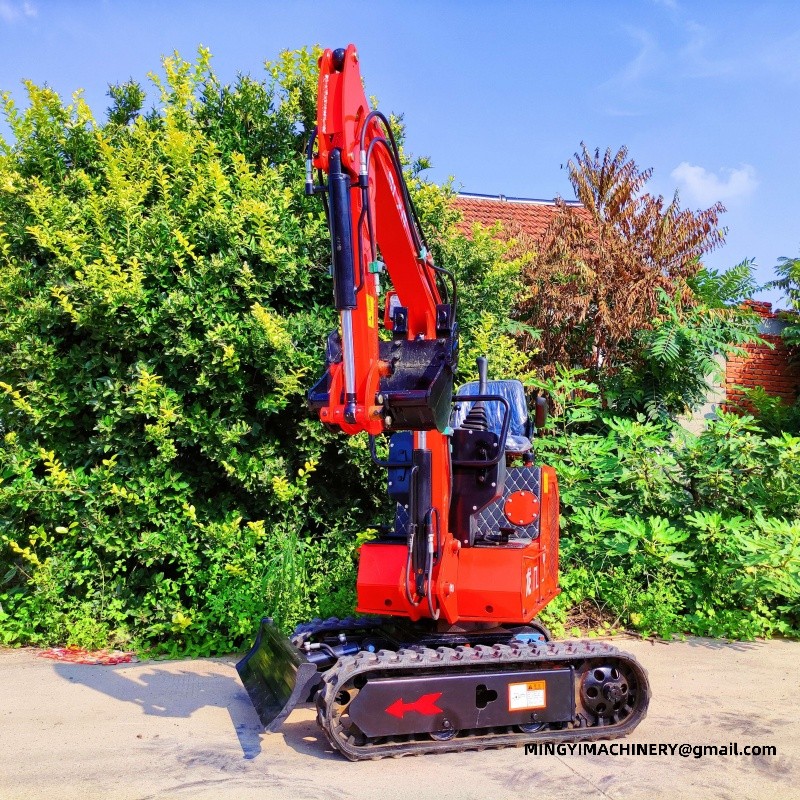
Acceptance checks when a mini excavator for tight access sites arrives Delivery day is the best time to find a problem. Checking the specification against the order, the fluid levels, the fasteners and any transport damage while the class of machine is still on the trailer is faster than claiming later. A function check before the machine goes to work is worth the hour. Running through the controls, the travel and the attachment circuit on the excavator confirms it is set up as specified and ready for the site. Export packing and shipping of mini excavator for tight access sites Machines leave the factory prepared for container or flat rack shipment. The unit in daily use is normally shipped with the attachment set and the spare parts list agreed in advance so the container is planned once. Export documentation, decals and paint are settled before packing. Asking for them with the a machine of this size order avoids a second handling session and keeps the machine on the booked vessel. Engine options behind mini excavator for tight access sites Power unit selection is settled against the service network the buyer already uses. MINGYI offers Kubota D722, Kubota D902, YANMAR, Changchai, Laidong, Runtong, YARMAX, Youpu 2V80 and Youpu 195, so a fleet running one brand of engine can keep the same filters, the same parts supplier and the same mechanic. Two buyers can order the same the equipment on site and receive different engines. The decision is rarely about peak power; it is about which parts counter is closest to the site and which engine the local mechanic already knows. Boom configuration for mini excavator for tight access sites A swing boom lets the machine dig parallel to its tracks without repositioning, which is what makes trenching beside a wall or a fence practical. On the machine itself this is often the option that decides whether a job is possible at all. Extended and offset boom configurations change reach and working range. The model in question with a longer arm reaches further but lifts less at full extension, so the specification is set against the deepest and furthest point on the job list. Quick coupler practice on mini excavator for tight access sites Couplers are specified early because they affect the arm and the hydraulic kit. Adding one to the machine in that duty after delivery means new pins, new hoses and a fitment session; adding it at build time is a line on the sheet. For a fleet that shares attachments between machines, a common coupler standard matters more than the coupler brand. The unit on the job that picks up the same tools as the larger machines keeps the rack usable across the yard. Working a mini excavator for tight access sites in confined spaces Clearance above matters as much as around. Door heights, pipework and overhead services set the limit for a machine built for the work indoors, and measuring them first avoids a machine that arrives and cannot be used. Ventilation is the other indoor constraint. Running the equipment in service inside a closed structure needs air movement, and that is a planning item rather than something to discover after the first hour. Orchard, vineyard and farm use of the excavator Ditching, fertilising and drainage on farmland suit this class of machine because the work is spread over a large area in short bursts. The machine travels behind a pickup and works where it stops. Farms also use the unit in daily use for general maintenance - clearing a watercourse, repairing a track, loading a spreader. One carrier with a few attachments covers most of the jobs that would otherwise wait for a contractor. Matching a machine of this size to ground conditions Soft ground is a flotation problem, not a power problem. The equipment on site on wide rubber tracks crosses lawn, sand and cultivated soil that would stop a narrower machine or a wheeled unit of the same capacity. Hard and abrasive ground reverses the specification. On rock, demolition rubble or sharp gravel, steel tracks with rubber blocks on the machine itself survive conditions that cut a rubber belt quickly. Track choice for the model in question Rubber tracks suit paved and landscaped ground because they spread the machine weight and leave the surface intact. Steel tracks with rubber blocks are specified where the ground is rougher or the working day is longer, and the choice can be made per machine rather than accepted as a factory default. Track type changes what the machine can cross and what it leaves behind. Buyers specify rubber for lawns, driveways and municipal work, and steel with rubber blocks for sites where sharp material would cut a rubber belt in a week. Interior and light demolition with the machine in that duty Interior demolition is an access and a weight question. The unit on the job that fits through a doorway and works on a suspended floor does jobs that would otherwise be done by hand or by a larger machine that cannot enter. Dust, debris clearance and floor loading all argue for a compact machine indoors. A machine built for the work spreads its weight over a wider track footprint than a wheeled machine of similar capacity. Parts, service and support for the equipment in service Engine parts availability usually drives the engine choice. The excavator built with an engine the local network already carries is serviced from stock rather than from an international order. Remote support is handled by video. This class of machine fault can often be diagnosed on a walk-around call with the panel open, which is faster than waiting for a visit and avoids shipping a part that is not needed. Specification data for the unit in daily use Where a machine of this size is being specified for a job list, the table below gives the factory figures that matter most: what the machine weighs, how deep and how far it works, and what it measures on a trailer. Figures are factory figures and are confirmed on the build sheet for the equipment on site. Where a job sits between two models, the larger machine usually takes less time than the smaller one spends on rework. Purchase decision is the visible part of the effort. Fuel, filters, tracks or tyres, the operator and the transport between sites are the items that decide what the machine itself actually demands over a few seasons, and they are worth listing before the order. Downtime is the hidden line item. The model in question waiting on a part earns nothing while it stands, so parts availability and service access belong in the plan as much as fuel does.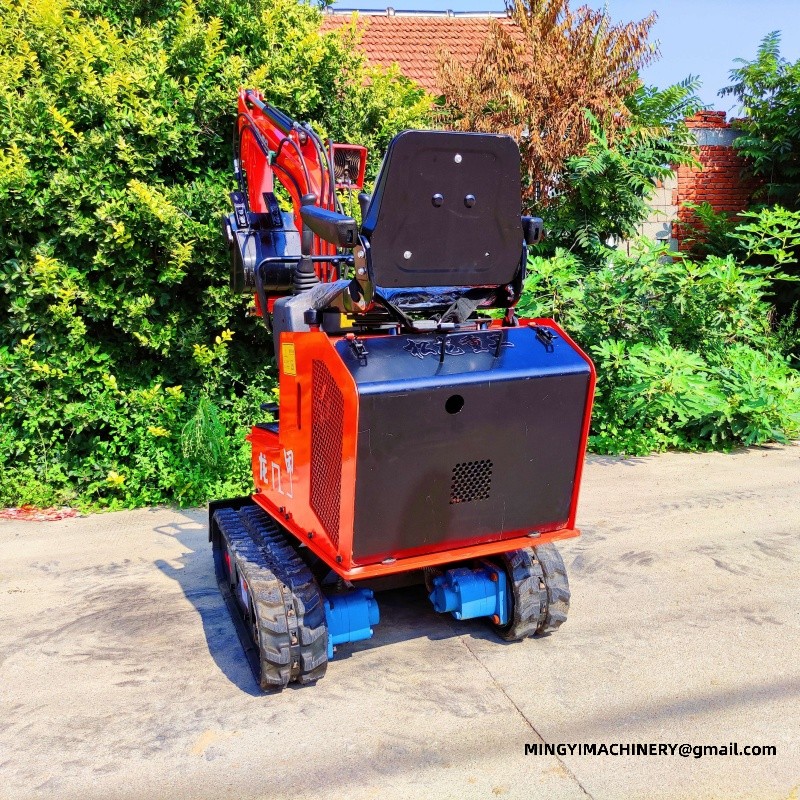
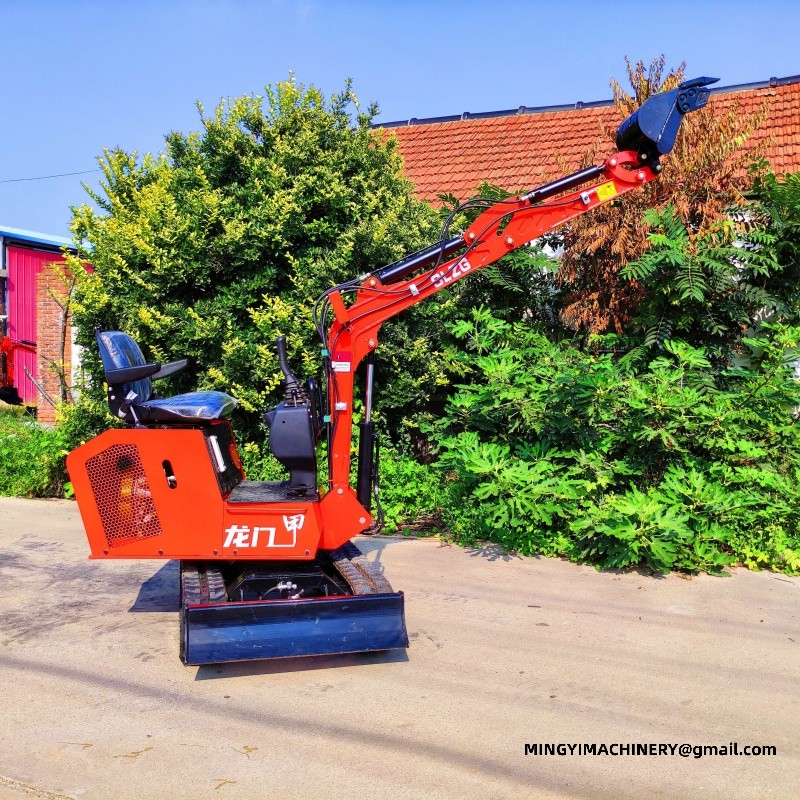
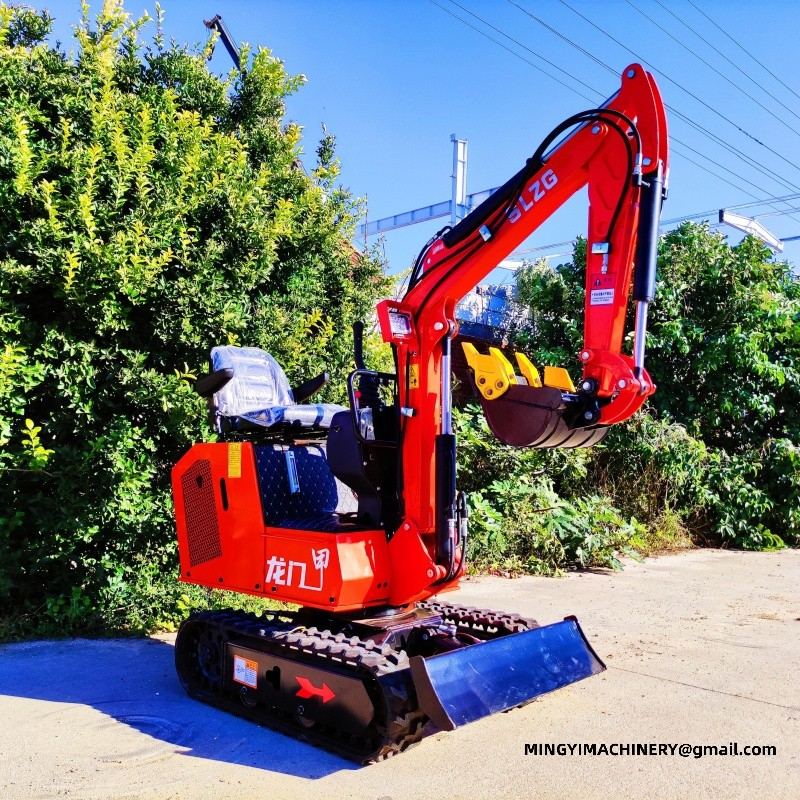
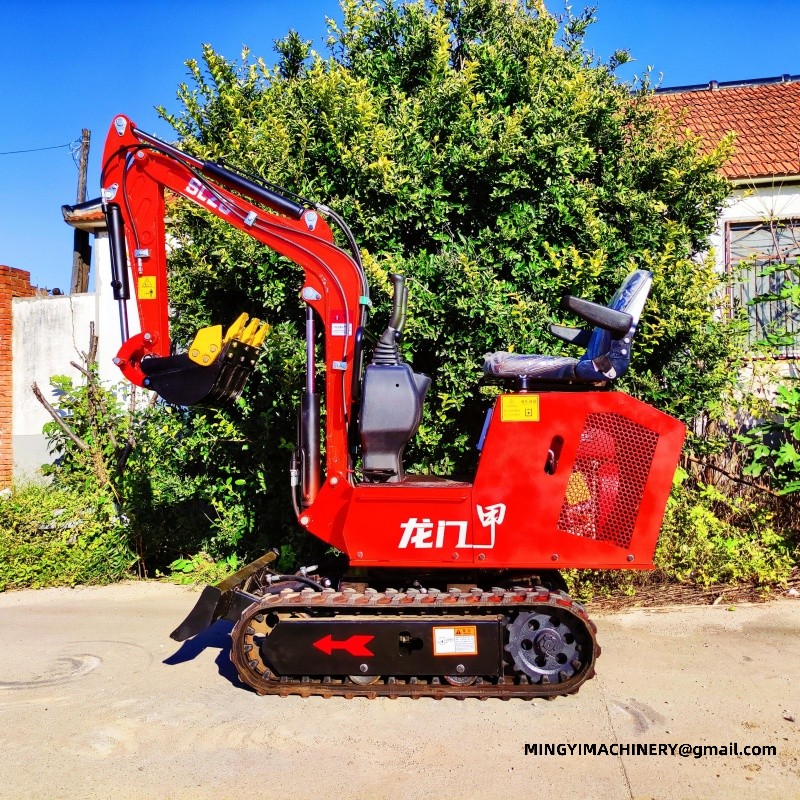
Reference specification — mini excavator range 09W 15W 30-1W 25L Operating weight 1100 kg (2425.08 lb) 1400 kg (3086.47 lb) 2900 kg (6393.41 lb) 2200 kg (4850.17 lb) Transport size (L×W×H) 1800 × 750 × 1970 mm 2200 × 930 × 2250 mm 3000 × 1250 × 2780 mm 3000 × 1300 × 2700 mm Max digging depth 1250 mm (49.21 in) 1630 mm (64.17 in) 2200 mm (86.61 in) 2300 mm (90.55 in) Max digging height 2800 mm (110.24 in) 2750 mm (108.27 in) 3400 mm (133.86 in) 3100 mm (122.05 in) Max dumping height 1700 mm (66.93 in) 1960 mm (77.17 in) 2400 mm (94.49 in) 2050 mm (80.71 in) Max digging radius 2570 mm (101.18 in) 2900 mm (114.17 in) 4000 mm (157.48 in) 3900 mm (153.54 in) Max digging distance 1869 mm (73.58 in) 2100 mm (82.68 in) 2800 mm (110.24 in) 3100 mm (125.05 in) Minimum turning radius 1000 mm (39.37 in) 1300 mm (51.18 in) 2000 mm (78.74 in) 1800 mm (70.87 in) Travel speed 3 km/h (1.86 mph) 3 km/h (1.86 mph) 5 km/h (3.11 mph) 7 km/h (4.35 mph) Gradeability 30° 30° 30° 30° Fuel consumption 1-1.3 L/h (0.264—0.343 gal) 1-1.3 L/h (0.264—0.343 gal) 2-3 L/h (0.528—0.793 gal) 2-3 L/h (0.528—0.793 gal) Fuel tank capacity 8 L (2.11 gal) 10 L (2.64 gal) 16 L (4.23 gal) 16 L (4.23 gal) Hydraulic oil tank 16 L (4.23 gal) 16 L (4.23 gal) 20 L (5.28 gal) 18 L (4.76 gal) Dozer blade lift height 180 mm (7.09 in) 180 mm (7.09 in) 420 mm (16.54 in) 230 mm (9.06 in) Dozer blade drop depth 210 mm (8.27 in) 210 mm (8.27 in) 210 mm (8.27 in) 280 mm (11.02 in)
Q. What are the machine in that duty?
A. Zero tail swing, retractable frames and short-radius booms exist for one reason: to put a real digging machine through a gap and let it work at full rate on the other side. Retractable frames narrow for the passage then widen for stability, so nothing is given up once the machine is through. MINGYI builds the 08, 12 and 18 models covering the 0.8 to 6 tonne class, and the unit on the job is where that range meets tight access sites.
Q. How does the machine get through a narrow opening?
A. Retractable or variable-width frames narrow for the passage then widen for stability, and zero tail swing keeps the counterweight inside the track line. Measure the gap first, then match the class - the smallest machines pass where a wheelbarrow would struggle.
Q. How do I get a specification?
A. Send the model, the destination and the attachment list by email or LINE - the channels listed just below this section. The reply covers the specification, lead time, packing and freight in one document, with the tight access sites build sheet attached.
Reading the early symptoms on a machine built for the work
The symptom is usually not at the fault. A hydraulic function that has become sluggish on the equipment in service may point to a filter, a relief setting or a pump, and starting with the simple checks avoids the wrong guess.
Documents that travel with the excavator
Documentation should match the machine that was actually built. The sheet supplied with this class of machine records the configuration as delivered, because the generic catalogue description is not what the customer needs when ordering a part.
E-mail : sales@mingycn.com
LINE ( ID ): mingyicn
Slope working and stability with mini excavator for tight access sites
Ground that looks firm after a dry week can carry a different load after rain, and that difference is worth a walk-over each morning.
Tracks or tyres, the contact patch is what holds the machine, and worn or wrongly inflated running gear reduces it more than most operators expect.
Related pages
mini excavator track options · rubber track digger for soft ground work · Wheel Loader for Agriculture: Gate Widths, Sheds and Wagons · Mini Excavators









