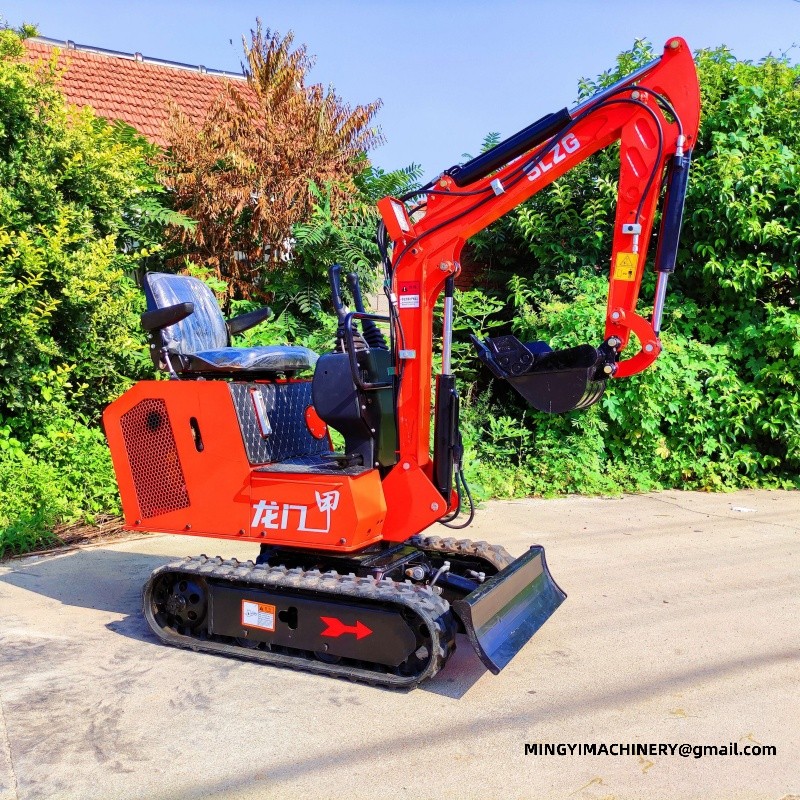
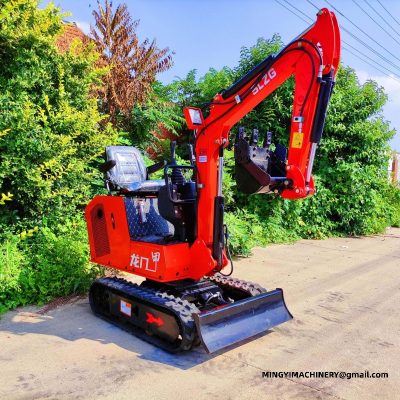
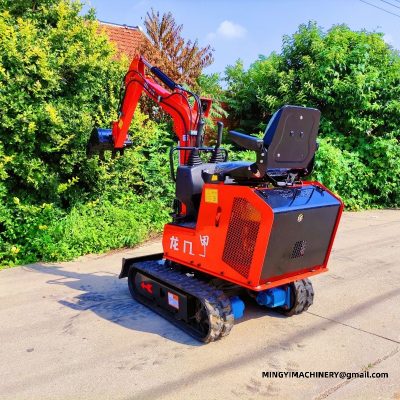
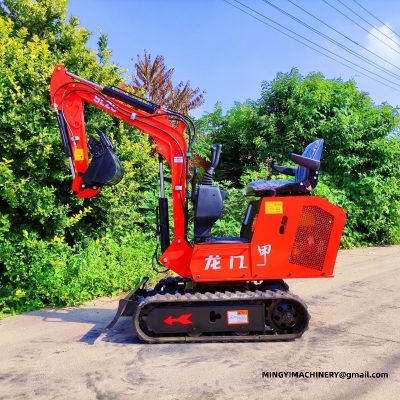
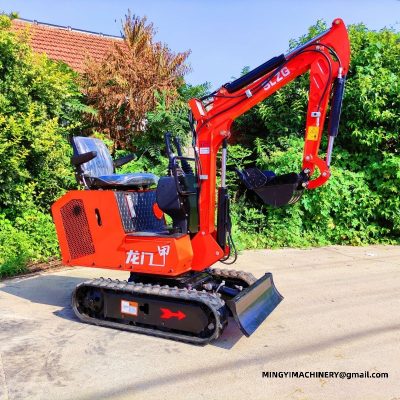
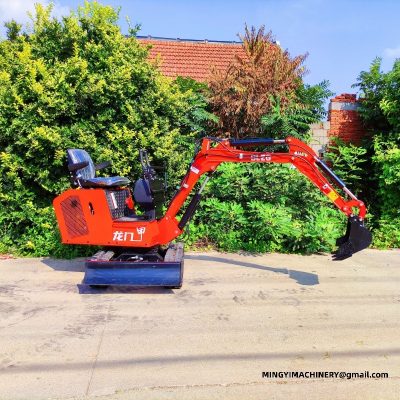
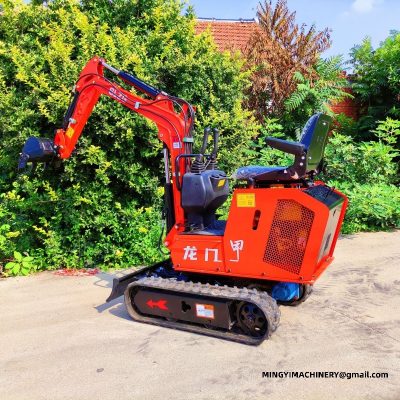
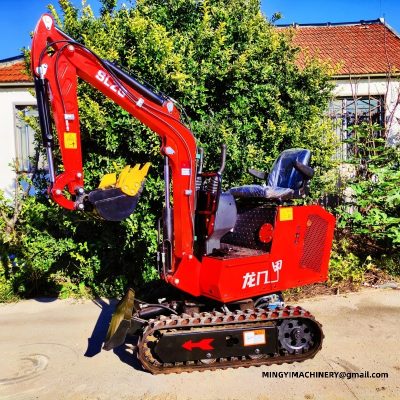
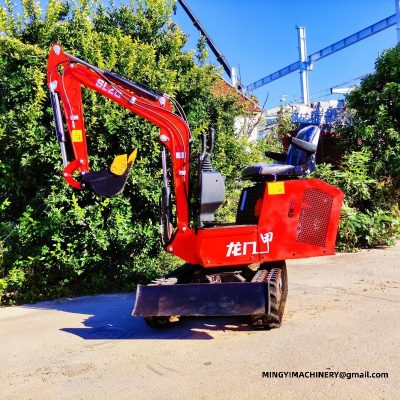
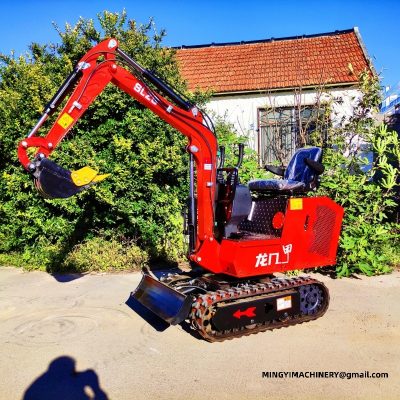
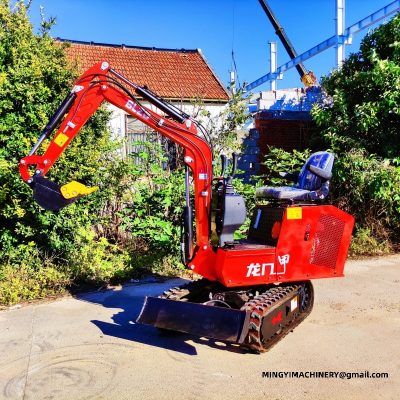
Soft, wet ground is the opposite problem to hard paving. Here the machine itself is at risk of sinking, and the aim is to spread weight over as large an area as the machine can manage.
MINGYI builds compact crawler diggers to order, and machines for soft ground are specified with a wider track footprint. Undercarriage width, track type and attachment set are agreed before production.
Rubber tracks on soft and waterlogged ground
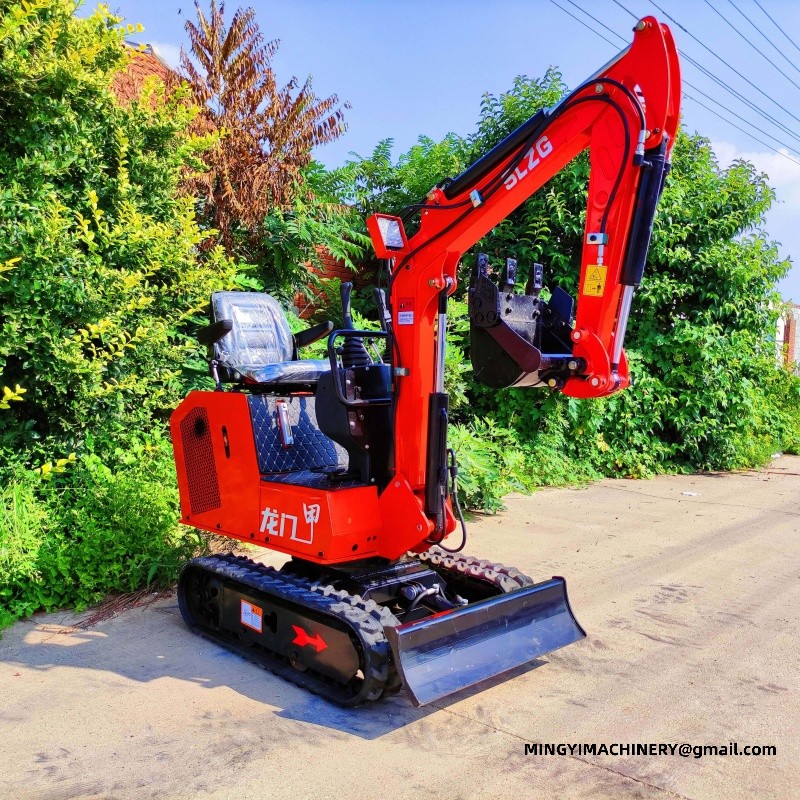
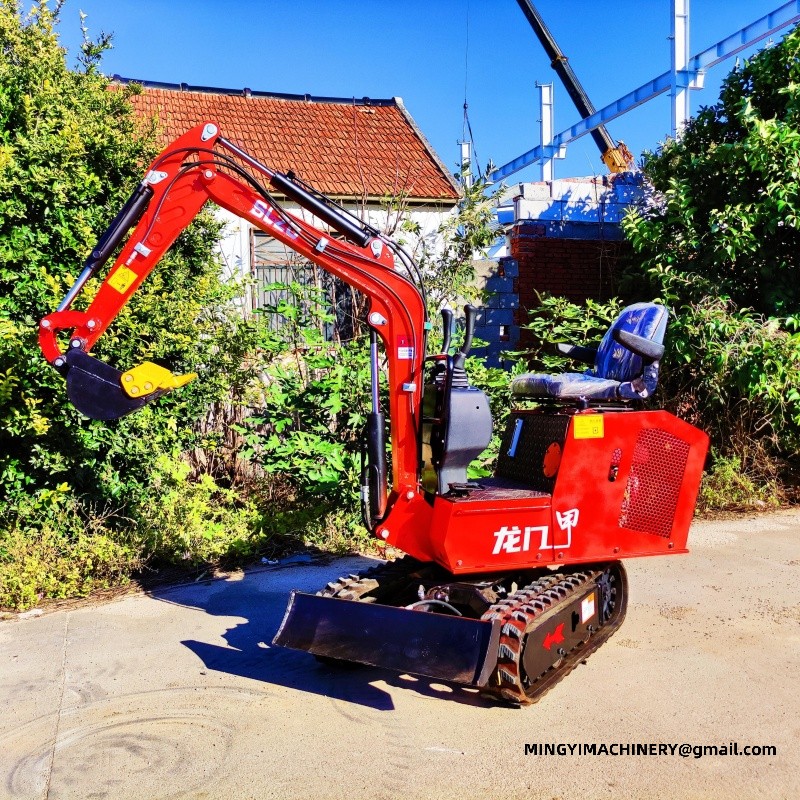
On wet clay or waterlogged soil the machine has to keep pressure low. A wider track spreads the weight of the carrier and the attachment over more ground, which keeps the machine on the surface rather than in it.
Working from firmer ground with the boom extended is often part of the technique as well. The operator digs the wet area from a stable position rather than driving into it, which keeps the machine out of trouble.
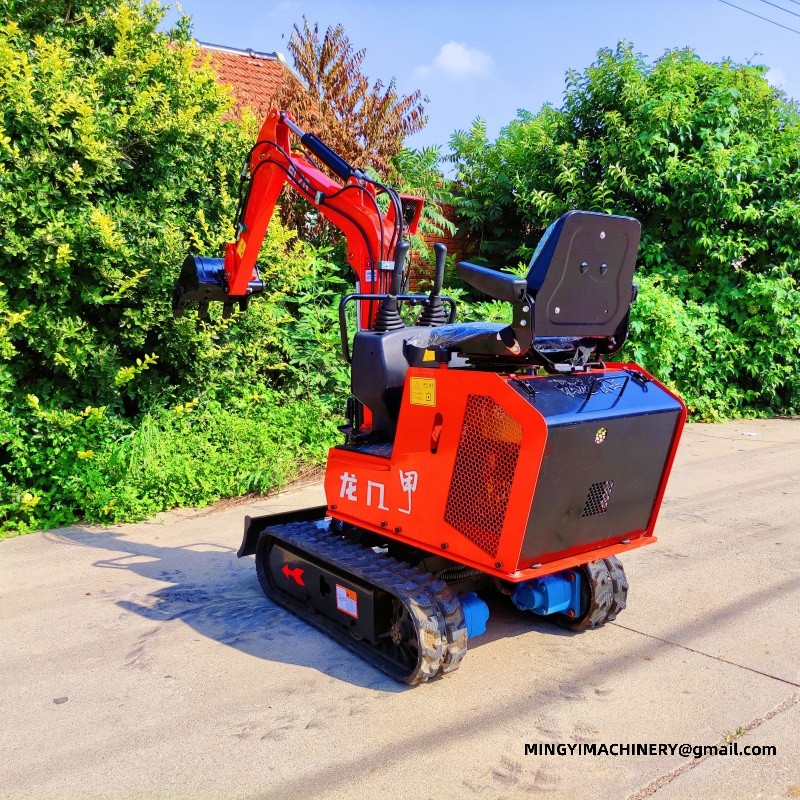
Working wet clay and marsh edges with a light digger
Drainage and ditching are the usual tasks on this ground. A trenching bucket opens the run, and a grading bucket keeps the fall even while the spoil is placed on the bank away from the channel.
The attachment set is kept matched to the machine so the balance stays predictable on soft ground. Every item is recorded against the unit, which lets a later order repeat the same working set.
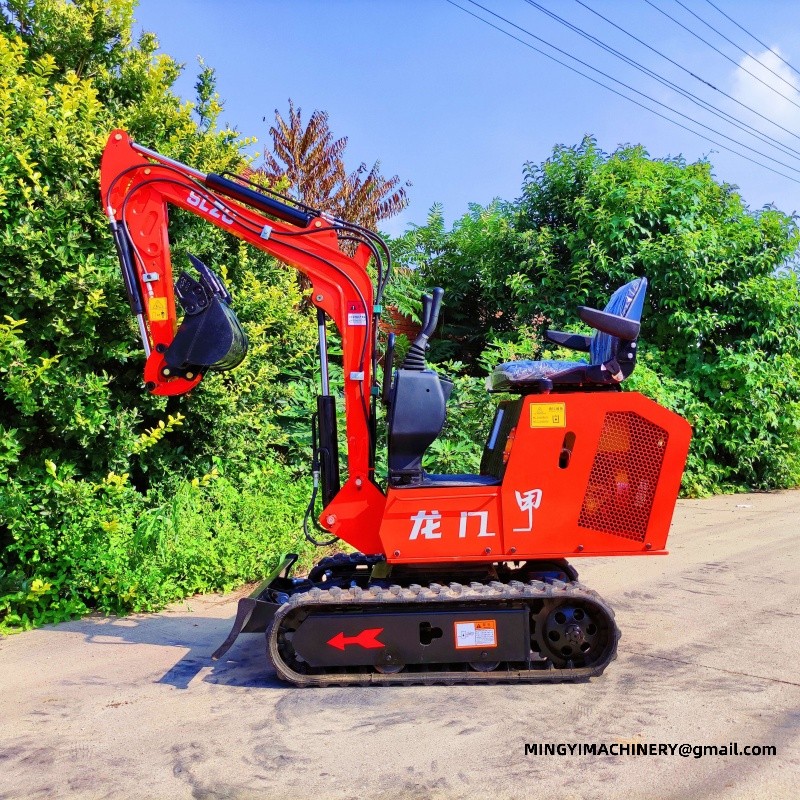
On soft ground the machine's footprint is the specification that keeps it working. A light digger with the right undercarriage and a planned attachment set handles drainage and ditching without churning the ground it stands on.
Matching rubber track digger for soft ground work to ground conditions Soft ground is a flotation problem, not a power problem. The excavator on wide rubber tracks crosses lawn, sand and cultivated soil that would stop a narrower machine or a wheeled unit of the same capacity. Mixed sites are common and argue for a compromise specification. Most buyers choose rubber for this class of machine and accept the wear, unless the majority of the work is on material that will damage it. Quick coupler practice on rubber track digger for soft ground work A quick coupler is the single option that changes how a machine is used day to day. Fitted to the unit in daily use, it turns an attachment change from a two-person workshop job into a task the operator does alone in minutes. Couplers are specified early because they affect the arm and the hydraulic kit. Adding one to a machine of this size after delivery means new pins, new hoses and a fitment session; adding it at build time is a line on the sheet. Trailering and moving rubber track digger for soft ground work Loading practice matters as much as the numbers. The equipment on site is driven up ramps under its own power with the boom lowered and the tracks aligned, and secured at the points the manufacturer specifies. Detachable components reduce transport length. The machine itself built with a removable arm section or a folding step fits a shorter trailer and may avoid an oversize movement permit. What owners should plan for beyond the rubber track digger for soft ground work The useful comparison is demand per working hour, not demand per machine. The model in question that works more hours a year spreads its standing takes over more output, which is why utilisation usually matters more than the invoice figure. Downtime is the hidden line item. The machine in that duty waiting on a part earns nothing while it stands, so parts availability and service access belong in the plan as much as fuel does. Noise, dust and working near occupied buildings Work near housing or occupied premises brings constraints that open sites do not. Start times, exhaust condition and how often the unit on the job needs to reverse are the practical limits that neighbours notice. Enclosure and machine condition both reduce noise. A machine built for the work with intact panels, sound mounts and a maintained exhaust is measurably quieter than the same machine with loose guards, and the difference matters on restricted sites. Parts, service and support for rubber track digger for soft ground work Support after delivery is a parts question. Wearing items for the equipment in service - filters, belts, track components, bucket teeth and pins - are the items a buyer should plan to hold before the first service interval. Remote support is handled by video. The excavator fault can often be diagnosed on a walk-around call with the panel open, which is faster than waiting for a visit and avoids shipping a part that is not needed. Specifying this class of machine against a job list The practical way to specify is to write the job list first: the narrowest access, the deepest trench, the heaviest tool and the surfaces the machine must cross. The unit in daily use is then matched to those four numbers. Buyers who skip this step either over-buy or under-buy. A machine of this size specified only from machine size tends to arrive without the coupler, the circuits or the track type the work actually needs. Daily checks and maintenance on the equipment on site Track tension is the item most often neglected. The machine itself run with slack tracks wears the undercarriage and can throw a track on a turn; run too tight, the same components wear from the other direction. Greasing is the second item. The slew ring, the boom and arm pins and the bucket linkage on the model in question take grease daily in dusty work, and the intervals shorten further when the machine is used in water or mud. Engine options behind the machine in that duty Two buyers can order the same a machine built for the work and receive different engines. The decision is rarely about peak power; it is about which parts counter is closest to the site and which engine the local mechanic already knows. Engine choice is also an emissions and documentation question for some markets. Listing the available units with the unit on the job enquiry lets the factory confirm what can be supplied and documented for the destination country. Attachments that turn the equipment in service into several machines The base machine is a carrier; the tool on the end of the arm decides the task. The excavator fitted with a toothed bucket digs, and the same machine with a breaker, an auger or a grab does work that would otherwise need a second unit on site. Most of the daily variety on this class of machine comes from the attachment rack rather than from the machine itself. Bucket, breaker, auger, ripper, rake and grab cover the large majority of the work a contractor will see. Specification data for the unit in daily use Buyers comparing a machine of this size usually start from four numbers - weight, digging depth, reach and transport width - because those are the ones that decide whether the machine can be delivered and whether it can do the job once it is there. Figures are factory figures and are confirmed on the build sheet for the equipment on site. Where a job sits between two models, the larger machine usually takes less time than the smaller one spends on rework. Machines leave the factory prepared for container or flat rack shipment. The machine itself is normally shipped with the attachment set and the spare parts list agreed in advance so the container is planned once. Buyers who import regularly plan the spare parts with the machine. The model in question ordered with a wearing-parts kit arrives ready to work rather than ready to wait for the first service interval.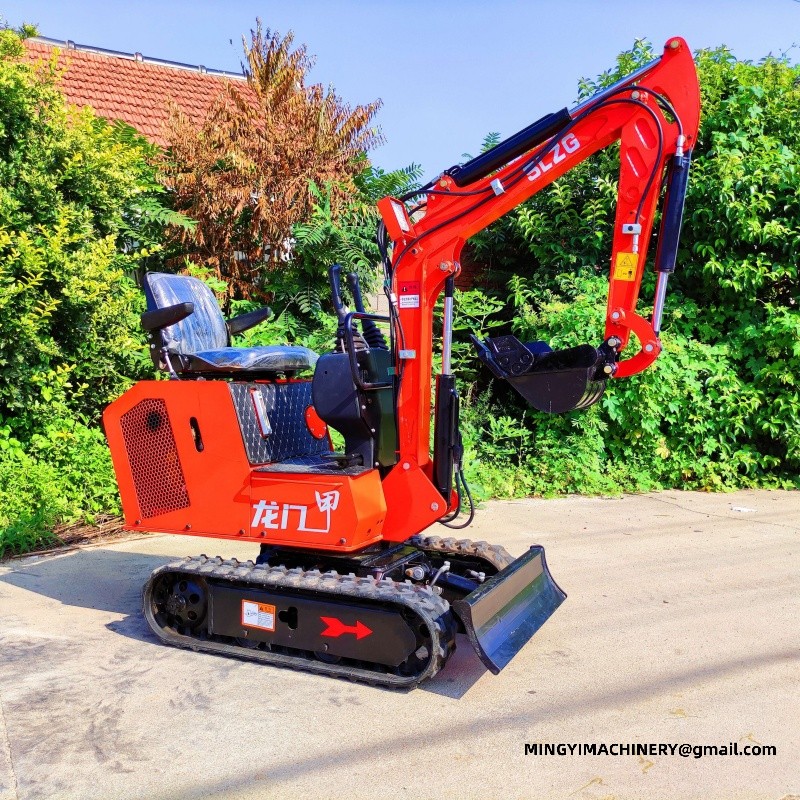
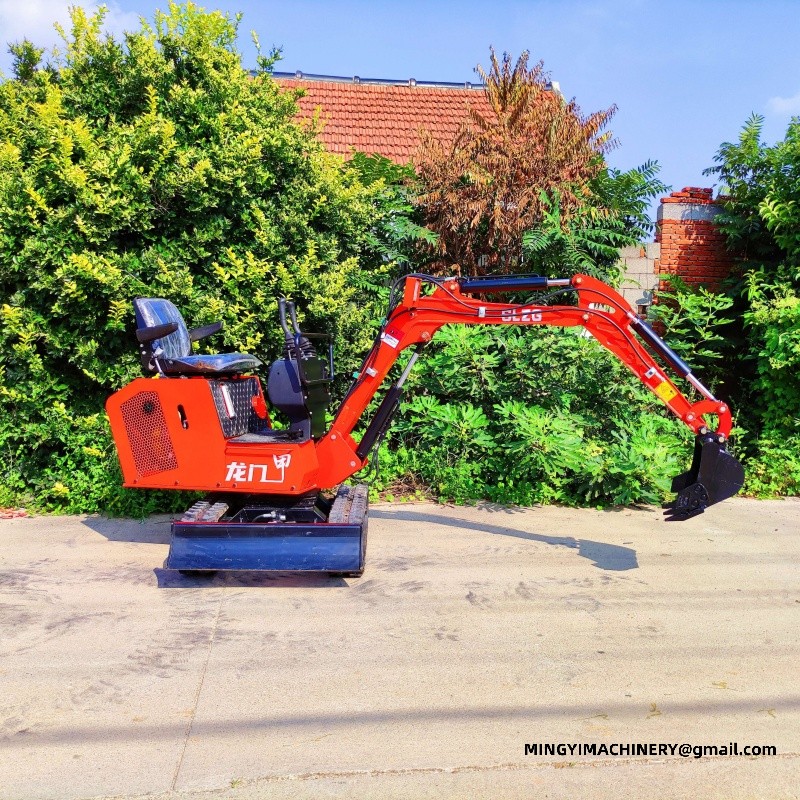
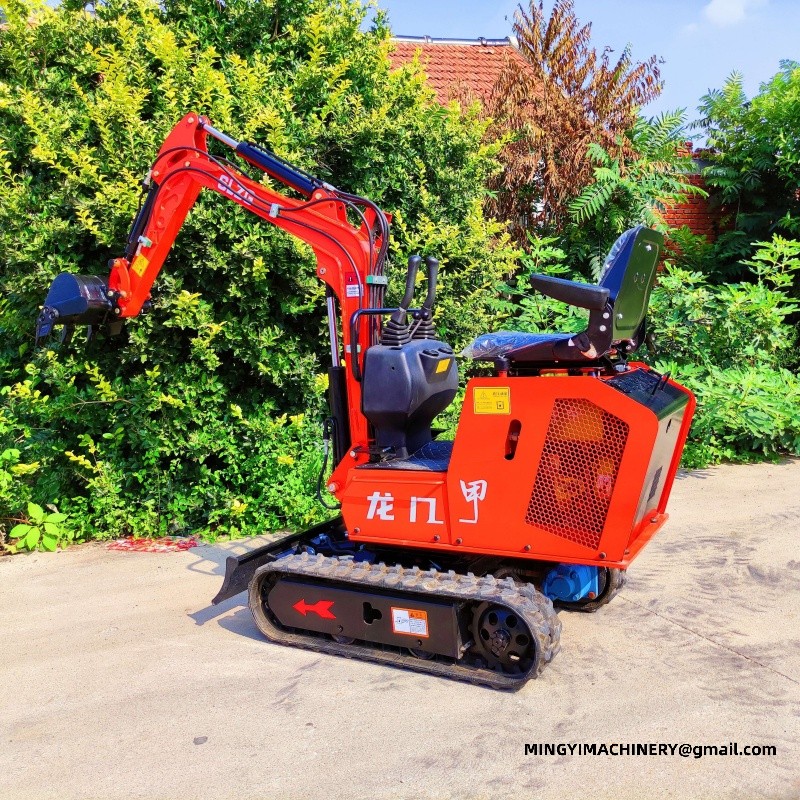
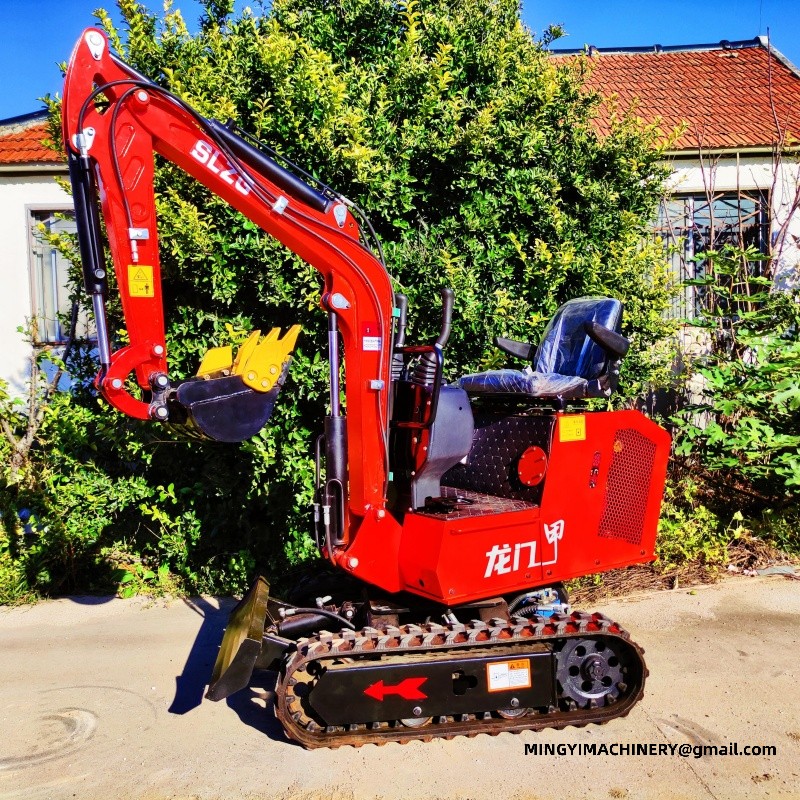
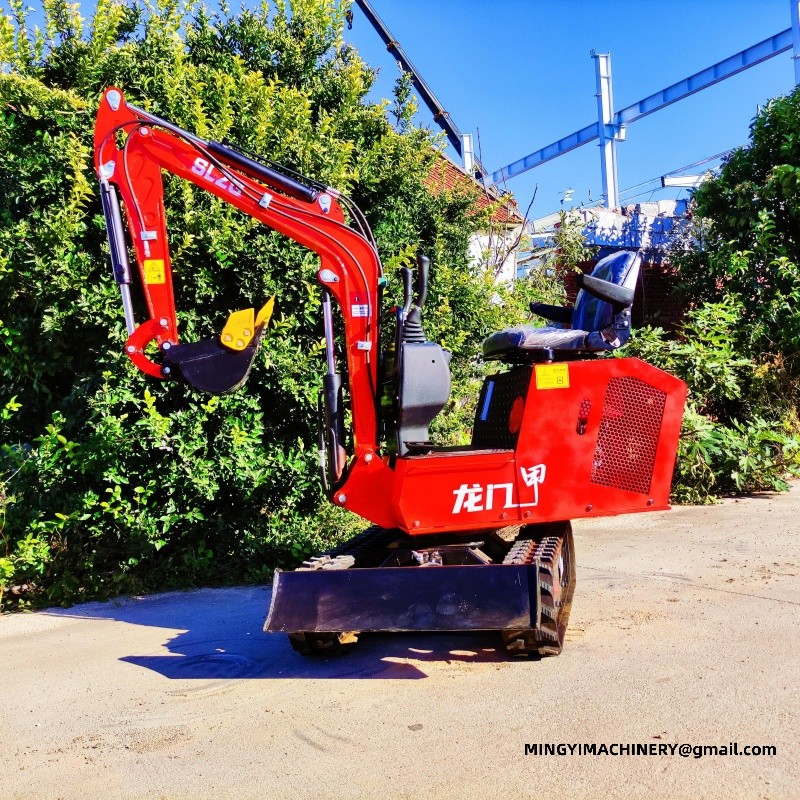
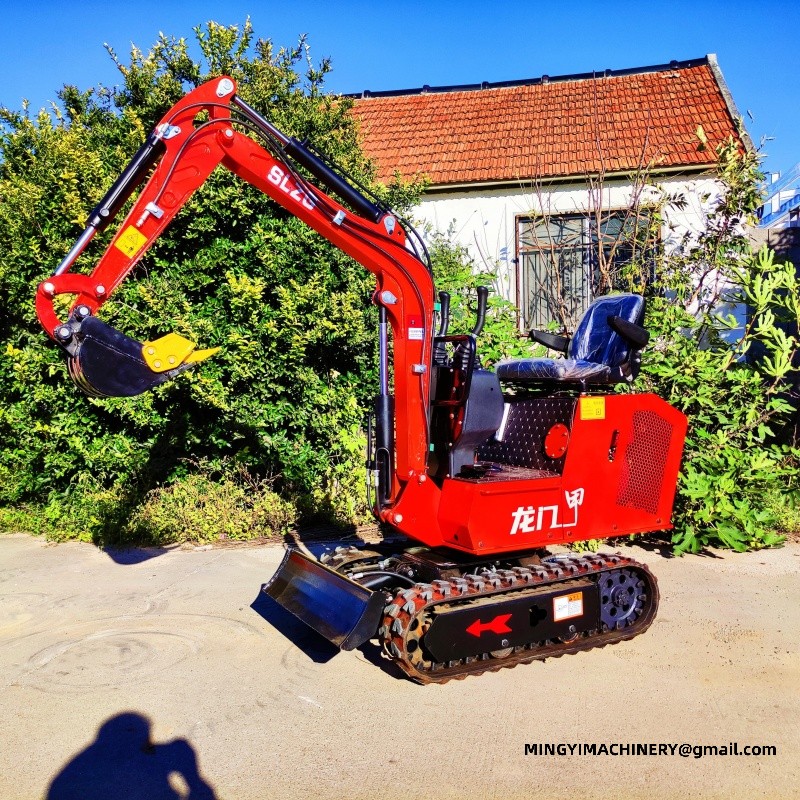
Reference specification — mini excavator range 13W 20-1W 20-3W 25L Operating weight 1300 kg (2866.01 lb) 1800 kg (3968.32 lb) 1900 kg (4188.78 lb) 2200 kg (4850.17 lb) Transport size (L×W×H) 2200 × 930 × 2250 mm 2550 × 1100 × 2200 mm 2550 × 1100 × 2200 mm 3000 × 1300 × 2700 mm Max digging depth 1630 mm (64.17 in) 1800 mm (70.87 in) 1800 mm (70.87 in) 2300 mm (90.55 in) Max digging height 2750 mm (108.27 in) 2820 mm (111.02 in) 2820 mm (111.02 in) 3100 mm (122.05 in) Max dumping height 1960 mm (77.17 in) 2050 mm (80.71 in) 2050 mm (80.71 in) 2050 mm (80.71 in) Max digging radius 2900 mm (114.17 in) 3050 mm (120.08 in) 3050 mm (120.08 in) 3900 mm (153.54 in) Max digging distance 2100 mm (82.68 in) 2300 mm (90.55 in) 2300 mm (90.55 in) 3100 mm (125.05 in) Minimum turning radius 1300 mm (51.18 in) 1450 mm (57.09 in) 1450 mm (57.09 in) 1800 mm (70.87 in) Travel speed 3 km/h (1.86 mph) 5 km/h (3.11 mph) 5 km/h (3.11 mph) 7 km/h (4.35 mph) Gradeability 30° 30° 30° 30° Fuel consumption 1-1.3 L/h (0.264—0.343 gal) 2-3 L/h (0.528—0.793 gal) 2-3 L/h (0.528—0.793 gal) 2-3 L/h (0.528—0.793 gal) Fuel tank capacity 10 L (2.64 gal) 16 L (4.23 gal) 16 L (4.23 gal) 16 L (4.23 gal) Hydraulic oil tank 16 L (4.23 gal) 18 L (4.76 gal) 18 L (4.76 gal) 18 L (4.76 gal) Dozer blade lift height 180 mm (7.09 in) 180 mm (7.09 in) 180 mm (7.09 in) 230 mm (9.06 in) Dozer blade drop depth 210 mm (8.27 in) 210 mm (8.27 in) 210 mm (8.27 in) 280 mm (11.02 in)
Q. Who chooses the machine in that duty?
A. The undercarriage is the most lengthy part of a compact digger to replace, which makes track choice a buying decision rather than an accessory. Tension checks and a walk-around for wrapped debris are the whole of daily track care, and they protect the part of the digger that is hardest to put right. Read the unit on the job together with the engine, track and attachment pages: jobs around soft ground work are decided by how those choices line up, not by any single number on the sheet.
Q. Can I change track type after purchase?
A. Yes; conversion is a planned job rather than a swap, and the pages on steel track replacement and rubber-to-steel conversion describe what is involved. Confirm the machine model and the target ground with the factory and the parts arrive as a matched set.
Q. Does MINGYI supply attachments with the machine?
A. Yes - buckets, breakers, augers, rakes and the rest of the working set ship with the carrier, matched to the hydraulic flow and the coupler. For soft ground work the package is confirmed on the build sheet, so machine and tools arrive together and start work together.
Keeping a service record for a machine built for the work
Patterns show up in the record before they show up in the machine. Rising oil consumption or a filter that keeps blocking on the equipment in service is obvious on paper long before it becomes a failure on site.
Handover and getting familiar with the excavator
A good handover covers the awkward cases, not just the easy ones. Starting this class of machine on a slope, turning in a confined space and recovering from soft ground are the situations an operator should meet first with someone beside them.
Storage and long idle periods for the unit in daily use
The battery and the fuel are the first things to suffer in storage. Preparing a machine of this size properly at the start of the idle period avoids the flat battery and the contaminated tank that greet an unprepared machine.
E-mail : sales@mingycn.com
LINE ( ID ): mingyicn
Slope working and stability with rubber track digger for soft ground work
Turning on a side slope is where most instability starts, so the route and the turning points are chosen before the first load is moved.
Working up and down the fall line rather than across it keeps the load predictable, and where that is impossible the load is reduced.
A machine parked on a gradient needs the parking brake applied, the attachment lowered and, where the ground allows, chocks under the wheels or tracks.
Fire prevention and emergency steps for rubber track digger for soft ground work
Refuelling is done with the engine stopped, the nozzle earthed and a spill kit within reach.
Related pages
two tonne mini excavator for utilities · 1 to 3.5 tonne mini digger for site work · Wheel Loader for Material Handling: Forks, Grapples and Circuits · Mini Excavators









