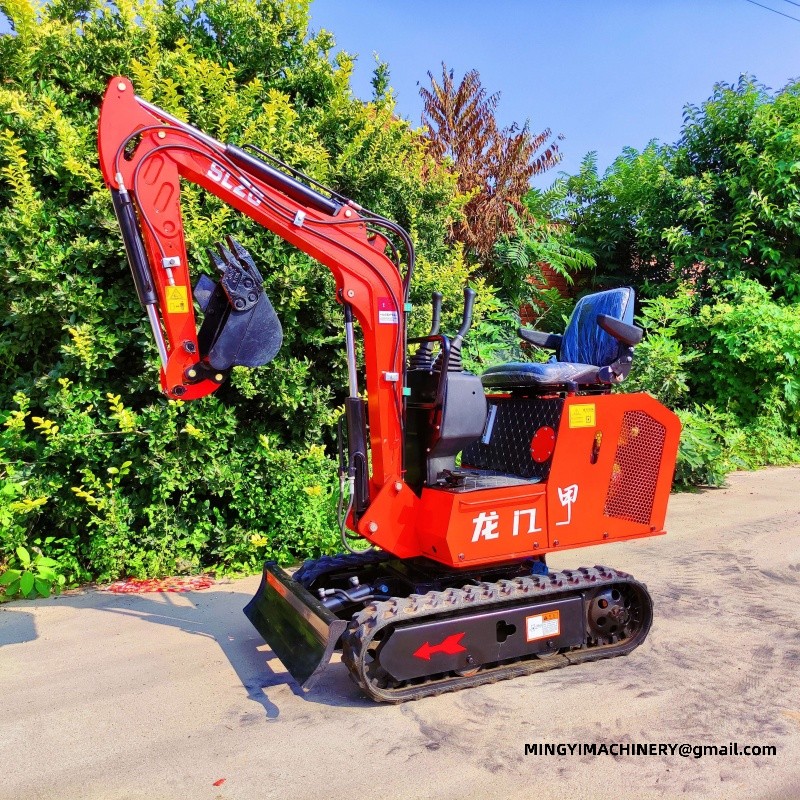
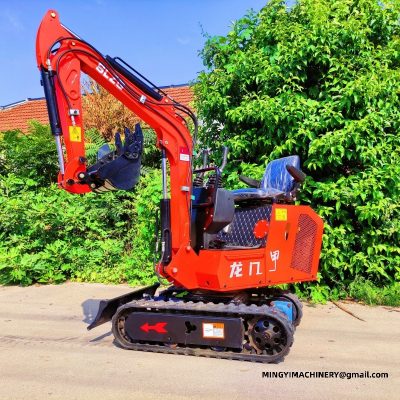
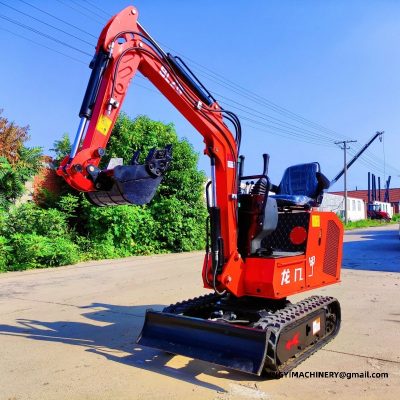
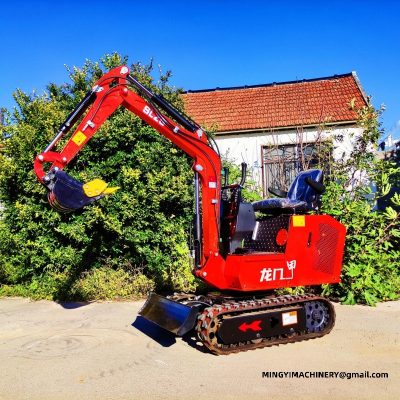
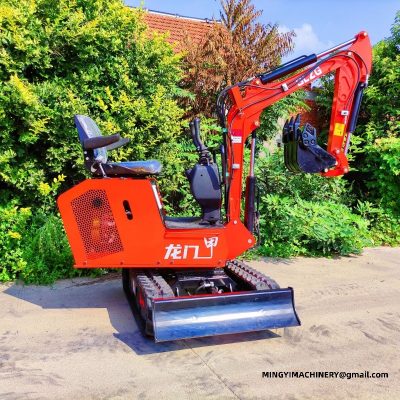
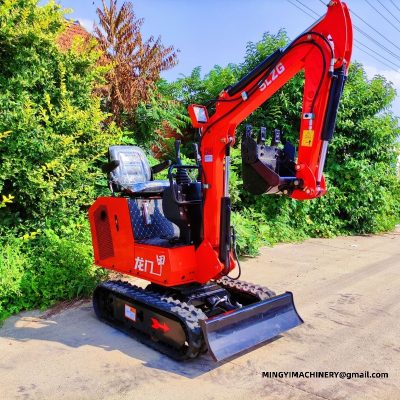
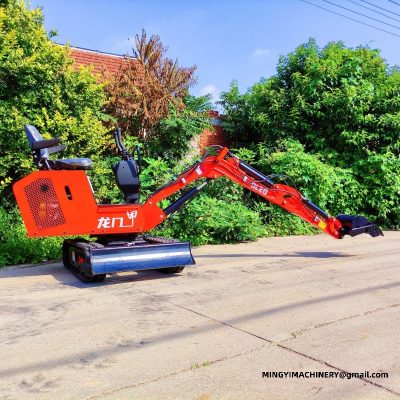
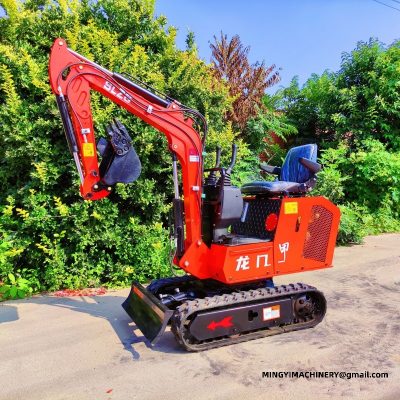
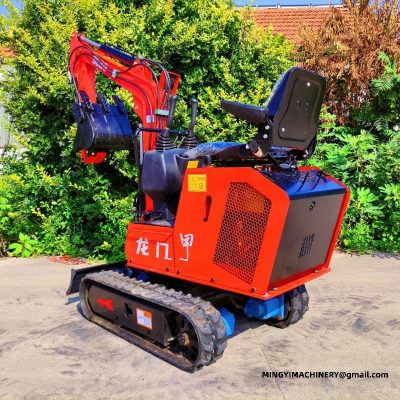
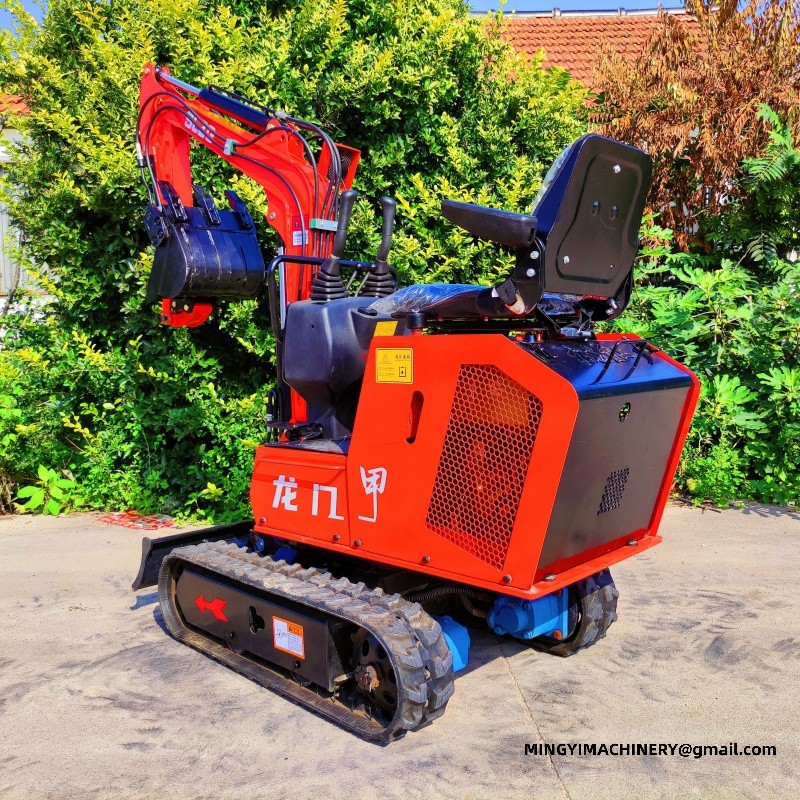
A tracked undercarriage is what lets a small excavator put its digging force into the ground instead of into wheel slip. MINGYI builds tracked mini excavators across the 0.8 to 6 tonnes range for export, with the undercarriage chosen to match the surfaces and slopes the machine will work on.
The decision that shapes the machine is track type: rubber or steel with rubber blocks. This page covers the tracked configuration in general and the points buyers should confirm when ordering.
What a tracked undercarriage does for the work
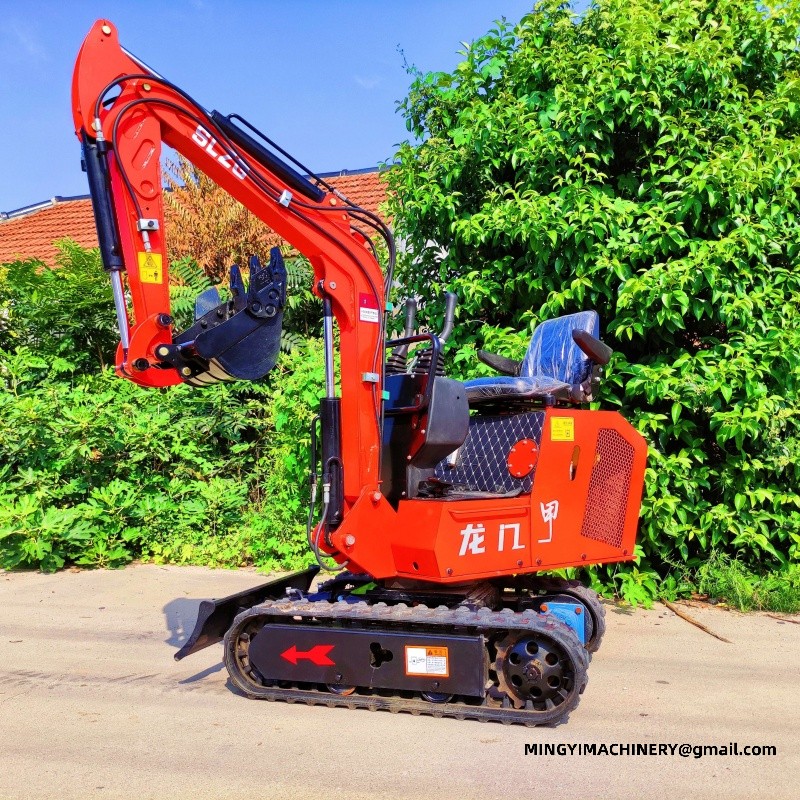
Tracks spread the machine weight over a large footprint, which matters on soft ground, on finished lawns, and on the verge work that wheeled plant simply cannot attempt. They also give the traction to climb loading heaps and hold position on slopes while the arm works.
The tracked format also carries the working platform for the attachment range. Breaker hammers, augers, tilting buckets and grabbers all load the machine through its undercarriage, and a stable tracked base is what keeps that load within the design envelope of the front structure.
Choosing between the track options
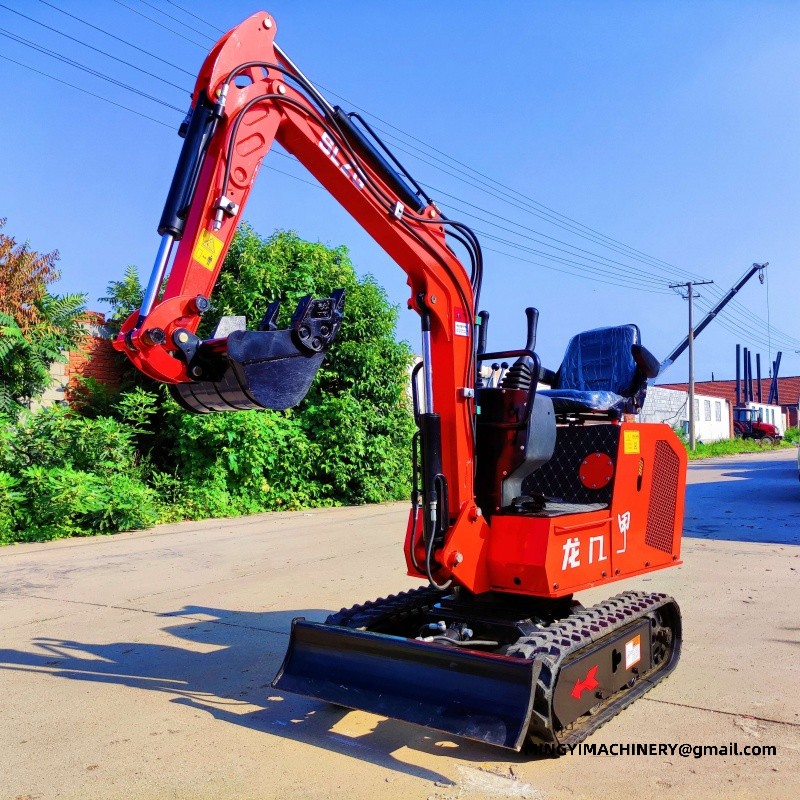
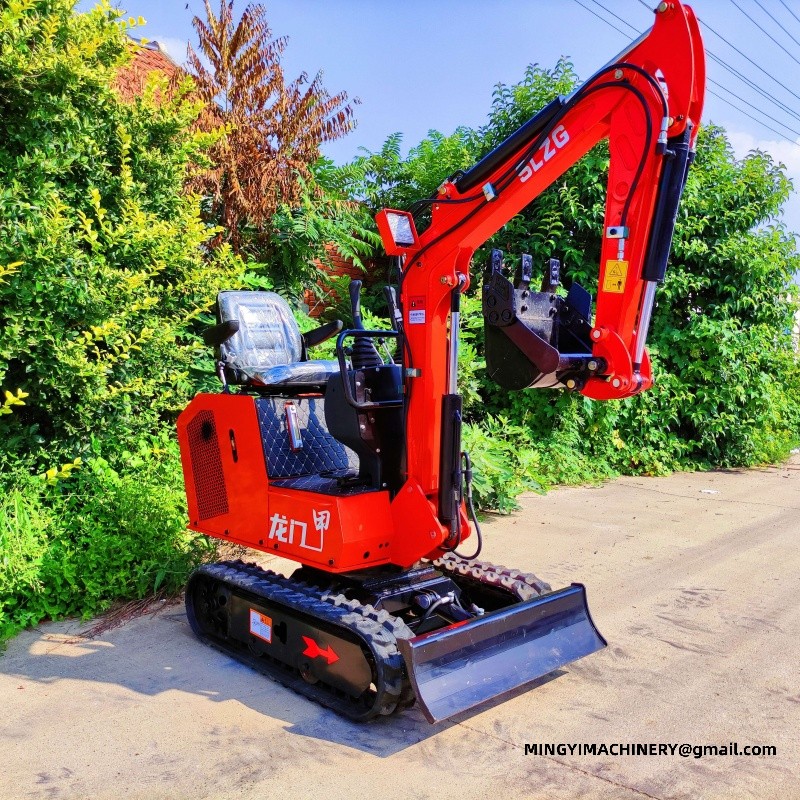
Rubber tracks are the default for work on finished surfaces, since they run quietly over paving and driveways without marking them. Steel tracks with rubber blocks suit rougher duty, demolition rubble, broken slab and soft verges, where the steel frame carries the wear and the blocks still protect paved crossings.
Undercarriage width can be fixed or retractable depending on the access the buyer faces, and extended or detachable track frames are available for specific duties. These choices, together with the class within the 1 to 3.5 tonnes working range or beyond it, are agreed at the ordering stage.
Note the surfaces your machine will cross and the steepest slope it will dig on, and the tracked configuration will be selected from those facts. Mingyi Machinery records the agreed undercarriage specification against every build for future parts ordering.
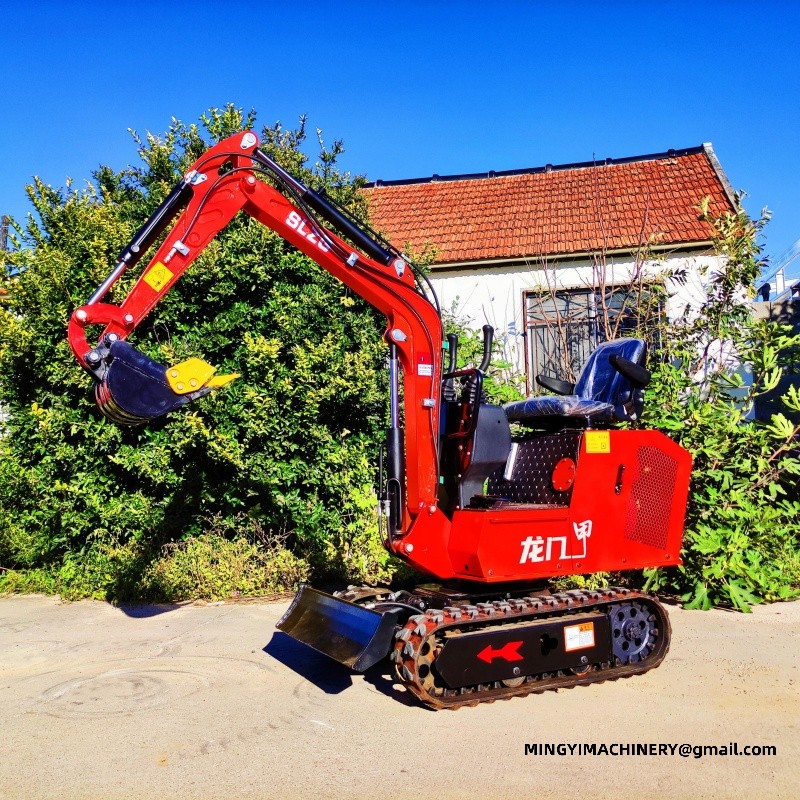
Working a mini excavator track options through the seasons Weather decides which days are productive. Rain turns some ground unusable and cold changes how the excavator starts and warms up, so planning the wet months around maintenance is more useful than planning around output. Seasonal planning smooths the workload. Machines that are busy for a few months and idle for the rest benefit from a service slot in the quiet period, and this class of machine prepared in the off-season starts the busy months reliably. Orchard, vineyard and farm use of mini excavator track options Orchard and vineyard work is carried out between rows. The unit in daily use with a narrow chassis and a swing boom works down the row without damaging the trees, which is the reason a full-size machine is not used at all. Ditching, fertilising and drainage on farmland suit a machine of this size because the work is spread over a large area in short bursts. The machine travels behind a pickup and works where it stops. Acceptance checks when a mini excavator track options arrives Delivery day is the best time to find a problem. Checking the specification against the order, the fluid levels, the fasteners and any transport damage while the machine itself is still on the trailer is faster than claiming later. Documentation should arrive with the machine. Parts list, service schedule and any certificates for the equipment on site are what the workshop needs later, and they are much easier to obtain at delivery than in month six. Trenching work with mini excavator track options Service trenches are the most common reason the model in question is hired. Water, sewage, cable and gas runs are narrow, shallow and often close to existing services, which is exactly the work a full-size machine cannot do safely. Trench quality depends on the bucket width and the operator, not on machine size. The machine in that duty with a narrow bucket and a swing boom cuts a clean run along a boundary without disturbing the ground either side of it. Attachments that turn mini excavator track options into several machines Attachment lists are best written before delivery. Specifying the unit on the job with the tools the job list needs avoids the work and delay of adding hydraulics later, and a quick coupler makes the swap a few minutes instead of a workshop job. Most of the daily variety on a machine built for the work comes from the attachment rack rather than from the machine itself. Bucket, breaker, auger, ripper, rake and grab cover the large majority of the work a contractor will see. Operator technique for mini excavator track options Output on a compact machine comes from placement rather than power. An experienced operator keeps the equipment in service working inside the swing arc, positions once and digs a full run instead of repositioning for every bucket. Stability is the third. The excavator working across the tracks rather than over the corners keeps the machine steady and the undercarriage loaded evenly, which shows up as track life at the end of the season. Working on slopes and uneven ground with this class of machine Ground that looks level often is not. The unit in daily use crossing a filled trench, a soft edge or a hidden void behaves differently from one on undisturbed ground, and those are the places worth walking before driving. Planning the direction of travel helps. Working so that the a machine of this size is stable under load and not required to turn on a slope is a decision made before the job starts, not a correction made during it. Quick coupler practice on the equipment on site A quick coupler is the single option that changes how a machine is used day to day. Fitted to the machine itself, it turns an attachment change from a two-person workshop job into a task the operator does alone in minutes. For a fleet that shares attachments between machines, a common coupler standard matters more than the coupler brand. The model in question that picks up the same tools as the larger machines keeps the rack usable across the yard. Landscaping and ground care with the machine in that duty Grass cutting heads, rakes and tillers extend the unit on the job into ground care. The same carrier that digs a border in spring can cut and clear the same area later in the season. On soft landscape work the surface is the constraint. A machine built for the work on rubber tracks crosses turf without stripping it, which is why the same jobs are not given to a wheeled machine. Interior and light demolition with the equipment in service Interior demolition is an access and a weight question. The excavator that fits through a doorway and works on a suspended floor does jobs that would otherwise be done by hand or by a larger machine that cannot enter. Breaking out a floor slab, a wall footing or a concrete step is routine work for this class of machine with a breaker. The machine is small enough to work inside and heavy enough to run the tool at a practical rate. Canopy or enclosed cab on the unit in daily use A canopy keeps the machine light and the operator aware of the surroundings, which suits short jobs in warm weather. A fully enclosed cab is specified where rain, dust or cold are part of the working year, and it can be added to a machine of this size as a retrofit rather than only at build time. The cab decision follows the climate and the hours. Operators working a full shift in the equipment on site benefit from a sealed cab with wipers and heating; operators stepping on and off every few minutes usually prefer the canopy for the visibility and the quick exit. Specification data for the machine itself The figures below are the factory figures for the models most often matched to the model in question. They are the numbers to check against the site: the depth the work needs, the reach from one position, and the width of the narrowest point on the route in. Figures are factory figures and are confirmed on the build sheet for the machine in that duty. Where a job sits between two models, the larger machine usually takes less time than the smaller one spends on rework. Road repair generates short, interrupted jobs - a patch, a drainage connection, a kerb line. The unit on the job is economical here because it travels on a small trailer and starts working minutes after arriving. Breaking out a failed slab and backfilling the same hole in one visit is normal work for a machine built for the work. The breaker and the bucket come off the same coupler, so the road is reopened the same day.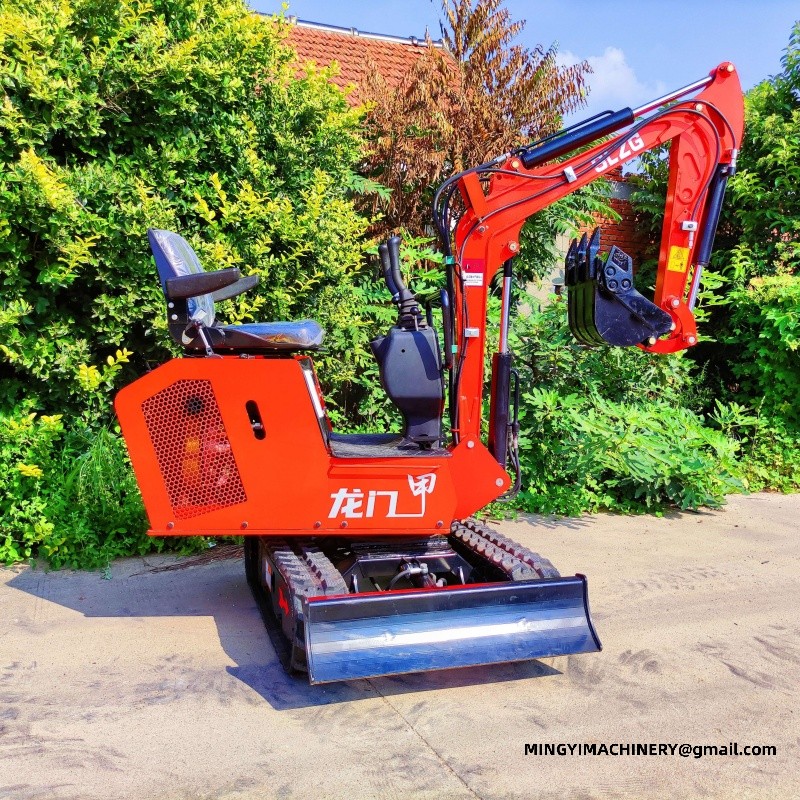
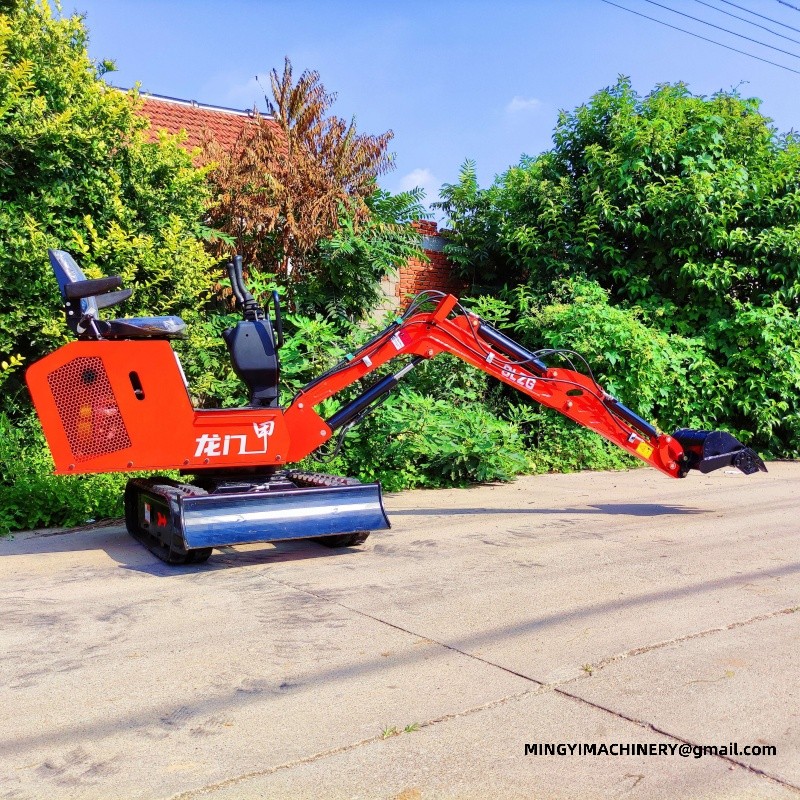
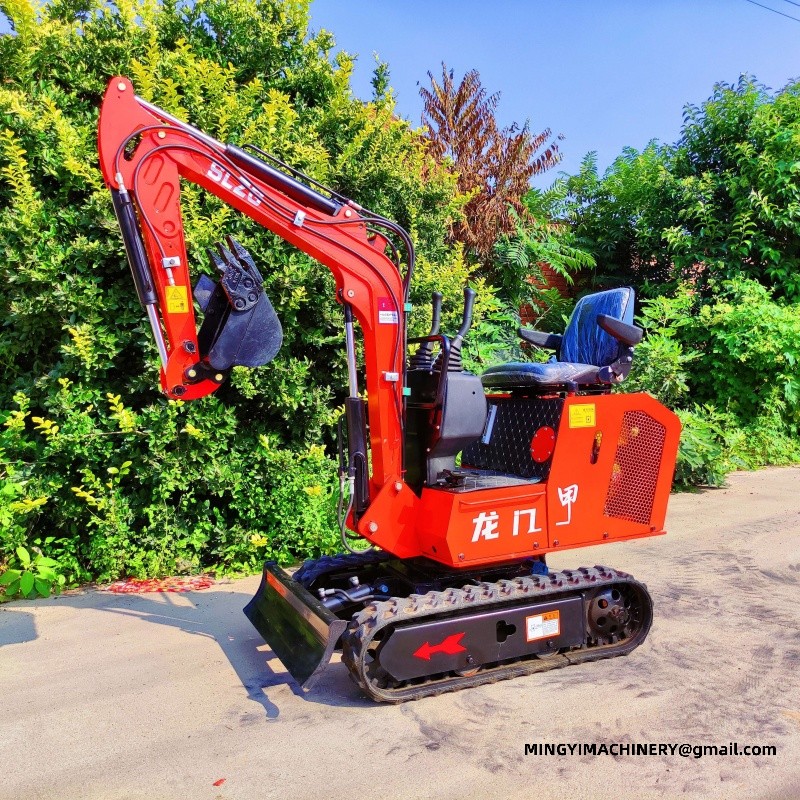
Reference specification — mini excavator range 09W 20-1W 30-2W 09L Operating weight 1100 kg (2425.08 lb) 1800 kg (3968.32 lb) 2700 kg (5952.48 lb) 1100 kg (2425.08 lb) Transport size (L×W×H) 1800 × 750 × 1970 mm 2550 × 1100 × 2200 mm 3000 × 1100 × 2700 mm 2300 × 720 × 1870 mm Max digging depth 1250 mm (49.21 in) 1800 mm (70.87 in) 2200 mm (86.61 in) 1400 mm (55.12 in) Max digging height 2800 mm (110.24 in) 2820 mm (111.02 in) 3000 mm (118.11 in) 2800 mm (110.24 in) Max dumping height 1700 mm (66.93 in) 2050 mm (80.71 in) 2000 mm (78.74 in) 1880 mm (74.02 in) Max digging radius 2570 mm (101.18 in) 3050 mm (120.08 in) 3800 mm (149.61 in) 2490 mm (98.03 in) Max digging distance 1869 mm (73.58 in) 2300 mm (90.55 in) 3050 mm (120.08 in) 2000 mm (78.74 in) Minimum turning radius 1000 mm (39.37 in) 1450 mm (57.09 in) 1750 mm (68.9 in) 1400 mm (55.12 in) Travel speed 3 km/h (1.86 mph) 5 km/h (3.11 mph) 7 km/h (4.35 mph) 3 km/h (1.86 mph) Gradeability 30° 30° 30° 30° Fuel consumption 1-1.3 L/h (0.264—0.343 gal) 2-3 L/h (0.528—0.793 gal) 2-3 L/h (0.528—0.793 gal) 1-1.3 L/h (0.264—0.343 gal) Fuel tank capacity 8 L (2.11 gal) 16 L (4.23 gal) 16 L (4.23 gal) 8 L (2.11 gal) Hydraulic oil tank 16 L (4.23 gal) 18 L (4.76 gal) 20 L (5.28 gal) 16 L (4.23 gal) Dozer blade lift height 180 mm (7.09 in) 180 mm (7.09 in) 230 mm (9.06 in) 180 mm (7.09 in) Dozer blade drop depth 210 mm (8.27 in) 210 mm (8.27 in) 280 mm (11.02 in) 210 mm (8.27 in)
Q. What does the equipment in service involve?
A. Track type sets ground pressure, grip and how the site looks when the machine leaves - the trade-off between rubber and steel is what the track decision comes down to. Rubber ages from sunlight as much as from work; steel wears from abrasion - the right call depends on what the machine stands on all day. Read the excavator together with the engine, track and attachment pages: jobs around track are decided by how those choices line up, not by any single number on the sheet.
Q. Which track should I run on my ground?
A. Rubber for lawns, paving and finished surfaces; steel for gravel, demolition rubble and slopes that eat rubber. Where the year takes the machine across both, the conversion and options pages describe moving between them, and MINGYI specifications both track types with the carrier.
Q. What support follows the sale?
A. Spare-part kits, wear items and service documentation ship with the programme, and the parts team works from the serial plate to match components exactly. Warranty and support terms for the track order are confirmed in writing before the machine leaves.
Storage and long idle periods for this class of machine
The battery and the fuel are the first things to suffer in storage. Preparing the unit in daily use properly at the start of the idle period avoids the flat battery and the contaminated tank that greet an unprepared machine.
Fuel, oil and fluid quality for a machine of this size
Most engine trouble starts with what went into the tank. Clean fuel, stored properly and filtered before it reaches the equipment on site, prevents more downtime than any other single habit an owner can adopt.
E-mail : sales@mingycn.com
LINE ( ID ): mingyicn
Related pages
rubber track digger for soft ground work · two tonne mini excavator for utilities · Wheel Loader for Construction Site: Board Heights and Turn Space · Mini Excavators









