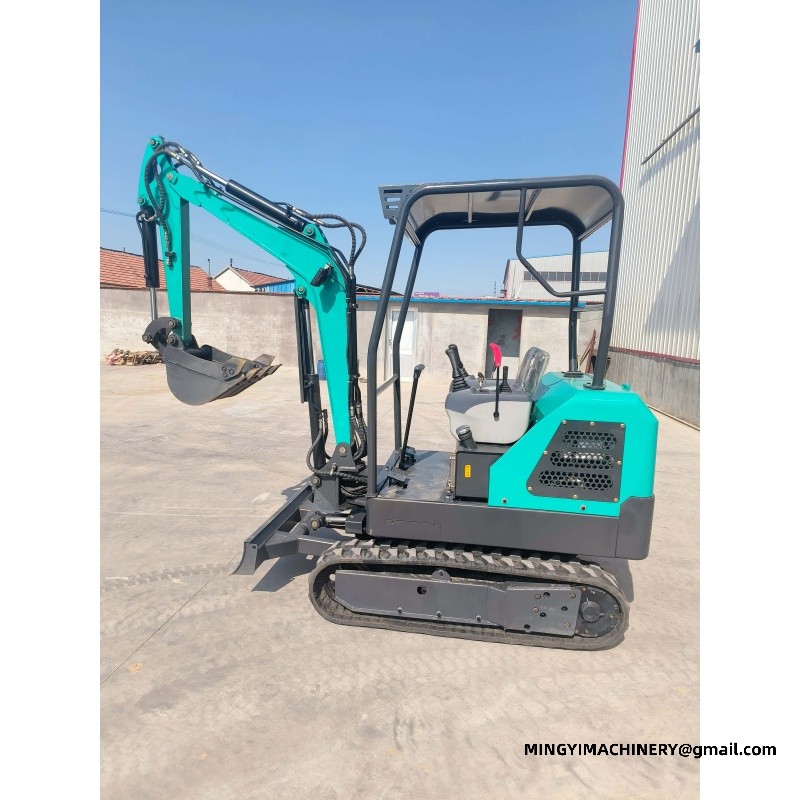
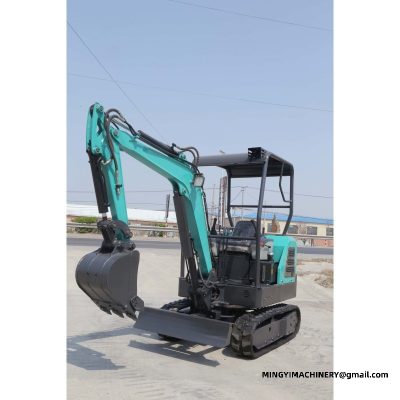
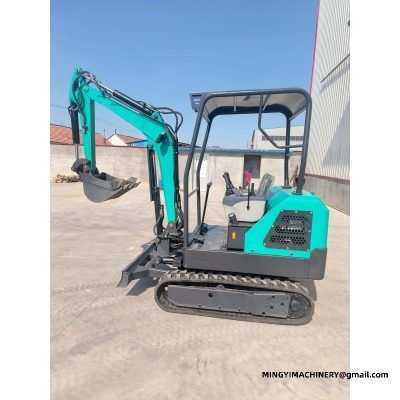
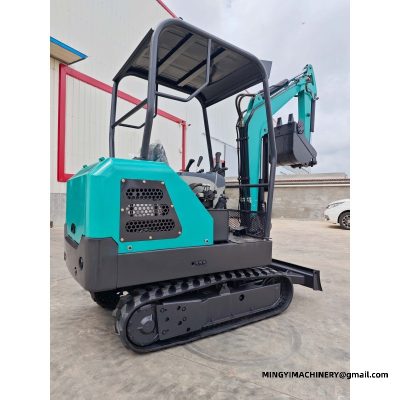
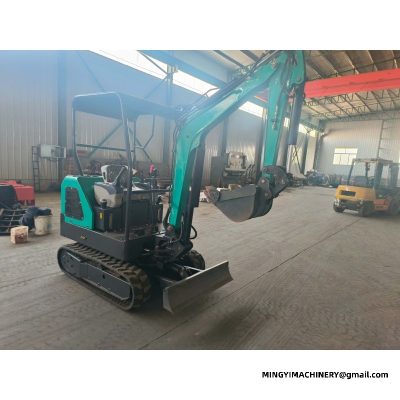
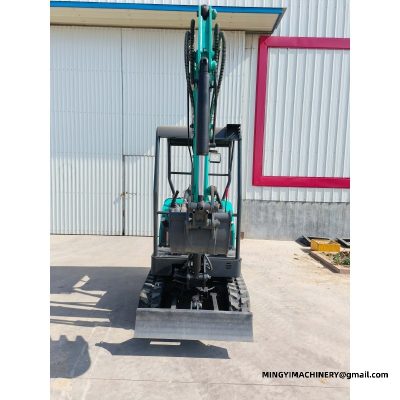
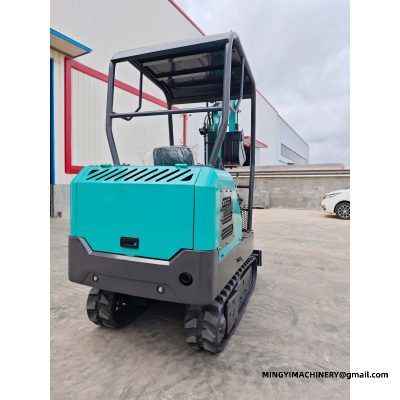
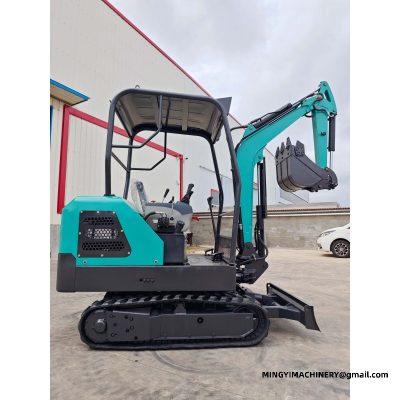
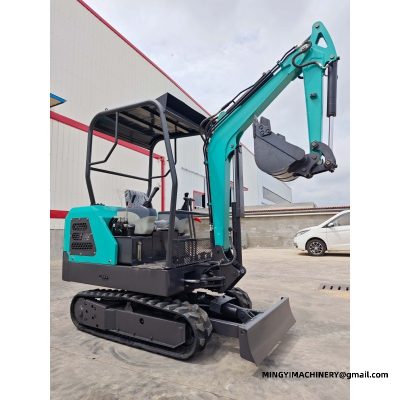
Between the smallest compact machines and full size plant there is a group of excavators that dig deeper, carry wider buckets and still fit through a site gate. Buyers who find the smallest models too slow but cannot justify a large machine usually settle here.
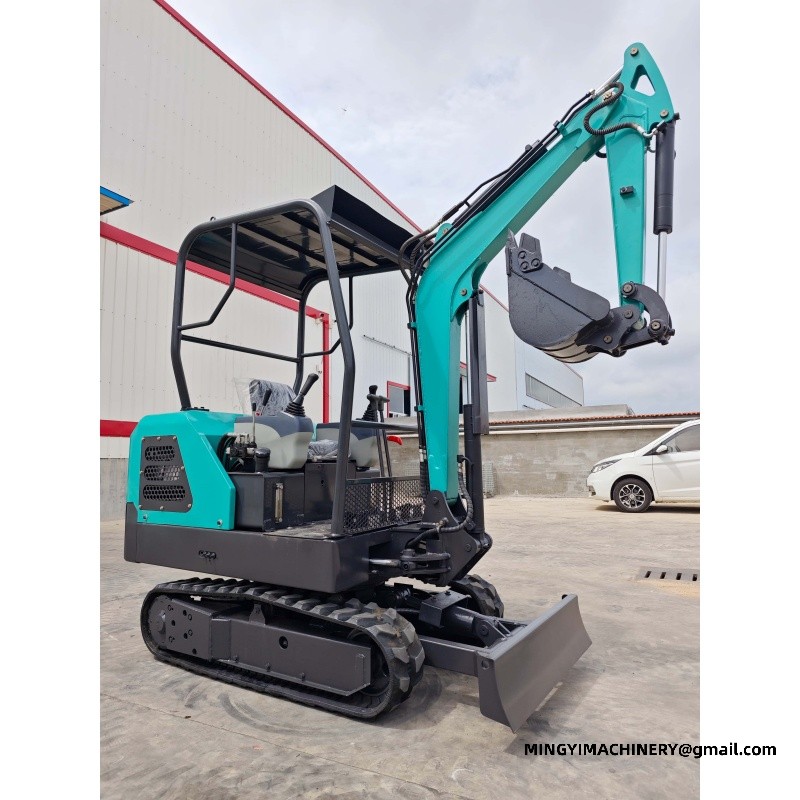
MINGYI builds crawler excavators across the compact band, including mid size models, to order. Dipper length, track type, bucket set and coupler are fixed at the ordering stage for the duty the machine will face.
Tasks that call for a mid size mini excavator
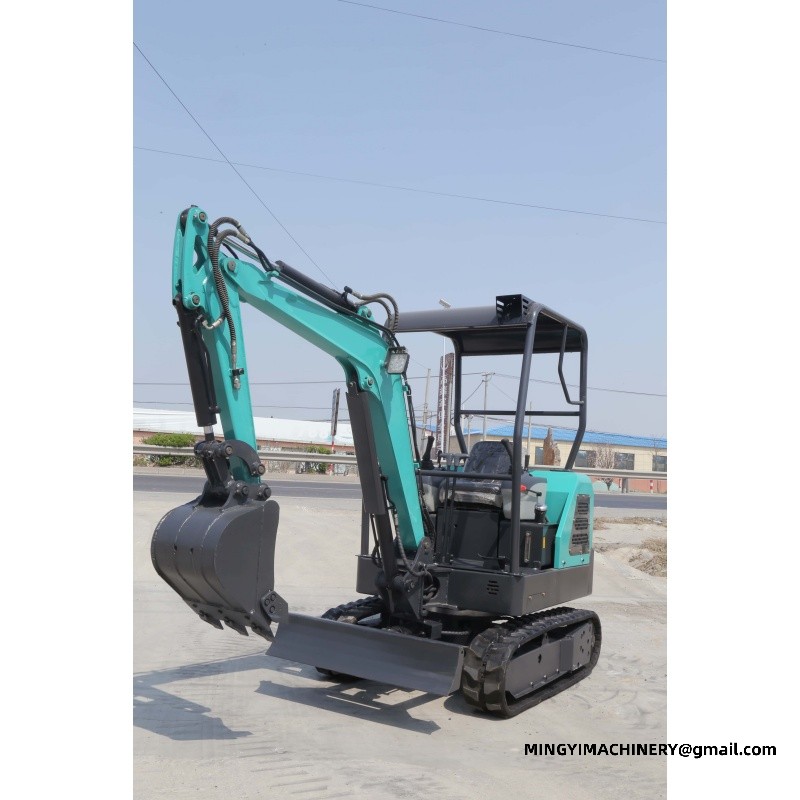
Mid size machines suit work with real depth: drainage at more than shallow cover, footings for extensions, and trench runs that would take too long with a smaller unit. They also load spoil at a rate that keeps a trailer moving.
They are still compact enough for domestic access. A machine in this class tracks through a gateway and works in a garden or courtyard, where a full size excavator could not be used at all.
Stability, tracks and bucket choice on a mid size machine
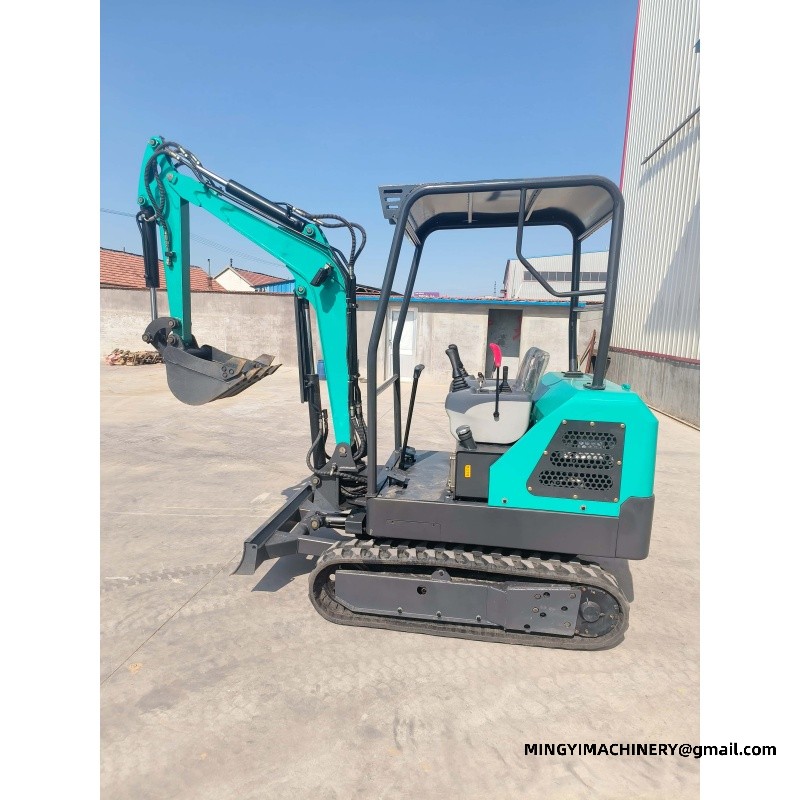
A wider, longer undercarriage gives the stability to carry a larger bucket at reach. That is what separates a mid size machine from the smallest models, where the same bucket would lift the tracks off the ground.
Track type follows the ground. Rubber tracks are used where finished surfaces must be protected, and steel tracks with rubber blocks where grip and durability matter more. Confirm both bucket widths and track choice when ordering.
A mid size mini excavator is chosen to raise output without losing access. MINGYI builds these compact crawler machines to order for the work they will do.
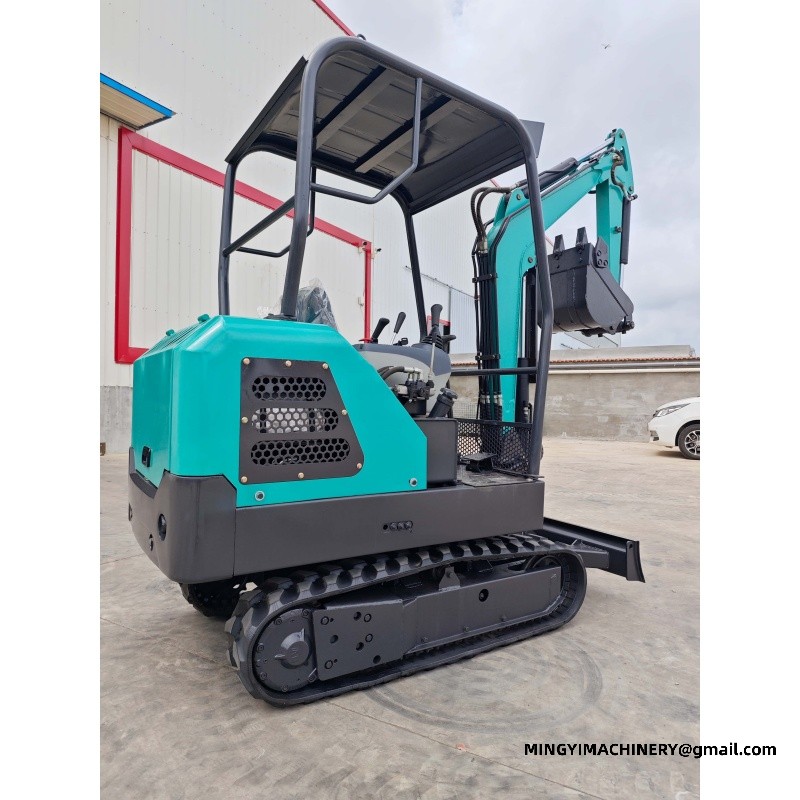
Running mid size mini crawler excavator in a rental fleet Rental fleets buy for utilisation, not for a single job. The excavator with a quick coupler and a common attachment standard is hired more often because it suits more of the calls that come in. Fleet buyers also weigh transport. This class of machine that a customer can tow on a normal licence and a standard trailer is a hire that does not need a delivery truck, which changes how often it goes out. Hiring versus owning a mid size mini crawler excavator The choice follows the hours. Work that fills a few weeks a year is usually better hired, while the unit in daily use that would be on site most weeks starts to justify ownership once the transport and booking time is counted. Ownership brings obligations that hiring does not. Storage, servicing, insurance and an operator are the items to set against the hire rate before deciding which way a machine of this size should be supplied. Canopy or enclosed cab on a mid size mini crawler excavator A canopy keeps the machine light and the operator aware of the surroundings, which suits short jobs in warm weather. A fully enclosed cab is specified where rain, dust or cold are part of the working year, and it can be added to the equipment on site as a retrofit rather than only at build time. Enclosure also changes noise and dust exposure. A sealed cab on the machine itself keeps dust out on dry sites and lets the machine work through weather that would otherwise stop a canopy machine for the day. Matching mid size mini crawler excavator to ground conditions Soft ground is a flotation problem, not a power problem. The model in question on wide rubber tracks crosses lawn, sand and cultivated soil that would stop a narrower machine or a wheeled unit of the same capacity. Mixed sites are common and argue for a compromise specification. Most buyers choose rubber for the machine in that duty and accept the wear, unless the majority of the work is on material that will damage it. Municipal and public works with mid size mini crawler excavator Municipal crews work on streets, footpaths and parks where the public is present. The unit on the job is specified because it occupies little space, works inside a small exclusion zone and can be moved on a standard trailer. Noise and surface protection matter on public work. A machine built for the work on rubber tracks across paving, with a sealed cab for the operator, suits the conditions better than a larger tracked machine. Boom configuration for mid size mini crawler excavator A swing boom lets the machine dig parallel to its tracks without repositioning, which is what makes trenching beside a wall or a fence practical. On the equipment in service this is often the option that decides whether a job is possible at all. Detachable boom sections are used where transport length matters. The excavator that has to travel on a standard trailer can be built so the arm comes off for the road and goes back on at the site. Export packing and shipping of this class of machine Machines leave the factory prepared for container or flat rack shipment. The unit in daily use is normally shipped with the attachment set and the spare parts list agreed in advance so the container is planned once. Buyers who import regularly plan the spare parts with the machine. A machine of this size ordered with a wearing-parts kit arrives ready to work rather than ready to wait for the first service interval. Interior and light demolition with the equipment on site Breaking out a floor slab, a wall footing or a concrete step is routine work for the machine itself with a breaker. The machine is small enough to work inside and heavy enough to run the tool at a practical rate. Dust, debris clearance and floor loading all argue for a compact machine indoors. The model in question spreads its weight over a wider track footprint than a wheeled machine of similar capacity. Quick coupler practice on the machine in that duty A quick coupler is the single option that changes how a machine is used day to day. Fitted to the unit on the job, it turns an attachment change from a two-person workshop job into a task the operator does alone in minutes. For a fleet that shares attachments between machines, a common coupler standard matters more than the coupler brand. A machine built for the work that picks up the same tools as the larger machines keeps the rack usable across the yard. Trailering and moving the equipment in service Transport weight and width decide whether a machine needs a specialist haulier. The excavator sized to travel on a standard plant trailer behind a suitable vehicle moves with the crew rather than on a scheduled low loader. Detachable components reduce transport length. This class of machine built with a removable arm section or a folding step fits a shorter trailer and may avoid an oversize movement permit. Daily checks and maintenance on the unit in daily use Daily maintenance on a machine of this size is a short list: engine oil level, coolant, track tension, hydraulic oil level and a look at the hoses. Ten minutes at the start of the shift prevents most of the failures that stop a machine. Greasing is the second item. The slew ring, the boom and arm pins and the bucket linkage on the equipment on site take grease daily in dusty work, and the intervals shorten further when the machine is used in water or mud. Specification data for the machine itself The figures below are the factory figures for the models most often matched to the model in question. They are the numbers to check against the site: the depth the work needs, the reach from one position, and the width of the narrowest point on the route in. Every value shown is as built for the machine in that duty; options such as cab, side swing or a telescopic undercarriage change the transport dimensions and are confirmed at order stage. Work near housing or occupied premises brings constraints that open sites do not. Start times, exhaust condition and how often the unit on the job needs to reverse are the practical limits that neighbours notice. Enclosure and machine condition both reduce noise. A machine built for the work with intact panels, sound mounts and a maintained exhaust is measurably quieter than the same machine with loose guards, and the difference matters on restricted sites.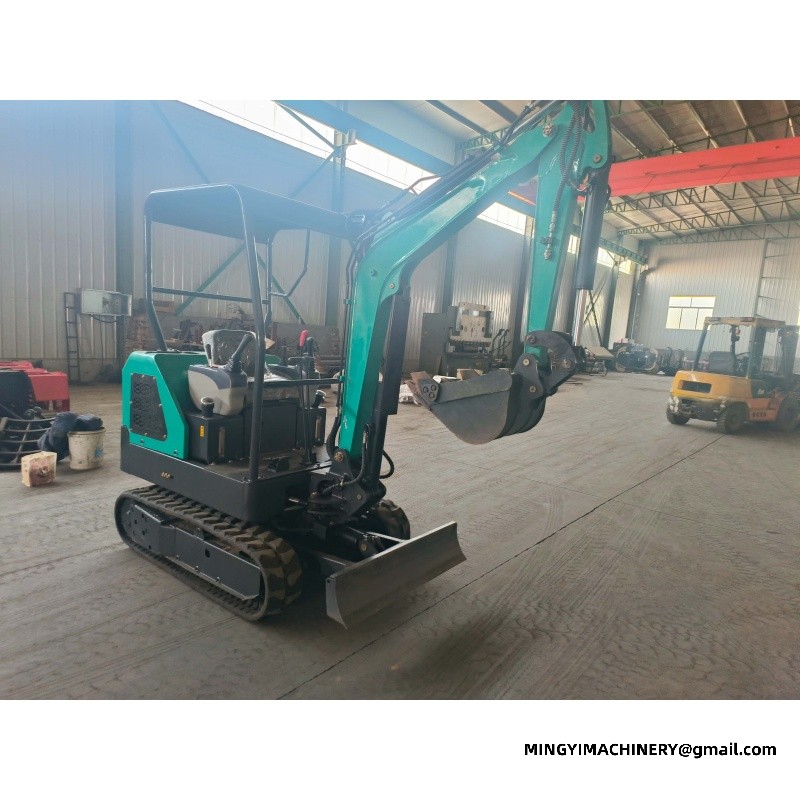
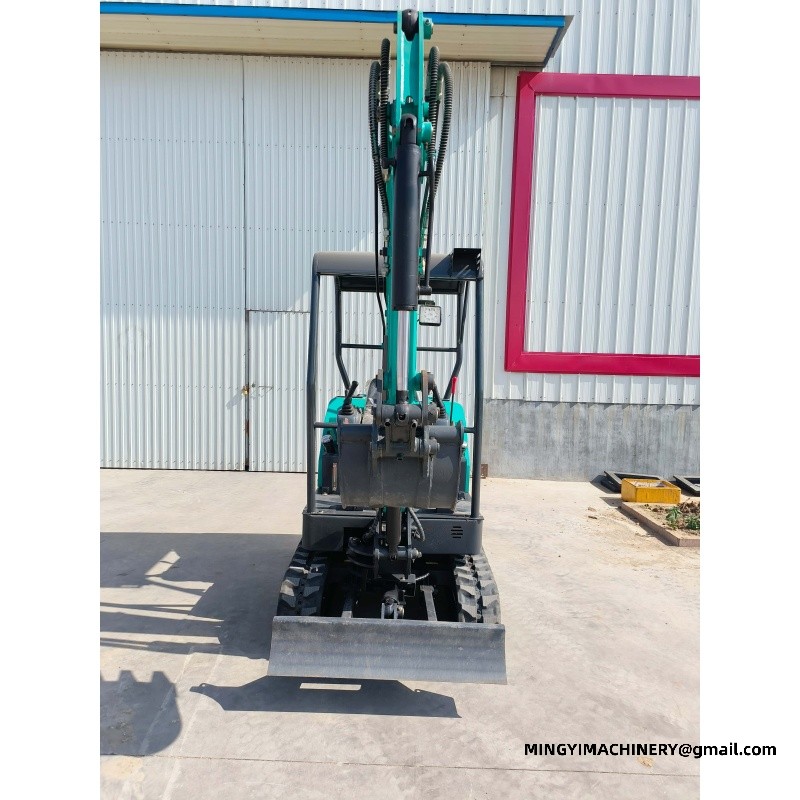
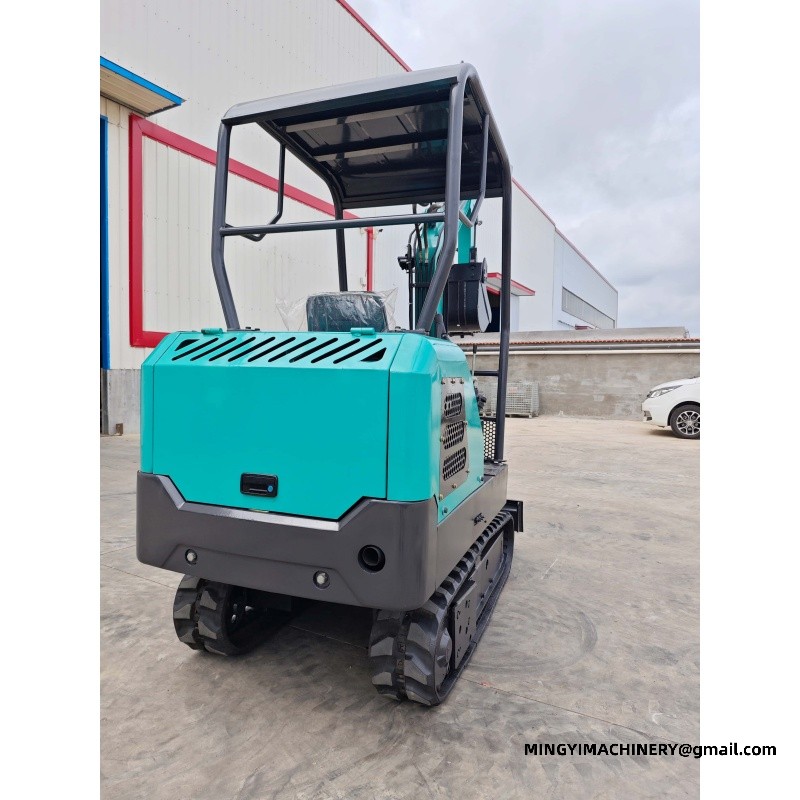
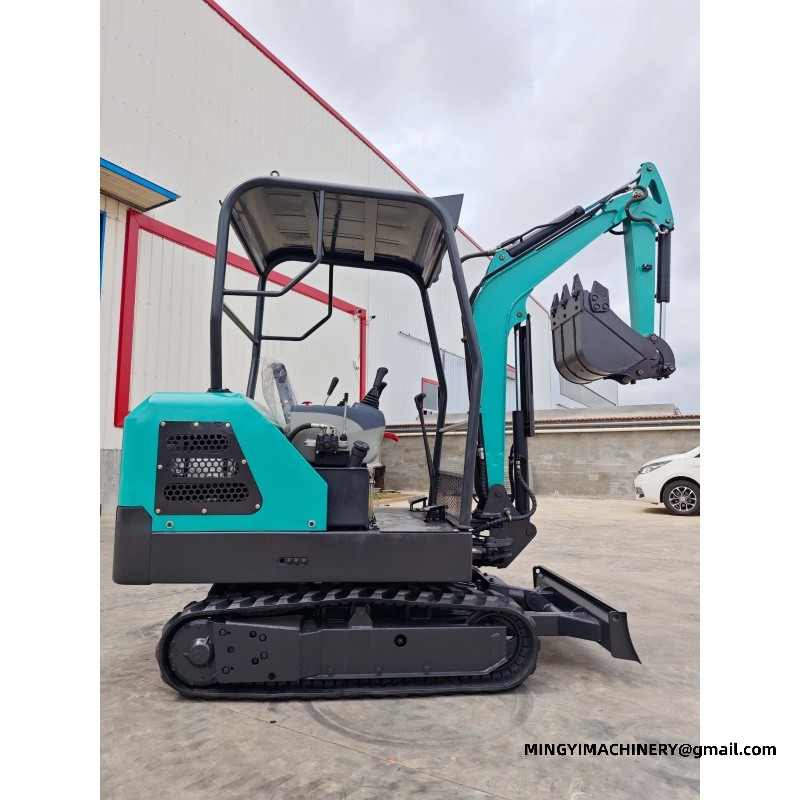
Reference specification — mini excavator range 13W 30-1W 09L 30-2L Operating weight 1300 kg (2866.01 lb) 2900 kg (6393.41 lb) 1100 kg (2425.08 lb) 2400 kg (5291 lb) Transport size (L×W×H) 2200 × 930 × 2250 mm 3000 × 1250 × 2780 mm 2300 × 720 × 1870 mm 2800 × 1500 × 2500 mm Max digging depth 1630 mm (64.17 in) 2200 mm (86.61 in) 1400 mm (55.12 in) 2200 mm (86.61 in) Max digging height 2750 mm (108.27 in) 3400 mm (133.86 in) 2800 mm (110.24 in) 2900 mm (114.17 in) Max dumping height 1960 mm (77.17 in) 2400 mm (94.49 in) 1880 mm (74.02 in) 2100 mm (82.68 in) Max digging radius 2900 mm (114.17 in) 4000 mm (157.48 in) 2490 mm (98.03 in) 3330 mm (131.1 in) Max digging distance 2100 mm (82.68 in) 2800 mm (110.24 in) 2000 mm (78.74 in) 2700 mm (106.3 in) Minimum turning radius 1300 mm (51.18 in) 2000 mm (78.74 in) 1400 mm (55.12 in) 1555 mm (61.22 in) Travel speed 3 km/h (1.86 mph) 5 km/h (3.11 mph) 3 km/h (1.86 mph) 7 km/h (4.35 mph) Gradeability 30° 30° 30° 30° Fuel consumption 1-1.3 L/h (0.264—0.343 gal) 2-3 L/h (0.528—0.793 gal) 1-1.3 L/h (0.264—0.343 gal) 2-3 L/h (0.528—0.793 gal) Fuel tank capacity 10 L (2.64 gal) 16 L (4.23 gal) 8 L (2.11 gal) 16 L (4.23 gal) Hydraulic oil tank 16 L (4.23 gal) 20 L (5.28 gal) 16 L (4.23 gal) 18 L (4.76 gal) Dozer blade lift height 180 mm (7.09 in) 420 mm (16.54 in) 180 mm (7.09 in) 230 mm (9.06 in) Dozer blade drop depth 210 mm (8.27 in) 210 mm (8.27 in) 210 mm (8.27 in) 280 mm (11.02 in)
Q. What is the equipment in service?
A. Inside the 0.8 to 6 tonne class MINGYI builds as the 08, 12 and 18 models lives most of the site, farm and rental work in the world. Tracks, cabs and attachments are common across the range, so the size decision is mostly about where the machine must fit and what it must lift. For mid size applications the practical route is to send the job list to the factory and let the build sheet answer it - which is exactly what this page invites.
Q. What changes between the size classes?
A. Reach, lift and stability grow with the class; doorways and trailer weight limits close. The smallest classes trade reach for access, the largest trade access for full-size work rates, and tracks, cabs and attachments stay common across the range.
Q. Can I see the machine before it ships?
A. Inspection is arranged at the factory, in person or by a scheduled video walk-around - the same session covers paint, decals and attachment fitment for the mid size specification, so the machine inspected is the machine that ships.
Later additions and retrofits on the excavator
Most additions are easier to plan than to add. Hydraulic services, mounting brackets and electrical capacity on this class of machine are build items, and deciding them at the specification stage is far easier than doing it later.
Commissioning the unit in daily use on site
The first hour on site should be slow. Before a machine of this size is put to work the fluid levels are rechecked after transport, the fasteners are gone over and the machine is run light so that anything loosened in transit shows up early.
Cold weather and winter care for the equipment on site
Winter is hard on rubber and on seals as much as on the engine. Parking the machine itself under cover, keeping the tracks or tyres off standing water and checking the hoses for cracking are all part of the season.
E-mail : sales@mingycn.com
LINE ( ID ): mingyicn
Related pages
mini excavator for pile and auger work · mini excavator for garden path work · Wheel Loader Series: Reliable Builds from Entry to Medium Frame · Mini Excavators









