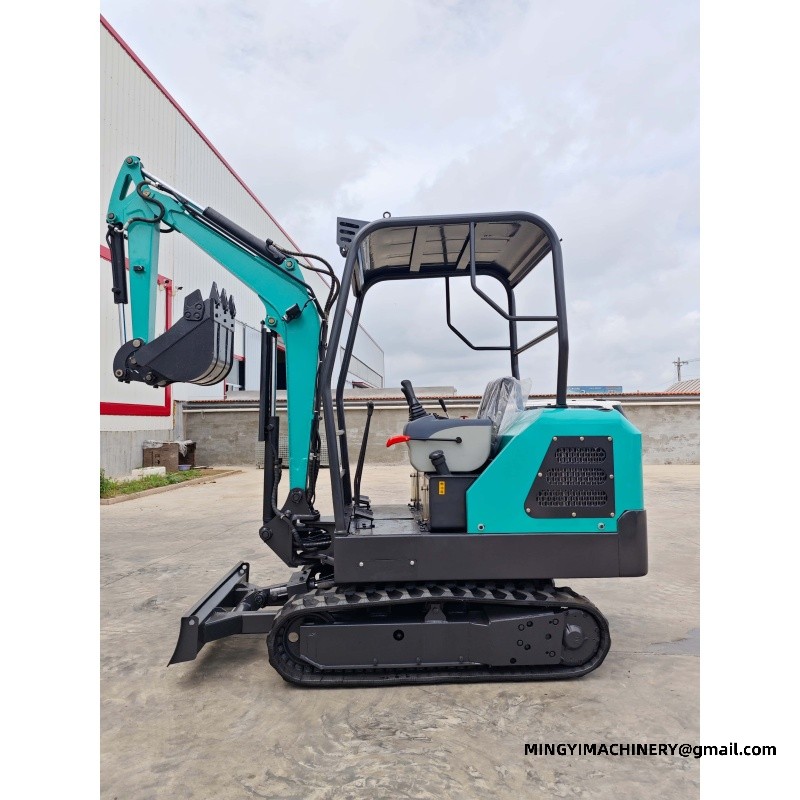
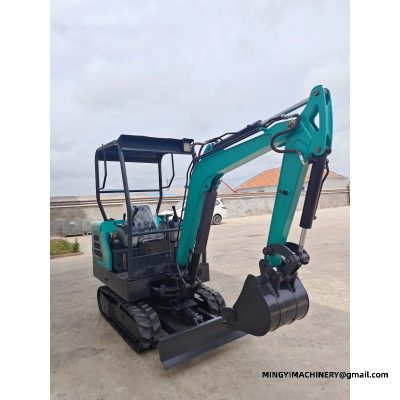
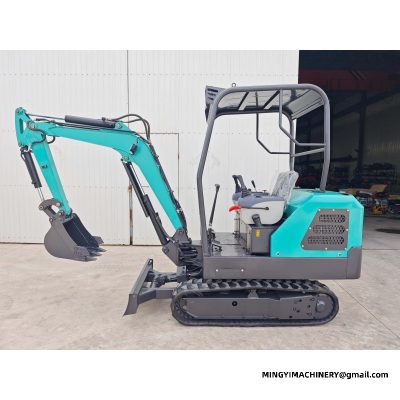
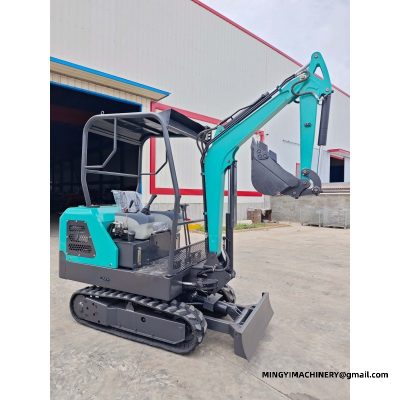
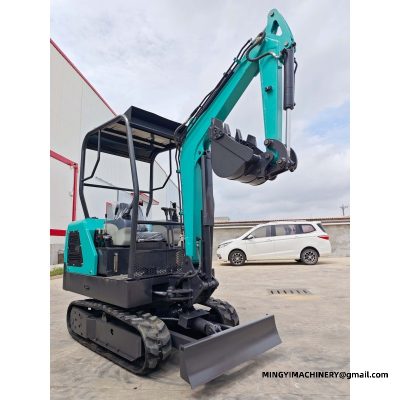
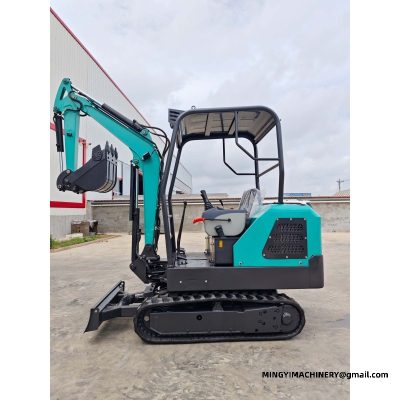
Garden paths and patios have to be cut to a straight edge and a shallow, even depth. Most of the digging happens between planting, fences and buildings, where there is little room to place a machine. A compact excavator can be set along the line and dig the base without crossing the beds.
MINGYI builds small crawler machines for exactly these narrow strips. The undercarriage, bucket and any tilting attachment are settled when the order is placed, so the path, edging and kerb work can be finished with one setup.
Excavating garden paths and patio bases
A path base is usually a shallow cut, and the value lies in keeping it uniform. Working backwards along the line, the operator takes the surface off in one pass and checks depth at intervals rather than digging deep sections and filling them again.
Patio areas need the same treatment over a wider footprint. Dividing the area into strips and grading each one keeps the base flat and gives a clear reference for the fall towards the drainage point.
Edging, kerbs and working in narrow access
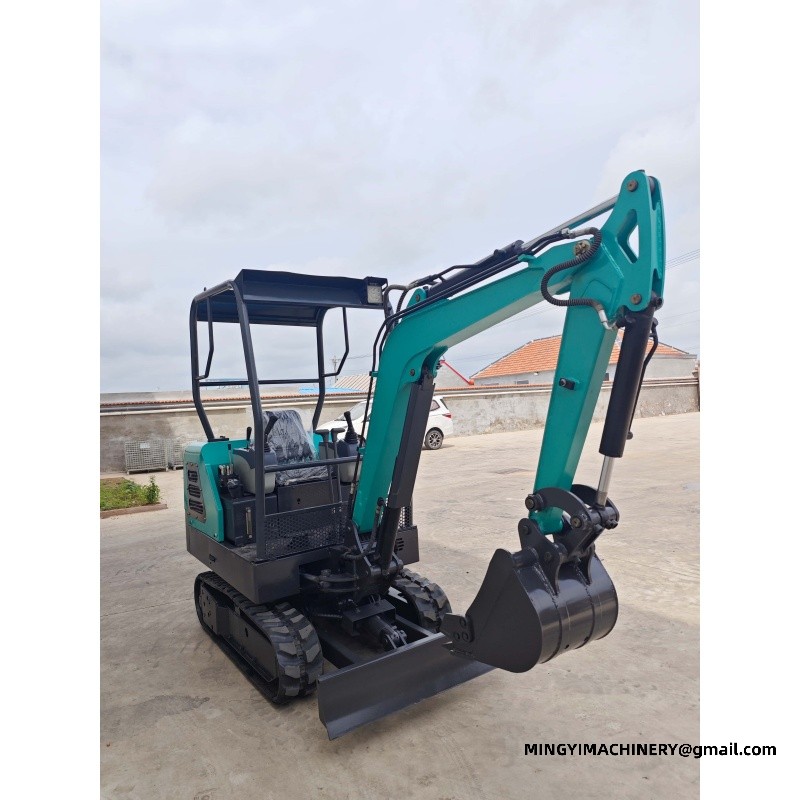
Edging trenches are narrow and follow curves as well as straight runs. A slim digging bucket cuts a clean line for kerbs and edging boards, and a swing boom lets the operator follow a bend without repositioning the machine.
Where a path runs beside a wall or fence, the tail of the machine can foul the boundary on every swing. A short tail or offset boom layout avoids that, and rubber tracks protect the surrounding lawn between cuts.
Path and patio work is a narrow, fussy task that rewards a small machine and a clean bucket. MINGYI supplies compact excavators built to order for garden construction.
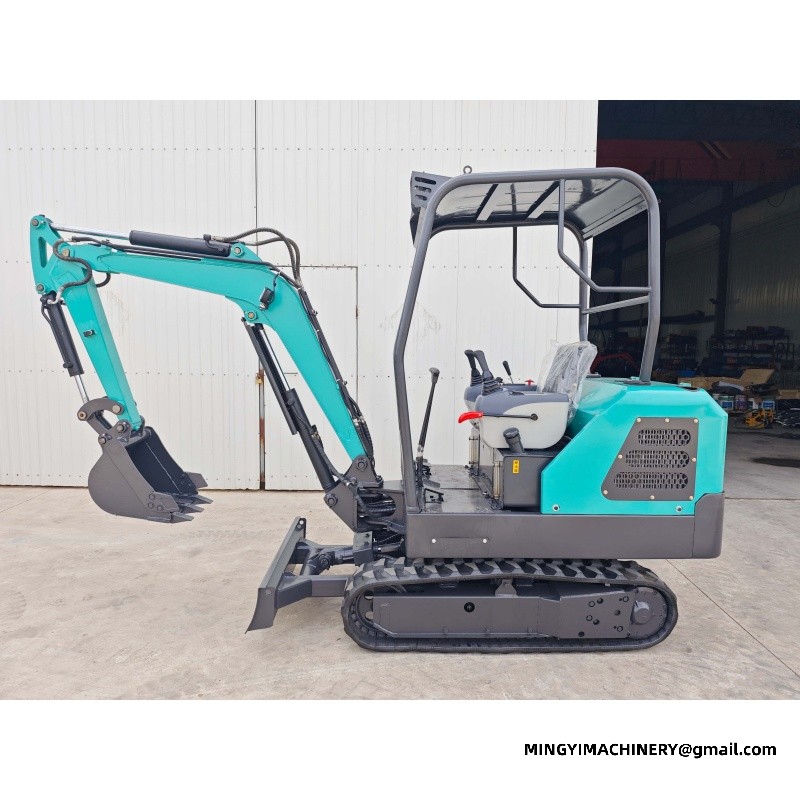
Noise, dust and working near occupied buildings Enclosure and machine condition both reduce noise. The excavator with intact panels, sound mounts and a maintained exhaust is measurably quieter than the same machine with loose guards, and the difference matters on restricted sites. Dust control is often part of the same conversation. Water, timing and work sequence reduce what leaves the site, and agreeing them in advance keeps this class of machine working rather than stopped after a complaint. Lifting and material handling with a mini excavator for garden path work Lifting with a machine built to dig needs a plan. The load, the radius and the ground under the machine of this size all matter, and the safe figure is the one on the chart rather than the one that looks possible. Ground condition under the machine is part of every lift. Soft or uneven support is the common factor in handling incidents, and checking it takes less time than recovering the unit in daily use that has settled. Track choice for mini excavator for garden path work Rubber tracks suit paved and landscaped ground because they spread the machine weight and leave the surface intact. Steel tracks with rubber blocks are specified where the ground is rougher or the working day is longer, and the choice can be made per machine rather than accepted as a factory default. Track type changes what the machine can cross and what it leaves behind. Buyers specify rubber for lawns, driveways and municipal work, and steel with rubber blocks for sites where sharp material would cut a rubber belt in a week. Landscaping and ground care with mini excavator for garden path work Landscape contractors use the equipment on site for planting holes, pond excavation, grading and retaining work. The machine is light enough to cross finished lawn and narrow enough to work between established trees. On soft landscape work the surface is the constraint. The machine itself on rubber tracks crosses turf without stripping it, which is why the same jobs are not given to a wheeled machine. Working a mini excavator for garden path work through the seasons Seasonal planning smooths the workload. Machines that are busy for a few months and idle for the rest benefit from a service slot in the quiet period, and the model in question prepared in the off-season starts the busy months reliably. Heat and dust are as limiting as rain. Air intake condition and cooling cleanliness decide how the machine in that duty behaves in a dry season, and both are checked in a minute rather than repaired later. Export packing and shipping of mini excavator for garden path work Machines leave the factory prepared for container or flat rack shipment. The unit on the job is normally shipped with the attachment set and the spare parts list agreed in advance so the container is planned once. Export documentation, decals and paint are settled before packing. Asking for them with the a machine built for the work order avoids a second handling session and keeps the machine on the booked vessel. Working near live services with the equipment in service Digging near water, gas and cable is a precision job. The excavator is used here because the operator can work in short controlled cuts and because the machine can be positioned without driving over the run being exposed. The risk on utility work is not machine power but machine placement. This class of machine that fits the working width leaves the surrounding ground undisturbed, which keeps the trench stable and the reinstatement small. Engine options behind the unit in daily use Power unit selection is settled against the service network the buyer already uses. MINGYI offers Kubota D722, Kubota D902, YANMAR, Changchai, Laidong, Runtong, YARMAX, Youpu 2V80 and Youpu 195, so a fleet running one brand of engine can keep the same filters, the same parts supplier and the same mechanic. Two buyers can order the same a machine of this size and receive different engines. The decision is rarely about peak power; it is about which parts counter is closest to the site and which engine the local mechanic already knows. Parts, service and support for the equipment on site Engine parts availability usually drives the engine choice. The machine itself built with an engine the local network already carries is serviced from stock rather than from an international order. Remote support is handled by video. The model in question fault can often be diagnosed on a walk-around call with the panel open, which is faster than waiting for a visit and avoids shipping a part that is not needed. Municipal and public works with the machine in that duty Drainage repair, tree planting, footway reconstruction and cemetery work are all within the range of the unit on the job. The jobs are small individually and continuous across the year. Noise and surface protection matter on public work. A machine built for the work on rubber tracks across paving, with a sealed cab for the operator, suits the conditions better than a larger tracked machine. Hydraulic circuits on the equipment in service Flow and pressure are matched to the tool, not to the machine size. Asking for the attachment list first means the excavator leaves the factory with circuits that suit the heaviest tool the buyer intends to run. Hydraulic specification is easier to settle at build time than to correct later. This class of machine delivered without auxiliary lines can still dig, but every additional tool becomes a retrofit project. Attachments that turn the unit in daily use into several machines Attachment lists are best written before delivery. Specifying a machine of this size with the tools the job list needs avoids the work and delay of adding hydraulics later, and a quick coupler makes the swap a few minutes instead of a workshop job. Most of the daily variety on the equipment on site comes from the attachment rack rather than from the machine itself. Bucket, breaker, auger, ripper, rake and grab cover the large majority of the work a contractor will see. Specification data for the machine itself Where the model in question is being specified for a job list, the table below gives the factory figures that matter most: what the machine weighs, how deep and how far it works, and what it measures on a trailer. Every value shown is as built for the machine in that duty; options such as cab, side swing or a telescopic undercarriage change the transport dimensions and are confirmed at order stage. Purchase decision is the visible part of the effort. Fuel, filters, tracks or tyres, the operator and the transport between sites are the items that decide what the unit on the job actually demands over a few seasons, and they are worth listing before the order. Downtime is the hidden line item. A machine built for the work waiting on a part earns nothing while it stands, so parts availability and service access belong in the plan as much as fuel does.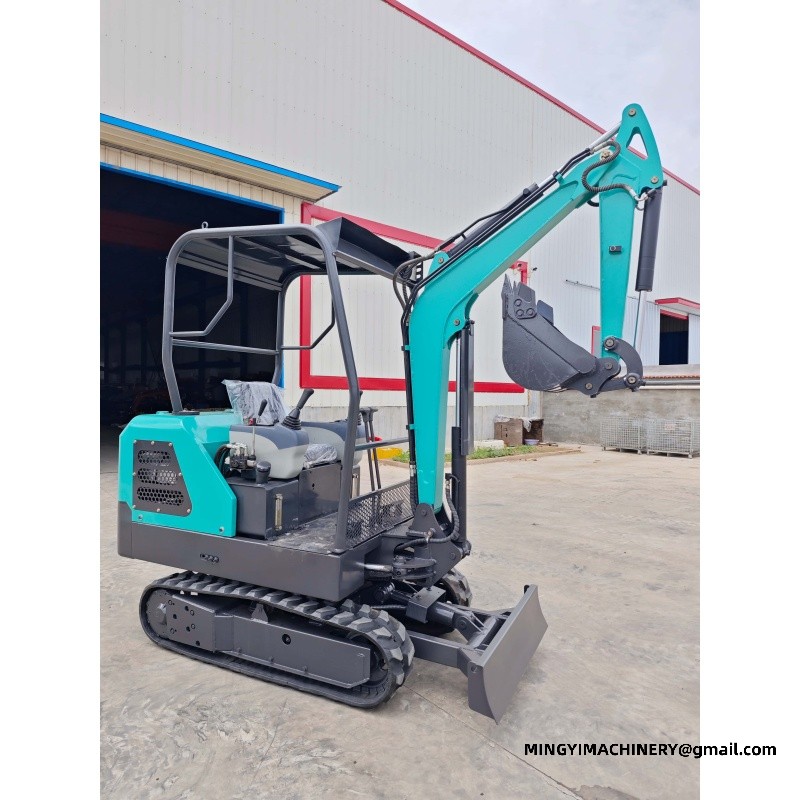
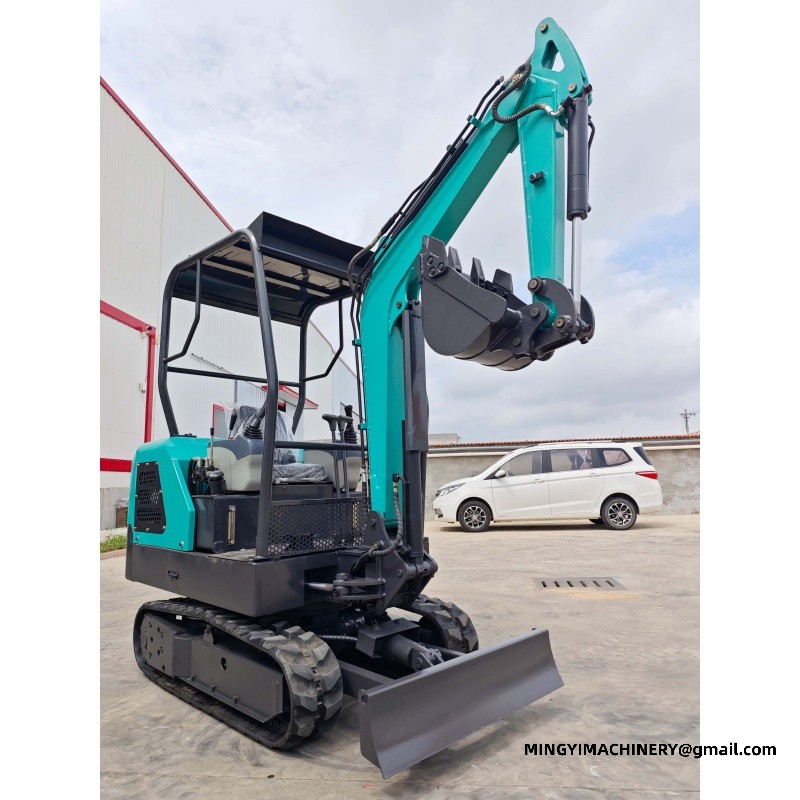
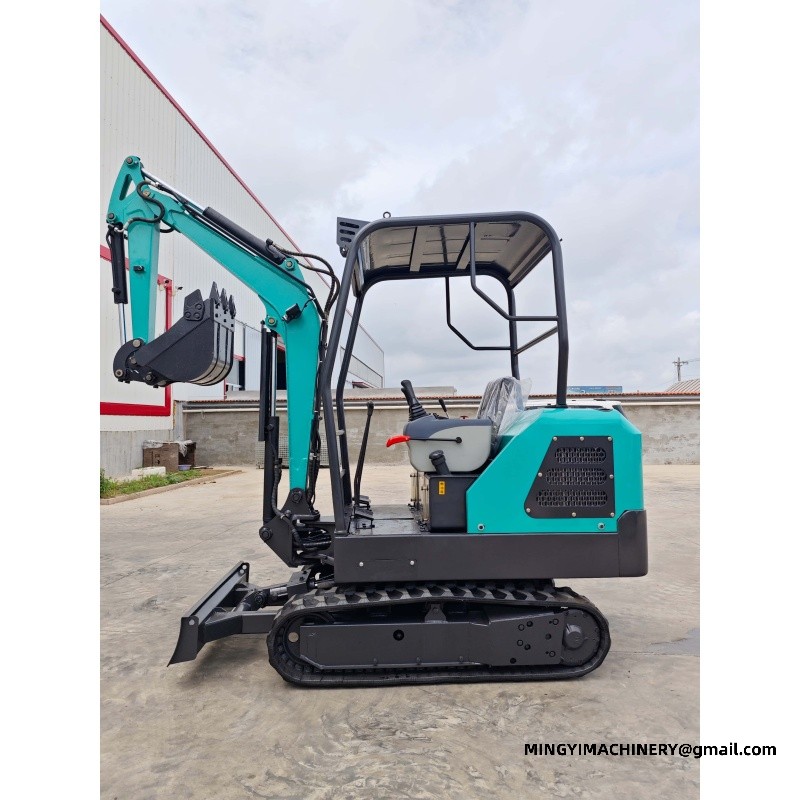
Reference specification — mini excavator range 12W 30-1W 30-2W 12L Operating weight 1200 kg (2645.55 lb) 2900 kg (6393.41 lb) 2700 kg (5952.48 lb) 1200 kg (2645.55 lb) Transport size (L×W×H) 2200 × 930 × 2250 mm 3000 × 1250 × 2780 mm 3000 × 1100 × 2700 mm 2200 × 930 × 2250 mm Max digging depth 1630 mm (64.17 in) 2200 mm (86.61 in) 2200 mm (86.61 in) 1700 mm (66.93 in) Max digging height 2750 mm (108.27 in) 3400 mm (133.86 in) 3000 mm (118.11 in) 2600 mm (102.36 in) Max dumping height 1960 mm (77.17 in) 2400 mm (94.49 in) 2000 mm (78.74 in) 1800 mm (70.87 in) Max digging radius 2900 mm (114.17 in) 4000 mm (157.48 in) 3800 mm (149.61 in) 2900 mm (114.17 in) Max digging distance 2100 mm (82.68 in) 2800 mm (110.24 in) 3050 mm (120.08 in) 2300 mm (90.55 in) Minimum turning radius 1300 mm (51.18 in) 2000 mm (78.74 in) 1750 mm (68.9 in) 1450 mm (57.09 in) Travel speed 3 km/h (1.86 mph) 5 km/h (3.11 mph) 7 km/h (4.35 mph) 3 km/h (1.86 mph) Gradeability 30° 30° 30° 30° Fuel consumption 1-1.3 L/h (0.264—0.343 gal) 2-3 L/h (0.528—0.793 gal) 2-3 L/h (0.528—0.793 gal) 1-1.3 L/h (0.264—0.343 gal) Fuel tank capacity 10 L (2.64 gal) 16 L (4.23 gal) 16 L (4.23 gal) 10 L (2.64 gal) Hydraulic oil tank 16 L (4.23 gal) 20 L (5.28 gal) 20 L (5.28 gal) 16 L (4.23 gal) Dozer blade lift height 180 mm (7.09 in) 420 mm (16.54 in) 230 mm (9.06 in) 180 mm (7.09 in) Dozer blade drop depth 210 mm (8.27 in) 210 mm (8.27 in) 280 mm (11.02 in) 210 mm (8.27 in)
Q. What is the equipment in service?
A. Landscaping is finishing work: prepare beds, level ground, move trees - then leave a surface the client is happy to look at. A fine-control valve lets the operator grade to the line the plan asks for, on the first pass. For garden path work applications the practical route is to send the job list to the factory and let the build sheet answer it - which is exactly what this page invites.
Q. How do you avoid damaging finished ground?
A. Rubber tracks, boards or mats under the machine, and a dig plan that treads where the hard surface will be. A fine-control valve grades to the line on the first pass, which is where the care shows.
Q. What about colours and branding?
A. OEM colours and decals are part of the build: private-label machines carry the buyer brand on the standard MINGYI platform, and the garden path work order confirms colours, marks and documents before production starts.
Reading the early symptoms on the excavator
The symptom is usually not at the fault. A hydraulic function that has become sluggish on this class of machine may point to a filter, a relief setting or a pump, and starting with the simple checks avoids the wrong guess.
Storage and long idle periods for the unit in daily use
The battery and the fuel are the first things to suffer in storage. Preparing a machine of this size properly at the start of the idle period avoids the flat battery and the contaminated tank that greet an unprepared machine.
E-mail : sales@mingycn.com
LINE ( ID ): mingyicn
Related pages
mini excavator for greenhouse deep tillage · mini excavator for lawn and turf care · Wheel Loader Snow Blower: Hydraulic Circuits and Winter Duty · Mini Excavators









