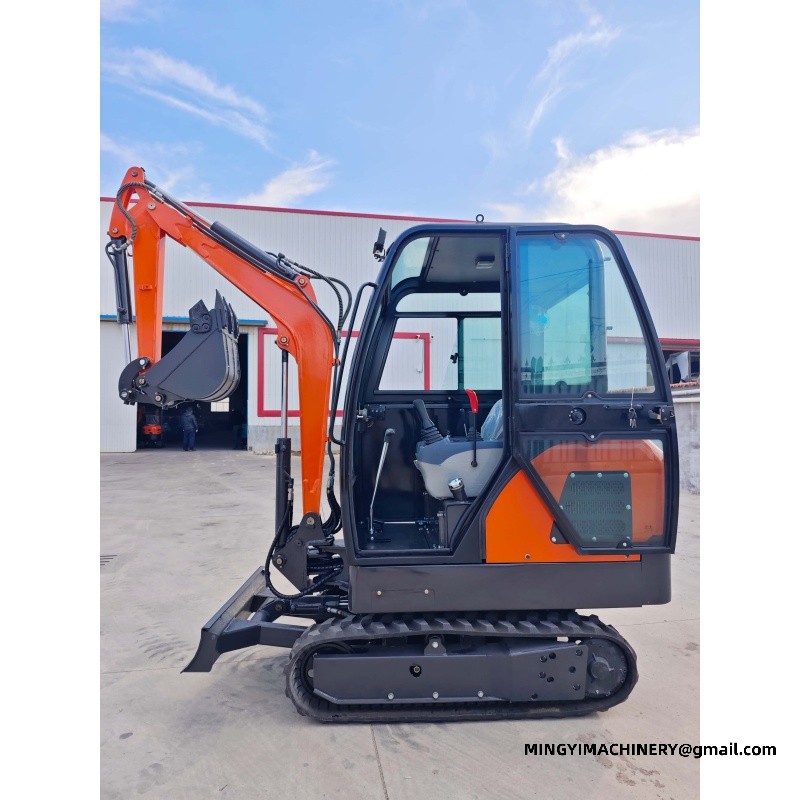
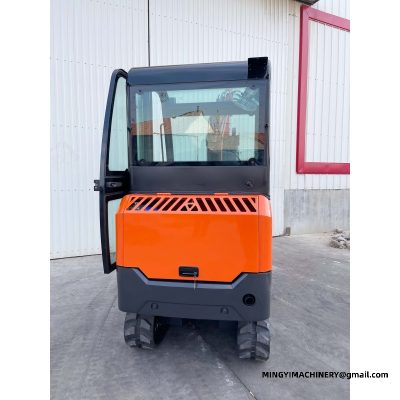
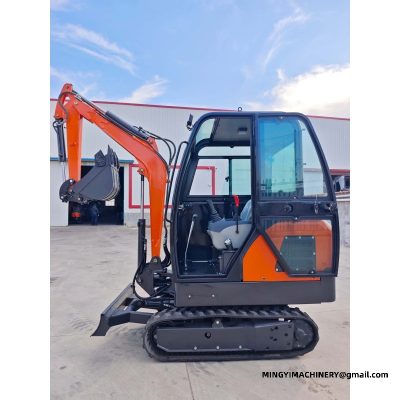
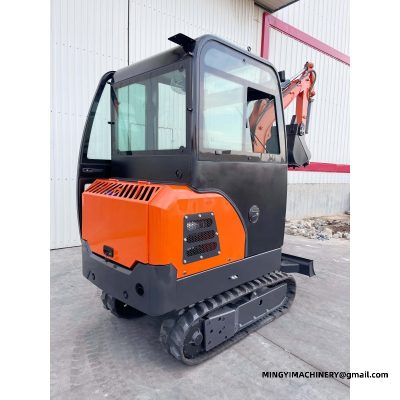
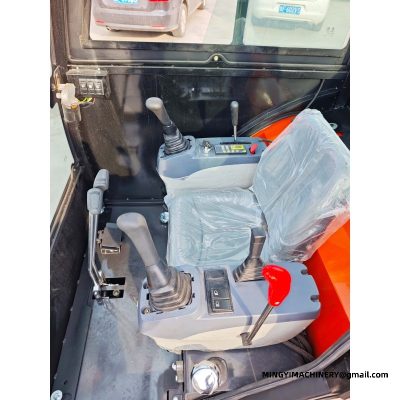
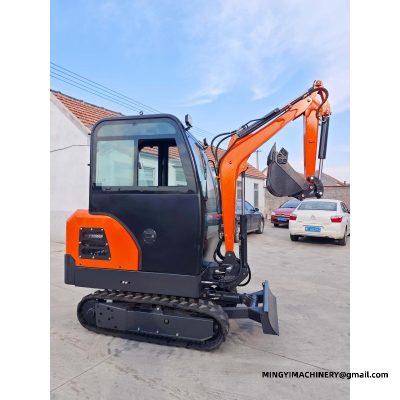
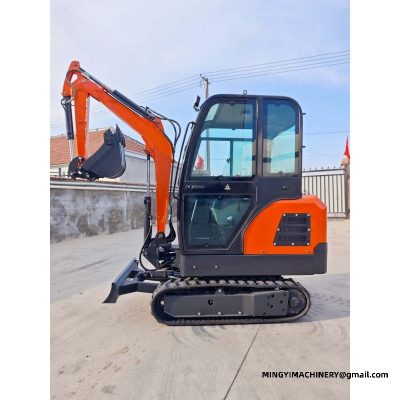
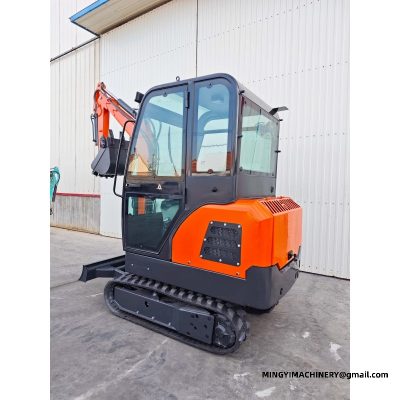
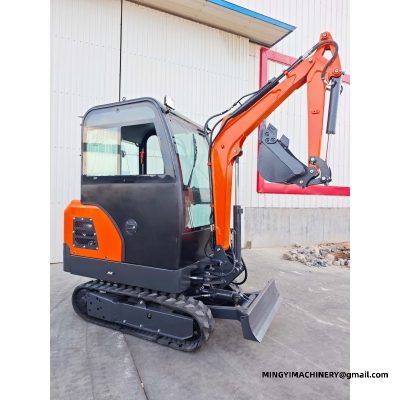
Lawns degrade in predictable ways: hollows form, edges creep, drainage fails in wet patches and the surface loses its level after building work. A mini excavator set up for turf care repairs these in a single visit without the lawn taking further damage.
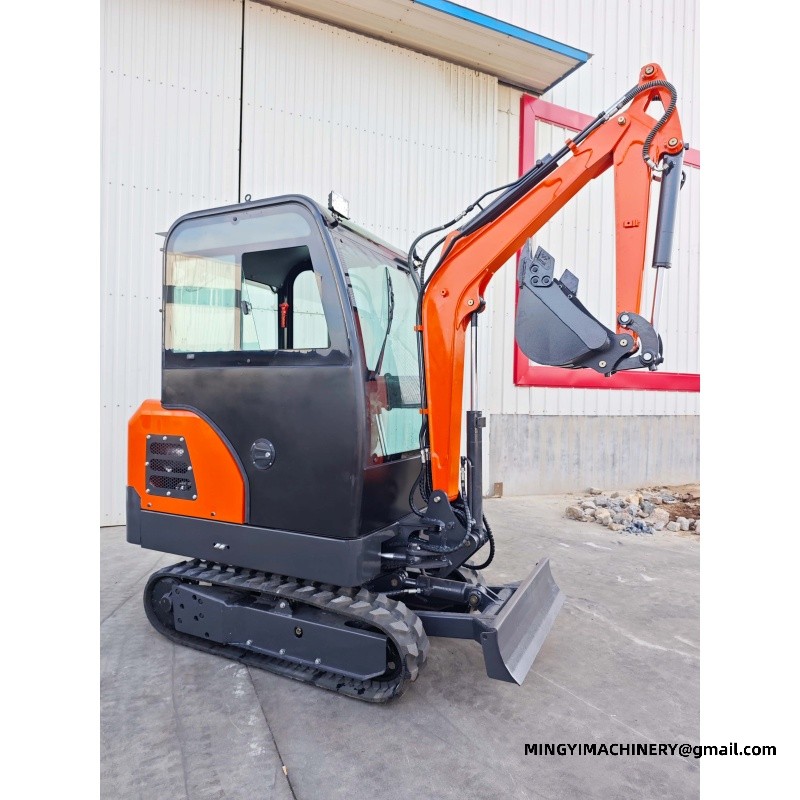
The balance to strike is weight against capability. Small classes carried on rubber tracks spread the load widely enough to work on established turf, while still lifting enough soil for levelling, drainage and edge work.
Lawn repair jobs the machine covers
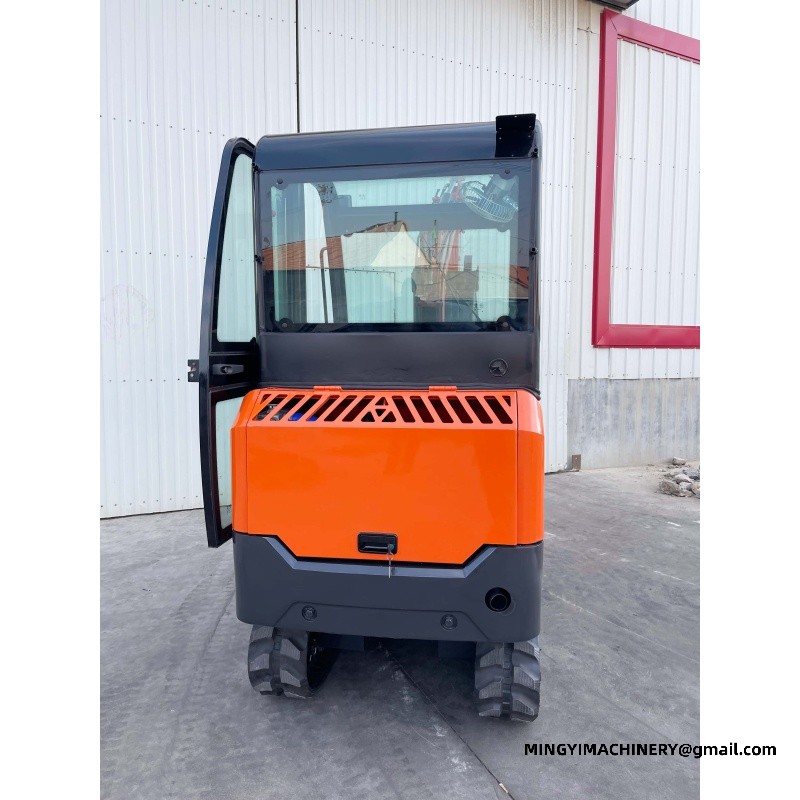
Common tasks include lifting and relaying sunken sections, spreading and grading topsoil as a dressing, cutting drainage slits across wet areas and re-cutting boundaries between lawn and border, with a tilting bucket trimming the finished grade so water moves off instead of pooling.
Where growth has crept onto the lawn, a grass rake fitted to the carrier pulls out thatch, clippings and debris before reseeding. On banks and ditches a mower attachment trims growth the lawn tractor cannot reach safely.
Protecting turf while the work goes on
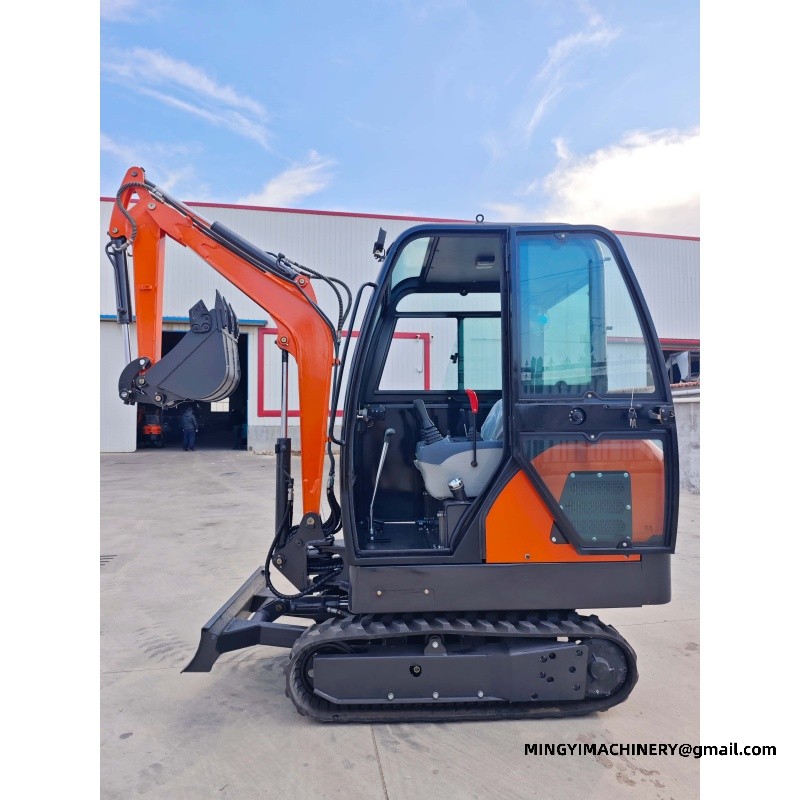
Track choice does most of the protecting: rubber tracks over paved edges and finished grass, with boards laid on the main travel lines as extra insurance on long jobs. Planning the job so heavy travel happens before the final levelling pass keeps the surface clean.
Ordering should cover the full season of care rather than one repair, so list the bucket widths, rake and mower together. The machine is built to order and its specification recorded, which keeps later attachment purchases matched to the same carrier.
Turf responds well to machinery used with restraint. Setting out the lawn problems you meet most often allows MINGYI to configure a digger that repairs the surface while leaving it in a state worth repairing.
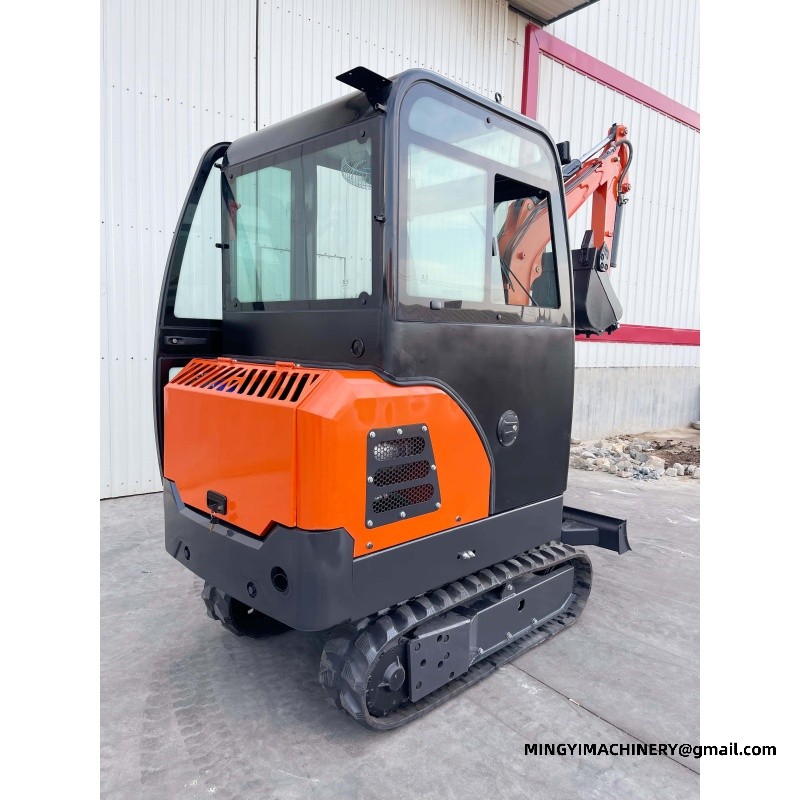
Track choice for mini excavator for lawn and turf care Undercarriage selection is a ground question, not a preference question. The excavator running on finished paving needs rubber; the same machine on demolition rubble or rock wears rubber quickly, so steel with rubber blocks becomes the better answer over a full season. Track type changes what the machine can cross and what it leaves behind. Buyers specify rubber for lawns, driveways and municipal work, and steel with rubber blocks for sites where sharp material would cut a rubber belt in a week. OEM and fleet customisation of mini excavator for lawn and turf care Distributors and rental fleets usually need the machine to look like theirs. Paint, decals, seat colour and attachment branding can be specified on this class of machine at build time rather than applied after import. Customisation also covers the specification sheet. A fleet buyer may want every unit in daily use delivered with the same coupler, the same engine and the same tool kit so training and parts stock stay simple. Working a mini excavator for lawn and turf care through the seasons Weather decides which days are productive. Rain turns some ground unusable and cold changes how a machine of this size starts and warms up, so planning the wet months around maintenance is more useful than planning around output. Heat and dust are as limiting as rain. Air intake condition and cooling cleanliness decide how the equipment on site behaves in a dry season, and both are checked in a minute rather than repaired later. Acceptance checks when a mini excavator for lawn and turf care arrives Delivery day is the best time to find a problem. Checking the specification against the order, the fluid levels, the fasteners and any transport damage while the model in question is still on the trailer is faster than claiming later. Documentation should arrive with the machine. Parts list, service schedule and any certificates for the machine itself are what the workshop needs later, and they are much easier to obtain at delivery than in month six. Daily checks and maintenance on mini excavator for lawn and turf care Track tension is the item most often neglected. The machine in that duty run with slack tracks wears the undercarriage and can throw a track on a turn; run too tight, the same components wear from the other direction. Greasing is the second item. The slew ring, the boom and arm pins and the bucket linkage on the unit on the job take grease daily in dusty work, and the intervals shorten further when the machine is used in water or mud. Canopy or enclosed cab on a mini excavator for lawn and turf care A canopy keeps the machine light and the operator aware of the surroundings, which suits short jobs in warm weather. A fully enclosed cab is specified where rain, dust or cold are part of the working year, and it can be added to a machine built for the work as a retrofit rather than only at build time. The cab decision follows the climate and the hours. Operators working a full shift in the equipment in service benefit from a sealed cab with wipers and heating; operators stepping on and off every few minutes usually prefer the canopy for the visibility and the quick exit. Working the excavator in confined spaces Confined sites are decided by dimensions. Overall width, tail swing and the space needed to work the arm are what let this class of machine operate inside a building, between walls or in a courtyard. Clearance above matters as much as around. Door heights, pipework and overhead services set the limit for the unit in daily use indoors, and measuring them first avoids a machine that arrives and cannot be used. Working on slopes and uneven ground with a machine of this size Slope work is a stability question before it is a traction question. Knowing the gradient the equipment on site is rated for, and working across rather than straight up where the ground allows, removes most of the risk. Planning the direction of travel helps. Working so that the machine itself is stable under load and not required to turn on a slope is a decision made before the job starts, not a correction made during it. Working near live services with the model in question The risk on utility work is not machine power but machine placement. The machine in that duty that fits the working width leaves the surrounding ground undisturbed, which keeps the trench stable and the reinstatement small. Utility crews specify the unit on the job with a narrow bucket and good visibility for exactly this reason: the machine has to stop at the service, not at the edge of the operator's view. Parts, service and support for a machine built for the work Support after delivery is a parts question. Wearing items for the equipment in service - filters, belts, track components, bucket teeth and pins - are the items a buyer should plan to hold before the first service interval. Remote support is handled by video. The excavator fault can often be diagnosed on a walk-around call with the panel open, which is faster than waiting for a visit and avoids shipping a part that is not needed. Specification data for this class of machine Buyers comparing the unit in daily use usually start from four numbers - weight, digging depth, reach and transport width - because those are the ones that decide whether the machine can be delivered and whether it can do the job once it is there. Every value shown is as built for a machine of this size; options such as cab, side swing or a telescopic undercarriage change the transport dimensions and are confirmed at order stage. Machines leave the factory prepared for container or flat rack shipment. The equipment on site is normally shipped with the attachment set and the spare parts list agreed in advance so the container is planned once. Buyers who import regularly plan the spare parts with the machine. The machine itself ordered with a wearing-parts kit arrives ready to work rather than ready to wait for the first service interval.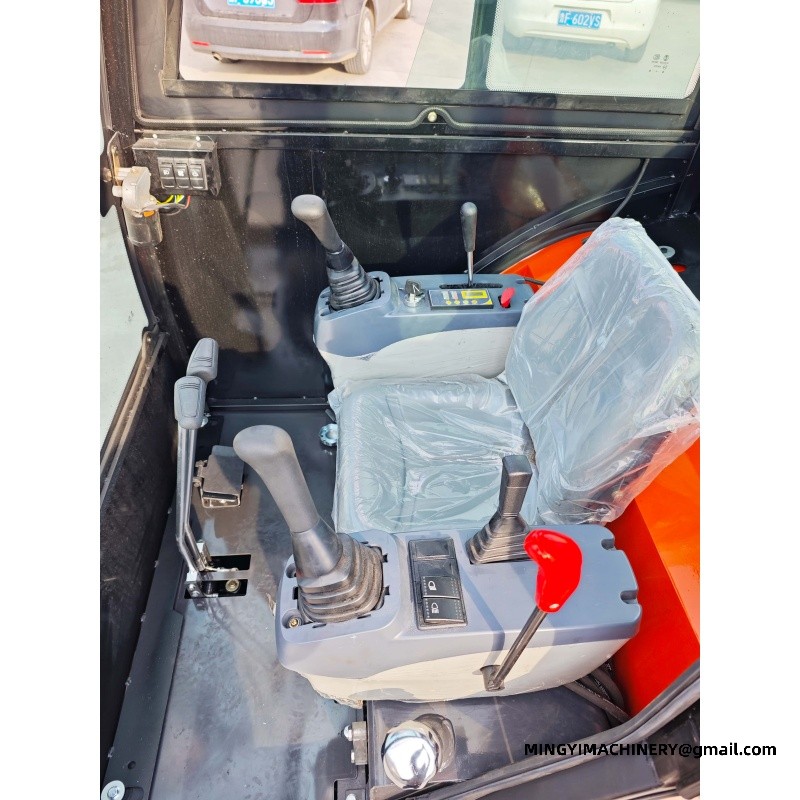
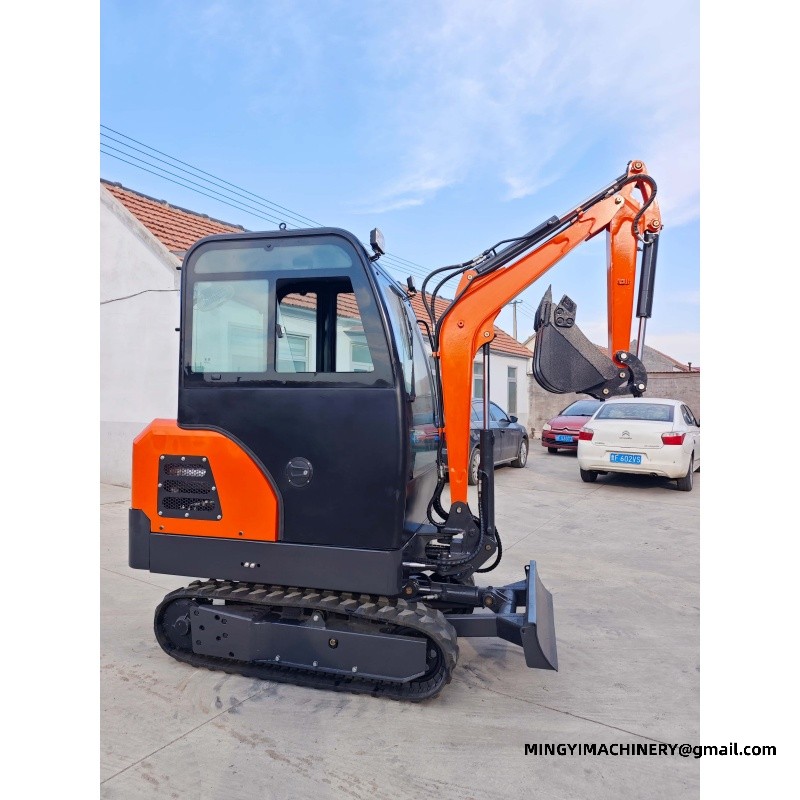
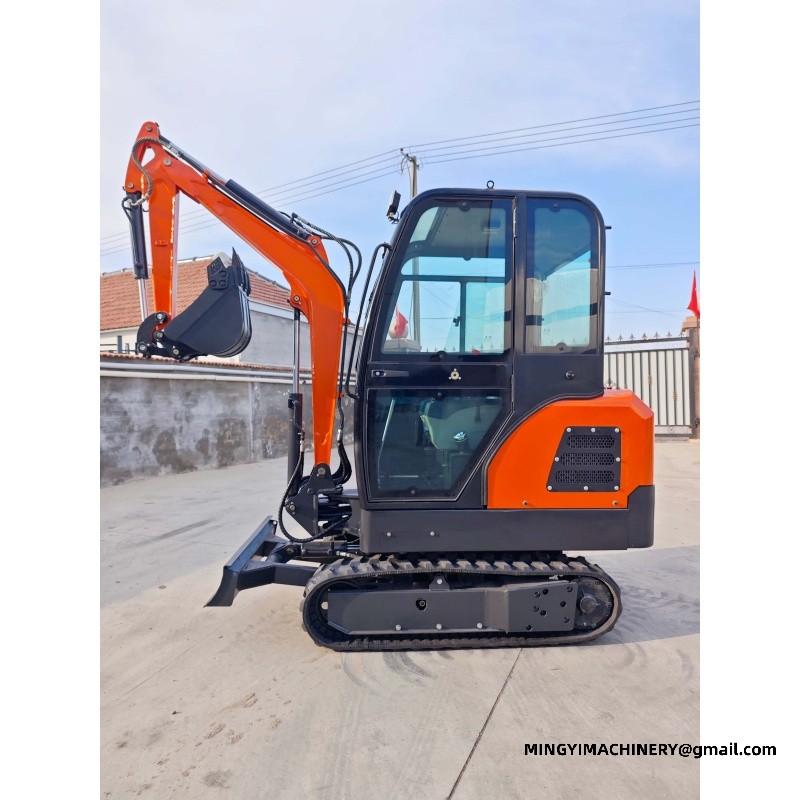
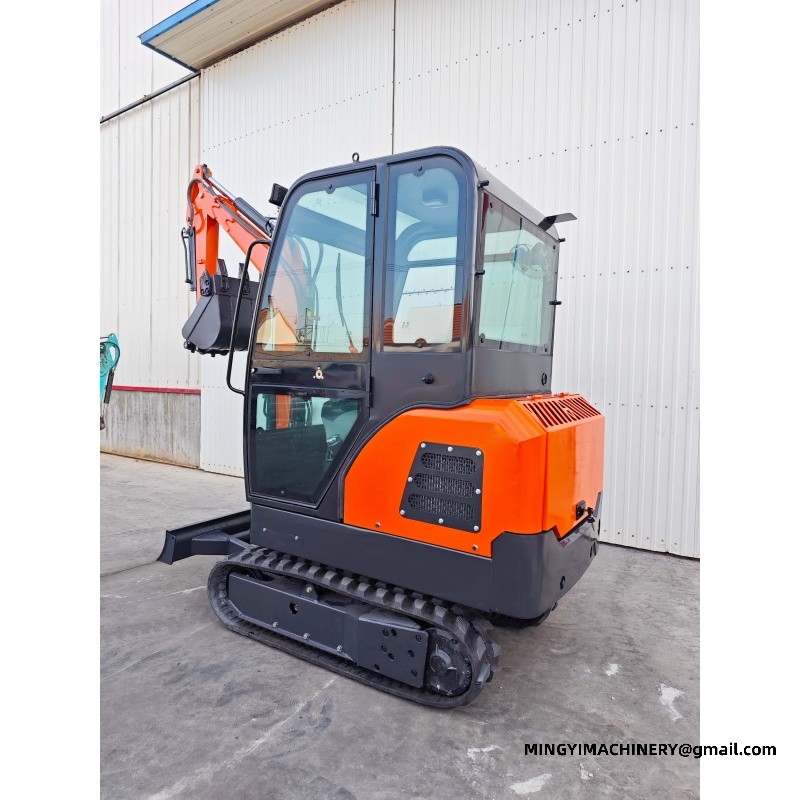
Reference specification — mini excavator range 09W 13W 15W 25L Operating weight 1100 kg (2425.08 lb) 1300 kg (2866.01 lb) 1400 kg (3086.47 lb) 2200 kg (4850.17 lb) Transport size (L×W×H) 1800 × 750 × 1970 mm 2200 × 930 × 2250 mm 2200 × 930 × 2250 mm 3000 × 1300 × 2700 mm Max digging depth 1250 mm (49.21 in) 1630 mm (64.17 in) 1630 mm (64.17 in) 2300 mm (90.55 in) Max digging height 2800 mm (110.24 in) 2750 mm (108.27 in) 2750 mm (108.27 in) 3100 mm (122.05 in) Max dumping height 1700 mm (66.93 in) 1960 mm (77.17 in) 1960 mm (77.17 in) 2050 mm (80.71 in) Max digging radius 2570 mm (101.18 in) 2900 mm (114.17 in) 2900 mm (114.17 in) 3900 mm (153.54 in) Max digging distance 1869 mm (73.58 in) 2100 mm (82.68 in) 2100 mm (82.68 in) 3100 mm (125.05 in) Minimum turning radius 1000 mm (39.37 in) 1300 mm (51.18 in) 1300 mm (51.18 in) 1800 mm (70.87 in) Travel speed 3 km/h (1.86 mph) 3 km/h (1.86 mph) 3 km/h (1.86 mph) 7 km/h (4.35 mph) Gradeability 30° 30° 30° 30° Fuel consumption 1-1.3 L/h (0.264—0.343 gal) 1-1.3 L/h (0.264—0.343 gal) 1-1.3 L/h (0.264—0.343 gal) 2-3 L/h (0.528—0.793 gal) Fuel tank capacity 8 L (2.11 gal) 10 L (2.64 gal) 10 L (2.64 gal) 16 L (4.23 gal) Hydraulic oil tank 16 L (4.23 gal) 16 L (4.23 gal) 16 L (4.23 gal) 18 L (4.76 gal) Dozer blade lift height 180 mm (7.09 in) 180 mm (7.09 in) 180 mm (7.09 in) 230 mm (9.06 in) Dozer blade drop depth 210 mm (8.27 in) 210 mm (8.27 in) 210 mm (8.27 in) 280 mm (11.02 in)
Q. What is the model in question?
A. Landscaping is finishing work: prepare beds, level ground, move trees - then leave a surface the client is happy to look at. With a thumb or a tree-moving grab the digger opens the root ball, lifts and sets the plant in one motion - the work of a crew. The machine in that duty is one of the pages buyers land on when comparing machines for lawn and turf care, and the factory treats it as a specification conversation rather than a catalogue line.
Q. Can it move trees and shrubs?
A. With a thumb or a tree-moving grab, yes: open the root ball, lift, set it in the prepared hole in one motion - the attachment doing the work of a crew, which is why landscape contractors keep a compact excavator on the trailer.
Q. Does MINGYI supply attachments with the machine?
A. Yes - buckets, breakers, augers, rakes and the rest of the working set ship with the carrier, matched to the hydraulic flow and the coupler. For lawn and turf care the package is confirmed on the build sheet, so machine and tools arrive together and start work together.
Hot, humid and dusty conditions around the unit on the job
Humidity attacks the parts that are not used. Storage in a damp climate means a machine built for the work needs the exposed metal protected and the machine run regularly, because standing still does more damage than working.
Keeping a service record for the equipment in service
The record should follow the machine, not the owner. When the excavator changes hands the service history travels with it, and a complete folder is often the difference between a quick sale and a long one.
E-mail : sales@mingycn.com
LINE ( ID ): mingyicn
Night work and lighting on mini excavator for lawn and turf care
Work lamps should cover the working area and the travel path separately, since a beam set for loading usually leaves the route dark.
Reflective markings on the machine help everyone else on site, and they are simple to add and easy to replace.
A lighting check belongs at the start of every night shift, together with a look at the warning beacon and the brake lights.
Emission and regional requirements for mini excavator for lawn and turf care
Fuel quality varies by region, and poor fuel shortens service intervals and affects after-treatment where it is fitted.
Where a machine moves between regions during its life, the original certificate is worth keeping with the manual.
Related pages
mini excavator for drainage ditching · mini excavator for public works · Wheel Loader Snow Pusher: Frame Loads and Cold-Weather Starting · Mini Excavators









