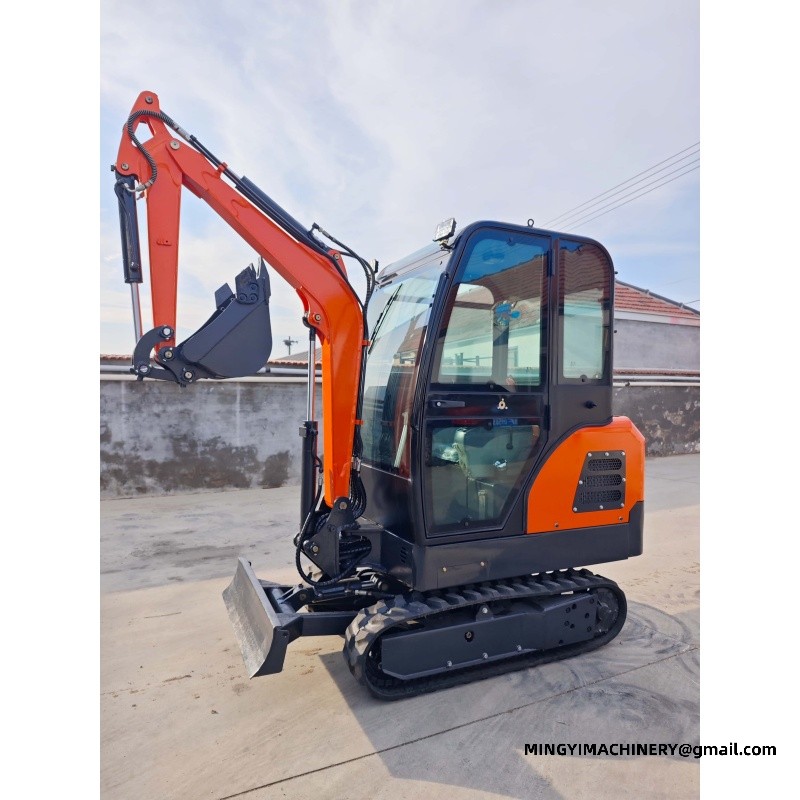
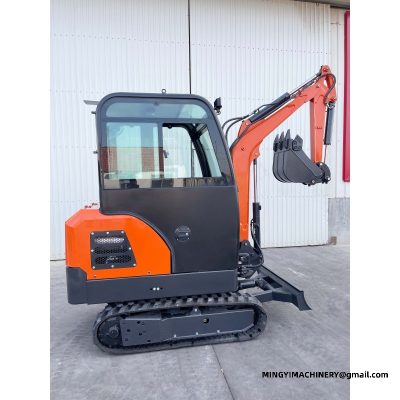
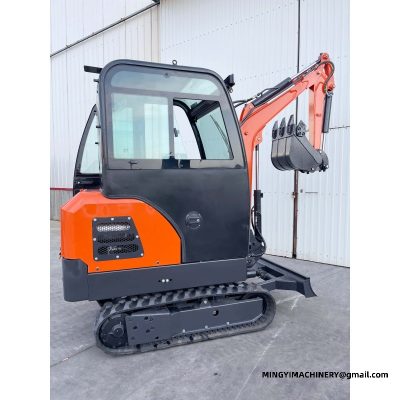
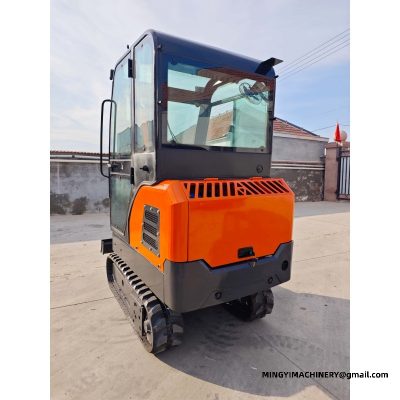
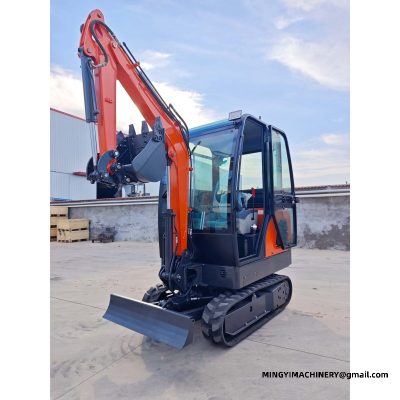
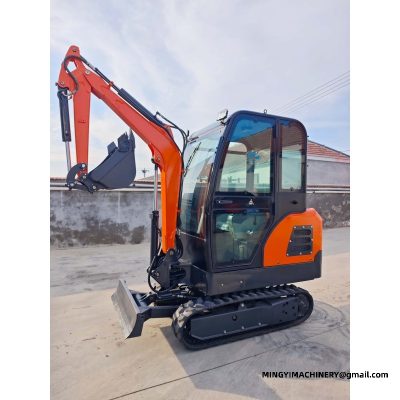
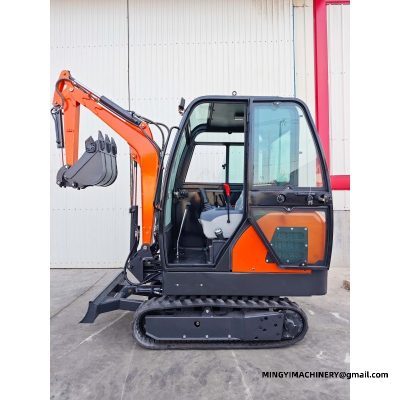
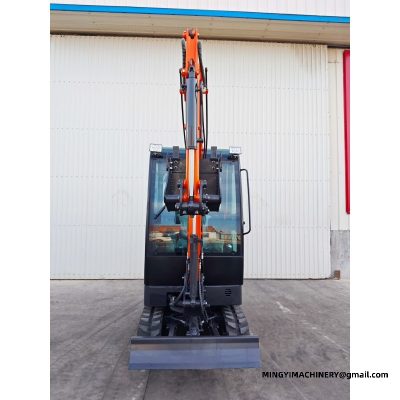
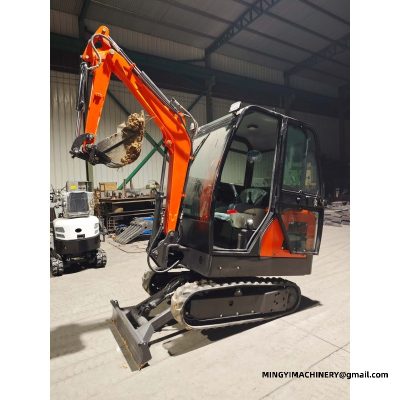
Drainage work follows water, which means the machine often has to work where the ground is already soft and the access is poor.
A compact excavator reaches those places that a wheeled machine cannot, and it can cut a graded channel rather than a straight-sided trench.
Cutting graded channels for land drainage
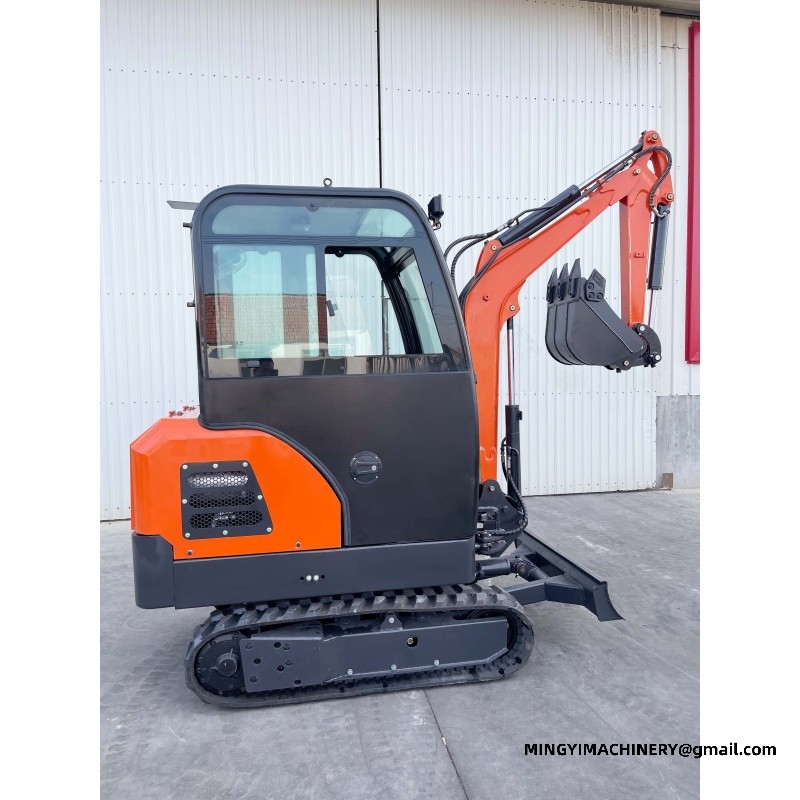
Field drains need a fall along the run, so the operator controls depth as the machine tracks forward. A tilting bucket helps to shape the invert and trim the sides in one movement.
Spoil is placed on the uphill side so it cannot wash back into the channel. On long runs the machine leapfrogs the pipe and closes the trench as it goes.
Working wet ground and roadside ditches
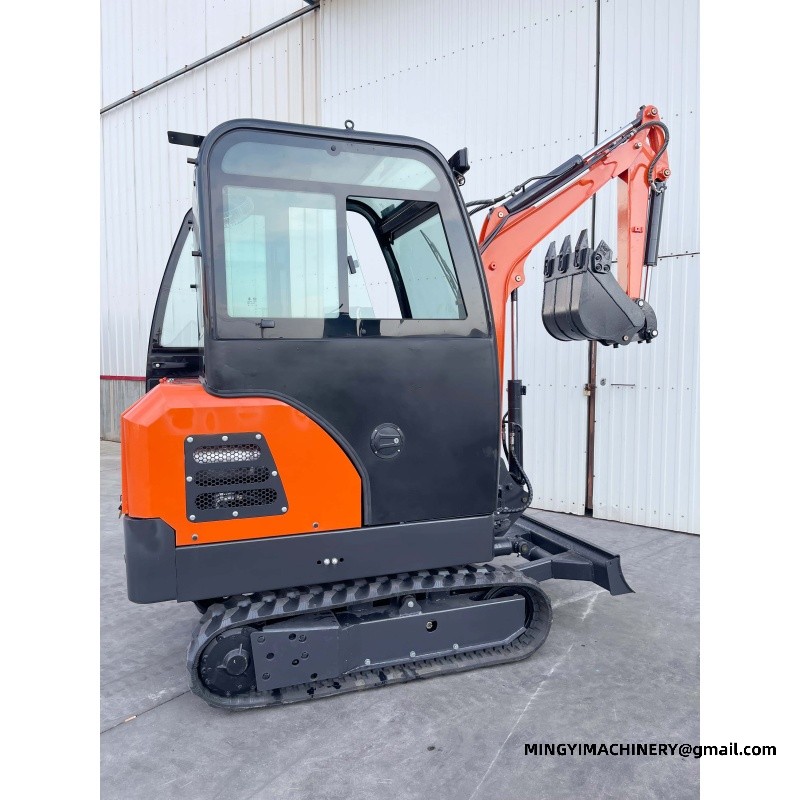
Where the going is soft, steel tracks with rubber blocks spread the load and keep the machine moving, while rubber tracks are kept for firm verges and finished surfaces.
Roadside ditches add another constraint, since the machine must clear a channel without blocking traffic. Short tail swing lets it work from the verge with the rear inside the lane markings.
The useful order details for ditching are the bucket set, the track option and the boom type, since these decide the fall the operator can hold over a long run.
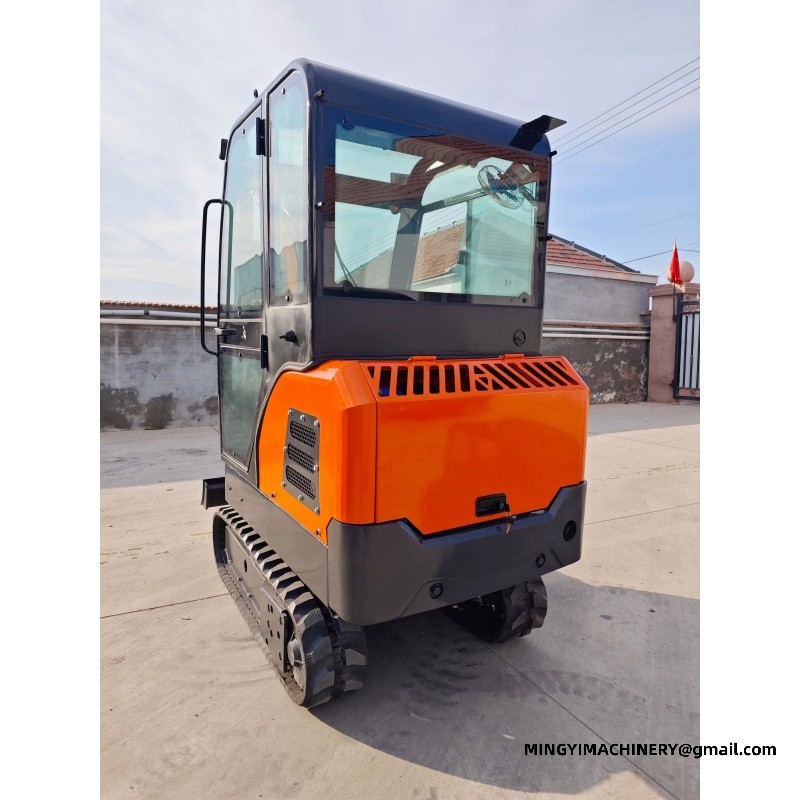
Orchard, vineyard and farm use of mini excavator for drainage ditching Orchard and vineyard work is carried out between rows. The excavator with a narrow chassis and a swing boom works down the row without damaging the trees, which is the reason a full-size machine is not used at all. Ditching, fertilising and drainage on farmland suit this class of machine because the work is spread over a large area in short bursts. The machine travels behind a pickup and works where it stops. Acceptance checks when a mini excavator for drainage ditching arrives A function check before the machine goes to work is worth the hour. Running through the controls, the travel and the attachment circuit on the unit in daily use confirms it is set up as specified and ready for the site. Documentation should arrive with the machine. Parts list, service schedule and any certificates for a machine of this size are what the workshop needs later, and they are much easier to obtain at delivery than in month six. Lifting and material handling with a mini excavator for drainage ditching Stability changes with reach. A load the equipment on site handles close in becomes a different proposition at full extension, so the working radius belongs in the plan before the lift rather than during it. Ground condition under the machine is part of every lift. Soft or uneven support is the common factor in handling incidents, and checking it takes less time than recovering the machine itself that has settled. Matching mini excavator for drainage ditching to ground conditions Hard and abrasive ground reverses the specification. On rock, demolition rubble or sharp gravel, steel tracks with rubber blocks on the model in question survive conditions that cut a rubber belt quickly. Mixed sites are common and argue for a compromise specification. Most buyers choose rubber for the machine in that duty and accept the wear, unless the majority of the work is on material that will damage it. Working on slopes and uneven ground with mini excavator for drainage ditching Slope work is a stability question before it is a traction question. Knowing the gradient the unit on the job is rated for, and working across rather than straight up where the ground allows, removes most of the risk. Ground that looks level often is not. A machine built for the work crossing a filled trench, a soft edge or a hidden void behaves differently from one on undisturbed ground, and those are the places worth walking before driving. Hydraulic circuits on a mini excavator for drainage ditching Auxiliary hydraulic lines are what let a machine drive a tool rather than only a bucket. The equipment in service specified with the right circuits and flow runs a breaker or an auger without an add-on power pack bolted to the frame. Hydraulic specification is easier to settle at build time than to correct later. The excavator delivered without auxiliary lines can still dig, but every additional tool becomes a retrofit project. Running this class of machine in a rental fleet Rental fleets buy for utilisation, not for a single job. The unit in daily use with a quick coupler and a common attachment standard is hired more often because it suits more of the calls that come in. Fleet buyers also weigh transport. A machine of this size that a customer can tow on a normal licence and a standard trailer is a hire that does not need a delivery truck, which changes how often it goes out. Parts, service and support for the equipment on site Support after delivery is a parts question. Wearing items for the machine itself - filters, belts, track components, bucket teeth and pins - are the items a buyer should plan to hold before the first service interval. Engine parts availability usually drives the engine choice. The model in question built with an engine the local network already carries is serviced from stock rather than from an international order. Municipal and public works with the machine in that duty Municipal crews work on streets, footpaths and parks where the public is present. The unit on the job is specified because it occupies little space, works inside a small exclusion zone and can be moved on a standard trailer. Noise and surface protection matter on public work. A machine built for the work on rubber tracks across paving, with a sealed cab for the operator, suits the conditions better than a larger tracked machine. Daily checks and maintenance on the equipment in service Daily maintenance on the excavator is a short list: engine oil level, coolant, track tension, hydraulic oil level and a look at the hoses. Ten minutes at the start of the shift prevents most of the failures that stop a machine. Greasing is the second item. The slew ring, the boom and arm pins and the bucket linkage on this class of machine take grease daily in dusty work, and the intervals shorten further when the machine is used in water or mud. Trailering and moving the unit in daily use Loading practice matters as much as the numbers. A machine of this size is driven up ramps under its own power with the boom lowered and the tracks aligned, and secured at the points the manufacturer specifies. Detachable components reduce transport length. The equipment on site built with a removable arm section or a folding step fits a shorter trailer and may avoid an oversize movement permit. Working the machine itself through the seasons Seasonal planning smooths the workload. Machines that are busy for a few months and idle for the rest benefit from a service slot in the quiet period, and the model in question prepared in the off-season starts the busy months reliably. Heat and dust are as limiting as rain. Air intake condition and cooling cleanliness decide how the machine in that duty behaves in a dry season, and both are checked in a minute rather than repaired later. Interior and light demolition with the unit on the job Breaking out a floor slab, a wall footing or a concrete step is routine work for a machine built for the work with a breaker. The machine is small enough to work inside and heavy enough to run the tool at a practical rate. Dust, debris clearance and floor loading all argue for a compact machine indoors. The equipment in service spreads its weight over a wider track footprint than a wheeled machine of similar capacity. Specification data for the excavator Where this class of machine is being specified for a job list, the table below gives the factory figures that matter most: what the machine weighs, how deep and how far it works, and what it measures on a trailer. These are the reference figures for the unit in daily use. MINGYI confirms the final build sheet, including engine and attachment choices, against the destination and the job list before production. The base machine is a carrier; the tool on the end of the arm decides the task. A machine of this size fitted with a toothed bucket digs, and the same machine with a breaker, an auger or a grab does work that would otherwise need a second unit on site. Most of the daily variety on the equipment on site comes from the attachment rack rather than from the machine itself. Bucket, breaker, auger, ripper, rake and grab cover the large majority of the work a contractor will see.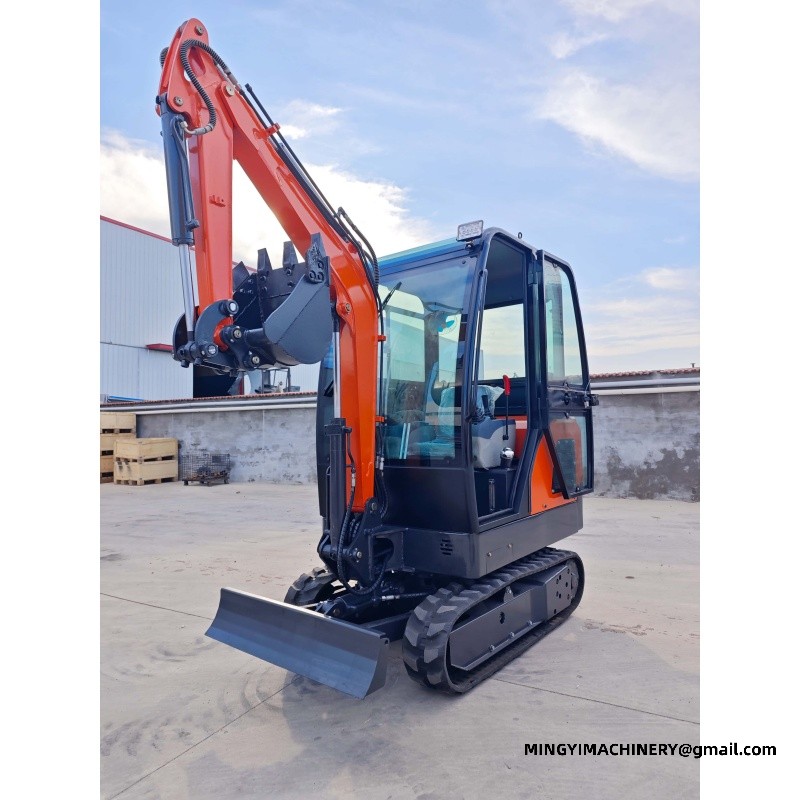
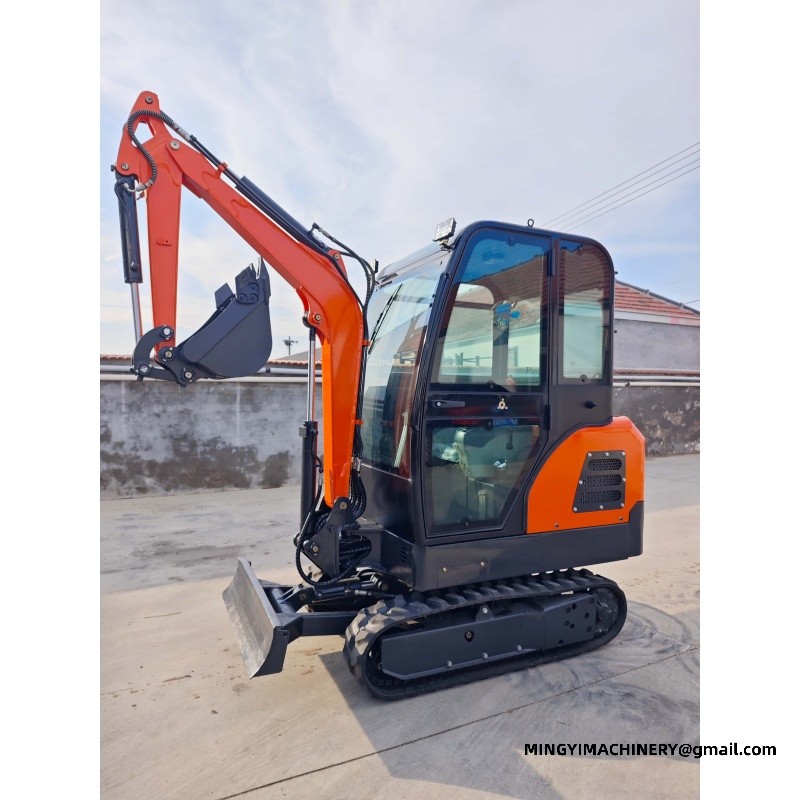
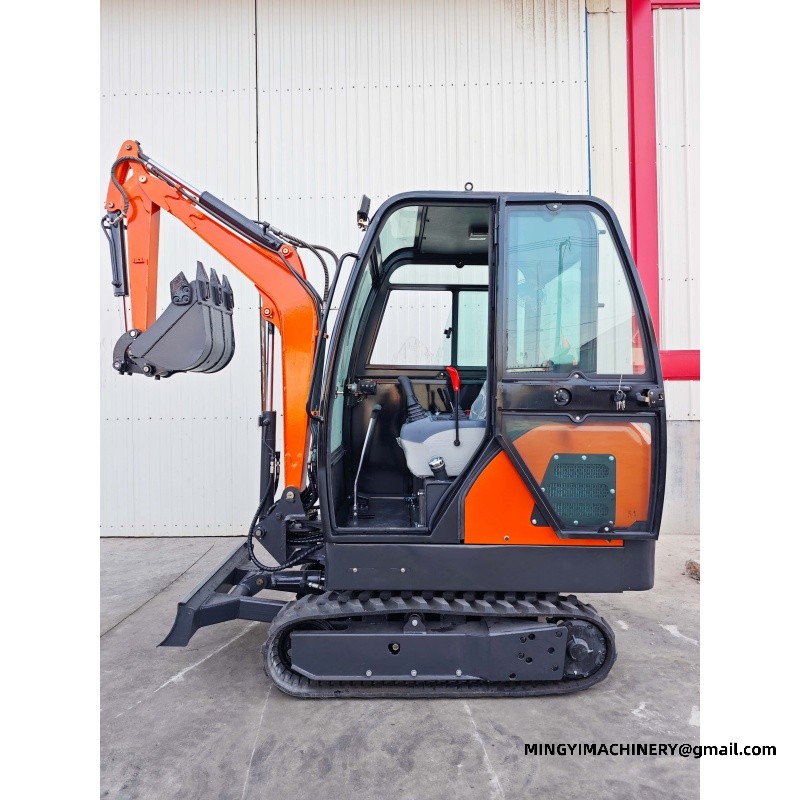
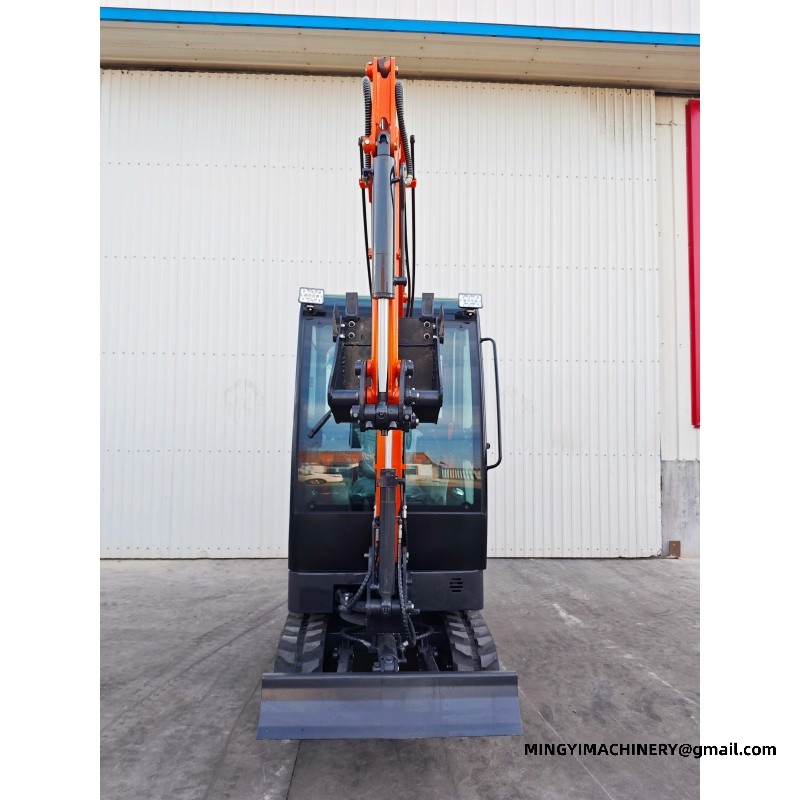
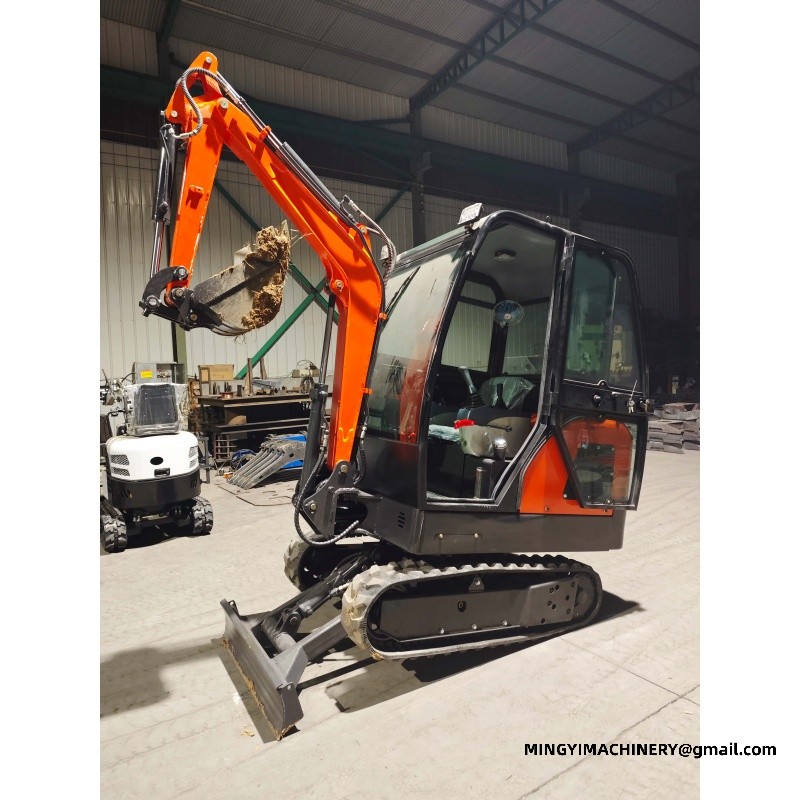
Reference specification — mini excavator range 13W 20-1WL 20-3W 09L Operating weight 1300 kg (2866.01 lb) 1900 kg (4188.78 lb) 1900 kg (4188.78 lb) 1100 kg (2425.08 lb) Transport size (L×W×H) 2200 × 930 × 2250 mm 2550 × 1100 × 2200 mm 2550 × 1100 × 2200 mm 2300 × 720 × 1870 mm Max digging depth 1630 mm (64.17 in) 1800 mm (70.87 in) 1800 mm (70.87 in) 1400 mm (55.12 in) Max digging height 2750 mm (108.27 in) 2820 mm (111.02 in) 2820 mm (111.02 in) 2800 mm (110.24 in) Max dumping height 1960 mm (77.17 in) 2050 mm (80.71 in) 2050 mm (80.71 in) 1880 mm (74.02 in) Max digging radius 2900 mm (114.17 in) 3050 mm (120.08 in) 3050 mm (120.08 in) 2490 mm (98.03 in) Max digging distance 2100 mm (82.68 in) 2300 mm (90.55 in) 2300 mm (90.55 in) 2000 mm (78.74 in) Minimum turning radius 1300 mm (51.18 in) 1450 mm (57.09 in) 1450 mm (57.09 in) 1400 mm (55.12 in) Travel speed 3 km/h (1.86 mph) 5 km/h (3.11 mph) 5 km/h (3.11 mph) 3 km/h (1.86 mph) Gradeability 30° 30° 30° 30° Fuel consumption 1-1.3 L/h (0.264—0.343 gal) 2-3 L/h (0.528—0.793 gal) 2-3 L/h (0.528—0.793 gal) 1-1.3 L/h (0.264—0.343 gal) Fuel tank capacity 10 L (2.64 gal) 16 L (4.23 gal) 16 L (4.23 gal) 8 L (2.11 gal) Hydraulic oil tank 16 L (4.23 gal) 18 L (4.76 gal) 18 L (4.76 gal) 16 L (4.23 gal) Dozer blade lift height 180 mm (7.09 in) 180 mm (7.09 in) 180 mm (7.09 in) 180 mm (7.09 in) Dozer blade drop depth 210 mm (8.27 in) 210 mm (8.27 in) 210 mm (8.27 in) 210 mm (8.27 in)
Q. Who chooses the machine itself?
A. A trench is judged by what happens after the dig: a straight line, a stable wall and a backfill that settles without sinking - all set by bucket width and machine control. Depth control comes from the machine holding position, not from the operator chasing the grade. MINGYI builds the 08, 12 and 18 models covering the 0.8 to 6 tonne class, and the model in question is where that range meets drainage ditching.
Q. What about trenches across soft ground?
A. Wider shoes or longer tracks spread the load, and working from mats keeps the trench wall intact while the machine digs alongside it - the same rules the soft-ground pages set out.
Q. What support follows the sale?
A. Spare-part kits, wear items and service documentation ship with the programme, and the parts team works from the serial plate to match components exactly. Warranty and support terms for the drainage ditching order are confirmed in writing before the machine leaves.
Reading the early symptoms on the machine in that duty
The symptom is usually not at the fault. A hydraulic function that has become sluggish on the unit on the job may point to a filter, a relief setting or a pump, and starting with the simple checks avoids the wrong guess.
Documents that travel with a machine built for the work
The machine is only half of what arrives. The parts book, the service schedule and the declarations that come with the equipment in service are what let the owner register, insure and maintain it without a second round of emails.
E-mail : sales@mingycn.com
LINE ( ID ): mingyicn
Related pages
mini excavator for public works · mini excavator for roadside drainage · Wheel Loader Log Grapple: Grapple Loads and Hinge Steel · Mini Excavators









