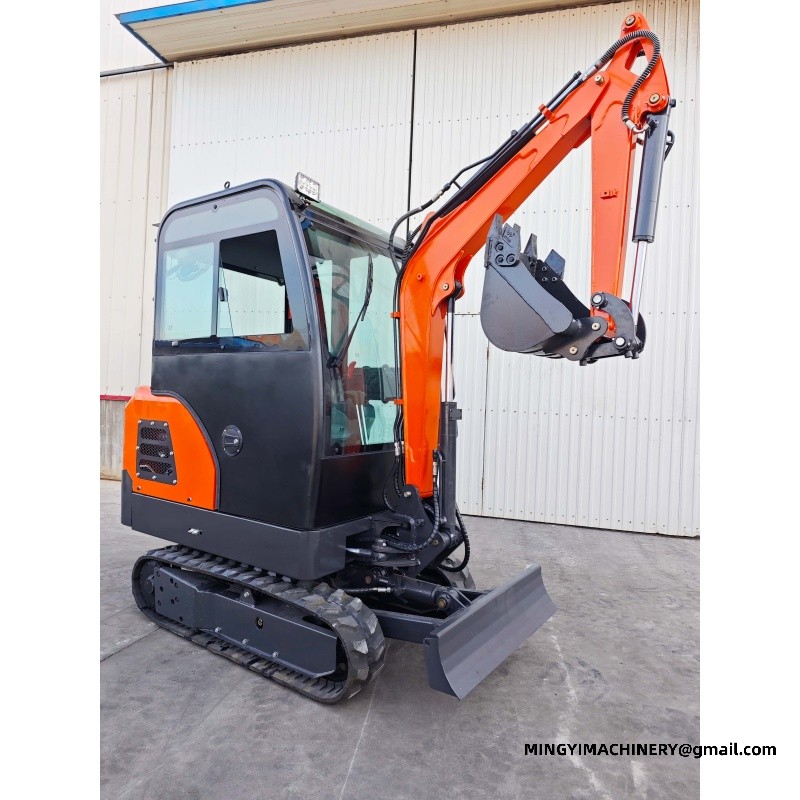
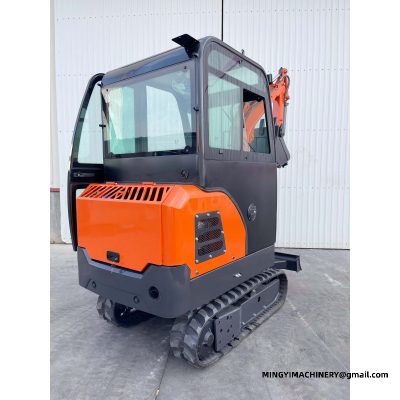
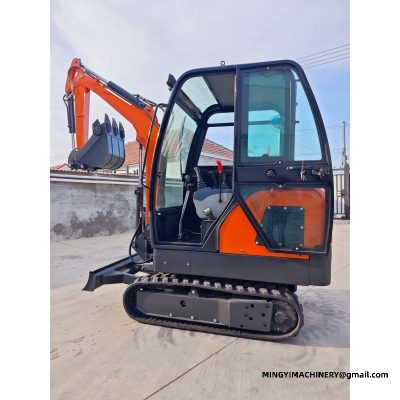
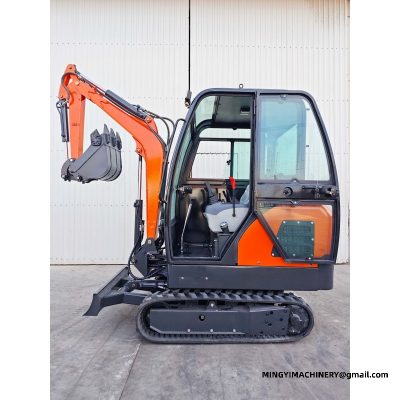
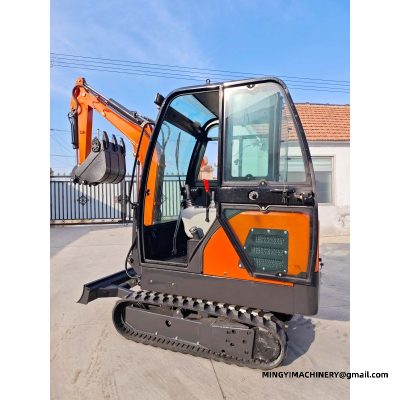
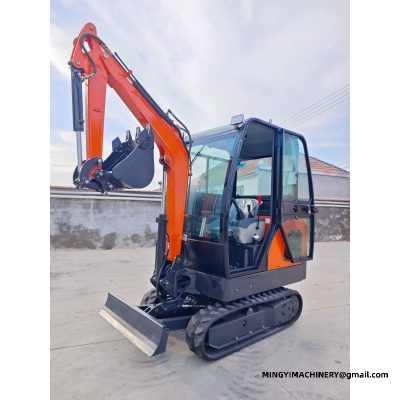
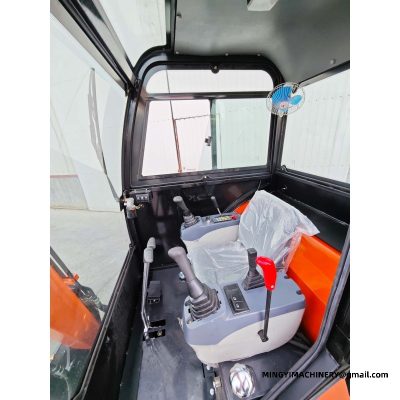
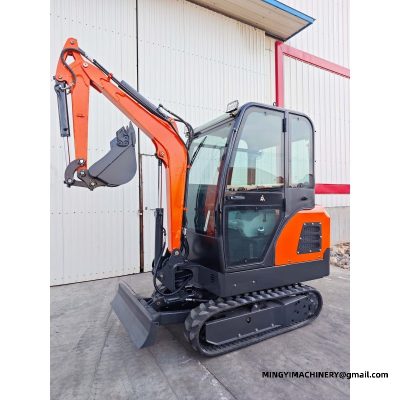
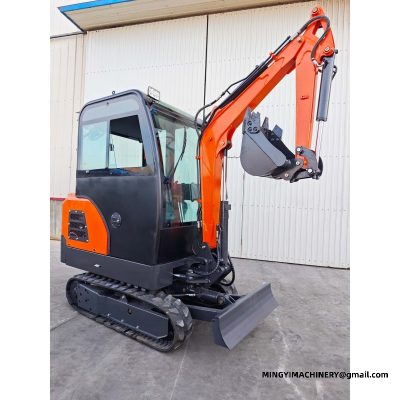
A municipal utility department runs a mixed book of work: a leaking valve in the morning, a new connection in the afternoon and a drainage repair before the week ends. The machine on the trailer has to cover all three.
Compact crawler excavators are bought for exactly that variety. One carrier takes several attachments, so a small crew can answer most call-outs without a second trip to the yard.
Serving a mixed municipal call-out book
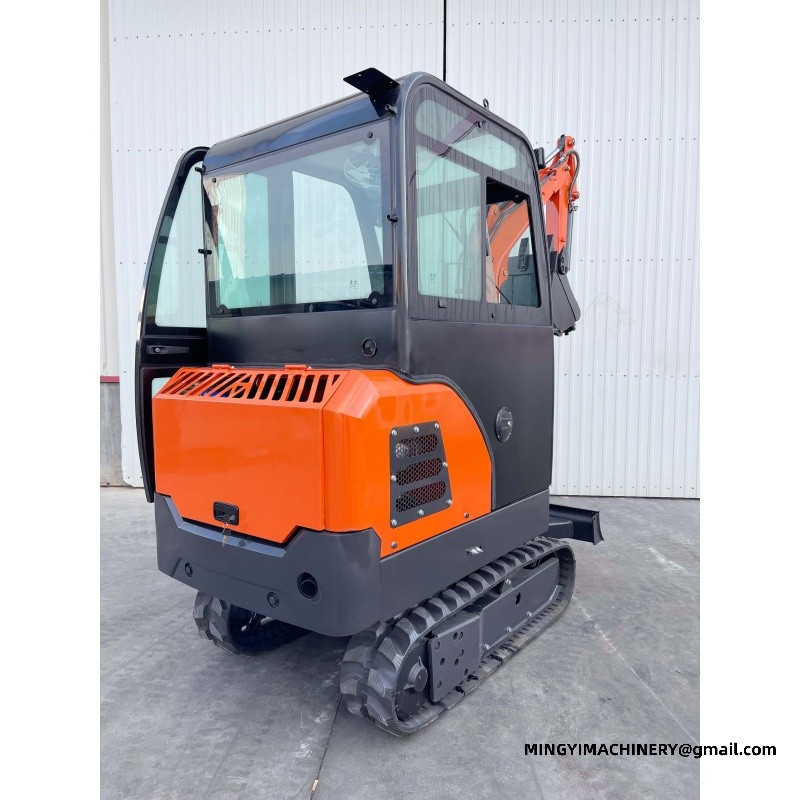
Public work happens close to kerbs, bollards, signs and buried plant that cannot be disturbed. Short tail swing keeps the rear of the machine inside the lane markings while the operator works a narrow bucket along a service line.
Set-up time counts for more than raw output here. A machine that unloads quickly, tracks over paving and starts cutting within minutes is worth more to a maintenance team than a larger unit that needs a lane closure.
Configuration for public works and roadside safety
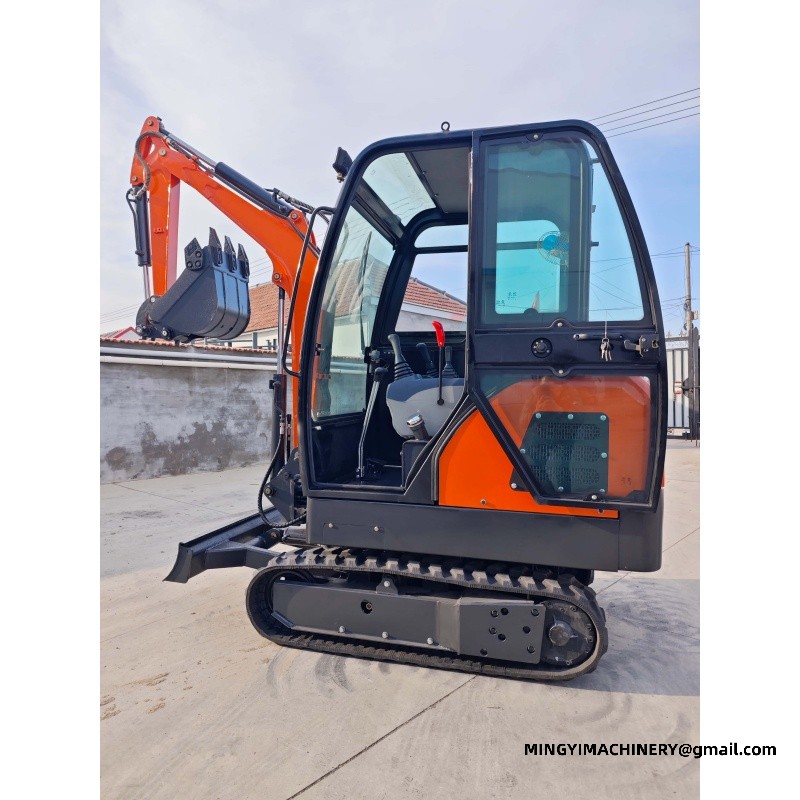
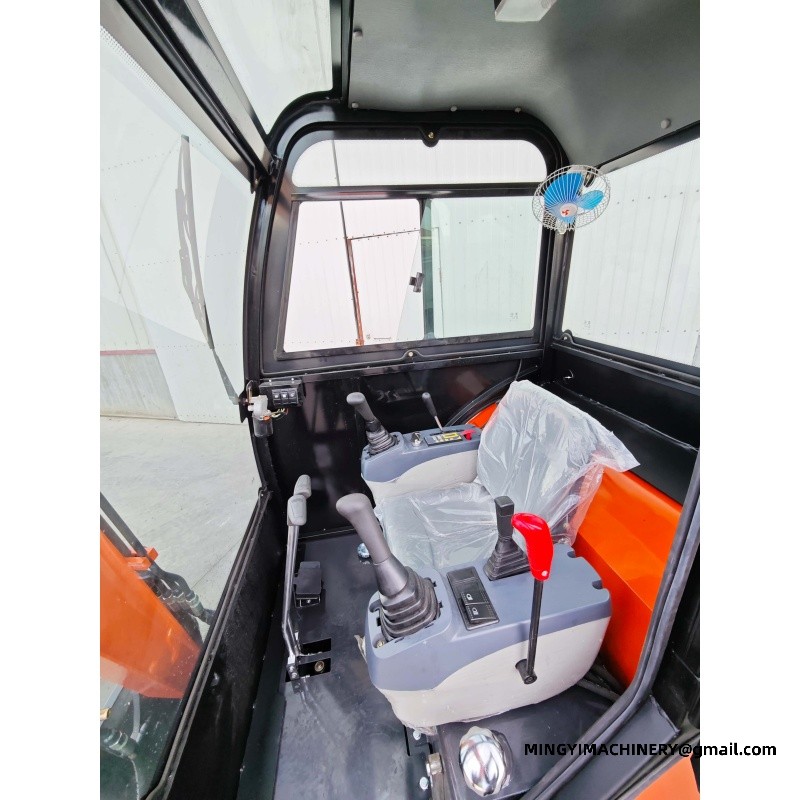
Canopy or enclosed cab is one early decision. An open canopy suits warm regions and quick hops between pits, while an enclosed cab keeps the operator comfortable through a long outdoor shift.
A breaker hammer, a compaction wheel and a thumb bucket cover the usual municipal spread, and a hydraulic quick coupler lets the crew change between them without leaving the seat.
Because these machines are built to order, the useful specification conversation covers track type, cab form and the attachment spread the department expects to use most often.
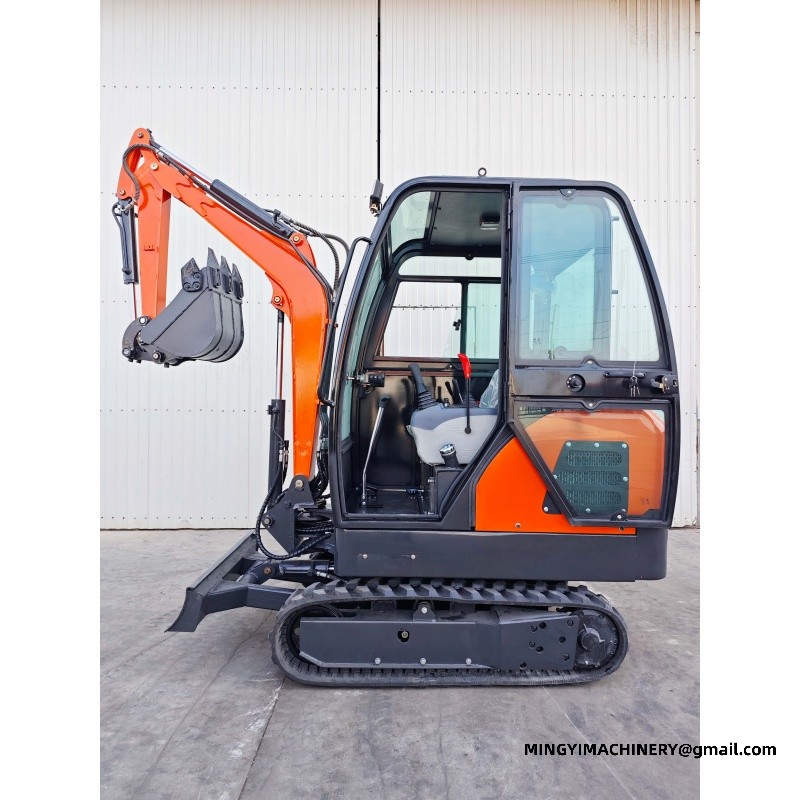
Engine options behind mini excavator for public works Power unit selection is settled against the service network the buyer already uses. MINGYI offers Kubota D722, Kubota D902, YANMAR, Changchai, Laidong, Runtong, YARMAX, Youpu 2V80 and Youpu 195, so a fleet running one brand of engine can keep the same filters, the same parts supplier and the same mechanic. Engine choice is also an emissions and documentation question for some markets. Listing the available units with the excavator enquiry lets the factory confirm what can be supplied and documented for the destination country. Track choice for mini excavator for public works Rubber tracks suit paved and landscaped ground because they spread the machine weight and leave the surface intact. Steel tracks with rubber blocks are specified where the ground is rougher or the working day is longer, and the choice can be made per machine rather than accepted as a factory default. Undercarriage selection is a ground question, not a preference question. This class of machine running on finished paving needs rubber; the same machine on demolition rubble or rock wears rubber quickly, so steel with rubber blocks becomes the better answer over a full season. Orchard, vineyard and farm use of mini excavator for public works Orchard and vineyard work is carried out between rows. The unit in daily use with a narrow chassis and a swing boom works down the row without damaging the trees, which is the reason a full-size machine is not used at all. Farms also use a machine of this size for general maintenance - clearing a watercourse, repairing a track, loading a spreader. One carrier with a few attachments covers most of the jobs that would otherwise wait for a contractor. Boom configuration for mini excavator for public works Extended and offset boom configurations change reach and working range. The equipment on site with a longer arm reaches further but lifts less at full extension, so the specification is set against the deepest and furthest point on the job list. Detachable boom sections are used where transport length matters. The machine itself that has to travel on a standard trailer can be built so the arm comes off for the road and goes back on at the site. Lifting and material handling with a mini excavator for public works Lifting with a machine built to dig needs a plan. The load, the radius and the ground under the machine in that duty all matter, and the safe figure is the one on the chart rather than the one that looks possible. Stability changes with reach. A load the model in question handles close in becomes a different proposition at full extension, so the working radius belongs in the plan before the lift rather than during it. What owners should plan for beyond the mini excavator for public works The useful comparison is demand per working hour, not demand per machine. The unit on the job that works more hours a year spreads its standing takes over more output, which is why utilisation usually matters more than the invoice figure. Downtime is the hidden line item. A machine built for the work waiting on a part earns nothing while it stands, so parts availability and service access belong in the plan as much as fuel does. Municipal and public works with the equipment in service Drainage repair, tree planting, footway reconstruction and cemetery work are all within the range of the excavator. The jobs are small individually and continuous across the year. Noise and surface protection matter on public work. This class of machine on rubber tracks across paving, with a sealed cab for the operator, suits the conditions better than a larger tracked machine. Quick coupler practice on the unit in daily use A quick coupler is the single option that changes how a machine is used day to day. Fitted to a machine of this size, it turns an attachment change from a two-person workshop job into a task the operator does alone in minutes. Couplers are specified early because they affect the arm and the hydraulic kit. Adding one to the equipment on site after delivery means new pins, new hoses and a fitment session; adding it at build time is a line on the sheet. OEM and fleet customisation of the machine itself Distributors and rental fleets usually need the machine to look like theirs. Paint, decals, seat colour and attachment branding can be specified on the model in question at build time rather than applied after import. Documentation can be prepared to suit the importer. Manuals, parts books and decal sets for the machine in that duty can be supplied with the buyer's own branding where the order size justifies it. Specifying the unit on the job against a job list The practical way to specify is to write the job list first: the narrowest access, the deepest trench, the heaviest tool and the surfaces the machine must cross. A machine built for the work is then matched to those four numbers. Useful information to send with an enquiry includes working width, required digging depth, ground conditions and the attachment set. Those four items let the factory specify the equipment in service that fits rather than a generic build. Trenching work with the excavator Service trenches are the most common reason this class of machine is hired. Water, sewage, cable and gas runs are narrow, shallow and often close to existing services, which is exactly the work a full-size machine cannot do safely. Depth control matters more on service work than speed. The unit in daily use working beside live services is chosen because it can be placed precisely and stopped instantly, which is what the job actually requires. Landscaping and ground care with a machine of this size Landscape contractors use the equipment on site for planting holes, pond excavation, grading and retaining work. The machine is light enough to cross finished lawn and narrow enough to work between established trees. Grass cutting heads, rakes and tillers extend the machine itself into ground care. The same carrier that digs a border in spring can cut and clear the same area later in the season. Specification data for the model in question The figures below are the factory figures for the models most often matched to the machine in that duty. They are the numbers to check against the site: the depth the work needs, the reach from one position, and the width of the narrowest point on the route in. These are the reference figures for the unit on the job. MINGYI confirms the final build sheet, including engine and attachment choices, against the destination and the job list before production. Export documentation, decals and paint are settled before packing. Asking for them with the equipment in service order avoids a second handling session and keeps the machine on the booked vessel. Buyers who import regularly plan the spare parts with the machine. A machine built for the work ordered with a wearing-parts kit arrives ready to work rather than ready to wait for the first service interval.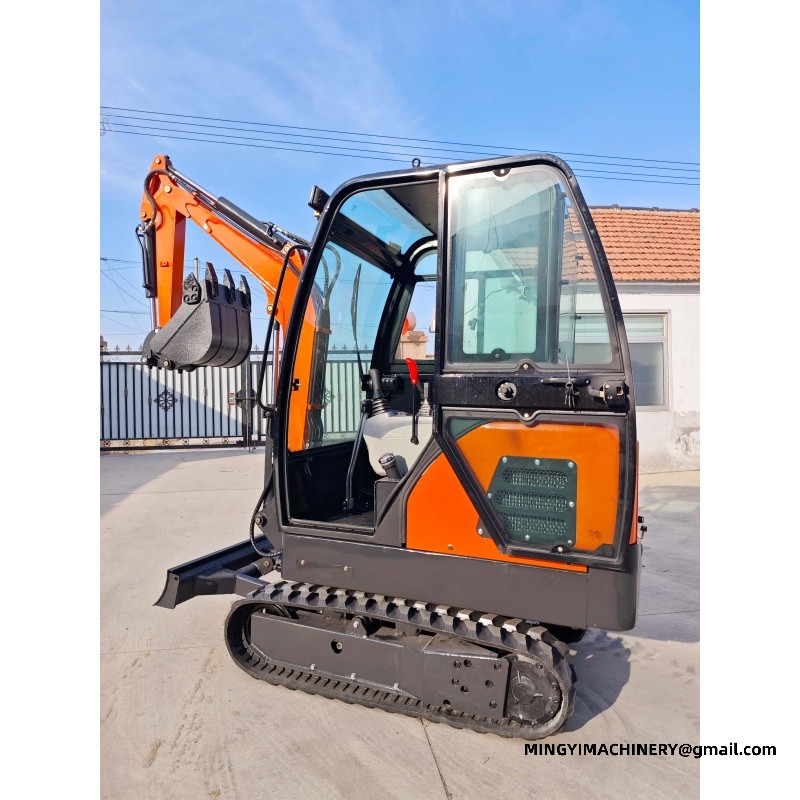
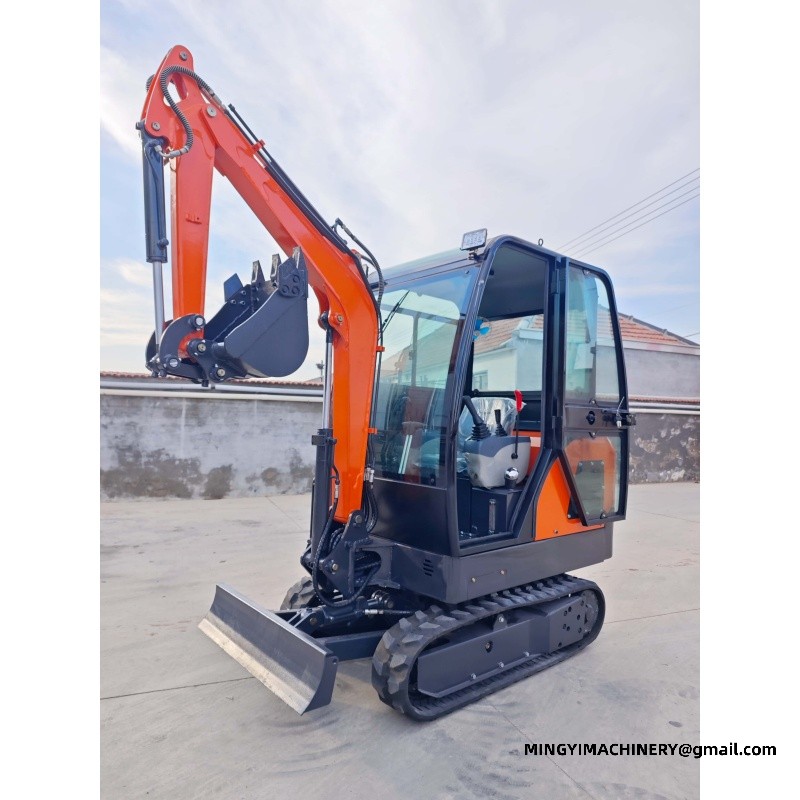
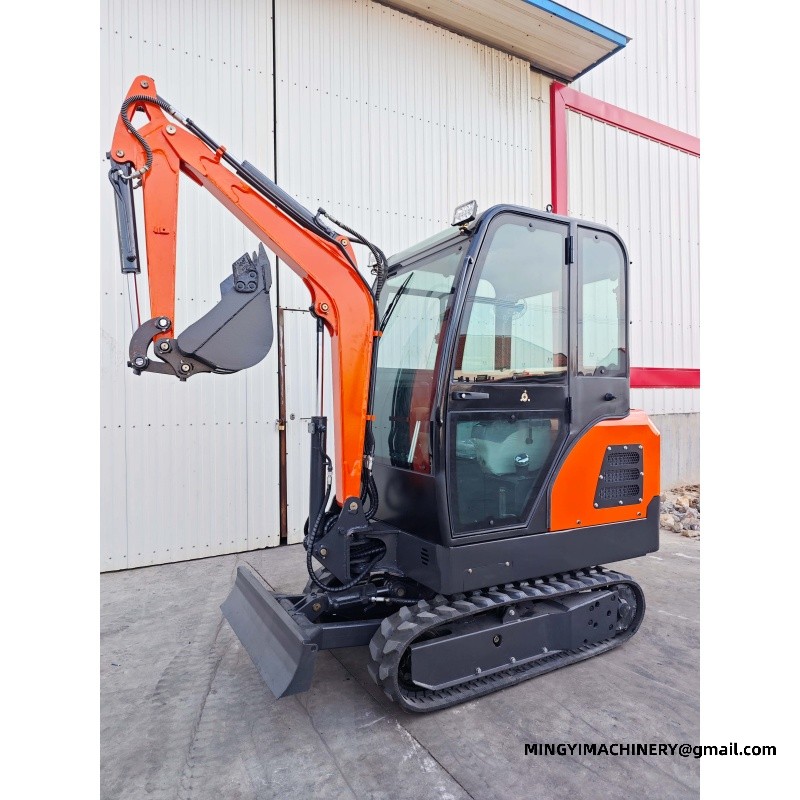
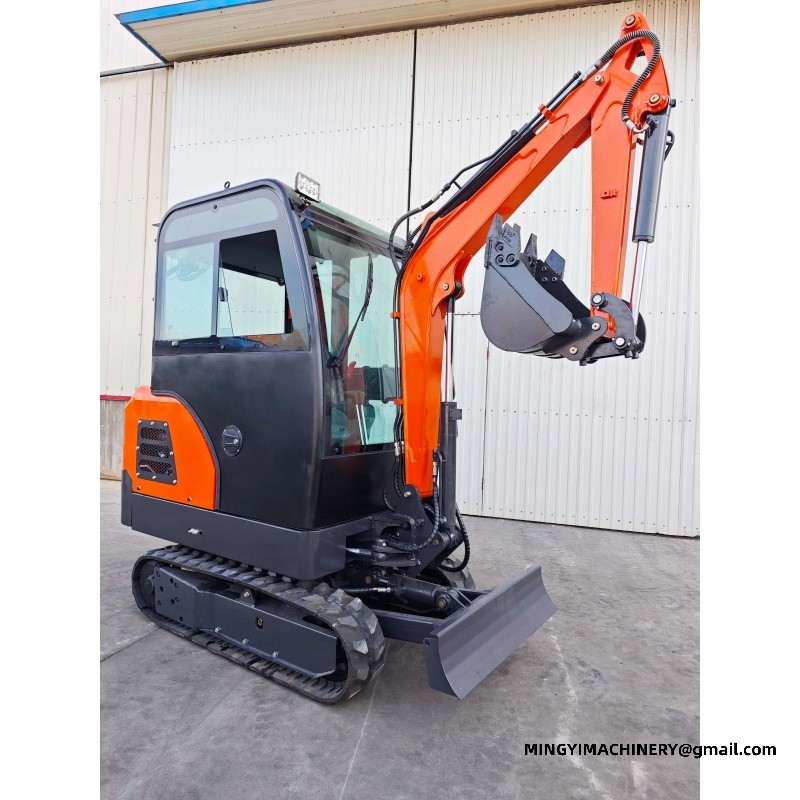
Reference specification — mini excavator range 12W 20-1W 12L 30-2L Operating weight 1200 kg (2645.55 lb) 1800 kg (3968.32 lb) 1200 kg (2645.55 lb) 2400 kg (5291 lb) Transport size (L×W×H) 2200 × 930 × 2250 mm 2550 × 1100 × 2200 mm 2200 × 930 × 2250 mm 2800 × 1500 × 2500 mm Max digging depth 1630 mm (64.17 in) 1800 mm (70.87 in) 1700 mm (66.93 in) 2200 mm (86.61 in) Max digging height 2750 mm (108.27 in) 2820 mm (111.02 in) 2600 mm (102.36 in) 2900 mm (114.17 in) Max dumping height 1960 mm (77.17 in) 2050 mm (80.71 in) 1800 mm (70.87 in) 2100 mm (82.68 in) Max digging radius 2900 mm (114.17 in) 3050 mm (120.08 in) 2900 mm (114.17 in) 3330 mm (131.1 in) Max digging distance 2100 mm (82.68 in) 2300 mm (90.55 in) 2300 mm (90.55 in) 2700 mm (106.3 in) Minimum turning radius 1300 mm (51.18 in) 1450 mm (57.09 in) 1450 mm (57.09 in) 1555 mm (61.22 in) Travel speed 3 km/h (1.86 mph) 5 km/h (3.11 mph) 3 km/h (1.86 mph) 7 km/h (4.35 mph) Gradeability 30° 30° 30° 30° Fuel consumption 1-1.3 L/h (0.264—0.343 gal) 2-3 L/h (0.528—0.793 gal) 1-1.3 L/h (0.264—0.343 gal) 2-3 L/h (0.528—0.793 gal) Fuel tank capacity 10 L (2.64 gal) 16 L (4.23 gal) 10 L (2.64 gal) 16 L (4.23 gal) Hydraulic oil tank 16 L (4.23 gal) 18 L (4.76 gal) 16 L (4.23 gal) 18 L (4.76 gal) Dozer blade lift height 180 mm (7.09 in) 180 mm (7.09 in) 180 mm (7.09 in) 230 mm (9.06 in) Dozer blade drop depth 210 mm (8.27 in) 210 mm (8.27 in) 210 mm (8.27 in) 280 mm (11.02 in)
Q. What are the excavator?
A. Public works and groundworks reward the machine that arrives small, works steady and reinstates cleanly - exactly the compact excavator brief. A swing boom reaches the line while the carrier stays off the carriageway. MINGYI builds the 08, 12 and 18 models covering the 0.8 to 6 tonne class, and this class of machine is where that range meets public works.
Q. What matters most on roadside work?
A. Stability at the trench edge and a boom that reaches the line while the carrier stays off the carriageway. Reinstatement quality - the part the public judges - comes from the grading and compaction tools running on the same carrier.
Q. Does MINGYI supply attachments with the machine?
A. Yes - buckets, breakers, augers, rakes and the rest of the working set ship with the carrier, matched to the hydraulic flow and the coupler. For public works the package is confirmed on the build sheet, so machine and tools arrive together and start work together.
Keeping a service record for the unit in daily use
Patterns show up in the record before they show up in the machine. Rising oil consumption or a filter that keeps blocking on a machine of this size is obvious on paper long before it becomes a failure on site.
Reading the early symptoms on the equipment on site
The symptom is usually not at the fault. A hydraulic function that has become sluggish on the machine itself may point to a filter, a relief setting or a pump, and starting with the simple checks avoids the wrong guess.
E-mail : sales@mingycn.com
LINE ( ID ): mingyicn
Lifting, tie-down and transport securing of mini excavator for public works
Lifting points are specified by the manufacturer, and improvising with the bucket linkage or the mounting ears is how machines get dropped.
The rated capacity of the crane and the slings is checked against the shipping weight of the machine rather than its working weight.
Related pages
mini excavator for roadside drainage · mini excavator for grounds maintenance · Front End Loader Log Grapple: Section Widths and Pin Geometry · Mini Excavators









