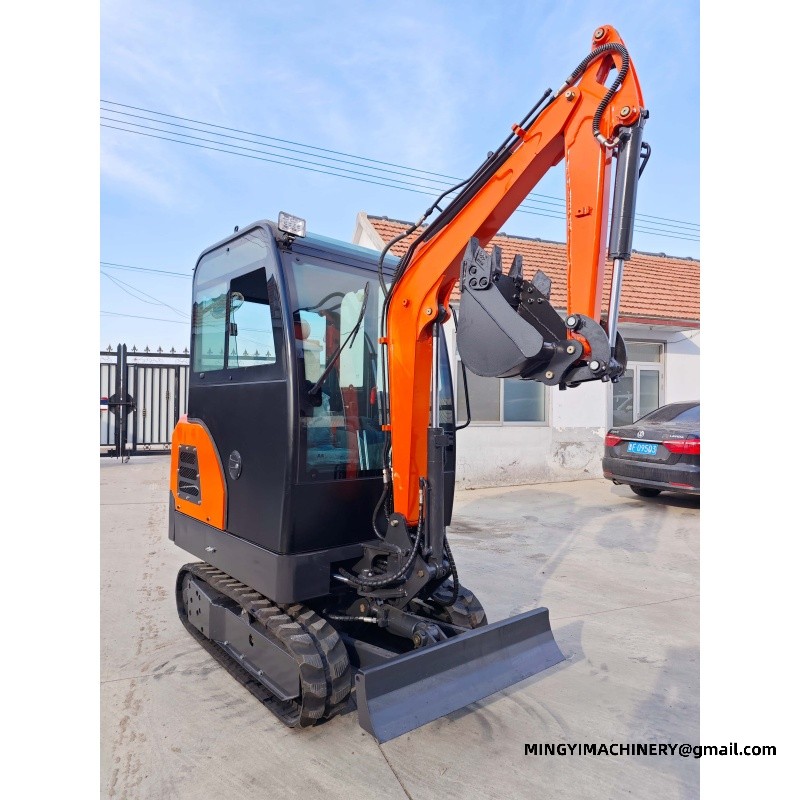
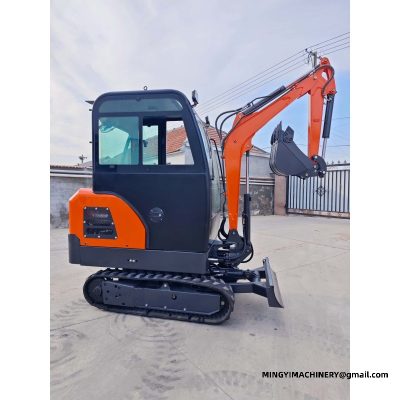
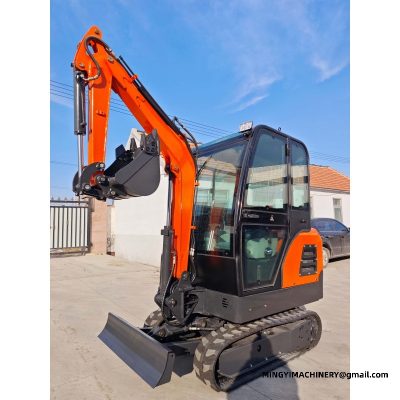
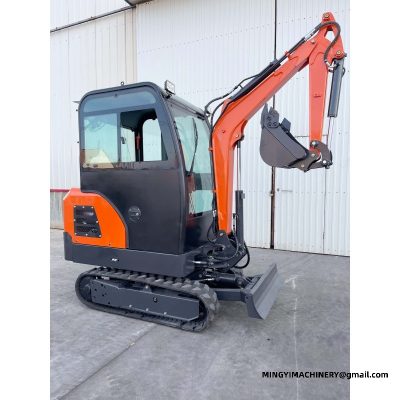
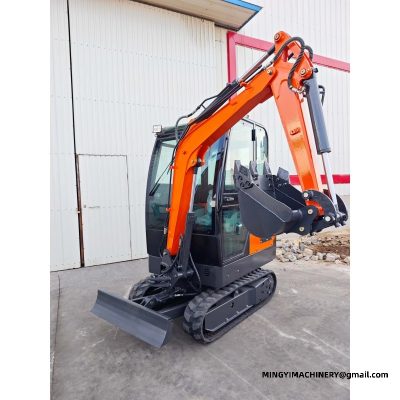
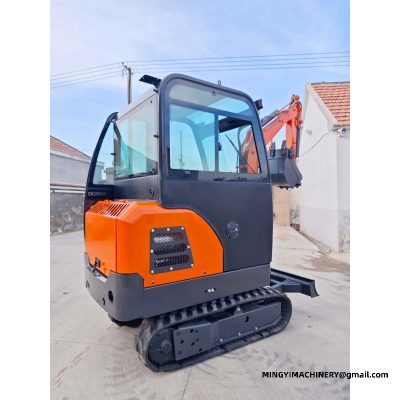
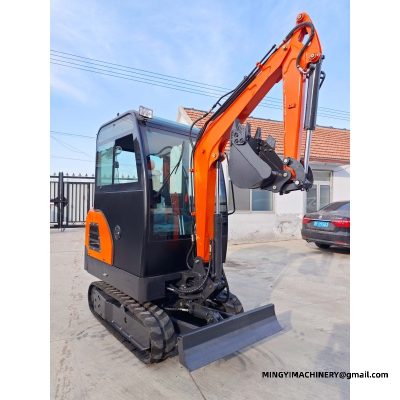
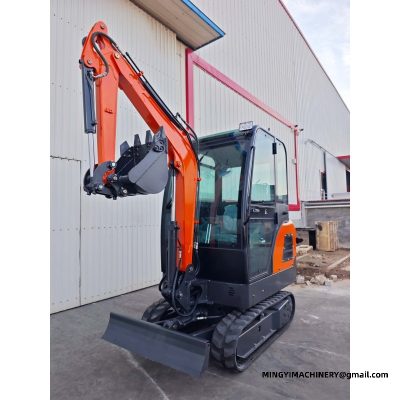
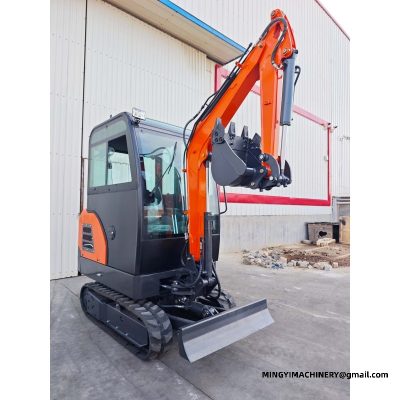
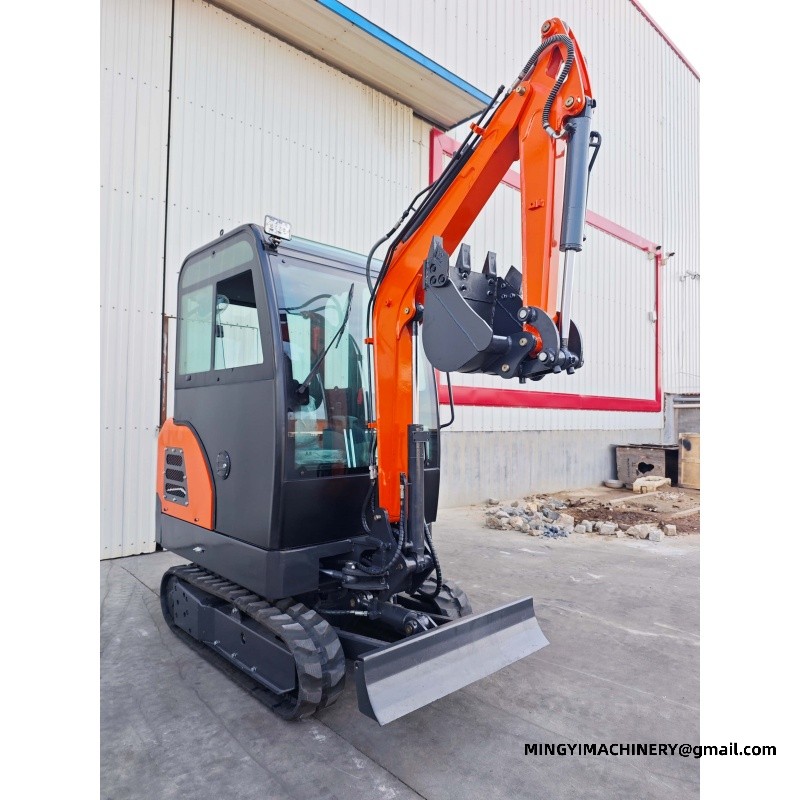
Inside a greenhouse the excavator works under a low roof and between beds, so height, width and fumes all become limiting factors. MINGYI builds compact excavators that growers use for deep tillage and root crop digging in these confined spaces.
The work is closer to cultivation than to construction, but the machine still has to reach depth, turn in a narrow aisle and leave the bed structure intact.
Limits inside a greenhouse structure
Roof height and bed spacing determine how large a machine can enter, and a canopy version is generally preferred because it keeps the overall height down. A narrow body lets the excavator move along the aisle between planted beds.
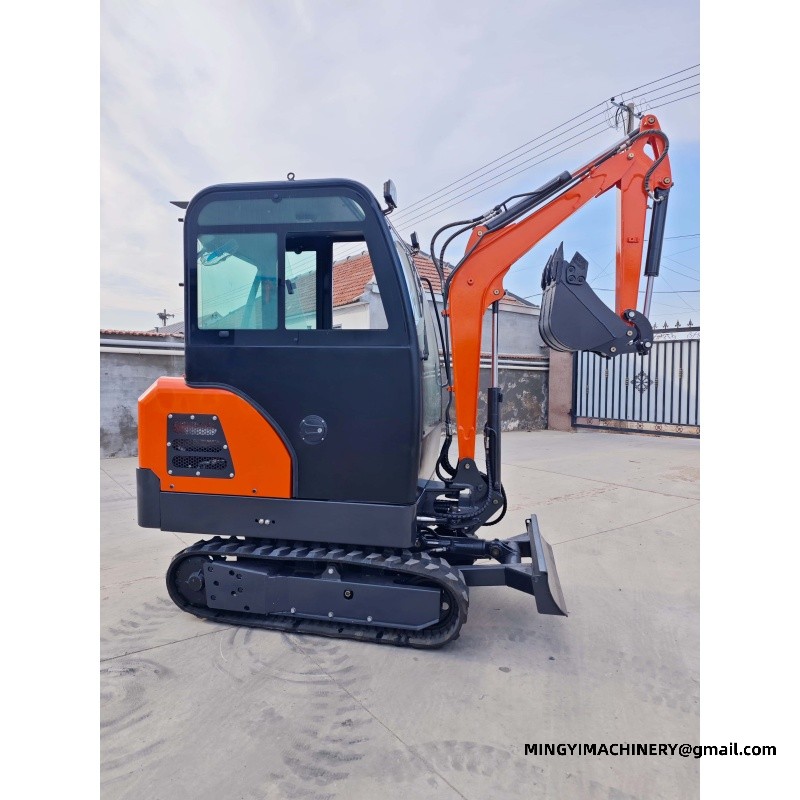
Because the machine runs inside an enclosed space, engine choice and ventilation are part of the planning. Buyers confirm the engine and the working height with MINGYI at the ordering stage.
Deep tillage and root digging in beds
Deep tillage in a greenhouse breaks up compacted subsoil without inverting the whole bed, and a soil loosener or rotary tiller attachment does this with the carrier moving slowly along the aisle. The depth is set to suit the crop root zone.
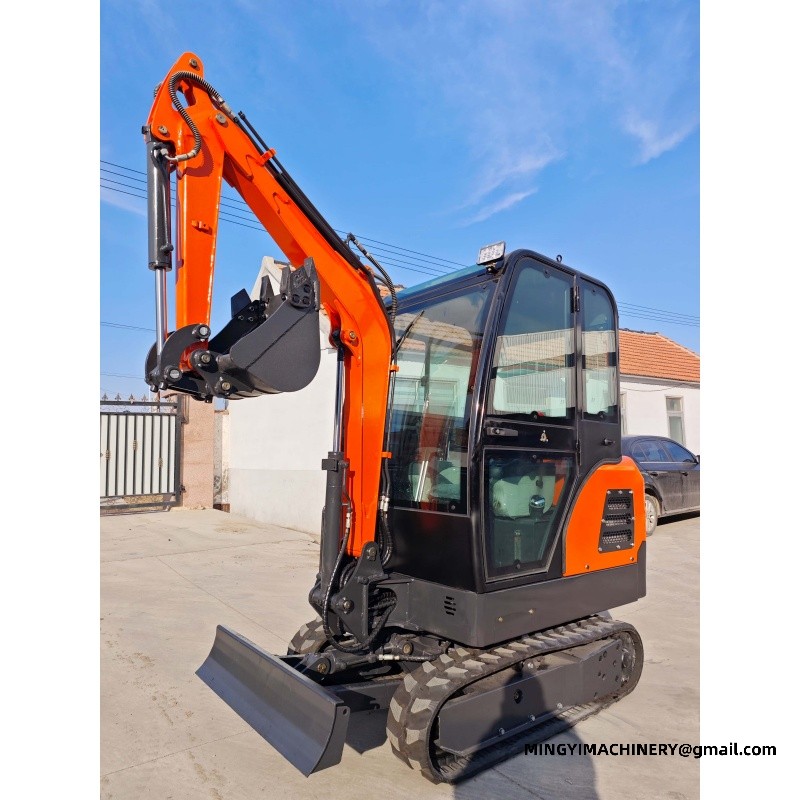
Herb and root crop digging follows a similar pattern, lifting the crop with a bucket or a root digger while the machine keeps to the row. Gentle, controlled movement matters more than high output in these beds.
For greenhouse work the details to give MINGYI are the roof height, the aisle width and the tillage depth needed, so the excavator can be specified to fit inside the structure.
Boom configuration for mini excavator for greenhouse deep tillage A swing boom lets the machine dig parallel to its tracks without repositioning, which is what makes trenching beside a wall or a fence practical. On the excavator this is often the option that decides whether a job is possible at all. Extended and offset boom configurations change reach and working range. This class of machine with a longer arm reaches further but lifts less at full extension, so the specification is set against the deepest and furthest point on the job list. Working a mini excavator for greenhouse deep tillage in confined spaces Clearance above matters as much as around. Door heights, pipework and overhead services set the limit for the unit in daily use indoors, and measuring them first avoids a machine that arrives and cannot be used. Ventilation is the other indoor constraint. Running a machine of this size inside a closed structure needs air movement, and that is a planning item rather than something to discover after the first hour. Orchard, vineyard and farm use of mini excavator for greenhouse deep tillage Ditching, fertilising and drainage on farmland suit the equipment on site because the work is spread over a large area in short bursts. The machine travels behind a pickup and works where it stops. Farms also use the machine itself for general maintenance - clearing a watercourse, repairing a track, loading a spreader. One carrier with a few attachments covers most of the jobs that would otherwise wait for a contractor. Municipal and public works with mini excavator for greenhouse deep tillage Municipal crews work on streets, footpaths and parks where the public is present. The model in question is specified because it occupies little space, works inside a small exclusion zone and can be moved on a standard trailer. Drainage repair, tree planting, footway reconstruction and cemetery work are all within the range of the machine in that duty. The jobs are small individually and continuous across the year. Quick coupler practice on mini excavator for greenhouse deep tillage Couplers are specified early because they affect the arm and the hydraulic kit. Adding one to the unit on the job after delivery means new pins, new hoses and a fitment session; adding it at build time is a line on the sheet. For a fleet that shares attachments between machines, a common coupler standard matters more than the coupler brand. A machine built for the work that picks up the same tools as the larger machines keeps the rack usable across the yard. Road and paving work for mini excavator for greenhouse deep tillage Road repair generates short, interrupted jobs - a patch, a drainage connection, a kerb line. The equipment in service is economical here because it travels on a small trailer and starts working minutes after arriving. Breaking out a failed slab and backfilling the same hole in one visit is normal work for the excavator. The breaker and the bucket come off the same coupler, so the road is reopened the same day. Acceptance checks when this class of machine arrives Delivery day is the best time to find a problem. Checking the specification against the order, the fluid levels, the fasteners and any transport damage while the machine of this size is still on the trailer is faster than claiming later. A function check before the machine goes to work is worth the hour. Running through the controls, the travel and the attachment circuit on the unit in daily use confirms it is set up as specified and ready for the site. OEM and fleet customisation of the equipment on site Customisation also covers the specification sheet. A fleet buyer may want every model in question delivered with the same coupler, the same engine and the same tool kit so training and parts stock stay simple. Documentation can be prepared to suit the importer. Manuals, parts books and decal sets for the machine itself can be supplied with the buyer's own branding where the order size justifies it. Operator technique for the machine in that duty Output on a compact machine comes from placement rather than power. An experienced operator keeps the unit on the job working inside the swing arc, positions once and digs a full run instead of repositioning for every bucket. The second habit is tool discipline. Running a machine built for the work with the right bucket width for the trench means less spoil, less reinstatement and a cleaner job than a wide bucket and a lot of trimming. Specifying the equipment in service against a job list Buyers who skip this step either over-buy or under-buy. The excavator specified only from machine size tends to arrive without the coupler, the circuits or the track type the work actually needs. Useful information to send with an enquiry includes working width, required digging depth, ground conditions and the attachment set. Those four items let the factory specify this class of machine that fits rather than a generic build. Interior and light demolition with the unit in daily use Interior demolition is an access and a weight question. A machine of this size that fits through a doorway and works on a suspended floor does jobs that would otherwise be done by hand or by a larger machine that cannot enter. Dust, debris clearance and floor loading all argue for a compact machine indoors. The equipment on site spreads its weight over a wider track footprint than a wheeled machine of similar capacity. Specification data for the machine itself The figures below are the factory figures for the models most often matched to the model in question. They are the numbers to check against the site: the depth the work needs, the reach from one position, and the width of the narrowest point on the route in. Every value shown is as built for the machine in that duty; options such as cab, side swing or a telescopic undercarriage change the transport dimensions and are confirmed at order stage. The cab decision follows the climate and the hours. Operators working a full shift in the unit on the job benefit from a sealed cab with wipers and heating; operators stepping on and off every few minutes usually prefer the canopy for the visibility and the quick exit. Enclosure also changes noise and dust exposure. A sealed cab on a machine built for the work keeps dust out on dry sites and lets the machine work through weather that would otherwise stop a canopy machine for the day.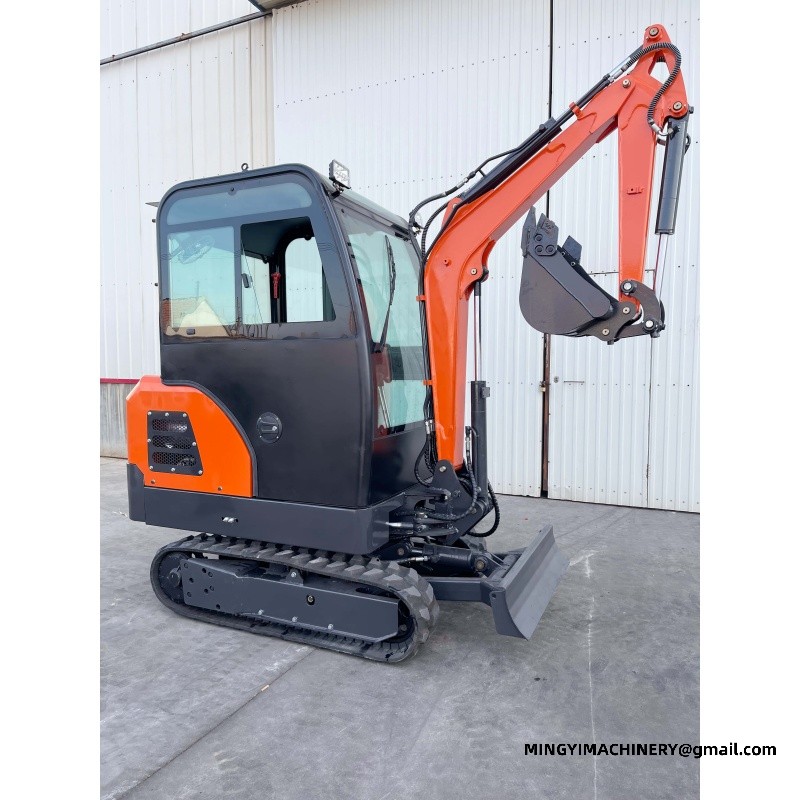
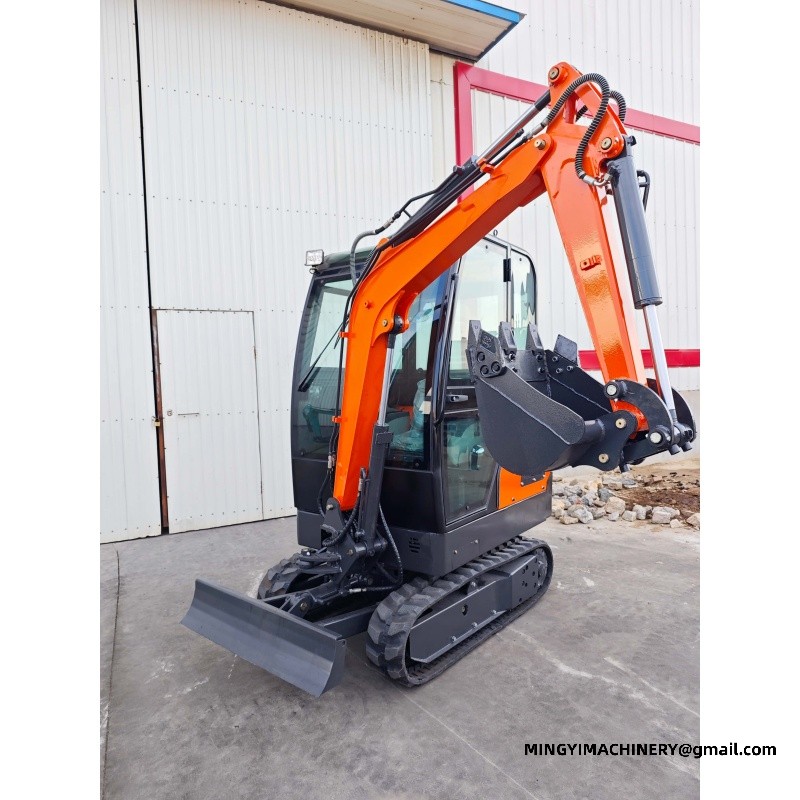
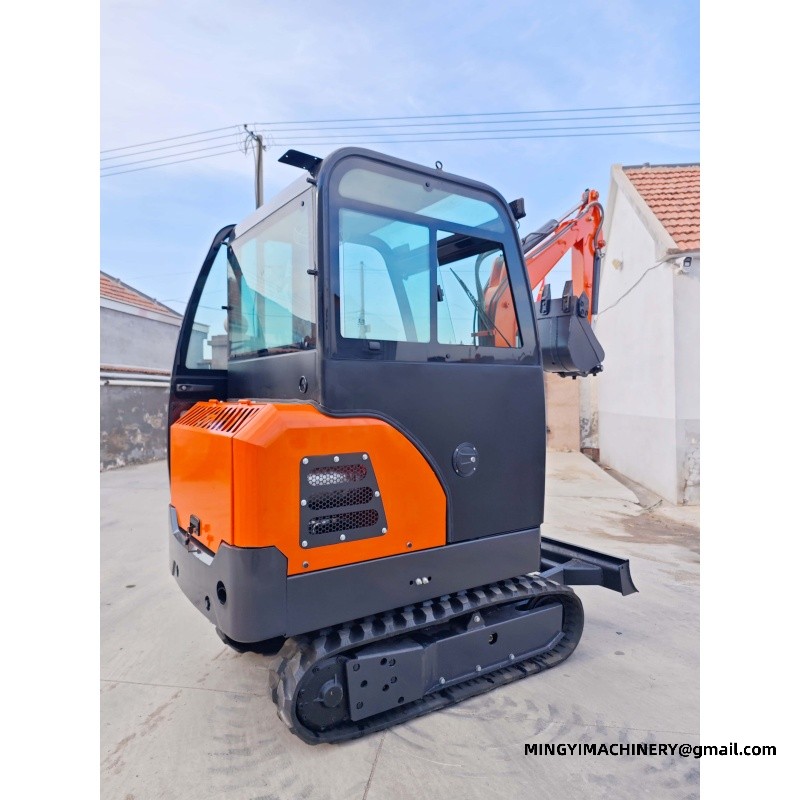
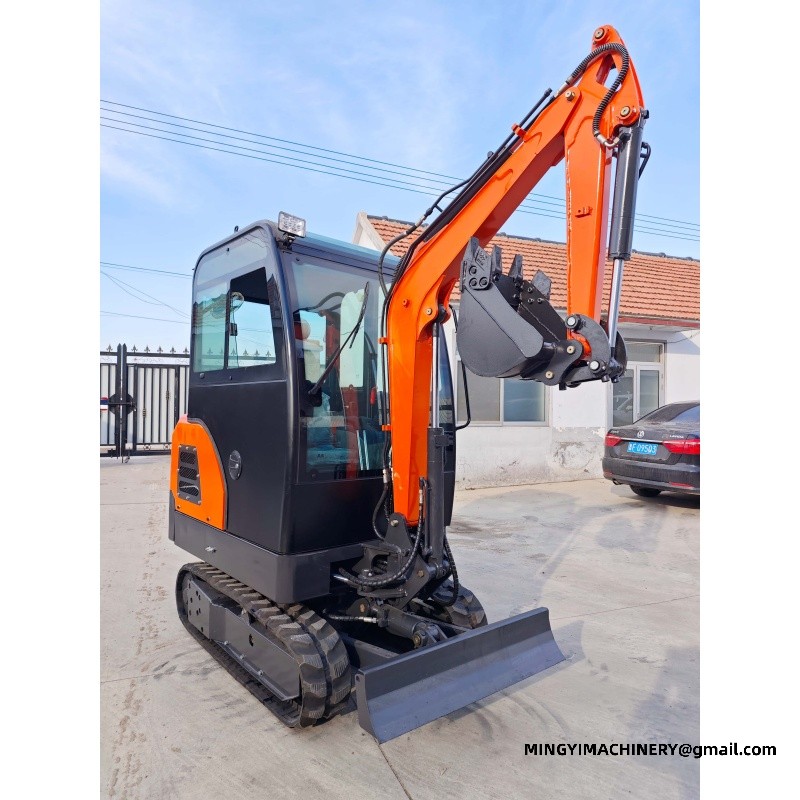
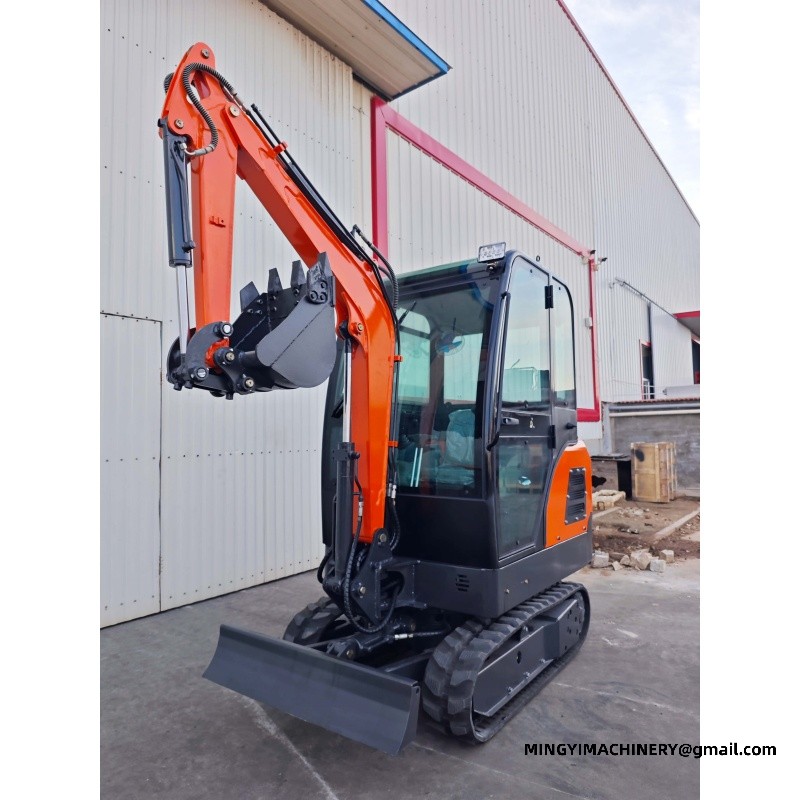
Reference specification — mini excavator range 13W 15L 20-2L 25L Operating weight 1300 kg (2866.01 lb) 1400 kg (3086.47 lb) 1900 kg (4188.78 lb) 2200 kg (4850.17 lb) Transport size (L×W×H) 2200 × 930 × 2250 mm 2200 × 930 × 2250 mm 2600 × 1300 × 2344 mm 3000 × 1300 × 2700 mm Max digging depth 1630 mm (64.17 in) 1700 mm (66.93 in) 2100 mm (82.68 in) 2300 mm (90.55 in) Max digging height 2750 mm (108.27 in) 2750 mm (108.27 in) 2880 mm (113.39 in) 3100 mm (122.05 in) Max dumping height 1960 mm (77.17 in) 1960 mm (77.17 in) 2100 mm (82.68 in) 2050 mm (80.71 in) Max digging radius 2900 mm (114.17 in) 2900 mm (114.17 in) 3215 mm (126.57 in) 3900 mm (153.54 in) Max digging distance 2100 mm (82.68 in) 2300 mm (90.55 in) 2460 mm (96.85 in) 3100 mm (125.05 in) Minimum turning radius 1300 mm (51.18 in) 1450 mm (57.09 in) 1587 mm (62.48 in) 1800 mm (70.87 in) Travel speed 3 km/h (1.86 mph) 3 km/h (1.86 mph) 5 km/h (3.11 mph) 7 km/h (4.35 mph) Gradeability 30° 30° 30° 30° Fuel consumption 1-1.3 L/h (0.264—0.343 gal) 1-1.3 L/h (0.264—0.343 gal) 2-3 L/h (0.528—0.793 gal) 2-3 L/h (0.528—0.793 gal) Fuel tank capacity 10 L (2.64 gal) 10 L (2.64 gal) 16 L (4.23 gal) 16 L (4.23 gal) Hydraulic oil tank 16 L (4.23 gal) 16 L (4.23 gal) 18 L (4.76 gal) 18 L (4.76 gal) Dozer blade lift height 180 mm (7.09 in) 180 mm (7.09 in) 180 mm (7.09 in) 230 mm (9.06 in) Dozer blade drop depth 210 mm (8.27 in) 210 mm (8.27 in) 210 mm (8.27 in) 280 mm (11.02 in)
Q. What is the equipment in service?
A. Farm and orchard work is seasonal and varied - trenching at planting, drainage before the rains, clearing and grading after harvest - and one compact machine covers most of that calendar. Rubber tracks and a swing boom protect roots and irrigation lines while the carrier stays on the headland. Read the excavator together with the engine, track and attachment pages: jobs around greenhouse deep tillage are decided by how those choices line up, not by any single number on the sheet.
Q. Which farm jobs come first?
A. Drainage before the rains, trenching for water and power at planting, then clearing, grading and post-hole work through the season. One compact excavator with a bucket, an auger and a rake covers most of that calendar.
Q. What support follows the sale?
A. Spare-part kits, wear items and service documentation ship with the programme, and the parts team works from the serial plate to match components exactly. Warranty and support terms for the greenhouse deep tillage order are confirmed in writing before the machine leaves.
Documents that travel with this class of machine
The machine is only half of what arrives. The parts book, the service schedule and the declarations that come with the unit in daily use are what let the owner register, insure and maintain it without a second round of emails.
A second operator for a machine of this size
Shared machines need shared habits. Two operators on the equipment on site should do the same daily checks in the same order, because the check that one person skips is the check that eventually matters.
Storage and long idle periods for the machine itself
Standing still is harder on a machine than working. Preparing the model in question for a long idle period means clean fluids, a charged battery and protection for the exposed surfaces, because neglect is not the same as rest.
E-mail : sales@mingycn.com
LINE ( ID ): mingyicn
Slope working and stability with mini excavator for greenhouse deep tillage
Rated capacity is measured on level ground, and once the machine works across a gradient the safe figure follows the slope and the load position.
Tracks or tyres, the contact patch is what holds the machine, and worn or wrongly inflated running gear reduces it more than most operators expect.
Working up and down the fall line rather than across it keeps the load predictable, and where that is impossible the load is reduced.
Related pages
mini excavator for lawn and turf care · mini excavator for drainage ditching · Wheel Loader Snow Blower: Specifying the Third Circuit · Mini Excavators









