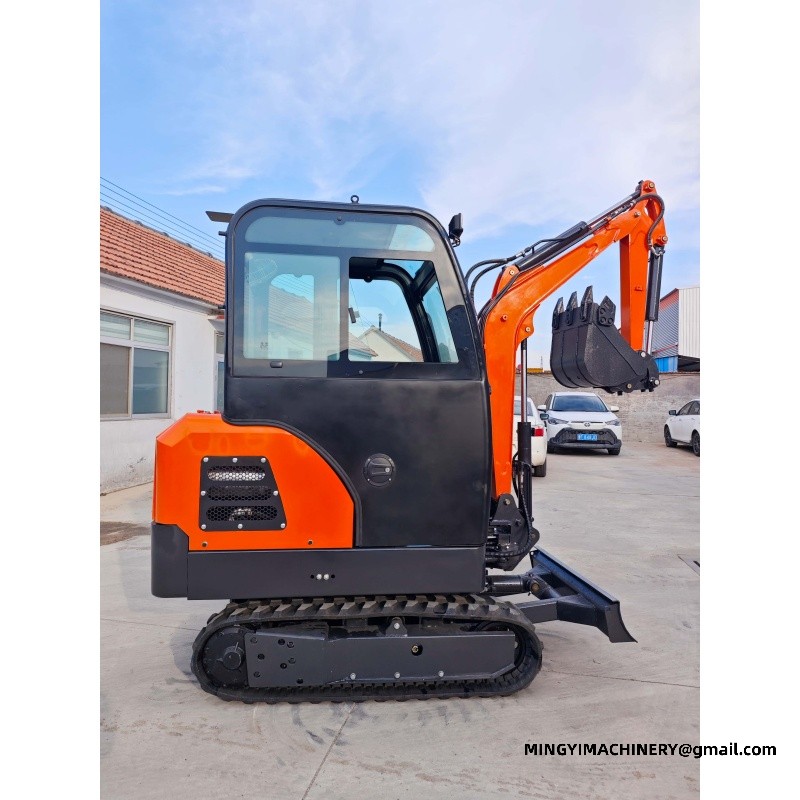
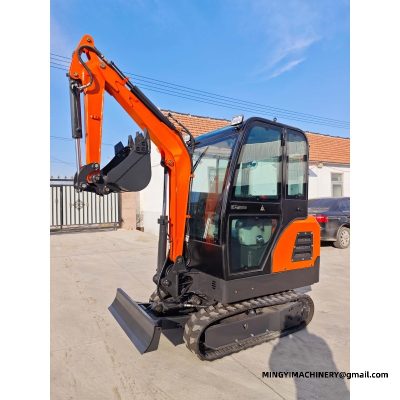
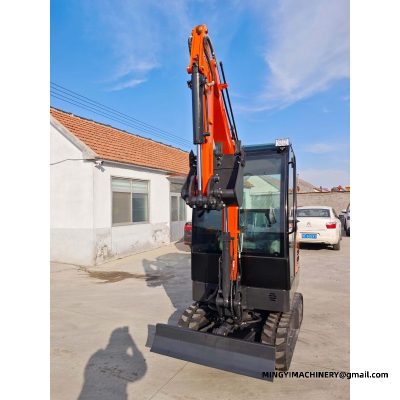
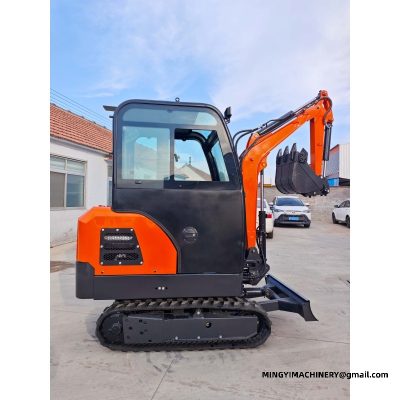
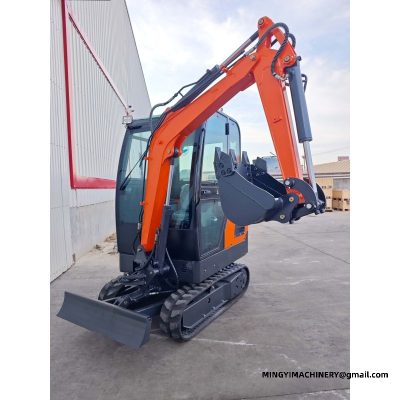
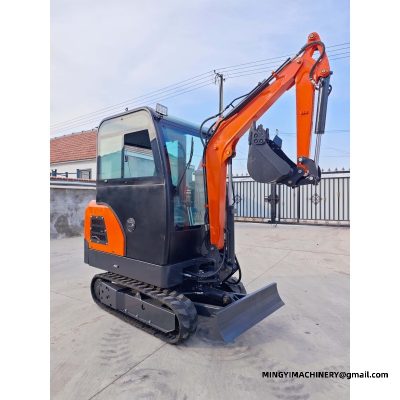
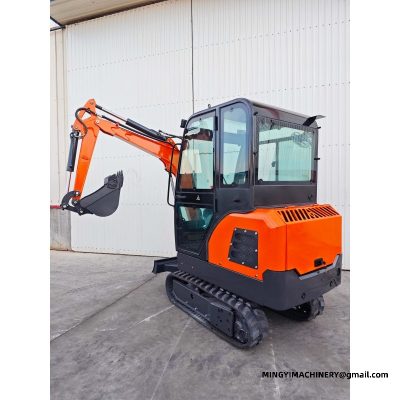
Every MINGYI compact excavator is built to order, which means the production line starts from a buyer's specification rather than from a batch of identical finished units. The order travels with the machine through the build so the right parts reach the right stage.
For a buyer, the value of this approach shows up in the details: the track type, the boom arrangement and the attachment brackets are prepared for that specific machine instead of being adapted afterwards.
Following a machine through build to order
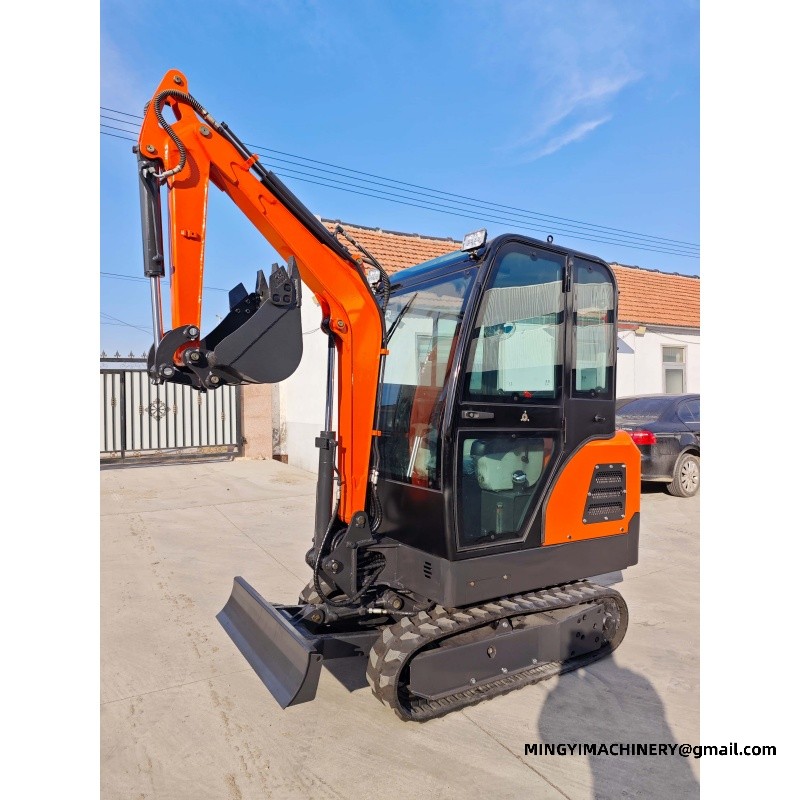
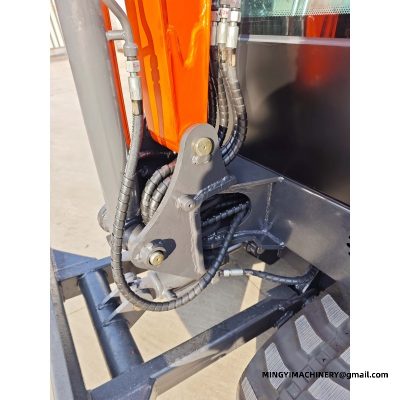
Production begins with the undercarriage, where the choice between rubber tracks and steel tracks with rubber blocks is set. The boom and dipper are assembled next, and the hydraulic lines are laid out to suit the attachments on the order.
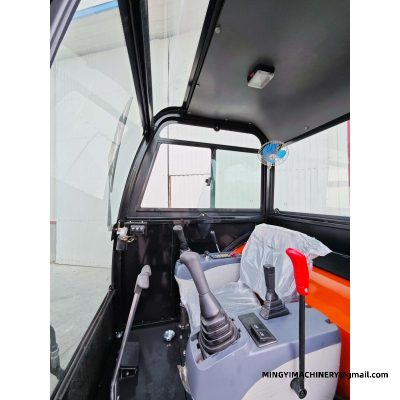
The engine is installed once the buyer's engine preference is confirmed, and the cab or canopy is fitted to match the climate the machine will work in. Each stage is checked before the unit moves on.
Why build to order suits compact excavator buyers
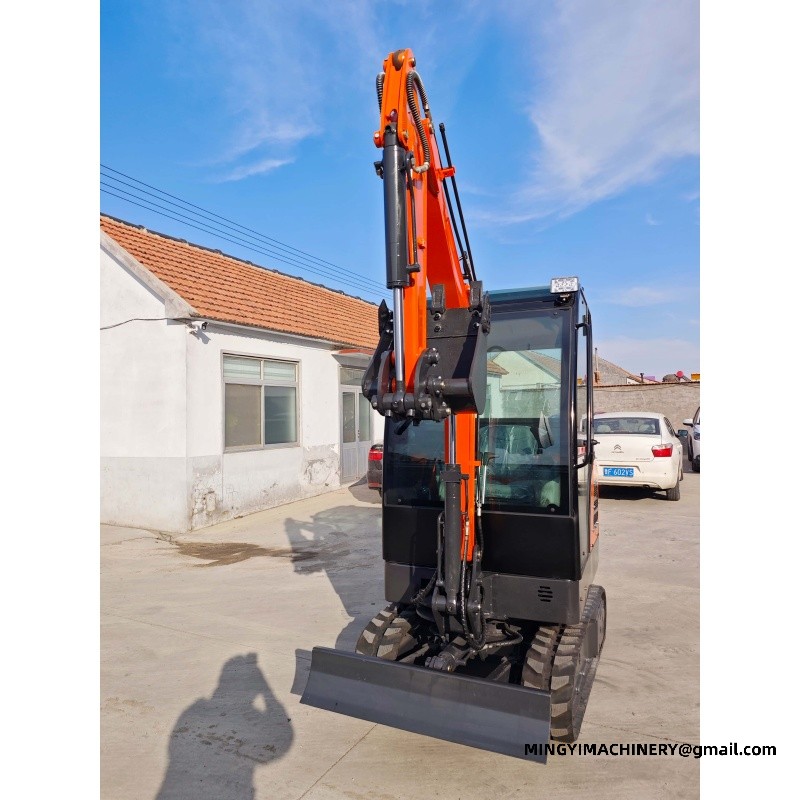
Compact excavators are used in widely different jobs, from greenhouse tillage to service trenching, and a single fixed specification rarely suits all of them. Building to order lets the machine be matched to the work instead of the other way round.
The same approach makes repeat orders simpler, because the factory holds the earlier specification and can rebuild it. Spare parts and service information are issued to match the machine as it was actually built.
A build to order enquiry should list the job, the attachments and the working conditions, so MINGYI can sequence production around those requirements and confirm the specification before the line starts.
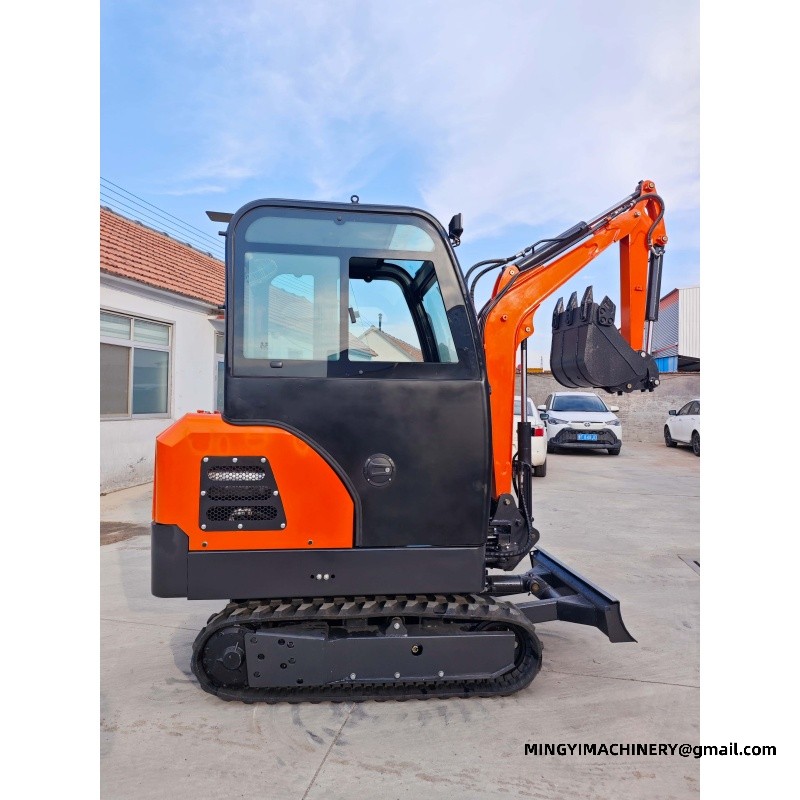
Noise, dust and working near occupied buildings Work near housing or occupied premises brings constraints that open sites do not. Start times, exhaust condition and how often the excavator needs to reverse are the practical limits that neighbours notice. Enclosure and machine condition both reduce noise. This class of machine with intact panels, sound mounts and a maintained exhaust is measurably quieter than the same machine with loose guards, and the difference matters on restricted sites. What owners should plan for beyond the mini excavator build to order production Purchase decision is the visible part of the effort. Fuel, filters, tracks or tyres, the operator and the transport between sites are the items that decide what the unit in daily use actually demands over a few seasons, and they are worth listing before the order. The useful comparison is demand per working hour, not demand per machine. A machine of this size that works more hours a year spreads its standing takes over more output, which is why utilisation usually matters more than the invoice figure. Boom configuration for mini excavator build to order production A swing boom lets the machine dig parallel to its tracks without repositioning, which is what makes trenching beside a wall or a fence practical. On the equipment on site this is often the option that decides whether a job is possible at all. Detachable boom sections are used where transport length matters. The machine itself that has to travel on a standard trailer can be built so the arm comes off for the road and goes back on at the site. Lifting and material handling with a mini excavator build to order production Stability changes with reach. A load the model in question handles close in becomes a different proposition at full extension, so the working radius belongs in the plan before the lift rather than during it. Ground condition under the machine is part of every lift. Soft or uneven support is the common factor in handling incidents, and checking it takes less time than recovering the machine in that duty that has settled. Engine options behind mini excavator build to order production Two buyers can order the same a machine built for the work and receive different engines. The decision is rarely about peak power; it is about which parts counter is closest to the site and which engine the local mechanic already knows. Engine choice is also an emissions and documentation question for some markets. Listing the available units with the unit on the job enquiry lets the factory confirm what can be supplied and documented for the destination country. Interior and light demolition with mini excavator build to order production Interior demolition is an access and a weight question. The equipment in service that fits through a doorway and works on a suspended floor does jobs that would otherwise be done by hand or by a larger machine that cannot enter. Breaking out a floor slab, a wall footing or a concrete step is routine work for the excavator with a breaker. The machine is small enough to work inside and heavy enough to run the tool at a practical rate. Matching this class of machine to ground conditions Soft ground is a flotation problem, not a power problem. The unit in daily use on wide rubber tracks crosses lawn, sand and cultivated soil that would stop a narrower machine or a wheeled unit of the same capacity. Mixed sites are common and argue for a compromise specification. Most buyers choose rubber for a machine of this size and accept the wear, unless the majority of the work is on material that will damage it. Specifying the equipment on site against a job list The practical way to specify is to write the job list first: the narrowest access, the deepest trench, the heaviest tool and the surfaces the machine must cross. The machine itself is then matched to those four numbers. Buyers who skip this step either over-buy or under-buy. The model in question specified only from machine size tends to arrive without the coupler, the circuits or the track type the work actually needs. Trenching work with the machine in that duty Service trenches are the most common reason the unit on the job is hired. Water, sewage, cable and gas runs are narrow, shallow and often close to existing services, which is exactly the work a full-size machine cannot do safely. Trench quality depends on the bucket width and the operator, not on machine size. A machine built for the work with a narrow bucket and a swing boom cuts a clean run along a boundary without disturbing the ground either side of it. Export packing and shipping of the equipment in service Machines leave the factory prepared for container or flat rack shipment. The excavator is normally shipped with the attachment set and the spare parts list agreed in advance so the container is planned once. Buyers who import regularly plan the spare parts with the machine. This class of machine ordered with a wearing-parts kit arrives ready to work rather than ready to wait for the first service interval. Hydraulic circuits on the unit in daily use Auxiliary hydraulic lines are what let a machine drive a tool rather than only a bucket. A machine of this size specified with the right circuits and flow runs a breaker or an auger without an add-on power pack bolted to the frame. Flow and pressure are matched to the tool, not to the machine size. Asking for the attachment list first means the equipment on site leaves the factory with circuits that suit the heaviest tool the buyer intends to run. Specification data for the machine itself Where the model in question is being specified for a job list, the table below gives the factory figures that matter most: what the machine weighs, how deep and how far it works, and what it measures on a trailer. Figures are factory figures and are confirmed on the build sheet for the machine in that duty. Where a job sits between two models, the larger machine usually takes less time than the smaller one spends on rework. Grass cutting heads, rakes and tillers extend the unit on the job into ground care. The same carrier that digs a border in spring can cut and clear the same area later in the season. On soft landscape work the surface is the constraint. A machine built for the work on rubber tracks crosses turf without stripping it, which is why the same jobs are not given to a wheeled machine.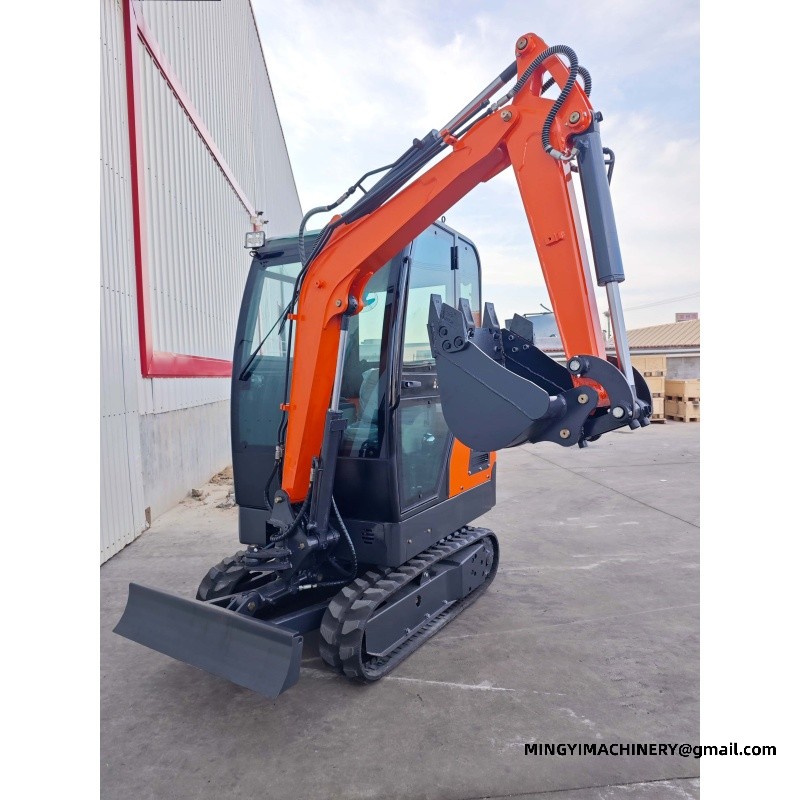
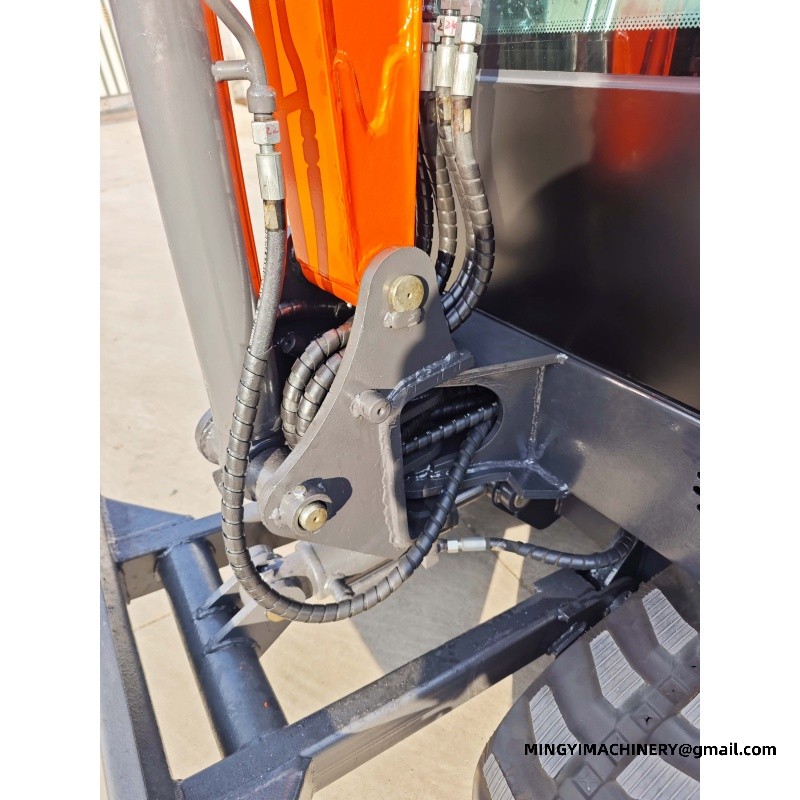
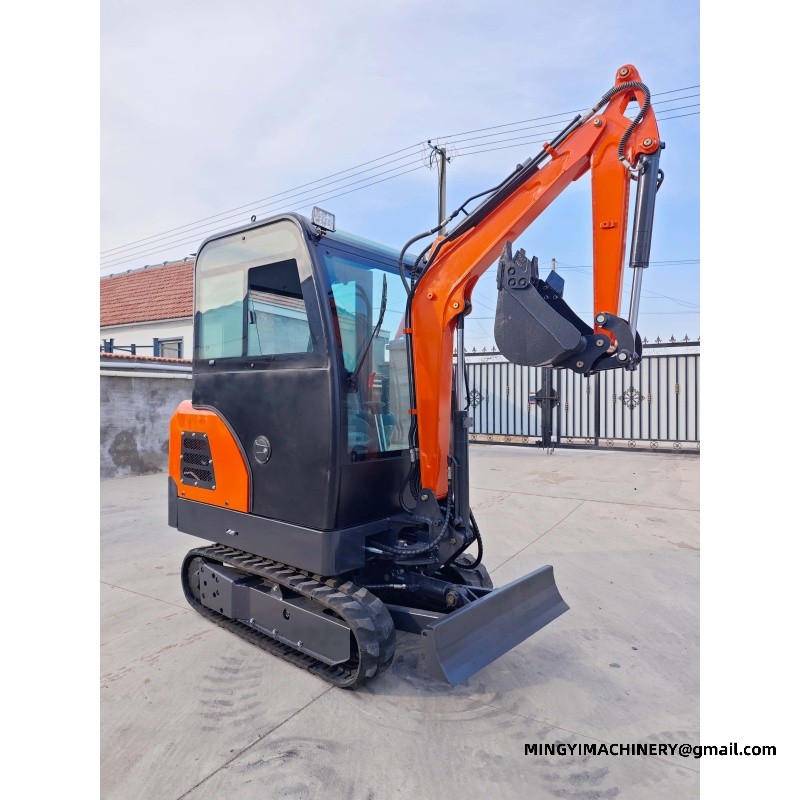
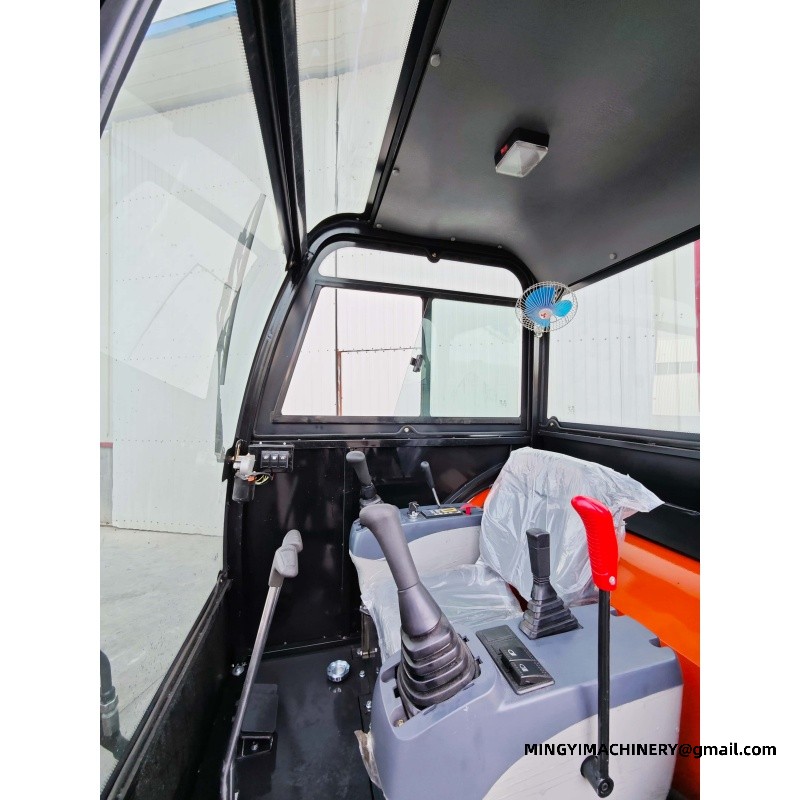
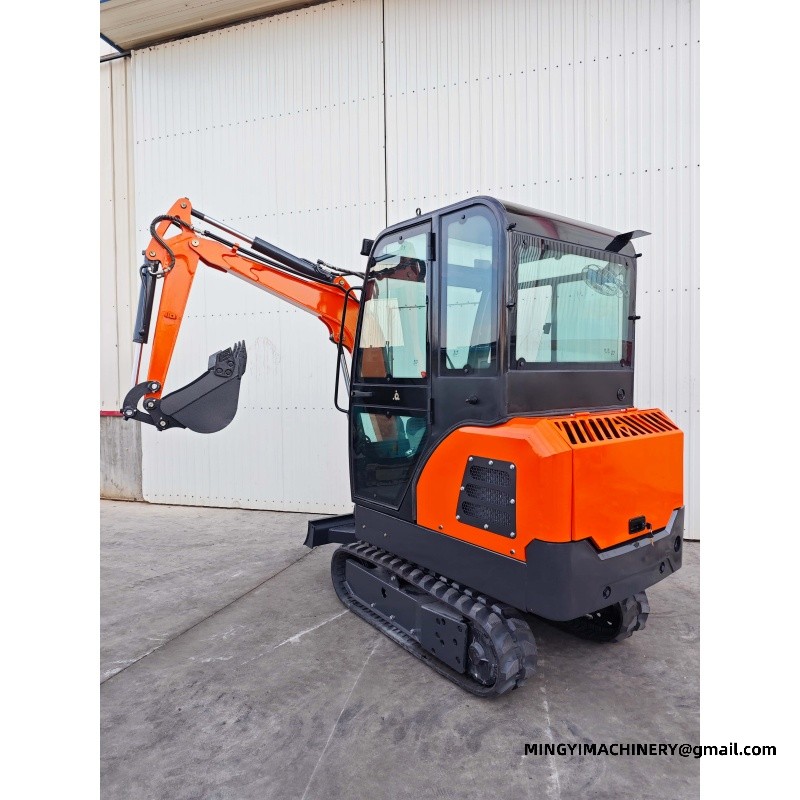
Reference specification — mini excavator range 09W 13W 15L 25L Operating weight 1100 kg (2425.08 lb) 1300 kg (2866.01 lb) 1400 kg (3086.47 lb) 2200 kg (4850.17 lb) Transport size (L×W×H) 1800 × 750 × 1970 mm 2200 × 930 × 2250 mm 2200 × 930 × 2250 mm 3000 × 1300 × 2700 mm Max digging depth 1250 mm (49.21 in) 1630 mm (64.17 in) 1700 mm (66.93 in) 2300 mm (90.55 in) Max digging height 2800 mm (110.24 in) 2750 mm (108.27 in) 2750 mm (108.27 in) 3100 mm (122.05 in) Max dumping height 1700 mm (66.93 in) 1960 mm (77.17 in) 1960 mm (77.17 in) 2050 mm (80.71 in) Max digging radius 2570 mm (101.18 in) 2900 mm (114.17 in) 2900 mm (114.17 in) 3900 mm (153.54 in) Max digging distance 1869 mm (73.58 in) 2100 mm (82.68 in) 2300 mm (90.55 in) 3100 mm (125.05 in) Minimum turning radius 1000 mm (39.37 in) 1300 mm (51.18 in) 1450 mm (57.09 in) 1800 mm (70.87 in) Travel speed 3 km/h (1.86 mph) 3 km/h (1.86 mph) 3 km/h (1.86 mph) 7 km/h (4.35 mph) Gradeability 30° 30° 30° 30° Fuel consumption 1-1.3 L/h (0.264—0.343 gal) 1-1.3 L/h (0.264—0.343 gal) 1-1.3 L/h (0.264—0.343 gal) 2-3 L/h (0.528—0.793 gal) Fuel tank capacity 8 L (2.11 gal) 10 L (2.64 gal) 10 L (2.64 gal) 16 L (4.23 gal) Hydraulic oil tank 16 L (4.23 gal) 16 L (4.23 gal) 16 L (4.23 gal) 18 L (4.76 gal) Dozer blade lift height 180 mm (7.09 in) 180 mm (7.09 in) 180 mm (7.09 in) 230 mm (9.06 in) Dozer blade drop depth 210 mm (8.27 in) 210 mm (8.27 in) 210 mm (8.27 in) 280 mm (11.02 in)
Q. Who chooses the equipment in service?
A. Trenching is the bread and butter of compact excavators: cable runs, pipe laying, drainage and service ducts all come down to a clean, straight cut at controlled depth. A bucket too wide pulls more spoil than the job needs and leaves a messy backfill; a bucket matched to the service keeps the cut clean. For build to order production applications the practical route is to send the job list to the factory and let the build sheet answer it - which is exactly what this page invites.
Q. Which bucket digs a clean trench?
A. A narrow trenching bucket matched to the pipe or cable, with teeth only when the ground is hard. MINGYI specifications bucket widths with the machine, so the trench and the tool arrive matched instead of guessed.
Q. Does MINGYI supply attachments with the machine?
A. Yes - buckets, breakers, augers, rakes and the rest of the working set ship with the carrier, matched to the hydraulic flow and the coupler. For build to order production the package is confirmed on the build sheet, so machine and tools arrive together and start work together.
Packing, loading and shipment of the excavator
How a machine travels decides how it starts on arrival. Securing this class of machine against movement, protecting the exposed cylinders and keeping the battery and fluids in the right state for the voyage all belong to the packing list.
Handover and getting familiar with the unit in daily use
Operators who come from a different machine need a short conversion. The controls on a machine of this size follow the usual pattern, but the response, the sightlines and the stopping distance are learned by doing rather than by reading.
E-mail : sales@mingycn.com
LINE ( ID ): mingyicn
Visibility and blind spots around mini excavator build to order production
Reverse alarms and beacons fail quietly, and testing them takes a minute whenever the machine changes site.
Dust, low sun and rain all shorten sight lines, and the sensible response is to slow the cycle rather than to work on memory.
The seat position, the mirror setting and the camera angle are worth recording once the operator is settled, so a change of driver does not undo them.
Related pages
mini excavator export packing · built to order mini excavator supply · Wheel Loader Supplier: Model Coverage and Container Planning · Mini Excavators









