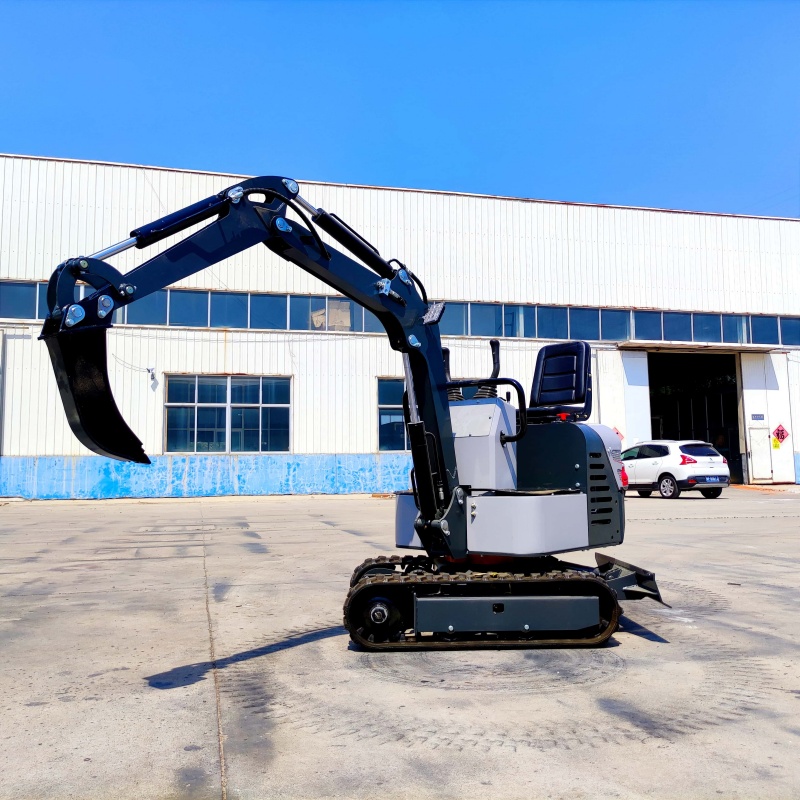
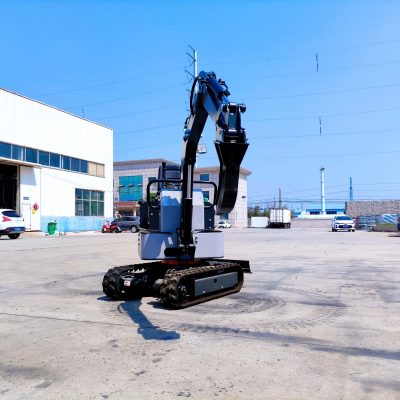
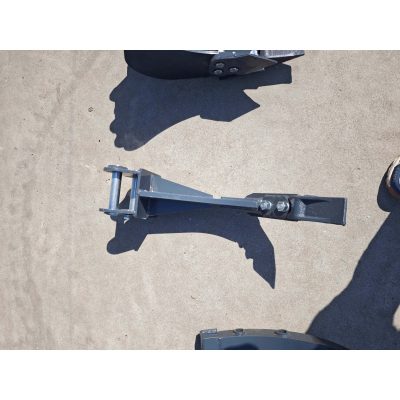
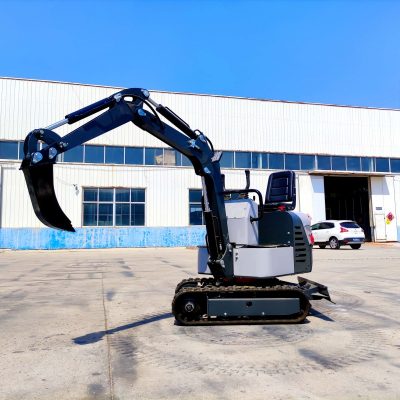
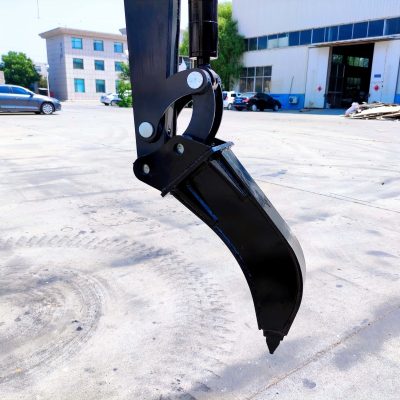
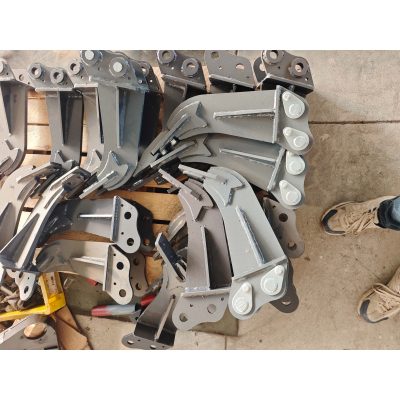
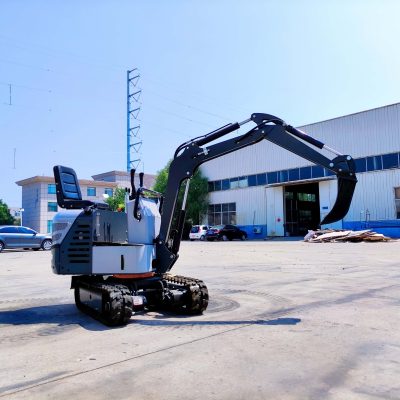
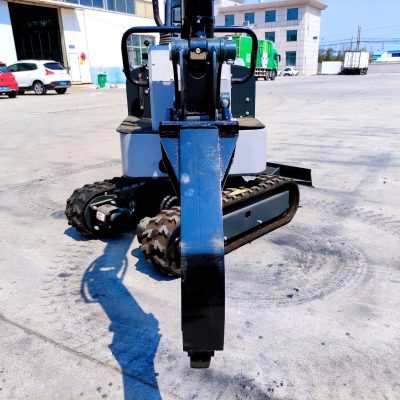
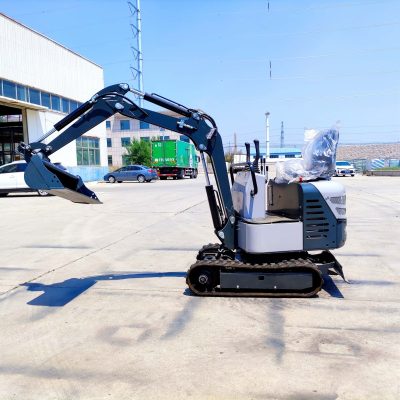
Some ground defeats a bucket before the job starts: sun-baked clay, compacted track ways, stony fill and the hardpan of repeated cultivation. A soil loosener mounted on the arm rips through these layers first, so the bucket works broken ground instead of fighting solid ground.
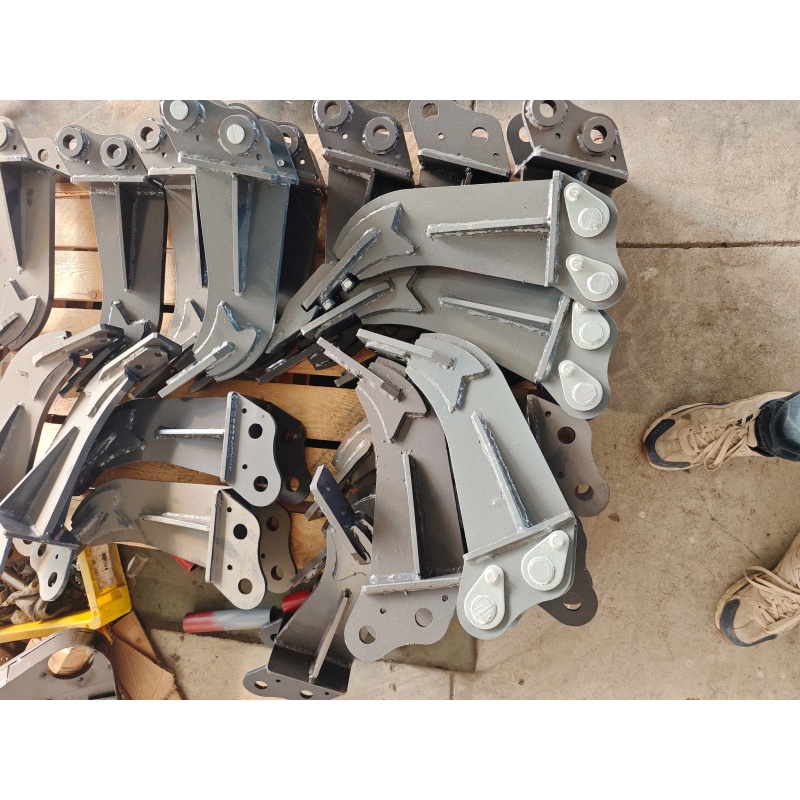
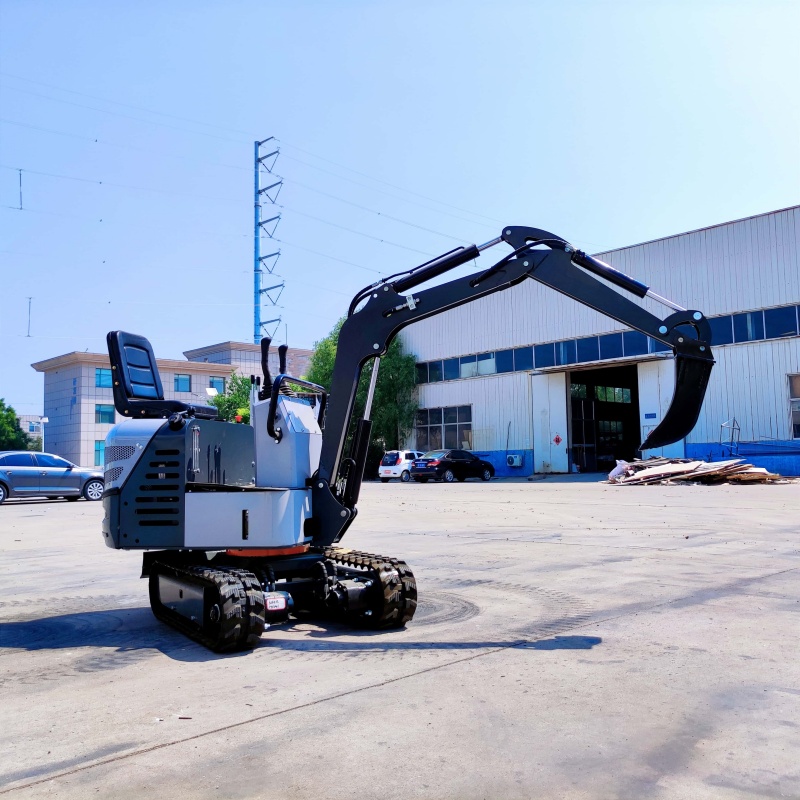
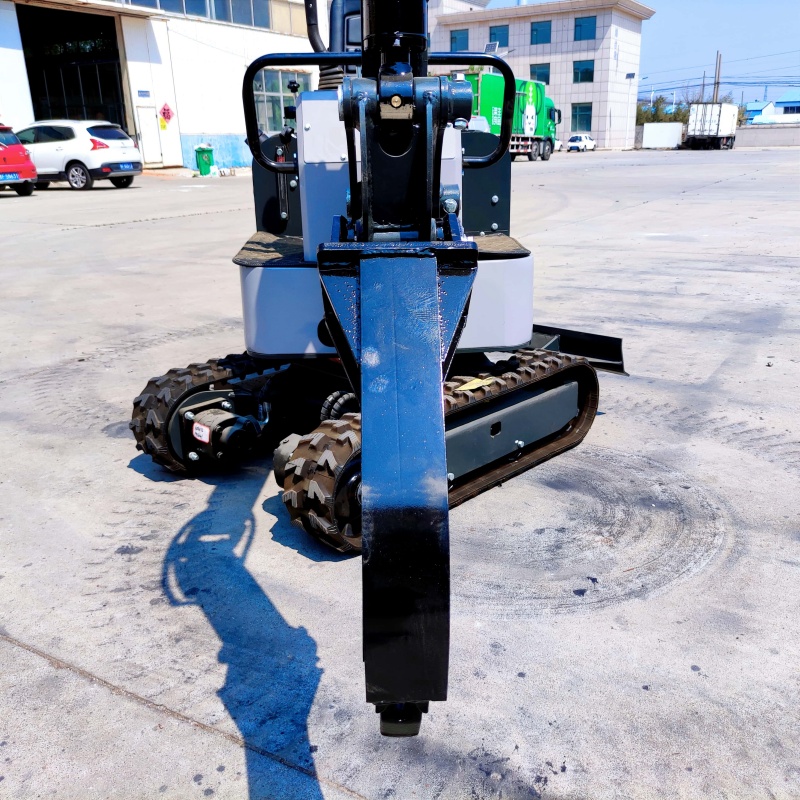
MINGYI supplies soil loosener attachments matched to its compact excavator range, ordered with the machine or against its recorded specification later. The shank setup is agreed at the ordering stage to suit the ground conditions the buyer describes.
Ground conditions that call for loosening
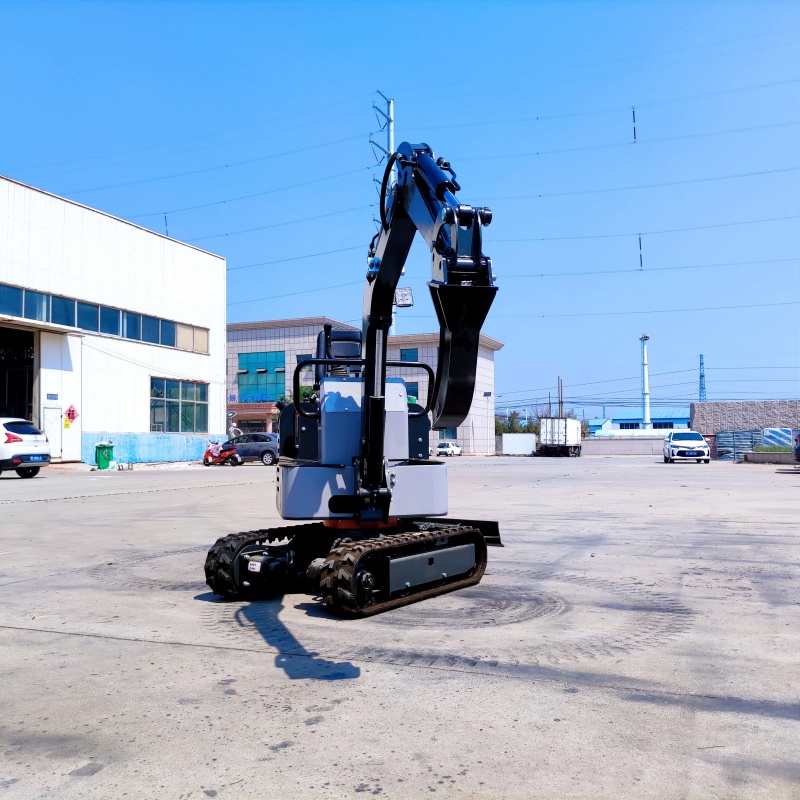
The loosener earns its keep on dried and compacted soils where bucket teeth skate across the surface, on building plots compacted by plant traffic, on old pasture returning to cultivation, and on greenhouse beds and orchard circles that have settled under years of traffic.
Beyond breaking ground for digging, the tool is used on its own: opening the root zone of orchard rows, aerating headlands and preparing ground for seeding or planting where full excavation is not wanted, with rip line depth controlled from the cab pass by pass.
Running a soil loosener on a small excavator
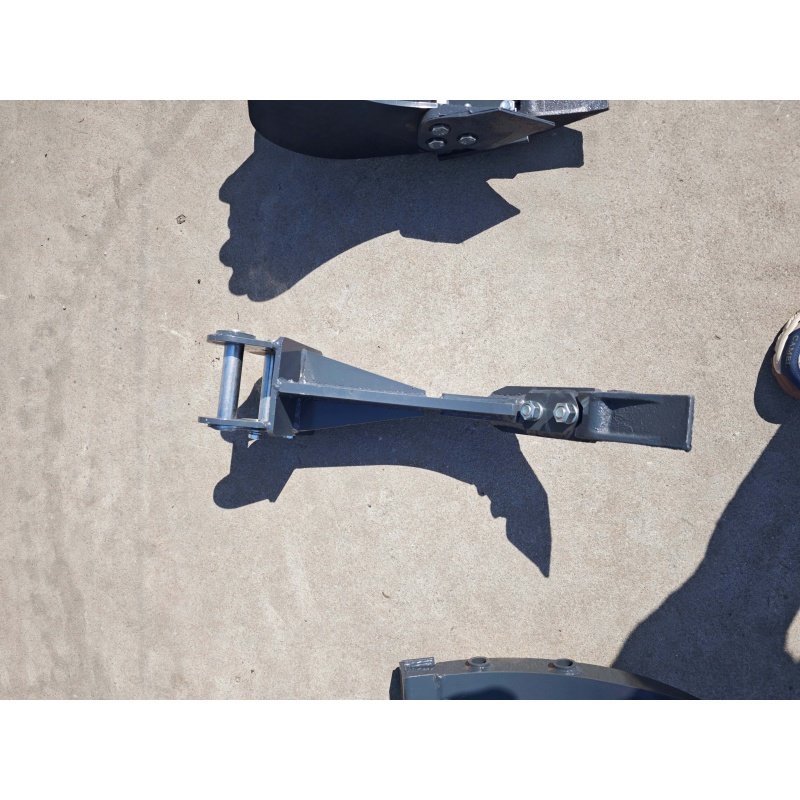
The working method is simple: rip the strip, then follow with the bucket or tiller on loosened ground. Machine strain drops, cycle times improve and the bucket edge lasts longer on broken soil rather than solid ground.
Ordering should state the hardness and stone content of the ground, since very rocky ground may point to the heavier ripper instead. Match the loosener to the carrier model at specification so the shank set suits the machine.
Loosening first gives the largest gain in digging for the least outlay. Describing the soils and compaction you deal with lets MINGYI supply a loosener set up for that ground, turning the hardest digging into a preparatory pass.
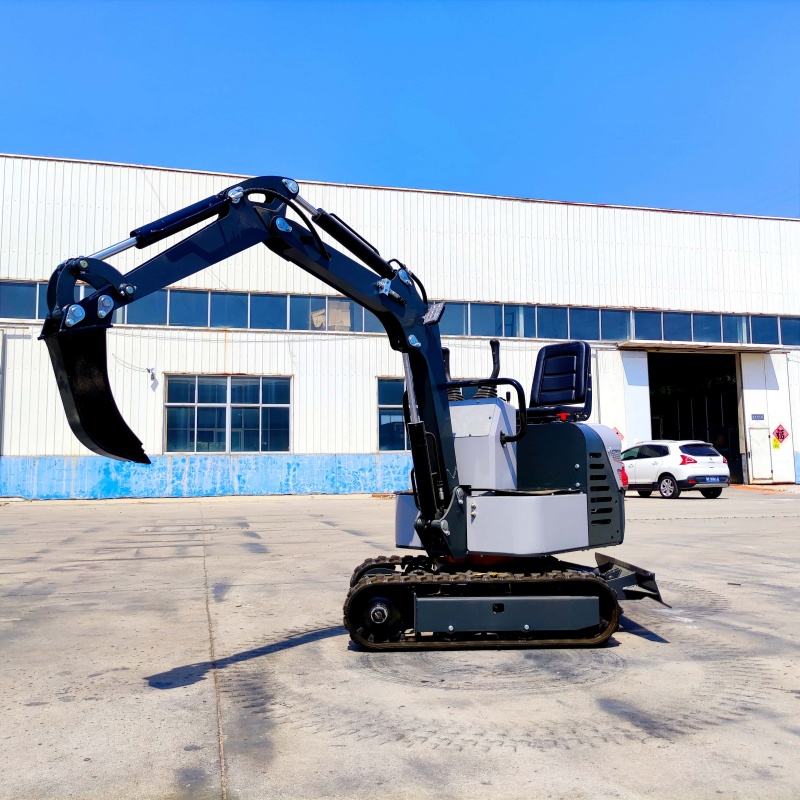
Hiring versus owning a soil looser attachment for excavators Availability is part of the decision. Owning the excavator means it is there on the day the ground is ready; hiring means competing for the same machine at the same time as everyone else in the season. Ownership brings obligations that hiring does not. Storage, servicing, insurance and an operator are the items to set against the hire rate before deciding which way this class of machine should be supplied. Orchard, vineyard and farm use of soil looser attachment for excavators Ditching, fertilising and drainage on farmland suit the unit in daily use because the work is spread over a large area in short bursts. The machine travels behind a pickup and works where it stops. Farms also use a machine of this size for general maintenance - clearing a watercourse, repairing a track, loading a spreader. One carrier with a few attachments covers most of the jobs that would otherwise wait for a contractor. Quick coupler practice on soil looser attachment for excavators Couplers are specified early because they affect the arm and the hydraulic kit. Adding one to the equipment on site after delivery means new pins, new hoses and a fitment session; adding it at build time is a line on the sheet. For a fleet that shares attachments between machines, a common coupler standard matters more than the coupler brand. The machine itself that picks up the same tools as the larger machines keeps the rack usable across the yard. Parts, service and support for soil looser attachment for excavators Engine parts availability usually drives the engine choice. The model in question built with an engine the local network already carries is serviced from stock rather than from an international order. Remote support is handled by video. The machine in that duty fault can often be diagnosed on a walk-around call with the panel open, which is faster than waiting for a visit and avoids shipping a part that is not needed. Specifying soil looser attachment for excavators against a job list Buyers who skip this step either over-buy or under-buy. The unit on the job specified only from machine size tends to arrive without the coupler, the circuits or the track type the work actually needs. Useful information to send with an enquiry includes working width, required digging depth, ground conditions and the attachment set. Those four items let the factory specify a machine built for the work that fits rather than a generic build. Hydraulic circuits on a soil looser attachment for excavators Auxiliary hydraulic lines are what let a machine drive a tool rather than only a bucket. The equipment in service specified with the right circuits and flow runs a breaker or an auger without an add-on power pack bolted to the frame. Flow and pressure are matched to the tool, not to the machine size. Asking for the attachment list first means the excavator leaves the factory with circuits that suit the heaviest tool the buyer intends to run. Track choice for this class of machine Rubber tracks suit paved and landscaped ground because they spread the machine weight and leave the surface intact. Steel tracks with rubber blocks are specified where the ground is rougher or the working day is longer, and the choice can be made per machine rather than accepted as a factory default. Track type changes what the machine can cross and what it leaves behind. Buyers specify rubber for lawns, driveways and municipal work, and steel with rubber blocks for sites where sharp material would cut a rubber belt in a week. Running the unit in daily use in a rental fleet The specification that rents best is usually the simplest one to explain at the counter. A machine of this size with rubber tracks, a canopy and a coupler covers the majority of weekend and short-term hires. Fleet buyers also weigh transport. The equipment on site that a customer can tow on a normal licence and a standard trailer is a hire that does not need a delivery truck, which changes how often it goes out. Working near live services with the machine itself The risk on utility work is not machine power but machine placement. The model in question that fits the working width leaves the surrounding ground undisturbed, which keeps the trench stable and the reinstatement small. Utility crews specify the machine in that duty with a narrow bucket and good visibility for exactly this reason: the machine has to stop at the service, not at the edge of the operator's view. Lifting and material handling with the unit on the job Stability changes with reach. A load a machine built for the work handles close in becomes a different proposition at full extension, so the working radius belongs in the plan before the lift rather than during it. Ground condition under the machine is part of every lift. Soft or uneven support is the common factor in handling incidents, and checking it takes less time than recovering the equipment in service that has settled. Road and paving work for the excavator Patching and reinstatement favour a machine that can work in a lane closure. This class of machine occupies less road than a full-size excavator, which reduces the traffic management needed and the length of the closure. Breaking out a failed slab and backfilling the same hole in one visit is normal work for the unit in daily use. The breaker and the bucket come off the same coupler, so the road is reopened the same day. Interior and light demolition with a machine of this size Interior demolition is an access and a weight question. The equipment on site that fits through a doorway and works on a suspended floor does jobs that would otherwise be done by hand or by a larger machine that cannot enter. Dust, debris clearance and floor loading all argue for a compact machine indoors. The machine itself spreads its weight over a wider track footprint than a wheeled machine of similar capacity. OEM and fleet customisation of the model in question Distributors and rental fleets usually need the machine to look like theirs. Paint, decals, seat colour and attachment branding can be specified on the machine in that duty at build time rather than applied after import. Specification data for the unit on the job Buyers comparing a machine built for the work usually start from four numbers - weight, digging depth, reach and transport width - because those are the ones that decide whether the machine can be delivered and whether it can do the job once it is there. Figures are factory figures and are confirmed on the build sheet for the equipment in service. Where a job sits between two models, the larger machine usually takes less time than the smaller one spends on rework. Customisation also covers the specification sheet. A fleet buyer may want every this class of machine delivered with the same coupler, the same engine and the same tool kit so training and parts stock stay simple. Documentation can be prepared to suit the importer. Manuals, parts books and decal sets for the excavator can be supplied with the buyer's own branding where the order size justifies it.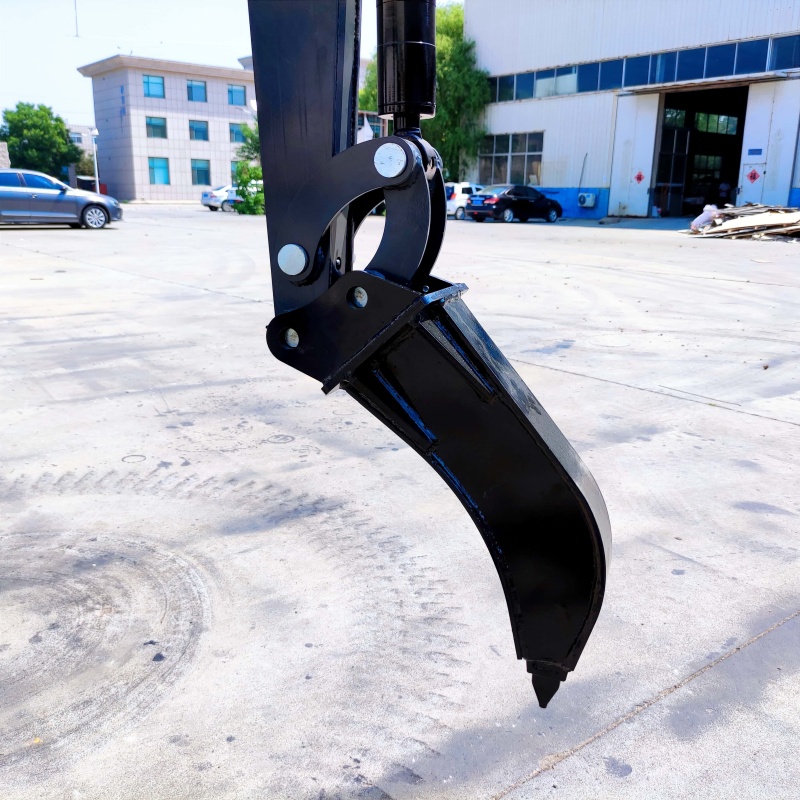
Reference specification — mini excavator range 09W 20-1WL 30-1W 12L Operating weight 1100 kg (2425.08 lb) 1900 kg (4188.78 lb) 2900 kg (6393.41 lb) 1200 kg (2645.55 lb) Transport size (L×W×H) 1800 × 750 × 1970 mm 2550 × 1100 × 2200 mm 3000 × 1250 × 2780 mm 2200 × 930 × 2250 mm Max digging depth 1250 mm (49.21 in) 1800 mm (70.87 in) 2200 mm (86.61 in) 1700 mm (66.93 in) Max digging height 2800 mm (110.24 in) 2820 mm (111.02 in) 3400 mm (133.86 in) 2600 mm (102.36 in) Max dumping height 1700 mm (66.93 in) 2050 mm (80.71 in) 2400 mm (94.49 in) 1800 mm (70.87 in) Max digging radius 2570 mm (101.18 in) 3050 mm (120.08 in) 4000 mm (157.48 in) 2900 mm (114.17 in) Max digging distance 1869 mm (73.58 in) 2300 mm (90.55 in) 2800 mm (110.24 in) 2300 mm (90.55 in) Minimum turning radius 1000 mm (39.37 in) 1450 mm (57.09 in) 2000 mm (78.74 in) 1450 mm (57.09 in) Travel speed 3 km/h (1.86 mph) 5 km/h (3.11 mph) 5 km/h (3.11 mph) 3 km/h (1.86 mph) Gradeability 30° 30° 30° 30° Fuel consumption 1-1.3 L/h (0.264—0.343 gal) 2-3 L/h (0.528—0.793 gal) 2-3 L/h (0.528—0.793 gal) 1-1.3 L/h (0.264—0.343 gal) Fuel tank capacity 8 L (2.11 gal) 16 L (4.23 gal) 16 L (4.23 gal) 10 L (2.64 gal) Hydraulic oil tank 16 L (4.23 gal) 18 L (4.76 gal) 20 L (5.28 gal) 16 L (4.23 gal) Dozer blade lift height 180 mm (7.09 in) 180 mm (7.09 in) 420 mm (16.54 in) 180 mm (7.09 in) Dozer blade drop depth 210 mm (8.27 in) 210 mm (8.27 in) 210 mm (8.27 in) 210 mm (8.27 in)
Q. What are the unit in daily use?
A. Attachments turn one carrier into several machines: dig on Monday, grade, lift, mow or drill on Tuesday without the machine leaving site. Every attachment on this page runs on the same carrier the machine ships with, matched to its hydraulic flow and coupler. MINGYI builds the 08, 12 and 18 models covering the 0.8 to 6 tonne class, and a machine of this size is where that range meets excavators.
Q. What does the attachment add to daily work?
A. Reach into jobs the bucket alone cannot specification: grading with a tilting bucket, clearing with a rake, drilling with an auger, lifting with a thumb. One carrier, several trades - the machine stays on site earning instead of waiting for a specialist.
Q. What about colours and branding?
A. OEM colours and decals are part of the build: private-label machines carry the buyer brand on the standard MINGYI platform, and the excavators order confirms colours, marks and documents before production starts.
Keeping a service record for the equipment on site
Service history also protects the warranty position. Evidence that the machine itself was maintained at the specified intervals and with the specified fluids settles questions that would otherwise be argued.
Moving the model in question between sites
Travel time is not working time, and it should be planned as its own item. The hours spent moving the machine in that duty between jobs are hours not worked, and a trailer that matches the machine reduces them every single trip.
E-mail : sales@mingycn.com
LINE ( ID ): mingyicn
Related pages
soil loosener for compact diggers · tree root digger for mini excavator · Compact Wheel Loader: Clearance, Footprint and Low Profile · Mini Excavators









