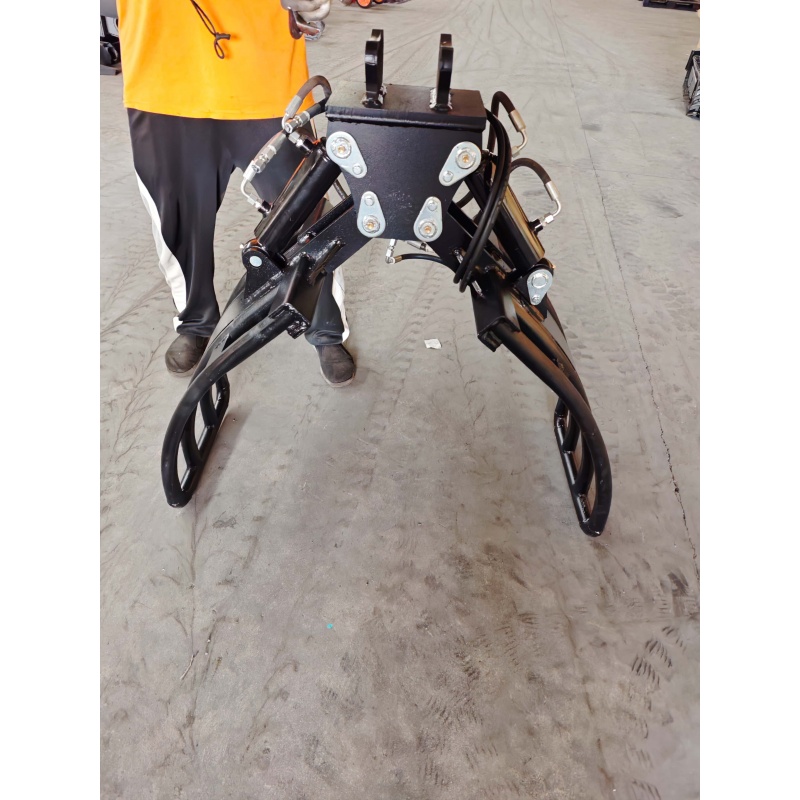
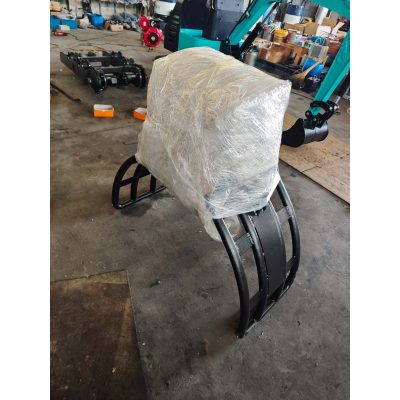
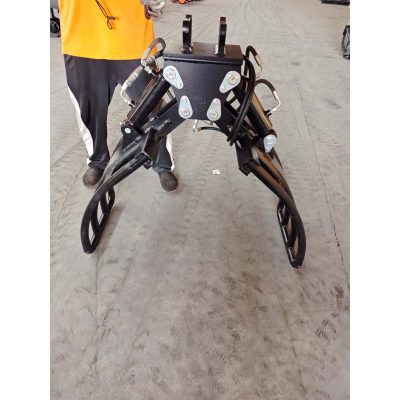
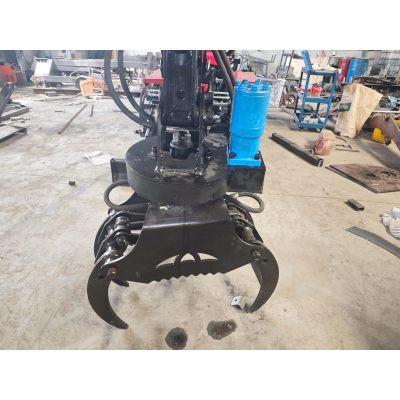
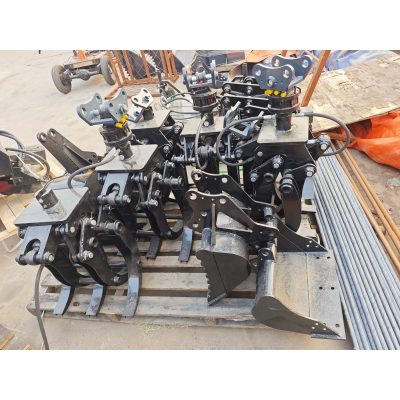
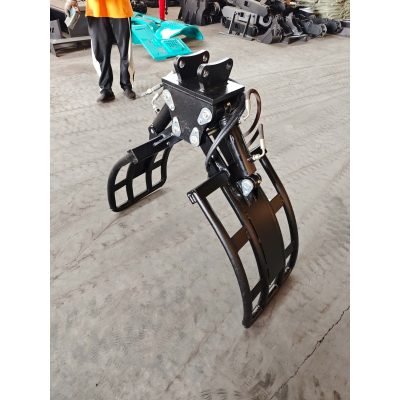
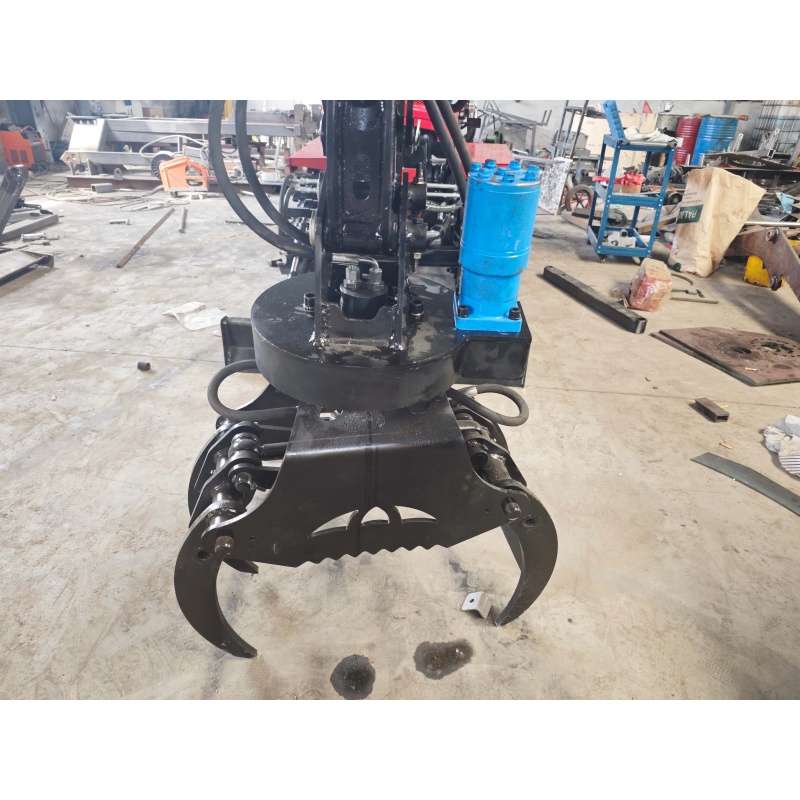
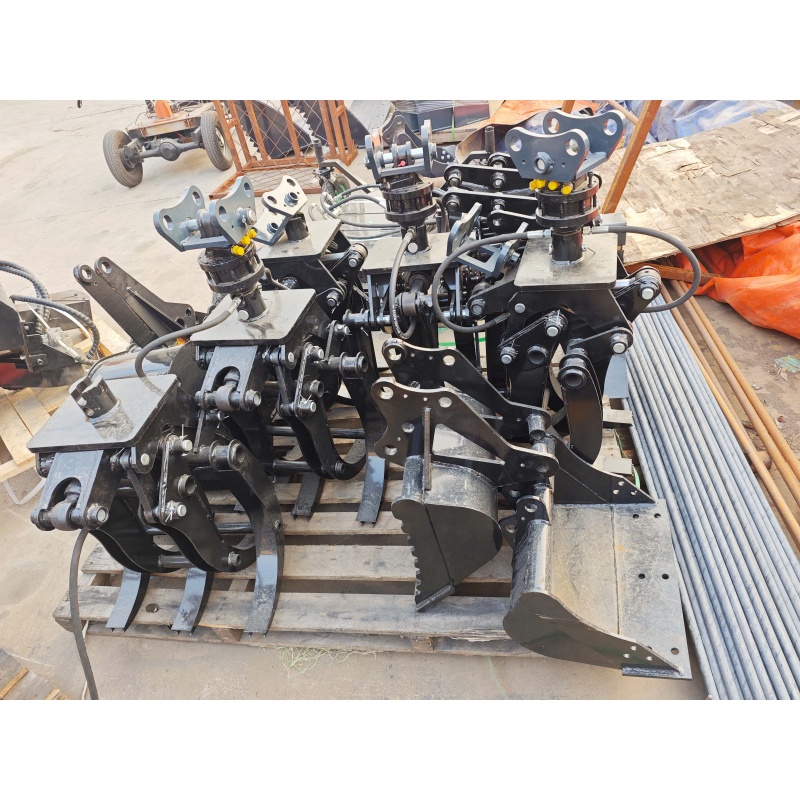
Cut vegetation still has to be moved, and loose brash is difficult to gather with a bucket because it will not stay on the blade. A grabber holds the material while the machine turns and travels, which makes the handling stage much shorter.
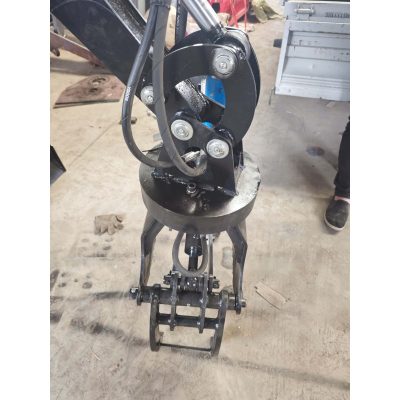
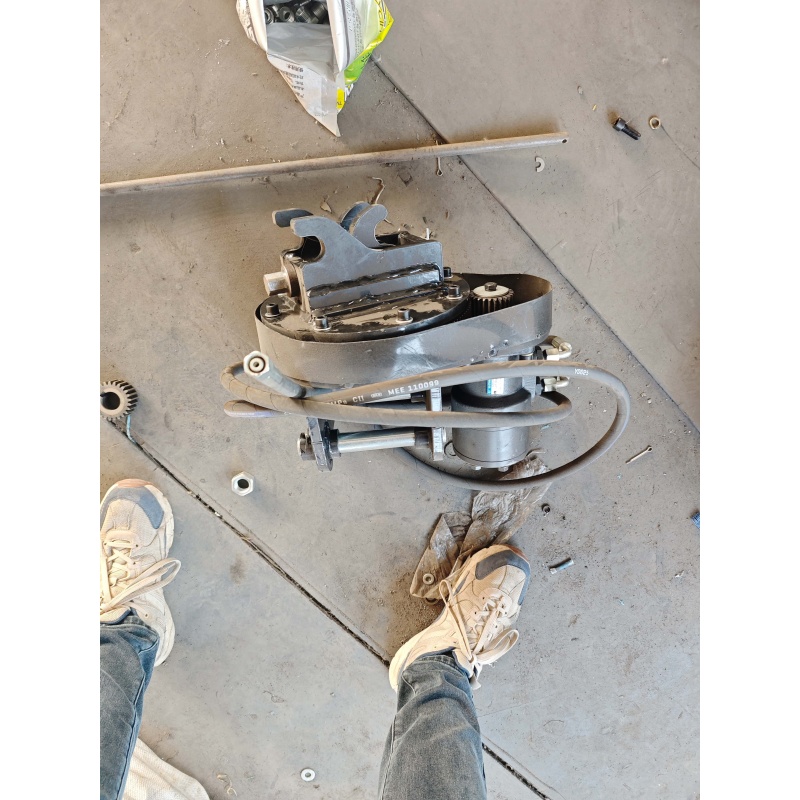
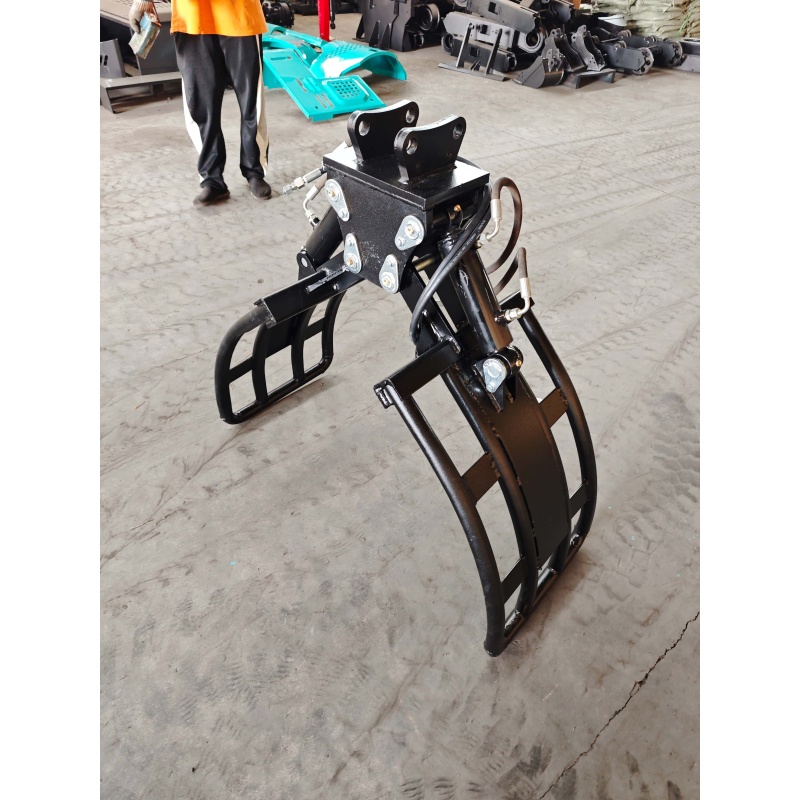
MINGYI supplies the excavator for its compact excavators. The rotating head lets the operator place a bundle in the right direction without repositioning the machine, and the mounting is fixed against the carrier at the ordering stage.
The rotation is the point of this tool: a bundle can be laid down in the direction the job needs.
| Checkpoint | What to settle for this machine |
|---|---|
| Carrier machine | MINGYI compact excavators |
| Work it takes on | Carrying away the growth the same machine has just cut, often ordered with a grass rake as one package |
| Ground and material | Loose brash and cut vegetation that will not stay on a bucket blade |
| Mounting and hydraulics | Rotating head with the mounting fixed to the machine specification |
| Confirmed at order stage | Rotation and mounting specified together with the machine |
| Handover and upkeep | Packed dimensions, securing points and documentation settled before the machine leaves, plus transport checks for owners working across several sites |
Gathering brash, branches and cut growth
The grab works by closing around a bundle rather than lifting it on a blade, so branches and long grass stay together during the turn. That reduces the number of trips needed to clear a boundary or a work area.
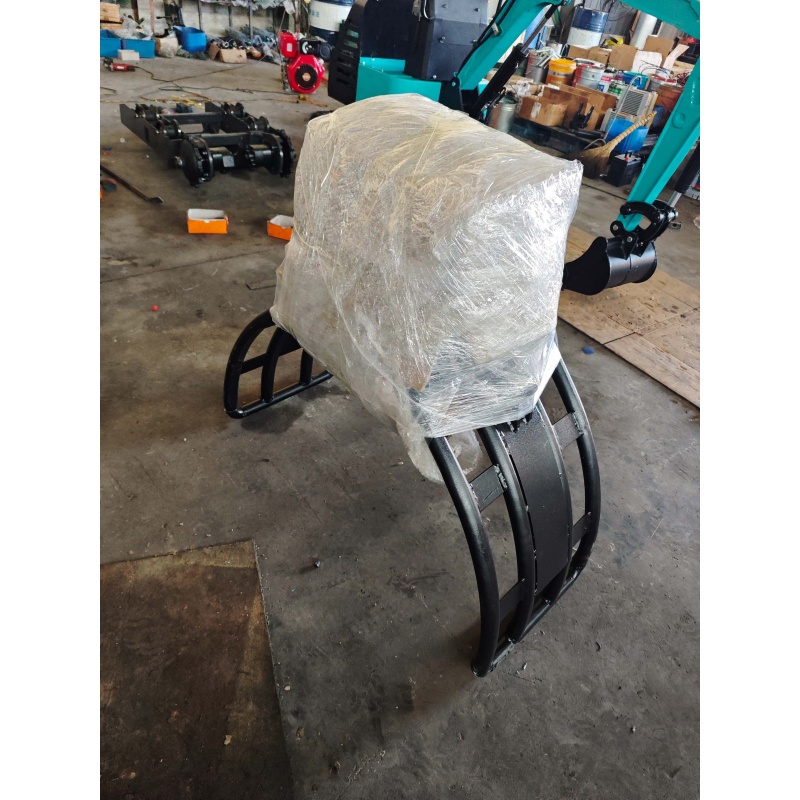
For tree work the grabber handles lengths that would otherwise be dragged. Once a bundle is held, the machine can carry it to a stack, a chipper or a trailer without the operator leaving the seat.
Rotation, grip and control in confined work
The rotating head allows the operator to align a bundle with the trailer or the heap before releasing it. On boundary work, where the machine is standing in a narrow gap, that saves repeated tracking backwards and forwards.
Grip is set by the hydraulic circuit rather than by force alone, so the attachment is specified alongside the machine rather than afterwards. Where the same excavator also clears growth, a grass rake is often ordered with the grabber as one package.
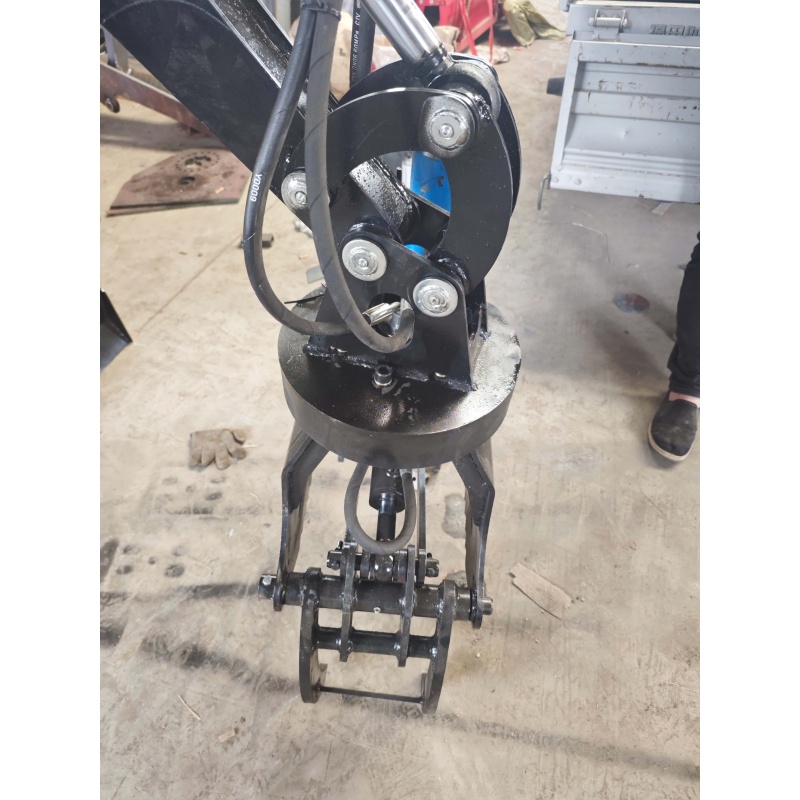
Vegetation handling is often the slowest part of a clearance job. A rotating grabber fitted to a compact excavator lets the same machine that takes the growth down carry it away, which keeps the site moving without extra plant.
Transporting rotating grass and tree grabber to and between sites Owners who work across several sites should check the transport dimensions before ordering. This class of machine that fits a standard trailer can be moved by any operator with a suitable vehicle, while an over-width machine narrows that choice and complicates every move. Shipping dimensions matter as much on export orders as they do locally. Confirming the packed size of the unit in daily use before booking avoids re-booking freight after the machine is built. Fitting rotating grass and tree grabber into the wider site plan Access and storage are worth settling early. Where a machine of this size will be parked, refuelled and serviced on site affects the working day more than most specification details, and it takes nothing to plan. Sequencing avoids rework. Doing the work in the order that suits the ground and the following trades keeps the equipment on site productive and prevents finishing a task that then has to be opened up again. Export packing and shipping of rotating grass and tree grabber Export orders add steps that domestic buyers never see. Packed dimensions, securing points, documentation and any dismantling required are all settled before the machine itself leaves the factory, and each one affects the freight booking. Documentation should be agreed at order stage. The commercial invoice, packing list and any certificate required at destination are part of shipping the model in question, and missing papers delay clearance longer than the voyage takes. Warranty, commissioning and early checks Warranty terms are clearer when they are read before purchase. Knowing what is covered, what counts as a wearing item and what documentation is required makes a claim on the machine in that duty straightforward rather than contested. Early faults are usually simple. The unit on the job that behaves differently in its first few hours is more often mis-set than defective, and a call to the supplier at that point usually resolves it the same day. Wear items and life of rotating grass and tree grabber Certain parts are designed to be consumed. Knowing which items on a machine built for the work are wearing parts, and roughly how long they last in the duty the machine sees, turns replacement into a plan rather than a breakdown. Wear rate follows conditions far more than hours. The equipment in service working on abrasive ground or in mud will consume undercarriage or tyre life much faster than the same machine on clean ground. Upgrading and reconfiguring rotating grass and tree grabber Reconfiguration can extend the useful life of a machine. The excavator that no longer suits the current work may suit it again with a different attachment, guarding or control arrangement. Upgrades should be checked against the base machine. Hydraulic capacity, mounting interface and stability all limit what can reasonably be added to this class of machine, and confirming those limits avoids an unsatisfactory result. Parts, service and support for the unit in daily use Support after delivery is a parts question. Filters, belts, hoses and the wearing items specific to a machine of this size are what a buyer should plan to hold before the first service interval rather than order after a failure. Parts availability usually decides the engine and the brand. A machine built around components the local network already carries is serviced from stock, which is the difference between a day lost and a week lost. Cold weather and low temperature work with the equipment on site Cold changes how a machine starts and how it warms up. Allowing the machine itself to reach operating temperature before loading it, and using the correct grade of oil and fuel for the season, prevents most cold-start problems. Batteries and fluids are the parts that notice the cold first. The model in question kept on a maintainer through a freezing spell starts on the first turn, while one left standing is the usual cause of a lost morning. Attachments and working tools for the machine in that duty The base machine is only as useful as the tool on the end of it. Matching the attachment to the task - rather than to what arrived with the machine - is what lets one the unit on the job cover several jobs across a week. Attachment decisions are best made before delivery. Specifying hydraulics and couplers at build time is simpler than adding them later, and it avoids the downtime of a workshop visit in the first month. Daily checks and maintenance on a machine built for the work Most failures start as something small that a walk-around would have caught. Fluid levels, belt tension, tyre or track condition and any fresh leak are the items worth two minutes at the start of each shift on the equipment in service. A simple log helps. Recording hours, fuel and any adjustment made to the excavator gives the workshop a history, and that history is what turns an intermittent fault into a one-visit repair instead of three. Operator technique and familiarisation Familiarisation should cover the limits as well as the controls. Knowing where this class of machine loses stability, how it behaves at full reach, and what the warning lights mean prevents the incidents that are put down to bad luck. A short handover pays for itself. Operators who understand why the unit in daily use is set up the way it is will report a change in behaviour early, which is usually the point where a repair is simplest. Matching a machine of this size to ground conditions Ground decides more of the outcome than power does. Soft, wet or loose surfaces call for a wider footprint and lower ground pressure, while hard standing allows a narrower machine that turns in less space and travels faster between tasks. The working surface should be surveyed before the equipment on site is specified. A machine that is stable on compacted gravel can be unusable on the same site after rain, and the difference shows up as lost days rather than as a fault.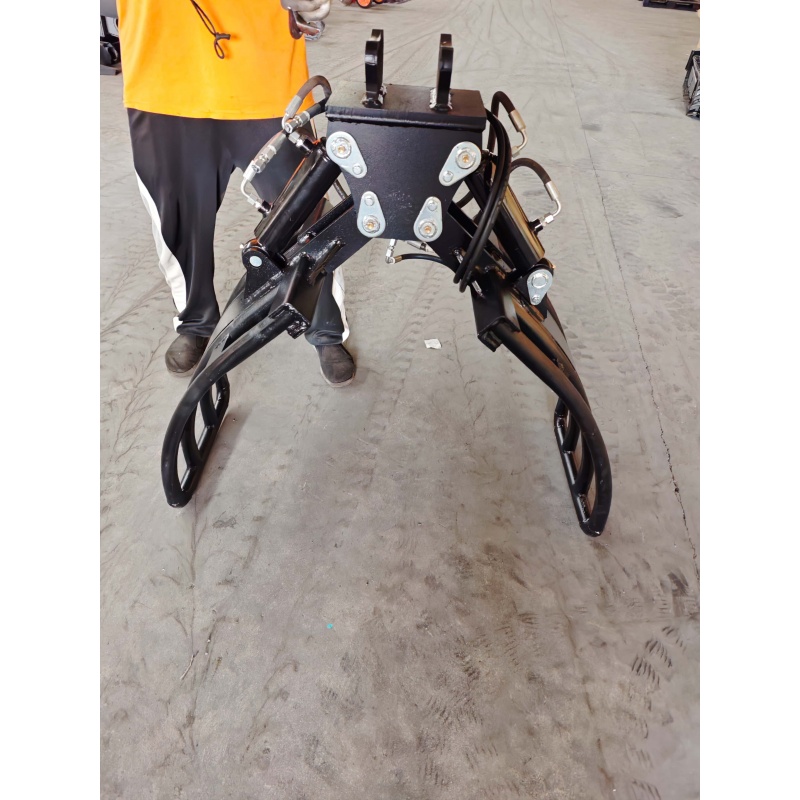
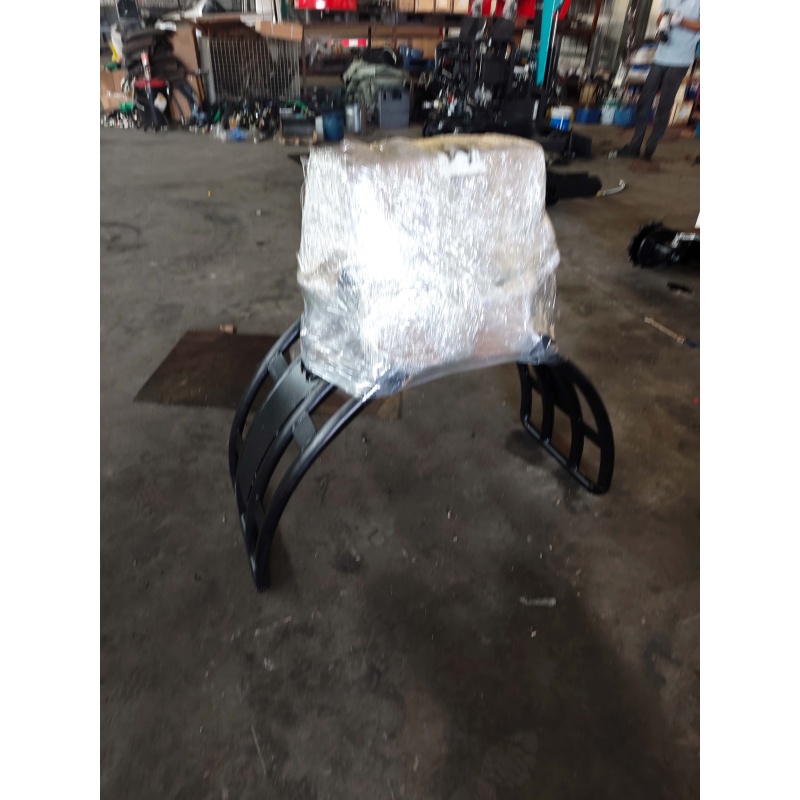
Q. What is the machine itself?
A. An attachment widens the range of jobs a single compact excavator can specification and win, which is why the working set matters as much as the base machine. A digger that only digs competes with shovels; a digger with the right working set competes for whole jobs. For rotating grass tree grabber applications the practical route is to send the job list to the factory and let the build sheet answer it - which is exactly what this page invites.
Q. How do I know which attachment my machine can run?
A. Compare the carrier hydraulic flow with what the attachment asks for, and the lifting moment with what it weighs at full reach. Lower-flow carriers still run buckets, rakes and mechanical tools; hungry attachments call for the high-flow option, and MINGYI confirms the pairing before the order ships.
Q. What support follows the sale?
A. Spare-part kits, wear items and service documentation ship with the programme, and the parts team works from the serial plate to match components exactly. Warranty and support terms for the rotating grass tree grabber order are confirmed in writing before the machine leaves.
Handover and getting familiar with the model in question
Familiarisation is not the same as reading the manual. Sitting on the machine in that duty, working through the controls at low speed and learning where the machine balances takes an hour, and that hour is what keeps the first week uneventful.
Cold weather and winter care for the unit on the job
Starting is only the first problem. Until a machine built for the work reaches working temperature the hydraulic response is slower and the seals are stiffer, and warming the machine before asking for full output avoids unnecessary strain.
Storage and long idle periods for the equipment in service
A stored machine should be brought back carefully. Before the excavator returns to work the fluids, the brakes and the controls are checked, because months of standing change more than a weekend does.
Wear items and spares worth holding for this class of machine
Wear items are predictable once the machine has settled in. After the first service interval the pattern on the unit in daily use is visible, and the parts that were replaced become the parts that are kept.
Keeping a service record for a machine of this size
The record should follow the machine, not the owner. When the equipment on site changes hands the service history travels with it, and a complete folder is often the difference between a quick sale and a long one.
Packing, loading and shipment of the machine itself
The paperwork matters as much as the packing. Serial numbers, dimensions and weights recorded for the model in question at loading are the same figures the destination needs, and a mismatch here loses more days than the voyage itself.
Pre-delivery inspection before the machine in that duty leaves the shop
The last hour before packing is the best time to find a fault. Running the unit on the job through its full working cycle, checking for leaks under load and confirming that the controls match the specification avoids a conversation across time zones later.
Planning the season around a machine built for the work
Seasonal work rewards a machine that can change duty. Through the year the equipment in service may move from one task to another, and the attachment list should be chosen for the whole year rather than for the first job.
Fuel, oil and fluid quality for the excavator
The specification for oil is written for a reason. Using the grade and the change interval set for this class of machine keeps the engine and the hydraulic system inside the range they were designed for.
E-mail : sales@mingycn.com
LINE ( ID ): mingyicn
Planning utilisation for rotating grass and tree grabber
Utilisation is decided in the planning office as much as on site, through the number of machines, the haul route and the order of the work.
Seasonal peaks are easier handled with a clear service window before them than with a repair during them.
A short weekly plan posted where the operators can see it removes most of the questions about what happens next.
Emission and regional requirements for rotating grass and tree grabber
Engine tier, noise limit and any local registration requirement are three separate questions, and each carries its own paperwork.
Related pages
hydraulic thumb bucket attachment · hydraulic thumb bucket for demolition · Wheel Loader for Material Handling: Pallet, Bagged and Bulk Load Duty · Mini Excavators









