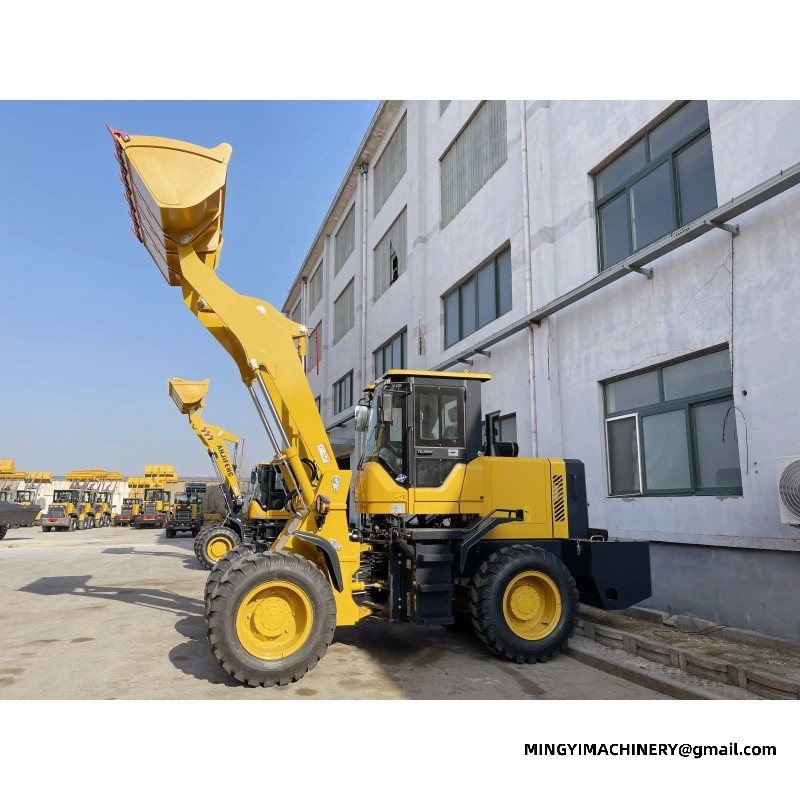
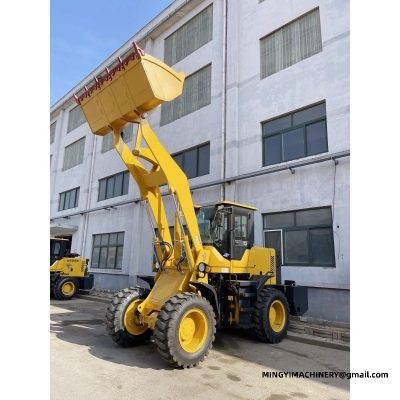
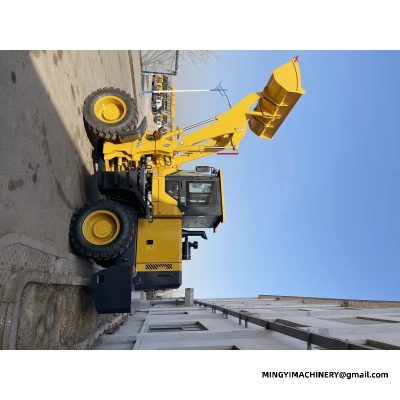
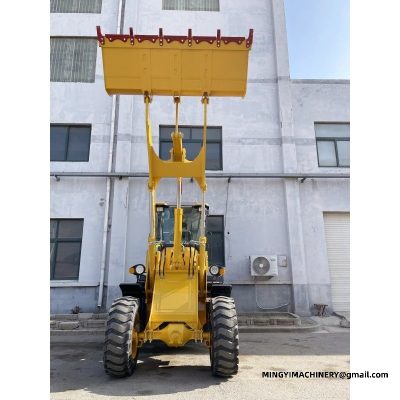
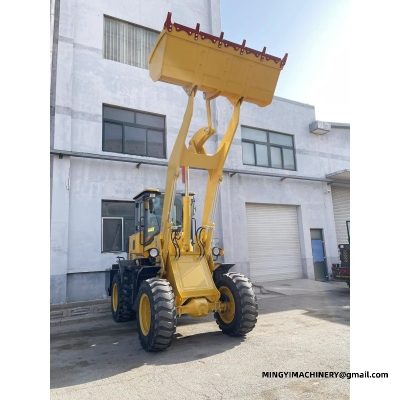
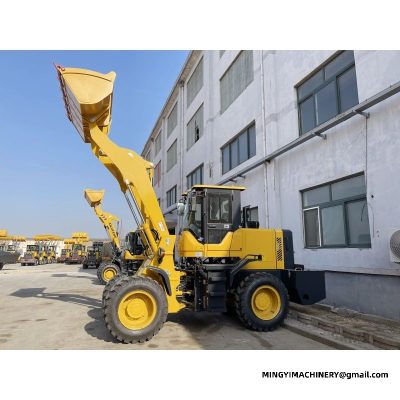
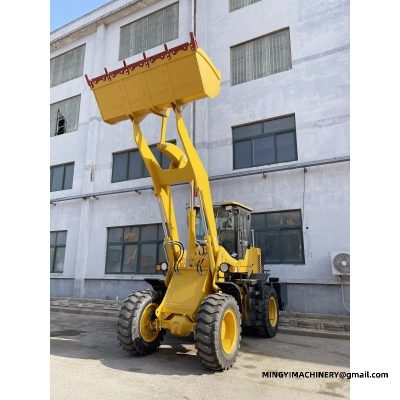
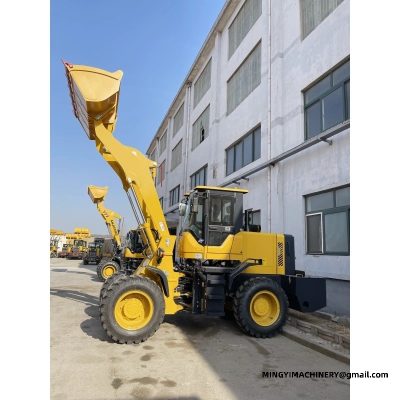
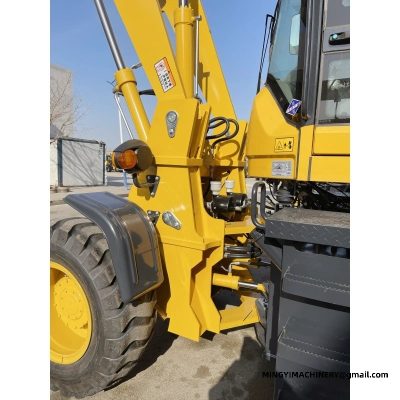
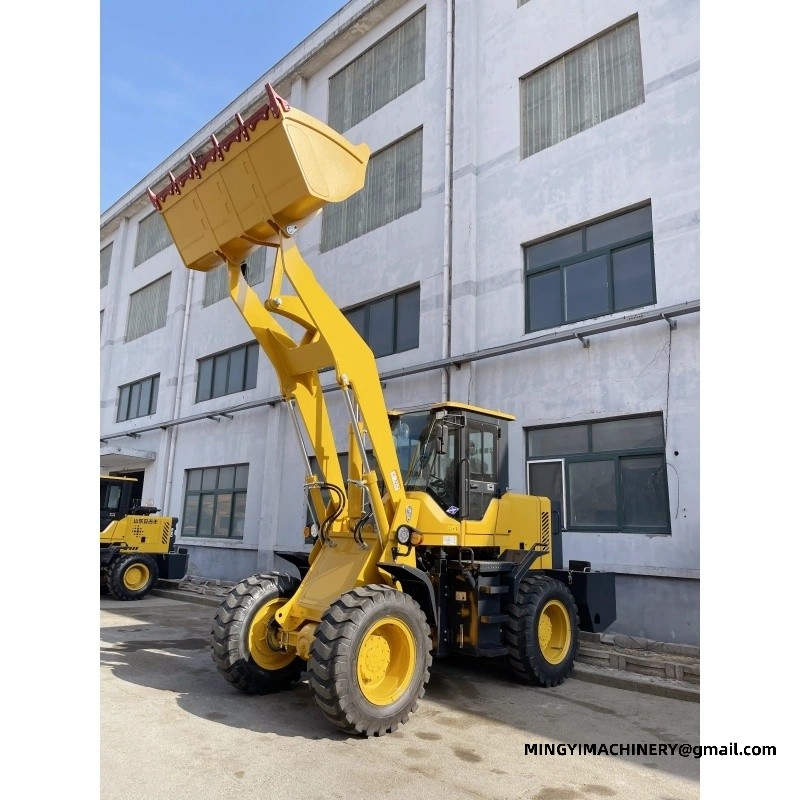
Buying a china wheel loader factory supplier is mostly deciding what you are willing to give up.Reach takes stability, capacity takes weight, speed takes heat, and a longer arm loads the hinge harder on every pass. The range publishes each of those trade-offs, so the decision can be made deliberately. Taking the heavy-duty 4.2 m small-frame wheel-side reduction wheel loader — 0.4 m³ bucket, 4.2 m of lift, 30 mm cross-member — against the light-duty 3.5 m medium-frame wheel-side reduction wheel loader at 0.52 m³, 3.5 m and 45 mm, this page shows what each choice buys and what it takes.
Winter changes three things: the battery has less to give, the oil is thicker, and the operator is working in gloves. The first two are specification questions. 60 Ah (490 engine); 80 Ah (4102 turbo engine) covers the first. The hydraulic side, centre cylinder 45 / side cylinder 40 with a 40 pump (490 engine); 1045 pump (4102 turbo engine), is sized for the loads it will see at working temperature and will simply be slower until it warms.
The third is a machine-layout question and comes down to the rear frame and the tank: 280 mm high x 800 mm wide of rear section and 64.7 L (75# small tank) of fuel. Cold-weather work also means more idling, so tank capacity should be read against winter consumption rather than summer consumption. A machine that needs refuelling at minus ten with an operator standing outside is a specification failure, not a weather problem.
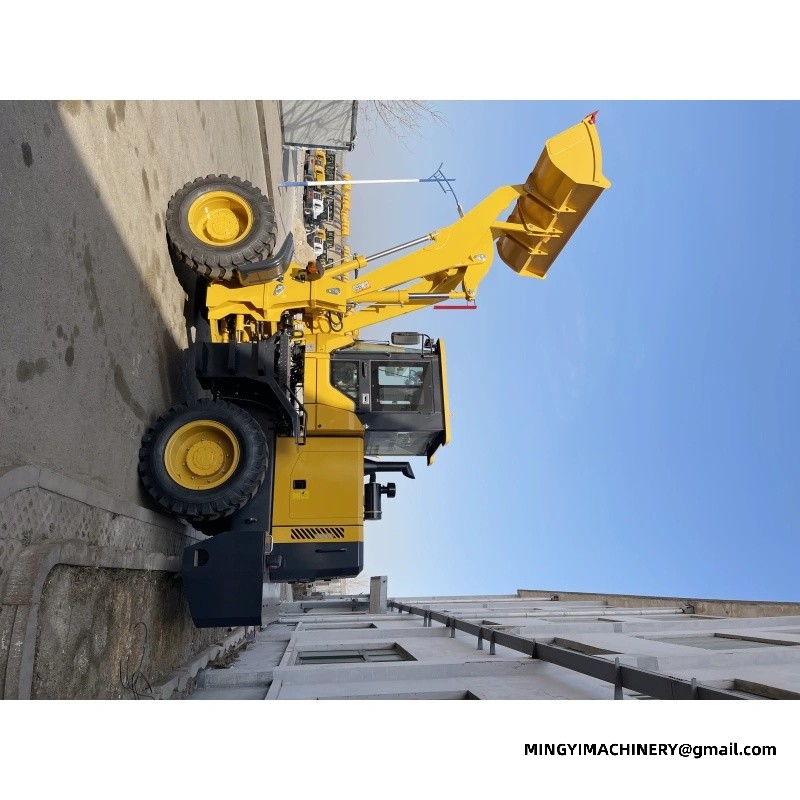
On builds with two engine options the cooling package changes with the engine, which is why the radiator line in the table reads as a pair: 4100 core (490 engine); 4105 core (4102T engine) on the heavy-duty 4.2 m small-frame wheel-side reduction wheel loader and 4105 core on the light-duty 3.5 m medium-frame wheel-side reduction wheel loader. The 4100 core serves the 490 engine; the 4105 raised core serves the 4102 turbo. The raised core is not a marketing variant — it is more core area in the same footprint, and it is the difference between finishing a dusty shift and stopping at noon to blow out the fins.
Where the machine will work is the deciding factor. Grain handling, lime, cement raw meal, crushing and screening all load a radiator with fine material; road building on a wet day does not. If the application is dusty, specify the raised core and a reversible fan if offered. Then check the rest of the package matches: 64.7 L (75# small tank) fuel on the heavy-duty 4.2 m small-frame wheel-side reduction wheel loader against 70 L (75# large tank) on the light-duty 3.5 m medium-frame wheel-side reduction wheel loader, and the battery at 60 Ah (490 engine); 80 Ah (4102 turbo engine) against 80 Ah.
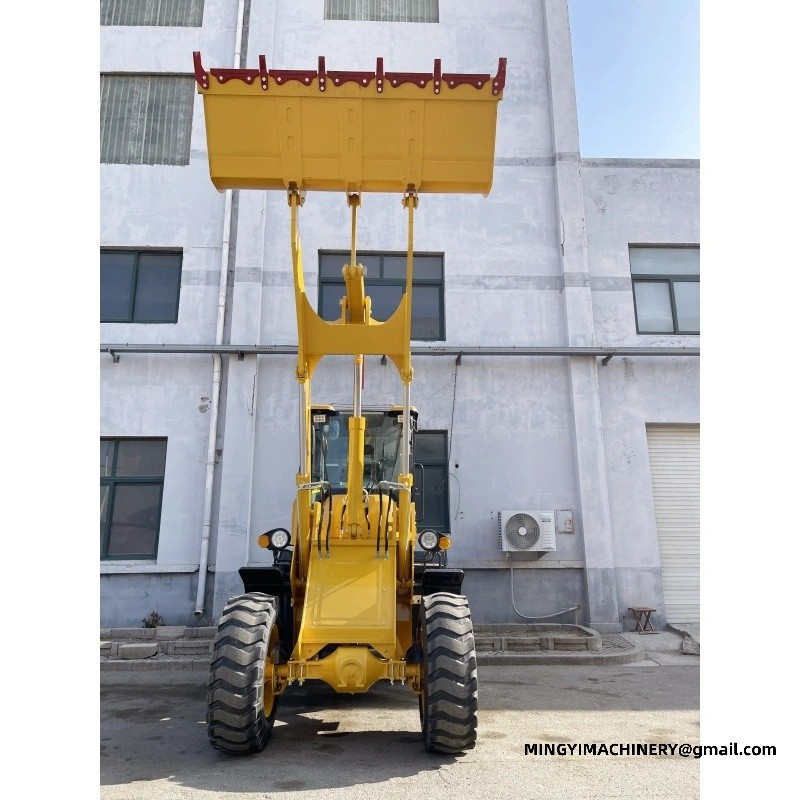
A loading cycle is four movements repeated a few hundred times a shift: approach, fill, lift, dump. Each one loads a different part of the machine, and the specification that matters changes with the movement. Filling asks for bucket volume and breakout, so 0.52 m³ on the light-duty 3.8 m medium-frame wheel-side reduction wheel loader is the first figure to read. Lifting asks for boom section and cylinder size, which is 30 mm of wall and centre cylinder 60 / side cylinder 50. Dumping asks for height over the receiving board, 3.8 m here against 4.2 m on the light-duty 4.2 m medium-frame wheel-side reduction wheel loader.
The approach is the movement nobody specifies for, and it is where frames age. Every run at a face loads the front hinge plate, 45 mm on this build against 30 mm at the rear; the rear plate carries the weight of the counterweight and the swing of the whole rear frame, which is why it is the heavier of the two. A 4.3 m wheelbase keeps the machine settled when the bucket meets resistance rather than air.
| Reference specification — light-duty 3.2 m small-frame wheel-side reduction wheel loader | |
|---|---|
| Bucket capacity | 0.38 m³ |
| Dump height | 3.2 m |
| Track width | 1.5 m (wheel-side reduction axle); 1.45 m (Isuzu axle) |
| Boom arm thickness | 25 mm |
| Boom arm width | 370 mm |
| Boom arm length | 2.3 m |
| Boom arm centre distance | 890 mm |
| Cross-member thickness | 25 mm |
| Front hinge plate thickness | 25 mm |
| Rear hinge plate thickness | 14 mm |
| Rear frame section | 280 mm high x 800 mm wide |
| Hydraulic cylinders | centre cylinder 45 / side cylinder 40 |
| Fuel tank | 64.7 L (75# small tank) |
| Battery | 60 Ah (490 engine); 80 Ah (4102 turbo engine) |
| Front wheel to counterweight | 3.8 m |
| Radiator | 4100 core (490 engine); 4105 core (4102T engine) |
| Work pump | 40 pump (490 engine); 1045 pump (4102 turbo engine) |
| Travel pump | 316 pump |
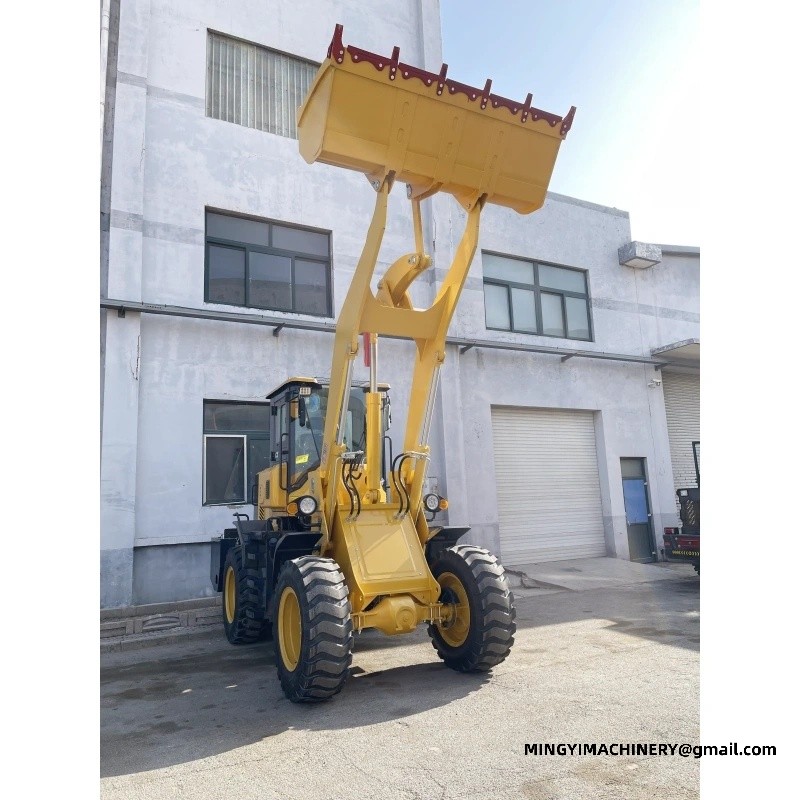
Bucket capacity decides how many passes you make; dump height decides whether the pass is possible at all. The heavy-duty 4.2 m small-frame wheel-side reduction wheel loader clears 4.2 m; the light-duty 3.5 m medium-frame wheel-side reduction wheel loader clears 3.5 m. Measure the receiving body at the front board rather than the side, because side boards sit lower and a machine that clears the side can still clip the front when it slews under load.
That single measurement eliminates most of the range before anything else is discussed. A low pan mixer or a one-ton site truck is served by 4.2 m; a body-up site tipper needs more; a crusher feed hopper or a high-board highway truck needs 3.5 m. Get it wrong and no amount of bucket volume, engine power or pump flow rescues the machine — it simply cannot put material where it has to go.
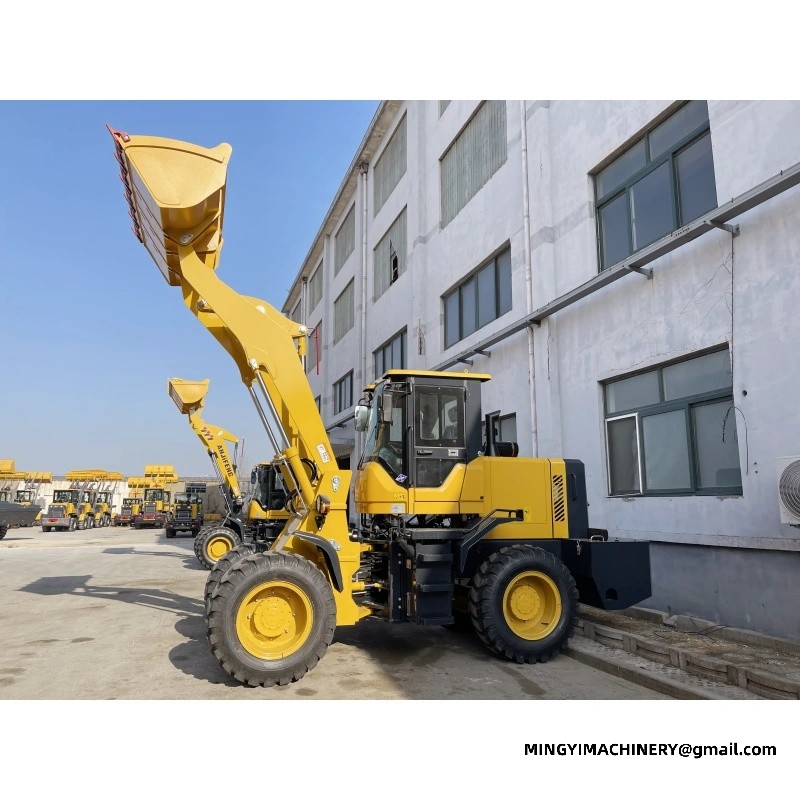
Airborne dust is the hardest thing a cooling system has to deal with, because it blocks the fin passages from the outside while the engine keeps producing heat. Core size is the buffer: 4100 core (490 engine); 4105 core (4102T engine) here against 4105 core on the light-duty 3.5 m medium-frame wheel-side reduction wheel loader. Screen area and access for cleaning matter as much as volume, so ask how the core is mounted before asking how big it is.
Work pumps generate heat too, not only the engine. This build runs 40 pump (490 engine); 1045 pump (4102 turbo engine) alongside 316 pump, and sustained hydraulic work in a hot climate adds load that the radiator was not sized for on a temperate machine. Where the duty is continuous rather than intermittent — a stockpile that never stops rather than a site that loads three trucks an hour — specify the larger core even if the engine is the same.
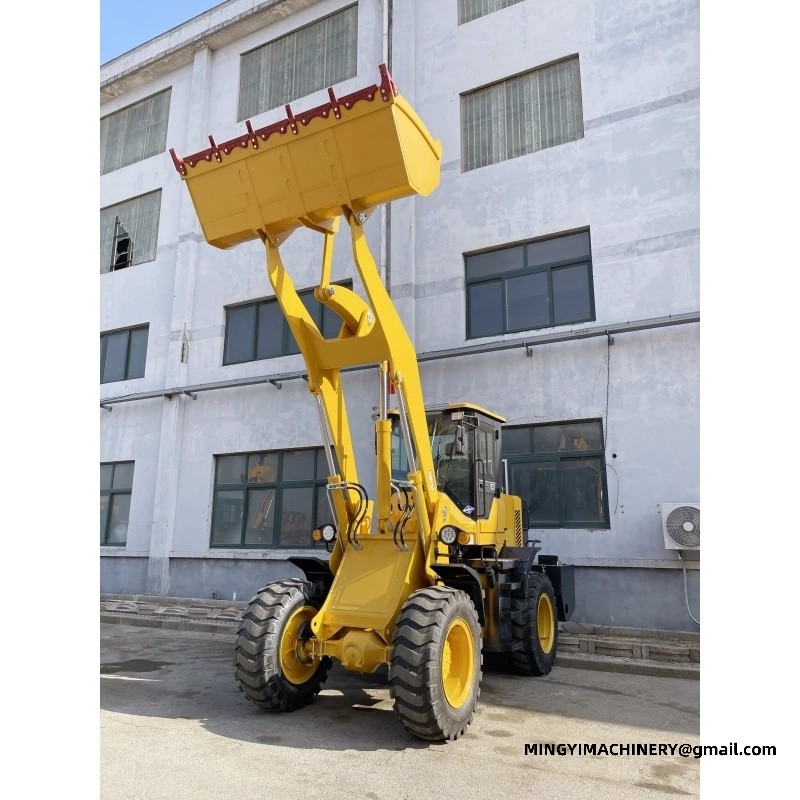
Soft ground punishes driveline parts before it punishes the frame. Sand, clay and loose overburden all increase rolling resistance, which increases torque at the hub, which is exactly where a non-reduction axle is weakest. Where the specification lists two track figures, as it does here at 1.2 m (Isuzu axle); 1.3 m (wheel-side reduction axle), the wider one belongs to the hub-reduction axle and is the specification for that ground.
Hard ground is the opposite case. On concrete, compacted hardstand or a paved yard, rolling resistance is low and sustained travel speed is high, so heat rather than torque becomes the limit. The light-duty 3.8 m medium-frame wheel-side reduction wheel loader lists 1.6 m, and the narrower figure there is the one for hard standing. Matching axle to surface takes nothing at the order stage and saves a driveline later.
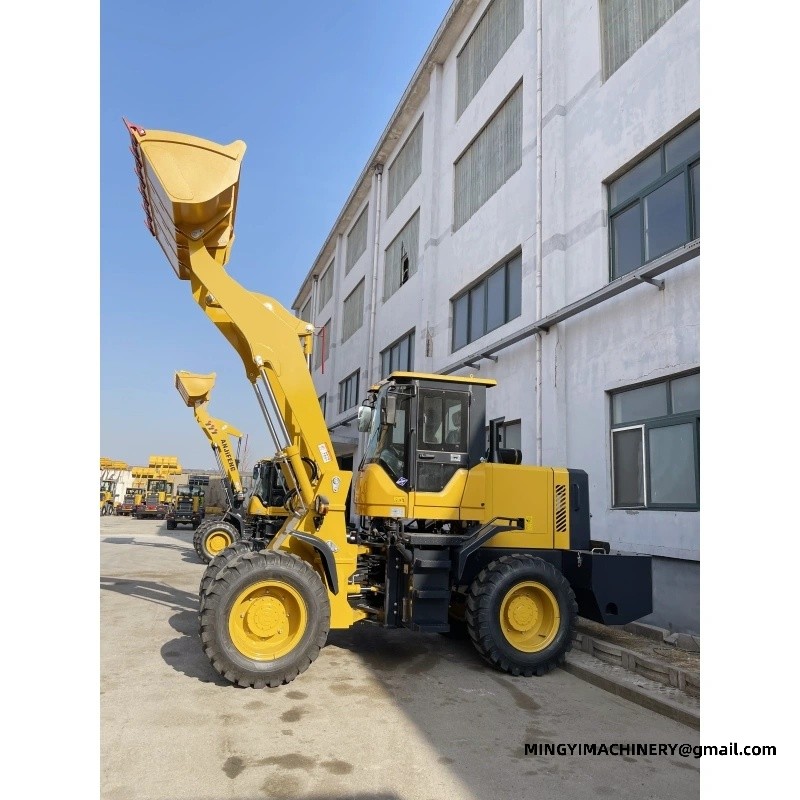
Hinge plates carry the pin loads that the boom and the steering articulation put into the frame, and they are where a loader shows its age first. The heavy-duty 4.2 m small-frame wheel-side reduction wheel loader runs 30 mm front plates and 20 mm rear plates over a 30 mm cross-member; the light-duty 3.5 m medium-frame wheel-side reduction wheel loader runs 45 mm and 30 mm over 45 mm. Rear frame sections follow at 280 mm high x 800 mm wide and 300 mm high x 800 mm wide respectively.
The rear plate is the more telling of the two. Articulated steering loads the rear hinge every time the machine turns under load, and reversing out of a face with a full bucket doubles it. A 20 mm rear plate with a 30 mm cross-member is a light-duty specification; 30 mm over 45 mm is a heavy-duty one. Put those alongside the 0.4 m³ and 0.52 m³ buckets and the specification difference between the two builds stops looking arbitrary — it is steel.
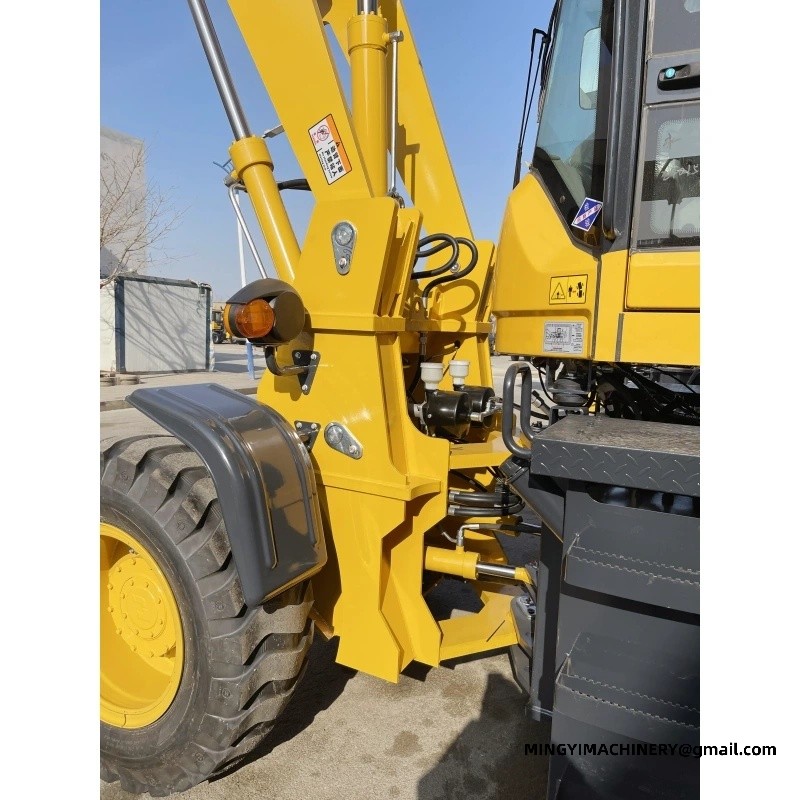
Some choices can be made after delivery and some cannot. Steel cannot: hinge plates at 16 mm and 16 mm, a 16 mm cross-member and a 200 mm high x 750 mm wide rear frame are decided when the frame is welded. Hydraulics mostly can: this build runs centre cylinder 40 / side cylinder 40 on a 32 pump, and adding a service later is possible even if it is never as tidy as specifying it first.
The engine is the other early decision, because it drags three figures with it. Where two engines are offered, battery, radiator and pump all change: 45 Ah (24 V), 4100 core, 32 pump. Choosing the engine late means choosing all three late, and usually accepting whatever is in stock.
What do I check the day a china wheel loader factory supplier is delivered?
Bucket 0.52 m³, lift 3.8 m, cylinders centre cylinder 60 / side cylinder 50, track 1.6 m and length 4.3 m. Photograph all five; they settle any later question about what was ordered.
How is dump height on a china wheel loader factory supplier measured?
At the bucket edge, arm at full lift, machine level. The light-duty 3.2 m small-frame wheel-side reduction wheel loader publishes 3.2 m and the heavy-duty 4.2 m small-frame wheel-side reduction wheel loader publishes 4.2 m, measured the same way, so the two can be compared directly.
Which engine option should a china wheel loader factory supplier be ordered with?
It follows the duty. The engine drags three rows with it: pump 2063 pump, core 4105 core and battery 80 Ah. Choose it early rather than accepting whatever is in stock.
How often should the hinge pins of a china wheel loader factory supplier be greased?
Measured in hours, not weeks, on short-cycle work. The pins behind the 25 mm and 14 mm plates take every steering input; dry pins are how a frame goes loose.
Can a china wheel loader factory supplier work inside a building?
Clearance and ventilation are the constraints. Lift height is 3.2 m and the core is 4100 core (490 engine); 4105 core (4102T engine), which has to reject heat into air that is not moving.
How often will a china wheel loader factory supplier need refuelling?
The tank is 30.8 L (48# large tank, 20.5/70-16 tyres); 24.6 L (48# small tank, 8.25-16 tyres), sized for a full shift at working throttle without a mid-day stop. Machines on short cycles with a lot of idling will use more than the figure suggests.
Why does my china wheel loader factory supplier wander on the road?
Worn hinge pins. Load the bucket, hold the machine on a slope and watch the joint while the steering is rocked; movement there is wear behind the 30 mm and 20 mm plates.
Keep this page against the delivery paperwork. Bucket 0.4 m³, lift 4.2 m, track 1.5 m (wheel-side reduction axle); 1.45 m (Isuzu axle) and cylinders centre cylinder 45 / side cylinder 45 are the four rows that settle any later question about what was actually ordered.
Moving China Wheel Loader Factory Supplier: Steady Supply Planning between sites
Securing the load is not optional. Lashing China Wheel Loader Factory Supplier: Steady Supply Planning at the points intended for it, checking the tension before the vehicle moves and rechecking after the first kilometres is standard practice rather than extra care.
A second operator for China Wheel Loader Factory Supplier: Steady Supply Planning
Different operators suit different work. The person who is quickest with China Wheel Loader Factory Supplier: Steady Supply Planning on open ground is not always the one who is safest in a confined space, and having both available is a genuine advantage.
Contact MINGYI Machinery for the current wheel loader lineup, configuration options and a formal specification for your market. E-mail: sales@mingycn.com | LINE (ID): mingyicn
Wheel Loader Manufacturer | China Factory: Checking Shipments · Wheel Loader Series: Matching a Build to Daily Work · Loader Machine for Construction: 0.4 m3 or 0.65 m3 Bucket · Wheel Loader









