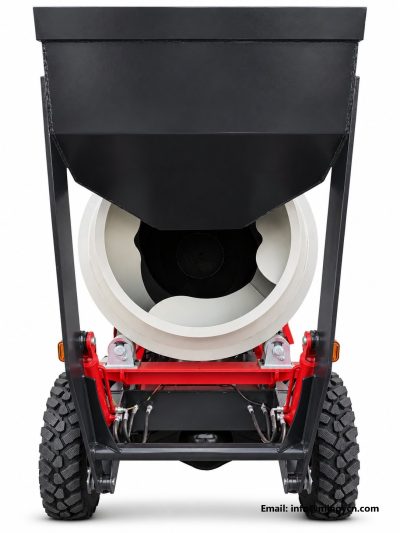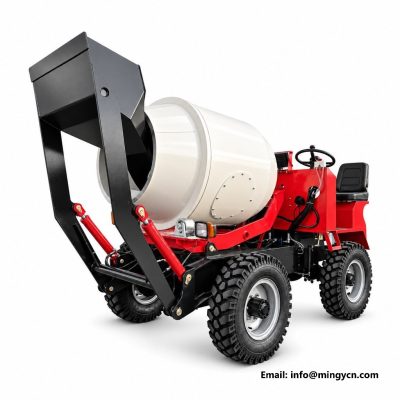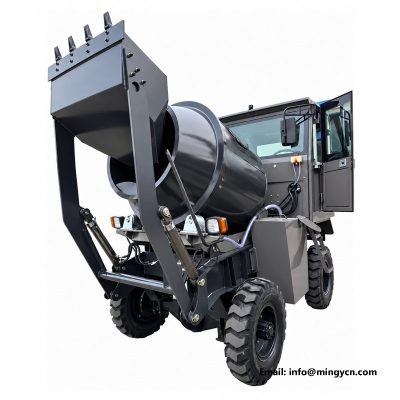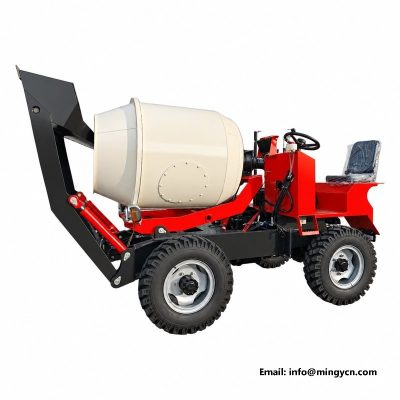
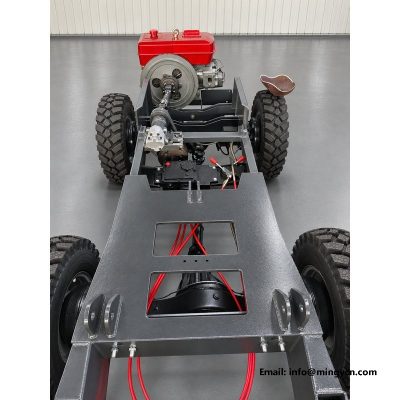
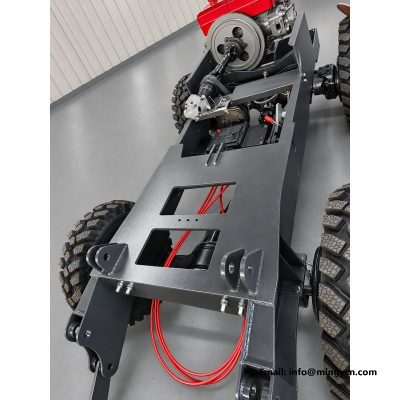
0.8 m3 4WD Self Loading Concrete Mixer with Steel Counterweight Box, Front Weight Frame and Diesel Engine Bay
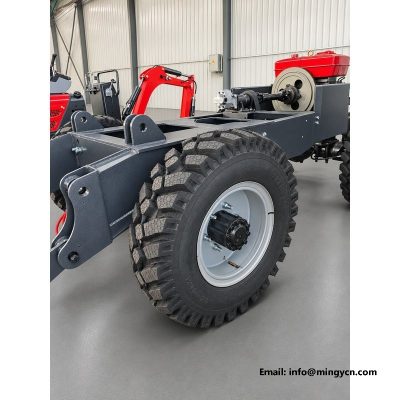
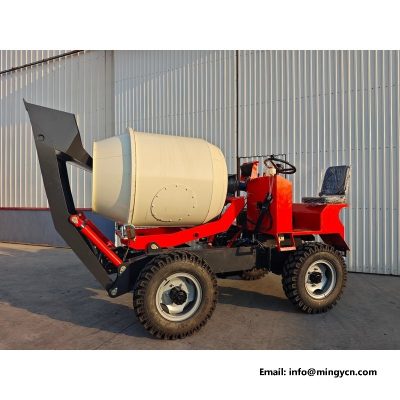
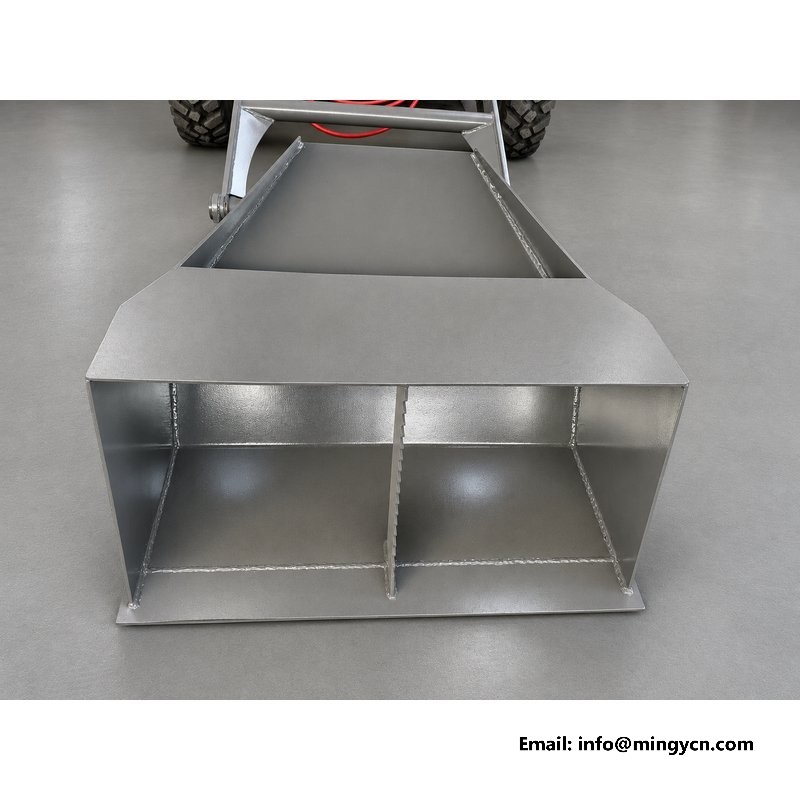
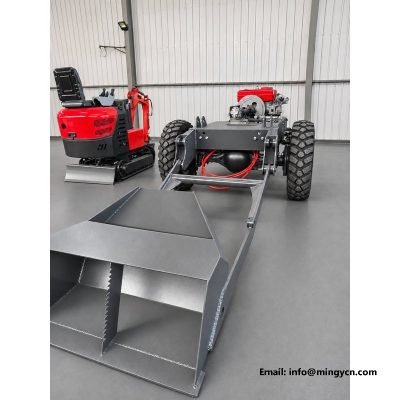
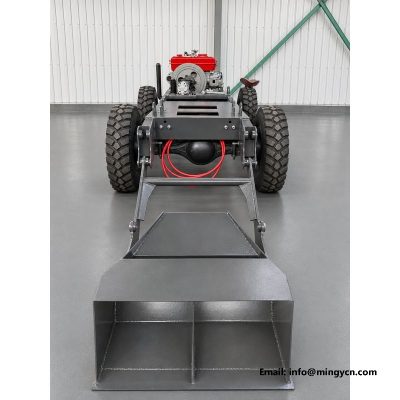
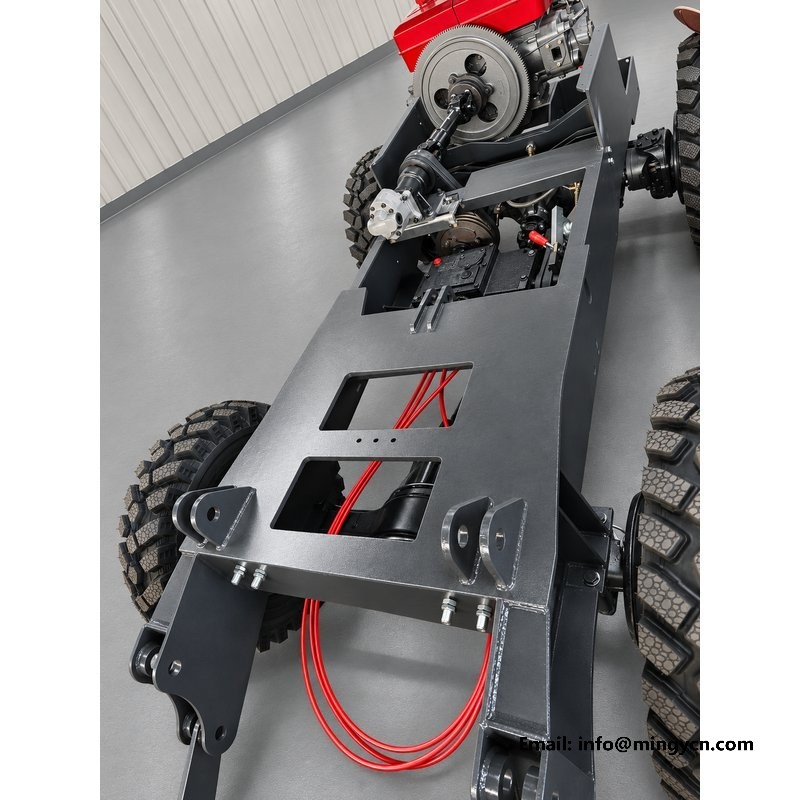
A wheel loader balances its load with weight, and a self loading mixer is a wheel loader that also mixes. Every time the front shovel lifts a heaped scoop of aggregate, the machine leans forward, and something has to hold the rear wheels down so the operator keeps steering and traction. On this 0.8 m³ four-wheel-drive machine that job belongs to the steel counterweight box built into the nose of the chassis, and the photographs on this page show it bare, before the drum and shovel are hung on the frame.
The pages that follow the photographs cover why the box is shaped the way it is, what belongs inside it, how the front frame carries the engine and the shovel pivots together, and the checks a buyer should make before ordering.
An empty shovel arm on a short machine acts like a lever: one metre of arm with fifty kilograms of steel at its end is enough to lift a useful share of the rear axle off the ground. Add a loaded scoop and the rear of the machine goes light exactly when the operator needs grip, because loading usually happens on the loosest ground on site. The counterweight box moves mass forward and low, which cancels the shovel moment before it reaches the wheels.
Four-wheel drive hides the problem partly, since the front axle can pull even when the rear is light. But steering still depends on tyre grip, and a machine that steers by sliding is not a machine an operator trusts beside fresh formwork. Weight ahead of the front axle is what keeps the steering honest through the whole loading cycle.
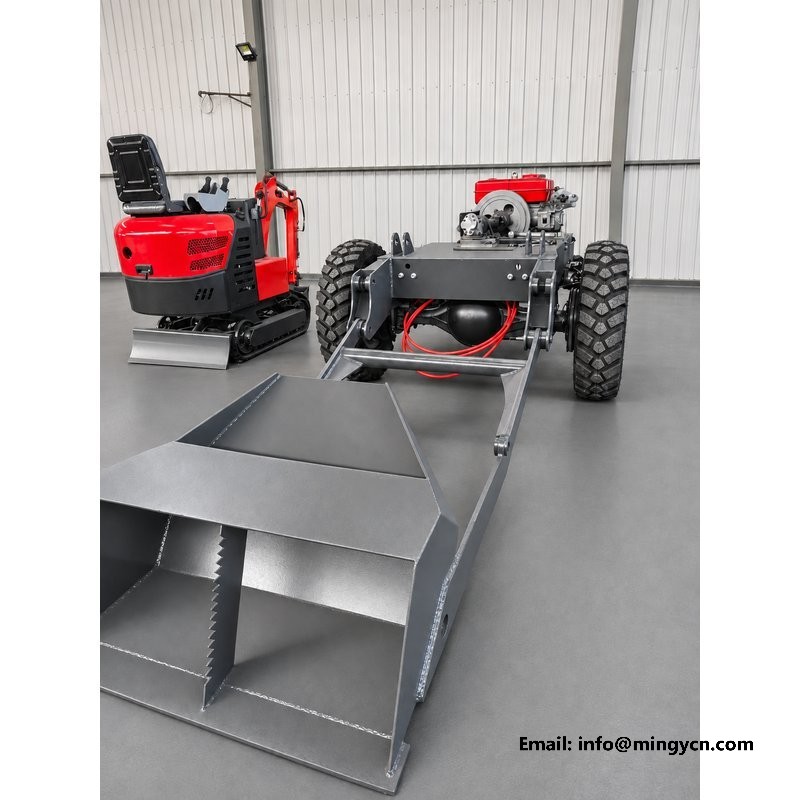
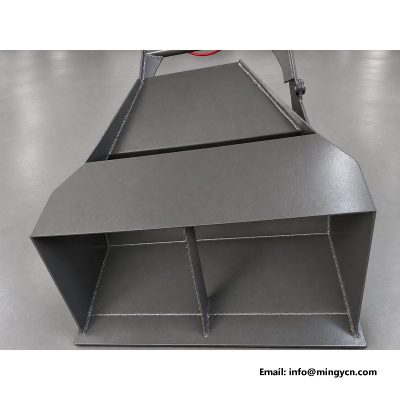
The box is welded from folded steel plate into a tapered trough that narrows toward the nose, and the shape is not styling. A tapered nose keeps the approach angle useful over kerbs and ramps, while the wide rear of the box spreads the weight across the full width of the front frame. Inside, a centre partition divides the box into two compartments, which does three jobs at once: it stiffens the plates against bulging, it stops loose ballast from shifting from side to side as the machine works, and it lets the factory trim the balance of each machine by choosing what goes in each half.
Buyers sometimes assume the box ships empty. It does not. It carries the factory ballast set, and the machine is balanced with that ballast in place before it leaves the works.
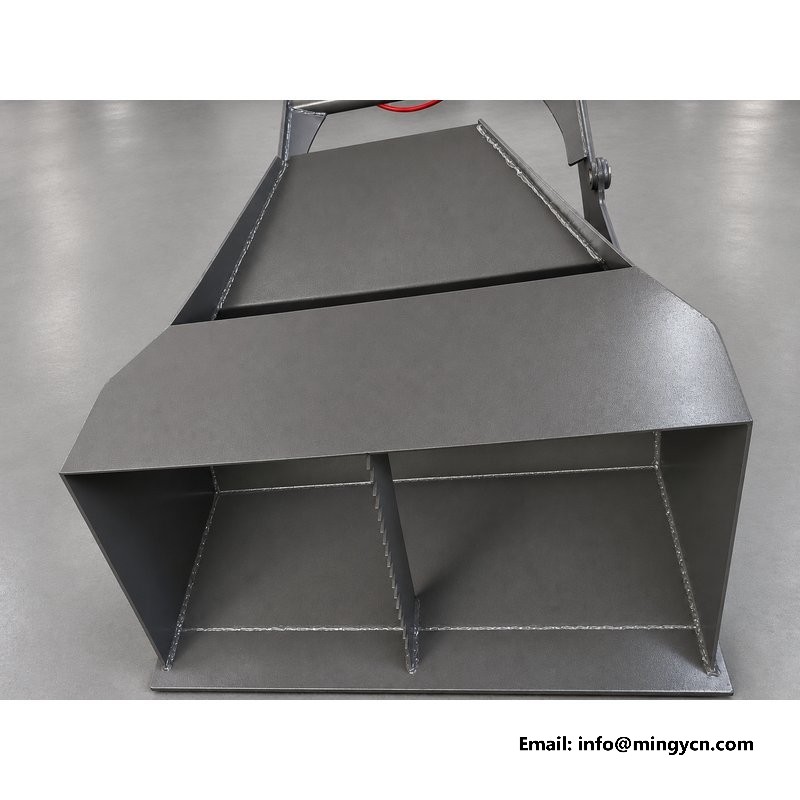
Ballast is usually clean graded steel offcuts or cast blocks, laid into both compartments and held by the partition so it cannot migrate. The amount is chosen at the factory to balance the shovel at its working reach with the drum empty, which is the condition that produces the worst front-heavy moment. Operators who add their own ballast on site should only ever add it in the compartments, never strapped to the shovel arm or the lift frame, where it multiplies the exact load the box exists to cancel.
There is a simple field test for correct balance. With the shovel raised to half height and the drum empty, the rear tyres should stay planted when the machine is braked on level ground. If the rear lifts, the box is light; if steering feels heavy with the shovel down, it is over-full.
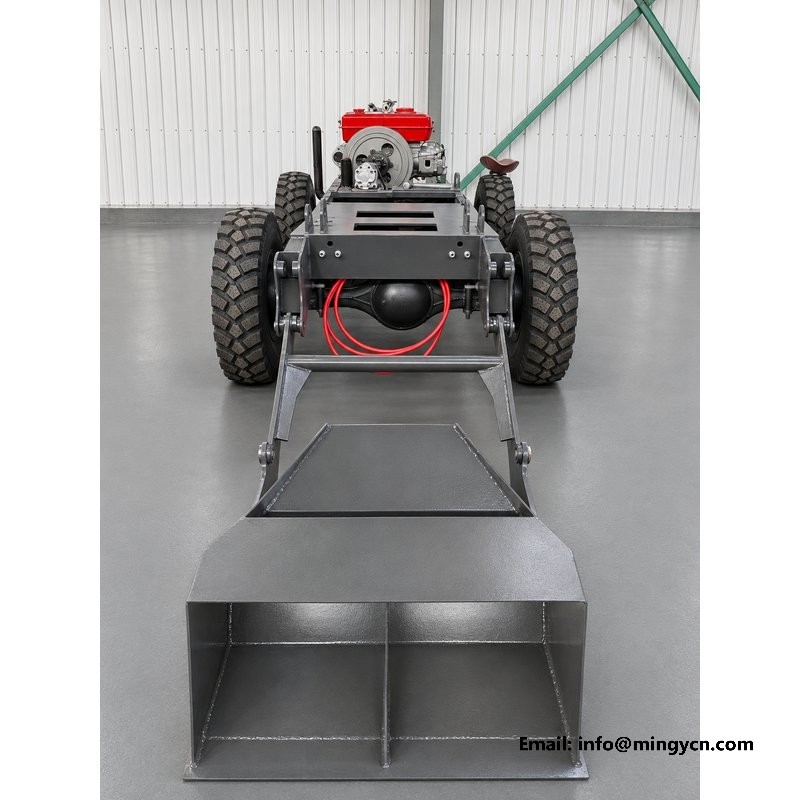
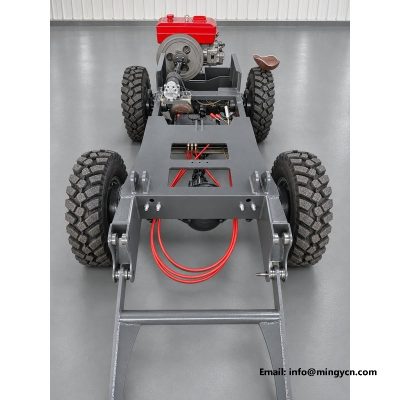
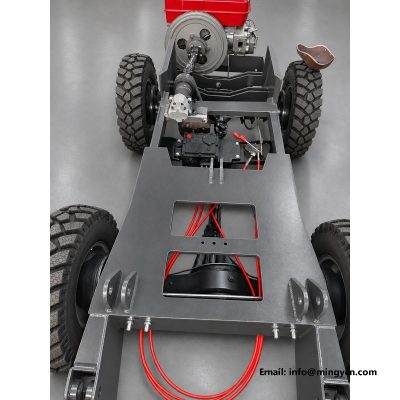
The counterweight box is not a separate lump bolted to the nose; it is welded into the front frame as one structure. The same plates that form the box continue upward and backward as the engine bed and the lift arm towers, so the load path runs from the shovel pivot, through the box and into the main rails without a joint in between. The top view above shows the layout: engine behind, box ahead, and the pivot towers at the outer edges where the lift arms can swing clear.
Building it as one structure costs more jigging time at the factory. In return there is no bolted joint between the shovel reaction and the main frame, and bolted joints are where light builds work loose first.
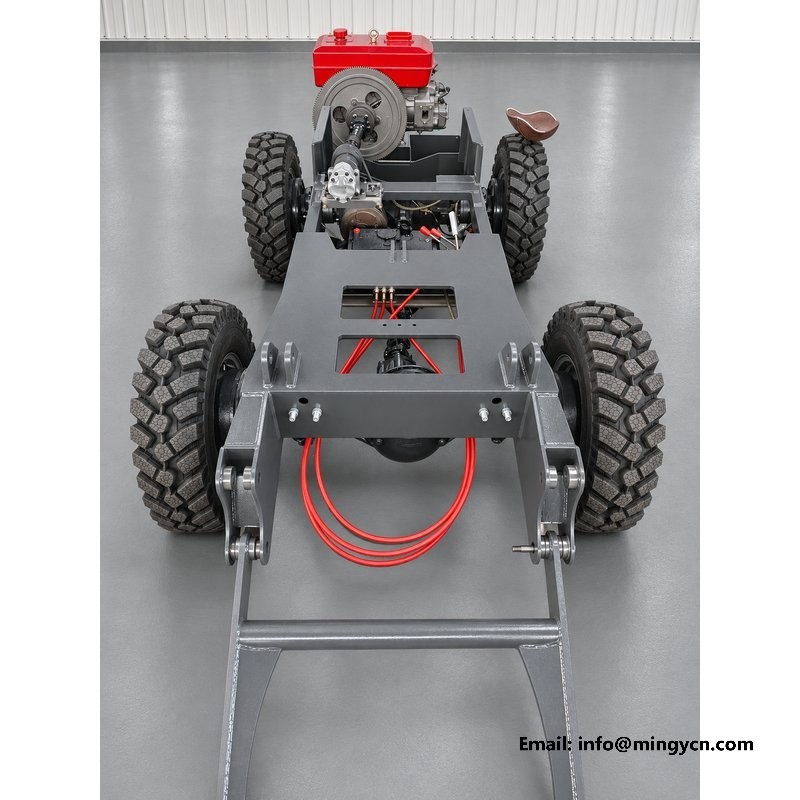
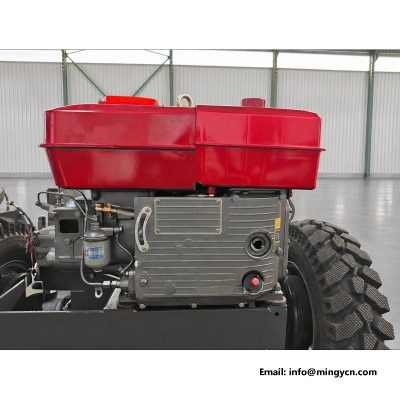
The 25 hp single-cylinder diesel sits on a bed directly above and behind the box, which puts the heaviest fixed component as far forward as the layout allows. Sitting the engine low and forward does two things: it adds to the anti-shovel moment, and it shortens the belt and coupling runs to the gearbox behind. Service access stays reasonable because the side panels lift off without tools, and the fuel tank fills from the top plate within easy reach of the operator platform.
The trade-off for a forward engine is heat and dirt in the nose, so the cooling air path draws from the side grilles rather than over the box, and the daily brush-down routine starts at the fins. Buyers comparing machines should look where the cooling air enters; a front grille clogged with mix dust is the classic sign of a layout drawn without thought for the site.
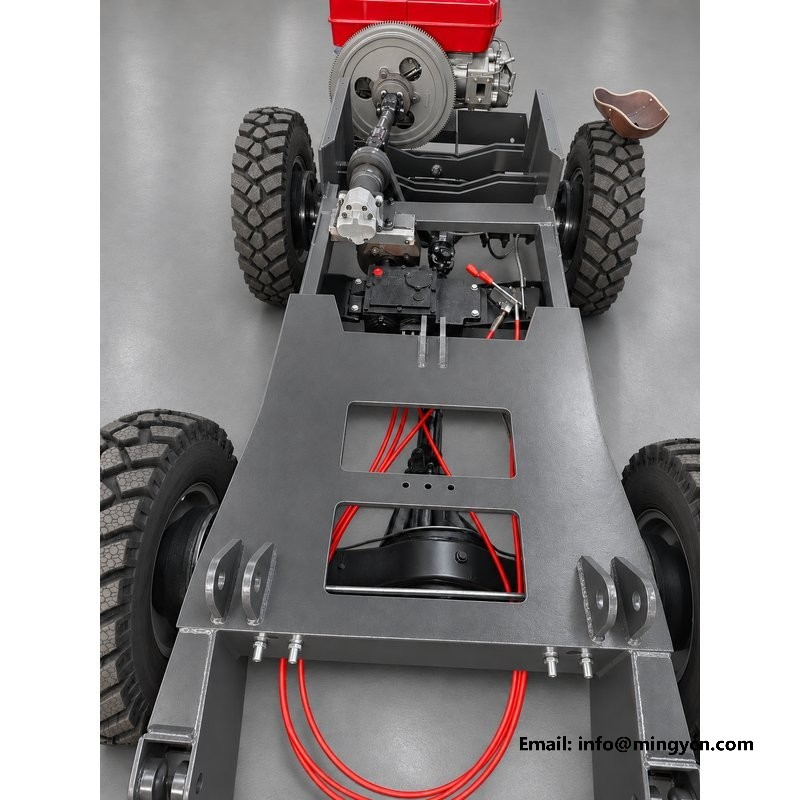
The hardest balance case is not loading; it is travelling. A full drum carries one and a half tonnes roughly above the rear axle, the shovel rides high with its own steel well forward, and the machine meets a pothole that drops the front wheels a hand-width. The counterweight is what stops that drop from lifting the steering into lightness at the worst moment. This is why the factory ballast set is matched to the shovel at carry height, and why operators should be told, in the handover notes, to lower the shovel before travelling any distance on rough ground.
Buyers who expect long hauls on bad roads should say so at order time; the ballast set can be weighted differently for machines that will travel loaded more than most.
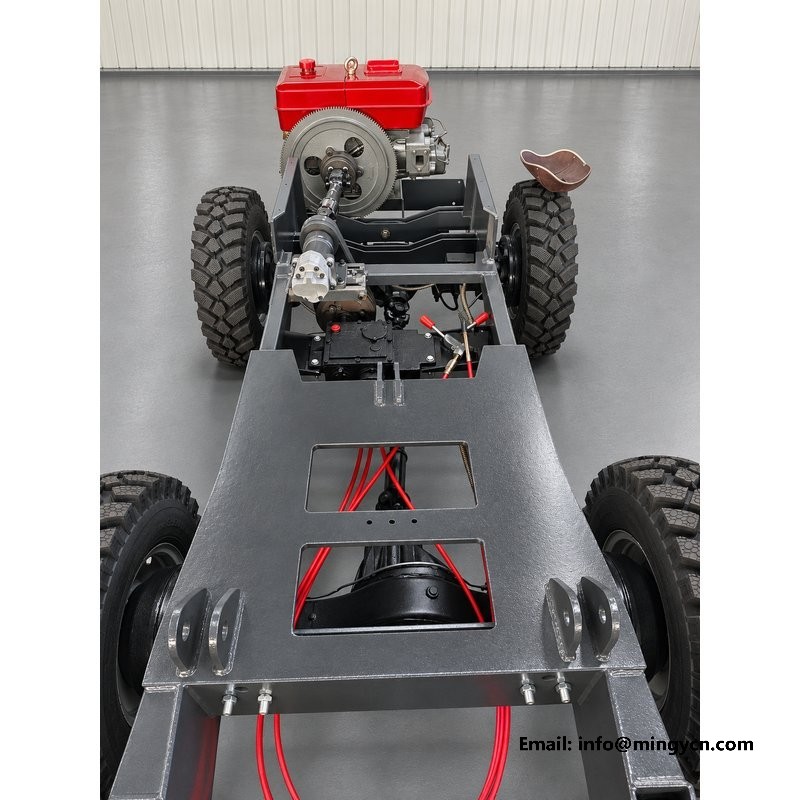
On any real site the nose of the machine becomes a tool of its own. Operators nudge stockpile edges with it, push fallen bags clear and occasionally use it as a step. The tapered plate box handles that duty because its front face is a continuous welded plate with no bolt heads to shear and no protruding fittings to catch. The shovel frame ahead of it takes the pointed hits, and the box behind spreads whatever gets through.
One habit is worth training out of crews: using the box as a dozer blade for hard pushes. The plate handles pushing loose material, but a stalled push against a buried rock loads the box in a way it was never drawn for, and the damage shows up later as a wrinkled front plate.
| Front structure reference — 0.8 m³ 4WD self-loading mixer | |
|---|---|
| Rated capacity | 0.8 m³ |
| Rated load | 1,500 kg |
| Counterweight box | welded tapered steel trough, twin compartments |
| Ballast | factory steel ballast set, matched at the works |
| Engine | single-cylinder diesel, 25 hp class, front mounted |
| Shovel pivots | welded towers at frame outer edges, bushed |
| Overall dimensions (L x W x H) | 3,500 x 1,600 x 2,200 mm |
| Minimum ground clearance | 204 mm |
Ballast mass is set per machine, not per model, and is recorded on the factory sheet that travels with the documents. Ask for that figure with the quotation.
Handover takes ten minutes with a torch. Look into both compartments and confirm the ballast is present, seated below the partition top and dry. Sight down the tapered nose from the side for any wrinkle in the plate, which would mean the machine met something solid nose-first after it left the works. Check the four bolts that clamp the box assembly to the frame are torqued and witness-marked. Finally, run the balance test with the shovel at half height and confirm the rear tyres stay planted.
Any one of those checks failing is a reason to write on the delivery note before signing. Container shipments are settled against photographs, and the time to take them is at the port, not the week after.
Three habits shorten the life of the front structure. Welding brackets onto the box for tools or canopies changes the plate between the box and the pivot towers, and the front frame is not the place for improvisation. Filling the compartments with site rubble instead of the factory ballast adds uncontrolled mass with water and mud in the mix. And carrying the shovel high while travelling, already mentioned, deserves repeating because it is the most common of the three.
None of this forbids sensible use. It means the front structure should carry loads it was drawn to carry, in the place designed to carry them.
Photographs of a bare front frame also let a buyer judge the fixture work behind it. The box, the engine bed and the pivot towers are welded in a jig that holds every plate in position until the frame comes out as one assembly, and the evidence of jigging is visible in a photograph: hole groups line up across the centre line, the two pivot towers stand at equal height, and the tapered nose plates meet the side plates on a clean fold rather than a filled gap. Machines welded without fixtures show the opposite, small asymmetries that translate into lift arms that sit at slightly different heights and a shovel that digs a fraction crooked.
None of this is visible once the machine is dressed with drum, cab and decals, which is why the bare frame stage is worth asking to see. A factory confident in its jigging sends those photographs willingly; one that is not will offer finished-machine pictures instead.
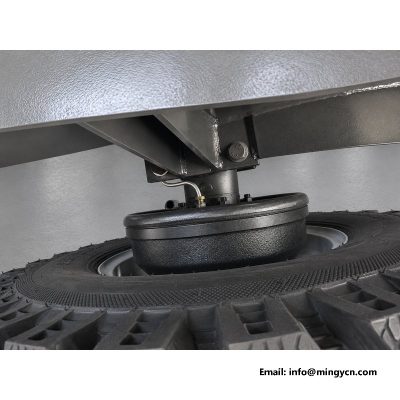
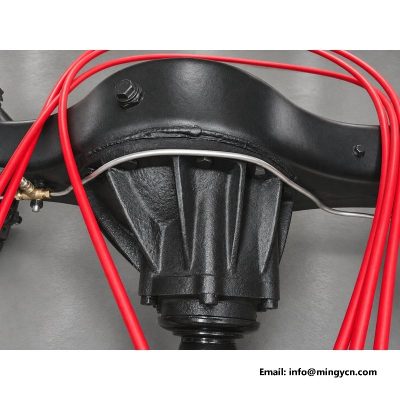
Front weight is not free. Every kilogram placed in the box loads the front axle, the front tyre carcass and the steering gear, and each has a rating. On this machine the front axle is a reinforced automotive-type housing specified together with the ballast set, so the factory balance sheet keeps all three within limits at full shovel reach. Buyers who register the machine for road travel should also check the local rulebook: some regions cap front axle load independently of gross weight, and a machine balanced for site work can sit over that cap when it drives between jobs with the shovel carried and the drum part-full.
The practical fix is operational rather than mechanical. Travel with the shovel low and the drum empty, keep the water tank only as full as the journey needs, and the registered axle load lands back inside the limit without touching the ballast that site work depends on.
Within limits, yes, and it is a factory decision rather than a site one. The box compartments take extra ballast, but the front axle, tyres and steering gear have a rating, and the factory balances the whole front end rather than just adding mass. Ask with the order, not after.
The tapered shape is drawn specifically to hold the approach angle useful. The reference ground clearance is 204 mm and the nose tapers above it, so ramps and kerb work stay practical.
Drill-out drain points sit at the lowest corners. Emptying, drying and repainting the cavity is a workshop morning, not a repair. Water inside is one more reason the annual inspection should include opening the box covers.
For coastal and chemical-plant markets the box can be ordered with an upgraded coating system. Full stainless is rarely worth the cost on this component; the coating route protects the same plate for a fraction of the price.
Contact MINGYI Machinery for the current 0.8 m³ self loading concrete mixer specification, front structure drawings and a formal quotation for your market. E-mail: sales@mingycn.com | LINE (ID): mingyicn
For the chassis this box is welded into, read Reinforced Axle 0.8m3 Self Loading Mixer for Unpaved Sites. For the front loader geometry that works against this weight, see the loading shovel page in the mini self loading concrete mixer category, and for buying notes, the self loading mixer guides.