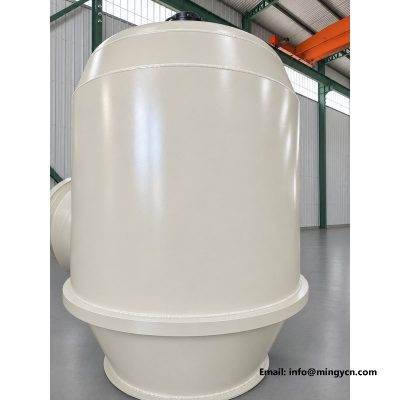
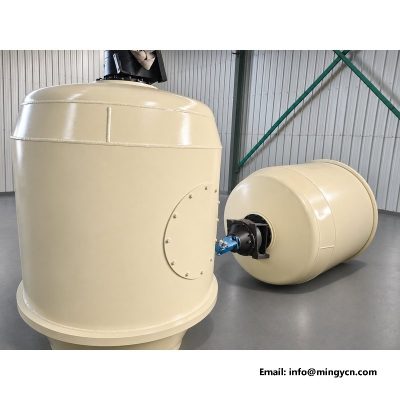
0.8 m3 Concrete Mixing Drum for Self Loading Mixer with Steel Shell, Wide Loading Mouth and Hydraulic Motor Mount
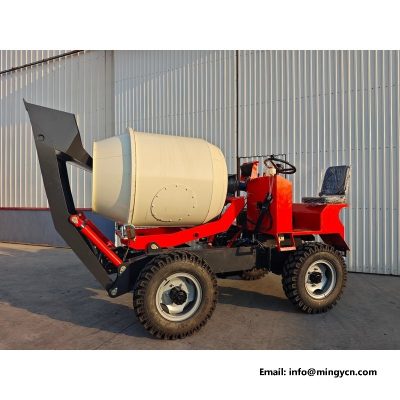
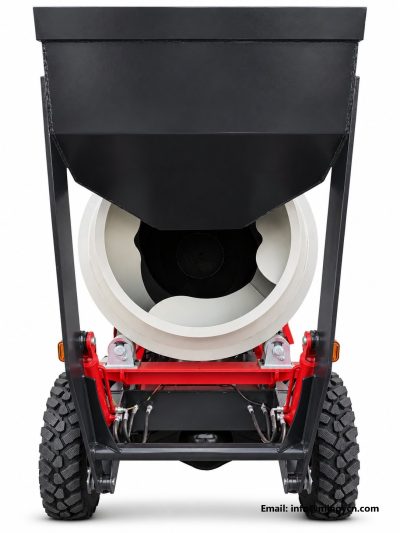
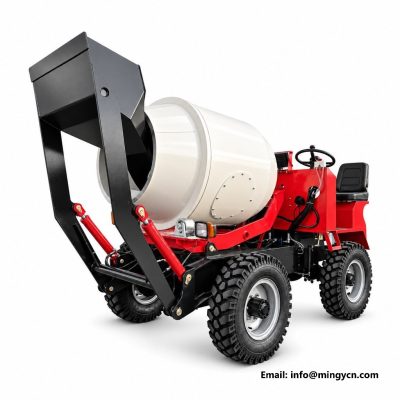
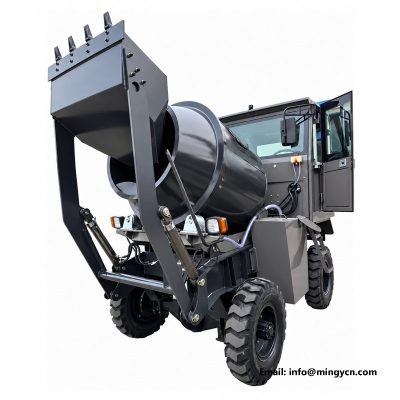
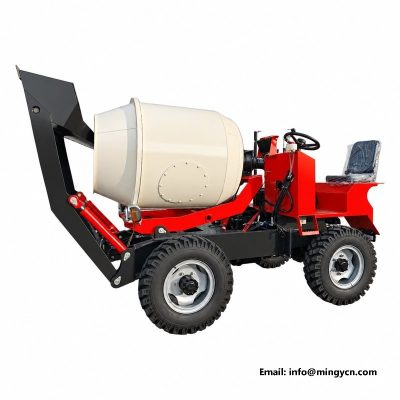
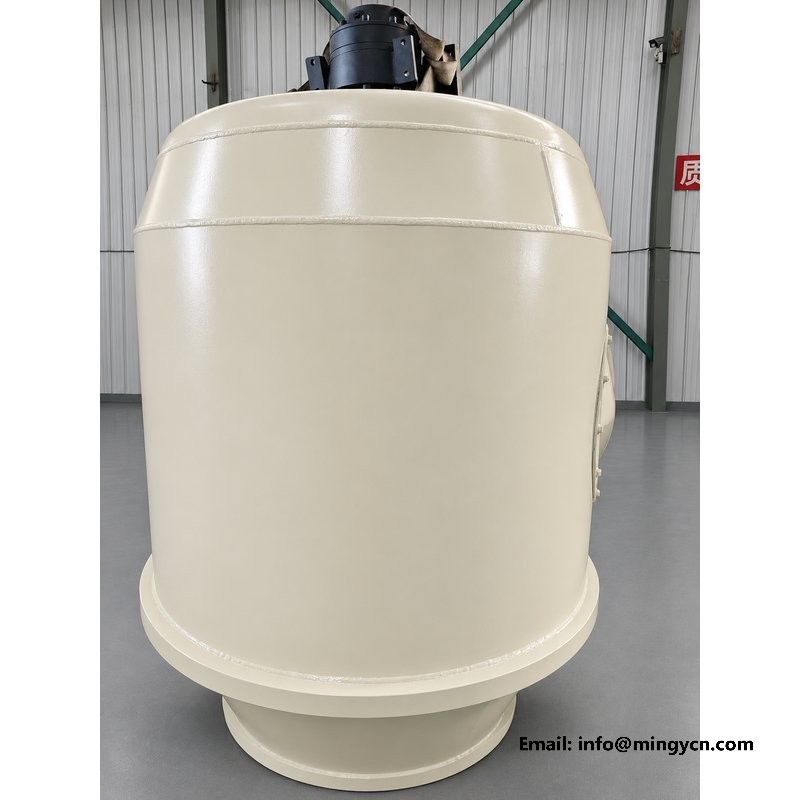
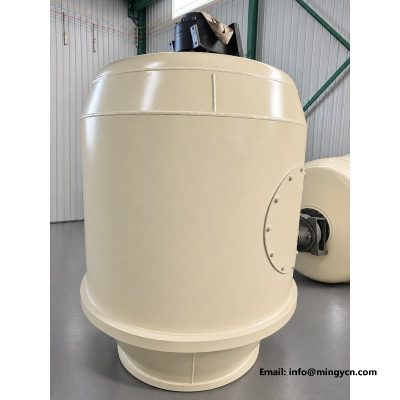
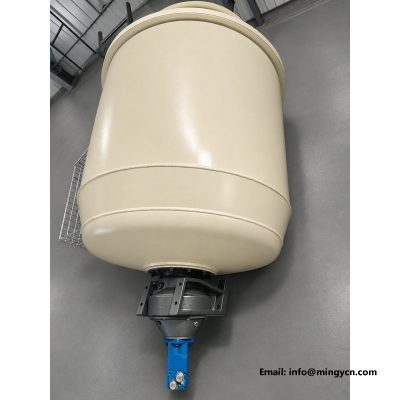
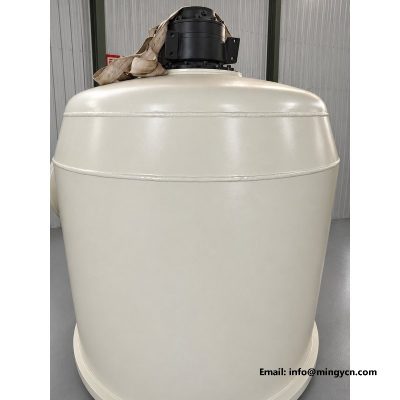
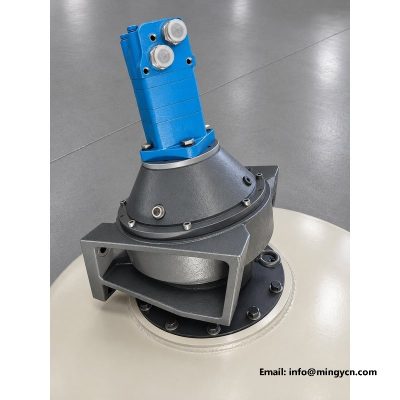
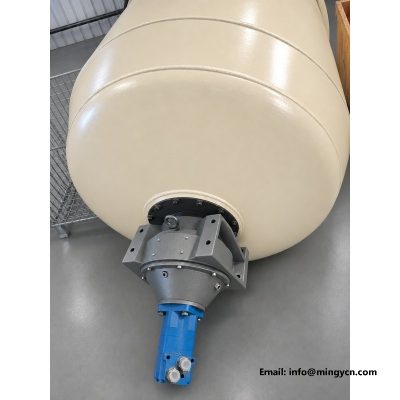
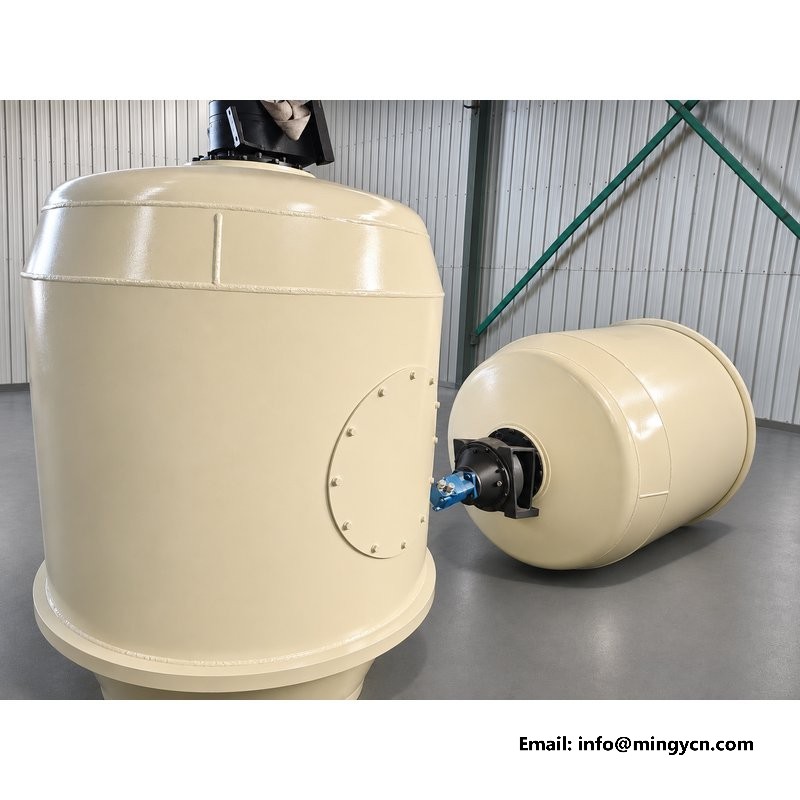
The drum is the part of a self loading mixer the customer actually buys, and it is the part whose quality is hardest to judge once the machine is painted, filled and working. The photographs on this page show the 0.8 m³ mixing drum bare, in the workshop and on the bench: the shell, the rolled edges, the loading mouth, the reduction gearbox at the rear and the mounting that carries the hydraulic motor. Judged from these angles, the construction speaks for itself.
The sections below explain how the drum is built, why its geometry is shaped the way it is, how the drive attaches, and what a buyer should confirm before ordering a machine whose drum must last the life of the whole investment.
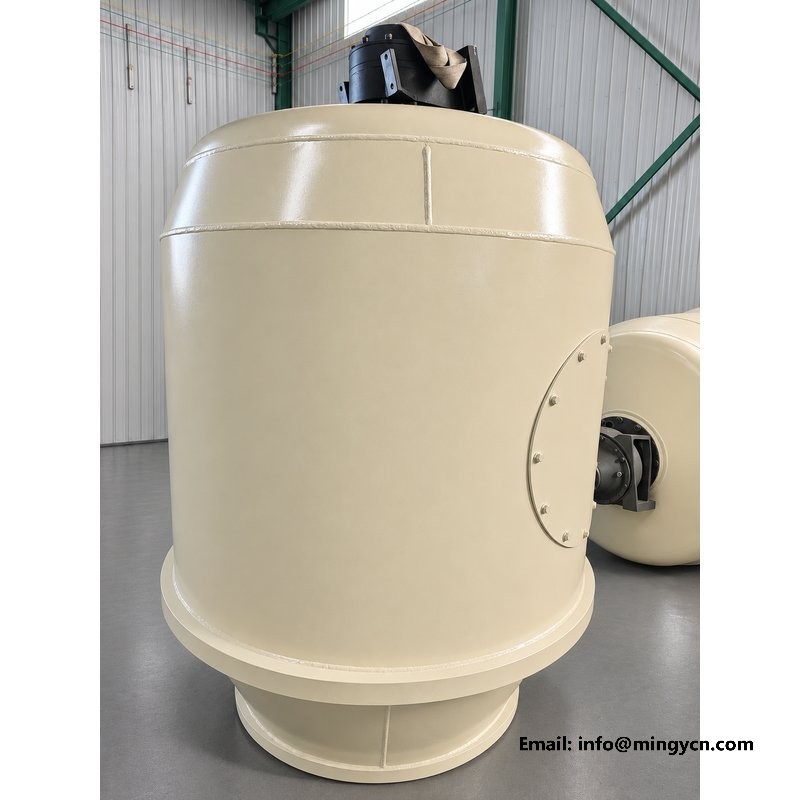
The drum shell is rolled from a single steel plate with the wall thickness chosen for a mixing duty rather than a storage duty. Mixing is abrasive work: aggregate tumbles against steel for minutes at a time, batch after batch, and a shell that is one gauge thinner shows wear rings within a season. Two rolled seams close the shell, and both are welded on the inside and outside so no raw edge is left exposed to the mix.
The cream finish on these photographs is the standard export paint over primer. Under it, the shell carries the same preparation as the chassis: clean steel, primer, top coat. A drum is also a water-containing component in practice, since every batch carries its mixing water against this surface, and trapped moisture behind thin paint is where drums rust first.
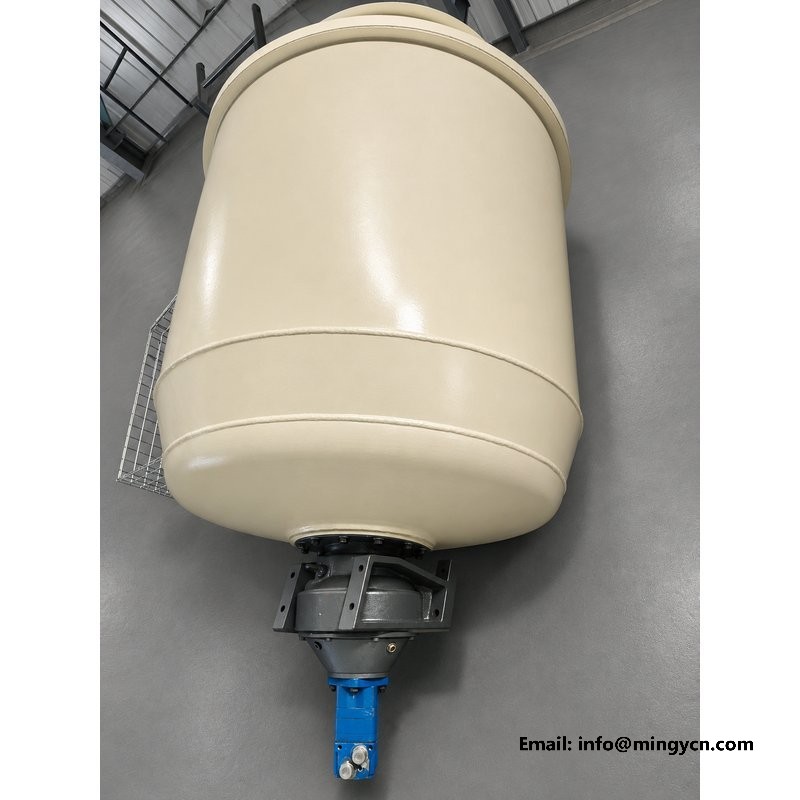
The drum profile is not a plain cylinder. The mouth flares outward, the body swells at the mixing zone and the rear tapers toward the drive. Each feature earns its place. The flared mouth lets a shovel dump a heaped scoop without bridging across the opening. The swelling body gives the mix room to tumble rather than slide, which is what turns materials into concrete rather than into layered mush. The tapered rear carries the gearbox in a compact housing that keeps the drum mouth height low enough to shovel into.
Internal fins, welded to the shell at the mixing zone, lift the batch as the drum turns and drop it through itself. Their height and count are matched to the drum speed range; fins that are too proud trap aggregate, fins that are too shallow let the batch ride along the wall instead of folding.
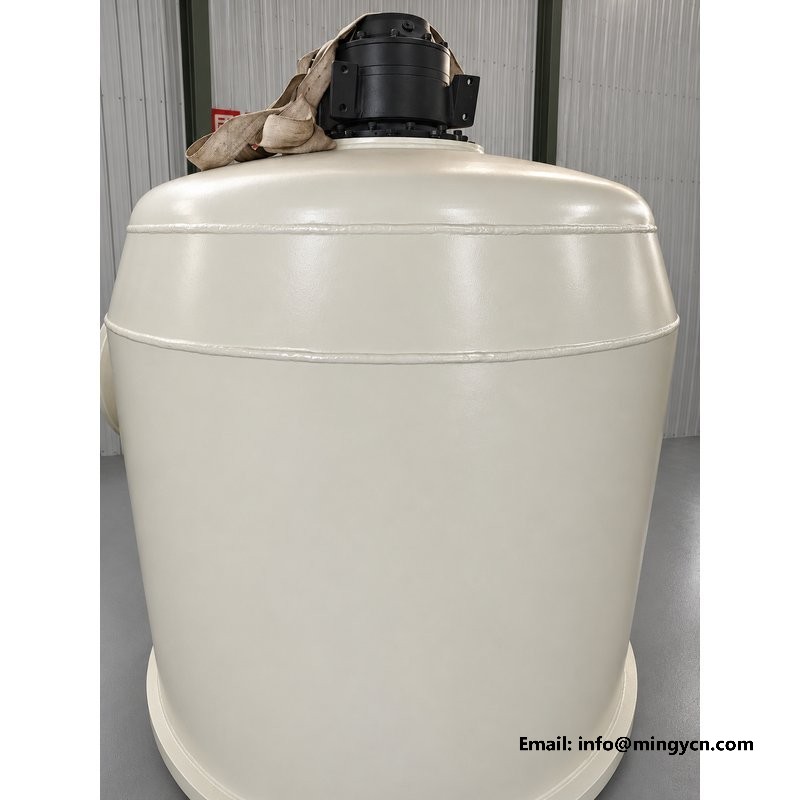
The mouth takes more abuse than any other part of the drum. A shovel or a scoop edge strikes it hundreds of times a day, and the rim is therefore rolled and reinforced rather than left as a cut plate edge. The rim on this drum carries a folded stiffening lip that resists denting and gives the mouth enough rigidity to stay round, which matters because an out-of-round mouth eventually interferes with the shovel dump path.
Height is the other daily fact of the mouth. The loading edge sits at a working height one person can shovel into without a step, which is a direct consequence of the drum capacity: at 0.8 m³ the geometry still allows a manual loading line, something larger mixers give away.
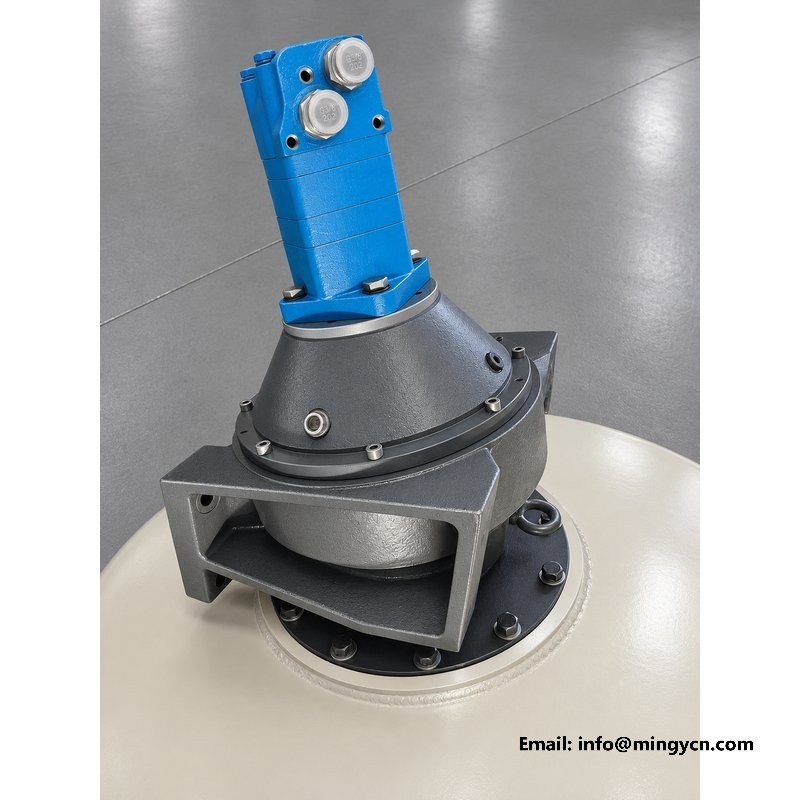
At the rear of the drum sits the reduction gearbox in its cast housing, bolted to a machined mounting plate welded into the drum shell. The drum turns on this gearbox shaft, and the hydraulic motor couples to the gearbox input through a splined flange. Keeping the motor separate from the gearbox is deliberate: the motor is the wearing item and the gearbox is the structural one, and separating them means a motor replacement costs half an hour and a flange, not a drum.
The mounting plate is machined after welding, so the drum axis runs true. A drum that wobbles shows its error at the mouth first, as an uneven gap to the shovel, and later at the gearbox seal, which runs hot on a bent axis.
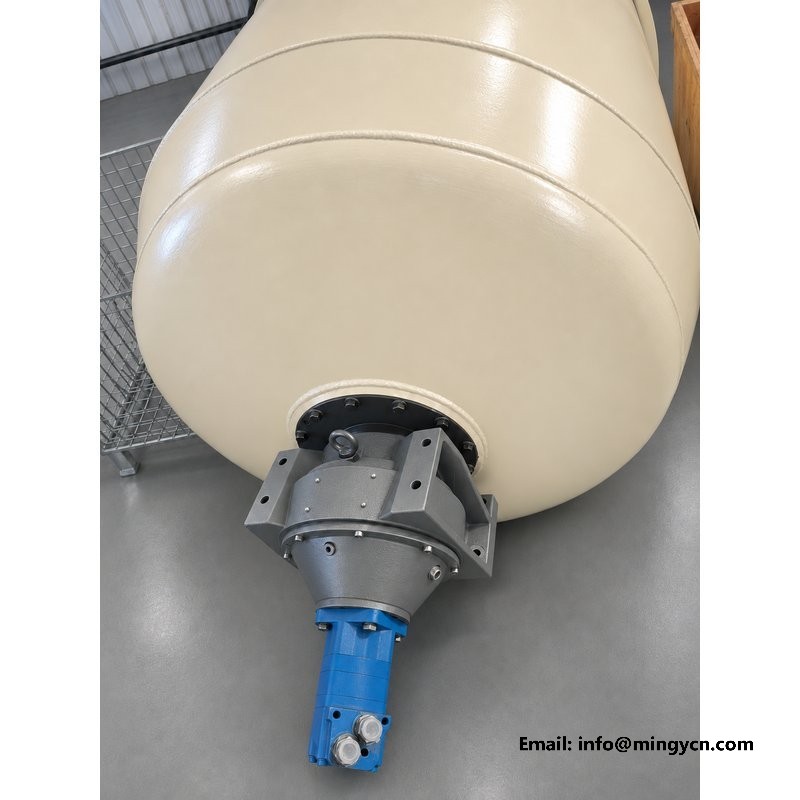
The drum assembly pivots on a saddle fixed to the chassis, with a hydraulic tilt cylinder controlling the discharge angle. The saddle carries the rotation loads; the gearbox shaft takes only torque. Splitting the duties this way means the drum can be removed for overhaul by unbolting the saddle and the motor, without disturbing the chassis.
Discharge geometry is worth a sentence. As the drum tilts, the mouth drops toward the chute and the batch pours from the lowest edge of the tilt. The 0.8 m³ drum discharges clean at a moderate tilt angle, which keeps the centre of gravity change manageable on a machine this light.
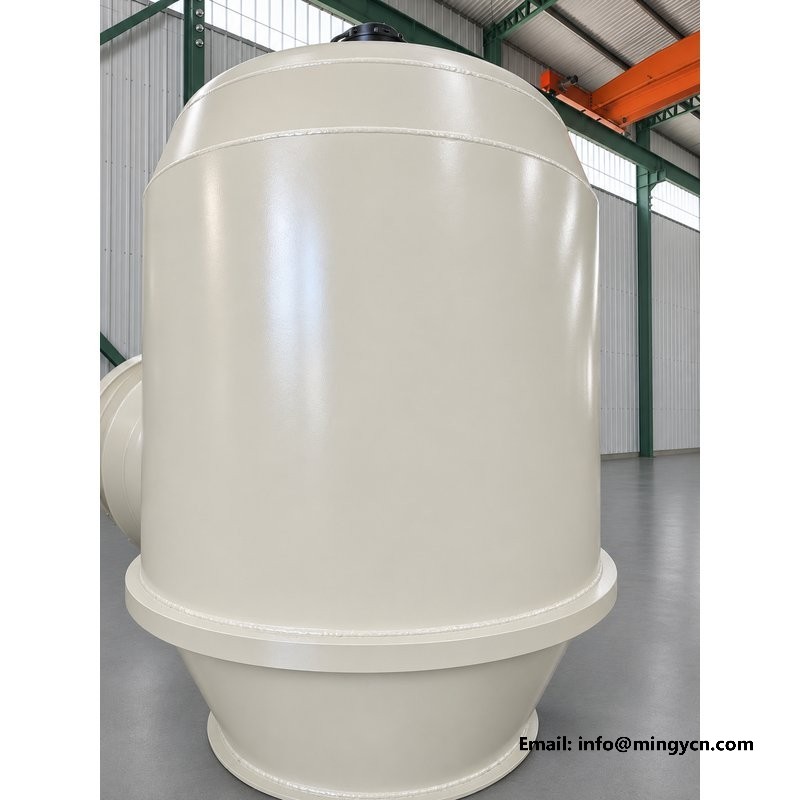
The interior of a drum that has been rinsed properly looks like the photograph: clean steel, visible fins, no cement build-up. Rinse discipline is the whole difference. A drum rinsed at the end of every pour keeps its shell thickness; a drum left with a bag of set concrete in the bottom loses effective capacity and gains a hammer every time it turns. The water system feeds a rinse line into the drum for exactly this purpose, and using it is a two-minute habit that protects the most expensive component on the machine.
For machines that mix in high heat, a light oiling of the interior after rinse-out slows the surface from drying instantly and keeps the first batch of the next day from sticking.
| Drum reference — 0.8 m³ self-loading concrete mixer | |
|---|---|
| Rated capacity | 0.8 m³ (800 litres) |
| Shell | rolled steel plate, twin welded seams, internal fins |
| Loading mouth | flared, reinforced rolled rim |
| Drive | hydraulic motor to planetary reduction gearbox |
| Rotation | hydraulic, both directions, proportional control |
| Discharge | hydraulic tilt, rear chute |
| Rated load | 1,500 kg per batch |
Shell thickness and gearbox ratio are fixed by the mixer design; both are listed in the full specification sheet available with a quotation.
Drum wear is honest and predictable. The shell thins first where the aggregate rides highest, visible as polished bands inside. Fins wear at their tips. The gearbox seals age with hours and heat. None of these is sudden; all of them are visible during an annual internal inspection, which takes ten minutes with a torch through the mouth. A drum that has worked clean and been rinsed daily will measure close to its new shell thickness after years of batching; one that has hosted set concrete will show a glazed, patched interior long before its time.
Spare gearbox seals and a spare motor coupling belong in the parts box from the first shipping container, for the same reason as every other part on this list: the machine usually works far from the town that stocks them.
Four checks cover the drum in minutes. Turn the drum slowly by hand, if the layout allows, or at low engine speed, and watch the mouth run true. Look inside with a torch for clean steel and intact fins. Check the gearbox for oil at the level plug and for weeping at the shaft. Tilt the drum to discharge and confirm the movement is smooth with no knocking at the saddle. A drum that passes all four is a drum that was built, transported and mounted with care.
A single 0.8 m3 batch is roughly a third of a cubic metre of placed concrete after compaction, and a two-person crew working a short cycle, load, add water, mix, discharge, Rinse, completes a batch in eight to twelve minutes depending on the haul distance. Over a working day that is a steady four to six cubic metres placed without a second machine and without a transit mixer standing idle. The drum size is not a limitation so much as a rhythm: the crew never waits for concrete, and the concrete never waits for the crew, which is exactly what small pours need.
In the container the drum stays mounted on the machine with the mouth bagged against dust and the tilt cylinder pinned. The gearbox travels with its oil in, sealed at the factory. At the far end, the checks are the same four listed above, plus one look at the mouth rim for dents, because the mouth is the part of the drum closest to the container wall and the only part that ever meets a strap or a crate edge. Damage there is rare, visible immediately, and belongs on the delivery note when it happens.
Drums within the series share the saddle interface, the gearbox pattern and the motor coupling, which means a replacement or a spare drum for a fleet drops onto any machine of the same series without modification. Fleets running several mixers often order one bare drum with a shipment; it travels nested and inexpensive, and it converts a cracked-shell incident from a season-ending event into a weekend swap.
The drum surface lives in the hardest conditions on the machine: sun above, wet mix within, and abrasion across the whole face. The paint system here matters less for beauty than for cleanability, because a smooth, intact surface sheds splashes before they set. Touching up chips at the mouth rim after the first weeks of work is normal everywhere; the point is to do it before rust establishes, using the same primer the factory ships in the spares kit.
A final remark on judging drum quality from photographs, since that is how most buyers will first meet this component. Roll your eye along the shell seam and confirm it is straight and continuous. Look at the fins through the mouth and check they are welded at both ends. Count the fasteners around the gearbox mounting plate; a fully bolted circle is what holds a drum axis true for years. These three simple details reliably separate a drum built for a long working life from one built only for a quotation, and they are all clearly visible in the photographs on this page before a single unit of money is committed to the order.
The drum is designed for concrete and mortars. Dry powders, feed and similar light duties are possible in practice, but abrasive or sticky materials outside the design brief shorten shell life and void the wear expectations in the manual.
With daily rinse-out and normal batching, the shell outlasts several sets of hydraulic seals and usually the first engine overhaul. Neglected drums that ride on set concrete can lose a season of life in a month. Maintenance, not metallurgy, decides the answer.
Patch plates can be welded internally by a competent workshop as a temporary measure. A drum worn through at the mixing bands is replaced; the replacement bolts to the same saddle and couples to the same motor, because the mounting interface is standard within the series.
The light finish reflects heat, which matters for the mix in hot climates, and it makes cracks and wear easy to see at inspection. It is also the colour the factory has used across this series, so replacement drums arrive matching.
Contact MINGYI Machinery for the current 0.8 m³ drum specification, replacement drum supply and a formal quotation for your market. E-mail: sales@mingycn.com | LINE (ID): mingyicn
For the hydraulic motor that turns this drum, see the hydraulic drive page in the mini self loading concrete mixer category, and for the machine around it, Reinforced Axle 0.8m3 Self Loading Mixer for Unpaved Sites. Application notes sit in the self loading mixer buying guides.