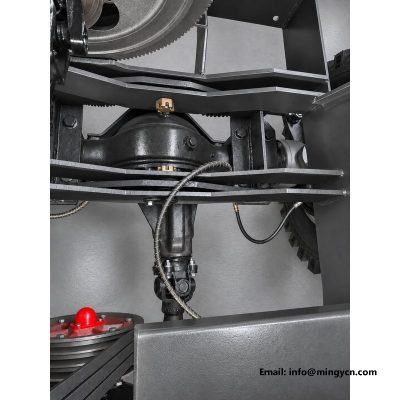
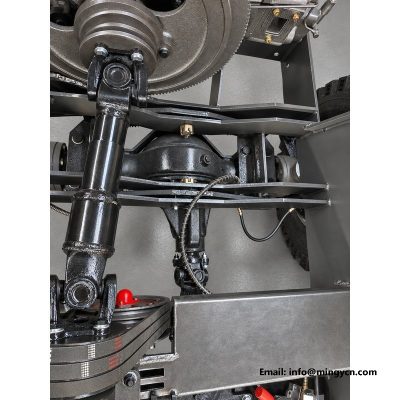
212 Type Steering Rear Axle of the 0.8 m3 4WD Self Loading Mixer with Central Oscillating Pivot and Bump Stops
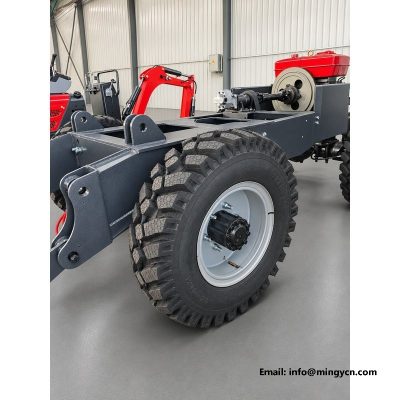
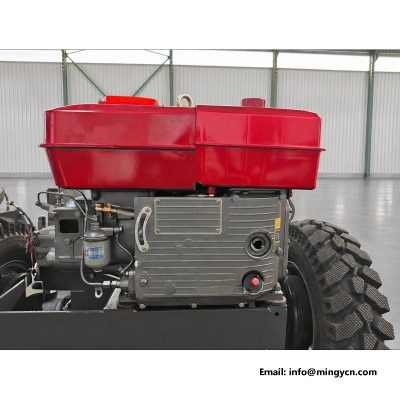
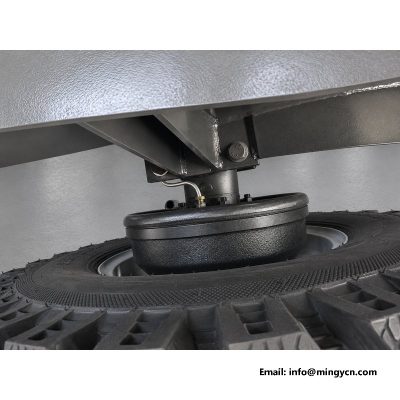
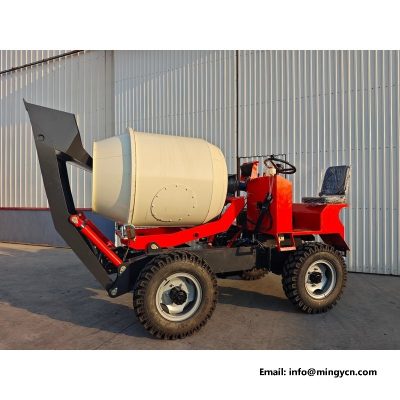
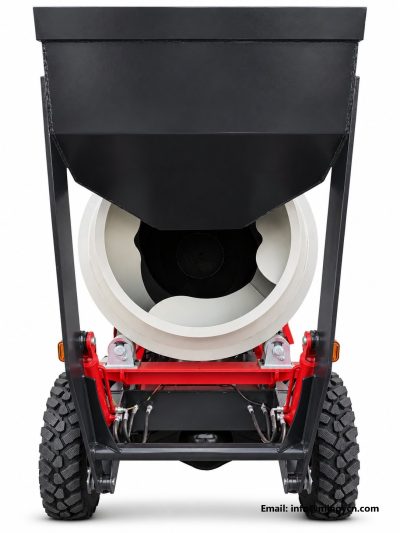
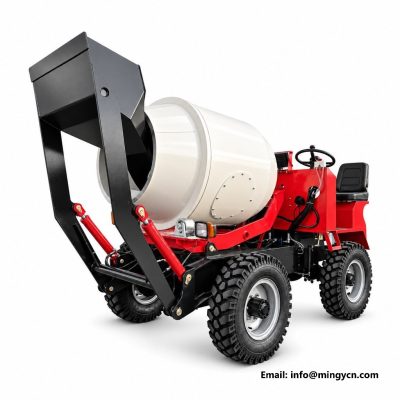
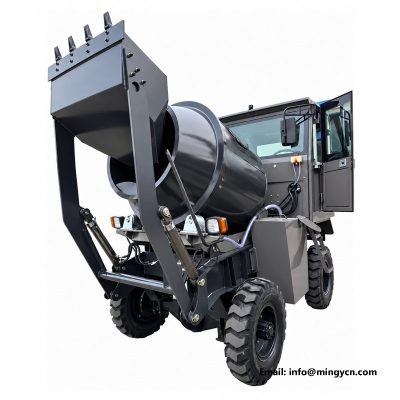
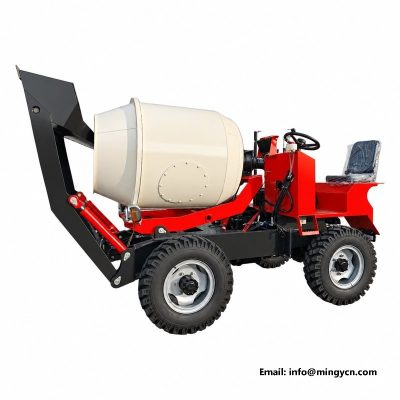
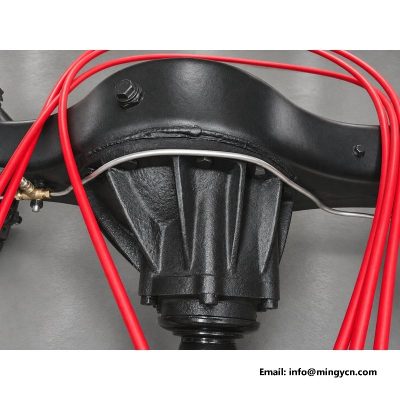
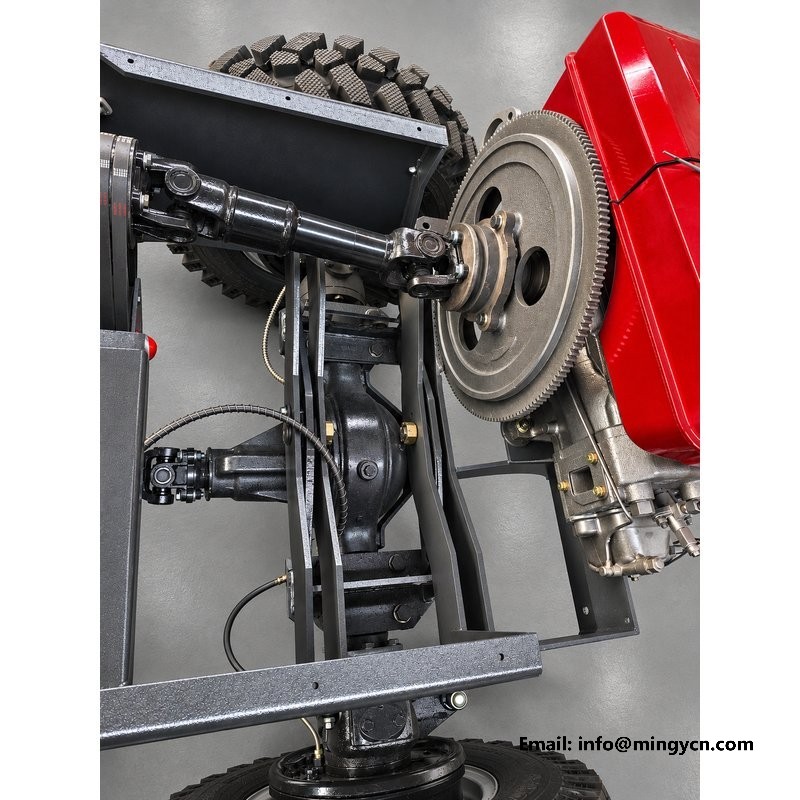
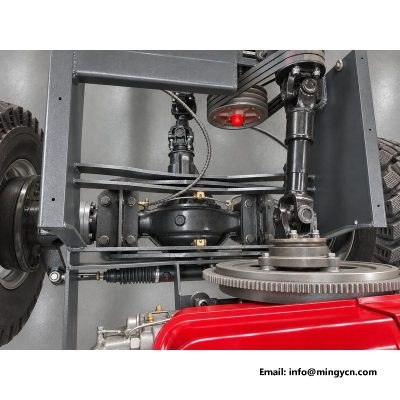
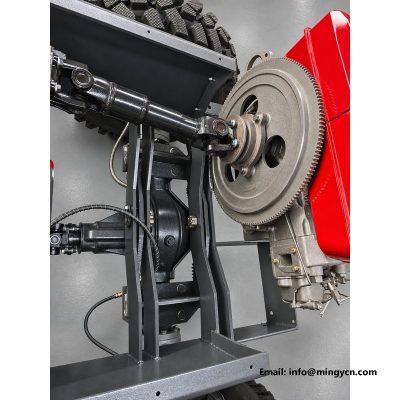
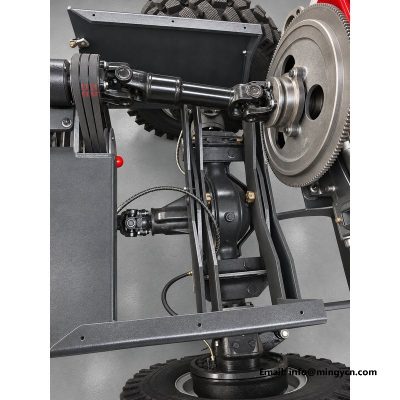
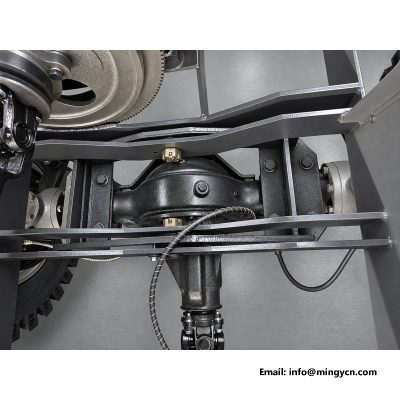
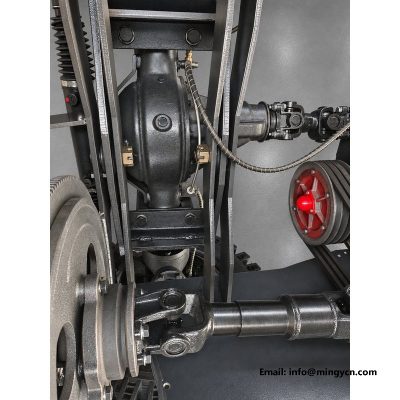
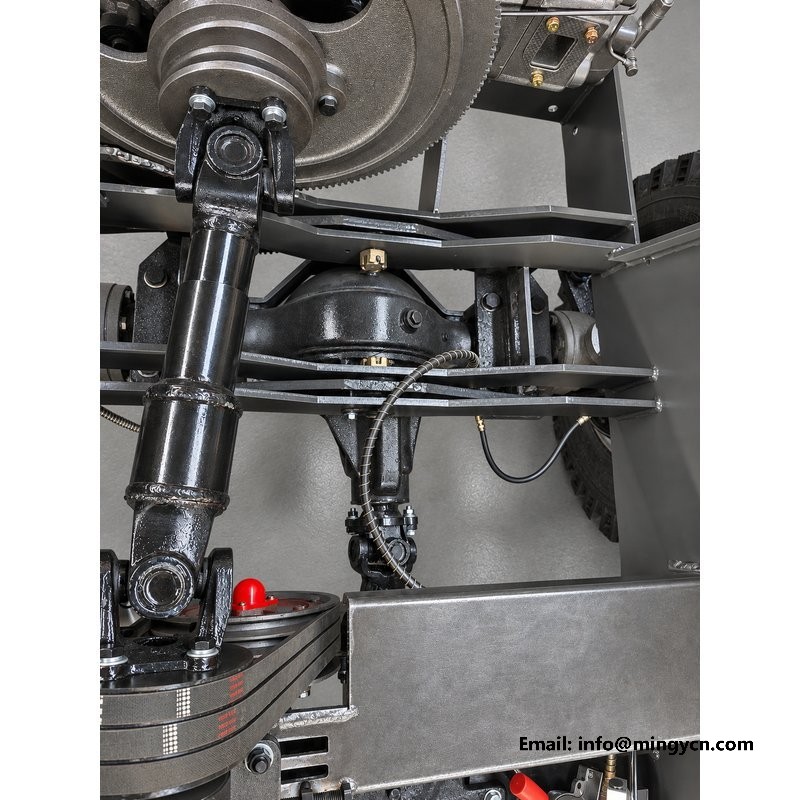
A rigid axle on rough ground balances a machine on three wheels; an oscillating axle keeps all four planted. The photographs in this page show the steering rear axle of the 0.8 m³ self loading concrete mixer from below and in section: the central pivot, the oscillation the pivot allows, and the bump stops that bound it. Together they explain a feature that separates machines built for prepared yards from machines built for the unpaved sites this one is sold into.
The sections below cover how the oscillating pivot works, why the steering axle is placed at the rear of this machine, what the bump stops do and why their condition matters, and how a buyer can check the whole arrangement in ten minutes at a factory visit or at delivery. Every claim made here can be verified on the photographs themselves, all of them shot in the assembly workshop, which is the point of publishing them.
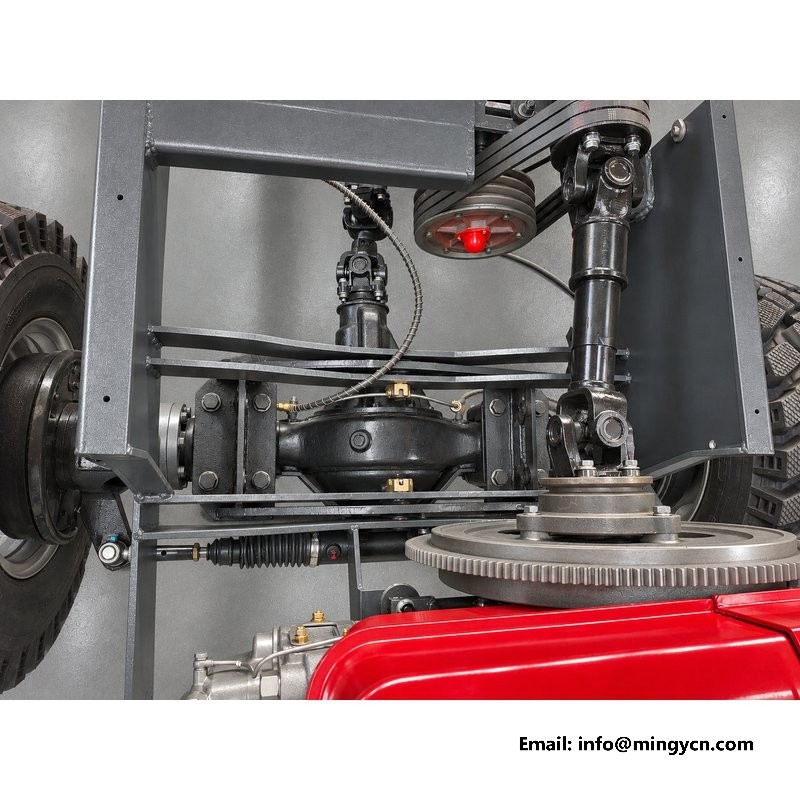
The axle housing hangs from a transverse pivot at its centre instead of being bolted rigid to the chassis. When the left wheel climbs a rock, the whole axle rocks about that pivot, the left wheel rises, the right wheel stays down, and the chassis above tilts only half as much as the ground. The machine keeps four wheels in contact and keeps traction on all four while the ground does its worst. On a rigid axle the same rock lifts the inner wheel into the air, the machine balances on three points, and the unloaded wheel spins uselessly on a four-wheel-drive system that is feeding it power.
The pivot runs in bushings designed for grease maintenance, and a grease point reaches it from the service side of the chassis. It is a one-minute weekly item that protects an assembly most buyers never think about until it knocks.
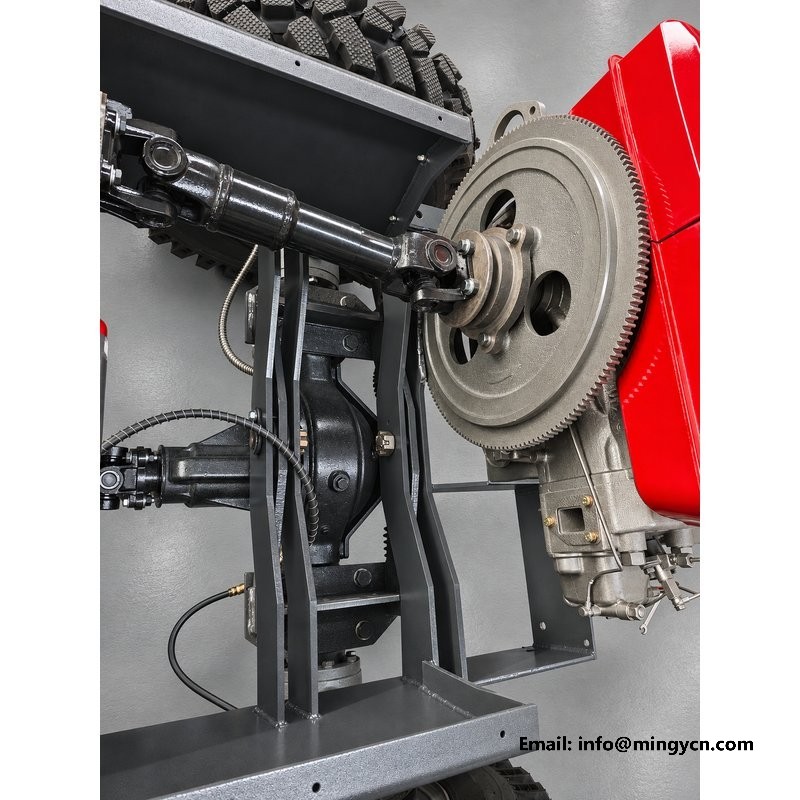
Most buyers expect steering at the front, because almost everything on the road steers there. This machine steers at the rear by design: the loading shovel swings at the front, and steering from the rear lets the shovel follow a curving approach into a stockpile without the operator making wide correction arcs. The mixer also discharges from the rear or side depending on configuration, and a short rear-steer wheelbase tightens the working manoeuvre in exactly the space a pour happens in.
Rear steer has a personality the operator learns in an hour: reversing the sense of correction at first, then feeling natural, and bringing a real benefit that front-steer mixers of this size cannot offer, which is a turning circle closer to the wheelbase than to the machine length.
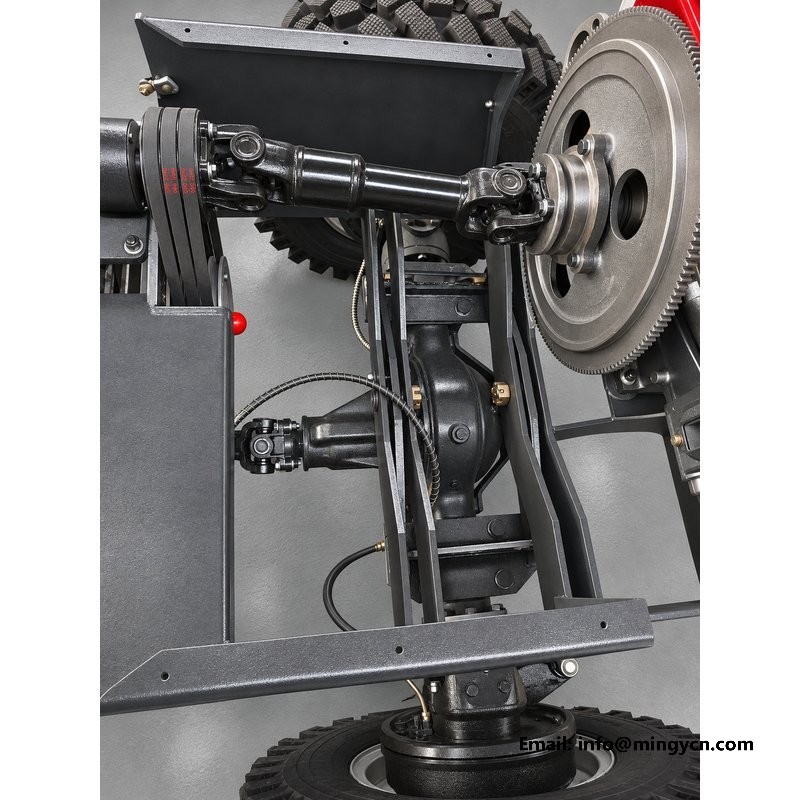
The pivot lets the axle rock, and the bump stops decide how far. Rubber blocks on the chassis meet matched pads on the axle at each end of the travel, and beyond them the axle is meant to hit nothing. When a stop is missing, crushed or oil-soaked, the metal arrives at the chassis instead, and every rock in the ground becomes a hammer blow on the pivot and the frame.
The stops are consumables in the same sense as brake pads: cheap, replaceable, and worth inspecting at every service. On a used machine, torn or flattened stops are a reliable hint that the machine has worked hard ground hard, and the pivot bushings deserve a closer look in the same inspection.
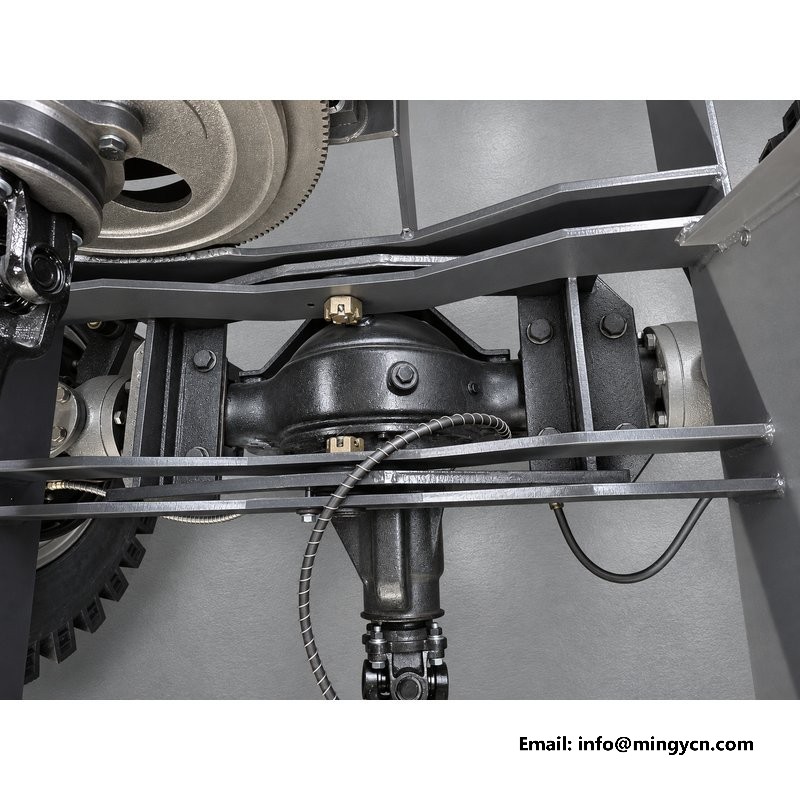
A loaded drum raises the centre of gravity, and sloped sites lean it sideways. The oscillating axle manages the combination: the chassis leans half the ground angle, the drum stays closer to level than the ground is, and the machine keeps its full footprint on the ground. The drum level matters more than comfort, because a tilting drum changes the mixing and the discharge geometry at the same time.
The geometry also feeds back into shovel work. With the rear axle keeping the machine planted, the shovel can dig one side into a heap without the opposite front wheel leaving the ground, which is precisely the situation where rigid-axle loaders rock and lose the bite.
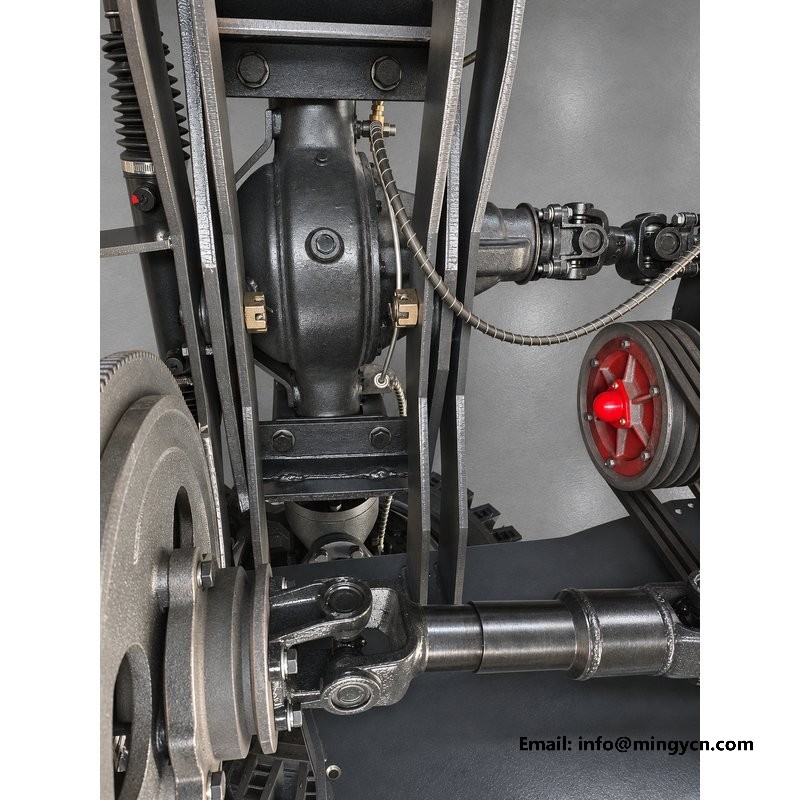
Steering effort is hydraulic, with cylinders acting on the track rod arms from a valve fed by the machine’s own hydraulic pump. The flow share means steering stays light even while the drum turns and the shovel lifts, which is the whole working condition of a mixer: everything happening at once. The cylinders carry dust seals exposed to the worst air on the machine, and a wiped rod with a torn seal weeps hydraulic oil that shows as a dark line down the axle housing.
A weekly walk-round that looks at the cylinder rods, wipes them and greases the pivot catches nearly every steering complaint years before it becomes a repair.
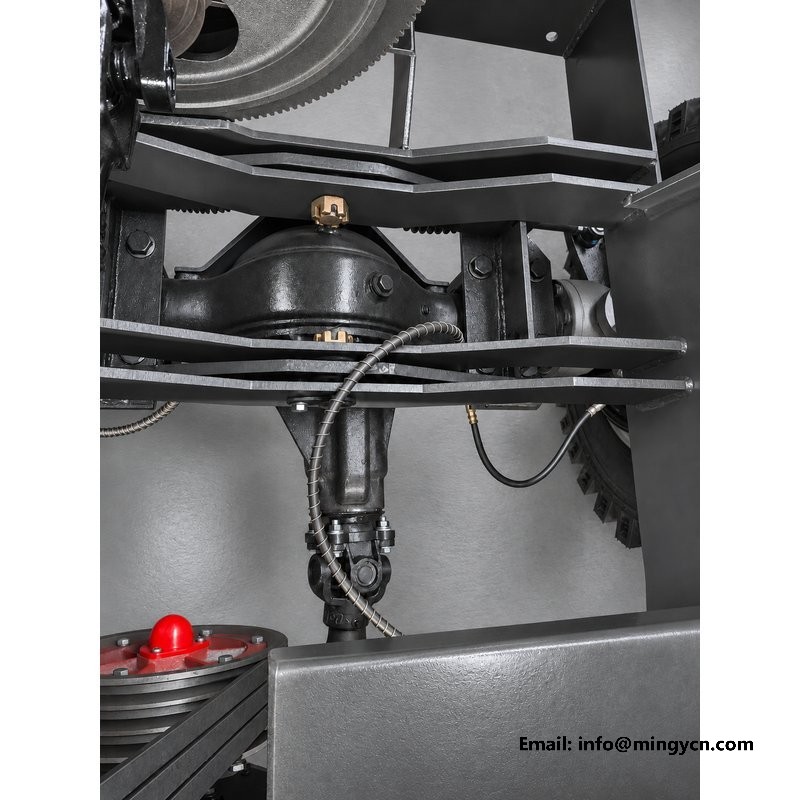
The steering axle is a 212-type unit, a layout with decades of service behind it in light 4WD machinery across Asia and Africa. The choice is deliberate: parts for this axle family are stocked from provincial capitals down to county towns in the markets this machine serves, and any mechanic who has kept a light truck alive knows its geometry. Wheel bearings, king pins, track rod ends and pivot bushings are all over-the-counter items rather than factory specials.
For a buyer planning to run machines far from a dealer, that parts geography is often the deciding argument, and it is worth asking any supplier which axle family their machine uses before comparing anything else.
| Steering rear axle reference — 0.8 m³ 4WD self-loading mixer | |
|---|---|
| Axle type | 212-type steering drive axle |
| Steering position | rear axle, hydraulic cylinder assist |
| Oscillation | central transverse pivot with bushings and grease point |
| Travel limits | rubber bump stops at both ends of oscillation |
| Maintenance | weekly grease, stop and rod inspection |
Figures describe the machine as supplied; the manual carries service intervals and tightening values for the pivot and hub hardware.
Ten minutes covers it. With the machine standing, look under the rear: the bump stops should be present, intact and square, the pivot area greased and free of cracked rubber debris, and the cylinder rods wiped clean with no weeping lines. Rock the machine by hand side to side and watch the axle move on its pivot; it should rock freely and return without knocking. Drive a slow figure on loose ground and listen for clonks at full steering lock, which would point at track rod ends rather than the pivot. Note what you find with photographs, as with the wheel and tread checks, so the delivery record reads as one continuous baseline.
Buyers sometimes read the pivot as a suspension system, and it is worth being precise about the difference. The axle oscillates to follow terrain; it does not absorb the wheel’s vertical shocks with springs and dampers. What softens the ride is the big-volume tyre carcass itself, flexing at site pressures, and that is one more reason the deep lug tyres run at the pressures the manual quotes rather than rock hard. The arrangement is the same philosophy agricultural machinery has used for a century: let the tyre absorb the small stuff, let the pivot keep the wheels planted, and let the structure be strong enough that neither has to apologise. Machines that add sprung suspension to this weight class pay for it in complexity, and the sites this mixer works do not reward the complexity.
Track rod ends set the toe, and toe out of adjustment chews the tread edges faster than any hill does. The symptom is feathering you can feel with a palm drawn across the tread: sharp one way, smooth the other. After any incident that bends something, and at every major service, the toe is checked and set with a tape and the manual figure. The 212-type layout makes the adjustment a ten-minute job with hand tools, which is part of why it was chosen. A buyer inspecting a machine should run the palm test on all four tyres; even feathering is fine, one-sided feathering is a toe or bearing conversation with the factory before shipment rather than a discovery after it.
The oscillating axle tilts the chassis half way to the ground, which extends the slope the machine can work on, but the limit is still gravity and the load in the drum. The safe habits are the same everywhere: keep the batch at or under the rating on slopes, travel across a slope with the drum low, and turn uphill rather than down when the ground is loose. The pivot keeps wheels planted; it does not change where the centre of gravity sits. Supervisors setting up a pour on sloping ground should plan the travel lines with that in mind, and the machine rewards the planning with traction that rigid-axle machines of the same weight cannot match on the same ground.
Noises from the rear axle sort themselves into three families. A knock over every bump points at the bump stops or loose pivot hardware, and a torch and a wrench settle it. A clonk only at full steering lock points at track rod ends or the steering stop geometry, and it grows quickly if ignored. A growl that rises with road speed and changes on corners lives in the wheel bearings, and a hand-spin check with the wheel off the ground finds it in minutes. None of these needs a workshop with special tools, which is the recurring theme of this axle: the failure modes are visible, the parts are common, and the fixes are within a competent site mechanic.
When a dry pivot finally knocks through the grease, the rebuild is still a modest job. The axle is supported, the pivot pin is withdrawn, bushings are pressed and new ones fitted, the pin is inspected for scoring and replaced if it carries any, and the assembly goes back with fresh grease and new stop rubbers if the old ones have taken a set. A day of work with common tools, and the axle returns to the silence it left the factory with. Machines kept on a weekly grease routine from new routinely never see this job, which is the economics of a grease gun in one sentence.
An hour of yard work, generally. The correction sense reverses against car habits at first, and then the tight working circle the layout gives becomes the reason nobody wants to go back.
The machine keeps working, but every oscillation overtravel lands metal on metal. Fit a replacement from the parts box before the next shift on rough ground; the stops are inexpensive and the pivot wear they prevent is not.
Enough to keep four wheels on typical site terrain, bounded by the stops rather than by a figure to quote. The practical test at handover is the free-rocking check described above, not a protractor.
With weekly grease it is a years-not-months item. Dry pivots knock audibly long before they fail structurally, so the noise is the warning and the grease gun is the cure.
Contact MINGYI Machinery for the current 0.8 m³ self loading concrete mixer specification, axle options and a formal quotation for your market. E-mail: sales@mingycn.com | LINE (ID): mingyicn
For the driveline this axle feeds and the tyres it plants, see Reinforced Axle 0.8m3 Self Loading Mixer for Unpaved Sites and the wheel and tread pages in the mini self loading concrete mixer category.