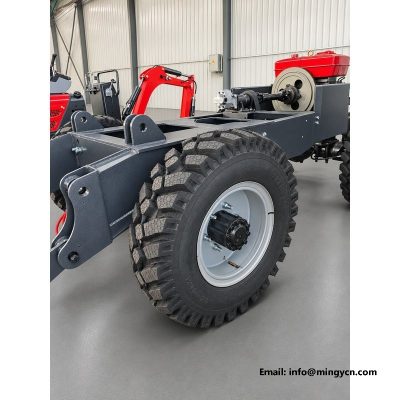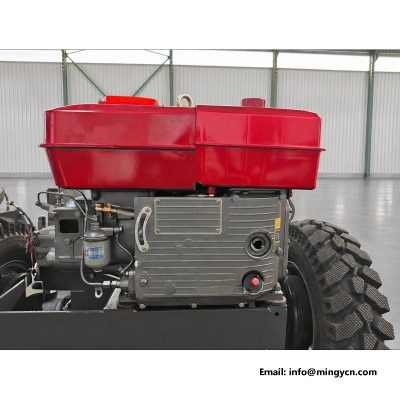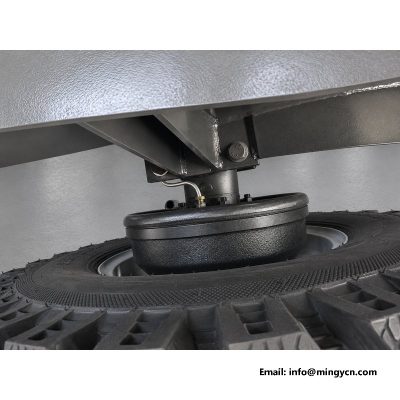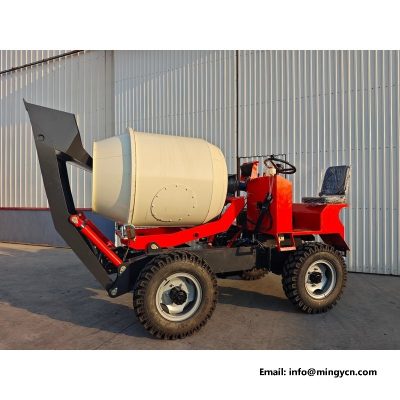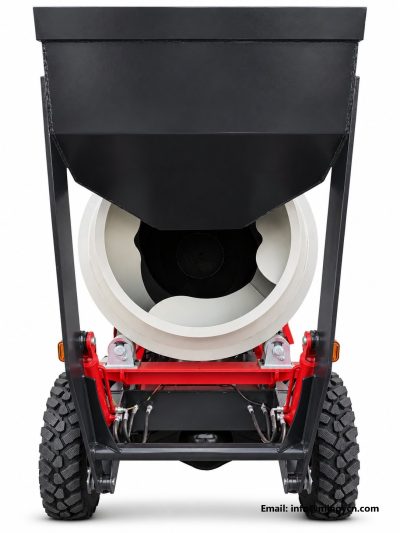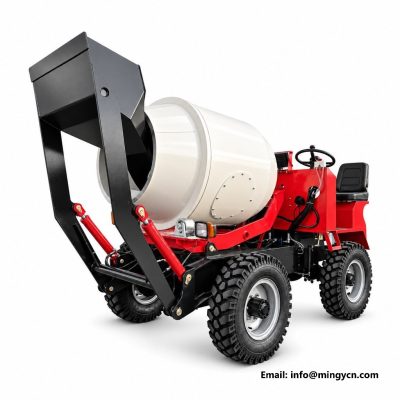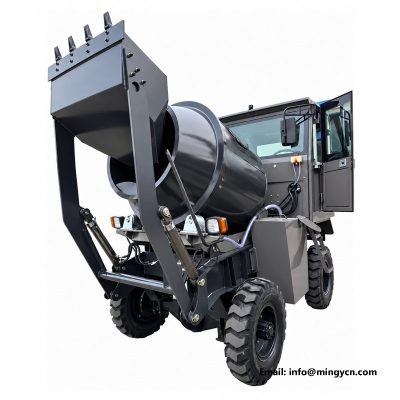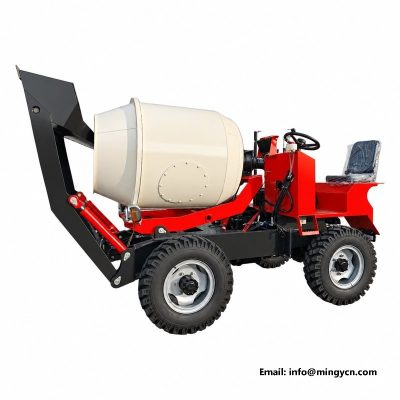
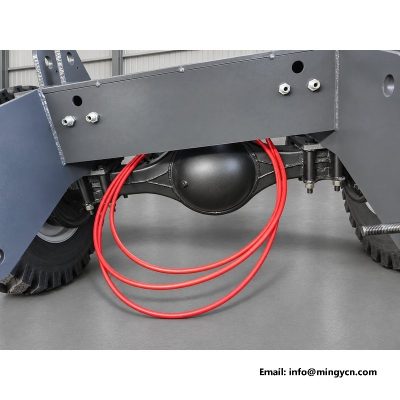
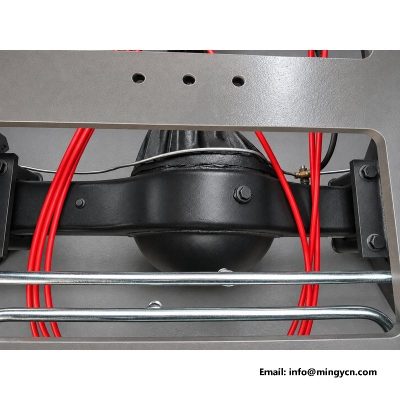
Driveline of the 0.8 m3 4WD Self Loading Concrete Mixer with Centre Driveshafts, Differentials and Cast Axle Housings
Four-wheel drive is a promise made of steel shafts. Between the gearbox and each wheel of the 0.8 m³ self loading concrete mixer sits a chain of driveshafts, differentials and cast axle housings, and the photographs in this page follow that chain from end to end. Buyers rarely see these parts before delivery, which is why they are photographed here in the assembly shop: the driveline is where a cheap machine hides its costs, and where this one spends its steel instead.
The sections below walk through the path the power takes, what each differential does on slippery ground, why the housings are cast the way they are, and what a buyer can check and hear during a test run that tells the truth about the driveline underneath the paint.
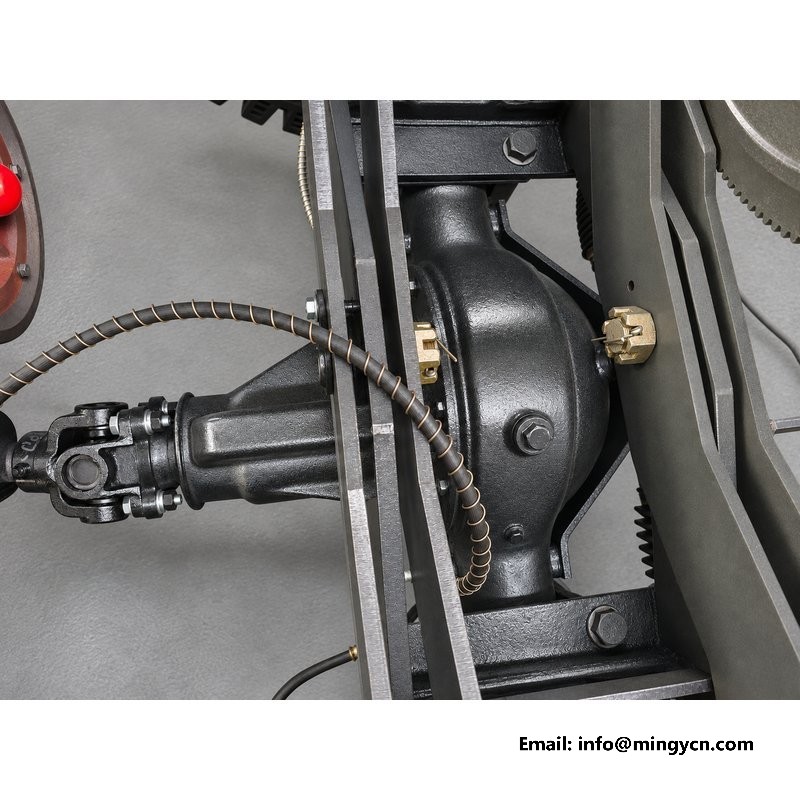
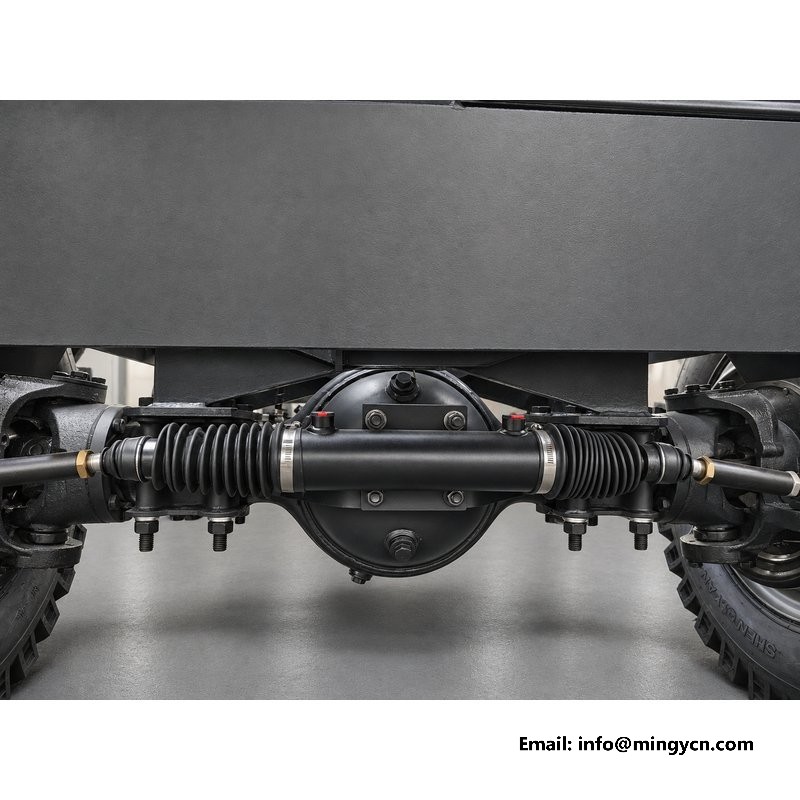
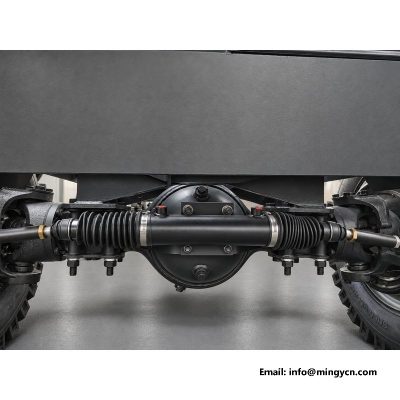
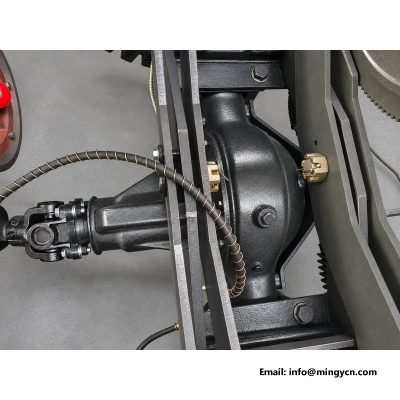
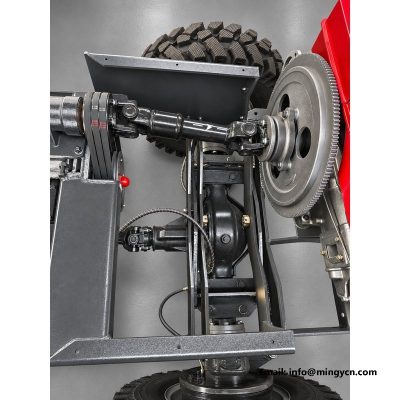
The diesel engine turns the gearbox, the gearbox splits its output between the wheels and the hydraulics, and the wheel branch leaves through a flange that carries the centre driveshaft. Universal joints at each end let the shaft work through the suspension-like movement of the axles without losing the drive. From the axle input, a bevel gear set turns the flow ninety degrees and the differential divides it between the two wheels of that axle. The arrangement is classical, which is the compliment: nothing in it is experimental, every part is sized with decades of light-4WD practice behind it, and any competent mechanic in the export markets can service every joint of it.
The splines and bolts in this chain are the parts that know the machine’s working life. They are checked at the works with torque tools, and the handover advice at the end of this page repeats those checks in buyer-visible form.
It is worth saying plainly why this page exists. Machines in this weight class are usually sold on drum volume and engine horsepower, because those are the figures that fit a quotation line, and the driveline that actually decides whether the machine earns its keep stays invisible until the warranty is a memory. Photographing the shafts, differentials and housings before assembly hides them is the factory’s way of putting them on the quotation line where a buyer can actually compare them. The same standard applies to every page in this series.
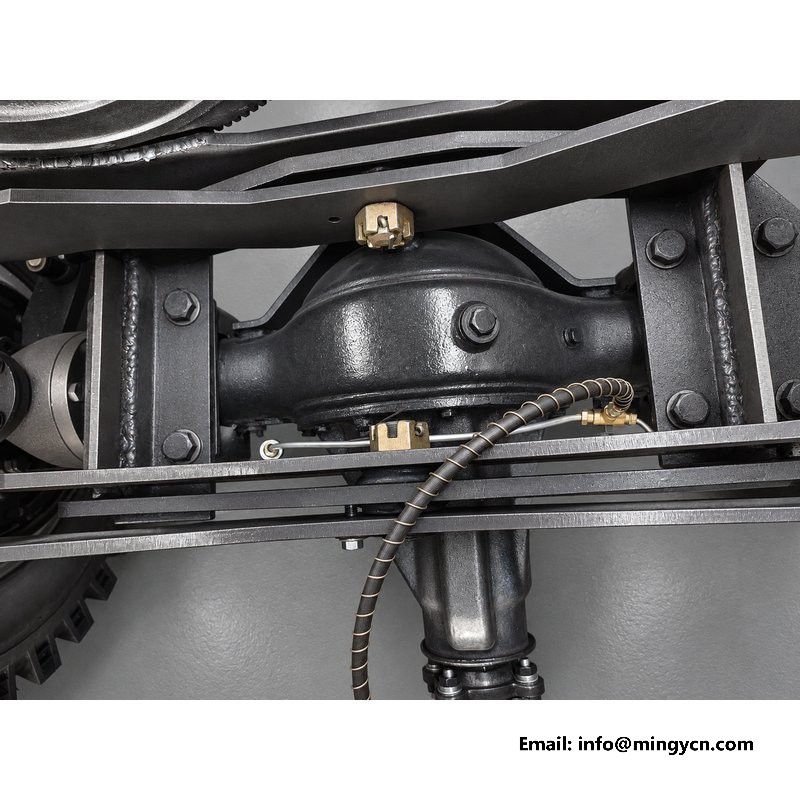
A differential lets the two wheels of an axle turn at different speeds, which is essential in corners and unhelpful on ice. On loose sand or mud, the classic behaviour is the one-wheel burnout: the unloaded wheel spins, the planted wheel stops, and the machine waits for a shovel. This mixer manages that compromise the way farm machinery does, with gear ratios, tyre grip and operator technique rather than electronic trickery. The deep lug tyres do most of the work; a driver who lifts the shovel and eases off before the spin starts does the rest.
The differential internals are standard bevel-gear units, and their settings belong to the 212-type axle family described on the axle page, so backlash adjustment and parts supply follow the same common-stock logic as everything else underneath this machine.
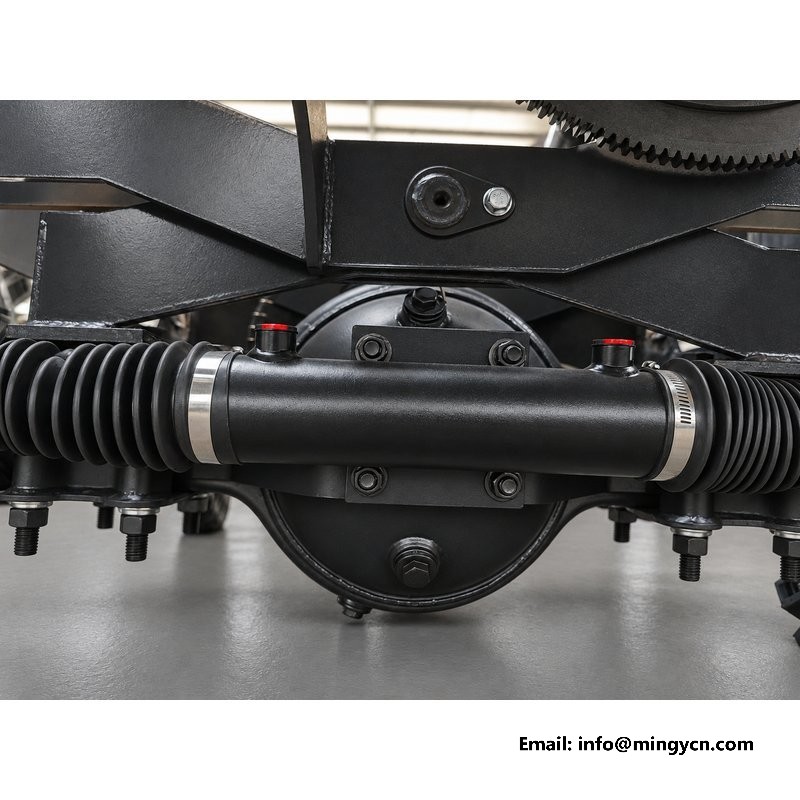
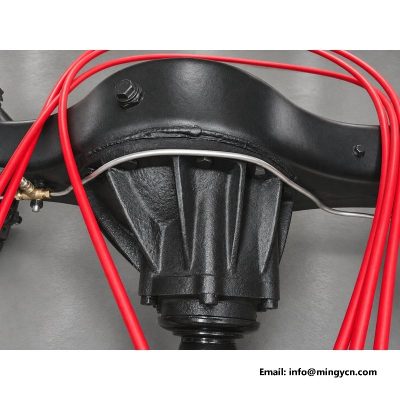
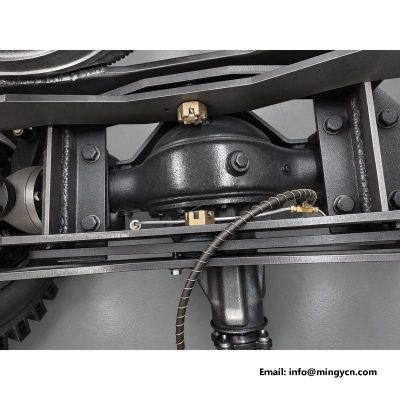
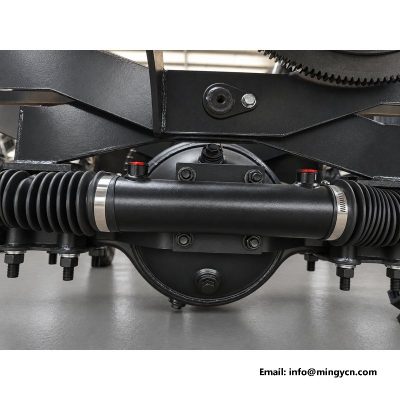
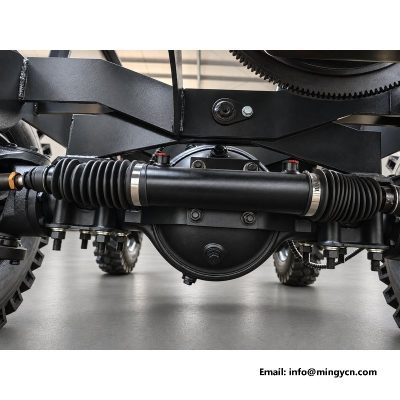
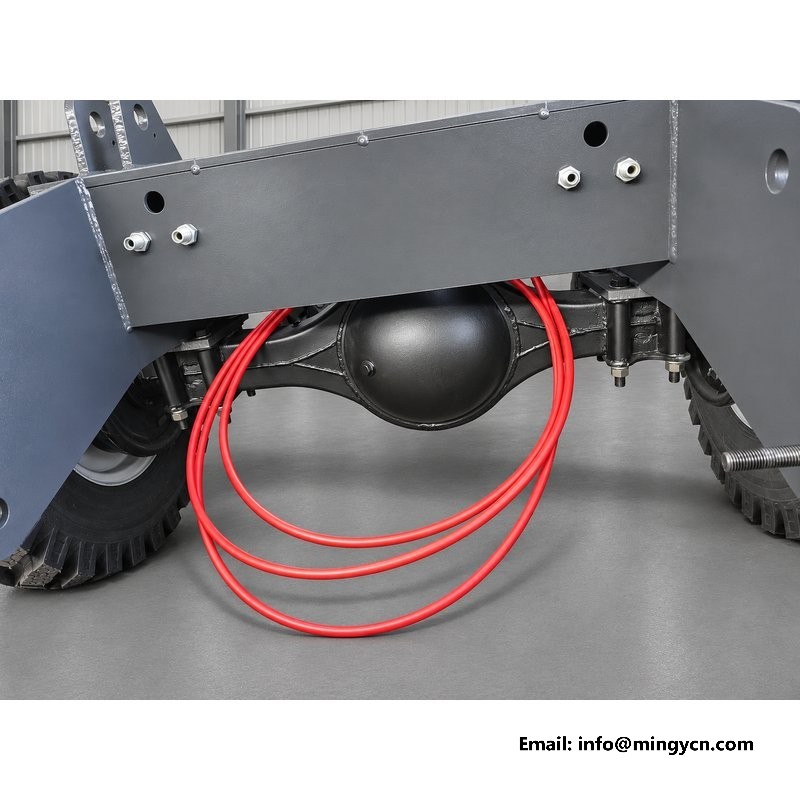
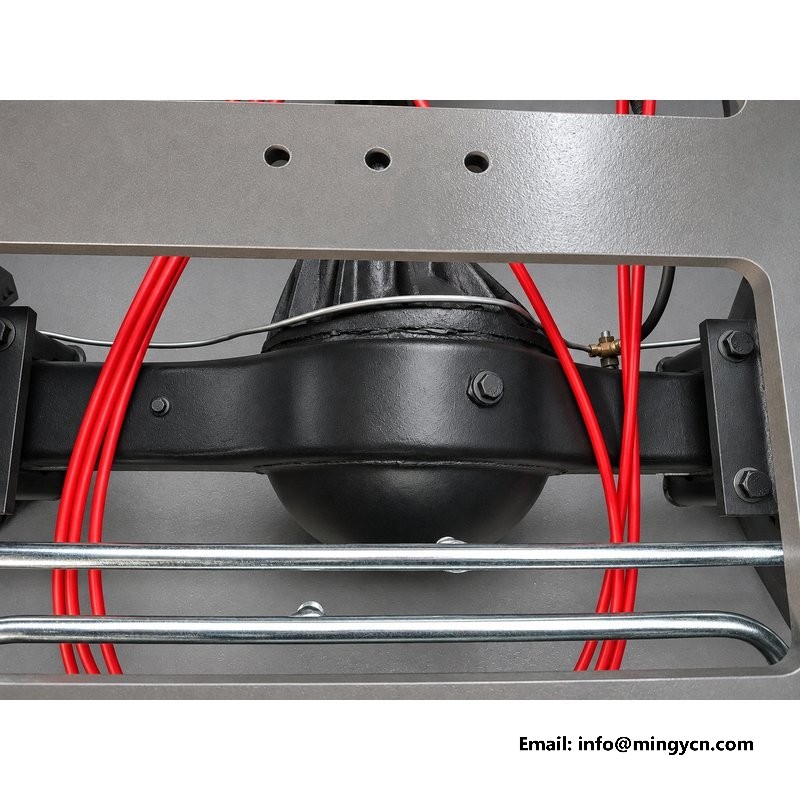
The axle centre is a cast bowl carrying the gears and bearings, with tube sections pressed and welded in to carry the wheel ends. The casting sees every torque spike the diesel can deliver, plus the bending loads of a loaded machine on rough ground, and its ribbing is not decoration. A housing that flexes lets the gear mesh drift, and drifting mesh is how bearings and teeth eat themselves quietly over a season.
On the photographs the cast surfaces carry the texture of sound castings: even, without the porosity or cold-shut lines that signal a rushed foundry. Buyers comparing machines across suppliers can learn more from five minutes under an unpainted axle than from an hour of brochure reading.
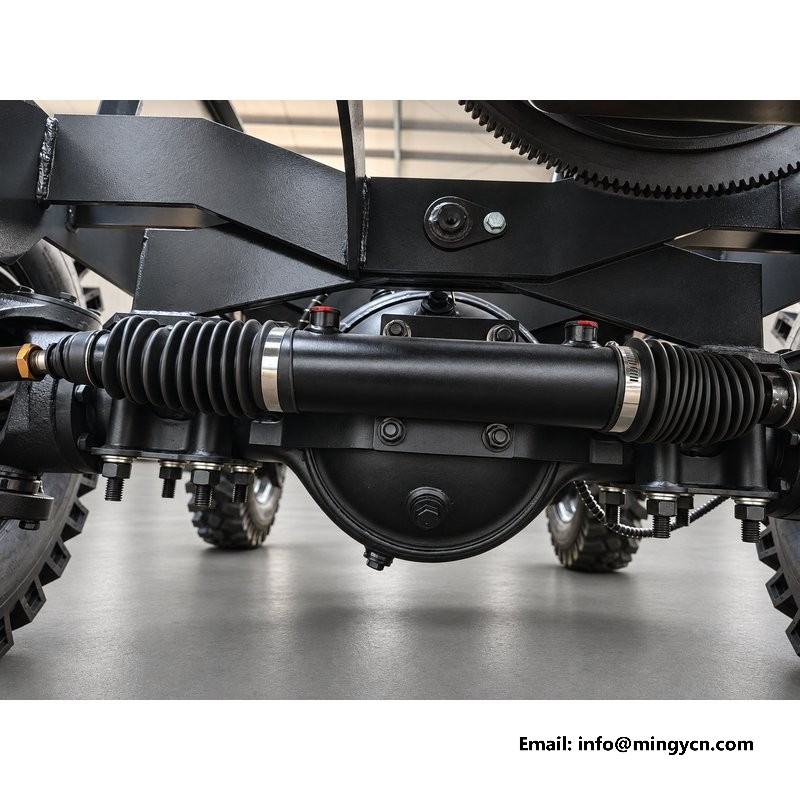
The universal joints are cross-and-bearing units with their own grease points, and they live short lives when the grease gun forgets them. A dry cross wears into flats that announce themselves as a rhythmic clunk at take-off, easiest to feel when the machine starts forward with the shovel loaded. The fix at that stage is a cross kit, an afternoon job; the fix after neglect runs through shaft yokes and splines and becomes a workshop visit.
The weekly service route on this machine runs grease to the U-joints, the steering pivot and the hub bearings in a few minutes, and the lubrication chart in the manual prints every point. A machine bought for a crew without a mechanic should still be bought with a grease gun and the habit to match.
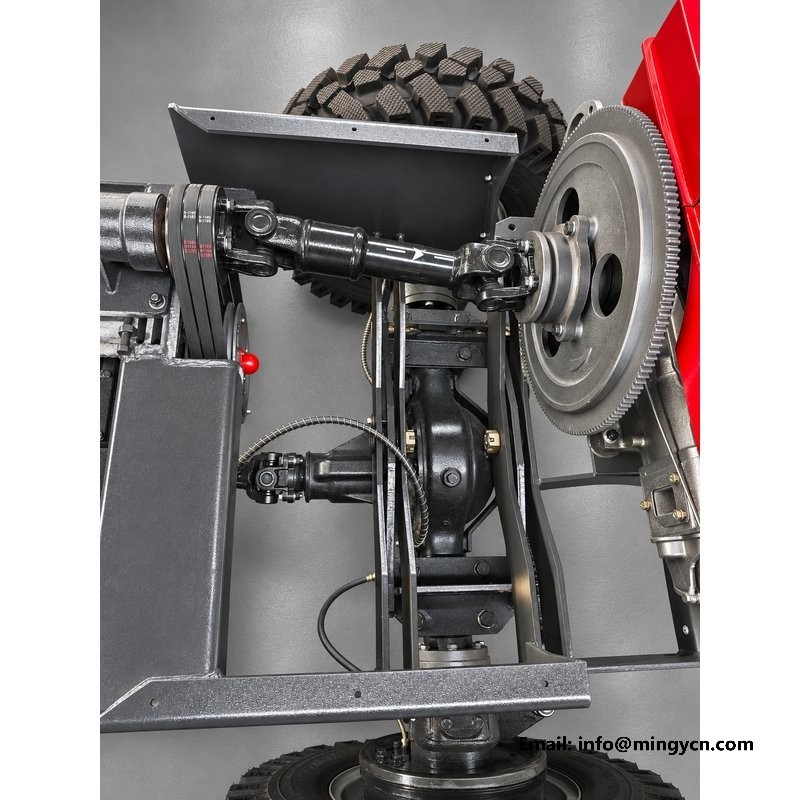
Because the axles oscillate, the driveshafts work through angles that change with the ground. The operating angles are set so the joints stay inside their efficient range across the whole oscillation travel, which is one of the quiet reasons the bump stops and pivot geometry matter: keep the axle travel where it was designed and the shafts live their full life. Machines modified with taller tyres or altered body mounts shift those angles, and the wear shows up in U-joints first. Owners fitting non-standard wheels should expect that conversation with reality, and it is why factory wheel options exist rather than improvisation.
A test run tells the truth cheaply. Drive straight on loose ground and listen: a fine whine that rises with speed points at gear mesh settings, a click at slow speed with the wheel turned points at joint crosses, and a knock on take-off points at splines or a dry cross. Any of these on a new machine is a factory conversation, not a running-in story. A quiet driveline is nearly silent at working speed with only the diesel and the drum audible, and that is the standard the machine leaves the works against.
| Driveline reference — 0.8 m³ 4WD self-loading concrete mixer | |
|---|---|
| Drive layout | 4WD, centre driveshafts with universal joints |
| Axle family | 212-type front drive and steering rear axles |
| Differentials | bevel-gear open type, one per axle |
| Housings | cast centre bowl with pressed tube sections |
| Service | weekly greasing of joints; oil levels at service intervals |
The manual shipped with each machine carries oil capacities, torque values and the full lubrication chart for the driveline as supplied.
Five minutes with a torch covers the visible half. Look for oil weeping at the hub seals and at the axle housing covers, check that the driveshaft flange bolts are torqued and wire-locked or marked as the manual specifies, and confirm the axle oil level plugs are sealed and dry. Then take the test run described above. Photograph anything uncertain and put it on the delivery note; a driveline question raised before shipment is answered in days, and the same question raised in another country is answered in weeks.
Four driven wheels split the job of moving the machine, and the split is fixed by the gear train rather than by electronics. On firm ground each tyre carries its share of traction; on broken ground the oscillating axles keep every tyre loaded so the share stays real. The system’s simplicity is its selling point: there is no transfer case electronics to diagnose, no clutch packs to burn, and the whole driveline can be understood from the photographs on this page by anyone who has maintained a light 4WD truck. Operators coming from two-wheel-drive machines notice the difference most on wet clay approaches, where the front axle keeps the machine steering while the rear pushes, instead of the front wheels skating uselessly ahead of the drive.
Driveline failures in the field trace back to three causes in overwhelming proportion: oil that ran low, seals that leaked, and water that got in during washing or wading. The defences are simple. Hub and axle oil levels are checked at the service interval with the machine level; the seals are replaced at the first weep rather than the last drop; and high-pressure washing is kept off the seal lines, because a jet of water finds its way past a lip seal that years of mud cannot. Machines worked in river crossings or heavy rain seasons should have their axle oil inspected more often, and any milkiness in the oil means water is inside and the oil goes out the same day.
The driveline’s fasteners work in a violent environment, and the discipline that keeps them honest is sequence and marking. Flange bolts are tightened evenly in a star, to the manual torque, and marked with a paint pencil after tightening so a later glance shows any bolt that has moved. The marking habit costs a minute and spots a loosening joint before it becomes a broken shaft, and it is the same habit applied to the wheel nuts described on the wheel page. Buyers checking a machine at delivery can verify the marks are present and unbroken in a two-minute walk with a torch.
Everything in this driveline descends from the 212-type axle family and the common diesel gearbox behind it, and that lineage is a logistics decision as much as an engineering one. Cross kits, hub bearings, seal sets and differential internals are catalogued sizes available in the light-truck channels of the export markets, and the parts book shipped with the machine lists them by size and specification so a local supplier can match them without a trans-ocean order. The factory also holds a consumables box option for the first season: crosses, seal kits and the lubrication chart packed into the container with the machine, which costs little and covers the parts that statistics say will be wanted first.
The assembly shop standard is visible in these photographs and repeatable at any pre-shipment inspection: clean castings without cracking or crude weld repair, fasteners torqued and marked, fresh grease at every point on the chart, dry seal lines with no weeping, and a test-run record noting noise at straight drive and at full lock. A buyer arranging third-party inspection can hand the inspector exactly that list, and any machine that passes it has a driveline ready for the ship and the site.
Because the machine’s traction problem is solved at the tyres and the pivot, and a limited-slip unit adds cost and a specialist service burden in markets where its parts are not stocked. The open differential with deep lug tyres and an operator who reads the ground handles the sites this machine is sold to.
At the interval the manual states, measured in working hours, and sooner if a hub seal has wept. The oil is a common gear oil in the export markets, so the change is a site task rather than a dealer visit.
Almost always a universal joint cross that missed its grease, and it announces itself early with the take-off clunk described above. Greased on schedule, the joints last seasons.
Yes, and it is encouraged. Buyers visiting the works are walked under the machine, and the same photographs published in these pages are taken from the actual production line. A video inspection can be arranged when a visit is not practical.
Contact MINGYI Machinery for the current 0.8 m³ self loading concrete mixer specification, driveline options and a formal quotation for your market. E-mail: sales@mingycn.com | LINE (ID): mingyicn
For the axles these shafts feed, see Reinforced Axle 0.8m3 Self Loading Mixer for Unpaved Sites and the steering axle page in the mini self loading concrete mixer category.