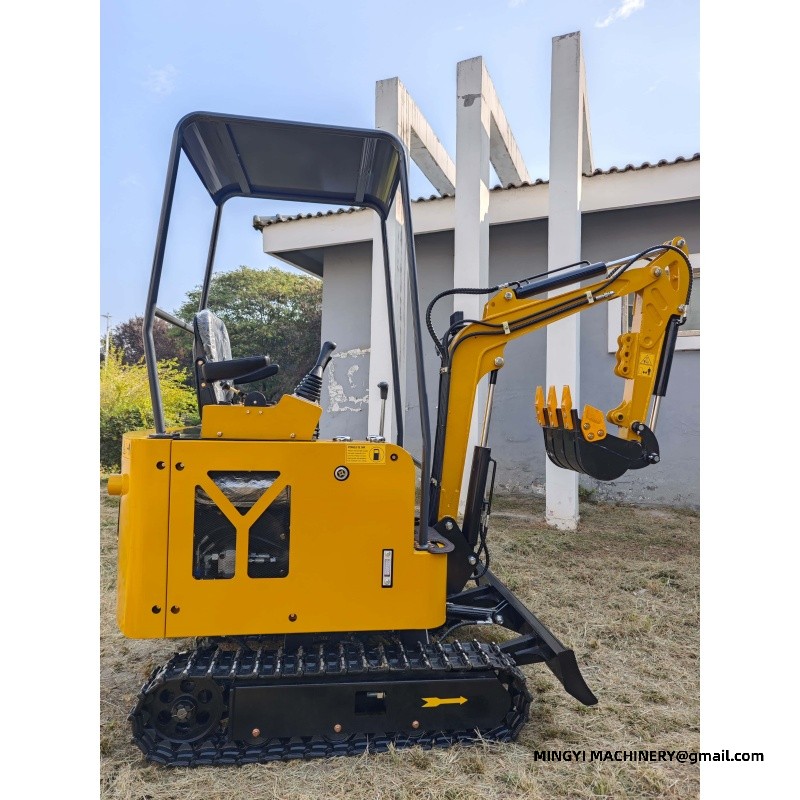
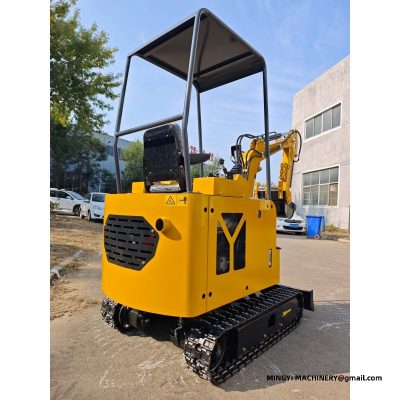
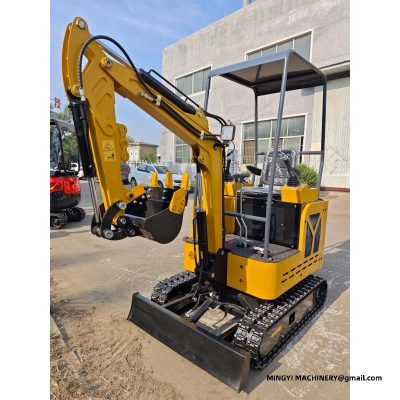
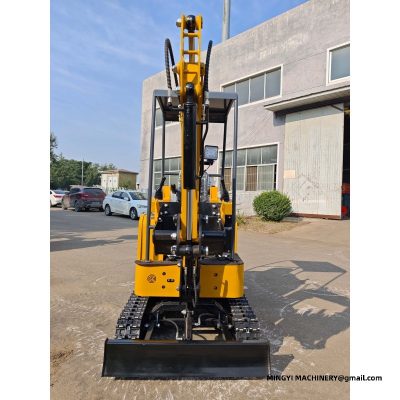
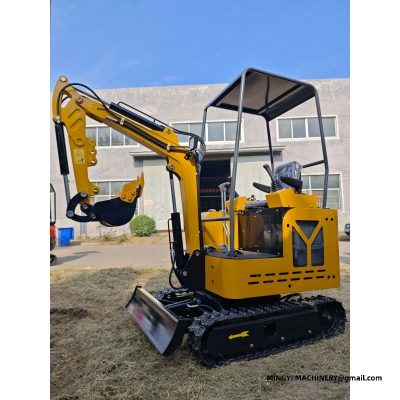
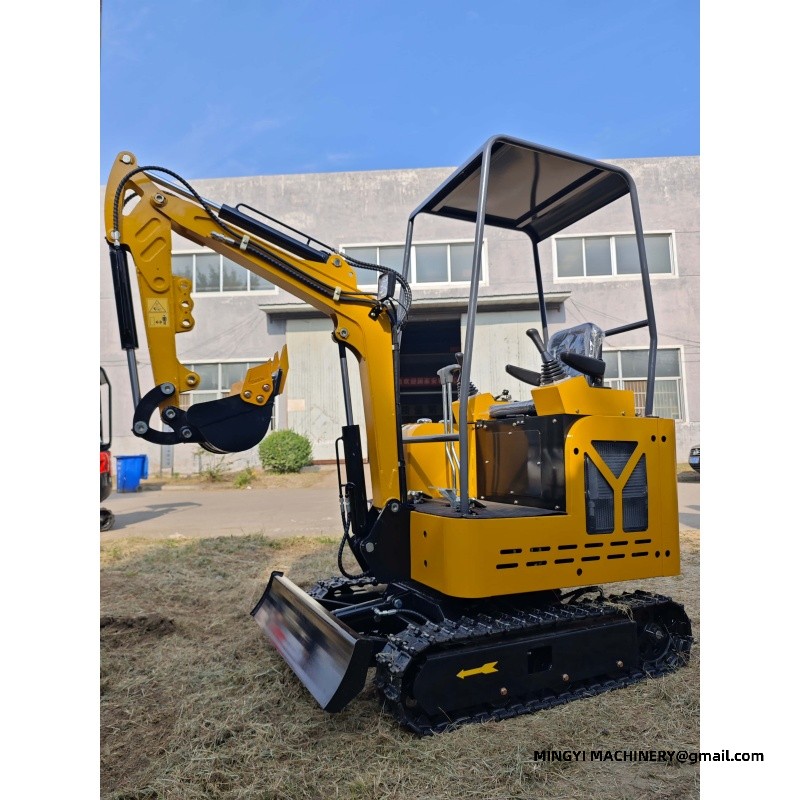
Utility work means working around live services, and that shapes what a machine has to be. A utility mini excavator is bought for controlled digging beside cables, pipes and ducts, where an uncontrolled bucket is a liability rather than an advantage.
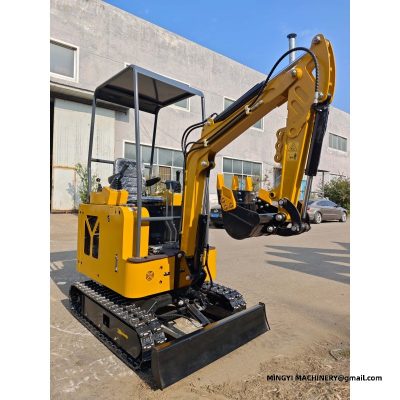
MINGYI builds these machines in the compact sizes utility crews use, from the smallest classes up to the larger units that handle main runs, with hydraulic metering fine enough to work close to what is already buried. Working near services means knowing where they are before the bucket goes in, and digging in a way that leaves them undisturbed.
Built for working around services
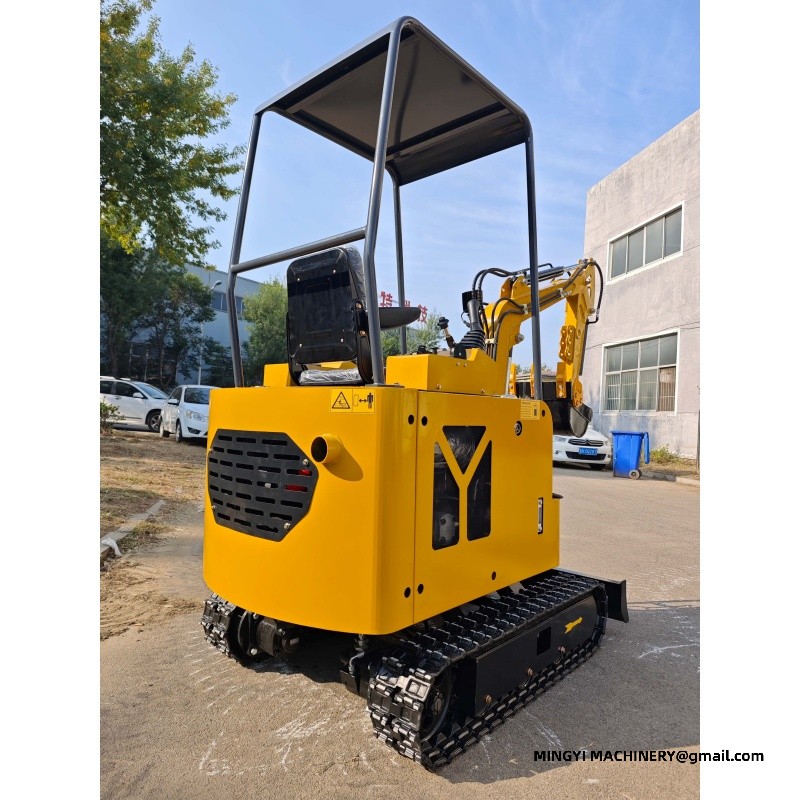
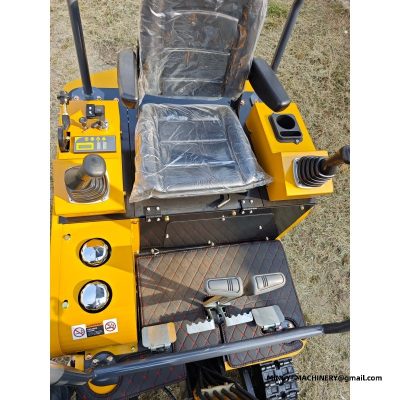
The hydraulic circuit is the part that matters most. Fine joystick control lets an operator feel resistance and stop the bucket before it reaches a duct, which is the situation a utility crew meets all day long.
Auxiliary flow comes from the same circuit, so a breaker or an auger can be run from the machine without a second power source on site.
Sizes and configurations that suit utility crews
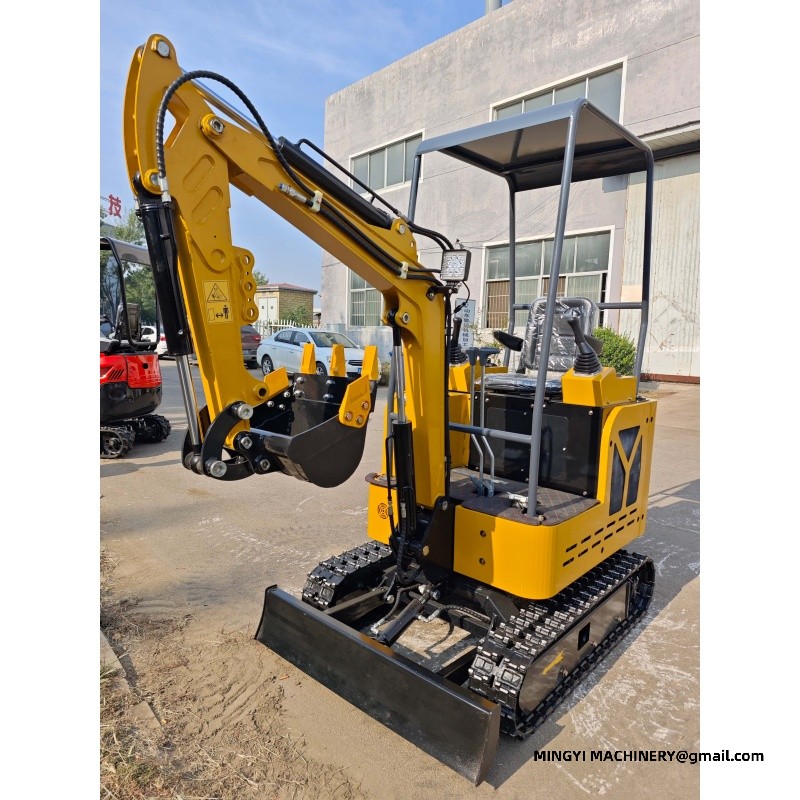
Utility contractors usually standardise on one or two sizes. The smaller machines reach gardens, footpaths and narrow easements, while the larger ones take on deeper runs where spoil volume is greater.
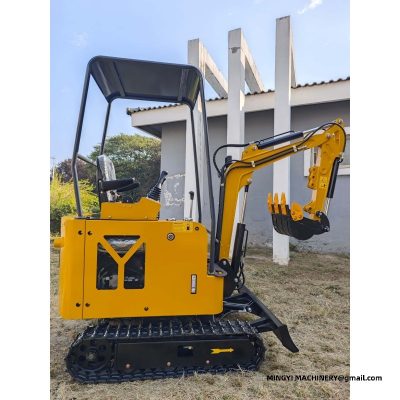
Rubber tracks are common in this work because they cross finished surfaces with far less marking than steel; where ground is rough or traction is critical, steel tracks with rubber pads are the alternative.
If you are equipping a utility crew, tell MINGYI the services you work around and the trench sizes you cut, and the right size and attachment set can be confirmed before ordering.
E-mail : Working this class of machine through the seasons Seasonal planning smooths the workload. Machines that are busy for a few months and idle for the rest benefit from a service slot in the quiet period, and the unit in daily use prepared in the off-season starts the busy months reliably. Heat and dust are as limiting as rain. Air intake condition and cooling cleanliness decide how a machine of this size behaves in a dry season, and both are checked in a minute rather than repaired later. Parts, service and support for mini excavator for digging near services Support after delivery is a parts question. Wearing items for the equipment on site - filters, belts, track components, bucket teeth and pins - are the items a buyer should plan to hold before the first service interval. Engine parts availability usually drives the engine choice. The machine itself built with an engine the local network already carries is serviced from stock rather than from an international order. Engine options behind mini excavator for digging near services Power unit selection is settled against the service network the buyer already uses. MINGYI offers Kubota D722, Kubota D902, YANMAR, Changchai, Laidong, Runtong, YARMAX, Youpu 2V80 and Youpu 195, so a fleet running one brand of engine can keep the same filters, the same parts supplier and the same mechanic. Engine choice is also an emissions and documentation question for some markets. Listing the available units with the model in question enquiry lets the factory confirm what can be supplied and documented for the destination country. Lifting and material handling with a mini excavator for digging near services Lifting with a machine built to dig needs a plan. The load, the radius and the ground under the unit on the job all matter, and the safe figure is the one on the chart rather than the one that looks possible. Stability changes with reach. A load the machine in that duty handles close in becomes a different proposition at full extension, so the working radius belongs in the plan before the lift rather than during it. Getting mini excavator for digging near services through a narrow gap The first question on most job lists is whether the machine can reach the work at all. A machine built for the work is chosen against the narrowest point on the route - a garden gate, a doorway, a gap between two walls - because a machine that arrives and then cannot pass loses a day, not an hour. Contractors who buy the equipment in service normally have one job in mind that nothing else reaches. The purchase order follows the access measurement, not the other way round, and the build sheet is then settled around it. Trenching work with mini excavator for digging near services Service trenches are the most common reason this class of machine is hired. Water, sewage, cable and gas runs are narrow, shallow and often close to existing services, which is exactly the work a full-size machine cannot do safely. Depth control matters more on service work than speed. The unit in daily use working beside live services is chosen because it can be placed precisely and stopped instantly, which is what the job actually requires. Working near live services with mini excavator for digging near services The risk on utility work is not machine power but machine placement. A machine of this size that fits the working width leaves the surrounding ground undisturbed, which keeps the trench stable and the reinstatement small. Utility crews specify the equipment on site with a narrow bucket and good visibility for exactly this reason: the machine has to stop at the service, not at the edge of the operator's view. OEM and fleet customisation of the machine itself Distributors and rental fleets usually need the machine to look like theirs. Paint, decals, seat colour and attachment branding can be specified on the model in question at build time rather than applied after import. Customisation also covers the specification sheet. A fleet buyer may want every machine in that duty delivered with the same coupler, the same engine and the same tool kit so training and parts stock stay simple. Hydraulic circuits on the unit on the job Auxiliary hydraulic lines are what let a machine drive a tool rather than only a bucket. A machine built for the work specified with the right circuits and flow runs a breaker or an auger without an add-on power pack bolted to the frame. Flow and pressure are matched to the tool, not to the machine size. Asking for the attachment list first means the equipment in service leaves the factory with circuits that suit the heaviest tool the buyer intends to run. Canopy or enclosed cab on this class of machine A canopy keeps the machine light and the operator aware of the surroundings, which suits short jobs in warm weather. A fully enclosed cab is specified where rain, dust or cold are part of the working year, and it can be added to the unit in daily use as a retrofit rather than only at build time. Enclosure also changes noise and dust exposure. A sealed cab on a machine of this size keeps dust out on dry sites and lets the machine work through weather that would otherwise stop a canopy machine for the day. Noise, dust and working near occupied buildings Work near housing or occupied premises brings constraints that open sites do not. Start times, exhaust condition and how often the equipment on site needs to reverse are the practical limits that neighbours notice. Dust control is often part of the same conversation. Water, timing and work sequence reduce what leaves the site, and agreeing them in advance keeps the machine itself working rather than stopped after a complaint. What owners should plan for beyond the model in question Purchase decision is the visible part of the effort. Fuel, filters, tracks or tyres, the operator and the transport between sites are the items that decide what the machine in that duty actually demands over a few seasons, and they are worth listing before the order. The useful comparison is demand per working hour, not demand per machine. The unit on the job that works more hours a year spreads its standing takes over more output, which is why utilisation usually matters more than the invoice figure. Working a machine built for the work in confined spaces Confined sites are decided by dimensions. Overall width, tail swing and the space needed to work the arm are what let the equipment in service operate inside a building, between walls or in a courtyard. Ventilation is the other indoor constraint. Running this class of machine inside a closed structure needs air movement, and that is a planning item rather than something to discover after the first hour. Specification data for the unit in daily use Buyers comparing a machine of this size usually start from four numbers - weight, digging depth, reach and transport width - because those are the ones that decide whether the machine can be delivered and whether it can do the job once it is there. Every value shown is as built for the equipment on site; options such as cab, side swing or a telescopic undercarriage change the transport dimensions and are confirmed at order stage. Hot, humid and dusty conditions around the machine itself Dust is the enemy of every rotating joint. Keeping the radiator and the air intake of the model in question clean, and cleaning them before they are blocked rather than after, is what separates a machine that lasts from one that overheats. Handover and getting familiar with the machine in that duty The first day with a new machine sets the pattern for the next five years. Handover for the unit on the job covers the control layout, the daily check points and the limits the operator needs to know before the first real load is lifted or carried. Daily maintenance on a machine built for the work is a short list: engine oil level, coolant, track tension, hydraulic oil level and a look at the hoses. Ten minutes at the start of the shift prevents most of the failures that stop a machine. Greasing is the second item. The slew ring, the boom and arm pins and the bucket linkage on the equipment in service take grease daily in dusty work, and the intervals shorten further when the machine is used in water or mud.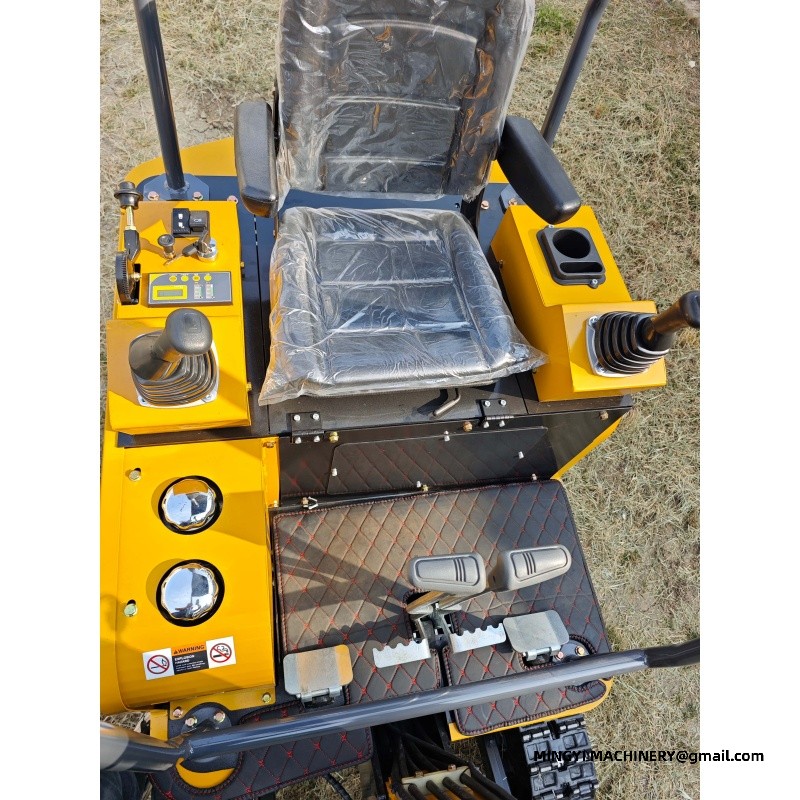
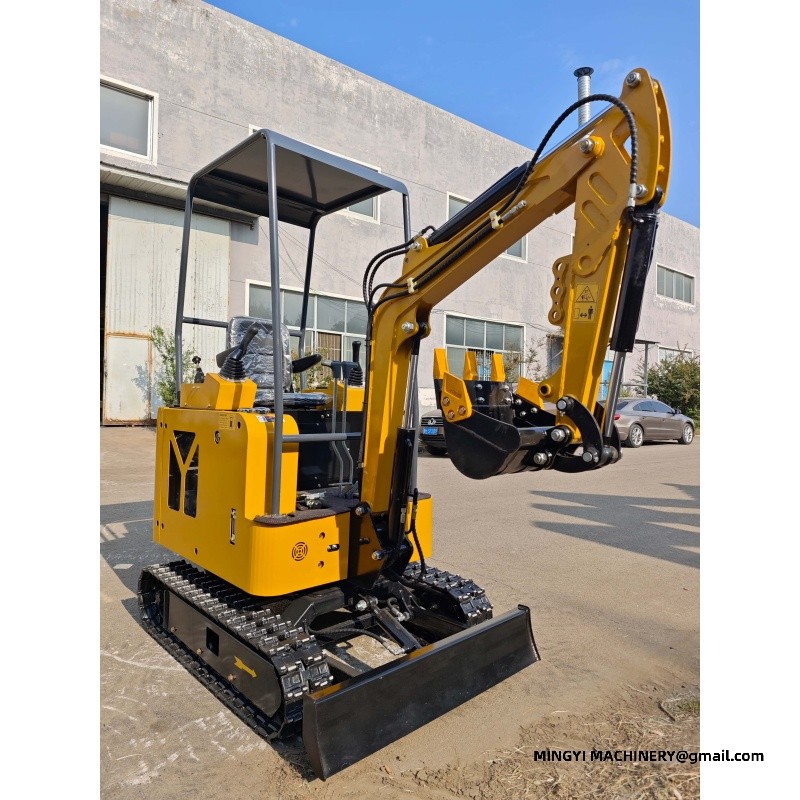
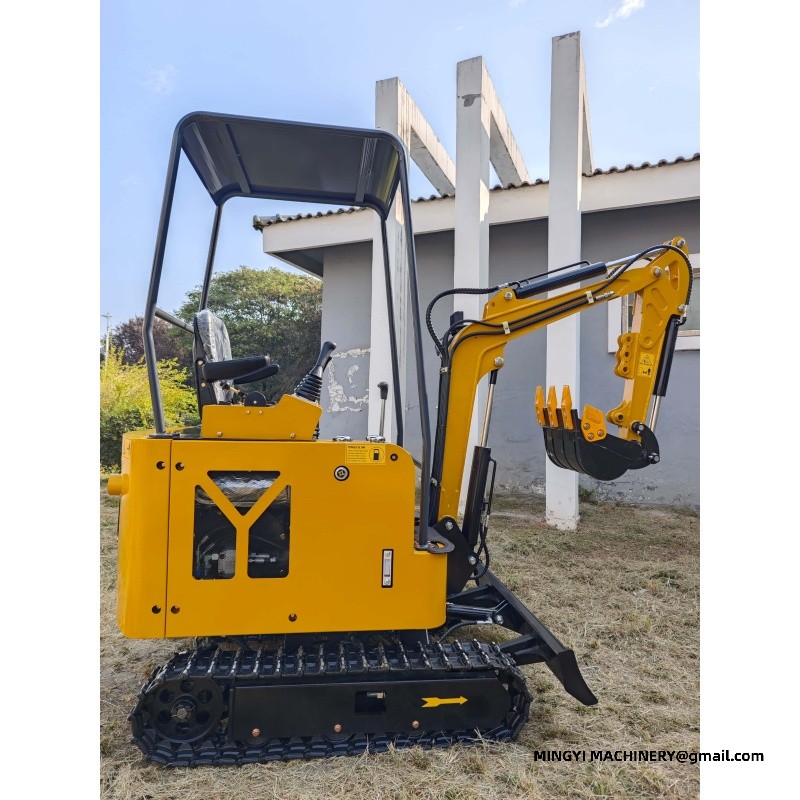
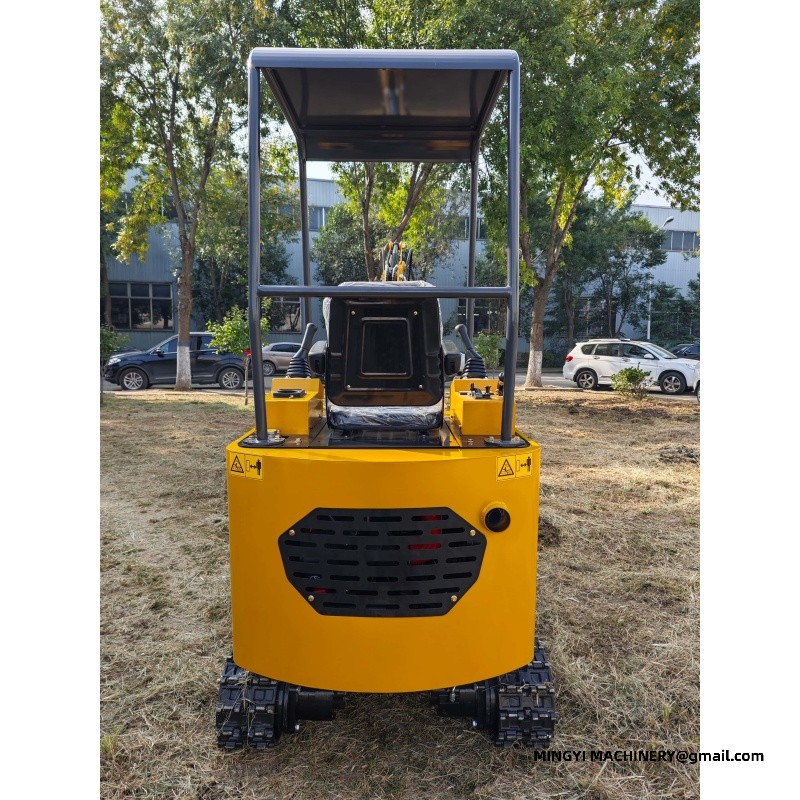
Reference specification — mini excavator range 30-1W 30-2W 12L 20-2L Operating weight 2900 kg (6393.41 lb) 2700 kg (5952.48 lb) 1200 kg (2645.55 lb) 1900 kg (4188.78 lb) Transport size (L×W×H) 3000 × 1250 × 2780 mm 3000 × 1100 × 2700 mm 2200 × 930 × 2250 mm 2600 × 1300 × 2344 mm Max digging depth 2200 mm (86.61 in) 2200 mm (86.61 in) 1700 mm (66.93 in) 2100 mm (82.68 in) Max digging height 3400 mm (133.86 in) 3000 mm (118.11 in) 2600 mm (102.36 in) 2880 mm (113.39 in) Max dumping height 2400 mm (94.49 in) 2000 mm (78.74 in) 1800 mm (70.87 in) 2100 mm (82.68 in) Max digging radius 4000 mm (157.48 in) 3800 mm (149.61 in) 2900 mm (114.17 in) 3215 mm (126.57 in) Max digging distance 2800 mm (110.24 in) 3050 mm (120.08 in) 2300 mm (90.55 in) 2460 mm (96.85 in) Minimum turning radius 2000 mm (78.74 in) 1750 mm (68.9 in) 1450 mm (57.09 in) 1587 mm (62.48 in) Travel speed 5 km/h (3.11 mph) 7 km/h (4.35 mph) 3 km/h (1.86 mph) 5 km/h (3.11 mph) Gradeability 30° 30° 30° 30° Fuel consumption 2-3 L/h (0.528—0.793 gal) 2-3 L/h (0.528—0.793 gal) 1-1.3 L/h (0.264—0.343 gal) 2-3 L/h (0.528—0.793 gal) Fuel tank capacity 16 L (4.23 gal) 16 L (4.23 gal) 10 L (2.64 gal) 16 L (4.23 gal) Hydraulic oil tank 20 L (5.28 gal) 20 L (5.28 gal) 16 L (4.23 gal) 18 L (4.76 gal) Dozer blade lift height 420 mm (16.54 in) 230 mm (9.06 in) 180 mm (7.09 in) 180 mm (7.09 in) Dozer blade drop depth 210 mm (8.27 in) 280 mm (11.02 in) 210 mm (8.27 in) 210 mm (8.27 in)
LINE ( ID ): mingyicn
Heat and hydraulic temperature in mini excavator for digging near services
Hoses age faster next to hot manifolds, so routing and clearance are checked at the same time as the oil level.
Oil analysis is more useful than a calendar, because it shows what is actually in the system rather than what should be.
Related pages
mini excavator for road repair · mini excavator for small projects · mini excavator odm factory · PRODUCTS









