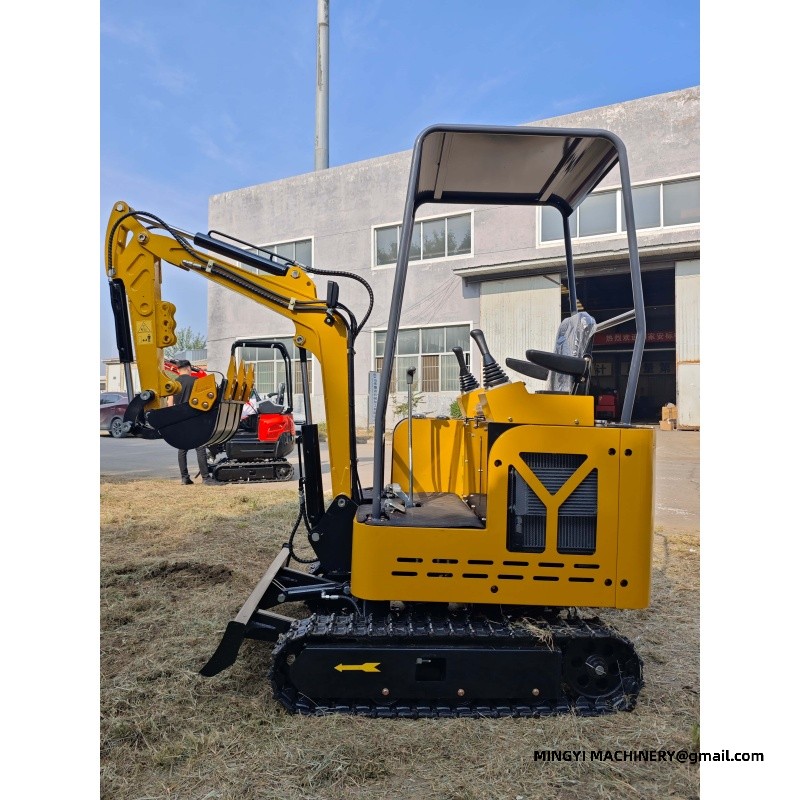
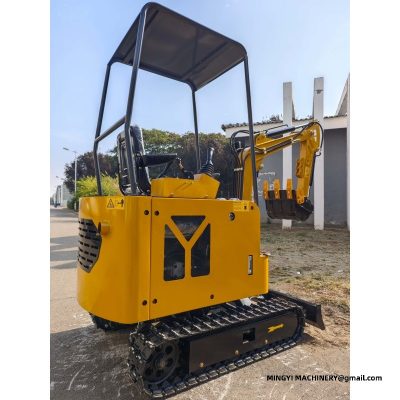
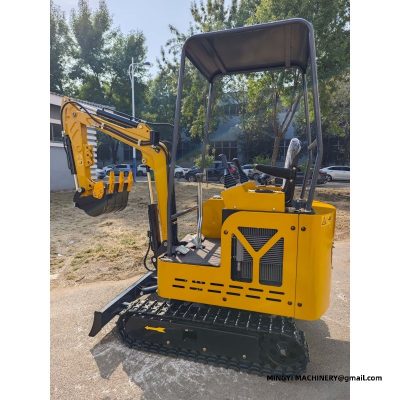
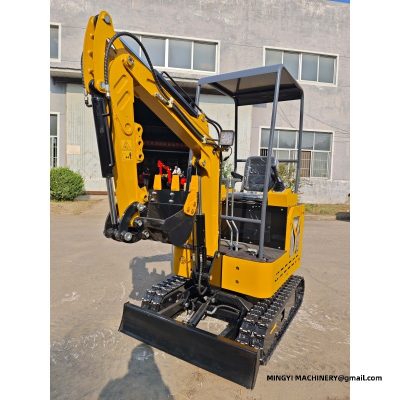
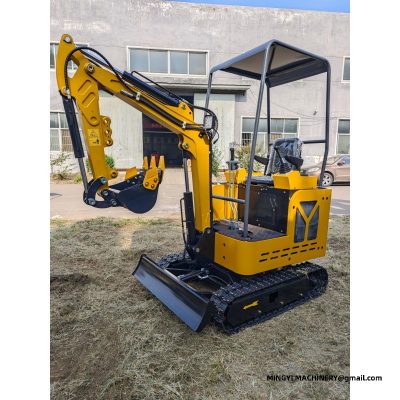
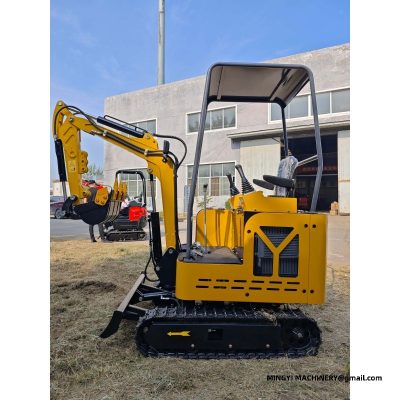
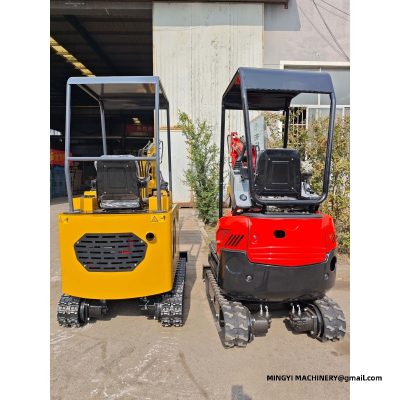
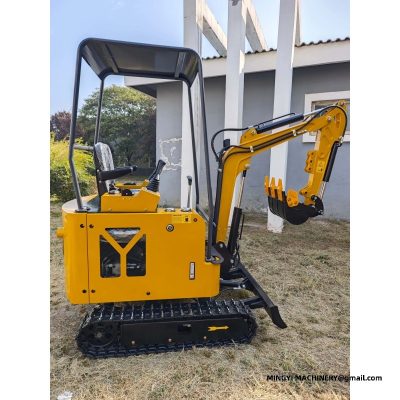
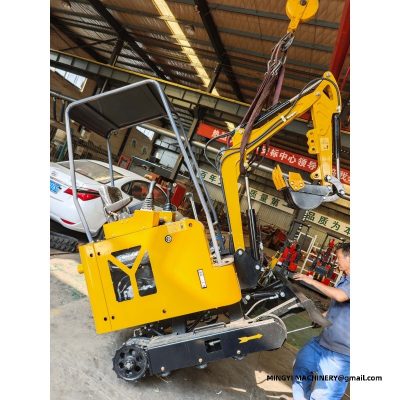
Road repair work is defined by two constraints: the repair has to be quick, and the traffic management around it has to be small. A compact excavator that can be off a trailer, into a lane and working in minutes is worth more on this job than a larger machine with more reach.
MINGYI mini excavators are used for pothole excavation, kerb and channel replacement, footpath repair and the breakout of failed sections — all tasks where a narrow machine accesses the work without closing a full carriageway.
The breakout-to-backfill cycle
A breaker hammer opens the failed asphalt or concrete, the quick coupler swaps to a bucket to remove the arisings, and the same machine backfills and consolidates the sub-base. Doing all three stages with one machine and one operator removes the machine changeover that stretches most road repairs.
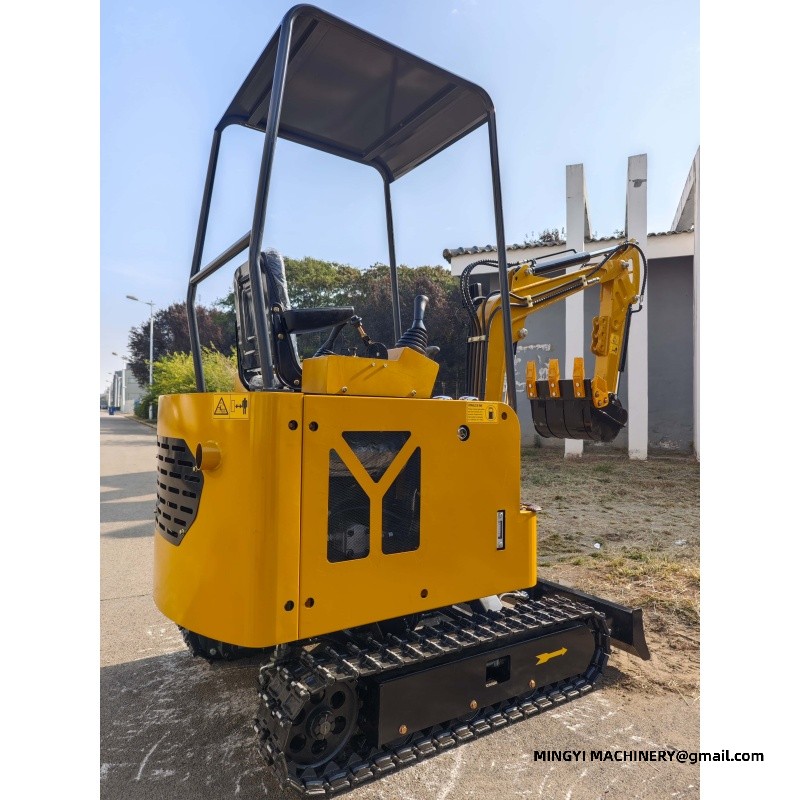
Rubber tracks are the default for surfacing work because they limit marking on the repaired surface and travel better across kerbs.
Working beside live traffic
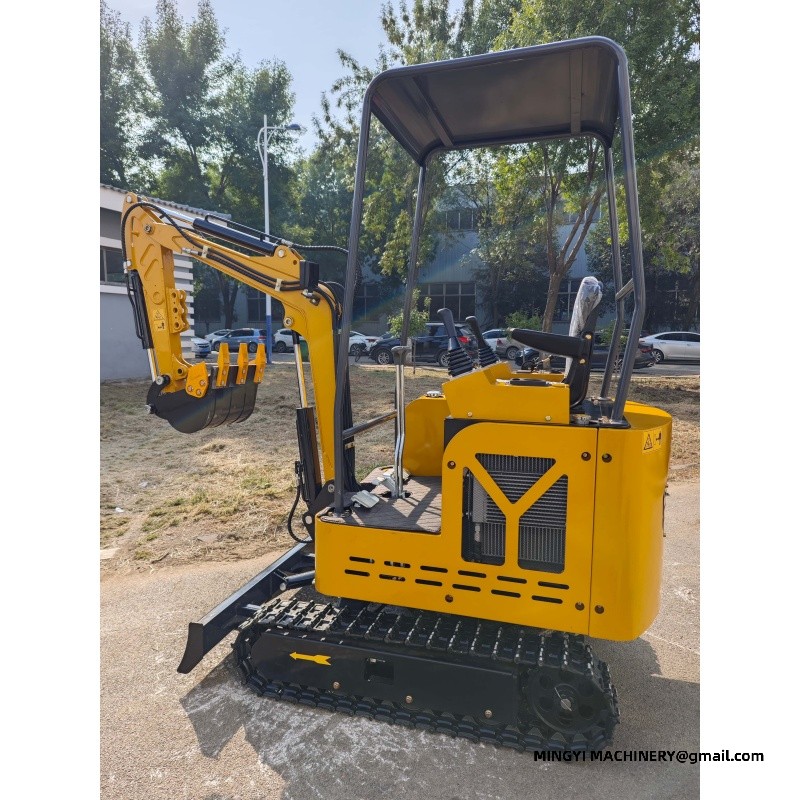
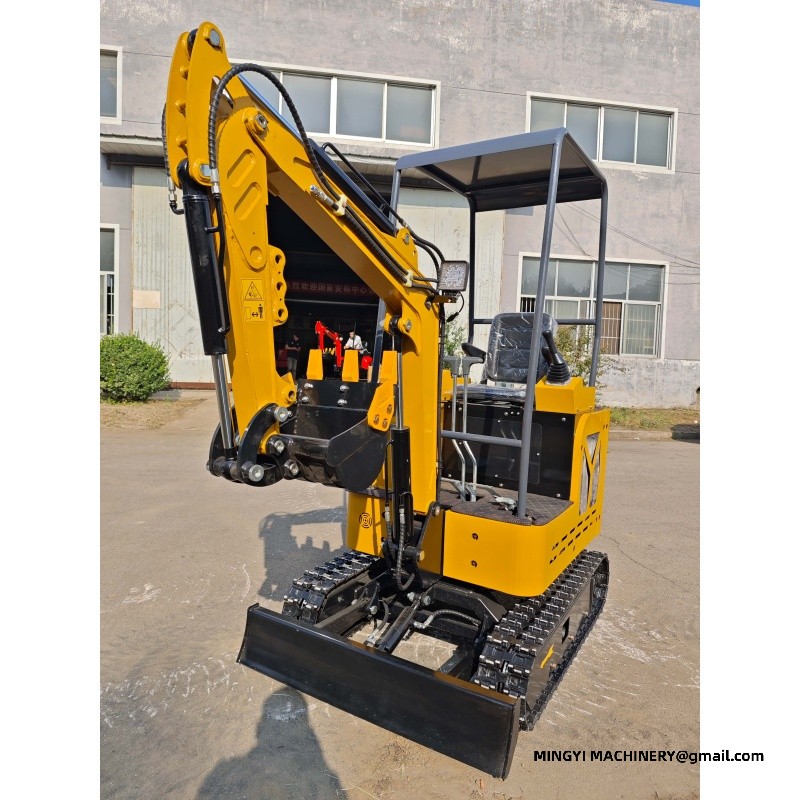
The upper structure swings within the track width, so the machine can work along the kerb line without its tail entering the running lane. Compact dimensions also mean the excavator and its trailer occupy far less of the traffic management footprint.
Road repair applications
• Pothole and edge defect excavation and reinstatement
• Kerb, channel and gully replacement
• Footpath and cycleway repair
• Utility patch reinstatement in carriageway
• Drainage and culvert clearing beside the road
Describe your typical repair — surface type, depth and access width — and we will match a model and breaker/bucket set to it.
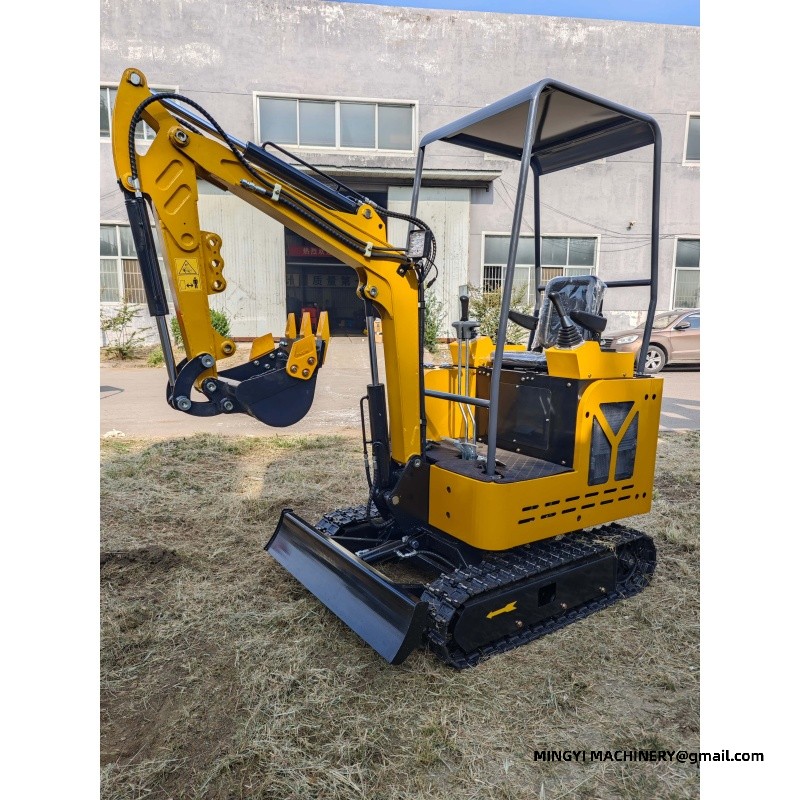
Working near live services with mini excavator for road repair Digging near water, gas and cable is a precision job. This class of machine is used here because the operator can work in short controlled cuts and because the machine can be positioned without driving over the run being exposed. Utility crews specify the unit in daily use with a narrow bucket and good visibility for exactly this reason: the machine has to stop at the service, not at the edge of the operator's view. What owners should plan for beyond the mini excavator for road repair The useful comparison is demand per working hour, not demand per machine. A machine of this size that works more hours a year spreads its standing takes over more output, which is why utilisation usually matters more than the invoice figure. Downtime is the hidden line item. The equipment on site waiting on a part earns nothing while it stands, so parts availability and service access belong in the plan as much as fuel does. Hiring versus owning a mini excavator for road repair The choice follows the hours. Work that fills a few weeks a year is usually better hired, while the machine itself that would be on site most weeks starts to justify ownership once the transport and booking time is counted. Ownership brings obligations that hiring does not. Storage, servicing, insurance and an operator are the items to set against the hire rate before deciding which way the model in question should be supplied. Track choice for mini excavator for road repair Rubber tracks suit paved and landscaped ground because they spread the machine weight and leave the surface intact. Steel tracks with rubber blocks are specified where the ground is rougher or the working day is longer, and the choice can be made per machine rather than accepted as a factory default. Undercarriage selection is a ground question, not a preference question. The machine in that duty running on finished paving needs rubber; the same machine on demolition rubble or rock wears rubber quickly, so steel with rubber blocks becomes the better answer over a full season. Hydraulic circuits on a mini excavator for road repair Auxiliary hydraulic lines are what let a machine drive a tool rather than only a bucket. The unit on the job specified with the right circuits and flow runs a breaker or an auger without an add-on power pack bolted to the frame. Hydraulic specification is easier to settle at build time than to correct later. A machine built for the work delivered without auxiliary lines can still dig, but every additional tool becomes a retrofit project. Road and paving work for the equipment in service Road repair generates short, interrupted jobs - a patch, a drainage connection, a kerb line. This class of machine is economical here because it travels on a small trailer and starts working minutes after arriving. Patching and reinstatement favour a machine that can work in a lane closure. The unit in daily use occupies less road than a full-size excavator, which reduces the traffic management needed and the length of the closure. Acceptance checks when a machine of this size arrives A function check before the machine goes to work is worth the hour. Running through the controls, the travel and the attachment circuit on the equipment on site confirms it is set up as specified and ready for the site. Documentation should arrive with the machine. Parts list, service schedule and any certificates for the machine itself are what the workshop needs later, and they are much easier to obtain at delivery than in month six. Attachments that turn the model in question into several machines The base machine is a carrier; the tool on the end of the arm decides the task. The machine in that duty fitted with a toothed bucket digs, and the same machine with a breaker, an auger or a grab does work that would otherwise need a second unit on site. Attachment lists are best written before delivery. Specifying the unit on the job with the tools the job list needs avoids the work and delay of adding hydraulics later, and a quick coupler makes the swap a few minutes instead of a workshop job. Matching a machine built for the work to ground conditions Hard and abrasive ground reverses the specification. On rock, demolition rubble or sharp gravel, steel tracks with rubber blocks on the equipment in service survive conditions that cut a rubber belt quickly. Mixed sites are common and argue for a compromise specification. Most buyers choose rubber for this class of machine and accept the wear, unless the majority of the work is on material that will damage it. Export packing and shipping of the unit in daily use Export documentation, decals and paint are settled before packing. Asking for them with the equipment on site order avoids a second handling session and keeps the machine on the booked vessel. Buyers who import regularly plan the spare parts with the machine. A machine of this size ordered with a wearing-parts kit arrives ready to work rather than ready to wait for the first service interval. Specifying the machine itself against a job list The practical way to specify is to write the job list first: the narrowest access, the deepest trench, the heaviest tool and the surfaces the machine must cross. The model in question is then matched to those four numbers. Useful information to send with an enquiry includes working width, required digging depth, ground conditions and the attachment set. Those four items let the factory specify the machine in that duty that fits rather than a generic build. Working on slopes and uneven ground with the unit on the job Slope work is a stability question before it is a traction question. Knowing the gradient a machine built for the work is rated for, and working across rather than straight up where the ground allows, removes most of the risk. Ground that looks level often is not. The equipment in service crossing a filled trench, a soft edge or a hidden void behaves differently from one on undisturbed ground, and those are the places worth walking before driving. Specification data for this class of machine Where the unit in daily use is being specified for a job list, the table below gives the factory figures that matter most: what the machine weighs, how deep and how far it works, and what it measures on a trailer. Every value shown is as built for a machine of this size; options such as cab, side swing or a telescopic undercarriage change the transport dimensions and are confirmed at order stage. Output on a compact machine comes from placement rather than power. An experienced operator keeps the equipment on site working inside the swing arc, positions once and digs a full run instead of repositioning for every bucket. The second habit is tool discipline. Running the machine itself with the right bucket width for the trench means less spoil, less reinstatement and a cleaner job than a wide bucket and a lot of trimming.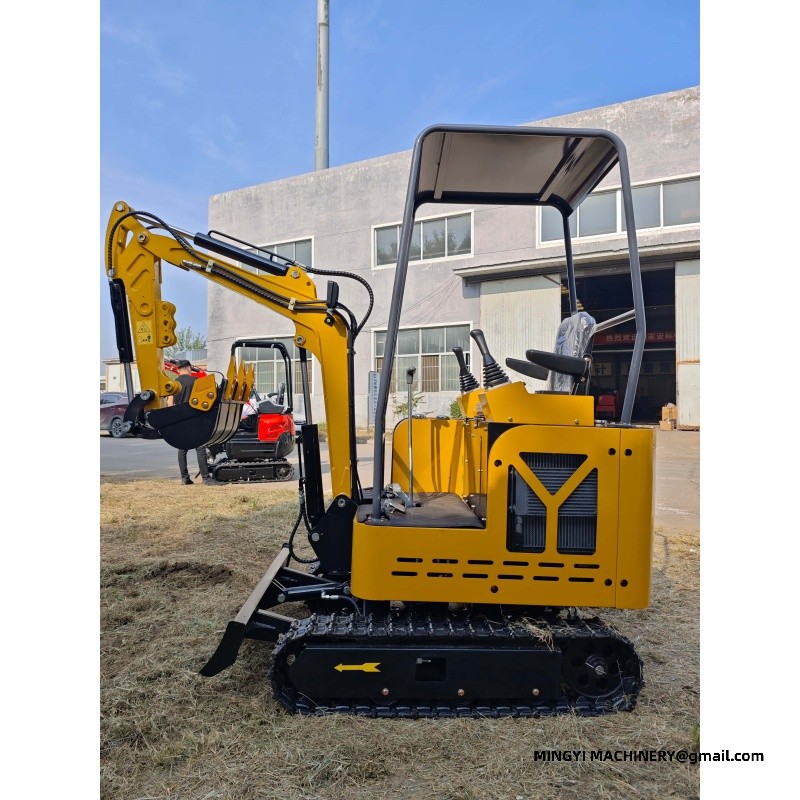
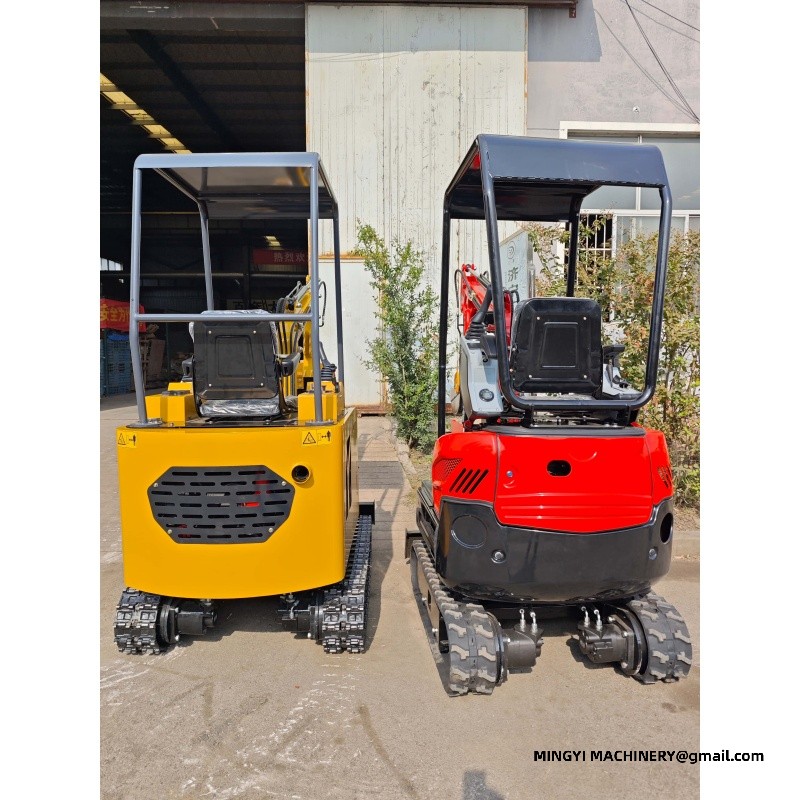
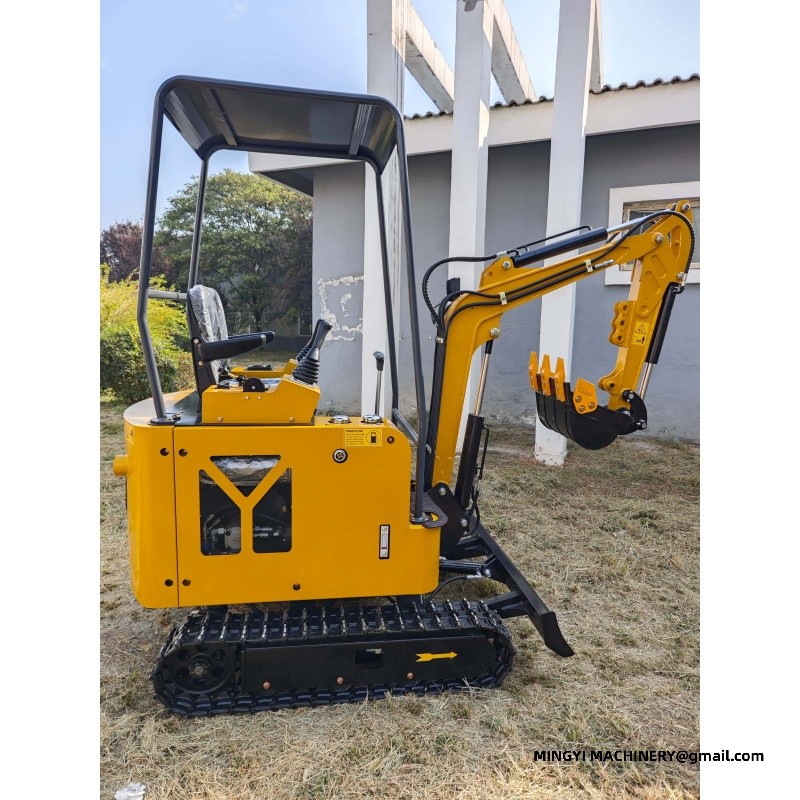
Reference specification — mini excavator range 09W 15W 20-2L 25L Operating weight 1100 kg (2425.08 lb) 1400 kg (3086.47 lb) 1900 kg (4188.78 lb) 2200 kg (4850.17 lb) Transport size (L×W×H) 1800 × 750 × 1970 mm 2200 × 930 × 2250 mm 2600 × 1300 × 2344 mm 3000 × 1300 × 2700 mm Max digging depth 1250 mm (49.21 in) 1630 mm (64.17 in) 2100 mm (82.68 in) 2300 mm (90.55 in) Max digging height 2800 mm (110.24 in) 2750 mm (108.27 in) 2880 mm (113.39 in) 3100 mm (122.05 in) Max dumping height 1700 mm (66.93 in) 1960 mm (77.17 in) 2100 mm (82.68 in) 2050 mm (80.71 in) Max digging radius 2570 mm (101.18 in) 2900 mm (114.17 in) 3215 mm (126.57 in) 3900 mm (153.54 in) Max digging distance 1869 mm (73.58 in) 2100 mm (82.68 in) 2460 mm (96.85 in) 3100 mm (125.05 in) Minimum turning radius 1000 mm (39.37 in) 1300 mm (51.18 in) 1587 mm (62.48 in) 1800 mm (70.87 in) Travel speed 3 km/h (1.86 mph) 3 km/h (1.86 mph) 5 km/h (3.11 mph) 7 km/h (4.35 mph) Gradeability 30° 30° 30° 30° Fuel consumption 1-1.3 L/h (0.264—0.343 gal) 1-1.3 L/h (0.264—0.343 gal) 2-3 L/h (0.528—0.793 gal) 2-3 L/h (0.528—0.793 gal) Fuel tank capacity 8 L (2.11 gal) 10 L (2.64 gal) 16 L (4.23 gal) 16 L (4.23 gal) Hydraulic oil tank 16 L (4.23 gal) 16 L (4.23 gal) 18 L (4.76 gal) 18 L (4.76 gal) Dozer blade lift height 180 mm (7.09 in) 180 mm (7.09 in) 180 mm (7.09 in) 230 mm (9.06 in) Dozer blade drop depth 210 mm (8.27 in) 210 mm (8.27 in) 210 mm (8.27 in) 280 mm (11.02 in)
Q. What mini excavator is used for road repair?
A. A compact crawler machine with a breaker and a bucket set, working in the restricted space of a carriageway, verge or footway. The machine has to reach the repair and hold position without blocking the road for longer than necessary.
Q. What does road repair work need from the machine?
A. Breakout capability, accurate trenching for service repairs, and a size that fits within a lane. A quick coupler is usually specified so the breaker and the bucket can be swapped within the same repair.
Q. Which model suits road repair?
A. The mid and compact models, depending on the road width available and whether the machine works beside live traffic. Tell us the working width and the type of repair and MINGYI will confirm the model and the tools.
Hot, humid and dusty conditions around the model in question
Tropical operation is a specification question as much as a maintenance one. The cooling capacity, the sealing and the corrosion protection fitted to the machine in that duty are what make the difference once the ambient temperature rises.
Cold weather and winter care for the unit on the job
A cold start is easier when the machine is prepared the night before. The routine that keeps a machine built for the work working through winter is mostly a matter of fuel, battery and patience in the first ten minutes of the day.
E-mail : sales@mingycn.com
LINE ( ID ): mingyicn
Electrical system and battery care on mini excavator for road repair
Most electrical faults are connection faults, and a corroded earth strap or a loose terminal produces symptoms that look like a failed component.
Battery condition follows the charging system, so the belt, the connections and the electrolyte are checked together rather than separately.
Related pages
mini excavator for small projects · tracked mini excavator · mini excavator oem manufacturer · PRODUCTS









