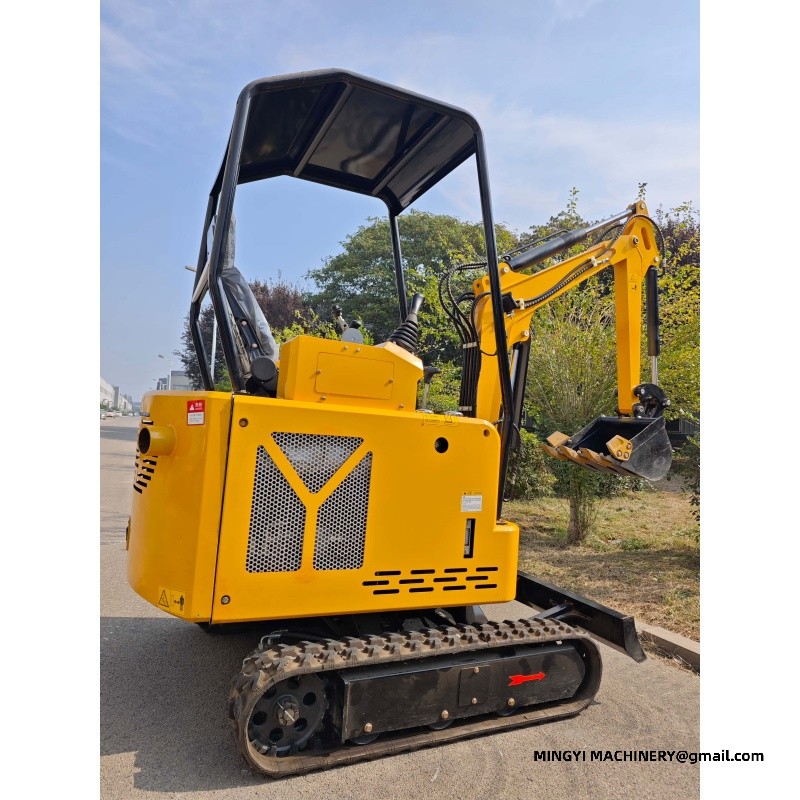
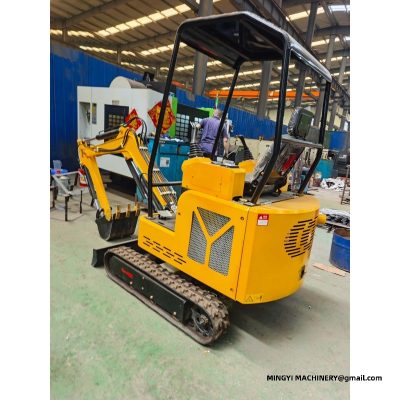
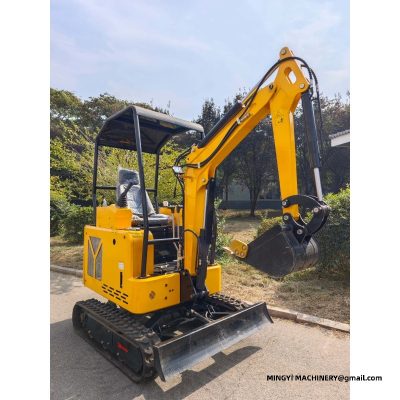
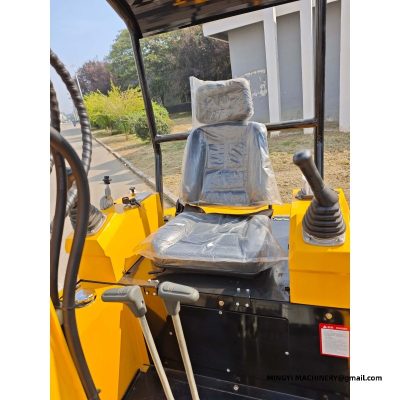
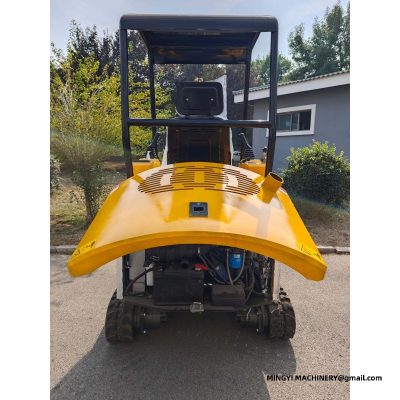
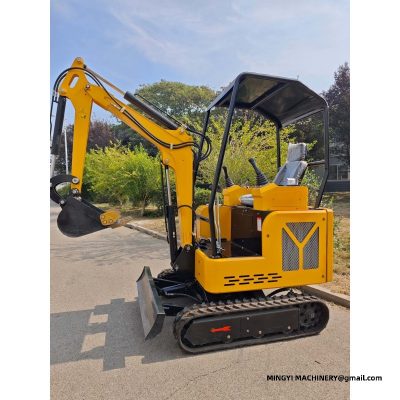
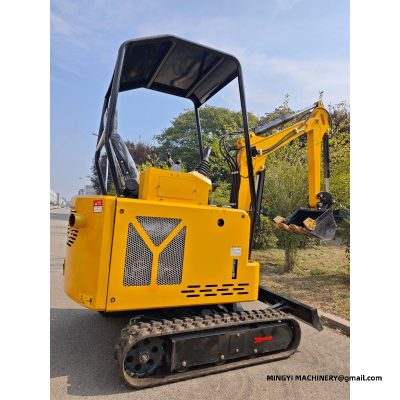
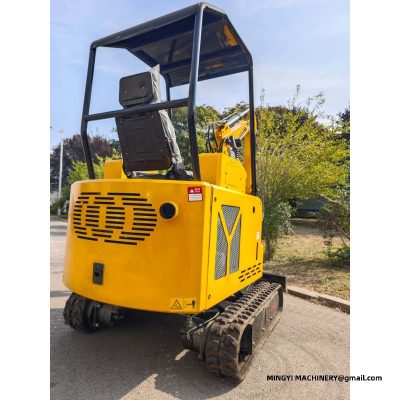
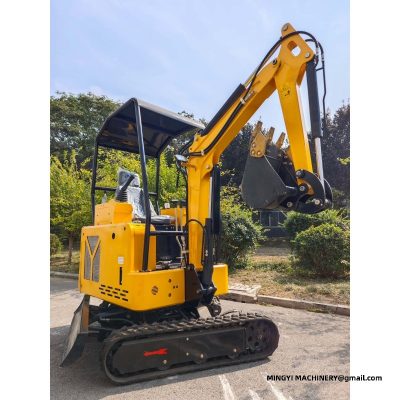
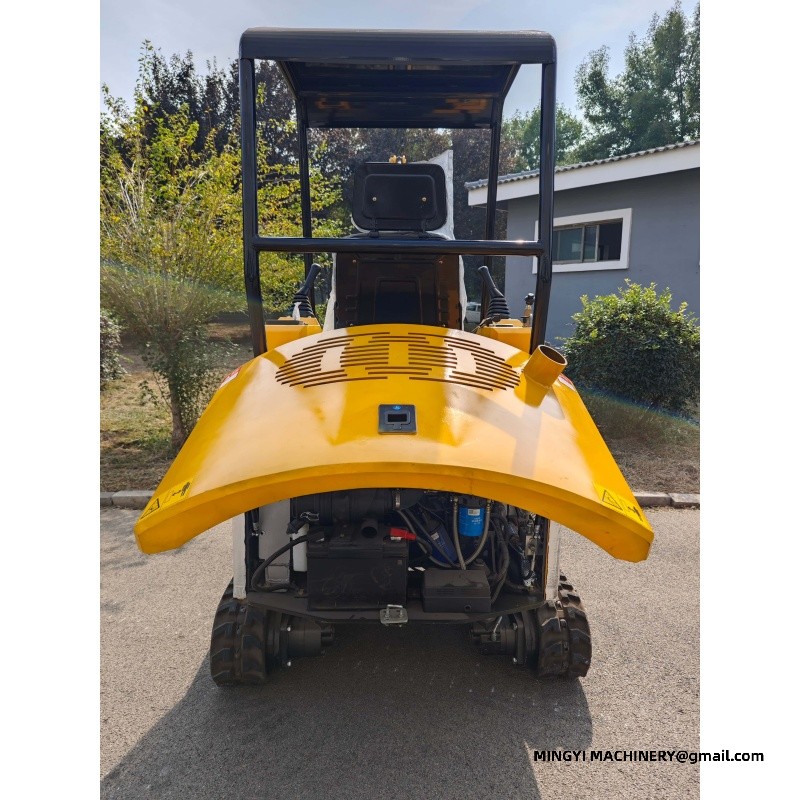
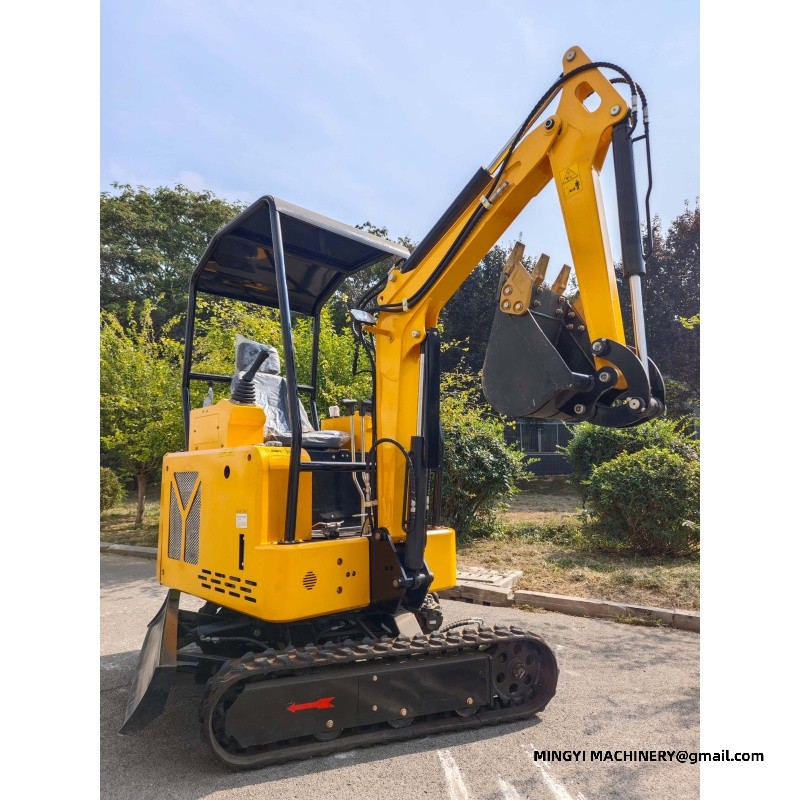
A mini excavator is only as useful as the tools it can carry. The same MINGYI base machine can be fitted with buckets, breaker hammers, augers, rakes, mowers, forks and quick couplers, which is why one compact excavator often replaces several single-purpose machines on a site.
All attachments mount on a common quick-change interface across the 08, 12 and 18 model series.
The attachment set we supply
Digging tools include standard and narrow buckets, shell-type excavating buckets, tilting buckets and mechanical thumb buckets. Breaking tools cover breaker hammers and crusher hammers for concrete, asphalt and rock. Drilling and landscaping tools include augers, multi-tooth grass rakes, lawn mowers and front forks.
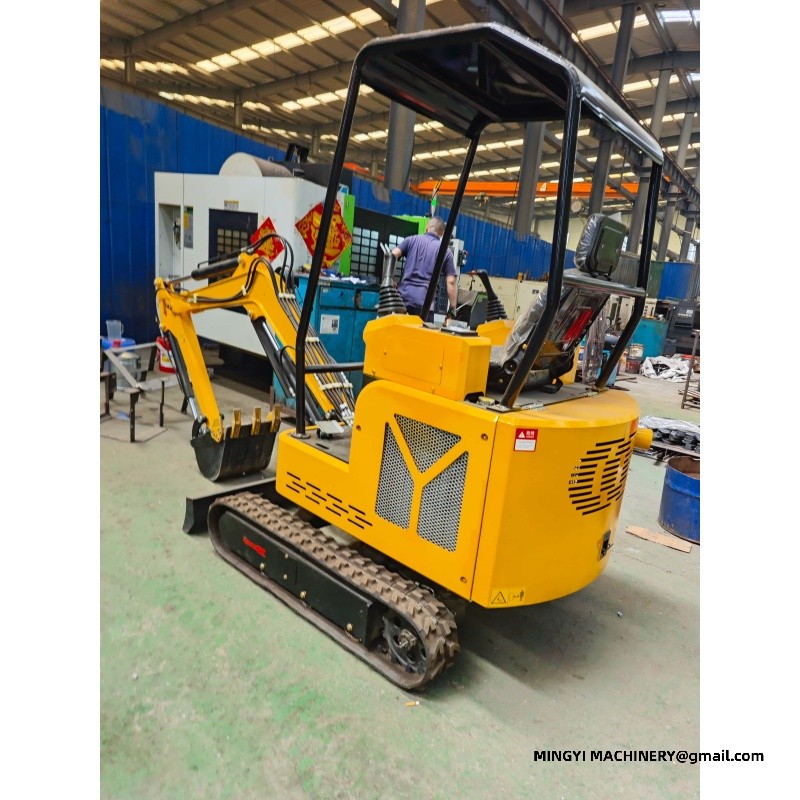
Specialty items include steel tracks with rubber blocks, extended and detachable booms, ladders and mechanical or hydraulic quick-change heads.
Why quick change matters
Changing tools on a fixed mount takes time, and time is the whole allowance on short jobs. A mechanical or hydraulic quick coupler lets one operator move from bucket to breaker to auger within minutes, keeping the machine productive instead of parked.
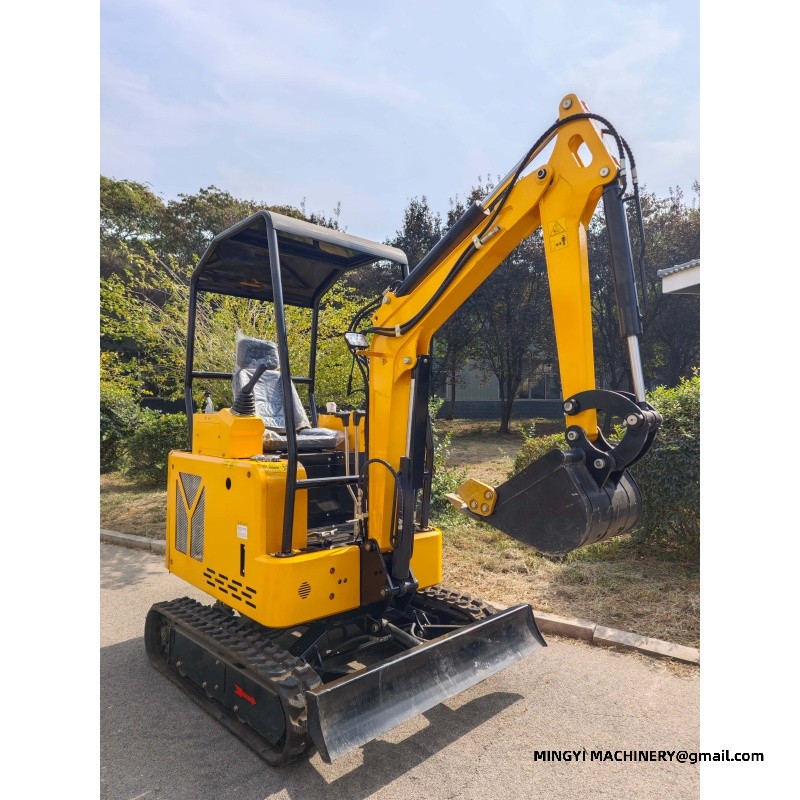
Attachment range
• Standard, narrow, tilting and shell-type buckets
• Mechanical and hydraulic thumb buckets
• Breaker hammers and crusher hammers
• Augers / screw drills for post and crossing holes
• Multi-tooth grass rakes and lawn mowers
• Front forks, ladders and extended booms
• Mechanical and hydraulic quick-change heads
Tell us the tasks you need to cover with one machine and we will put together the attachment set that meets them.
Working a mini excavator attachments through the seasons Weather decides which days are productive. Rain turns some ground unusable and cold changes how this class of machine starts and warms up, so planning the wet months around maintenance is more useful than planning around output. Seasonal planning smooths the workload. Machines that are busy for a few months and idle for the rest benefit from a service slot in the quiet period, and the unit in daily use prepared in the off-season starts the busy months reliably. What owners should plan for beyond the mini excavator attachments Purchase decision is the visible part of the effort. Fuel, filters, tracks or tyres, the operator and the transport between sites are the items that decide what a machine of this size actually demands over a few seasons, and they are worth listing before the order. Downtime is the hidden line item. The equipment on site waiting on a part earns nothing while it stands, so parts availability and service access belong in the plan as much as fuel does. Hydraulic circuits on a mini excavator attachments Flow and pressure are matched to the tool, not to the machine size. Asking for the attachment list first means the machine itself leaves the factory with circuits that suit the heaviest tool the buyer intends to run. Hydraulic specification is easier to settle at build time than to correct later. The model in question delivered without auxiliary lines can still dig, but every additional tool becomes a retrofit project. Orchard, vineyard and farm use of mini excavator attachments Orchard and vineyard work is carried out between rows. The machine in that duty with a narrow chassis and a swing boom works down the row without damaging the trees, which is the reason a full-size machine is not used at all. Farms also use the unit on the job for general maintenance - clearing a watercourse, repairing a track, loading a spreader. One carrier with a few attachments covers most of the jobs that would otherwise wait for a contractor. Working near live services with mini excavator attachments Digging near water, gas and cable is a precision job. A machine built for the work is used here because the operator can work in short controlled cuts and because the machine can be positioned without driving over the run being exposed. The risk on utility work is not machine power but machine placement. The equipment in service that fits the working width leaves the surrounding ground undisturbed, which keeps the trench stable and the reinstatement small. Hiring versus owning this class of machine The choice follows the hours. Work that fills a few weeks a year is usually better hired, while the unit in daily use that would be on site most weeks starts to justify ownership once the transport and booking time is counted. Availability is part of the decision. Owning a machine of this size means it is there on the day the ground is ready; hiring means competing for the same machine at the same time as everyone else in the season. OEM and fleet customisation of the equipment on site Distributors and rental fleets usually need the machine to look like theirs. Paint, decals, seat colour and attachment branding can be specified on the machine itself at build time rather than applied after import. Documentation can be prepared to suit the importer. Manuals, parts books and decal sets for the model in question can be supplied with the buyer's own branding where the order size justifies it. Trailering and moving the machine in that duty Transport weight and width decide whether a machine needs a specialist haulier. The unit on the job sized to travel on a standard plant trailer behind a suitable vehicle moves with the crew rather than on a scheduled low loader. Loading practice matters as much as the numbers. A machine built for the work is driven up ramps under its own power with the boom lowered and the tracks aligned, and secured at the points the manufacturer specifies. Quick coupler practice on the equipment in service A quick coupler is the single option that changes how a machine is used day to day. Fitted to this class of machine, it turns an attachment change from a two-person workshop job into a task the operator does alone in minutes. Couplers are specified early because they affect the arm and the hydraulic kit. Adding one to the unit in daily use after delivery means new pins, new hoses and a fitment session; adding it at build time is a line on the sheet. Parts, service and support for a machine of this size Support after delivery is a parts question. Wearing items for the equipment on site - filters, belts, track components, bucket teeth and pins - are the items a buyer should plan to hold before the first service interval. Engine parts availability usually drives the engine choice. The machine itself built with an engine the local network already carries is serviced from stock rather than from an international order. Boom configuration for the model in question Extended and offset boom configurations change reach and working range. The machine in that duty with a longer arm reaches further but lifts less at full extension, so the specification is set against the deepest and furthest point on the job list. Detachable boom sections are used where transport length matters. The unit on the job that has to travel on a standard trailer can be built so the arm comes off for the road and goes back on at the site. Track choice for a machine built for the work Rubber tracks suit paved and landscaped ground because they spread the machine weight and leave the surface intact. Steel tracks with rubber blocks are specified where the ground is rougher or the working day is longer, and the choice can be made per machine rather than accepted as a factory default. Track type changes what the machine can cross and what it leaves behind. Buyers specify rubber for lawns, driveways and municipal work, and steel with rubber blocks for sites where sharp material would cut a rubber belt in a week. Matching the equipment in service to ground conditions Soft ground is a flotation problem, not a power problem. This class of machine on wide rubber tracks crosses lawn, sand and cultivated soil that would stop a narrower machine or a wheeled unit of the same capacity. Hard and abrasive ground reverses the specification. On rock, demolition rubble or sharp gravel, steel tracks with rubber blocks on the unit in daily use survive conditions that cut a rubber belt quickly. Specification data for a machine of this size The figures below are the factory figures for the models most often matched to the equipment on site. They are the numbers to check against the site: the depth the work needs, the reach from one position, and the width of the narrowest point on the route in. Figures are factory figures and are confirmed on the build sheet for the machine itself. Where a job sits between two models, the larger machine usually takes less time than the smaller one spends on rework. Landscape contractors use the model in question for planting holes, pond excavation, grading and retaining work. The machine is light enough to cross finished lawn and narrow enough to work between established trees. On soft landscape work the surface is the constraint. The machine in that duty on rubber tracks crosses turf without stripping it, which is why the same jobs are not given to a wheeled machine.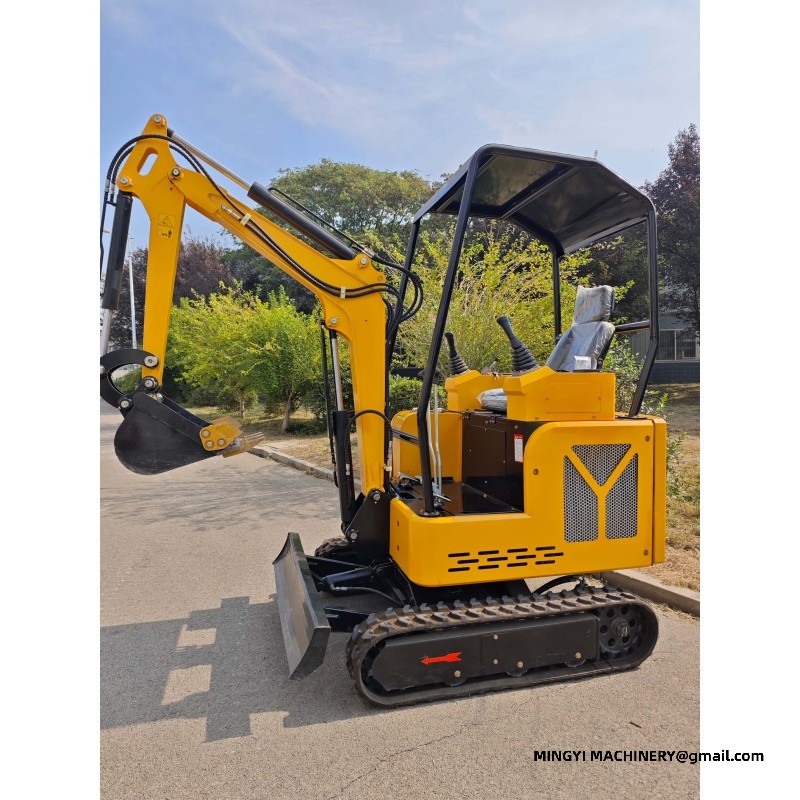
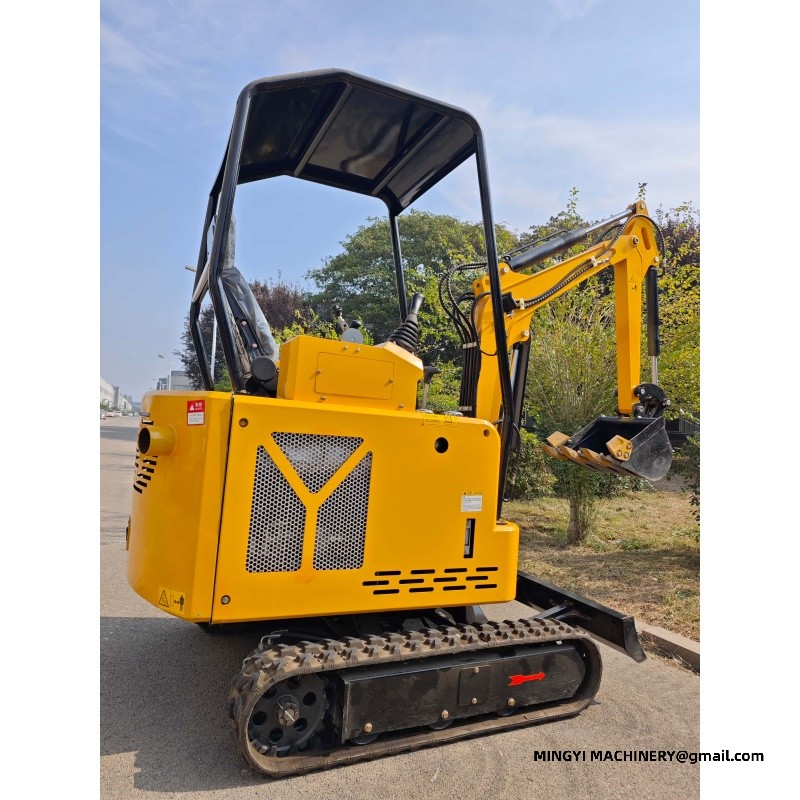
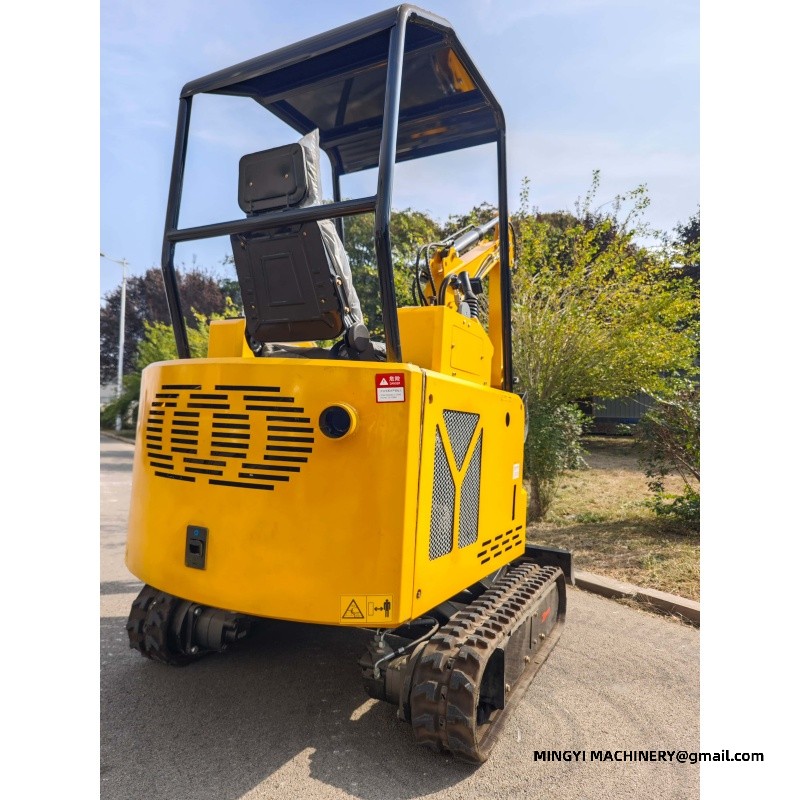
Reference specification — mini excavator range 13W 15W 20-1WL 20-2L Operating weight 1300 kg (2866.01 lb) 1400 kg (3086.47 lb) 1900 kg (4188.78 lb) 1900 kg (4188.78 lb) Transport size (L×W×H) 2200 × 930 × 2250 mm 2200 × 930 × 2250 mm 2550 × 1100 × 2200 mm 2600 × 1300 × 2344 mm Max digging depth 1630 mm (64.17 in) 1630 mm (64.17 in) 1800 mm (70.87 in) 2100 mm (82.68 in) Max digging height 2750 mm (108.27 in) 2750 mm (108.27 in) 2820 mm (111.02 in) 2880 mm (113.39 in) Max dumping height 1960 mm (77.17 in) 1960 mm (77.17 in) 2050 mm (80.71 in) 2100 mm (82.68 in) Max digging radius 2900 mm (114.17 in) 2900 mm (114.17 in) 3050 mm (120.08 in) 3215 mm (126.57 in) Max digging distance 2100 mm (82.68 in) 2100 mm (82.68 in) 2300 mm (90.55 in) 2460 mm (96.85 in) Minimum turning radius 1300 mm (51.18 in) 1300 mm (51.18 in) 1450 mm (57.09 in) 1587 mm (62.48 in) Travel speed 3 km/h (1.86 mph) 3 km/h (1.86 mph) 5 km/h (3.11 mph) 5 km/h (3.11 mph) Gradeability 30° 30° 30° 30° Fuel consumption 1-1.3 L/h (0.264—0.343 gal) 1-1.3 L/h (0.264—0.343 gal) 2-3 L/h (0.528—0.793 gal) 2-3 L/h (0.528—0.793 gal) Fuel tank capacity 10 L (2.64 gal) 10 L (2.64 gal) 16 L (4.23 gal) 16 L (4.23 gal) Hydraulic oil tank 16 L (4.23 gal) 16 L (4.23 gal) 18 L (4.76 gal) 18 L (4.76 gal) Dozer blade lift height 180 mm (7.09 in) 180 mm (7.09 in) 180 mm (7.09 in) 180 mm (7.09 in) Dozer blade drop depth 210 mm (8.27 in) 210 mm (8.27 in) 210 mm (8.27 in) 210 mm (8.27 in)
Q. What attachments do you supply for mini excavators?
A. MINGYI supplies breaker hammers, augers, tilting buckets, thumb buckets, shell buckets, quick couplers, grass rakes, lawn mowers, front forks, ladders and extended booms for the 08, 12 and 18 models. They ship with the machine or separately against a model reference.
Q. Should I buy attachments with the machine or later?
A. Buying them with the machine is usually simpler, because the tooling goes into the same container and the hydraulic circuit is set up for it at build time. Adding a tool later is possible, but it has to be matched to the machine's hydraulics and coupler.
Q. How do I know which bucket size to take?
A. Bucket choice follows the trench width and the ground: narrow buckets for cable and pipe runs, wider buckets for bulk excavation. Tell us the trench width and the ground conditions and MINGYI will include the matching bucket and teeth in the specification.
Planning the season around the unit on the job
The calendar decides more than the specification does. Planning when a machine built for the work will be working, when it will be serviced and when it can be spared keeps the maintenance out of the weeks that matter.
Moving the equipment in service between sites
Loading is where most damage happens. Ramps, angle of approach and the condition of the ground under them matter more than the machine when this class of machine is being loaded, and a careful driver is worth more than a fast one.
E-mail : sales@mingycn.com
LINE ( ID ): mingyicn
Related pages
mini excavator with auger · mini excavator with breaker · mini excavator bucket options · PRODUCTS









