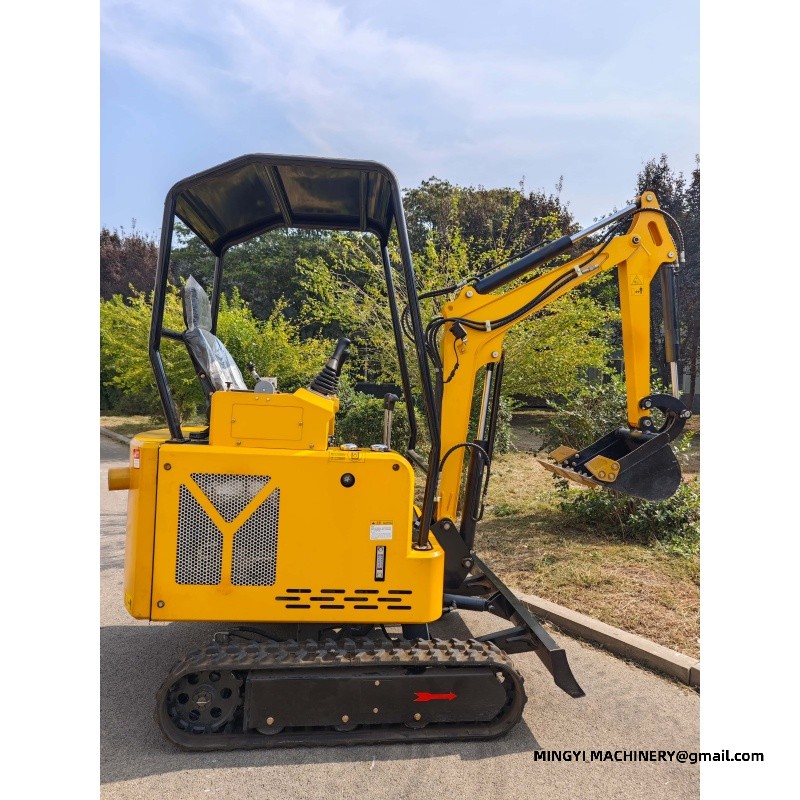
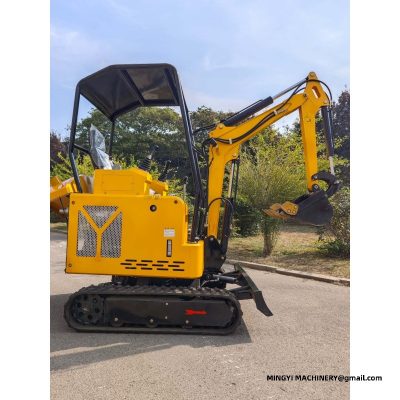
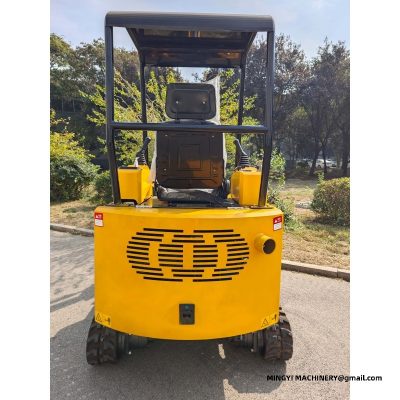
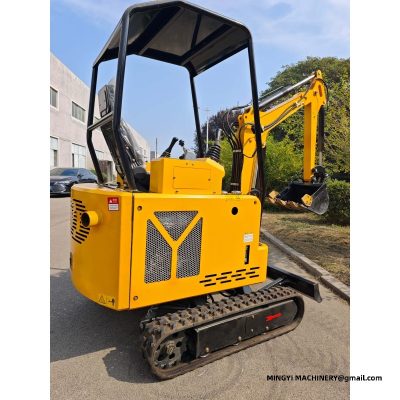
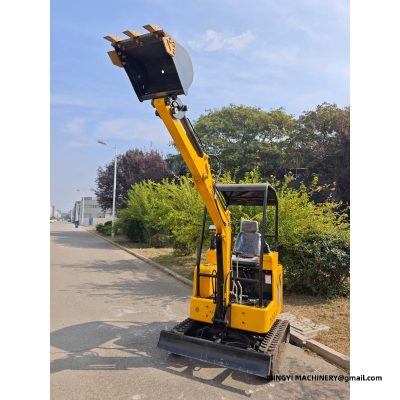
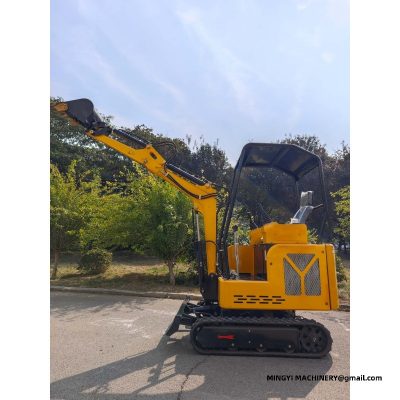
An auger turns a mini excavator into a drilling machine. Post holes for fencing, tree and vine planting holes, foundation piles for small structures and crossing holes beneath paths and kerbs can all be drilled from the same machine that digs the trench.
MINGYI mini excavators accept a screw-drill auger on the quick-change mount, driven from the machine auxiliaries.
What an auger does that a bucket cannot
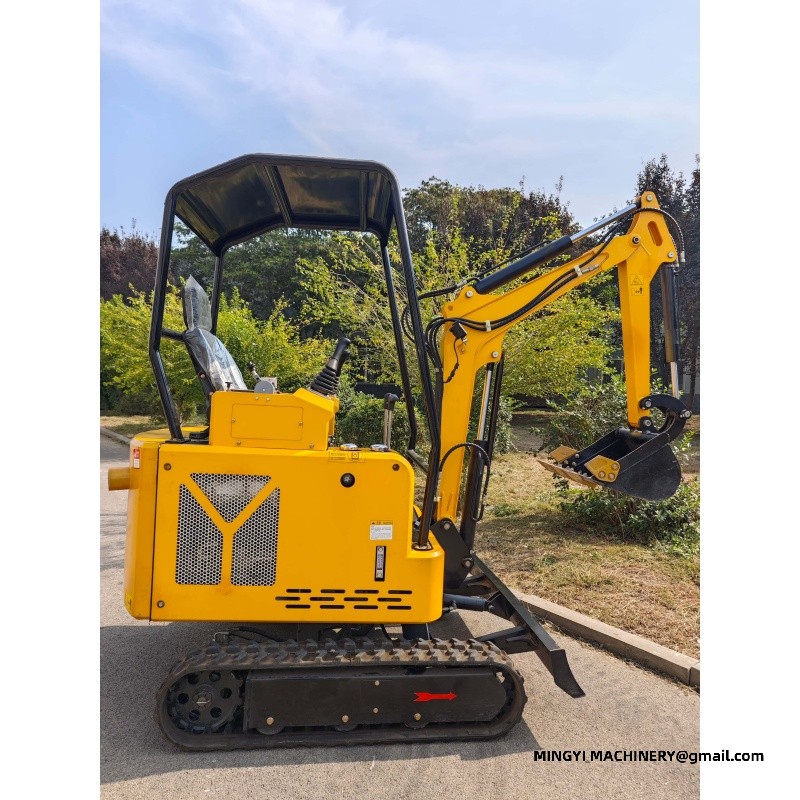
A bucket removes soil one bite at a time and disturbs the surrounding ground as it goes. An auger drills a clean, vertical hole at a set diameter and leaves the sides intact, which is exactly what is required when a post or a pipe has to sit plumb in undisturbed ground.
Drilling also avoids the surface damage that a bucket causes when the operator is trying to open a small hole in a paved area — the auger lifts the cut material out rather than levering around it.
Matching auger to machine
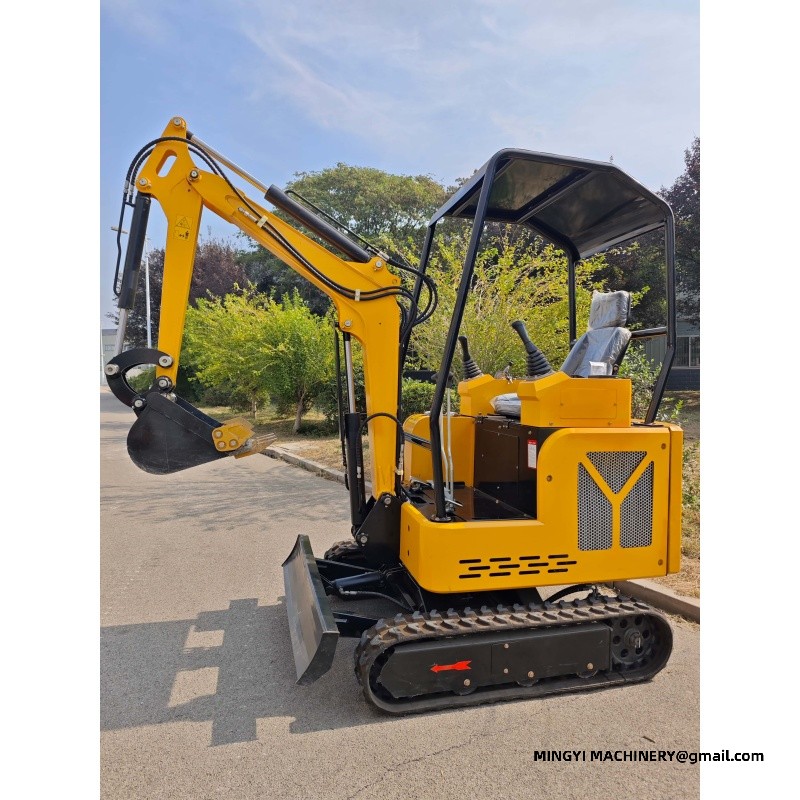
Auger diameter and length are chosen against the model and the ground. The hydraulic quick coupler allows the auger to be exchanged for a bucket or breaker as the job changes, so the excavator is not tied to one function.
Auger applications
• Fence posts, gate posts and signage posts
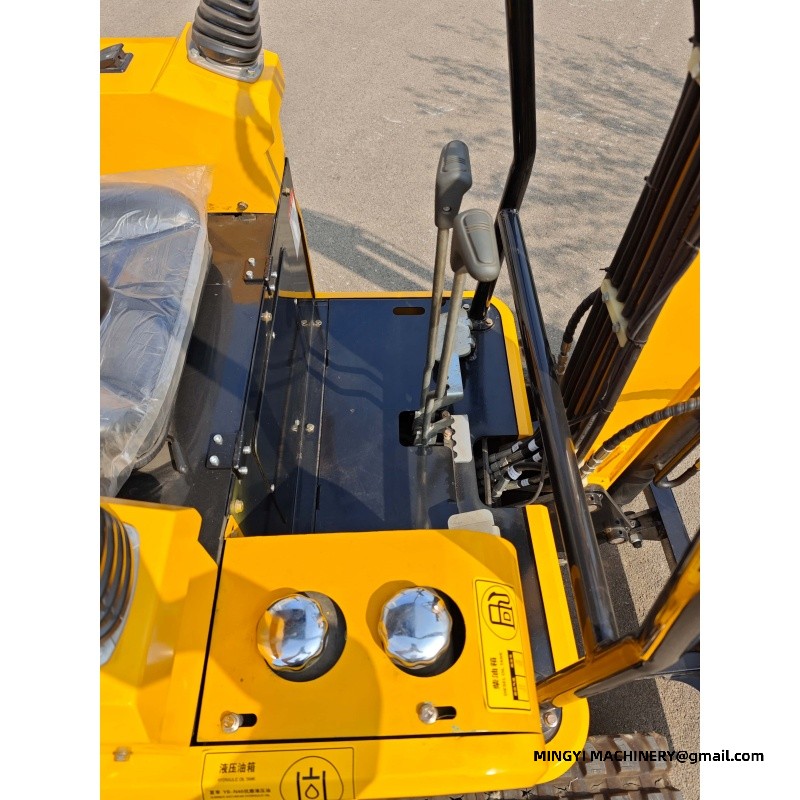
• Orchard, vineyard and nursery planting holes
• Small foundation and pile holes
• Service crossings beneath paths and kerbs
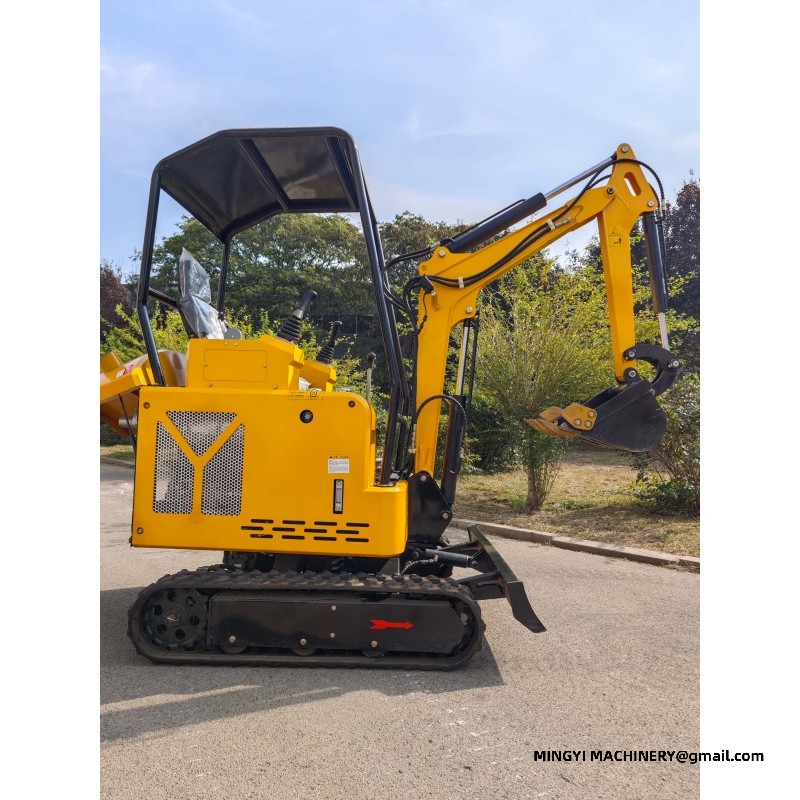
• Test holes and soil investigation pits
Tell us the hole diameter and depth you need and the ground type, and we will confirm the auger and model combination.
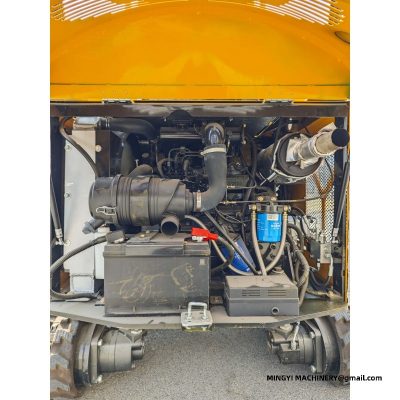
Municipal and public works with mini excavator with auger Municipal crews work on streets, footpaths and parks where the public is present. This class of machine is specified because it occupies little space, works inside a small exclusion zone and can be moved on a standard trailer. Drainage repair, tree planting, footway reconstruction and cemetery work are all within the range of the unit in daily use. The jobs are small individually and continuous across the year. Attachments that turn mini excavator with auger into several machines Attachment lists are best written before delivery. Specifying a machine of this size with the tools the job list needs avoids the work and delay of adding hydraulics later, and a quick coupler makes the swap a few minutes instead of a workshop job. Most of the daily variety on the equipment on site comes from the attachment rack rather than from the machine itself. Bucket, breaker, auger, ripper, rake and grab cover the large majority of the work a contractor will see. Quick coupler practice on mini excavator with auger Couplers are specified early because they affect the arm and the hydraulic kit. Adding one to the machine itself after delivery means new pins, new hoses and a fitment session; adding it at build time is a line on the sheet. For a fleet that shares attachments between machines, a common coupler standard matters more than the coupler brand. The model in question that picks up the same tools as the larger machines keeps the rack usable across the yard. Road and paving work for mini excavator with auger Patching and reinstatement favour a machine that can work in a lane closure. The machine in that duty occupies less road than a full-size excavator, which reduces the traffic management needed and the length of the closure. Breaking out a failed slab and backfilling the same hole in one visit is normal work for the unit on the job. The breaker and the bucket come off the same coupler, so the road is reopened the same day. OEM and fleet customisation of mini excavator with auger Customisation also covers the specification sheet. A fleet buyer may want every equipment in service delivered with the same coupler, the same engine and the same tool kit so training and parts stock stay simple. Documentation can be prepared to suit the importer. Manuals, parts books and decal sets for a machine built for the work can be supplied with the buyer's own branding where the order size justifies it. Specifying this class of machine against a job list Buyers who skip this step either over-buy or under-buy. The unit in daily use specified only from machine size tends to arrive without the coupler, the circuits or the track type the work actually needs. Useful information to send with an enquiry includes working width, required digging depth, ground conditions and the attachment set. Those four items let the factory specify a machine of this size that fits rather than a generic build. Working on slopes and uneven ground with the equipment on site Ground that looks level often is not. The machine itself crossing a filled trench, a soft edge or a hidden void behaves differently from one on undisturbed ground, and those are the places worth walking before driving. Planning the direction of travel helps. Working so that the model in question is stable under load and not required to turn on a slope is a decision made before the job starts, not a correction made during it. Orchard, vineyard and farm use of the machine in that duty Ditching, fertilising and drainage on farmland suit the unit on the job because the work is spread over a large area in short bursts. The machine travels behind a pickup and works where it stops. Farms also use a machine built for the work for general maintenance - clearing a watercourse, repairing a track, loading a spreader. One carrier with a few attachments covers most of the jobs that would otherwise wait for a contractor. Noise, dust and working near occupied buildings Enclosure and machine condition both reduce noise. The equipment in service with intact panels, sound mounts and a maintained exhaust is measurably quieter than the same machine with loose guards, and the difference matters on restricted sites. Dust control is often part of the same conversation. Water, timing and work sequence reduce what leaves the site, and agreeing them in advance keeps this class of machine working rather than stopped after a complaint. Export packing and shipping of the unit in daily use Machines leave the factory prepared for container or flat rack shipment. A machine of this size is normally shipped with the attachment set and the spare parts list agreed in advance so the container is planned once. Export documentation, decals and paint are settled before packing. Asking for them with the equipment on site order avoids a second handling session and keeps the machine on the booked vessel. Acceptance checks when the machine itself arrives Delivery day is the best time to find a problem. Checking the specification against the order, the fluid levels, the fasteners and any transport damage while the machine in that duty is still on the trailer is faster than claiming later. A function check before the machine goes to work is worth the hour. Running through the controls, the travel and the attachment circuit on the model in question confirms it is set up as specified and ready for the site. Engine options behind the unit on the job Power unit selection is settled against the service network the buyer already uses. MINGYI offers Kubota D722, Kubota D902, YANMAR, Changchai, Laidong, Runtong, YARMAX, Youpu 2V80 and Youpu 195, so a fleet running one brand of engine can keep the same filters, the same parts supplier and the same mechanic. Two buyers can order the same a machine built for the work and receive different engines. The decision is rarely about peak power; it is about which parts counter is closest to the site and which engine the local mechanic already knows. Specification data for the equipment in service Buyers comparing this class of machine usually start from four numbers - weight, digging depth, reach and transport width - because those are the ones that decide whether the machine can be delivered and whether it can do the job once it is there. Figures are factory figures and are confirmed on the build sheet for the unit in daily use. Where a job sits between two models, the larger machine usually takes less time than the smaller one spends on rework. Interior demolition is an access and a weight question. A machine of this size that fits through a doorway and works on a suspended floor does jobs that would otherwise be done by hand or by a larger machine that cannot enter. Dust, debris clearance and floor loading all argue for a compact machine indoors. The equipment on site spreads its weight over a wider track footprint than a wheeled machine of similar capacity.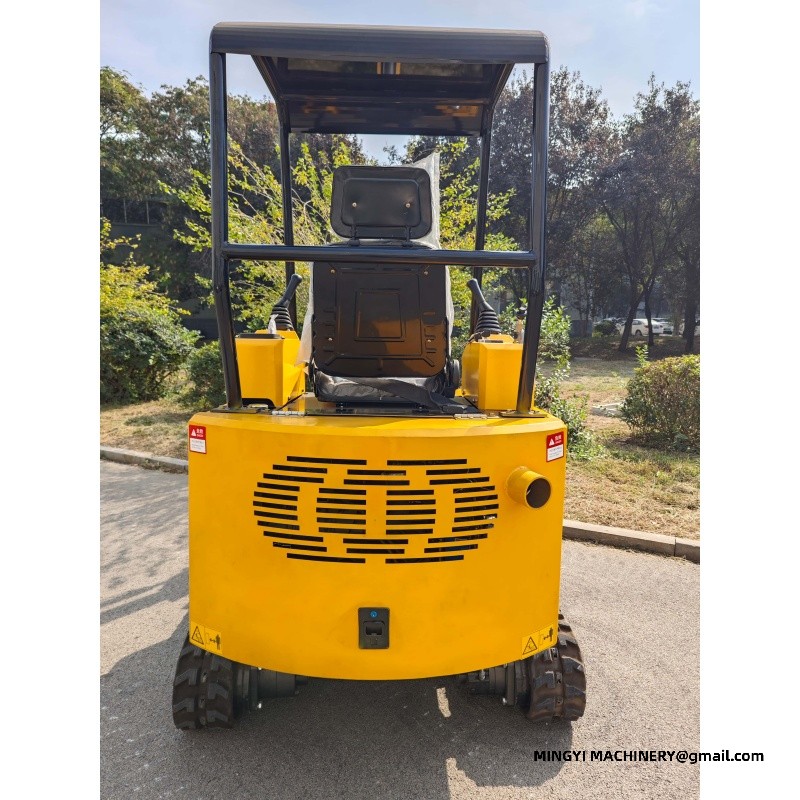
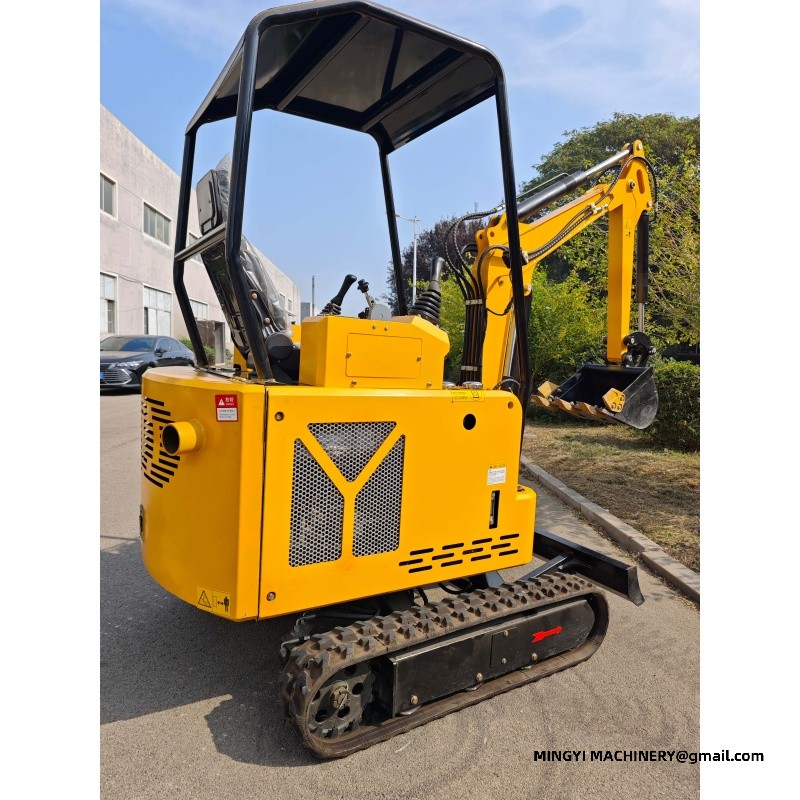
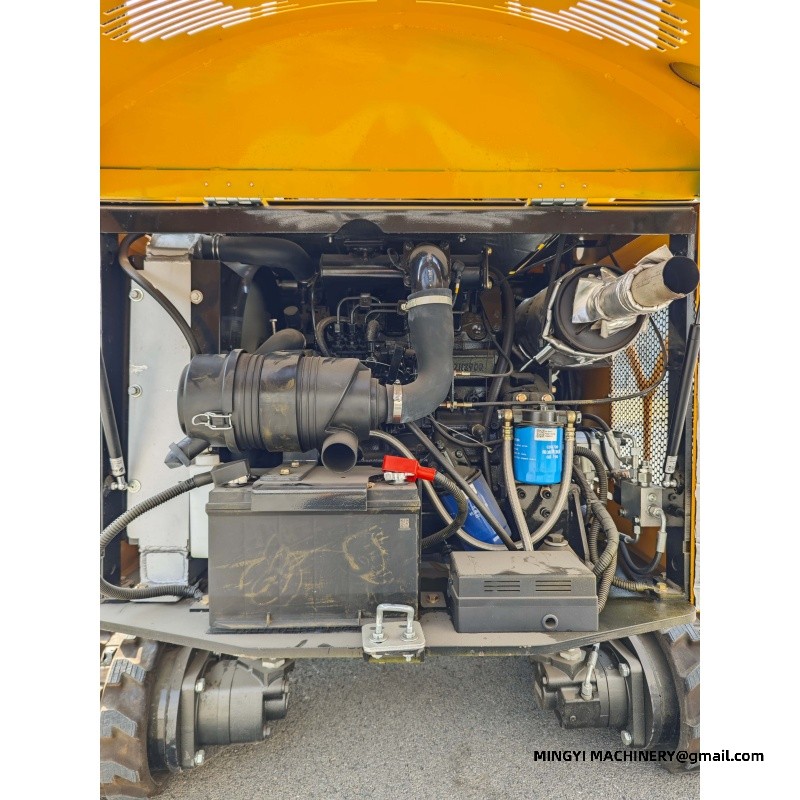
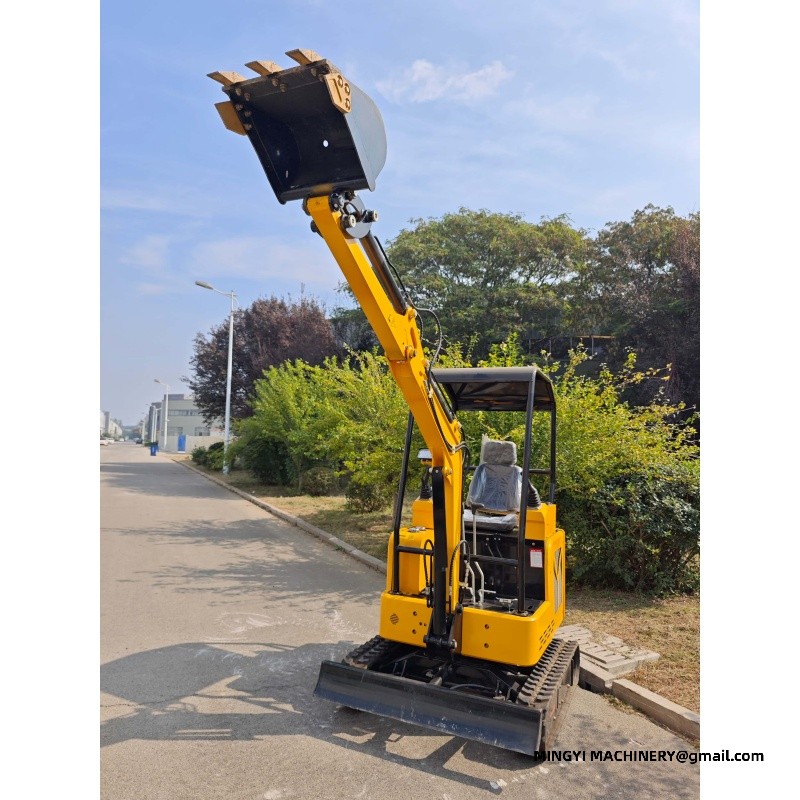
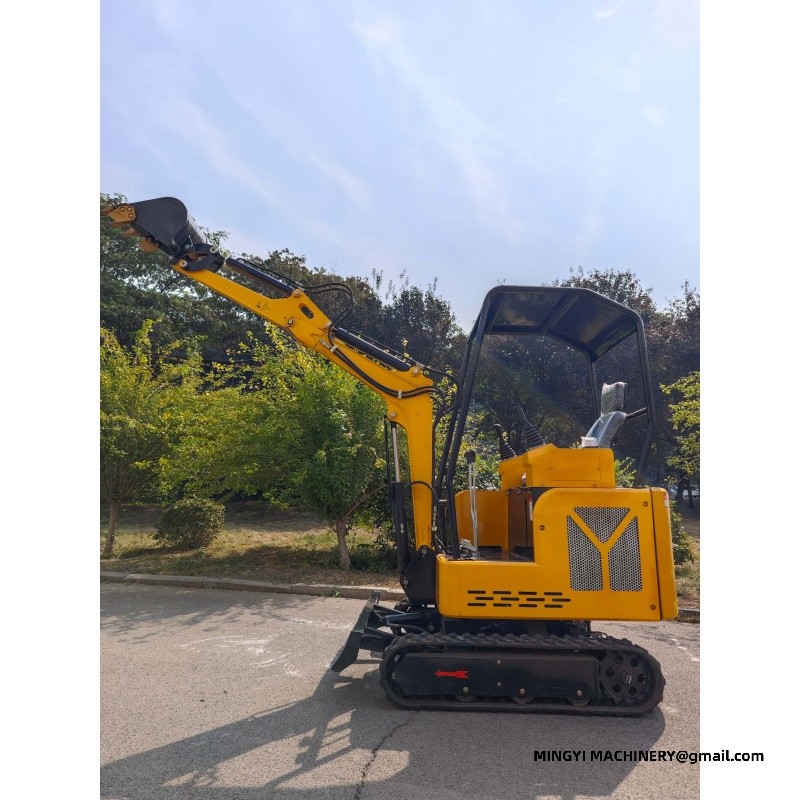
Reference specification — mini excavator range 12W 15W 20-1WL 20-3W Operating weight 1200 kg (2645.55 lb) 1400 kg (3086.47 lb) 1900 kg (4188.78 lb) 1900 kg (4188.78 lb) Transport size (L×W×H) 2200 × 930 × 2250 mm 2200 × 930 × 2250 mm 2550 × 1100 × 2200 mm 2550 × 1100 × 2200 mm Max digging depth 1630 mm (64.17 in) 1630 mm (64.17 in) 1800 mm (70.87 in) 1800 mm (70.87 in) Max digging height 2750 mm (108.27 in) 2750 mm (108.27 in) 2820 mm (111.02 in) 2820 mm (111.02 in) Max dumping height 1960 mm (77.17 in) 1960 mm (77.17 in) 2050 mm (80.71 in) 2050 mm (80.71 in) Max digging radius 2900 mm (114.17 in) 2900 mm (114.17 in) 3050 mm (120.08 in) 3050 mm (120.08 in) Max digging distance 2100 mm (82.68 in) 2100 mm (82.68 in) 2300 mm (90.55 in) 2300 mm (90.55 in) Minimum turning radius 1300 mm (51.18 in) 1300 mm (51.18 in) 1450 mm (57.09 in) 1450 mm (57.09 in) Travel speed 3 km/h (1.86 mph) 3 km/h (1.86 mph) 5 km/h (3.11 mph) 5 km/h (3.11 mph) Gradeability 30° 30° 30° 30° Fuel consumption 1-1.3 L/h (0.264—0.343 gal) 1-1.3 L/h (0.264—0.343 gal) 2-3 L/h (0.528—0.793 gal) 2-3 L/h (0.528—0.793 gal) Fuel tank capacity 10 L (2.64 gal) 10 L (2.64 gal) 16 L (4.23 gal) 16 L (4.23 gal) Hydraulic oil tank 16 L (4.23 gal) 16 L (4.23 gal) 18 L (4.76 gal) 18 L (4.76 gal) Dozer blade lift height 180 mm (7.09 in) 180 mm (7.09 in) 180 mm (7.09 in) 180 mm (7.09 in) Dozer blade drop depth 210 mm (8.27 in) 210 mm (8.27 in) 210 mm (8.27 in) 210 mm (8.27 in)
Q. What is the machine itself used for?
A. Drilling post, pile and planting holes where a dedicated drilling rig cannot reach. The auger attachment turns the excavator into a hole boring machine on the same carrier that does the general groundwork.
Q. Which auger suits my job?
A. Auger diameter follows the hole required, and the attachment has to match the machine's hydraulic circuit, which is why the tooling is settled with the order. Tell us the hole diameter and the ground and MINGYI will confirm the match.
Q. Can the auger be swapped for a bucket?
A. Yes, with a quick coupler. That is how one machine drills the holes and then does the surrounding excavation, which is the usual way fencing, planting and footing work is organised.
Documents that travel with the model in question
Documentation should match the machine that was actually built. The sheet supplied with the machine in that duty records the configuration as delivered, because the generic catalogue description is not what the customer needs when ordering a part.
Pre-delivery inspection before the unit on the job leaves the shop
Inspection is a list, not a glance. Before a machine built for the work is released the fluid levels, belt tension, electrical connections and safety decals are each ticked off, and anything that fails stays in the shop rather than travelling with the machine.
A second operator for the equipment in service
Shared machines need shared habits. Two operators on this class of machine should do the same daily checks in the same order, because the check that one person skips is the check that eventually matters.
E-mail : sales@mingycn.com
LINE ( ID ): mingyicn
Related pages
mini excavator with breaker · mini excavator with bucket · mini excavator for demolition · PRODUCTS









