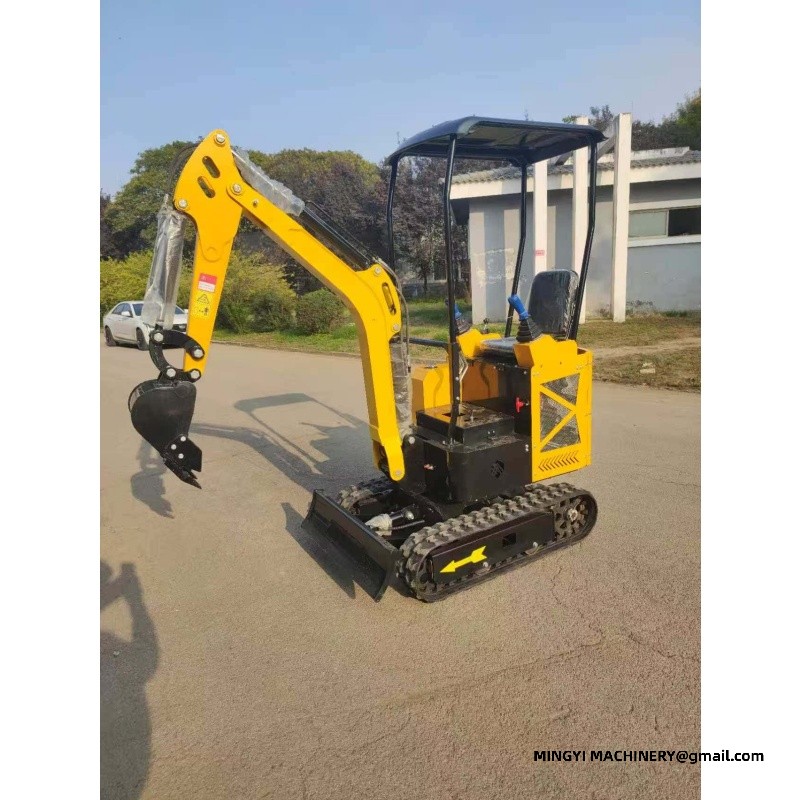
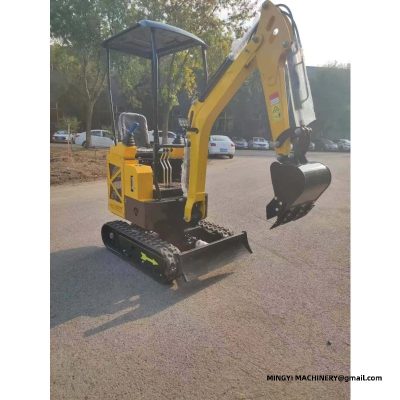
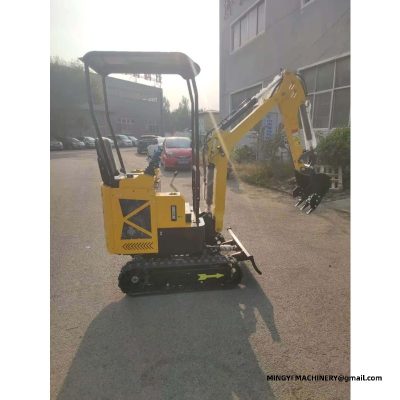
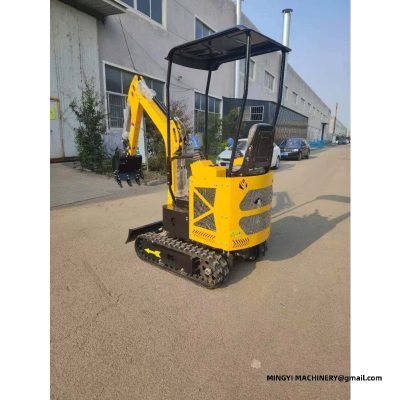
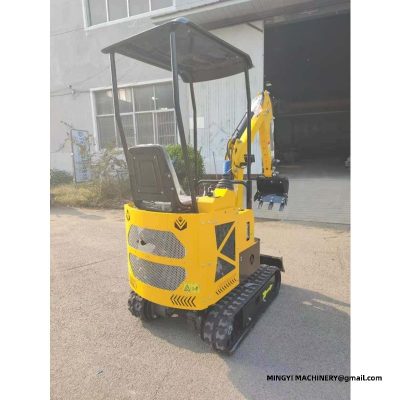
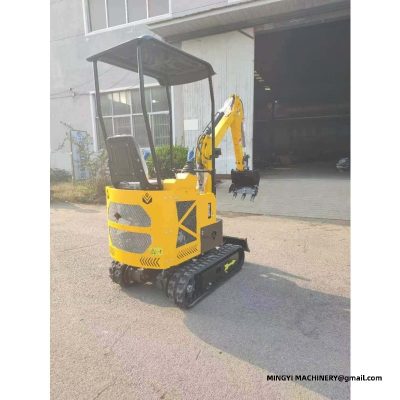
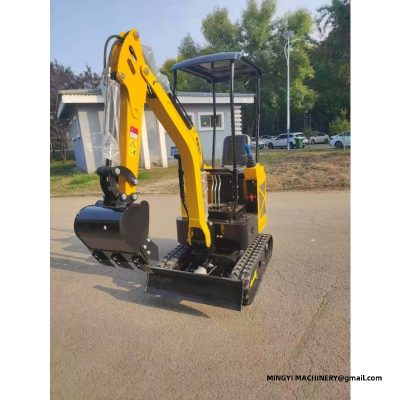
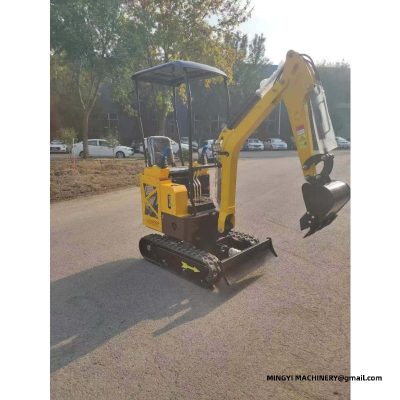
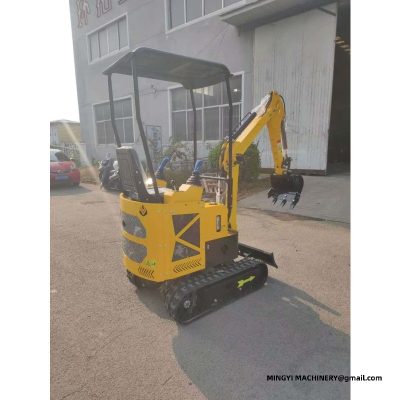
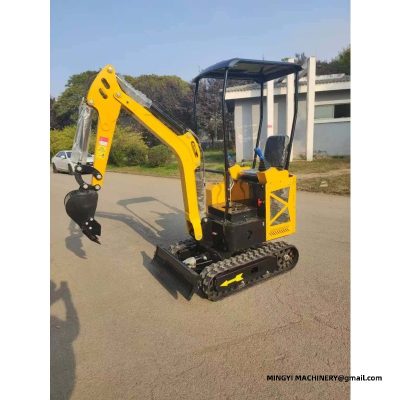
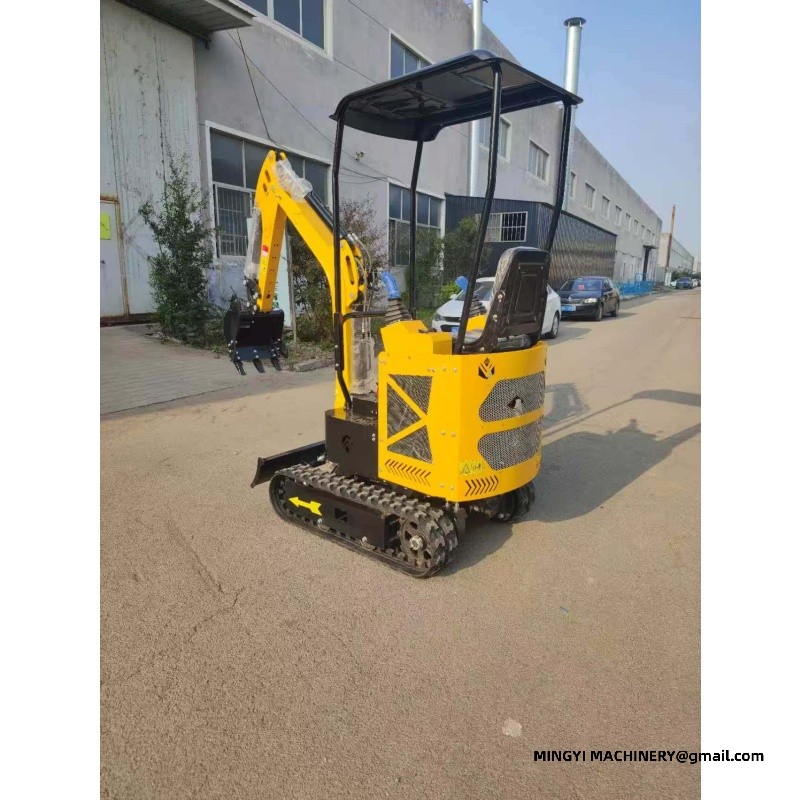
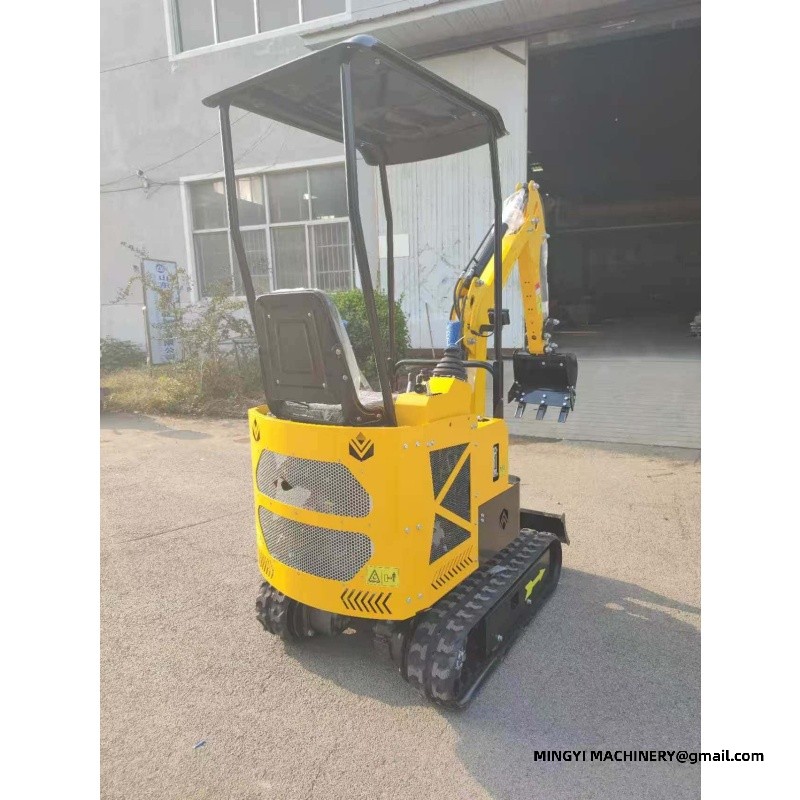
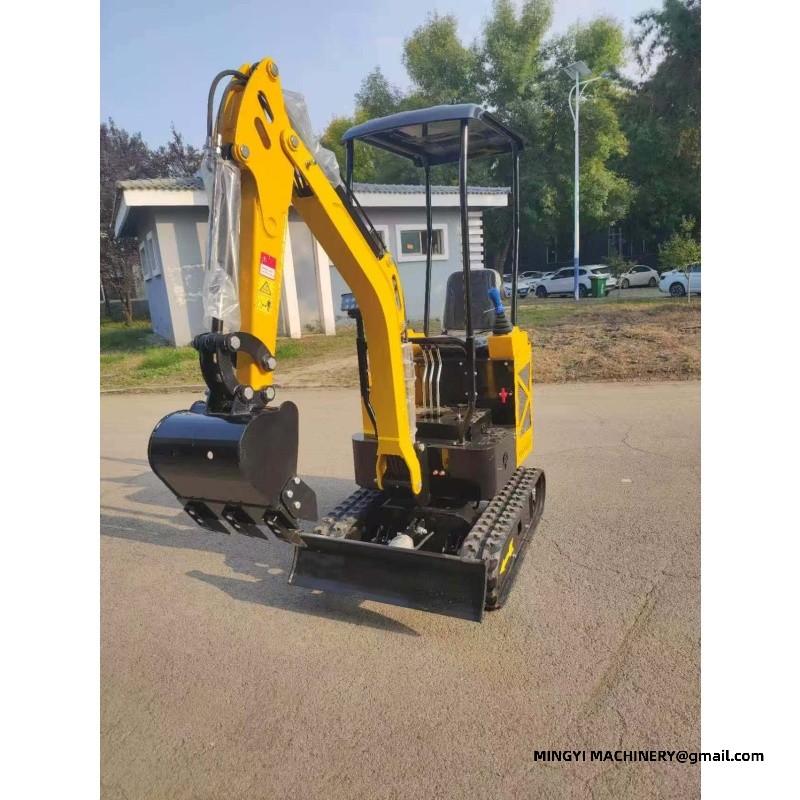
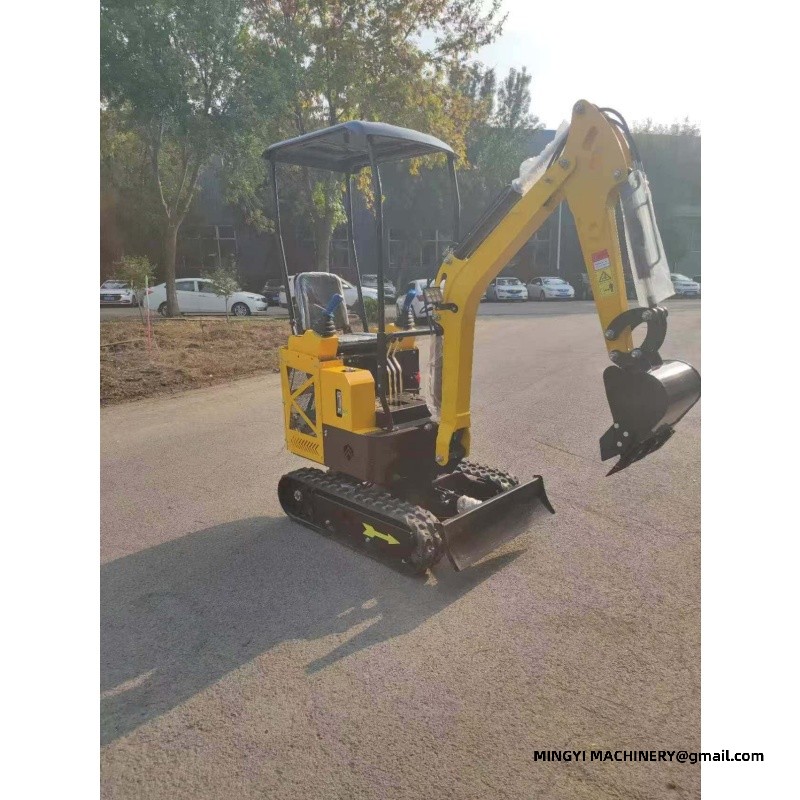
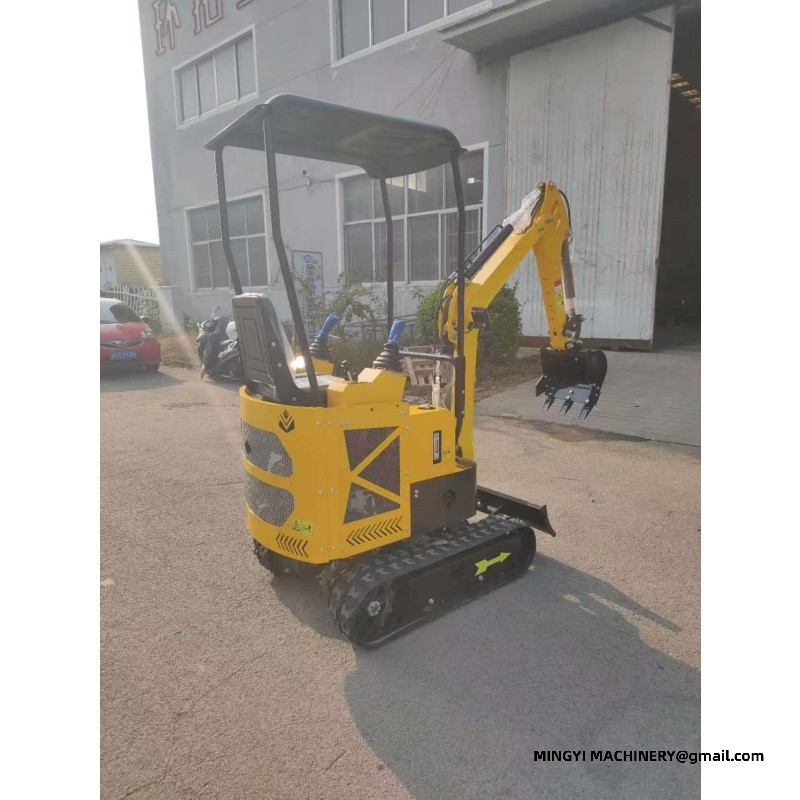
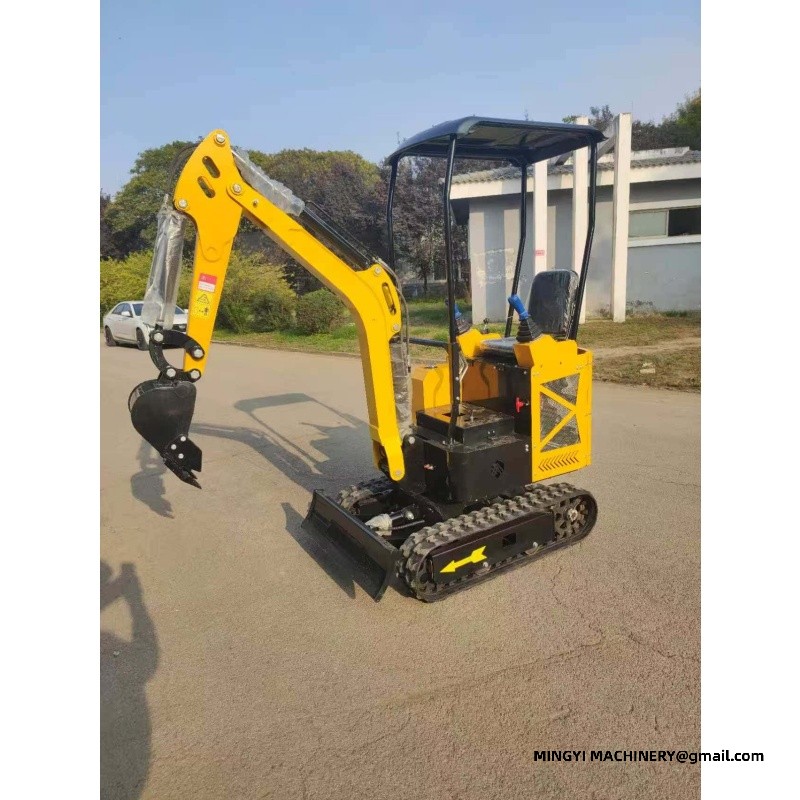
The 12 model was the first machine in the MINGYI mini excavator range to be put into production, and it remains the reference point for the range that followed. It established the layout the later models share: compact crawler undercarriage, offset swing boom, hydraulic quick-change attachment mount and a diesel power unit selected by the buyer.
Machines built since then, including the 08 and 18 models, use the same attachment interface and service philosophy.
Why the first model still matters
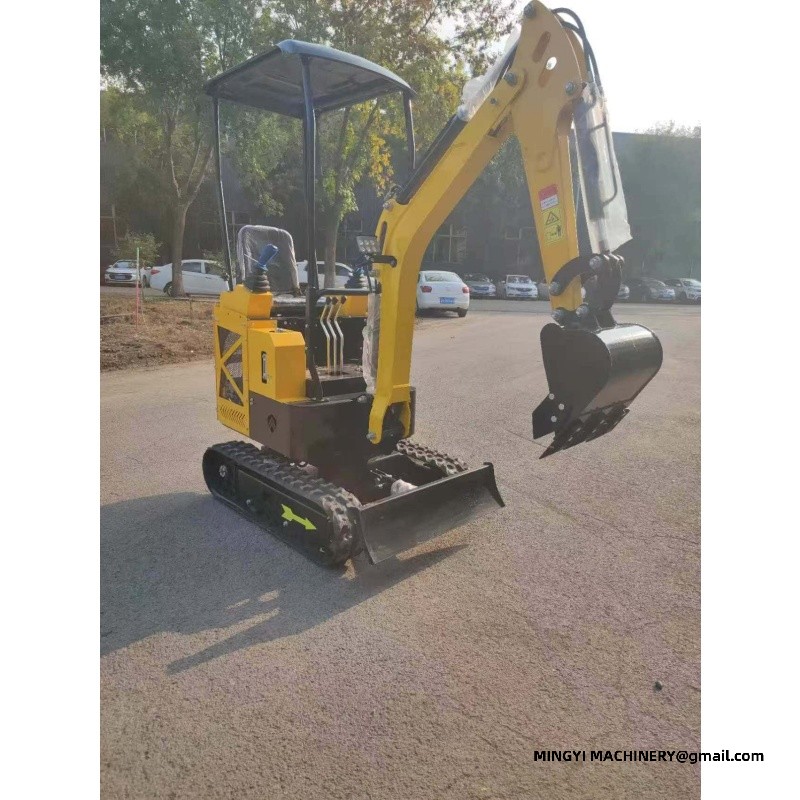
A first model is the one on which the machine’s reputation is built, and its design decisions carry through the range. The attachment interface, the undercarriage layout and the hydraulic architecture of the 12 model are the basis on which the rest of the range was developed, which is why buckets, breakers, augers and rakes are interchangeable across models.
For buyers, that continuity is practical: attachments bought for one machine can be used on another, and an operator trained on one model moves to another without relearning the controls.
Configuration
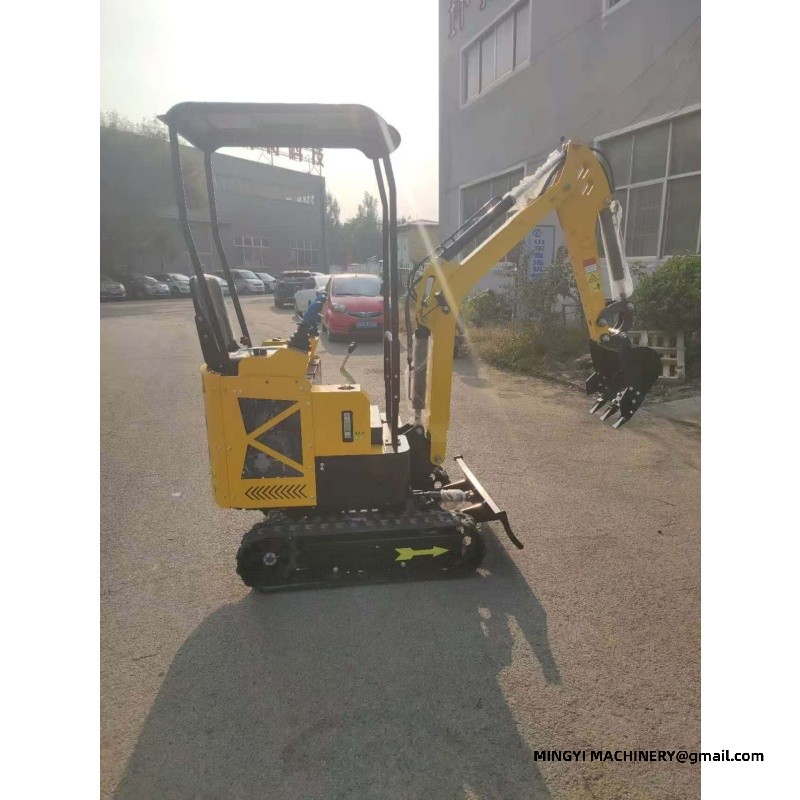
The 12 model is supplied with rubber tracks or steel tracks with rubber blocks, on a canopy or cab operator station, with engine options from Kubota, YANMAR, Changchai, Laidong, Runtong, YARMAX and Youpu.
Range continuity
• Common attachment interface across the 08, 12 and 18 models
• Consistent hydraulic architecture and operator controls
• Rubber or steel track options on every model
• Canopy or cab operator stations
• Shared attachment set across the range
Tell us the work the machine has to do and we will confirm whether the 12 model or another class in the range suits it.
Hydraulic circuits on a The 12-model mini excavator was the first to arrive Flow and pressure are matched to the tool, not to the machine size. Asking for the attachment list first means a The 12-model mini excavator was the first to arrive leaves the factory with circuits that suit the heaviest tool the buyer intends to run. Hydraulic specification is easier to settle at build time than to correct later. A The 12-model mini excavator was the first to arrive delivered without auxiliary lines can still dig, but every additional tool becomes a retrofit project. What owners should plan for beyond the 12-model mini excavator was the first to arrive Purchase decision is the visible part of the effort. Fuel, filters, tracks or tyres, the operator and the transport between sites are the items that decide what a The 12-model mini excavator was the first to arrive actually demands over a few seasons, and they are worth listing before the order. The useful comparison is demand per working hour, not demand per machine. A The 12-model mini excavator was the first to arrive that works more hours a year spreads its standing takes over more output, which is why utilisation usually matters more than the invoice figure. Orchard, vineyard and farm use of The 12-model mini excavator was the first to arrive Ditching, fertilising and drainage on farmland suit a The 12-model mini excavator was the first to arrive because the work is spread over a large area in short bursts. The machine travels behind a pickup and works where it stops. Farms also use a The 12-model mini excavator was the first to arrive for general maintenance - clearing a watercourse, repairing a track, loading a spreader. One carrier with a few attachments covers most of the jobs that would otherwise wait for a contractor. Trenching work with The 12-model mini excavator was the first to arrive Trench quality depends on the bucket width and the operator, not on machine size. A The 12-model mini excavator was the first to arrive with a narrow bucket and a swing boom cuts a clean run along a boundary without disturbing the ground either side of it. Depth control matters more on service work than speed. A The 12-model mini excavator was the first to arrive working beside live services is chosen because it can be placed precisely and stopped instantly, which is what the job actually requires. Trailering and moving The 12-model mini excavator was the first to arrive Loading practice matters as much as the numbers. A The 12-model mini excavator was the first to arrive is driven up ramps under its own power with the boom lowered and the tracks aligned, and secured at the points the manufacturer specifies. Detachable components reduce transport length. A The 12-model mini excavator was the first to arrive built with a removable arm section or a folding step fits a shorter trailer and may avoid an oversize movement permit. Lifting and material handling with a The 12-model mini excavator was the first to arrive Lifting with a machine built to dig needs a plan. The load, the radius and the ground under the 12-model mini excavator was the first to arrive all matter, and the safe figure is the one on the chart rather than the one that looks possible. Ground condition under the machine is part of every lift. Soft or uneven support is the common factor in handling incidents, and checking it takes less time than recovering a The 12-model mini excavator was the first to arrive that has settled. Getting The 12-model mini excavator was the first to arrive through a narrow gap Access decides the machine before output does. With a The 12-model mini excavator was the first to arrive the limiting dimension is usually the widest point on the way in, so measuring the gate, the corridor and the turning space first saves a wasted delivery and a second visit. Contractors who buy a The 12-model mini excavator was the first to arrive normally have one job in mind that nothing else reaches. The purchase order follows the access measurement, not the other way round, and the build sheet is then settled around it. Canopy or enclosed cab on a The 12-model mini excavator was the first to arrive The cab decision follows the climate and the hours. Operators working a full shift in a The 12-model mini excavator was the first to arrive benefit from a sealed cab with wipers and heating; operators stepping on and off every few minutes usually prefer the canopy for the visibility and the quick exit. Enclosure also changes noise and dust exposure. A sealed cab on a The 12-model mini excavator was the first to arrive keeps dust out on dry sites and lets the machine work through weather that would otherwise stop a canopy machine for the day. OEM and fleet customisation of The 12-model mini excavator was the first to arrive Customisation also covers the specification sheet. A fleet buyer may want every The 12-model mini excavator was the first to arrive delivered with the same coupler, the same engine and the same tool kit so training and parts stock stay simple. Documentation can be prepared to suit the importer. Manuals, parts books and decal sets for a The 12-model mini excavator was the first to arrive can be supplied with the buyer's own branding where the order size justifies it. Matching The 12-model mini excavator was the first to arrive to ground conditions Soft ground is a flotation problem, not a power problem. A The 12-model mini excavator was the first to arrive on wide rubber tracks crosses lawn, sand and cultivated soil that would stop a narrower machine or a wheeled unit of the same capacity. Hard and abrasive ground reverses the specification. On rock, demolition rubble or sharp gravel, steel tracks with rubber blocks on a The 12-model mini excavator was the first to arrive survive conditions that cut a rubber belt quickly. Working near live services with The 12-model mini excavator was the first to arrive Utility crews specify a The 12-model mini excavator was the first to arrive with a narrow bucket and good visibility for exactly this reason: the machine has to stop at the service, not at the edge of the operator's view. Specification data for The 12-model mini excavator was the first to arrive The figures below are the factory figures for the models most often matched to this class of machine They are the numbers to check against the site: the depth the work needs, the reach from one position, and the width of the narrowest point on the route in. Figures are factory figures and are confirmed on the build sheet for the unit in daily use Where a job sits between two models, the larger machine usually takes less time than the smaller one spends on rework. Digging near water, gas and cable is a precision job. A The 12-model mini excavator was the first to arrive is used here because the operator can work in short controlled cuts and because the machine can be positioned without driving over the run being exposed. The risk on utility work is not machine power but machine placement. A The 12-model mini excavator was the first to arrive that fits the working width leaves the surrounding ground undisturbed, which keeps the trench stable and the reinstatement small.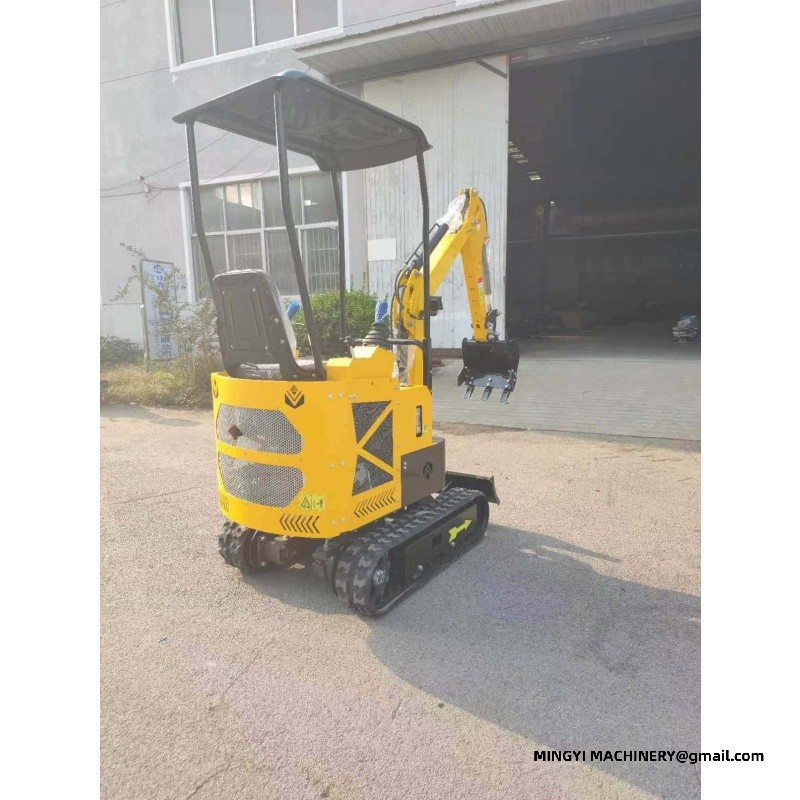
Reference specification — mini excavator range 15W 20-1W 12L 15L Operating weight 1400 kg (3086.47 lb) 1800 kg (3968.32 lb) 1200 kg (2645.55 lb) 1400 kg (3086.47 lb) Transport size (L×W×H) 2200 × 930 × 2250 mm 2550 × 1100 × 2200 mm 2200 × 930 × 2250 mm 2200 × 930 × 2250 mm Max digging depth 1630 mm (64.17 in) 1800 mm (70.87 in) 1700 mm (66.93 in) 1700 mm (66.93 in) Max digging height 2750 mm (108.27 in) 2820 mm (111.02 in) 2600 mm (102.36 in) 2750 mm (108.27 in) Max dumping height 1960 mm (77.17 in) 2050 mm (80.71 in) 1800 mm (70.87 in) 1960 mm (77.17 in) Max digging radius 2900 mm (114.17 in) 3050 mm (120.08 in) 2900 mm (114.17 in) 2900 mm (114.17 in) Max digging distance 2100 mm (82.68 in) 2300 mm (90.55 in) 2300 mm (90.55 in) 2300 mm (90.55 in) Minimum turning radius 1300 mm (51.18 in) 1450 mm (57.09 in) 1450 mm (57.09 in) 1450 mm (57.09 in) Travel speed 3 km/h (1.86 mph) 5 km/h (3.11 mph) 3 km/h (1.86 mph) 3 km/h (1.86 mph) Gradeability 30° 30° 30° 30° Fuel consumption 1-1.3 L/h (0.264—0.343 gal) 2-3 L/h (0.528—0.793 gal) 1-1.3 L/h (0.264—0.343 gal) 1-1.3 L/h (0.264—0.343 gal) Fuel tank capacity 10 L (2.64 gal) 16 L (4.23 gal) 10 L (2.64 gal) 10 L (2.64 gal) Hydraulic oil tank 16 L (4.23 gal) 18 L (4.76 gal) 16 L (4.23 gal) 16 L (4.23 gal) Dozer blade lift height 180 mm (7.09 in) 180 mm (7.09 in) 180 mm (7.09 in) 180 mm (7.09 in) Dozer blade drop depth 210 mm (8.27 in) 210 mm (8.27 in) 210 mm (8.27 in) 210 mm (8.27 in)
Q. Why is the 12 model so widely used?
A. Because it covers the widest spread of compact work: trenching, footings, drainage and planting, while still passing through a garden gate or a doorway. It is the mid size of the range, which is where most contractor work falls.
Q. When should I go smaller or larger than the 12 model?
A. Go down to the 08 model when the work is mostly indoors, in established gardens or through very tight access. Go up to the 18 model when the work is bulk excavation or requires more reach and stability than the mid size provides.
Q. Can the 12 model take the full attachment range?
A. The attachment set is confirmed with the order, because the hydraulic circuit and the coupler have to suit the tooling. Buckets, breakers, augers, couplers, rakes and other attachments can be specified with the machine.
Handover and getting familiar with a machine of this size
Familiarisation is not the same as reading the manual. Sitting on the equipment on site, working through the controls at low speed and learning where the machine balances takes an hour, and that hour is what keeps the first week uneventful.
Commissioning the machine itself on site
The machine should be introduced to the site as well as the operator. Walking the route the model in question will take, noting the soft spots and the turns, prevents the kind of first-day incident that has nothing to do with the machine.
Planning the season around the machine in that duty
Downtime is simplest when it is planned. Booking the service for the unit on the job in the quiet part of the season takes nothing from the schedule, while the same work in the busy weeks gives up a day of output every time.
E-mail : sales@mingycn.com
LINE ( ID ): mingyicn
Related pages
mini excavator hydraulic hammer · mini excavator for sale · mini excavator for landscaping projects · PRODUCTS









