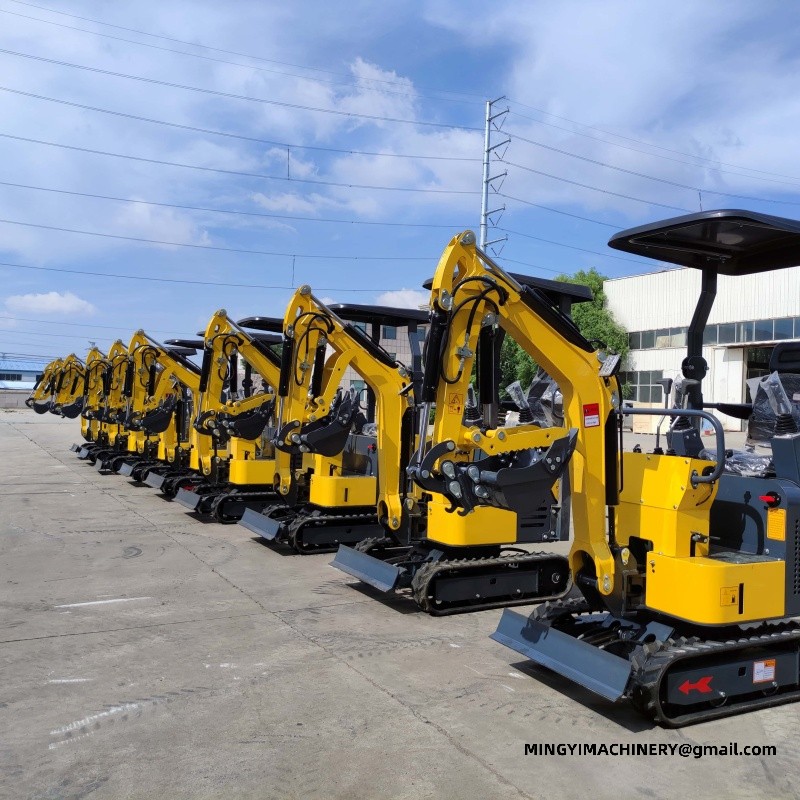
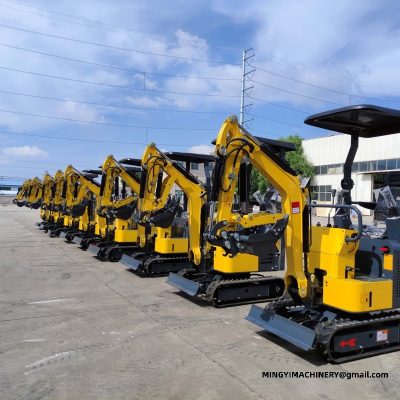
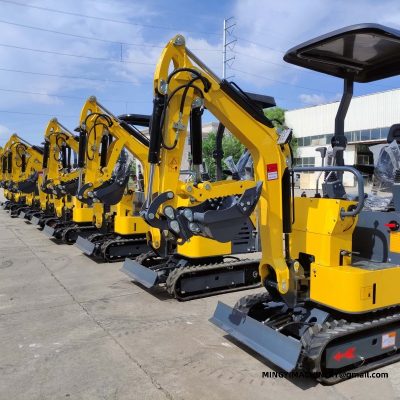
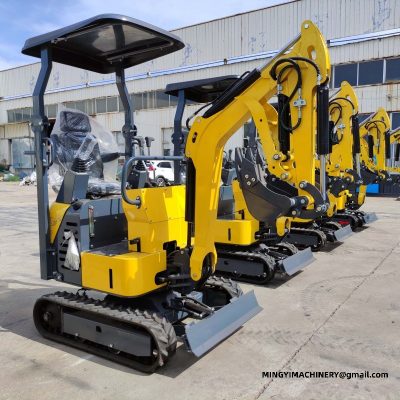
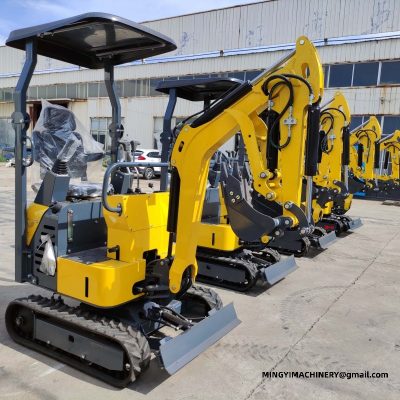
Parts supply is where a compact excavator purchase is proved right or wrong. Machines from any manufacturer work well when new; the difference appears when a track, a hose or a set of teeth has to be replaced and the answer has to come quickly.
MINGYI acts as the parts supplier for the mini excavators it builds, which means the machine specification on file is what the parts are supplied against.
Why the build record matters
Two machines of the same model can consume different parts if one was specified on rubber tracks and the other on steel tracks with rubber blocks, or if they run different engine families. Supplying parts correctly depends on knowing which specification the machine was built to, which is why we keep the order specification against the machine.
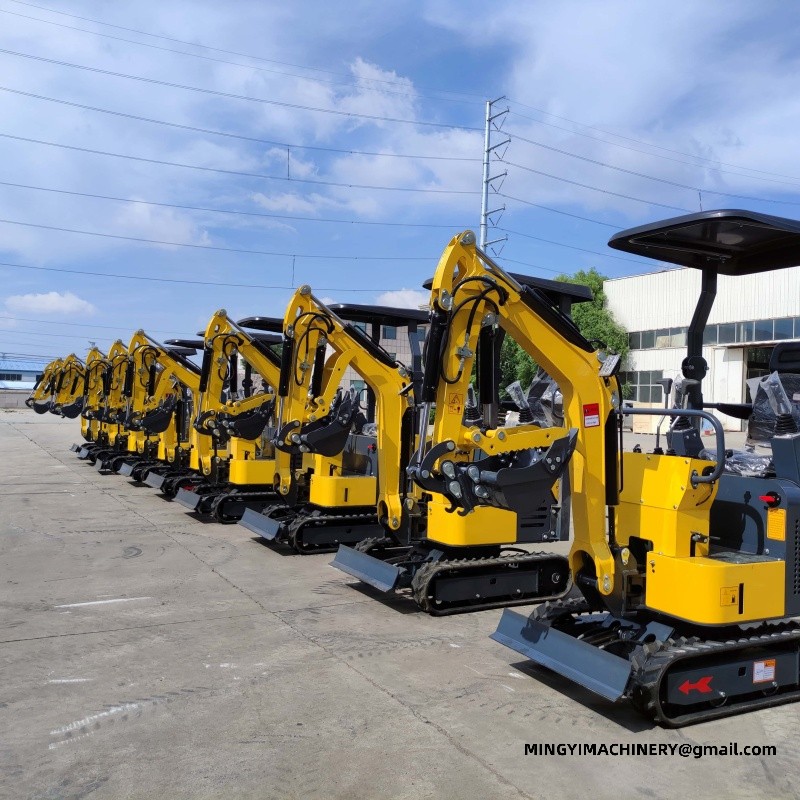
Planning parts around the work
The parts a machine consumes follow the work it does. Machines used mainly for trenching go through bucket teeth and cutting edges; machines used for breaking and demolition go through hoses, seals and pins; machines working on abrasive ground go through tracks. Advising the buyer which items to stock locally usually saves more time than any expedited shipment.
Parts supply support
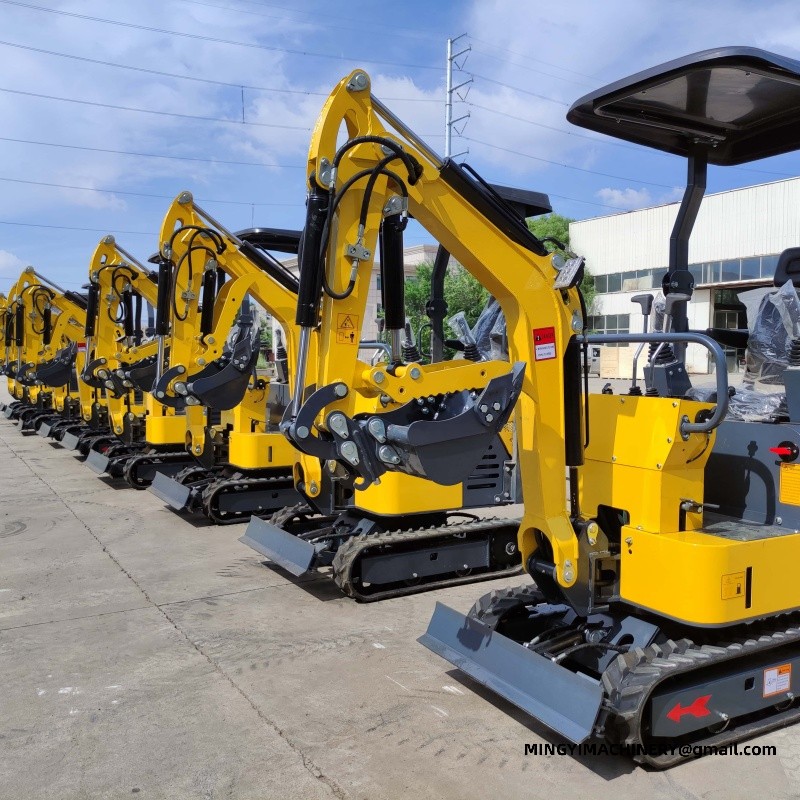
• Parts supplied against the recorded build specification
• Tracks, teeth, edges, pins, bushes, hoses and filters
• Guidance on which consumables to hold locally
• Engine service parts matched to the specified engine family
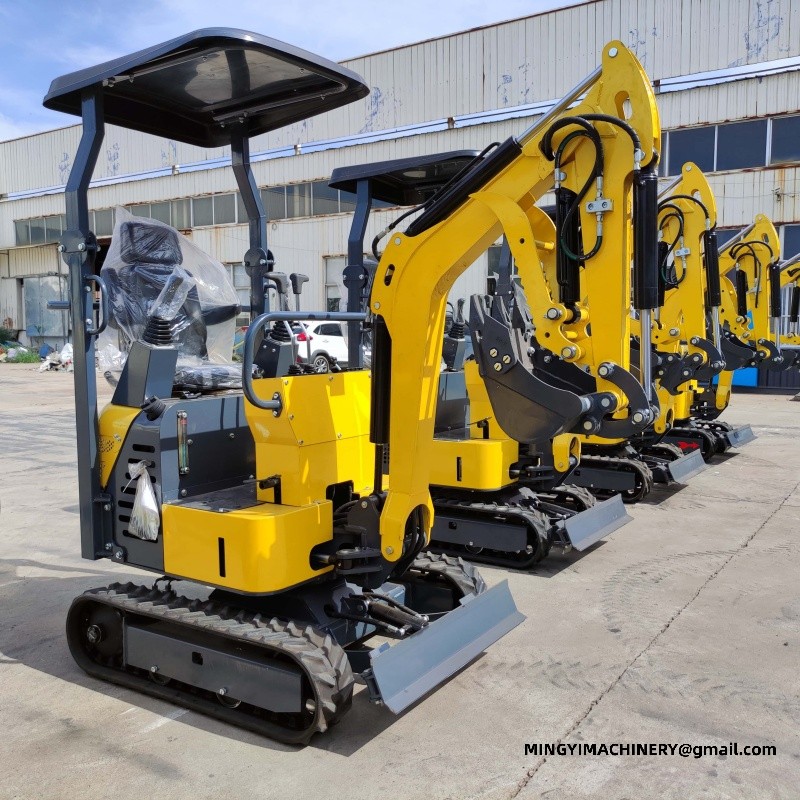
• Attachment components and fittings
Tell us the model, the work it does and the parts you need and we will confirm supply and advise what to stock.
Engine options behind mini excavator parts supplier Power unit selection is settled against the service network the buyer already uses. MINGYI offers Kubota D722, Kubota D902, YANMAR, Changchai, Laidong, Runtong, YARMAX, Youpu 2V80 and Youpu 195, so a fleet running one brand of engine can keep the same filters, the same parts supplier and the same mechanic. Two buyers can order the same this class of machine and receive different engines. The decision is rarely about peak power; it is about which parts counter is closest to the site and which engine the local mechanic already knows. Trenching work with mini excavator parts supplier Trench quality depends on the bucket width and the operator, not on machine size. The unit in daily use with a narrow bucket and a swing boom cuts a clean run along a boundary without disturbing the ground either side of it. Depth control matters more on service work than speed. A machine of this size working beside live services is chosen because it can be placed precisely and stopped instantly, which is what the job actually requires. Specifying mini excavator parts supplier against a job list The practical way to specify is to write the job list first: the narrowest access, the deepest trench, the heaviest tool and the surfaces the machine must cross. The equipment on site is then matched to those four numbers. Buyers who skip this step either over-buy or under-buy. The machine itself specified only from machine size tends to arrive without the coupler, the circuits or the track type the work actually needs. Noise, dust and working near occupied buildings Enclosure and machine condition both reduce noise. The model in question with intact panels, sound mounts and a maintained exhaust is measurably quieter than the same machine with loose guards, and the difference matters on restricted sites. Dust control is often part of the same conversation. Water, timing and work sequence reduce what leaves the site, and agreeing them in advance keeps the machine in that duty working rather than stopped after a complaint. Road and paving work for mini excavator parts supplier Patching and reinstatement favour a machine that can work in a lane closure. The unit on the job occupies less road than a full-size excavator, which reduces the traffic management needed and the length of the closure. Breaking out a failed slab and backfilling the same hole in one visit is normal work for a machine built for the work. The breaker and the bucket come off the same coupler, so the road is reopened the same day. Canopy or enclosed cab on the equipment in service The cab decision follows the climate and the hours. Operators working a full shift in this class of machine benefit from a sealed cab with wipers and heating; operators stepping on and off every few minutes usually prefer the canopy for the visibility and the quick exit. Enclosure also changes noise and dust exposure. A sealed cab on the unit in daily use keeps dust out on dry sites and lets the machine work through weather that would otherwise stop a canopy machine for the day. Running a machine of this size in a rental fleet Rental fleets buy for utilisation, not for a single job. The equipment on site with a quick coupler and a common attachment standard is hired more often because it suits more of the calls that come in. Fleet buyers also weigh transport. The machine itself that a customer can tow on a normal licence and a standard trailer is a hire that does not need a delivery truck, which changes how often it goes out. Daily checks and maintenance on the model in question Track tension is the item most often neglected. The machine in that duty run with slack tracks wears the undercarriage and can throw a track on a turn; run too tight, the same components wear from the other direction. Greasing is the second item. The slew ring, the boom and arm pins and the bucket linkage on the unit on the job take grease daily in dusty work, and the intervals shorten further when the machine is used in water or mud. Working on slopes and uneven ground with a machine built for the work Slope work is a stability question before it is a traction question. Knowing the gradient the equipment in service is rated for, and working across rather than straight up where the ground allows, removes most of the risk. Planning the direction of travel helps. Working so that the this class of machine is stable under load and not required to turn on a slope is a decision made before the job starts, not a correction made during it. Getting the unit in daily use through a narrow gap The first question on most job lists is whether the machine can reach the work at all. A machine of this size is chosen against the narrowest point on the route - a garden gate, a doorway, a gap between two walls - because a machine that arrives and then cannot pass loses a day, not an hour. Access decides the machine before output does. With the equipment on site the limiting dimension is usually the widest point on the way in, so measuring the gate, the corridor and the turning space first saves a wasted delivery and a second visit. Track choice for the machine itself Rubber tracks suit paved and landscaped ground because they spread the machine weight and leave the surface intact. Steel tracks with rubber blocks are specified where the ground is rougher or the working day is longer, and the choice can be made per machine rather than accepted as a factory default. Track type changes what the machine can cross and what it leaves behind. Buyers specify rubber for lawns, driveways and municipal work, and steel with rubber blocks for sites where sharp material would cut a rubber belt in a week. Working near live services with the model in question The risk on utility work is not machine power but machine placement. The machine in that duty that fits the working width leaves the surrounding ground undisturbed, which keeps the trench stable and the reinstatement small. Utility crews specify the unit on the job with a narrow bucket and good visibility for exactly this reason: the machine has to stop at the service, not at the edge of the operator's view. Specification data for a machine built for the work Where the equipment in service is being specified for a job list, the table below gives the factory figures that matter most: what the machine weighs, how deep and how far it works, and what it measures on a trailer. These are the reference figures for this class of machine. MINGYI confirms the final build sheet, including engine and attachment choices, against the destination and the job list before production. Purchase decision is the visible part of the effort. Fuel, filters, tracks or tyres, the operator and the transport between sites are the items that decide what the unit in daily use actually demands over a few seasons, and they are worth listing before the order. Downtime is the hidden line item. A machine of this size waiting on a part earns nothing while it stands, so parts availability and service access belong in the plan as much as fuel does.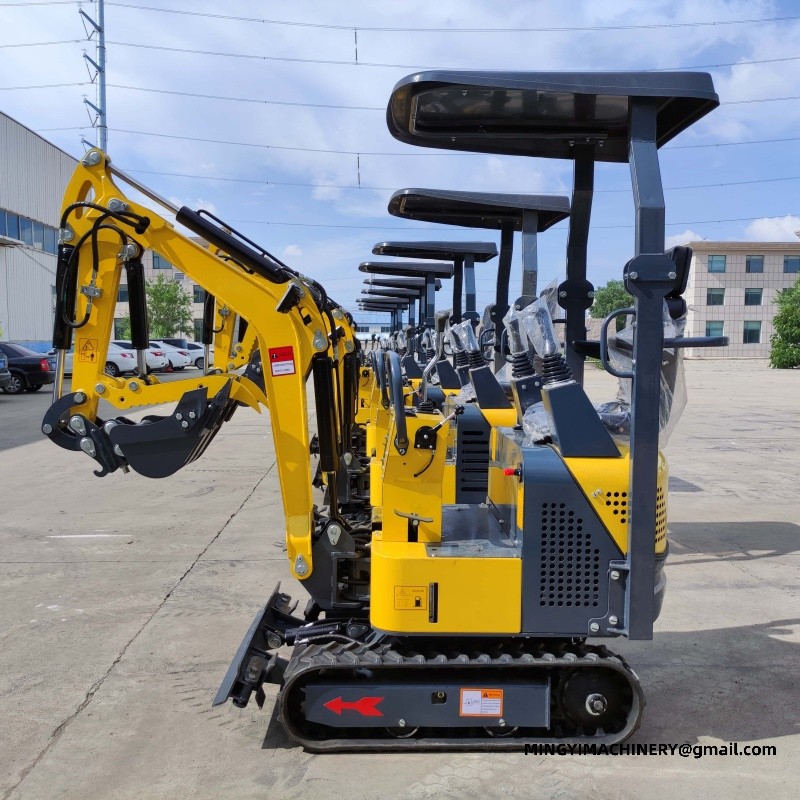
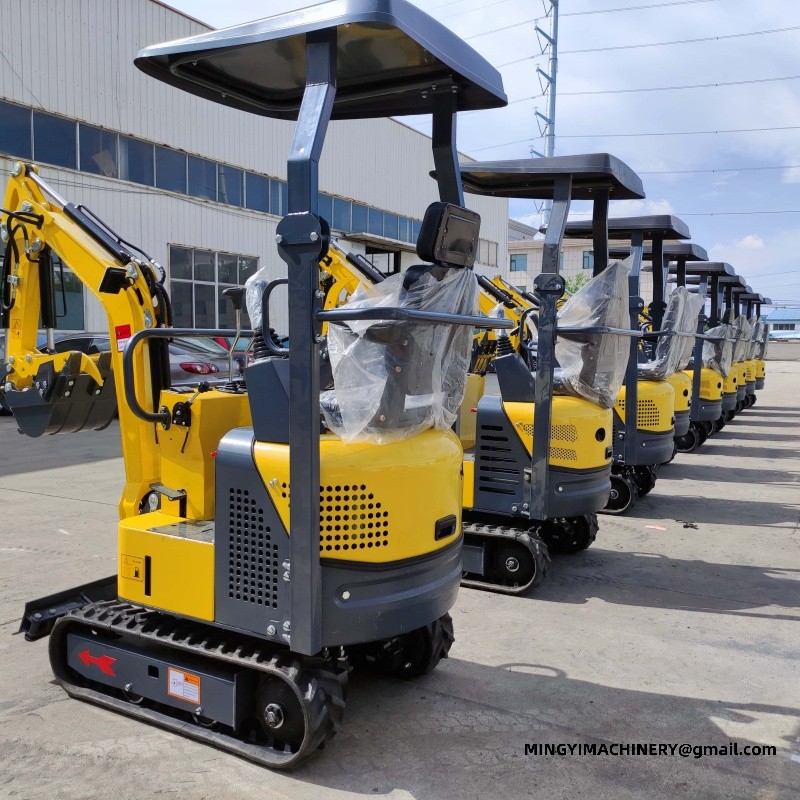
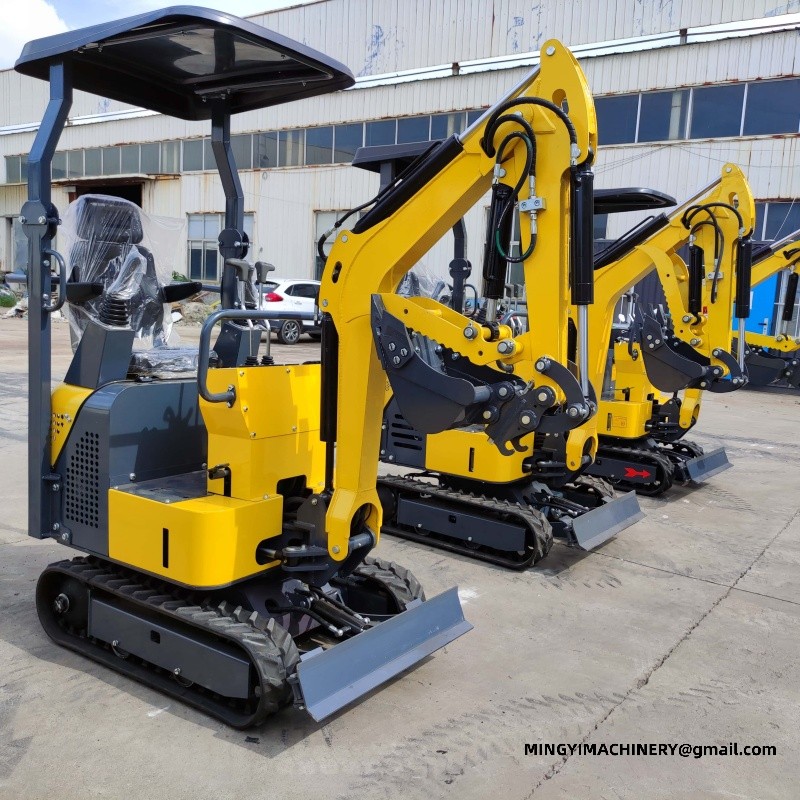
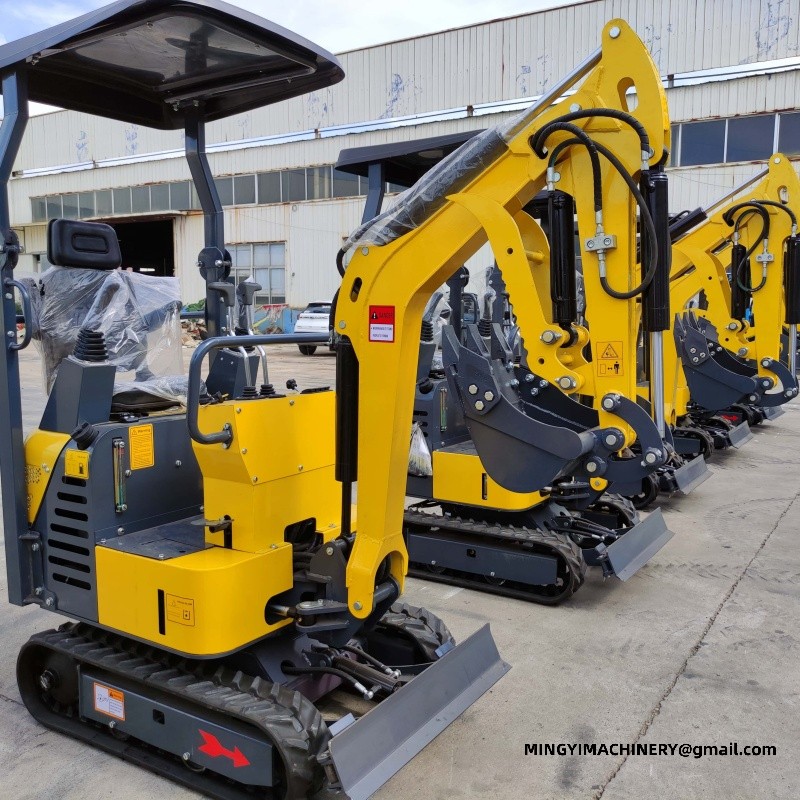
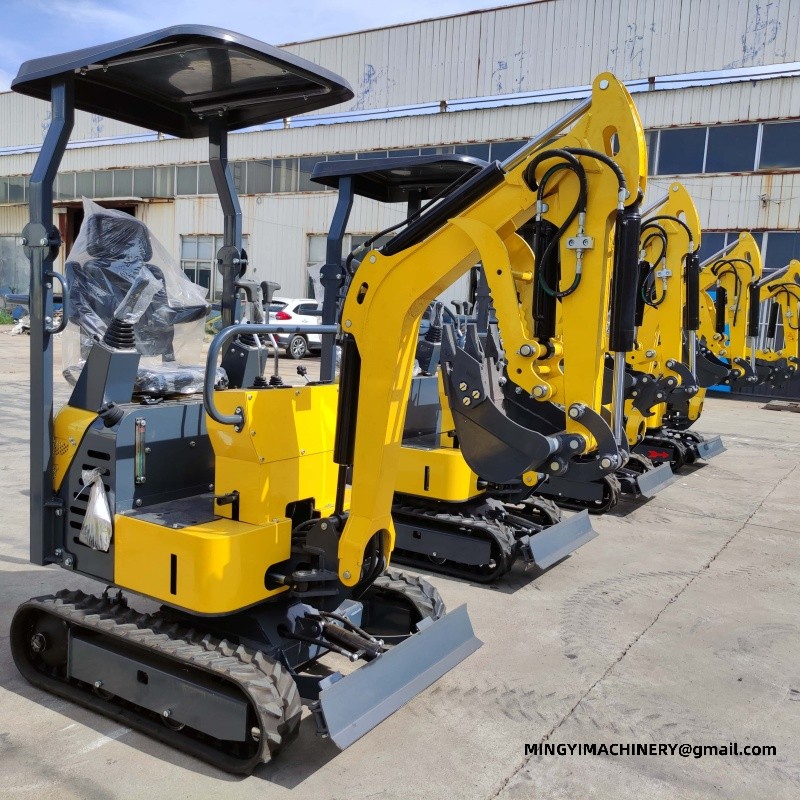
Reference specification — mini excavator range 09W 13W 20-1W 30-1W Operating weight 1100 kg (2425.08 lb) 1300 kg (2866.01 lb) 1800 kg (3968.32 lb) 2900 kg (6393.41 lb) Transport size (L×W×H) 1800 × 750 × 1970 mm 2200 × 930 × 2250 mm 2550 × 1100 × 2200 mm 3000 × 1250 × 2780 mm Max digging depth 1250 mm (49.21 in) 1630 mm (64.17 in) 1800 mm (70.87 in) 2200 mm (86.61 in) Max digging height 2800 mm (110.24 in) 2750 mm (108.27 in) 2820 mm (111.02 in) 3400 mm (133.86 in) Max dumping height 1700 mm (66.93 in) 1960 mm (77.17 in) 2050 mm (80.71 in) 2400 mm (94.49 in) Max digging radius 2570 mm (101.18 in) 2900 mm (114.17 in) 3050 mm (120.08 in) 4000 mm (157.48 in) Max digging distance 1869 mm (73.58 in) 2100 mm (82.68 in) 2300 mm (90.55 in) 2800 mm (110.24 in) Minimum turning radius 1000 mm (39.37 in) 1300 mm (51.18 in) 1450 mm (57.09 in) 2000 mm (78.74 in) Travel speed 3 km/h (1.86 mph) 3 km/h (1.86 mph) 5 km/h (3.11 mph) 5 km/h (3.11 mph) Gradeability 30° 30° 30° 30° Fuel consumption 1-1.3 L/h (0.264—0.343 gal) 1-1.3 L/h (0.264—0.343 gal) 2-3 L/h (0.528—0.793 gal) 2-3 L/h (0.528—0.793 gal) Fuel tank capacity 8 L (2.11 gal) 10 L (2.64 gal) 16 L (4.23 gal) 16 L (4.23 gal) Hydraulic oil tank 16 L (4.23 gal) 16 L (4.23 gal) 18 L (4.76 gal) 20 L (5.28 gal) Dozer blade lift height 180 mm (7.09 in) 180 mm (7.09 in) 180 mm (7.09 in) 420 mm (16.54 in) Dozer blade drop depth 210 mm (8.27 in) 210 mm (8.27 in) 210 mm (8.27 in) 210 mm (8.27 in)
Q. Are you the equipment on site?
A. Yes. MINGYI supplies parts for the 08, 12 and 18 models, including filters, seals, hoses, bucket teeth and wear parts, shipped with a machine order or separately against a model reference.
Q. How do I identify the right part?
A. Send the model, the working hours and, where possible, a photograph or the part number from the machine. With that MINGYI can confirm the item rather than leave it to be matched by description.
Q. Can parts be combined with a machine order?
A. Yes, and it is usually the simpler way to buy them, because the parts travel in the same container as the machine. Dealers often order a parts allowance with every container for exactly that reason.
Hot, humid and dusty conditions around the machine itself
Heat and dust shorten service intervals rather than machine life. In these conditions the filters on the model in question need attention more often, and the cooling surfaces need to be kept clear to hold the working temperature.
Planning the season around the machine in that duty
Workload is rarely even across the year, and the machine should be specified for the busy weeks. The unit on the job sized only for the average month will be the limiting factor exactly when the work is worth the most.
Wear items and spares worth holding for a machine built for the work
Holding spares is about downtime rather than the shelf itself. The question for the equipment in service is not how large the part is but how long the machine sits while it is found, and a small shelf answers that better than a fast courier.
E-mail : sales@mingycn.com
LINE ( ID ): mingyicn
Related pages
mini excavator warranty · best mini excavator for landscaping contractors · mini excavator for small building firms · PRODUCTS









