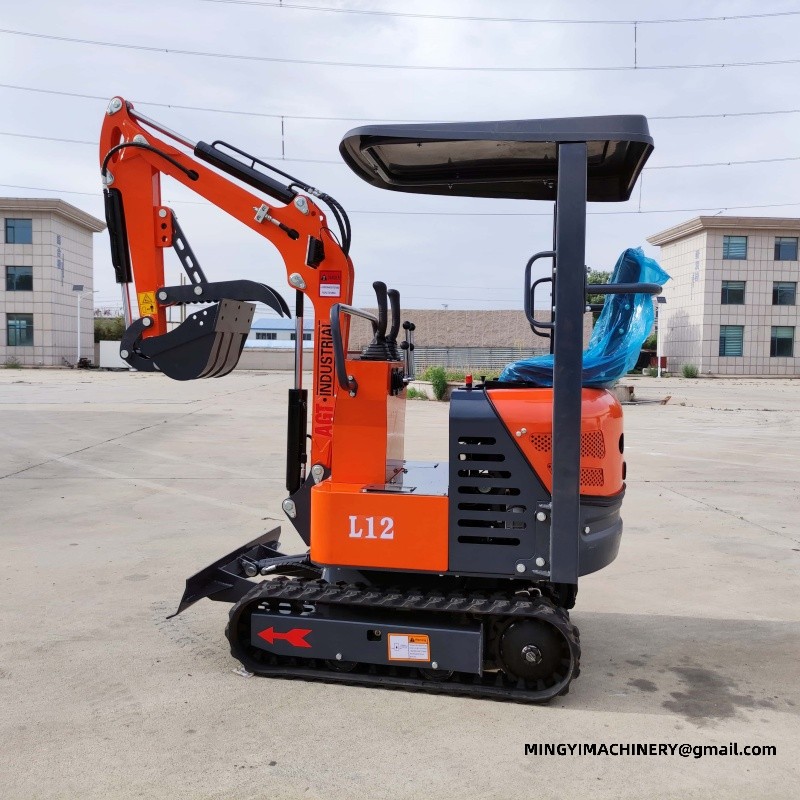
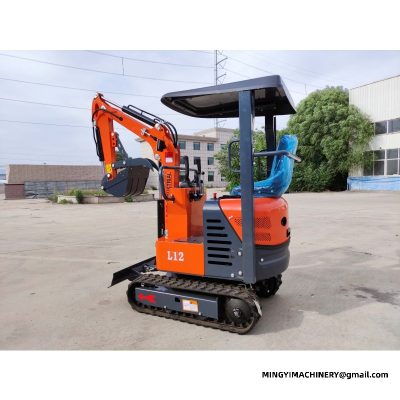
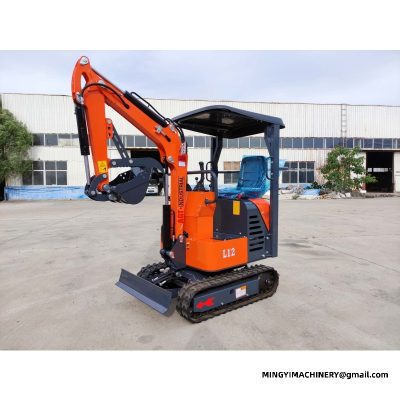
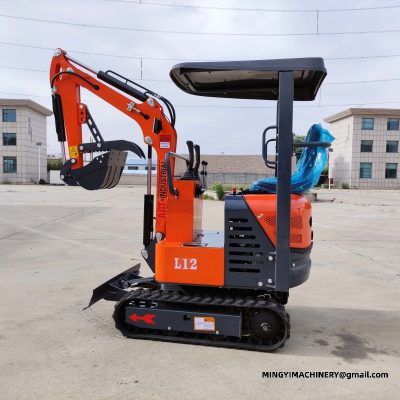
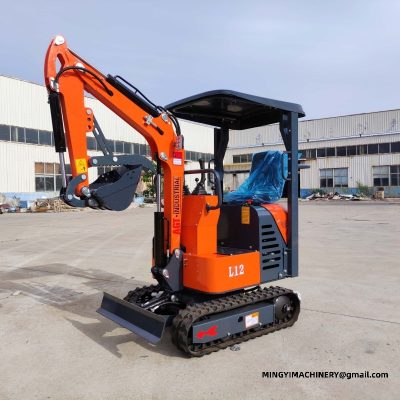
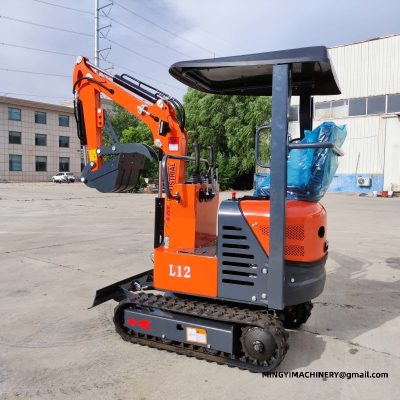
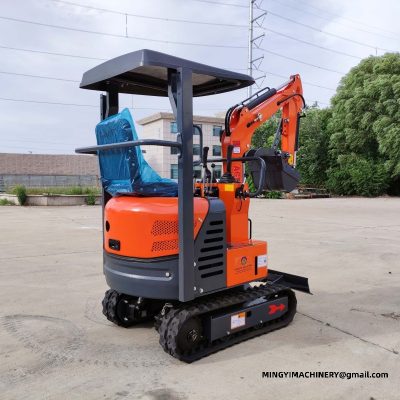
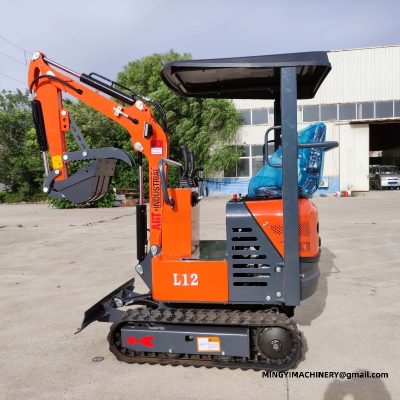
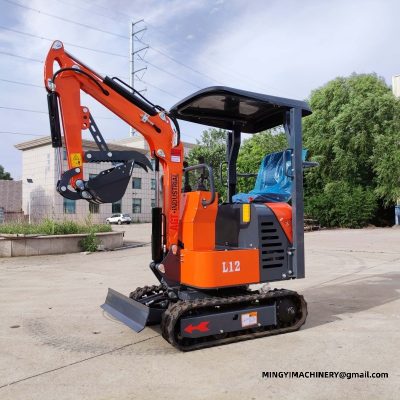
A landscaping contractor needs a machine that earns its keep across several different jobs in the same week: soft landscaping one day, hard landscaping the next, groundworks and drainage in between. The best machine for that is one that can be reconfigured quickly.
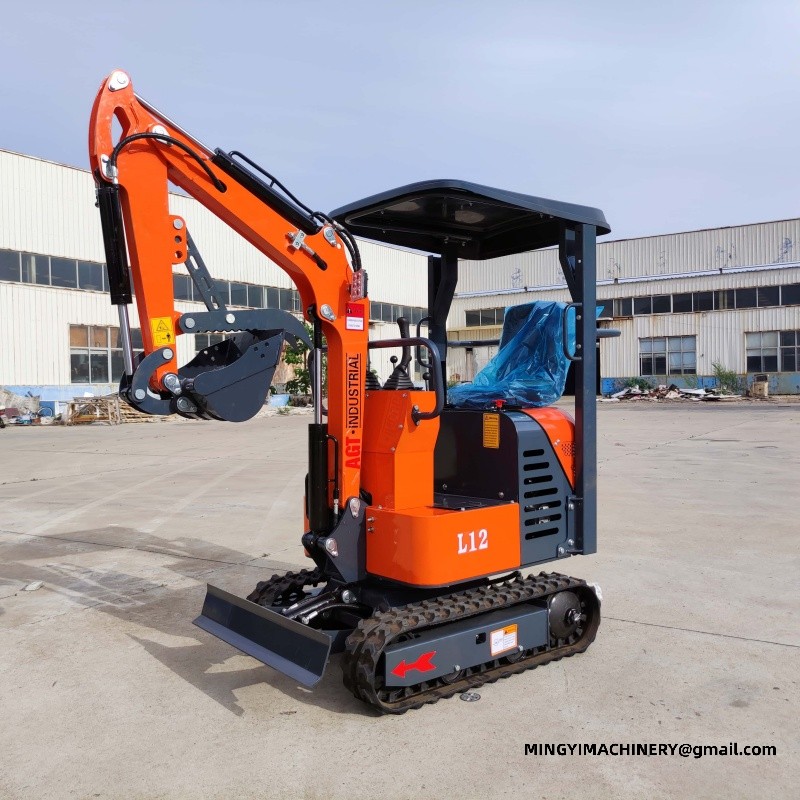
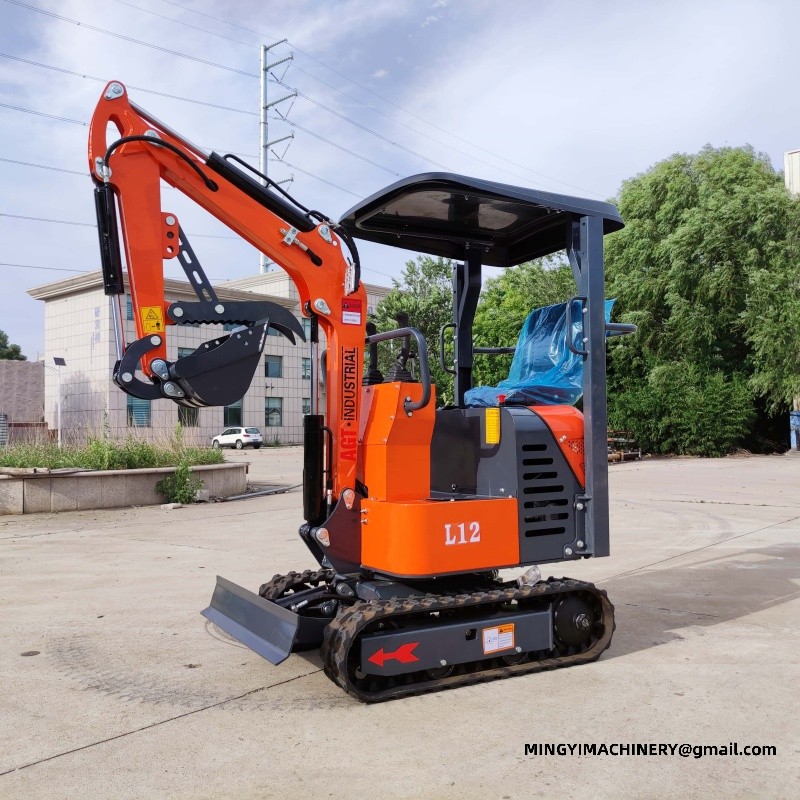
For landscaping contractors, MINGYI machines in the 1.5 to 2.5 tonne classes on rubber tracks, with a quick coupler and a multi-attachment set, cover the widest spread of work.
One machine, several trades
A landscaping contractor’s week rarely stays on one task. A quick coupler that lets the operator move from bucket to rake to auger from the seat keeps the machine productive as the work changes, instead of leaving it parked while a tool is bolted on.
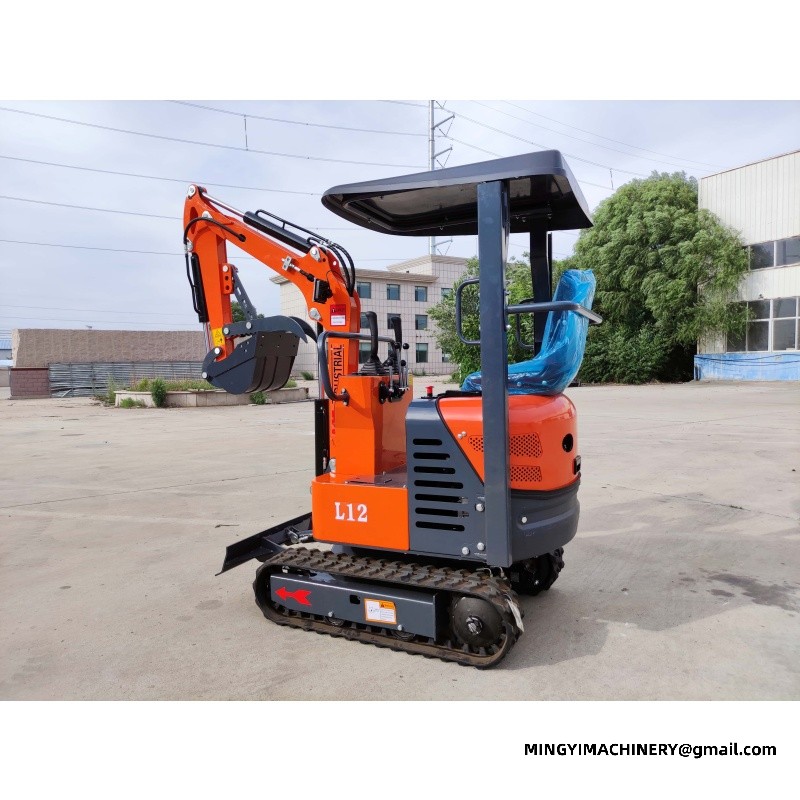
The same machine then digs a drainage run, opens planting holes, clears vegetation and handles stone or paving — all work that would otherwise need separate plant or hand labour.
Protecting the client’s site
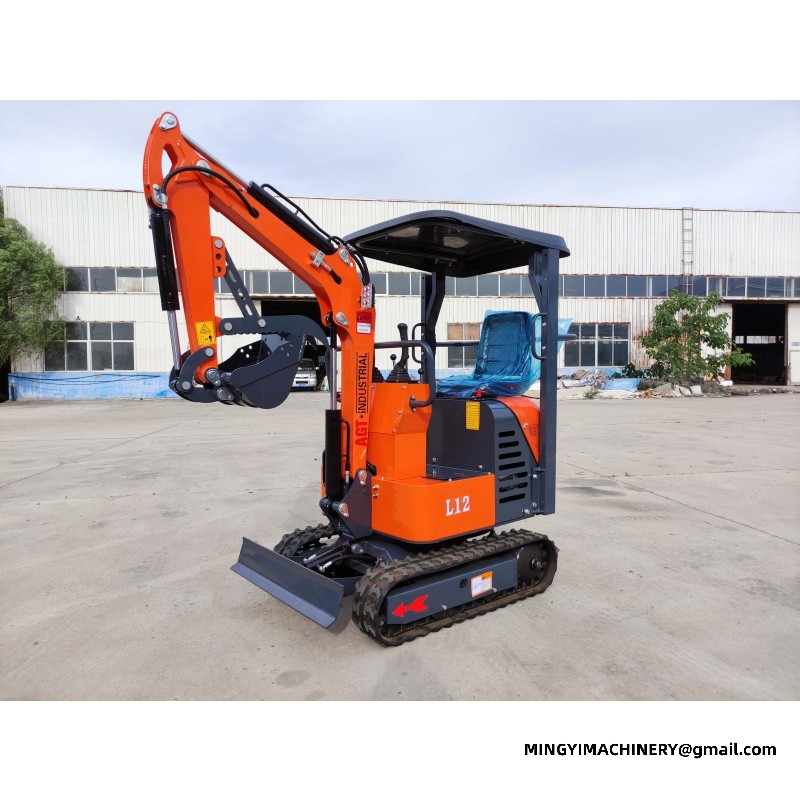
Contractors are judged on the finish, and the client’s garden is often complete when the machine arrives. Rubber tracks protect paving, drives and turf, and the compact size means the machine can be moved between the front and rear of a property without a crane or a fence removal.
Fleet and service considerations
Where several machines are run, standardising on one engine family and one attachment interface simplifies servicing and lets tools be shared. MINGYI machines share a common quick-change interface across the range.
Built for contracting work
• Quick coupler for rapid tool changes
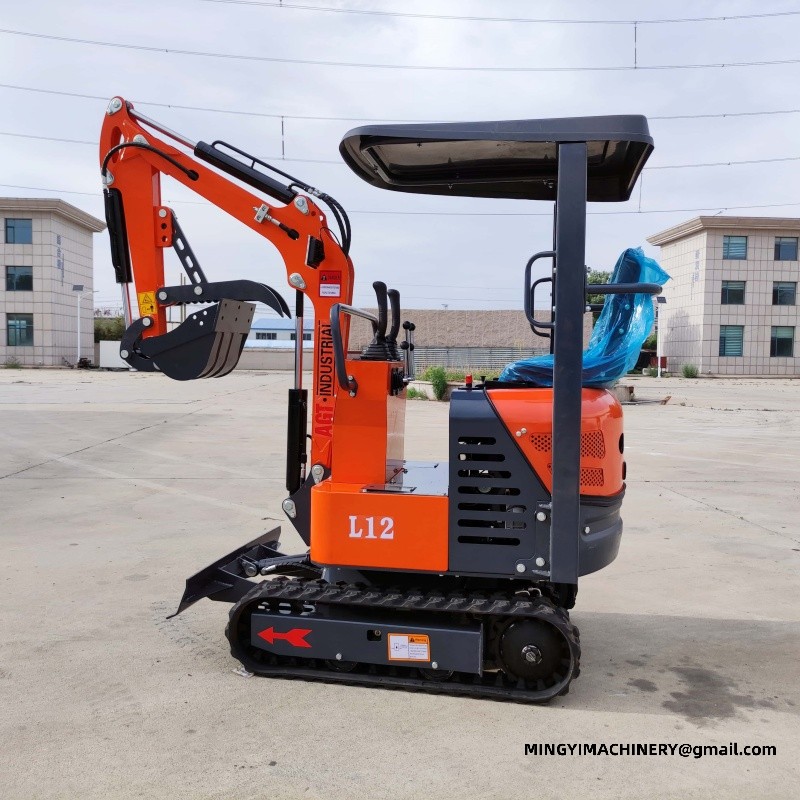
• Rubber tracks for finished-surface work
• Compact size for domestic access
• Shared attachments across the range
• Engine family choice for parts availability
Tell us the spread of work your crews handle and we will propose a machine and attachment set that covers it.
Track choice for best mini excavator for landscaping contractors Undercarriage selection is a ground question, not a preference question. This class of machine running on finished paving needs rubber; the same machine on demolition rubble or rock wears rubber quickly, so steel with rubber blocks becomes the better answer over a full season. Track type changes what the machine can cross and what it leaves behind. Buyers specify rubber for lawns, driveways and municipal work, and steel with rubber blocks for sites where sharp material would cut a rubber belt in a week. Working near live services with best mini excavator for landscaping contractors Digging near water, gas and cable is a precision job. The unit in daily use is used here because the operator can work in short controlled cuts and because the machine can be positioned without driving over the run being exposed. Utility crews specify a machine of this size with a narrow bucket and good visibility for exactly this reason: the machine has to stop at the service, not at the edge of the operator's view. Orchard, vineyard and farm use of best mini excavator for landscaping contractors Orchard and vineyard work is carried out between rows. The equipment on site with a narrow chassis and a swing boom works down the row without damaging the trees, which is the reason a full-size machine is not used at all. Farms also use the machine itself for general maintenance - clearing a watercourse, repairing a track, loading a spreader. One carrier with a few attachments covers most of the jobs that would otherwise wait for a contractor. Trailering and moving best mini excavator for landscaping contractors Transport weight and width decide whether a machine needs a specialist haulier. The model in question sized to travel on a standard plant trailer behind a suitable vehicle moves with the crew rather than on a scheduled low loader. Detachable components reduce transport length. The machine in that duty built with a removable arm section or a folding step fits a shorter trailer and may avoid an oversize movement permit. Canopy or enclosed cab on the unit on the job A canopy keeps the machine light and the operator aware of the surroundings, which suits short jobs in warm weather. A fully enclosed cab is specified where rain, dust or cold are part of the working year, and it can be added to a machine built for the work as a retrofit rather than only at build time. Enclosure also changes noise and dust exposure. A sealed cab on the equipment in service keeps dust out on dry sites and lets the machine work through weather that would otherwise stop a canopy machine for the day. Lifting and material handling with this class of machine Lifting with a machine built to dig needs a plan. The load, the radius and the ground under the machine of this size all matter, and the safe figure is the one on the chart rather than the one that looks possible. Stability changes with reach. A load the unit in daily use handles close in becomes a different proposition at full extension, so the working radius belongs in the plan before the lift rather than during it. Attachments that turn the equipment on site into several machines The base machine is a carrier; the tool on the end of the arm decides the task. The machine itself fitted with a toothed bucket digs, and the same machine with a breaker, an auger or a grab does work that would otherwise need a second unit on site. Attachment lists are best written before delivery. Specifying the model in question with the tools the job list needs avoids the work and delay of adding hydraulics later, and a quick coupler makes the swap a few minutes instead of a workshop job. Specifying the machine in that duty against a job list The practical way to specify is to write the job list first: the narrowest access, the deepest trench, the heaviest tool and the surfaces the machine must cross. The unit on the job is then matched to those four numbers. Useful information to send with an enquiry includes working width, required digging depth, ground conditions and the attachment set. Those four items let the factory specify a machine built for the work that fits rather than a generic build. Matching the equipment in service to ground conditions Hard and abrasive ground reverses the specification. On rock, demolition rubble or sharp gravel, steel tracks with rubber blocks on this class of machine survive conditions that cut a rubber belt quickly. Mixed sites are common and argue for a compromise specification. Most buyers choose rubber for the unit in daily use and accept the wear, unless the majority of the work is on material that will damage it. Municipal and public works with a machine of this size Municipal crews work on streets, footpaths and parks where the public is present. The equipment on site is specified because it occupies little space, works inside a small exclusion zone and can be moved on a standard trailer. Noise and surface protection matter on public work. The machine itself on rubber tracks across paving, with a sealed cab for the operator, suits the conditions better than a larger tracked machine. Specification data for the model in question Buyers comparing the machine in that duty usually start from four numbers - weight, digging depth, reach and transport width - because those are the ones that decide whether the machine can be delivered and whether it can do the job once it is there. These are the reference figures for the unit on the job. MINGYI confirms the final build sheet, including engine and attachment choices, against the destination and the job list before production. The first question on most job lists is whether the machine can reach the work at all. A machine built for the work is chosen against the narrowest point on the route - a garden gate, a doorway, a gap between two walls - because a machine that arrives and then cannot pass loses a day, not an hour. Contractors who buy the equipment in service normally have one job in mind that nothing else reaches. The purchase order follows the access measurement, not the other way round, and the build sheet is then settled around it.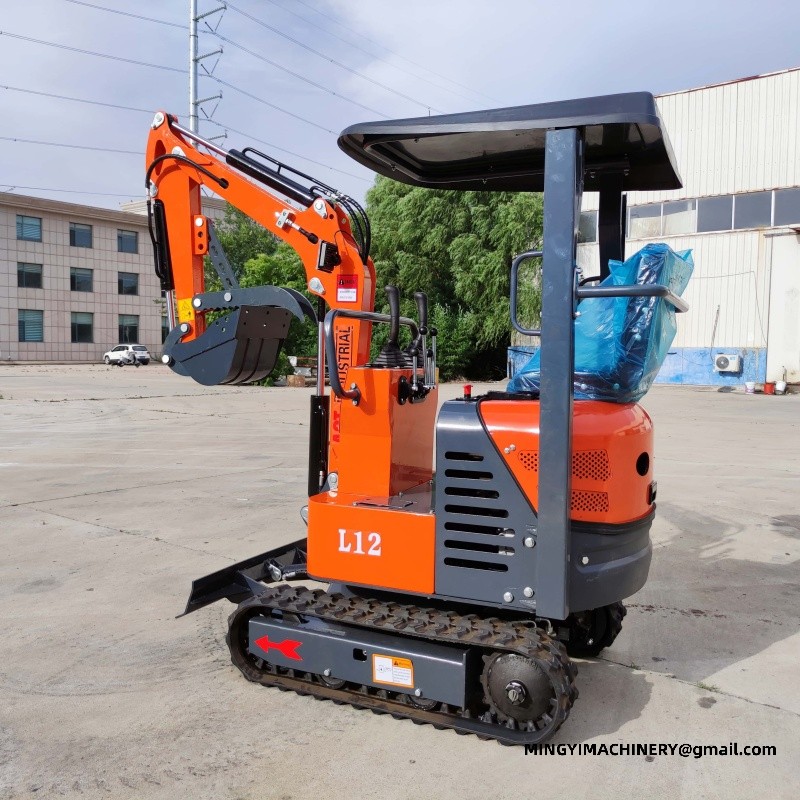
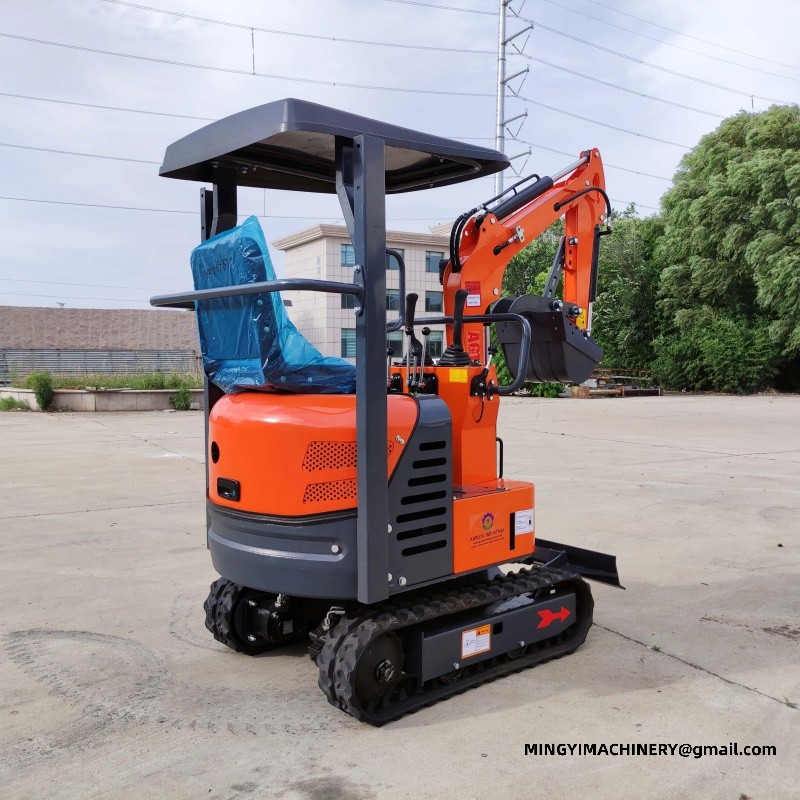
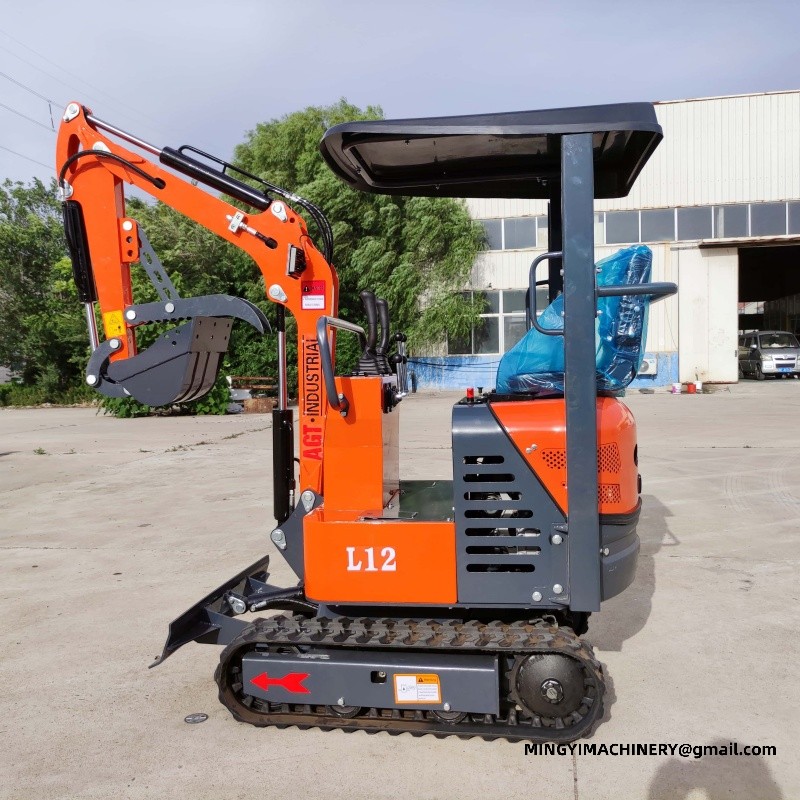
Reference specification — mini excavator range 20-3W 30-1W 25L 30-2L Operating weight 1900 kg (4188.78 lb) 2900 kg (6393.41 lb) 2200 kg (4850.17 lb) 2400 kg (5291 lb) Transport size (L×W×H) 2550 × 1100 × 2200 mm 3000 × 1250 × 2780 mm 3000 × 1300 × 2700 mm 2800 × 1500 × 2500 mm Max digging depth 1800 mm (70.87 in) 2200 mm (86.61 in) 2300 mm (90.55 in) 2200 mm (86.61 in) Max digging height 2820 mm (111.02 in) 3400 mm (133.86 in) 3100 mm (122.05 in) 2900 mm (114.17 in) Max dumping height 2050 mm (80.71 in) 2400 mm (94.49 in) 2050 mm (80.71 in) 2100 mm (82.68 in) Max digging radius 3050 mm (120.08 in) 4000 mm (157.48 in) 3900 mm (153.54 in) 3330 mm (131.1 in) Max digging distance 2300 mm (90.55 in) 2800 mm (110.24 in) 3100 mm (125.05 in) 2700 mm (106.3 in) Minimum turning radius 1450 mm (57.09 in) 2000 mm (78.74 in) 1800 mm (70.87 in) 1555 mm (61.22 in) Travel speed 5 km/h (3.11 mph) 5 km/h (3.11 mph) 7 km/h (4.35 mph) 7 km/h (4.35 mph) Gradeability 30° 30° 30° 30° Fuel consumption 2-3 L/h (0.528—0.793 gal) 2-3 L/h (0.528—0.793 gal) 2-3 L/h (0.528—0.793 gal) 2-3 L/h (0.528—0.793 gal) Fuel tank capacity 16 L (4.23 gal) 16 L (4.23 gal) 16 L (4.23 gal) 16 L (4.23 gal) Hydraulic oil tank 18 L (4.76 gal) 20 L (5.28 gal) 18 L (4.76 gal) 18 L (4.76 gal) Dozer blade lift height 180 mm (7.09 in) 420 mm (16.54 in) 230 mm (9.06 in) 230 mm (9.06 in) Dozer blade drop depth 210 mm (8.27 in) 210 mm (8.27 in) 280 mm (11.02 in) 280 mm (11.02 in)
Q. What is the best mini excavator for a landscaping contractor?
A. The one that can be reconfigured quickly, because a landscaping contractor changes task several times a week. A machine in the 1.5 to 2.5 tonne class on rubber tracks with a quick coupler lets the same machine dig a footing in the morning and plant in the afternoon.
Q. Why rubber tracks rather than steel?
A. Rubber tracks spread the machine weight and protect finished surfaces, which matters when the machine drives over lawns, paving or driveways. Steel tracks with rubber blocks are the alternative where the ground is harder and the machine works mostly off finished surfaces.
Q. How many attachments does a contractor need?
A. Most start with a bucket set, a quick coupler and an auger, then add a breaker or a rake as the work mix grows. Get the coupler at build time rather than later, because it is what makes the attachment set worth carrying.
Handover and getting familiar with this class of machine
Operators who come from a different machine need a short conversion. The controls on the unit in daily use follow the usual pattern, but the response, the sightlines and the stopping distance are learned by doing rather than by reading.
Wear items and spares worth holding for a machine of this size
A spares list should follow the duty cycle. The equipment on site working every day in abrasive dust consumes filters and cutting edges far faster than the same machine used once a week, and the shelf should be stocked for the harder case.
Documents that travel with the machine itself
The machine is only half of what arrives. The parts book, the service schedule and the declarations that come with the model in question are what let the owner register, insure and maintain it without a second round of emails.
E-mail : sales@mingycn.com
LINE ( ID ): mingyicn
Nameplate, serial number and documents for best mini excavator for landscaping contractors
The serial plate is how the right parts book, the right manual and the right service bulletin are found, and it is worth photographing on delivery.
A record of modifications matters as well, since an added hydraulic circuit or a changed attachment mount changes what the manual describes.
When a part is ordered, giving the serial number instead of the model name removes most of the guesswork.
Related pages
mini excavator for small construction companies · mini excavator suitable for narrow spaces · mini excavator warranty support · PRODUCTS









