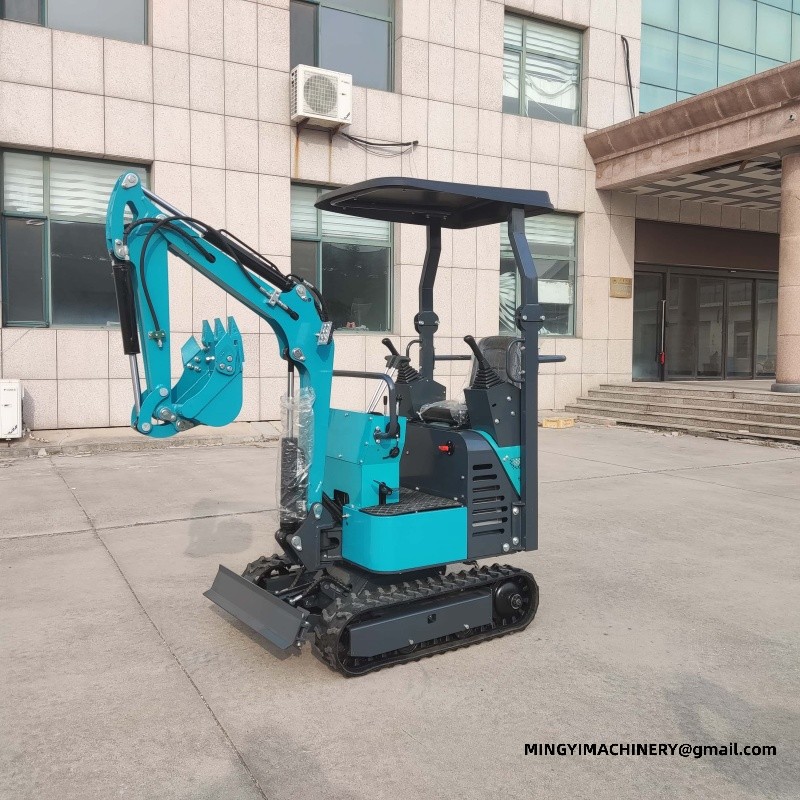
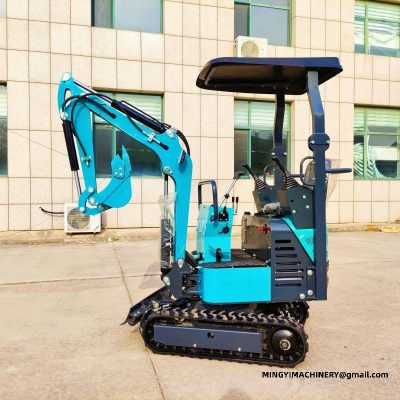
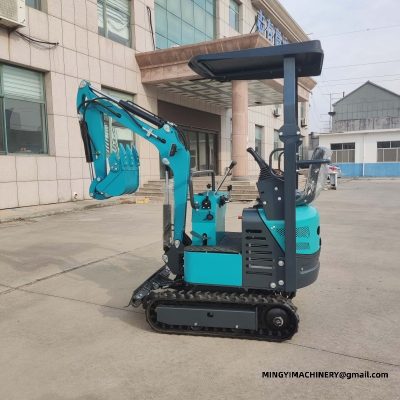
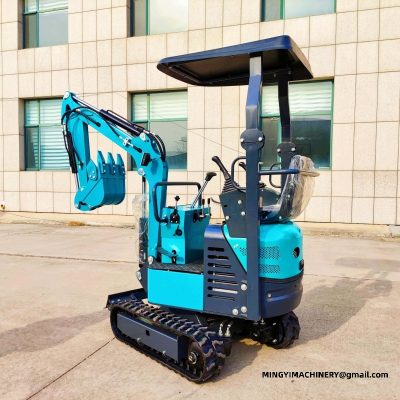
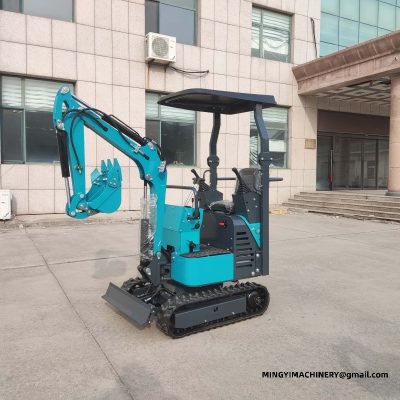
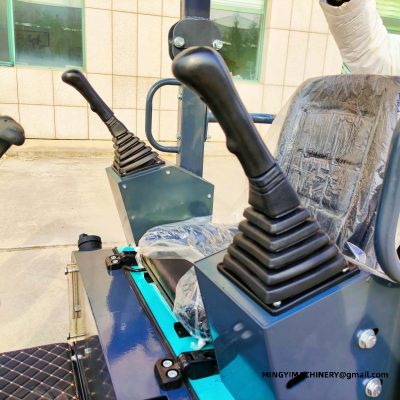
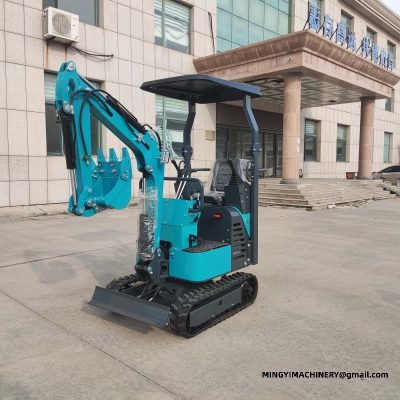
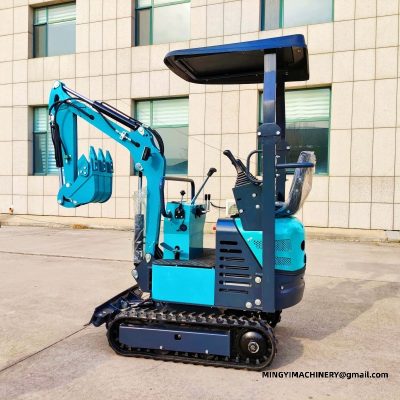
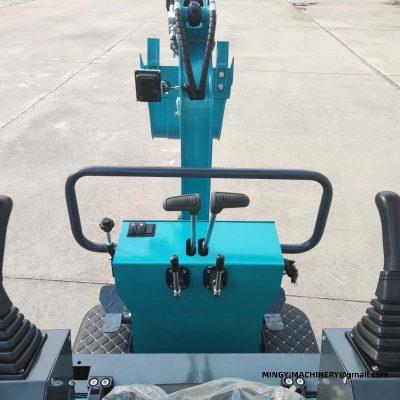
Garden work punishes access. Gates, hedges, established planting and finished paths all limit where a machine can go, and the client expects the garden to be left intact. A compact excavator on rubber tracks is the answer, and it is why the smallest classes are so widely used by gardeners and landscape gardeners.
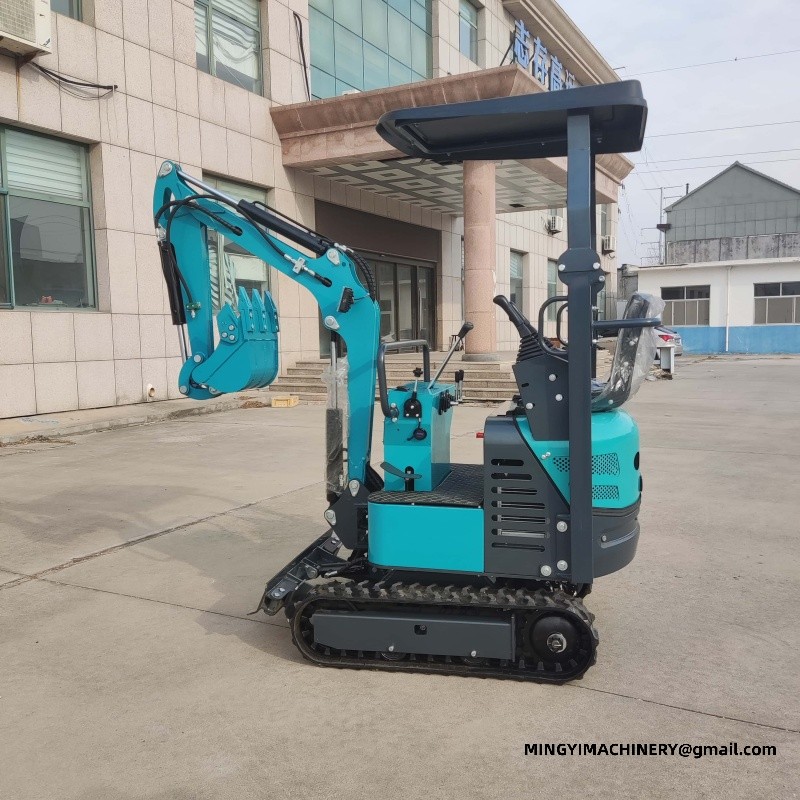
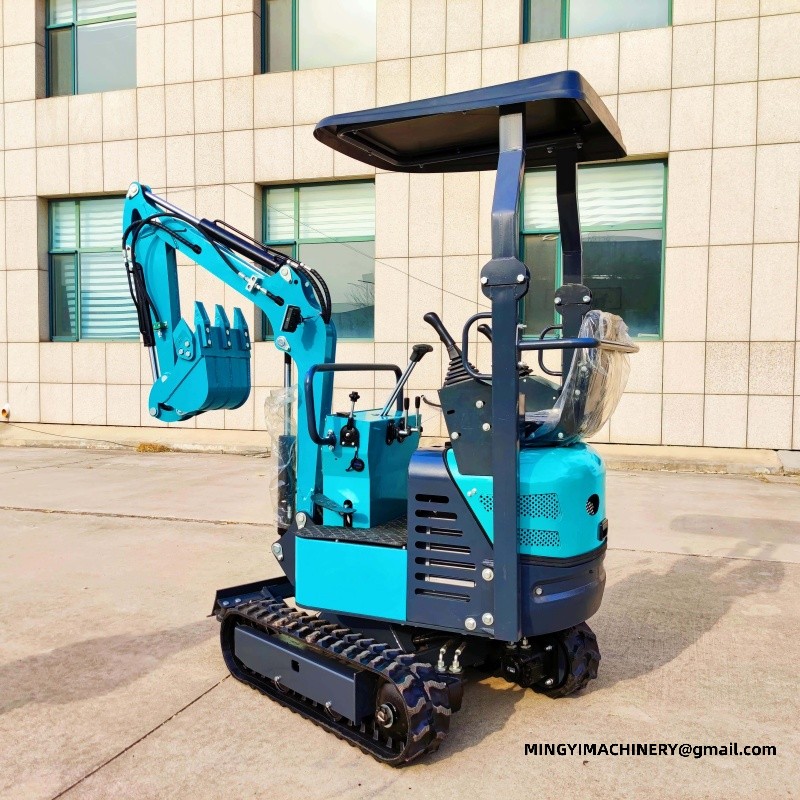
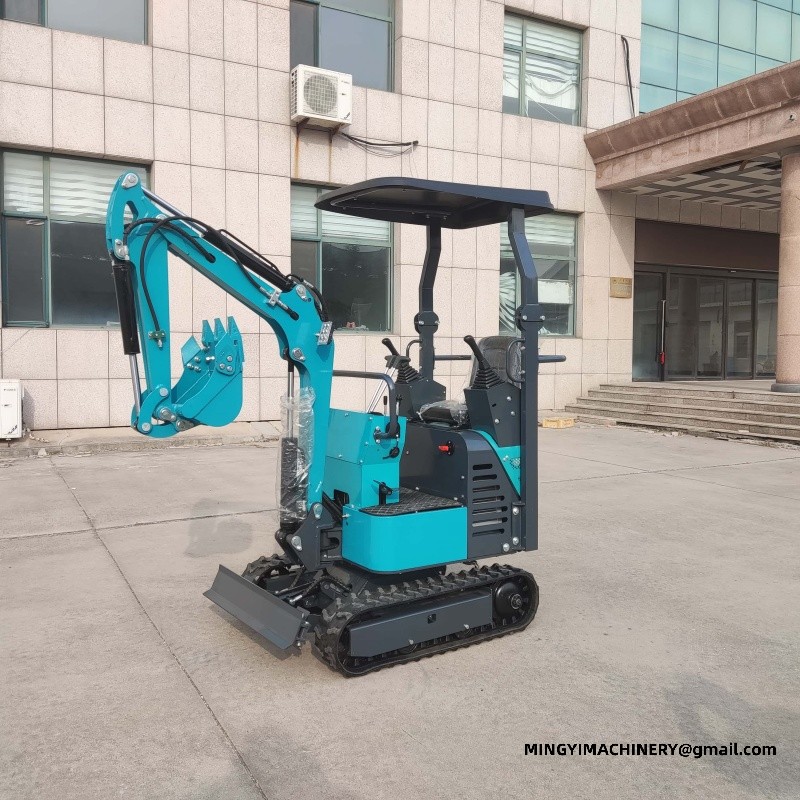
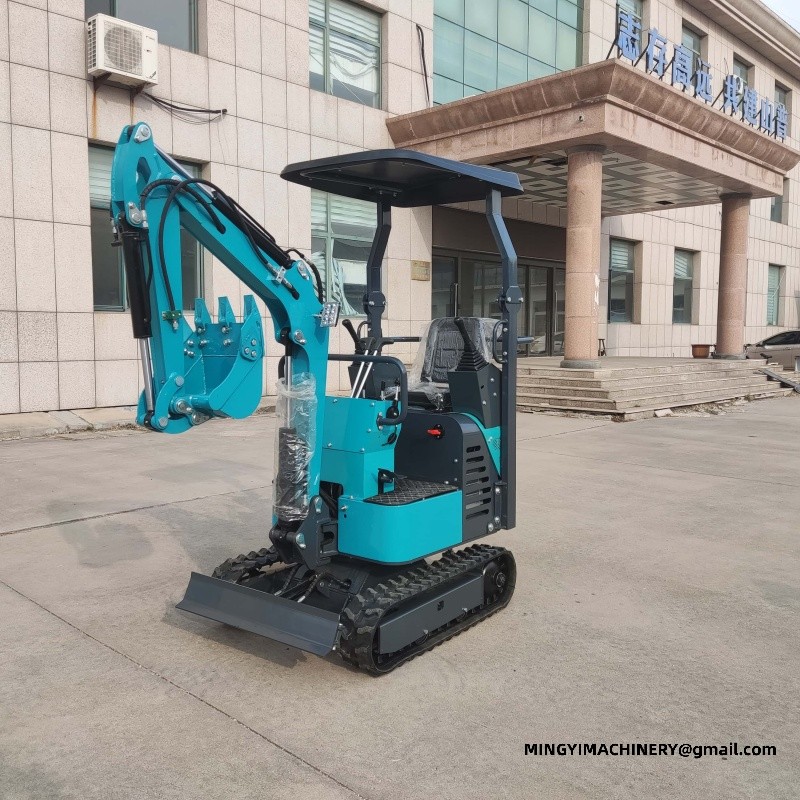
MINGYI mini excavators in the one-tonne and 1.5 tonne classes are sized for domestic gardens and small grounds.
Getting in and out without damage
The machine can be tracked through a side passage, between beds and along a path following an existing route, without removing a fence or hiring a crane. Rubber tracks ride over paving and turf, and the narrow digging buckets limit the width of trench so that borders and lawns can be reinstated over the line.
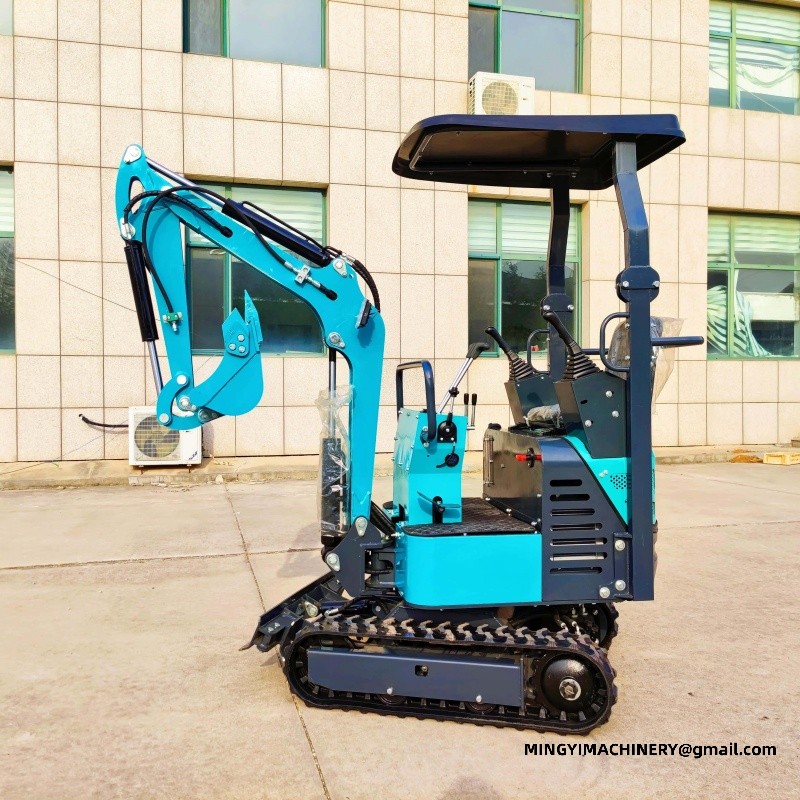
For beds and borders, an auger opens planting and post holes cleanly, while a small bucket handles the spoil from new footings and paths.
Useful beyond digging
A grass rake or lawn mower attachment makes the machine productive on vegetation clearance, and the thumb bucket allows logs, stone and paving to be picked up and placed. One machine then covers preparation, excavation and finish work.
Garden applications
• Drainage, soakaways and water feature trenches
• Planting holes, tree pits and post holes
• Path, patio and deck sub-base preparation
• Vegetation and scrub clearance
• Handling and placing stone and paving
Tell us the access into the garden and what the work involves and we will confirm the model and attachments.
Matching mini excavator for gardening to ground conditions Soft ground is a flotation problem, not a power problem. This class of machine on wide rubber tracks crosses lawn, sand and cultivated soil that would stop a narrower machine or a wheeled unit of the same capacity. Mixed sites are common and argue for a compromise specification. Most buyers choose rubber for the unit in daily use and accept the wear, unless the majority of the work is on material that will damage it. Quick coupler practice on mini excavator for gardening A quick coupler is the single option that changes how a machine is used day to day. Fitted to a machine of this size, it turns an attachment change from a two-person workshop job into a task the operator does alone in minutes. For a fleet that shares attachments between machines, a common coupler standard matters more than the coupler brand. The equipment on site that picks up the same tools as the larger machines keeps the rack usable across the yard. Hiring versus owning a mini excavator for gardening Availability is part of the decision. Owning the machine itself means it is there on the day the ground is ready; hiring means competing for the same machine at the same time as everyone else in the season. Ownership brings obligations that hiring does not. Storage, servicing, insurance and an operator are the items to set against the hire rate before deciding which way the model in question should be supplied. Road and paving work for mini excavator for gardening Road repair generates short, interrupted jobs - a patch, a drainage connection, a kerb line. The machine in that duty is economical here because it travels on a small trailer and starts working minutes after arriving. Breaking out a failed slab and backfilling the same hole in one visit is normal work for the unit on the job. The breaker and the bucket come off the same coupler, so the road is reopened the same day. Working on slopes and uneven ground with mini excavator for gardening Slope work is a stability question before it is a traction question. Knowing the gradient a machine built for the work is rated for, and working across rather than straight up where the ground allows, removes most of the risk. Planning the direction of travel helps. Working so that the equipment in service is stable under load and not required to turn on a slope is a decision made before the job starts, not a correction made during it. Engine options behind this class of machine Two buyers can order the same a machine of this size and receive different engines. The decision is rarely about peak power; it is about which parts counter is closest to the site and which engine the local mechanic already knows. Engine choice is also an emissions and documentation question for some markets. Listing the available units with the unit in daily use enquiry lets the factory confirm what can be supplied and documented for the destination country. Lifting and material handling with the equipment on site Stability changes with reach. A load the machine itself handles close in becomes a different proposition at full extension, so the working radius belongs in the plan before the lift rather than during it. Ground condition under the machine is part of every lift. Soft or uneven support is the common factor in handling incidents, and checking it takes less time than recovering the model in question that has settled. What owners should plan for beyond the machine in that duty The useful comparison is demand per working hour, not demand per machine. The unit on the job that works more hours a year spreads its standing takes over more output, which is why utilisation usually matters more than the invoice figure. Downtime is the hidden line item. A machine built for the work waiting on a part earns nothing while it stands, so parts availability and service access belong in the plan as much as fuel does. Orchard, vineyard and farm use of the equipment in service Orchard and vineyard work is carried out between rows. This class of machine with a narrow chassis and a swing boom works down the row without damaging the trees, which is the reason a full-size machine is not used at all. Ditching, fertilising and drainage on farmland suit the unit in daily use because the work is spread over a large area in short bursts. The machine travels behind a pickup and works where it stops. Acceptance checks when a machine of this size arrives A function check before the machine goes to work is worth the hour. Running through the controls, the travel and the attachment circuit on the equipment on site confirms it is set up as specified and ready for the site. Documentation should arrive with the machine. Parts list, service schedule and any certificates for the machine itself are what the workshop needs later, and they are much easier to obtain at delivery than in month six. Daily checks and maintenance on the model in question Daily maintenance on the machine in that duty is a short list: engine oil level, coolant, track tension, hydraulic oil level and a look at the hoses. Ten minutes at the start of the shift prevents most of the failures that stop a machine. Greasing is the second item. The slew ring, the boom and arm pins and the bucket linkage on the unit on the job take grease daily in dusty work, and the intervals shorten further when the machine is used in water or mud. Export packing and shipping of a machine built for the work Export documentation, decals and paint are settled before packing. Asking for them with the class of machine order avoids a second handling session and keeps the machine on the booked vessel. Buyers who import regularly plan the spare parts with the machine. The equipment in service ordered with a wearing-parts kit arrives ready to work rather than ready to wait for the first service interval. Specification data for the unit in daily use The figures below are the factory figures for the models most often matched to a machine of this size. They are the numbers to check against the site: the depth the work needs, the reach from one position, and the width of the narrowest point on the route in. Every value shown is as built for the equipment on site; options such as cab, side swing or a telescopic undercarriage change the transport dimensions and are confirmed at order stage. A canopy keeps the machine light and the operator aware of the surroundings, which suits short jobs in warm weather. A fully enclosed cab is specified where rain, dust or cold are part of the working year, and it can be added to the machine itself as a retrofit rather than only at build time. The cab decision follows the climate and the hours. Operators working a full shift in the model in question benefit from a sealed cab with wipers and heating; operators stepping on and off every few minutes usually prefer the canopy for the visibility and the quick exit.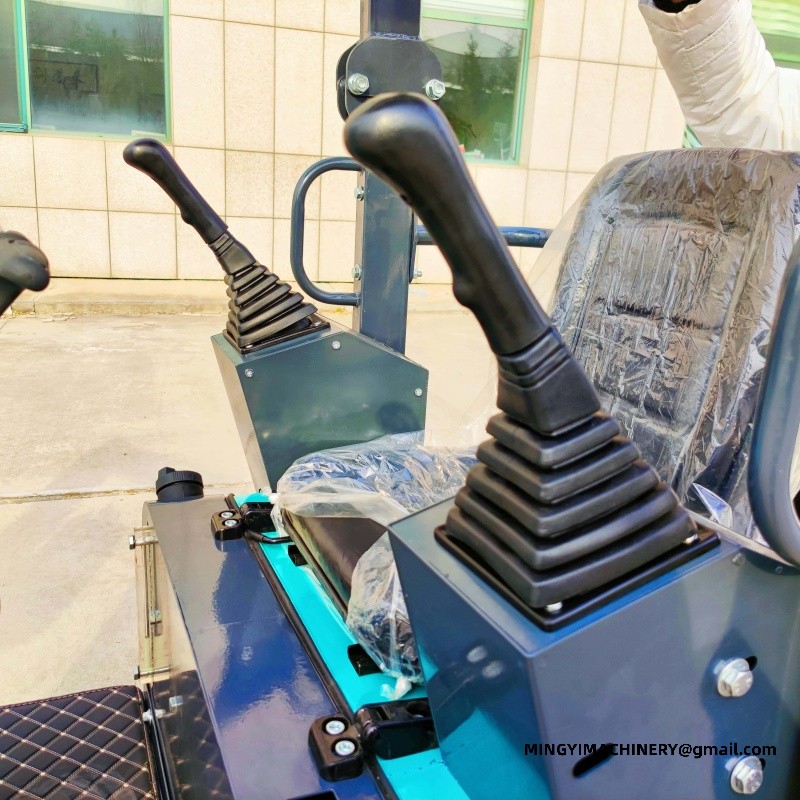
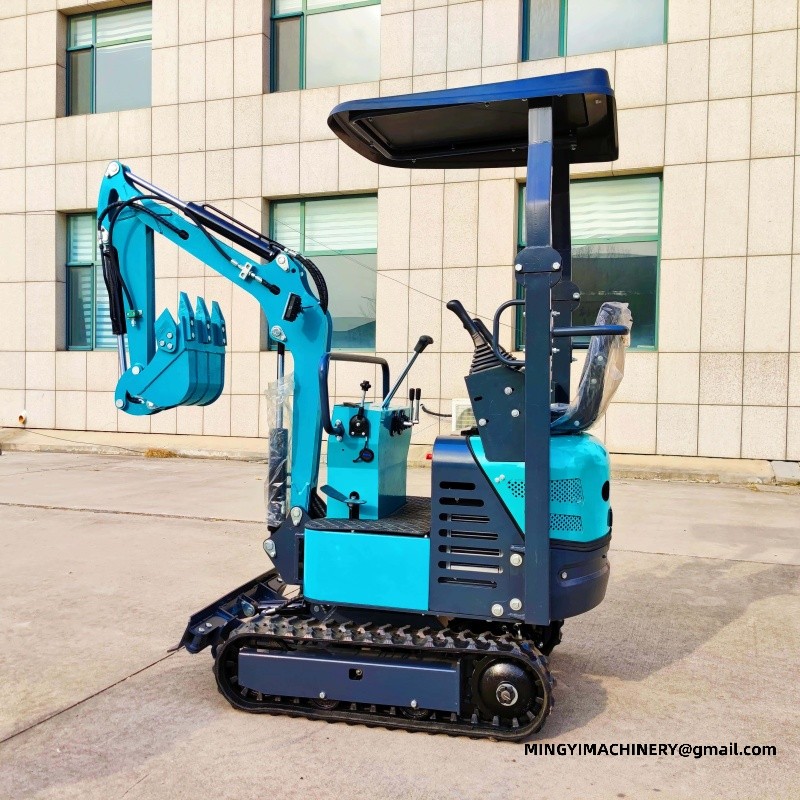
Reference specification — mini excavator range 13W 15W 20-1WL 25L Operating weight 1300 kg (2866.01 lb) 1400 kg (3086.47 lb) 1900 kg (4188.78 lb) 2200 kg (4850.17 lb) Transport size (L×W×H) 2200 × 930 × 2250 mm 2200 × 930 × 2250 mm 2550 × 1100 × 2200 mm 3000 × 1300 × 2700 mm Max digging depth 1630 mm (64.17 in) 1630 mm (64.17 in) 1800 mm (70.87 in) 2300 mm (90.55 in) Max digging height 2750 mm (108.27 in) 2750 mm (108.27 in) 2820 mm (111.02 in) 3100 mm (122.05 in) Max dumping height 1960 mm (77.17 in) 1960 mm (77.17 in) 2050 mm (80.71 in) 2050 mm (80.71 in) Max digging radius 2900 mm (114.17 in) 2900 mm (114.17 in) 3050 mm (120.08 in) 3900 mm (153.54 in) Max digging distance 2100 mm (82.68 in) 2100 mm (82.68 in) 2300 mm (90.55 in) 3100 mm (125.05 in) Minimum turning radius 1300 mm (51.18 in) 1300 mm (51.18 in) 1450 mm (57.09 in) 1800 mm (70.87 in) Travel speed 3 km/h (1.86 mph) 3 km/h (1.86 mph) 5 km/h (3.11 mph) 7 km/h (4.35 mph) Gradeability 30° 30° 30° 30° Fuel consumption 1-1.3 L/h (0.264—0.343 gal) 1-1.3 L/h (0.264—0.343 gal) 2-3 L/h (0.528—0.793 gal) 2-3 L/h (0.528—0.793 gal) Fuel tank capacity 10 L (2.64 gal) 10 L (2.64 gal) 16 L (4.23 gal) 16 L (4.23 gal) Hydraulic oil tank 16 L (4.23 gal) 16 L (4.23 gal) 18 L (4.76 gal) 18 L (4.76 gal) Dozer blade lift height 180 mm (7.09 in) 180 mm (7.09 in) 180 mm (7.09 in) 230 mm (9.06 in) Dozer blade drop depth 210 mm (8.27 in) 210 mm (8.27 in) 210 mm (8.27 in) 280 mm (11.02 in)
Q. Can a mini excavator be used for gardening work?
A. Yes. Garden work is mostly short, confined and on finished ground, which is exactly what a compact machine suits: planting holes, bed preparation, small drainage runs and removal of stumps and old paving.
Q. How do I avoid damaging a garden?
A. Low ground pressure and the right track type. Rubber tracks spread the machine weight and protect lawns, paving and driveways, which matters because garden work is usually carried out on a finished surface rather than on open ground.
Q. Which model and tooling suit garden work?
A. The smallest models in the range suit established gardens and tight access, with a bucket set and an auger covering most of the work. Tell us the plot size and the access route and MINGYI will confirm the model.
Hot, humid and dusty conditions around the machine in that duty
Tropical operation is a specification question as much as a maintenance one. The cooling capacity, the sealing and the corrosion protection fitted to the unit on the job are what make the difference once the ambient temperature rises.
Storage and long idle periods for a machine built for the work
Standing still is harder on a machine than working. Preparing the equipment in service for a long idle period means clean fluids, a charged battery and protection for the exposed surfaces, because neglect is not the same as rest.
Pre-delivery inspection before this class of machine leaves the shop
A machine should be inspected while it is still on our floor rather than after it lands. For the unit in daily use that means the engine is run to temperature, the hydraulics are cycled through full travel, and every function is checked against the build sheet before the crate is closed.
E-mail : sales@mingycn.com
LINE ( ID ): mingyicn
Related pages
mini excavator for precise trench digging · compact mini excavator for tight access · offset boom digger for wall work · PRODUCTS









