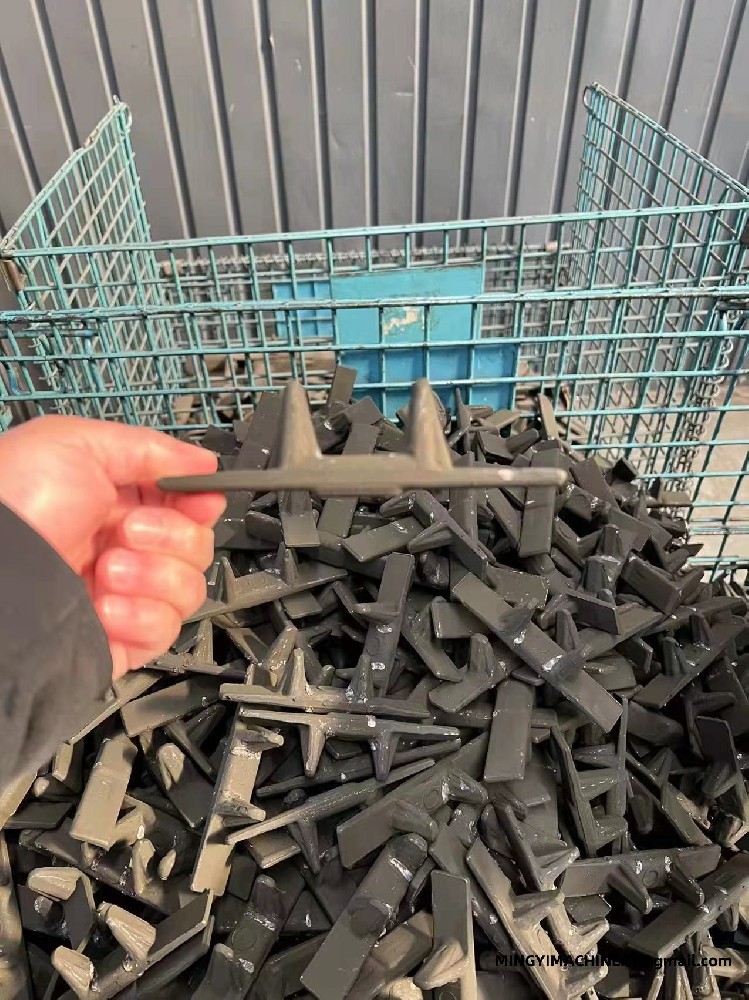
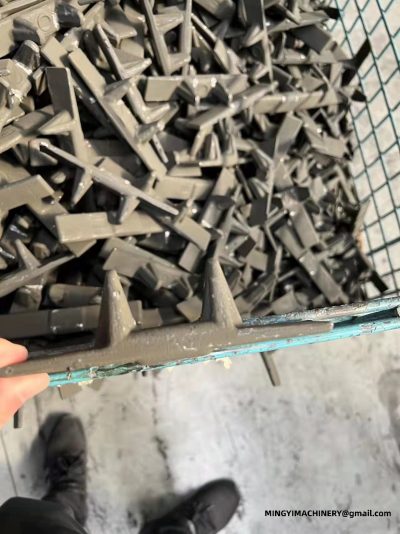
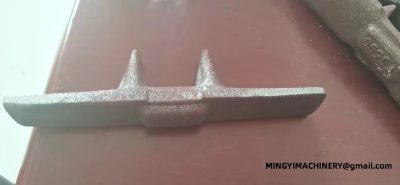
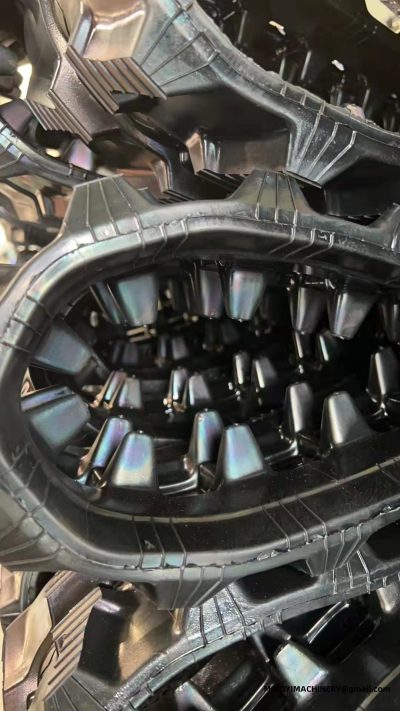
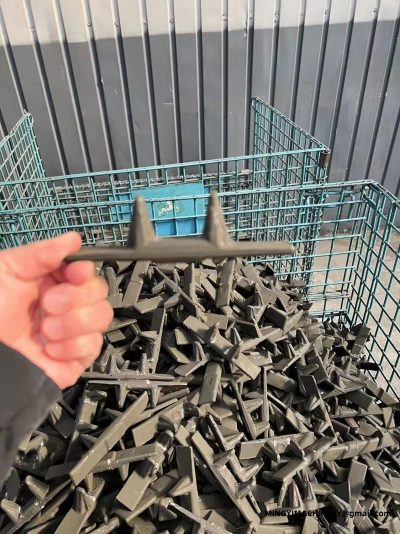
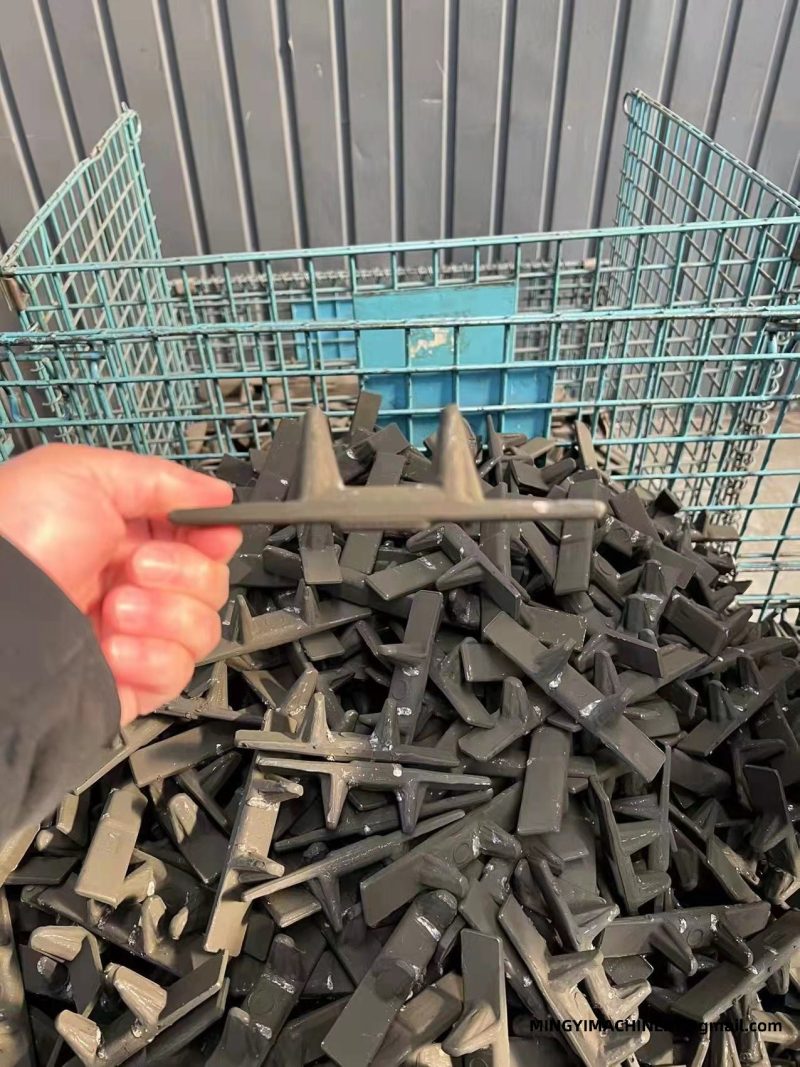
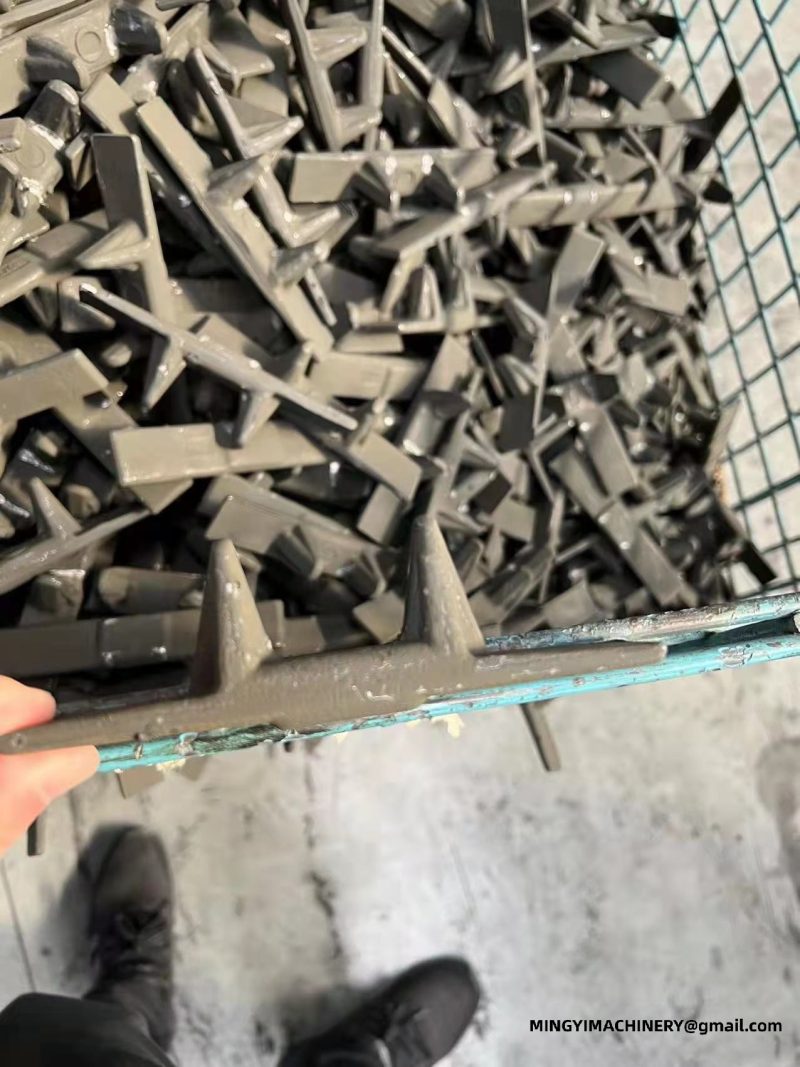
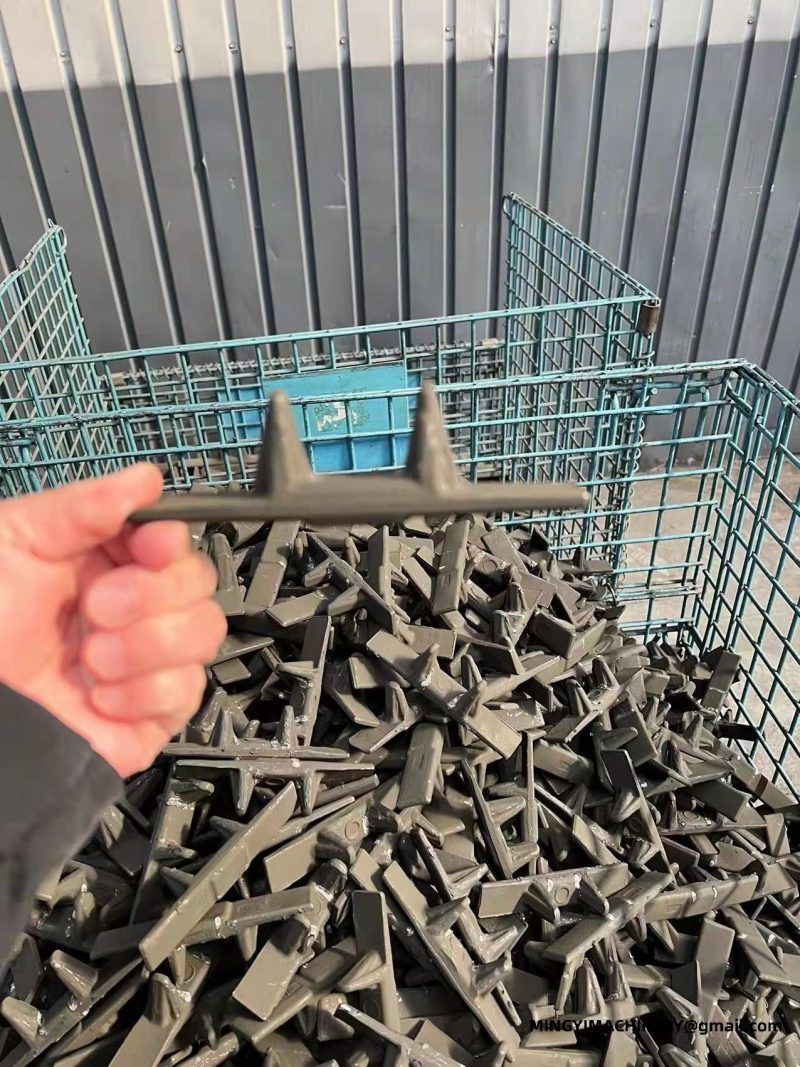
Steel teeth are what turn a plain steel track into a grip track. Fitted across the track shoes, they bite into soft soil, clay and loose ground where a smooth track or a rubber track would slip, and they are the reason steel tracks are used on the ground conditions rubber cannot handle.
MINGYI supplies steel track options with reinforced teeth and rubber blocks for its mini excavator range.
What steel teeth do
Traction on soft and loose ground comes from engaging the surface, not just from machine weight. Steel teeth penetrate the surface and transmit the machine’s tractive effort into the ground, which is what allows a tracked excavator to climb a slope or climb out of soft ground where a wheeled machine would spin.
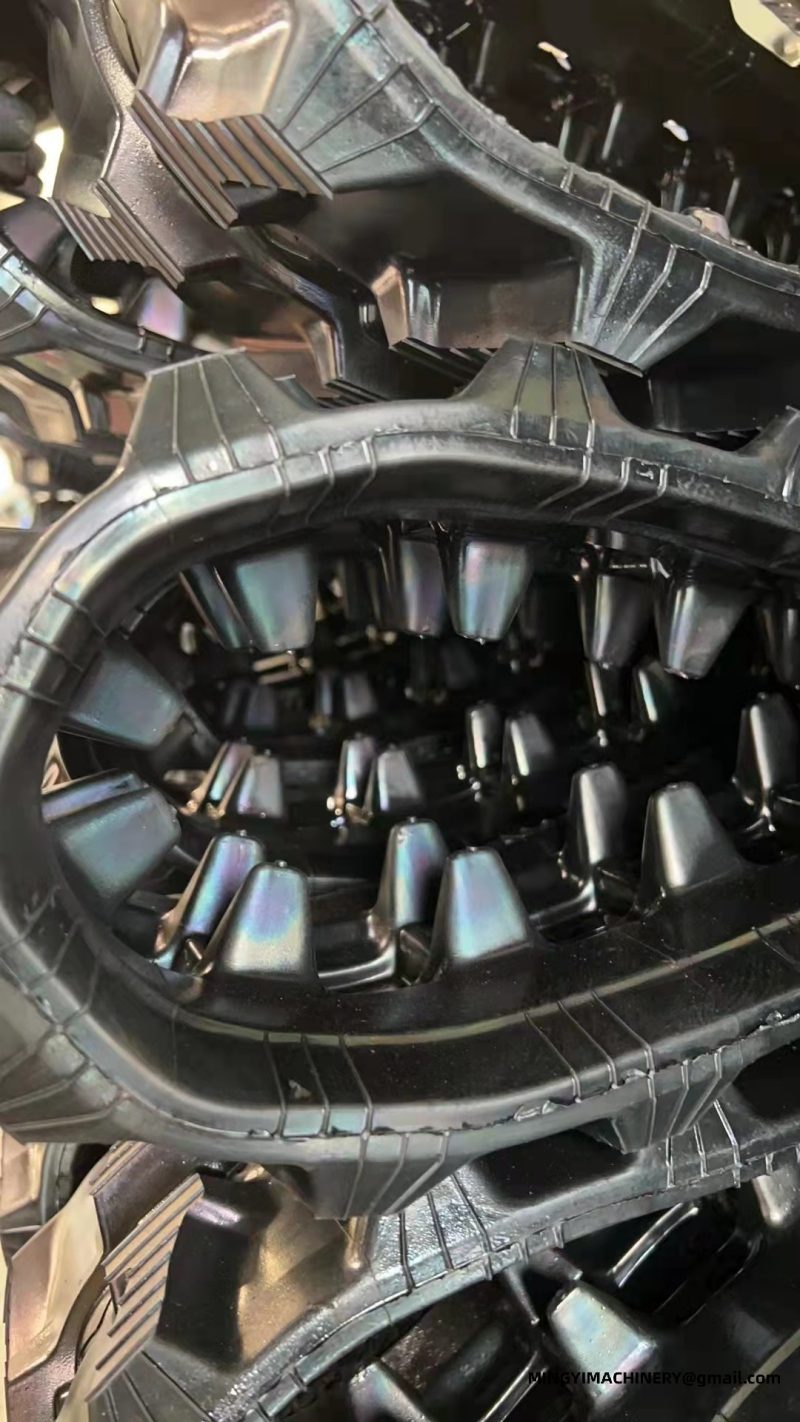
Rubber blocks can be fitted across the outer face of the same track, which gives grip on hard and paved surfaces while retaining the teeth for soft ground. That combination is why steel tracks with rubber blocks are specified on mixed sites.
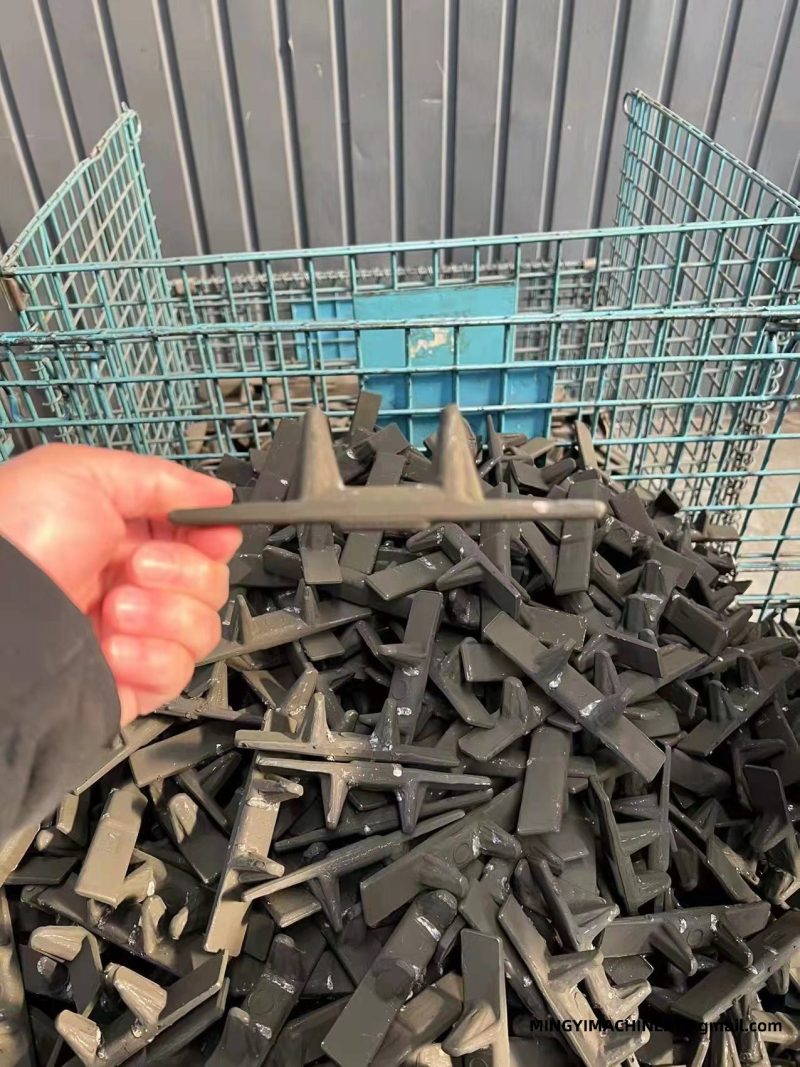
Choosing between track types
Rubber tracks are the right choice where the machine crosses lawns, paving and drives and surface protection matters most. Steel tracks with teeth and rubber blocks are chosen where the ground is harder, more abrasive or sloped, and where track life under those conditions matters more than surface finish.
Steel track applications
• Soft, wet and loose ground where grip is the limiting factor
• Sloped ground and hillside work
• Abrasive ground where rubber track life is short
• Demolition and rubble work
• Mixed sites where rubber blocks are fitted across the track face
Tell us the ground conditions and slope the machine works on and we will advise between rubber tracks and steel tracks with teeth.
Attachments that turn Steel Teeth of Tracked Excavator into several machines The base machine is a carrier; the tool on the end of the arm decides the task. This class of machine fitted with a toothed bucket digs, and the same machine with a breaker, an auger or a grab does work that would otherwise need a second unit on site. Most of the daily variety on the unit in daily use comes from the attachment rack rather than from the machine itself. Bucket, breaker, auger, ripper, rake and grab cover the large majority of the work a contractor will see. Hydraulic circuits on a Steel Teeth of Tracked Excavator Auxiliary hydraulic lines are what let a machine drive a tool rather than only a bucket. A machine of this size specified with the right circuits and flow runs a breaker or an auger without an add-on power pack bolted to the frame. Flow and pressure are matched to the tool, not to the machine size. Asking for the attachment list first means the equipment on site leaves the factory with circuits that suit the heaviest tool the buyer intends to run. Canopy or enclosed cab on a Steel Teeth of Tracked Excavator The cab decision follows the climate and the hours. Operators working a full shift in the machine itself benefit from a sealed cab with wipers and heating; operators stepping on and off every few minutes usually prefer the canopy for the visibility and the quick exit. Enclosure also changes noise and dust exposure. A sealed cab on the model in question keeps dust out on dry sites and lets the machine work through weather that would otherwise stop a canopy machine for the day. Quick coupler practice on Steel Teeth of Tracked Excavator A quick coupler is the single option that changes how a machine is used day to day. Fitted to the machine in that duty, it turns an attachment change from a two-person workshop job into a task the operator does alone in minutes. For a fleet that shares attachments between machines, a common coupler standard matters more than the coupler brand. The unit on the job that picks up the same tools as the larger machines keeps the rack usable across the yard. What owners should plan for beyond the Steel Teeth of Tracked Excavator Purchase decision is the visible part of the effort. Fuel, filters, tracks or tyres, the operator and the transport between sites are the items that decide what a machine built for the work actually demands over a few seasons, and they are worth listing before the order. Downtime is the hidden line item. The equipment in service waiting on a part earns nothing while it stands, so parts availability and service access belong in the plan as much as fuel does. Noise, dust and working near occupied buildings Work near housing or occupied premises brings constraints that open sites do not. Start times, exhaust condition and how often this class of machine needs to reverse are the practical limits that neighbours notice. Enclosure and machine condition both reduce noise. The unit in daily use with intact panels, sound mounts and a maintained exhaust is measurably quieter than the same machine with loose guards, and the difference matters on restricted sites. Boom configuration for a machine of this size A swing boom lets the machine dig parallel to its tracks without repositioning, which is what makes trenching beside a wall or a fence practical. On the equipment on site this is often the option that decides whether a job is possible at all. Detachable boom sections are used where transport length matters. The machine itself that has to travel on a standard trailer can be built so the arm comes off for the road and goes back on at the site. Track choice for the model in question Rubber tracks suit paved and landscaped ground because they spread the machine weight and leave the surface intact. Steel tracks with rubber blocks are specified where the ground is rougher or the working day is longer, and the choice can be made per machine rather than accepted as a factory default. Track type changes what the machine can cross and what it leaves behind. Buyers specify rubber for lawns, driveways and municipal work, and steel with rubber blocks for sites where sharp material would cut a rubber belt in a week. Trenching work with the machine in that duty Service trenches are the most common reason the unit on the job is hired. Water, sewage, cable and gas runs are narrow, shallow and often close to existing services, which is exactly the work a full-size machine cannot do safely. Trench quality depends on the bucket width and the operator, not on machine size. A machine built for the work with a narrow bucket and a swing boom cuts a clean run along a boundary without disturbing the ground either side of it. Orchard, vineyard and farm use of the equipment in service Ditching, fertilising and drainage on farmland suit this class of machine because the work is spread over a large area in short bursts. The machine travels behind a pickup and works where it stops. Farms also use the unit in daily use for general maintenance - clearing a watercourse, repairing a track, loading a spreader. One carrier with a few attachments covers most of the jobs that would otherwise wait for a contractor. Trailering and moving a machine of this size Loading practice matters as much as the numbers. The equipment on site is driven up ramps under its own power with the boom lowered and the tracks aligned, and secured at the points the manufacturer specifies. Detachable components reduce transport length. The machine itself built with a removable arm section or a folding step fits a shorter trailer and may avoid an oversize movement permit. Specification data for the model in question Buyers comparing the machine in that duty usually start from four numbers - weight, digging depth, reach and transport width - because those are the ones that decide whether the machine can be delivered and whether it can do the job once it is there. Figures are factory figures and are confirmed on the build sheet for the unit on the job. Where a job sits between two models, the larger machine usually takes less time than the smaller one spends on rework. Access decides the machine before output does. With a machine built for the work the limiting dimension is usually the widest point on the way in, so measuring the gate, the corridor and the turning space first saves a wasted delivery and a second visit. Contractors who buy the equipment in service normally have one job in mind that nothing else reaches. The purchase order follows the access measurement, not the other way round, and the build sheet is then settled around it.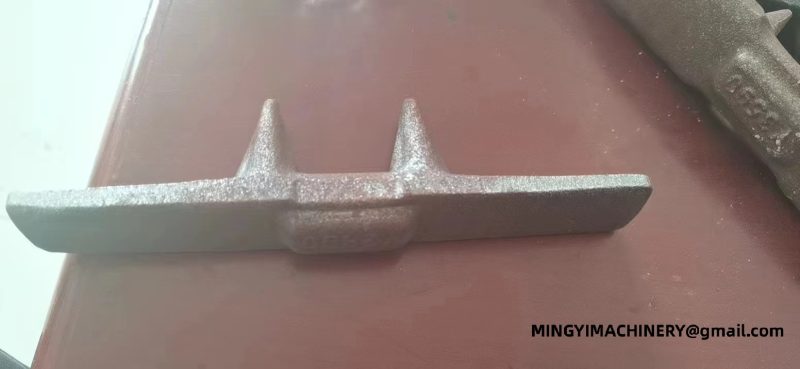
Reference specification — mini excavator range 13W 30-1W 09L 12L Operating weight 1300 kg (2866.01 lb) 2900 kg (6393.41 lb) 1100 kg (2425.08 lb) 1200 kg (2645.55 lb) Transport size (L×W×H) 2200 × 930 × 2250 mm 3000 × 1250 × 2780 mm 2300 × 720 × 1870 mm 2200 × 930 × 2250 mm Max digging depth 1630 mm (64.17 in) 2200 mm (86.61 in) 1400 mm (55.12 in) 1700 mm (66.93 in) Max digging height 2750 mm (108.27 in) 3400 mm (133.86 in) 2800 mm (110.24 in) 2600 mm (102.36 in) Max dumping height 1960 mm (77.17 in) 2400 mm (94.49 in) 1880 mm (74.02 in) 1800 mm (70.87 in) Max digging radius 2900 mm (114.17 in) 4000 mm (157.48 in) 2490 mm (98.03 in) 2900 mm (114.17 in) Max digging distance 2100 mm (82.68 in) 2800 mm (110.24 in) 2000 mm (78.74 in) 2300 mm (90.55 in) Minimum turning radius 1300 mm (51.18 in) 2000 mm (78.74 in) 1400 mm (55.12 in) 1450 mm (57.09 in) Travel speed 3 km/h (1.86 mph) 5 km/h (3.11 mph) 3 km/h (1.86 mph) 3 km/h (1.86 mph) Gradeability 30° 30° 30° 30° Fuel consumption 1-1.3 L/h (0.264—0.343 gal) 2-3 L/h (0.528—0.793 gal) 1-1.3 L/h (0.264—0.343 gal) 1-1.3 L/h (0.264—0.343 gal) Fuel tank capacity 10 L (2.64 gal) 16 L (4.23 gal) 8 L (2.11 gal) 10 L (2.64 gal) Hydraulic oil tank 16 L (4.23 gal) 20 L (5.28 gal) 16 L (4.23 gal) 16 L (4.23 gal) Dozer blade lift height 180 mm (7.09 in) 420 mm (16.54 in) 180 mm (7.09 in) 180 mm (7.09 in) Dozer blade drop depth 210 mm (8.27 in) 210 mm (8.27 in) 210 mm (8.27 in) 210 mm (8.27 in)
Q. What are the steel teeth on a tracked excavator?
A. They are the grouser teeth formed into the steel track shoes. The teeth bite into the ground and give the machine traction on soft, uneven or sloping ground, which is what lets a crawler machine hold position and pull itself through a cut while digging.
Q. When is a steel track with teeth the right choice?
A. Where the ground is soft, uneven or sloping and the machine does not drive over finished surfaces. Where lawns, paving or driveways have to be crossed, rubber tracks are used instead because they spread the load and protect the surface.
Q. How do I choose between steel teeth and rubber tracks?
A. Match the track to the ground the machine will actually work on, not to the ground on the brochure site. Tell us the surface the machine crosses and the material it digs, and MINGYI will confirm which track option to specify with the order.
E-mail : sales@mingycn.com
LINE ( ID ): mingyicn
Mingyi Machinery mini excavators are trusted by contractors and dealers worldwide.
Pre-delivery inspection before this class of machine leaves the shop
A machine should be inspected while it is still on our floor rather than after it lands. For the unit in daily use that means the engine is run to temperature, the hydraulics are cycled through full travel, and every function is checked against the build sheet before the crate is closed.
Storage and long idle periods for a machine of this size
Rubber, seals and hoses age whether the machine works or not. Keeping the equipment on site out of direct sun and off damp ground slows that, and running it briefly at intervals keeps everything moving.
E-mail:sales@mingycn.com
LINE(ID):mingyicn
Related pages
The tray transport vehicle for the mini excavator · Multi-function Small-scale Digging and Plowing Machine · fully hydraulic mini excavator · PRODUCTS









