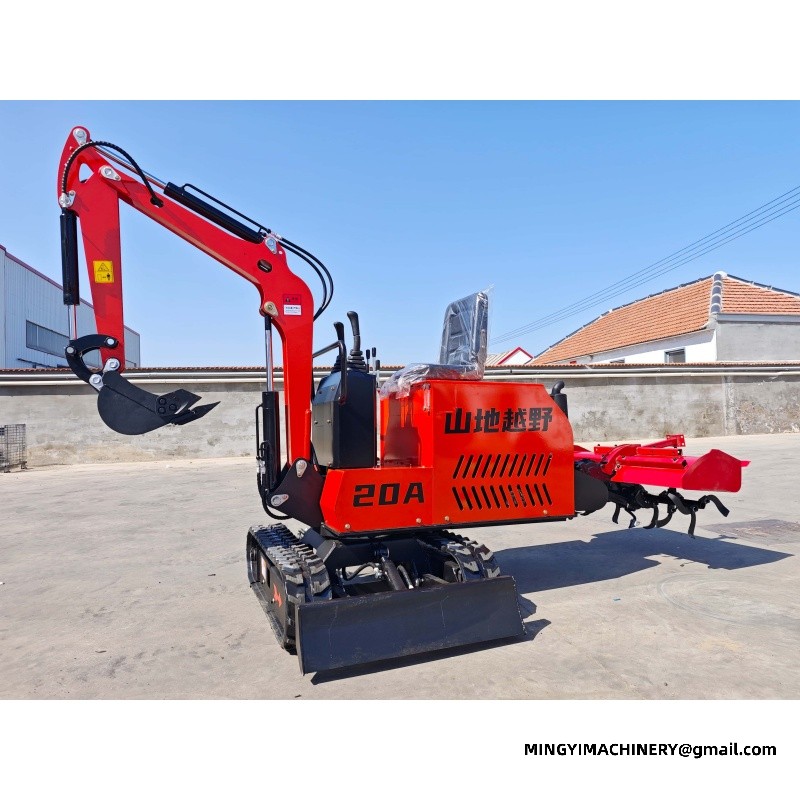
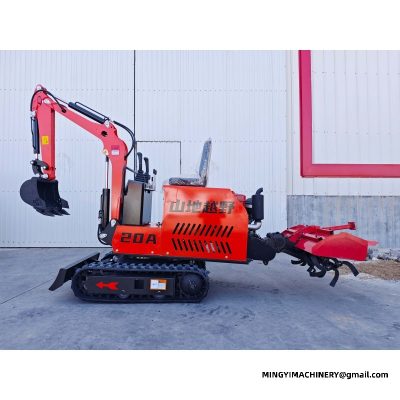
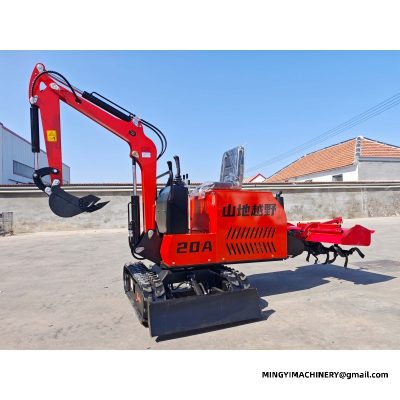
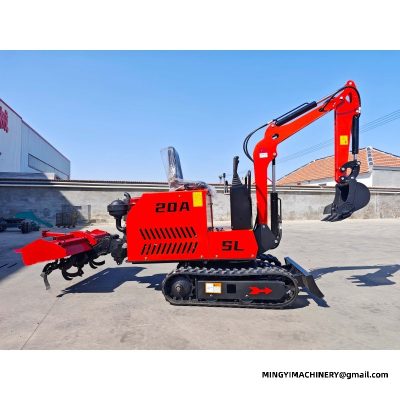
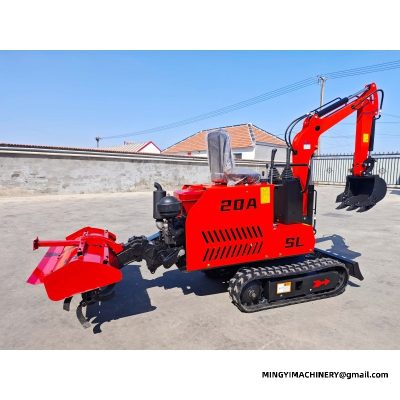
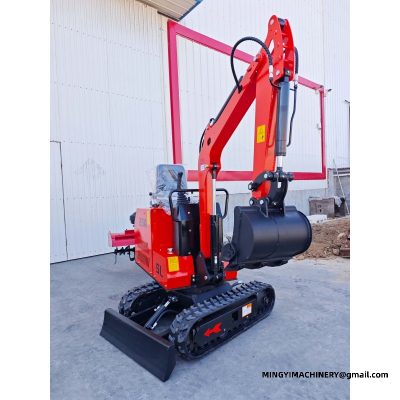
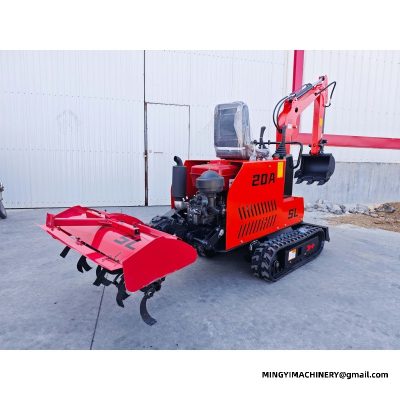
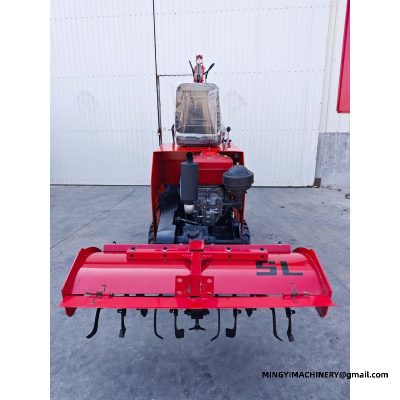
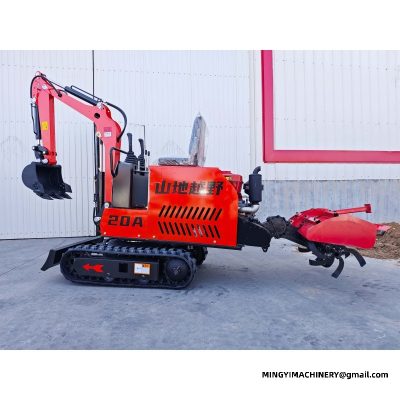
The one-tonne class is the smallest machine that still works like a real excavator. It digs, it swings, it carries a breaker or an auger — but it also fits through a garden gate, travels on a small trailer and can be operated by someone who is not a full-time plant operator.
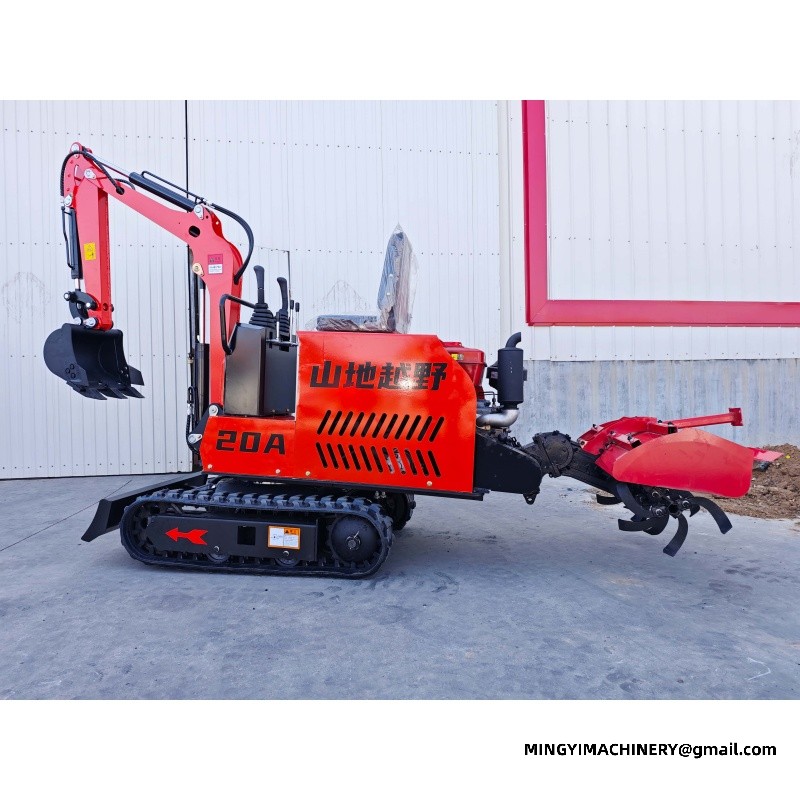
MINGYI builds the 1 tonne class mini excavator for domestic, horticultural and light municipal work where access, not output, is the constraint.
What the 1 tonne class is for
This is the machine for rear gardens, courtyards, allotments, greenhouses and small internal works. It opens a drainage run, digs planting holes and footings, and breaks out a concrete path without a crane, a road closure or a hired operator, and it can be moved between jobs behind a light vehicle.
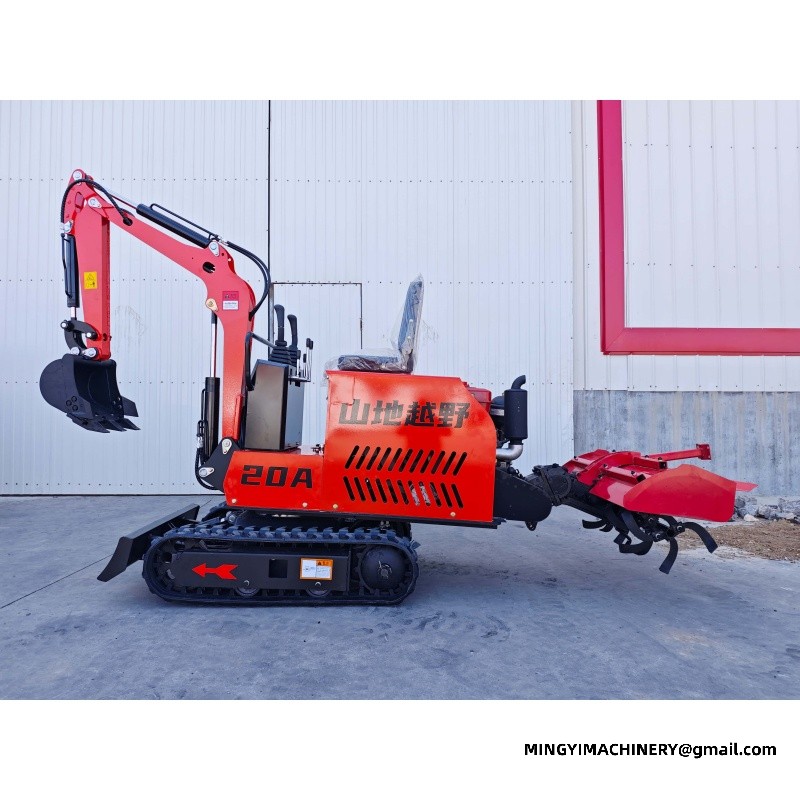
Because the machine is light, it can cross lawns and paved areas that a heavier excavator would mark, and it can be tracked through a side passage that no other plant can enter.
Specification choices
One-tonne machines are supplied with rubber tracks as standard and are available on a canopy or cab platform. Engine options include Kubota, YANMAR and Chinese power units, and the quick-change mount accepts the same buckets, breakers and augers as the larger models.
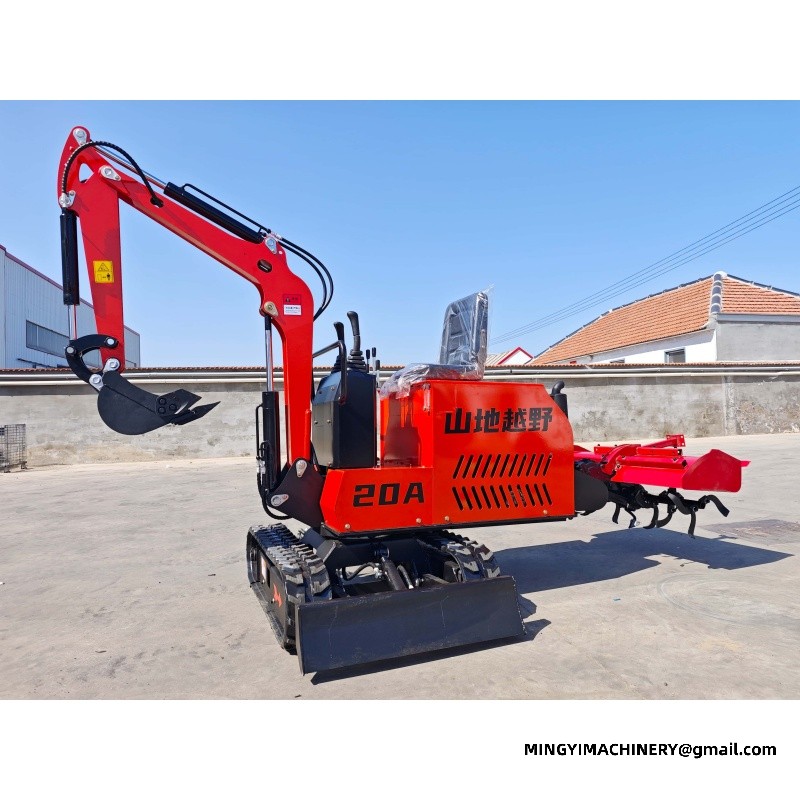
Typical 1 tonne work
• Garden and courtyard excavation and drainage
• Planting holes, footings and small foundations
• Interior and basement digging with surface protection
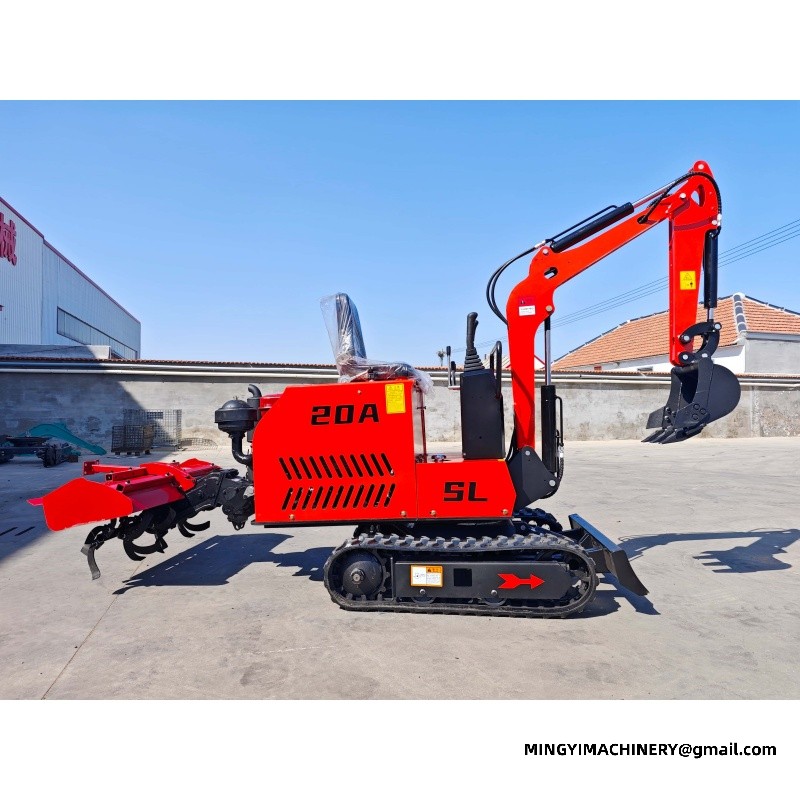
• Short cable and water service trenches
• Horticultural, greenhouse and orchard duties
Tell us the access width and what the machine has to dig, and we will confirm whether the one-tonne class or the next size up is the better buy.
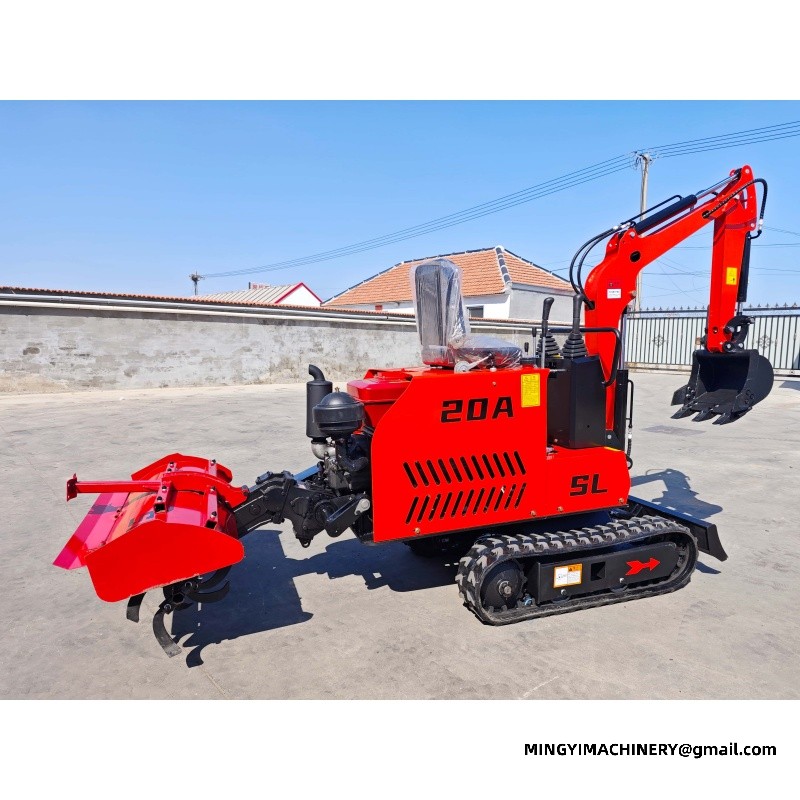
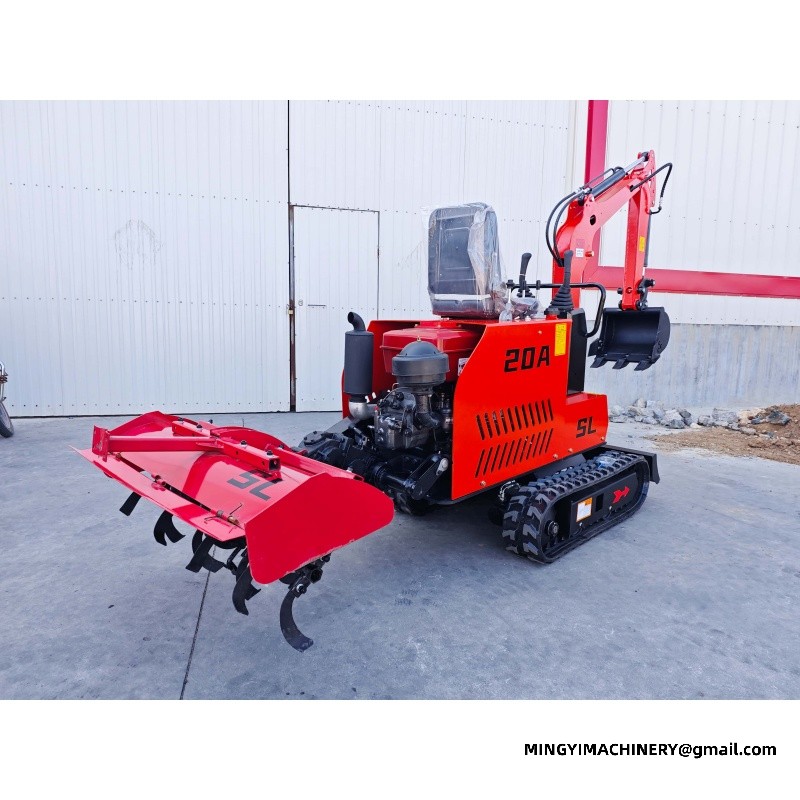
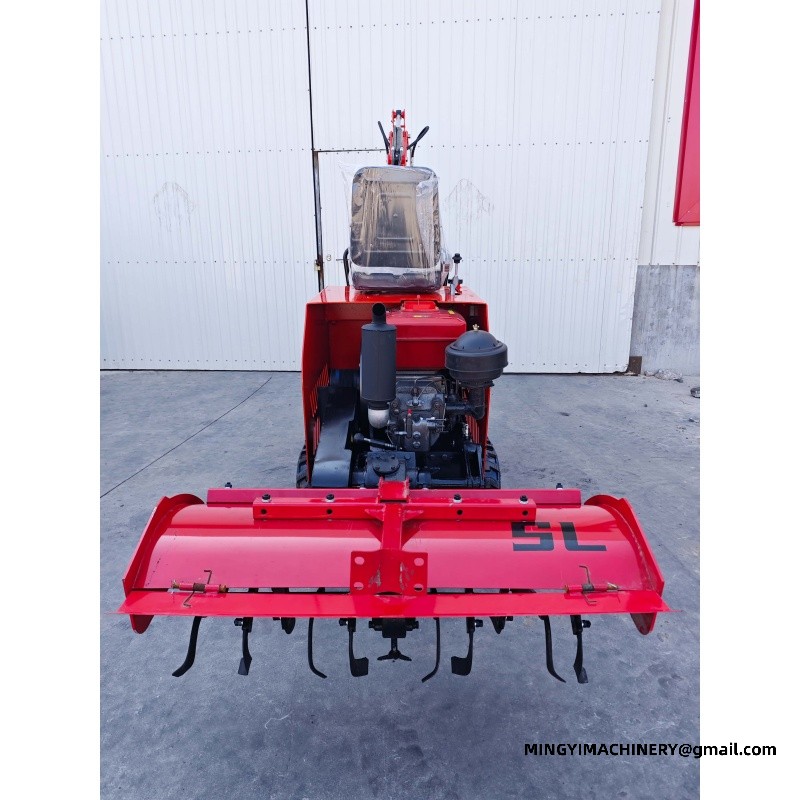
Engine options behind 1 ton mini excavator Power unit selection is settled against the service network the buyer already uses. MINGYI offers Kubota D722, Kubota D902, YANMAR, Changchai, Laidong, Runtong, YARMAX, Youpu 2V80 and Youpu 195, so a fleet running one brand of engine can keep the same filters, the same parts supplier and the same mechanic. Two buyers can order the same this class of machine and receive different engines. The decision is rarely about peak power; it is about which parts counter is closest to the site and which engine the local mechanic already knows. Hydraulic circuits on a 1 ton mini excavator Flow and pressure are matched to the tool, not to the machine size. Asking for the attachment list first means the unit in daily use leaves the factory with circuits that suit the heaviest tool the buyer intends to run. Hydraulic specification is easier to settle at build time than to correct later. A machine of this size delivered without auxiliary lines can still dig, but every additional tool becomes a retrofit project. Trenching work with 1 ton mini excavator Service trenches are the most common reason the equipment on site is hired. Water, sewage, cable and gas runs are narrow, shallow and often close to existing services, which is exactly the work a full-size machine cannot do safely. Depth control matters more on service work than speed. The machine itself working beside live services is chosen because it can be placed precisely and stopped instantly, which is what the job actually requires. Specifying 1 ton mini excavator against a job list The practical way to specify is to write the job list first: the narrowest access, the deepest trench, the heaviest tool and the surfaces the machine must cross. The model in question is then matched to those four numbers. Useful information to send with an enquiry includes working width, required digging depth, ground conditions and the attachment set. Those four items let the factory specify the machine in that duty that fits rather than a generic build. Interior and light demolition with 1 ton mini excavator Interior demolition is an access and a weight question. The unit on the job that fits through a doorway and works on a suspended floor does jobs that would otherwise be done by hand or by a larger machine that cannot enter. Dust, debris clearance and floor loading all argue for a compact machine indoors. A machine built for the work spreads its weight over a wider track footprint than a wheeled machine of similar capacity. Boom configuration for the equipment in service Extended and offset boom configurations change reach and working range. This class of machine with a longer arm reaches further but lifts less at full extension, so the specification is set against the deepest and furthest point on the job list. Detachable boom sections are used where transport length matters. The unit in daily use that has to travel on a standard trailer can be built so the arm comes off for the road and goes back on at the site. Landscaping and ground care with a machine of this size Landscape contractors use the equipment on site for planting holes, pond excavation, grading and retaining work. The machine is light enough to cross finished lawn and narrow enough to work between established trees. On soft landscape work the surface is the constraint. The machine itself on rubber tracks crosses turf without stripping it, which is why the same jobs are not given to a wheeled machine. Lifting and material handling with the model in question Lifting with a machine built to dig needs a plan. The load, the radius and the ground under the unit on the job all matter, and the safe figure is the one on the chart rather than the one that looks possible. Stability changes with reach. A load the machine in that duty handles close in becomes a different proposition at full extension, so the working radius belongs in the plan before the lift rather than during it. Working on slopes and uneven ground with a machine built for the work Ground that looks level often is not. The equipment in service crossing a filled trench, a soft edge or a hidden void behaves differently from one on undisturbed ground, and those are the places worth walking before driving. Planning the direction of travel helps. Working so that the this class of machine is stable under load and not required to turn on a slope is a decision made before the job starts, not a correction made during it. Running the unit in daily use in a rental fleet Rental fleets buy for utilisation, not for a single job. A machine of this size with a quick coupler and a common attachment standard is hired more often because it suits more of the calls that come in. The specification that rents best is usually the simplest one to explain at the counter. The equipment on site with rubber tracks, a canopy and a coupler covers the majority of weekend and short-term hires. Orchard, vineyard and farm use of the machine itself Ditching, fertilising and drainage on farmland suit the model in question because the work is spread over a large area in short bursts. The machine travels behind a pickup and works where it stops. Farms also use the machine in that duty for general maintenance - clearing a watercourse, repairing a track, loading a spreader. One carrier with a few attachments covers most of the jobs that would otherwise wait for a contractor. What owners should plan for beyond the unit on the job Purchase decision is the visible part of the effort. Fuel, filters, tracks or tyres, the operator and the transport between sites are the items that decide what a machine built for the work actually demands over a few seasons, and they are worth listing before the order. Downtime is the hidden line item. The equipment in service waiting on a part earns nothing while it stands, so parts availability and service access belong in the plan as much as fuel does. Specification data for this class of machine The figures below are the factory figures for the models most often matched to the unit in daily use. They are the numbers to check against the site: the depth the work needs, the reach from one position, and the width of the narrowest point on the route in. Every value shown is as built for a machine of this size; options such as cab, side swing or a telescopic undercarriage change the transport dimensions and are confirmed at order stage. Weather decides which days are productive. Rain turns some ground unusable and cold changes how the equipment on site starts and warms up, so planning the wet months around maintenance is more useful than planning around output. Seasonal planning smooths the workload. Machines that are busy for a few months and idle for the rest benefit from a service slot in the quiet period, and the machine itself prepared in the off-season starts the busy months reliably.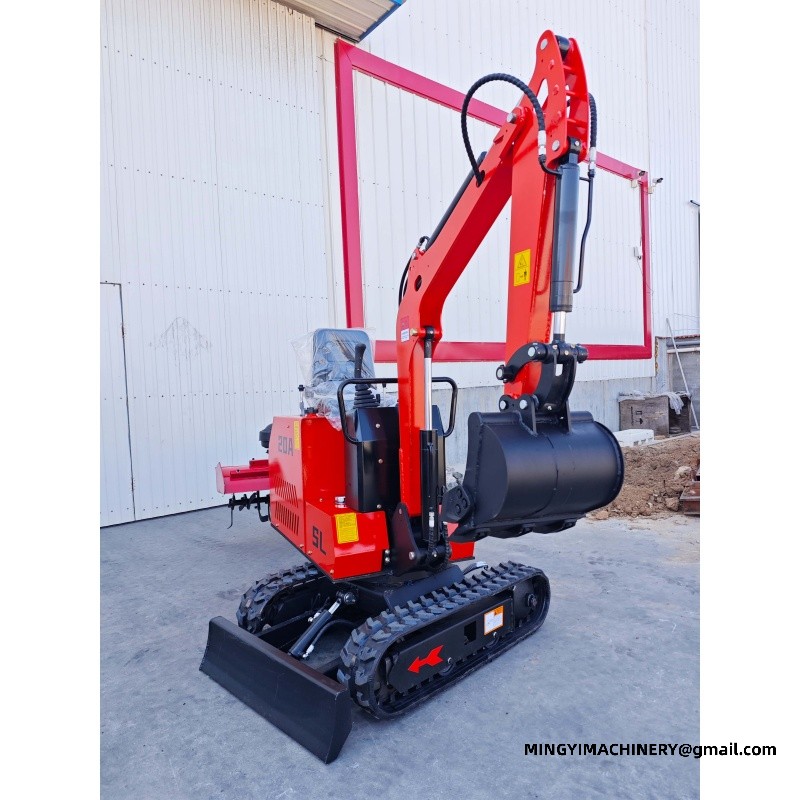
Reference specification — mini excavator range 09W 30-1W 09L 20-2L Operating weight 1100 kg (2425.08 lb) 2900 kg (6393.41 lb) 1100 kg (2425.08 lb) 1900 kg (4188.78 lb) Transport size (L×W×H) 1800 × 750 × 1970 mm 3000 × 1250 × 2780 mm 2300 × 720 × 1870 mm 2600 × 1300 × 2344 mm Max digging depth 1250 mm (49.21 in) 2200 mm (86.61 in) 1400 mm (55.12 in) 2100 mm (82.68 in) Max digging height 2800 mm (110.24 in) 3400 mm (133.86 in) 2800 mm (110.24 in) 2880 mm (113.39 in) Max dumping height 1700 mm (66.93 in) 2400 mm (94.49 in) 1880 mm (74.02 in) 2100 mm (82.68 in) Max digging radius 2570 mm (101.18 in) 4000 mm (157.48 in) 2490 mm (98.03 in) 3215 mm (126.57 in) Max digging distance 1869 mm (73.58 in) 2800 mm (110.24 in) 2000 mm (78.74 in) 2460 mm (96.85 in) Minimum turning radius 1000 mm (39.37 in) 2000 mm (78.74 in) 1400 mm (55.12 in) 1587 mm (62.48 in) Travel speed 3 km/h (1.86 mph) 5 km/h (3.11 mph) 3 km/h (1.86 mph) 5 km/h (3.11 mph) Gradeability 30° 30° 30° 30° Fuel consumption 1-1.3 L/h (0.264—0.343 gal) 2-3 L/h (0.528—0.793 gal) 1-1.3 L/h (0.264—0.343 gal) 2-3 L/h (0.528—0.793 gal) Fuel tank capacity 8 L (2.11 gal) 16 L (4.23 gal) 8 L (2.11 gal) 16 L (4.23 gal) Hydraulic oil tank 16 L (4.23 gal) 20 L (5.28 gal) 16 L (4.23 gal) 18 L (4.76 gal) Dozer blade lift height 180 mm (7.09 in) 420 mm (16.54 in) 180 mm (7.09 in) 180 mm (7.09 in) Dozer blade drop depth 210 mm (8.27 in) 210 mm (8.27 in) 210 mm (8.27 in) 210 mm (8.27 in)
Q. What is the model in question used for?
A. Work in the very tightest access: garden and internal jobs, short service runs and confined demolition where a larger machine cannot be positioned at all. It is the smallest class in the compact range and is chosen for where it fits rather than how fast it digs.
Q. Can a 1 ton machine still do real work?
A. Yes, within its class. It digs service trenches to a controlled depth and takes compact attachments, which is what makes it useful where the alternative is hand digging. The limit is the work rate, not the type of work.
Q. How does it compare with the next size up?
A. The next size carries more tooling and covers more ground per hour, but needs more space to work and more to transport. If most of the work is behind a gate or through a doorway, the smaller class is the one that gets used.
Keeping a service record for the machine in that duty
A written record is worth more than a good memory. Dates, hours and the parts fitted on the unit on the job turn a guess about the next service into a fact, and they are the first thing a buyer asks to see.
Reading the early symptoms on a machine built for the work
Operators notice things first because they hear the machine every day. Encouraging the person on the equipment in service to report small changes, and acting on them, is the most effective maintenance programme there is.
Pre-delivery inspection before this class of machine leaves the shop
The last hour before packing is the best time to find a fault. Running the unit in daily use through its full working cycle, checking for leaks under load and confirming that the controls match the specification avoids a conversation across time zones later.
E-mail : sales@mingycn.com
LINE ( ID ): mingyicn
Related pages
mini excavator for groundwork contractors · mini excavator for soft landscaping · mini excavator for vineyard rows · PRODUCTS









