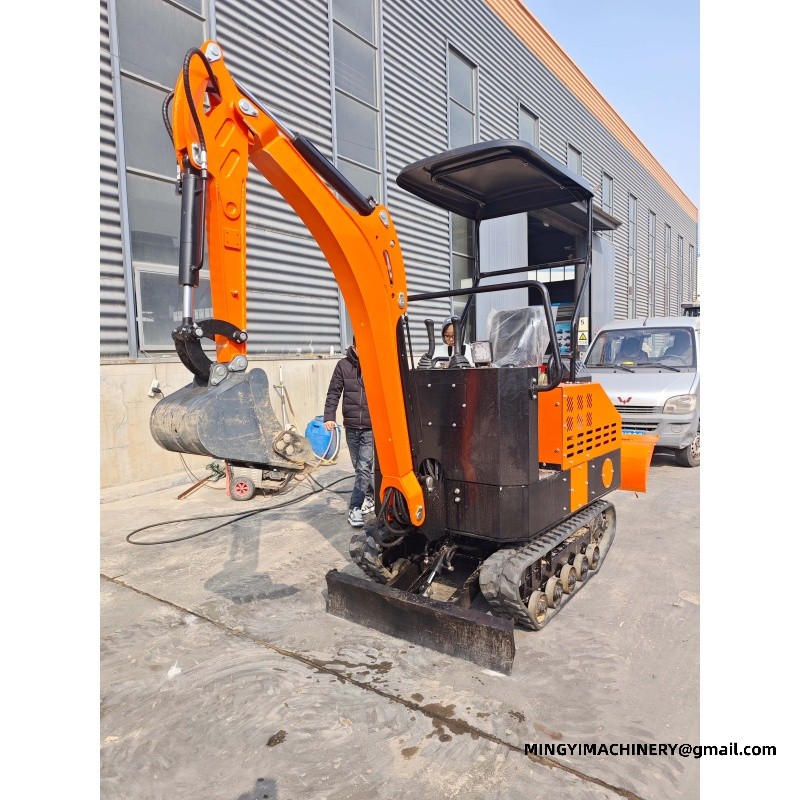
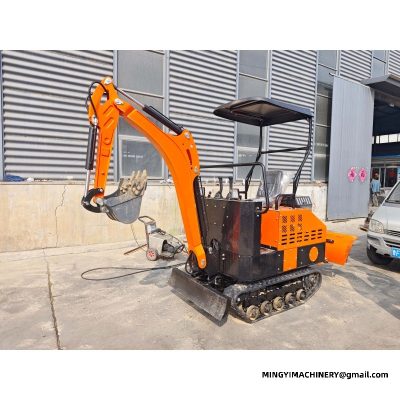
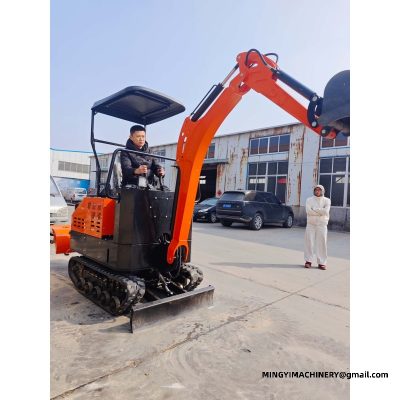
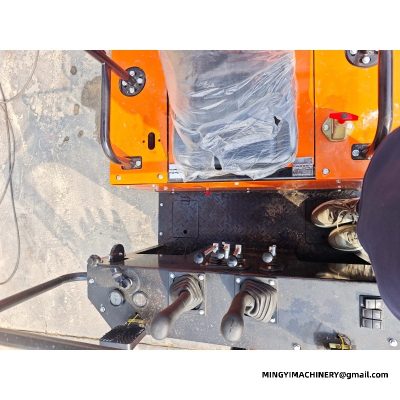
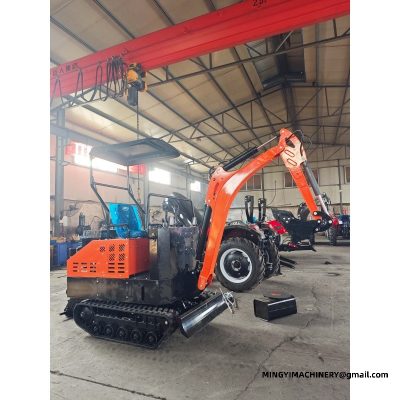
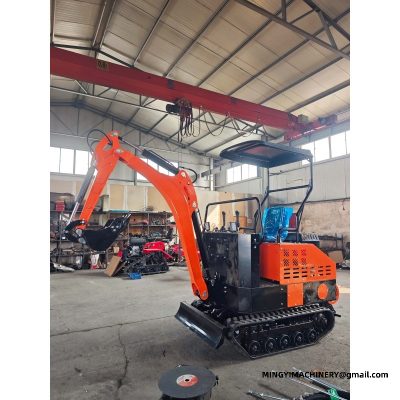
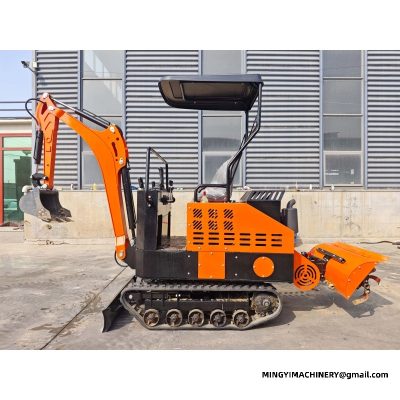
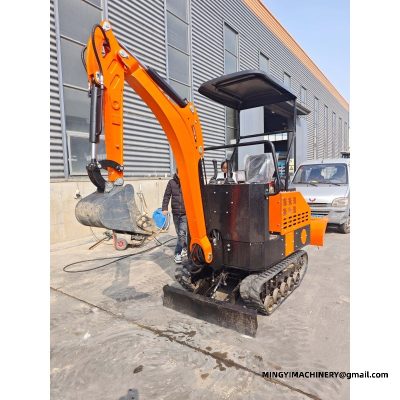
Small projects often mean tight sites: a rear garden reached through a side passage, a yard with a single gate, a plot with a building already standing on it.
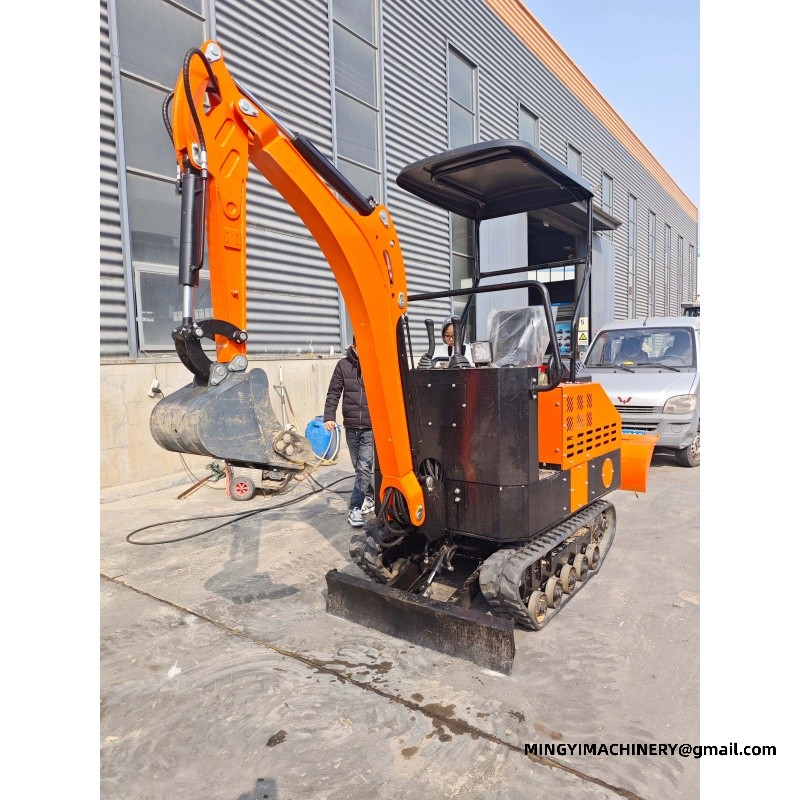
A compact mini excavator is chosen for that constraint first and the digging duty second, and MINGYI builds its smallest machines to pass where larger equipment cannot.
Getting to the work
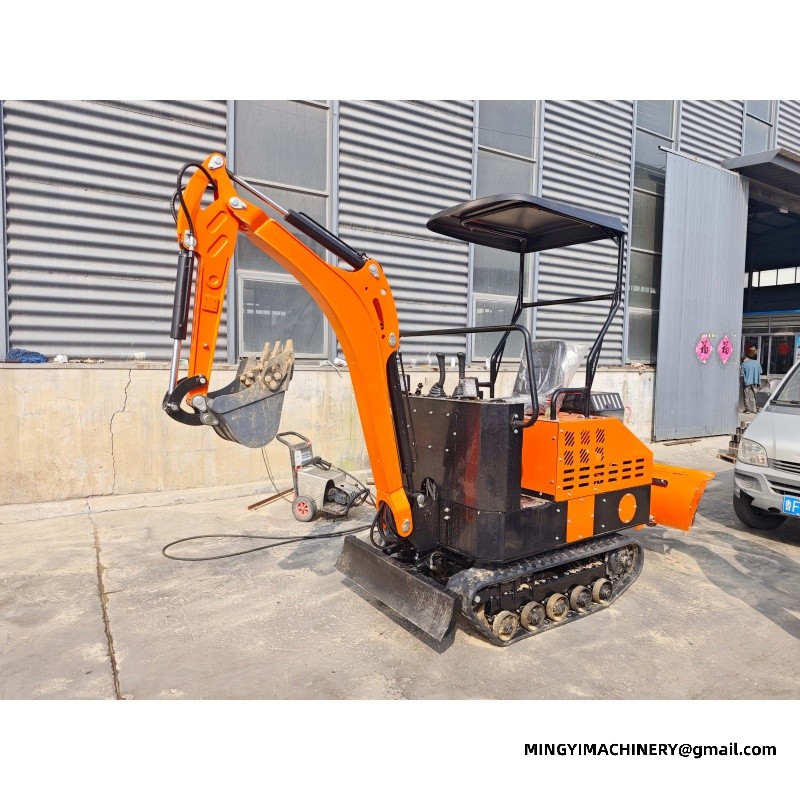
Overall width is the measurement that decides whether a machine can be used at all on many small projects, and the narrowest classes are sized to clear a standard domestic opening.
Short tail swing keeps the back of the machine inside its own footprint, so it can work along a wall or a boundary without the counterweight swinging into it.
Working properly once it is there
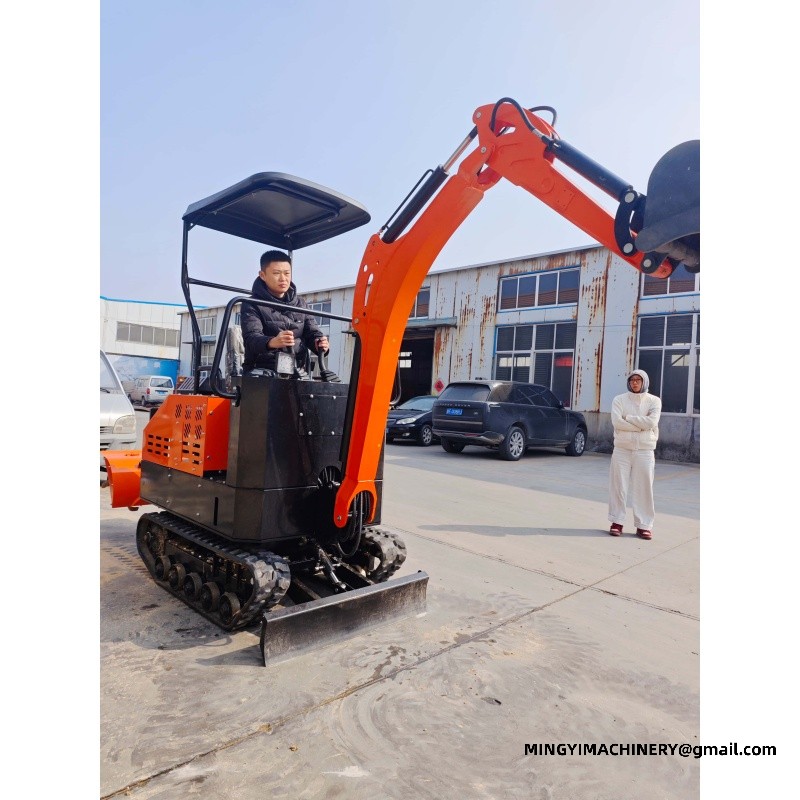
Compact does not mean limited; the same machine that fits through a gate can be fitted with an extended dipper for deeper work or a breaker for breaking out.
Rubber tracks are normal on this class of machine, because the surfaces crossed are usually finished ones.
Send MINGYI the site access width and the work you need to do, and we will confirm which compact model will reach it.
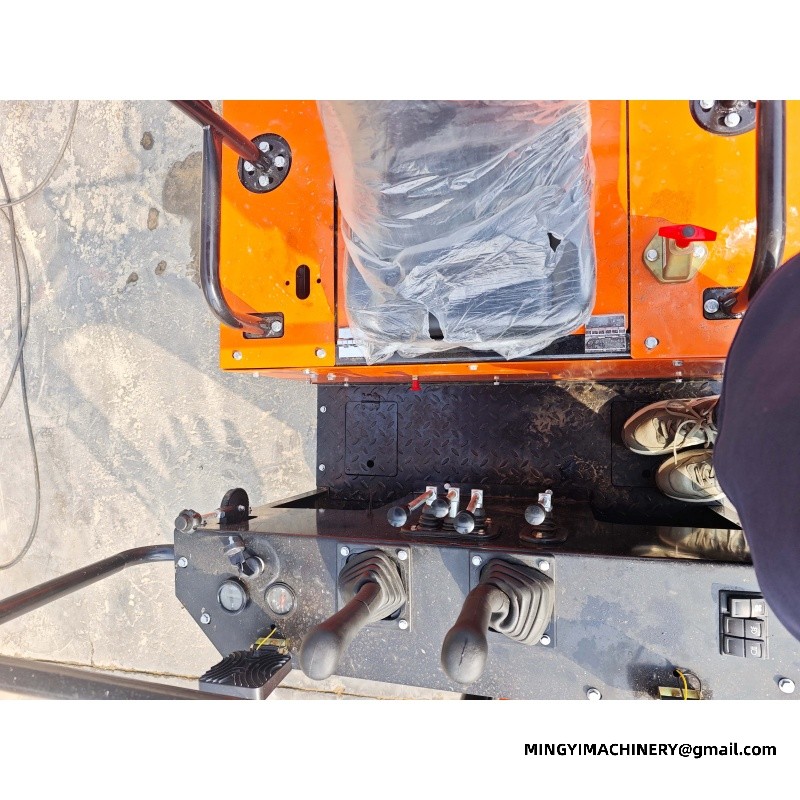
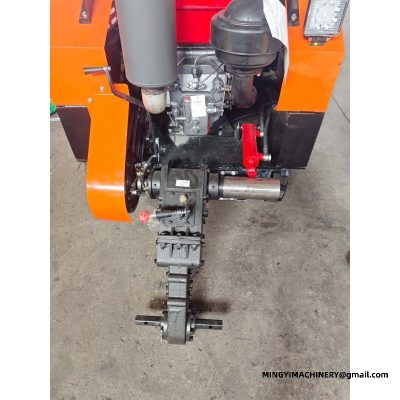
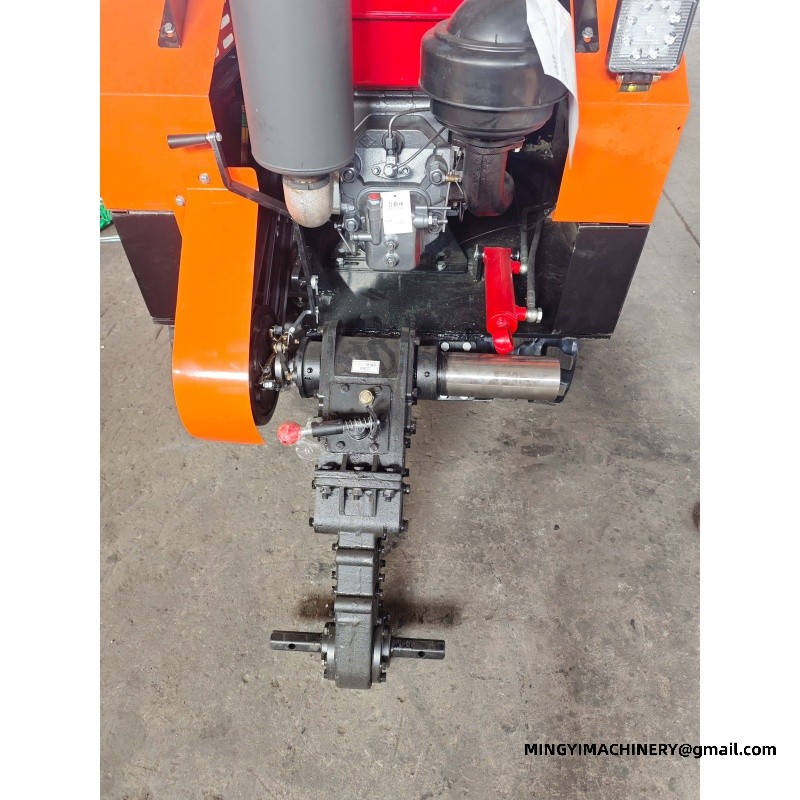
E-mail : Parts, service and support for this class of machine Support after delivery is a parts question. Wearing items for the unit in daily use - filters, belts, track components, bucket teeth and pins - are the items a buyer should plan to hold before the first service interval. Engine parts availability usually drives the engine choice. A machine of this size built with an engine the local network already carries is serviced from stock rather than from an international order. Hydraulic circuits on a narrow mini excavator for tight access Auxiliary hydraulic lines are what let a machine drive a tool rather than only a bucket. The equipment on site specified with the right circuits and flow runs a breaker or an auger without an add-on power pack bolted to the frame. Hydraulic specification is easier to settle at build time than to correct later. The machine itself delivered without auxiliary lines can still dig, but every additional tool becomes a retrofit project. Orchard, vineyard and farm use of narrow mini excavator for tight access Orchard and vineyard work is carried out between rows. The model in question with a narrow chassis and a swing boom works down the row without damaging the trees, which is the reason a full-size machine is not used at all. Ditching, fertilising and drainage on farmland suit the machine in that duty because the work is spread over a large area in short bursts. The machine travels behind a pickup and works where it stops. Getting narrow mini excavator for tight access through a narrow gap The first question on most job lists is whether the machine can reach the work at all. The unit on the job is chosen against the narrowest point on the route - a garden gate, a doorway, a gap between two walls - because a machine that arrives and then cannot pass loses a day, not an hour. Access decides the machine before output does. With a machine built for the work the limiting dimension is usually the widest point on the way in, so measuring the gate, the corridor and the turning space first saves a wasted delivery and a second visit. Engine options behind narrow mini excavator for tight access Power unit selection is settled against the service network the buyer already uses. MINGYI offers Kubota D722, Kubota D902, YANMAR, Changchai, Laidong, Runtong, YARMAX, Youpu 2V80 and Youpu 195, so a fleet running one brand of engine can keep the same filters, the same parts supplier and the same mechanic. Engine choice is also an emissions and documentation question for some markets. Listing the available units with the equipment in service enquiry lets the factory confirm what can be supplied and documented for the destination country. Working near live services with narrow mini excavator for tight access Digging near water, gas and cable is a precision job. This class of machine is used here because the operator can work in short controlled cuts and because the machine can be positioned without driving over the run being exposed. Utility crews specify the unit in daily use with a narrow bucket and good visibility for exactly this reason: the machine has to stop at the service, not at the edge of the operator's view. Specifying narrow mini excavator for tight access against a job list The practical way to specify is to write the job list first: the narrowest access, the deepest trench, the heaviest tool and the surfaces the machine must cross. A machine of this size is then matched to those four numbers. Useful information to send with an enquiry includes working width, required digging depth, ground conditions and the attachment set. Those four items let the factory specify the equipment on site that fits rather than a generic build. Track choice for the machine itself Undercarriage selection is a ground question, not a preference question. The model in question running on finished paving needs rubber; the same machine on demolition rubble or rock wears rubber quickly, so steel with rubber blocks becomes the better answer over a full season. Track type changes what the machine can cross and what it leaves behind. Buyers specify rubber for lawns, driveways and municipal work, and steel with rubber blocks for sites where sharp material would cut a rubber belt in a week. What owners should plan for beyond the machine in that duty The useful comparison is demand per working hour, not demand per machine. The unit on the job that works more hours a year spreads its standing takes over more output, which is why utilisation usually matters more than the invoice figure. Downtime is the hidden line item. A machine built for the work waiting on a part earns nothing while it stands, so parts availability and service access belong in the plan as much as fuel does. Working the equipment in service through the seasons Seasonal planning smooths the workload. Machines that are busy for a few months and idle for the rest benefit from a service slot in the quiet period, and this class of machine prepared in the off-season starts the busy months reliably. Heat and dust are as limiting as rain. Air intake condition and cooling cleanliness decide how the unit in daily use behaves in a dry season, and both are checked in a minute rather than repaired later. Hiring versus owning a machine of this size The choice follows the hours. Work that fills a few weeks a year is usually better hired, while the equipment on site that would be on site most weeks starts to justify ownership once the transport and booking time is counted. Ownership brings obligations that hiring does not. Storage, servicing, insurance and an operator are the items to set against the hire rate before deciding which way the machine itself should be supplied. Interior and light demolition with the model in question Breaking out a floor slab, a wall footing or a concrete step is routine work for the machine in that duty with a breaker. The machine is small enough to work inside and heavy enough to run the tool at a practical rate. Dust, debris clearance and floor loading all argue for a compact machine indoors. The unit on the job spreads its weight over a wider track footprint than a wheeled machine of similar capacity. Daily checks and maintenance on a machine built for the work Daily maintenance on the equipment in service is a short list: engine oil level, coolant, track tension, hydraulic oil level and a look at the hoses. Ten minutes at the start of the shift prevents most of the failures that stop a machine. Greasing is the second item. The slew ring, the boom and arm pins and the bucket linkage on this class of machine take grease daily in dusty work, and the intervals shorten further when the machine is used in water or mud. Municipal and public works with the unit in daily use Drainage repair, tree planting, footway reconstruction and cemetery work are all within the range of a machine of this size. The jobs are small individually and continuous across the year. Noise and surface protection matter on public work. The equipment on site on rubber tracks across paving, with a sealed cab for the operator, suits the conditions better than a larger tracked machine. Specification data for the machine itself Buyers comparing the model in question usually start from four numbers - weight, digging depth, reach and transport width - because those are the ones that decide whether the machine can be delivered and whether it can do the job once it is there. Figures are factory figures and are confirmed on the build sheet for the machine in that duty. Where a job sits between two models, the larger machine usually takes less time than the smaller one spends on rework. Fuel, oil and fluid quality for the unit on the job Fluid quality is a storage problem before it is a machine problem. Water and sediment in a drum will find the injection system of a machine built for the work eventually, and a settling period is nothing compared with a pump. Commissioning the equipment in service on site The machine should be introduced to the site as well as the operator. Walking the route this class of machine will take, noting the soft spots and the turns, prevents the kind of first-day incident that has nothing to do with the machine. Loading practice matters as much as the numbers. The unit in daily use is driven up ramps under its own power with the boom lowered and the tracks aligned, and secured at the points the manufacturer specifies. Detachable components reduce transport length. A machine of this size built with a removable arm section or a folding step fits a shorter trailer and may avoid an oversize movement permit.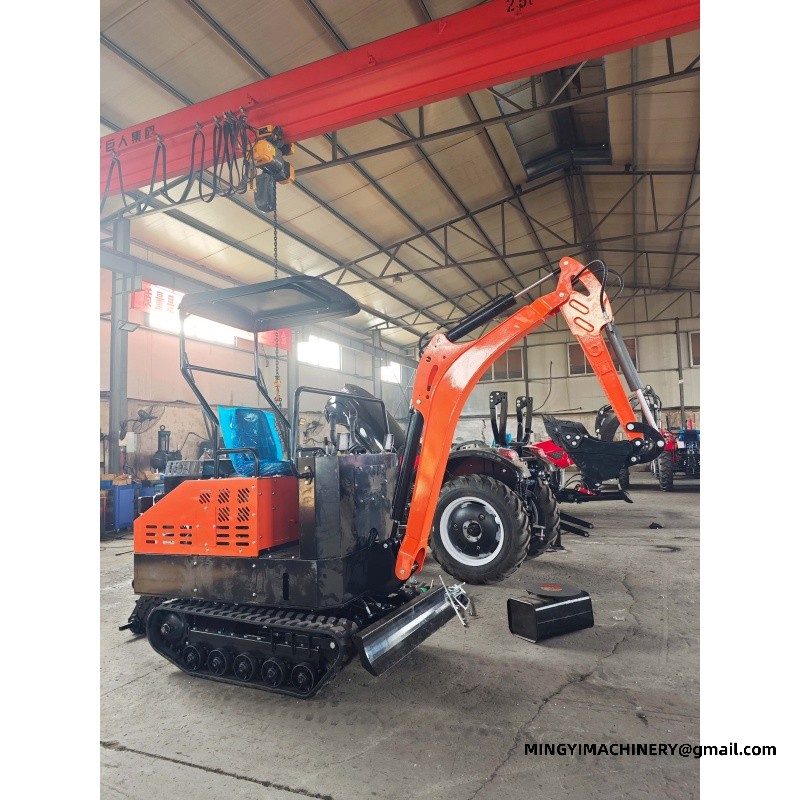
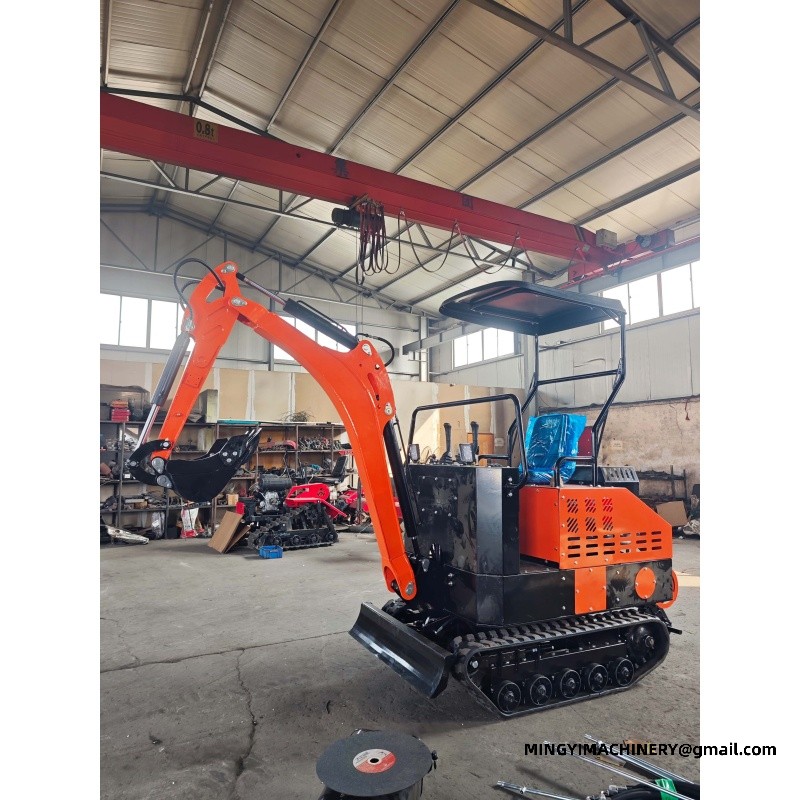
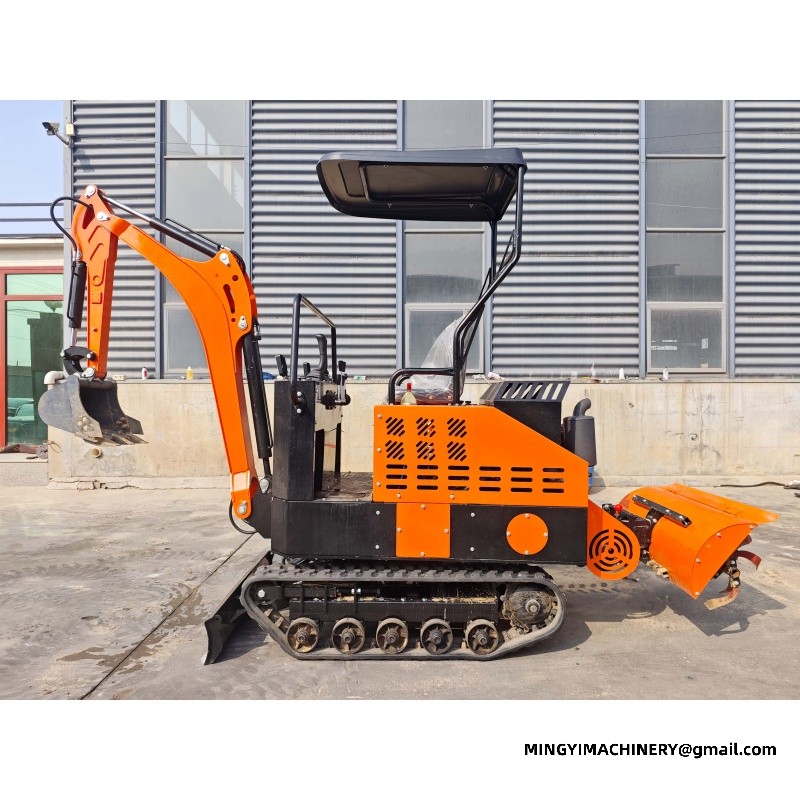
Reference specification — mini excavator range 09W 13W 12L 30-2L Operating weight 1100 kg (2425.08 lb) 1300 kg (2866.01 lb) 1200 kg (2645.55 lb) 2400 kg (5291 lb) Transport size (L×W×H) 1800 × 750 × 1970 mm 2200 × 930 × 2250 mm 2200 × 930 × 2250 mm 2800 × 1500 × 2500 mm Max digging depth 1250 mm (49.21 in) 1630 mm (64.17 in) 1700 mm (66.93 in) 2200 mm (86.61 in) Max digging height 2800 mm (110.24 in) 2750 mm (108.27 in) 2600 mm (102.36 in) 2900 mm (114.17 in) Max dumping height 1700 mm (66.93 in) 1960 mm (77.17 in) 1800 mm (70.87 in) 2100 mm (82.68 in) Max digging radius 2570 mm (101.18 in) 2900 mm (114.17 in) 2900 mm (114.17 in) 3330 mm (131.1 in) Max digging distance 1869 mm (73.58 in) 2100 mm (82.68 in) 2300 mm (90.55 in) 2700 mm (106.3 in) Minimum turning radius 1000 mm (39.37 in) 1300 mm (51.18 in) 1450 mm (57.09 in) 1555 mm (61.22 in) Travel speed 3 km/h (1.86 mph) 3 km/h (1.86 mph) 3 km/h (1.86 mph) 7 km/h (4.35 mph) Gradeability 30° 30° 30° 30° Fuel consumption 1-1.3 L/h (0.264—0.343 gal) 1-1.3 L/h (0.264—0.343 gal) 1-1.3 L/h (0.264—0.343 gal) 2-3 L/h (0.528—0.793 gal) Fuel tank capacity 8 L (2.11 gal) 10 L (2.64 gal) 10 L (2.64 gal) 16 L (4.23 gal) Hydraulic oil tank 16 L (4.23 gal) 16 L (4.23 gal) 16 L (4.23 gal) 18 L (4.76 gal) Dozer blade lift height 180 mm (7.09 in) 180 mm (7.09 in) 180 mm (7.09 in) 230 mm (9.06 in) Dozer blade drop depth 210 mm (8.27 in) 210 mm (8.27 in) 210 mm (8.27 in) 280 mm (11.02 in)
LINE ( ID ): mingyicn
Planning utilisation for narrow mini excavator for tight access
Utilisation is decided in the planning office as much as on site, through the number of machines, the haul route and the order of the work.
Seasonal peaks are easier handled with a clear service window before them than with a repair during them.
Hours per month tell more than hours in total, and they show whether a second machine or a second operator is the real constraint.
Related pages
rubber or steel tracks for mini excavators · mini excavator with precision hydraulics · mini crawler excavator for soft ground · PRODUCTS









