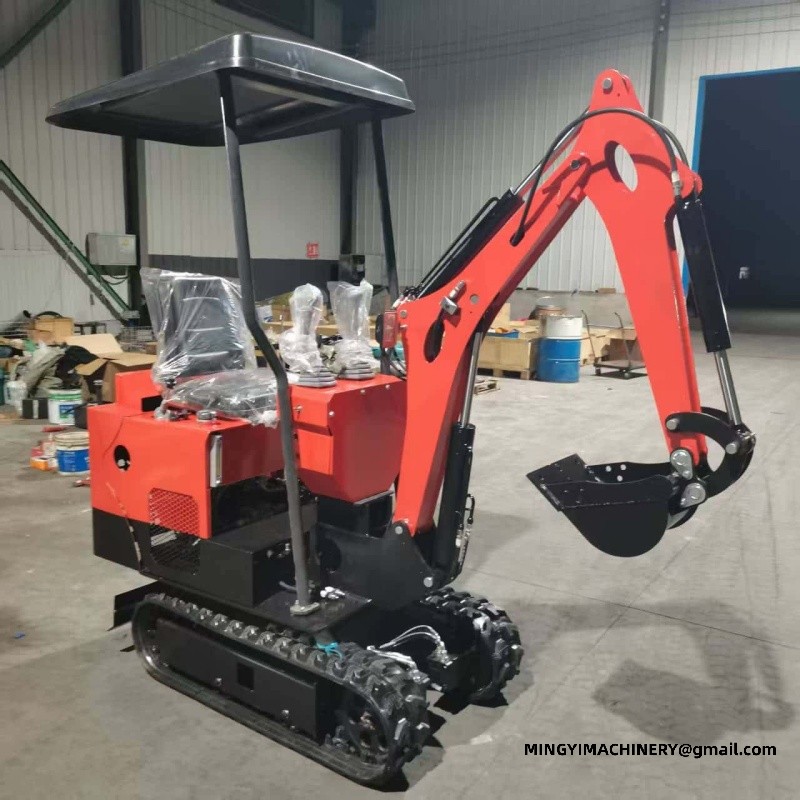
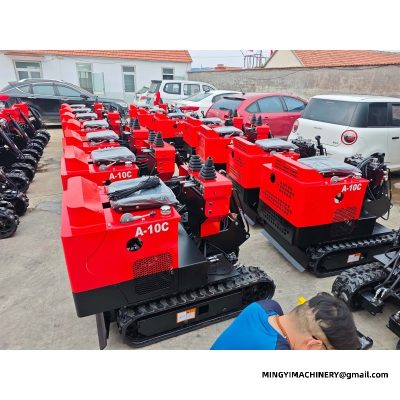
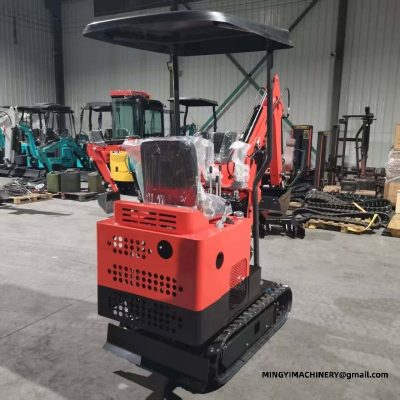
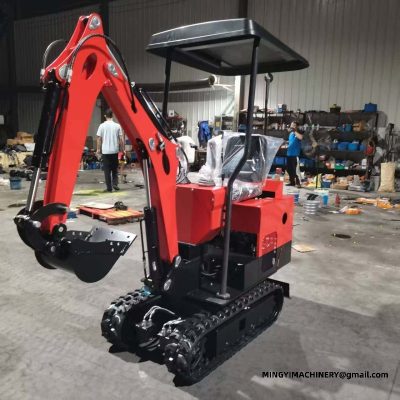
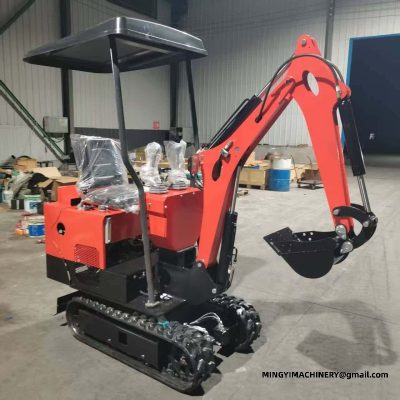
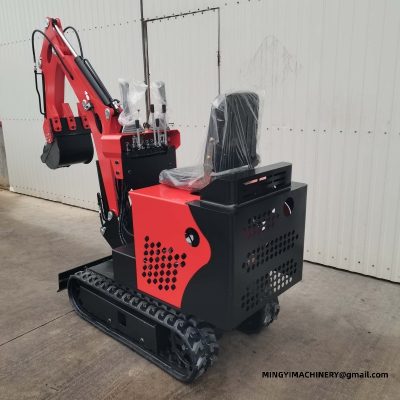
Zero tail swing is a design feature you notice most when you no longer have to think about it. The machine turns within its own tracks, so an operator working at a wall can rotate without watching the back of the machine.
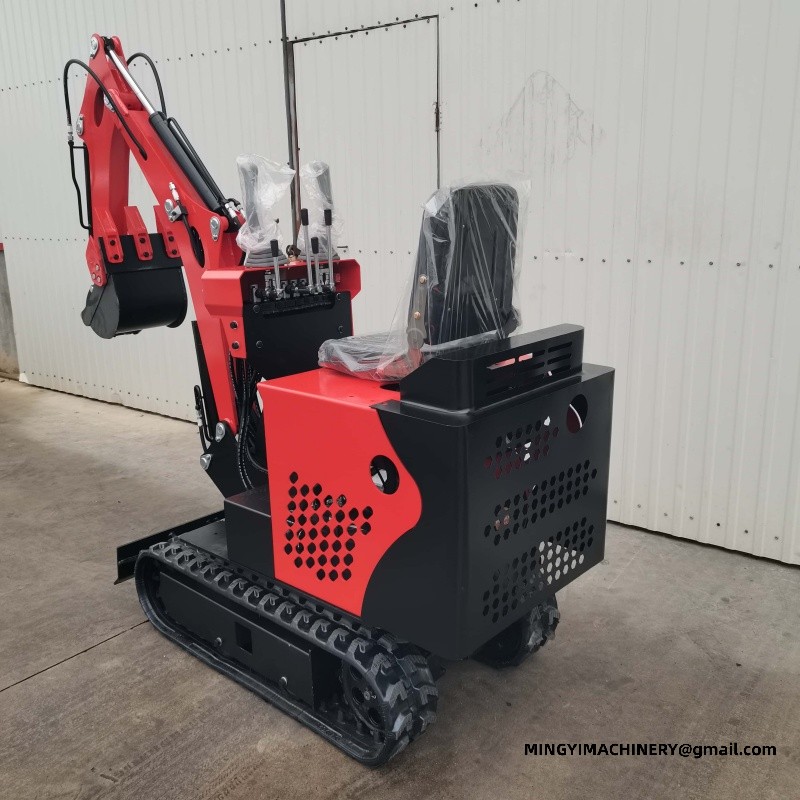
MINGYI supplies compact excavators with this configuration for work where space around the machine is as limited as the space in front of it.
Working against a boundary
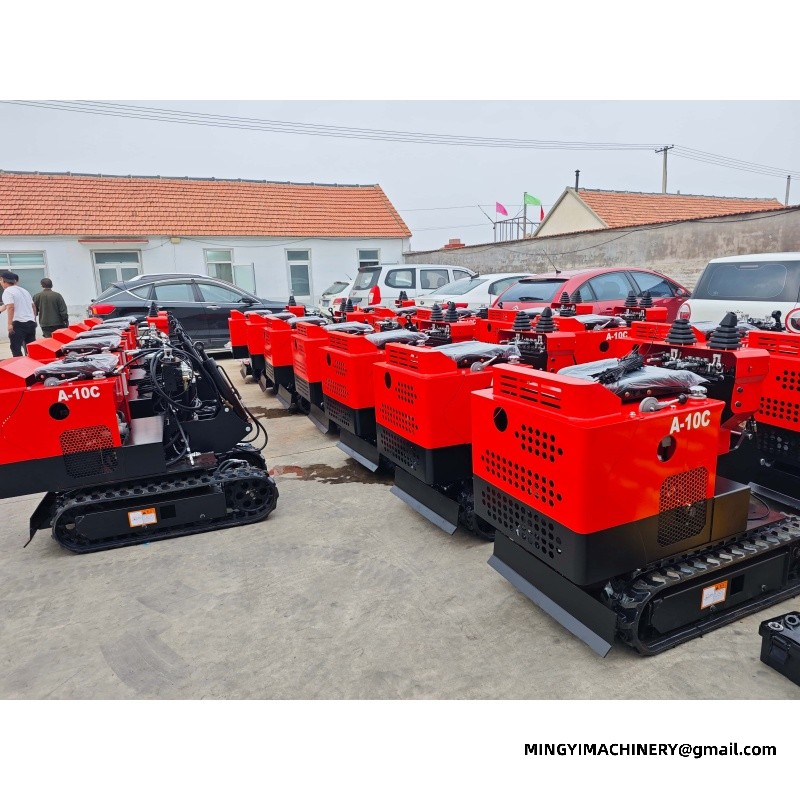
Digging a footing along a fence line, opening a trench beside a kerb, or trimming a bank close to a building all become straightforward when the rear never swings out.
It also reduces the number of times the operator has to stop and reposition, which improves output as well as safety.
Choosing the configuration
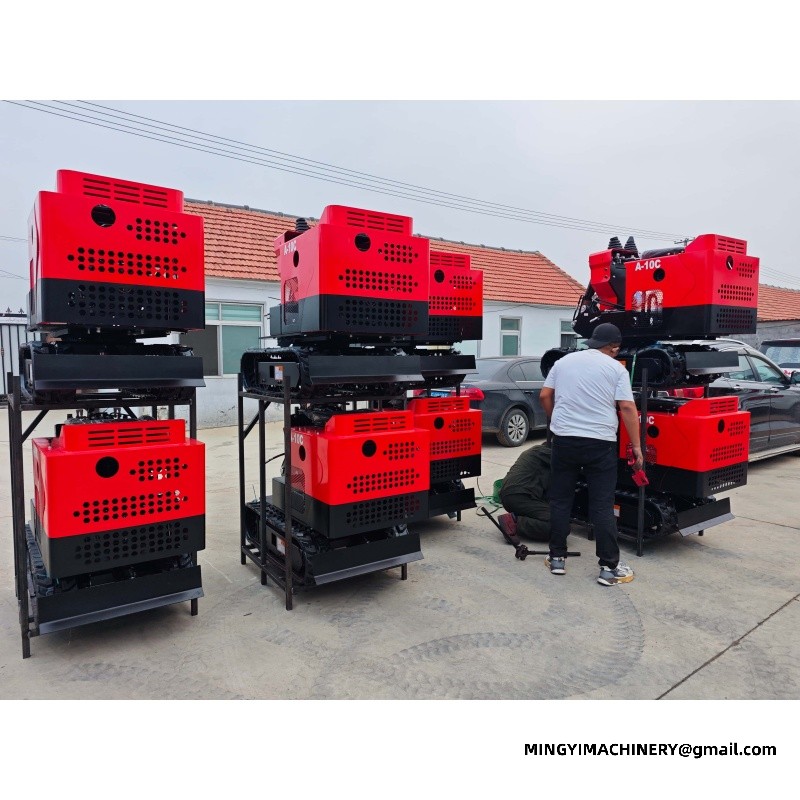
Zero tail swing is not needed where the machine works in open ground with room to turn, and a conventional machine may offer more stability in those conditions.
Where the site is the constraint, it is usually the configuration that makes the difference between the job being practical and not.
MINGYI can confirm which of its models are available in zero tail swing form; tell us the site conditions and the work.
E-mail : Road and paving work for this class of machine Patching and reinstatement favour a machine that can work in a lane closure. The unit in daily use occupies less road than a full-size excavator, which reduces the traffic management needed and the length of the closure. Breaking out a failed slab and backfilling the same hole in one visit is normal work for a machine of this size. The breaker and the bucket come off the same coupler, so the road is reopened the same day. Interior and light demolition with mini excavator for digging along walls Breaking out a floor slab, a wall footing or a concrete step is routine work for the equipment on site with a breaker. The machine is small enough to work inside and heavy enough to run the tool at a practical rate. Dust, debris clearance and floor loading all argue for a compact machine indoors. The machine itself spreads its weight over a wider track footprint than a wheeled machine of similar capacity. Trailering and moving mini excavator for digging along walls Transport weight and width decide whether a machine needs a specialist haulier. The model in question sized to travel on a standard plant trailer behind a suitable vehicle moves with the crew rather than on a scheduled low loader. Detachable components reduce transport length. The machine in that duty built with a removable arm section or a folding step fits a shorter trailer and may avoid an oversize movement permit. Lifting and material handling with a mini excavator for digging along walls Lifting with a machine built to dig needs a plan. The load, the radius and the ground under the machine built for the work all matter, and the safe figure is the one on the chart rather than the one that looks possible. Ground condition under the machine is part of every lift. Soft or uneven support is the common factor in handling incidents, and checking it takes less time than recovering the unit on the job that has settled. Working on slopes and uneven ground with mini excavator for digging along walls Slope work is a stability question before it is a traction question. Knowing the gradient the equipment in service is rated for, and working across rather than straight up where the ground allows, removes most of the risk. Ground that looks level often is not. This class of machine crossing a filled trench, a soft edge or a hidden void behaves differently from one on undisturbed ground, and those are the places worth walking before driving. Engine options behind mini excavator for digging along walls Power unit selection is settled against the service network the buyer already uses. MINGYI offers Kubota D722, Kubota D902, YANMAR, Changchai, Laidong, Runtong, YARMAX, Youpu 2V80 and Youpu 195, so a fleet running one brand of engine can keep the same filters, the same parts supplier and the same mechanic. Engine choice is also an emissions and documentation question for some markets. Listing the available units with the unit in daily use enquiry lets the factory confirm what can be supplied and documented for the destination country. Daily checks and maintenance on mini excavator for digging along walls Daily maintenance on a machine of this size is a short list: engine oil level, coolant, track tension, hydraulic oil level and a look at the hoses. Ten minutes at the start of the shift prevents most of the failures that stop a machine. Track tension is the item most often neglected. The equipment on site run with slack tracks wears the undercarriage and can throw a track on a turn; run too tight, the same components wear from the other direction. Canopy or enclosed cab on the machine itself A canopy keeps the machine light and the operator aware of the surroundings, which suits short jobs in warm weather. A fully enclosed cab is specified where rain, dust or cold are part of the working year, and it can be added to the model in question as a retrofit rather than only at build time. Enclosure also changes noise and dust exposure. A sealed cab on the machine in that duty keeps dust out on dry sites and lets the machine work through weather that would otherwise stop a canopy machine for the day. Parts, service and support for the unit on the job Support after delivery is a parts question. Wearing items for a machine built for the work - filters, belts, track components, bucket teeth and pins - are the items a buyer should plan to hold before the first service interval. Engine parts availability usually drives the engine choice. The equipment in service built with an engine the local network already carries is serviced from stock rather than from an international order. Matching this class of machine to ground conditions Soft ground is a flotation problem, not a power problem. The unit in daily use on wide rubber tracks crosses lawn, sand and cultivated soil that would stop a narrower machine or a wheeled unit of the same capacity. Hard and abrasive ground reverses the specification. On rock, demolition rubble or sharp gravel, steel tracks with rubber blocks on a machine of this size survive conditions that cut a rubber belt quickly. Working near live services with the equipment on site Digging near water, gas and cable is a precision job. The machine itself is used here because the operator can work in short controlled cuts and because the machine can be positioned without driving over the run being exposed. The risk on utility work is not machine power but machine placement. The model in question that fits the working width leaves the surrounding ground undisturbed, which keeps the trench stable and the reinstatement small. Attachments that turn the machine in that duty into several machines The base machine is a carrier; the tool on the end of the arm decides the task. The unit on the job fitted with a toothed bucket digs, and the same machine with a breaker, an auger or a grab does work that would otherwise need a second unit on site. Attachment lists are best written before delivery. Specifying a machine built for the work with the tools the job list needs avoids the work and delay of adding hydraulics later, and a quick coupler makes the swap a few minutes instead of a workshop job. Trenching work with the equipment in service Trench quality depends on the bucket width and the operator, not on machine size. This class of machine with a narrow bucket and a swing boom cuts a clean run along a boundary without disturbing the ground either side of it. Depth control matters more on service work than speed. The unit in daily use working beside live services is chosen because it can be placed precisely and stopped instantly, which is what the job actually requires. Orchard, vineyard and farm use of a machine of this size Orchard and vineyard work is carried out between rows. The equipment on site with a narrow chassis and a swing boom works down the row without damaging the trees, which is the reason a full-size machine is not used at all. Farms also use the machine itself for general maintenance - clearing a watercourse, repairing a track, loading a spreader. One carrier with a few attachments covers most of the jobs that would otherwise wait for a contractor. Specification data for the model in question Buyers comparing the machine in that duty usually start from four numbers - weight, digging depth, reach and transport width - because those are the ones that decide whether the machine can be delivered and whether it can do the job once it is there. Every value shown is as built for the unit on the job; options such as cab, side swing or a telescopic undercarriage change the transport dimensions and are confirmed at order stage. Reading the early symptoms on a machine built for the work The symptom is usually not at the fault. A hydraulic function that has become sluggish on the equipment in service may point to a filter, a relief setting or a pump, and starting with the simple checks avoids the wrong guess. Storage and long idle periods for this class of machine A stored machine should be brought back carefully. Before the unit in daily use returns to work the fluids, the brakes and the controls are checked, because months of standing change more than a weekend does. Work near housing or occupied premises brings constraints that open sites do not. Start times, exhaust condition and how often a machine of this size needs to reverse are the practical limits that neighbours notice. Dust control is often part of the same conversation. Water, timing and work sequence reduce what leaves the site, and agreeing them in advance keeps the equipment on site working rather than stopped after a complaint.
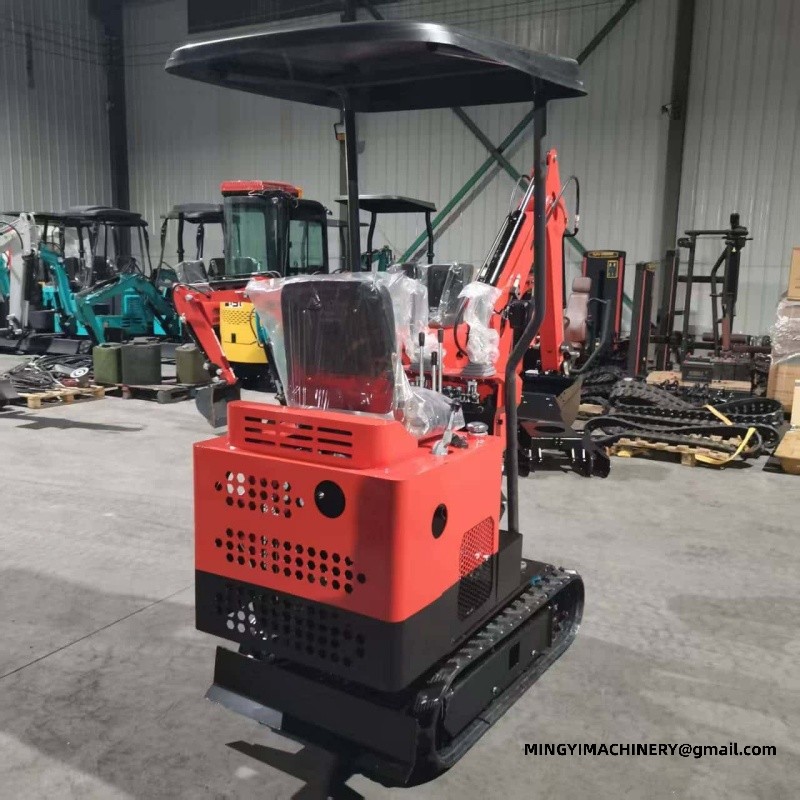
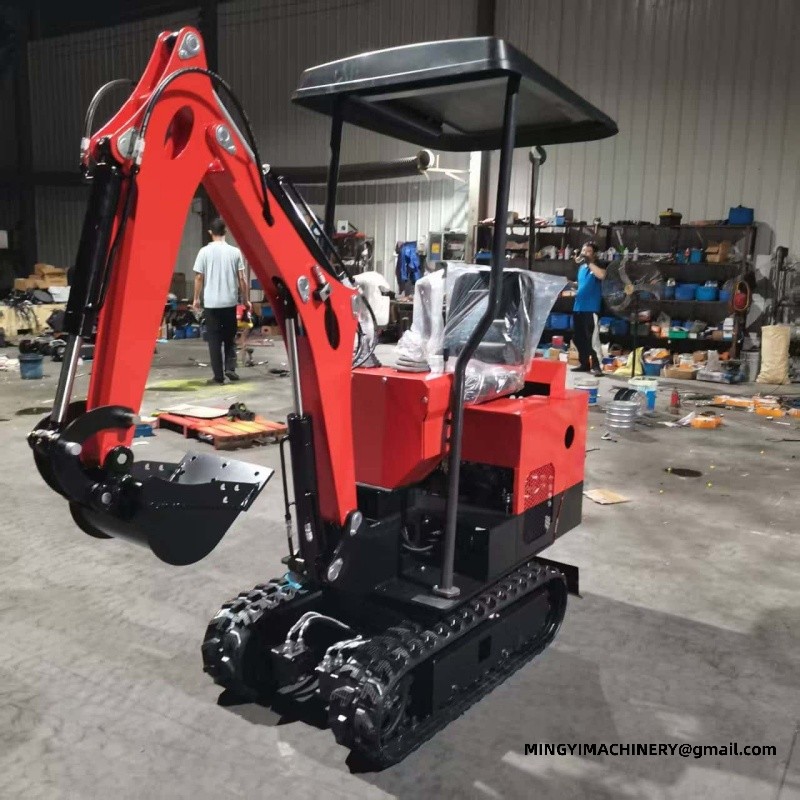
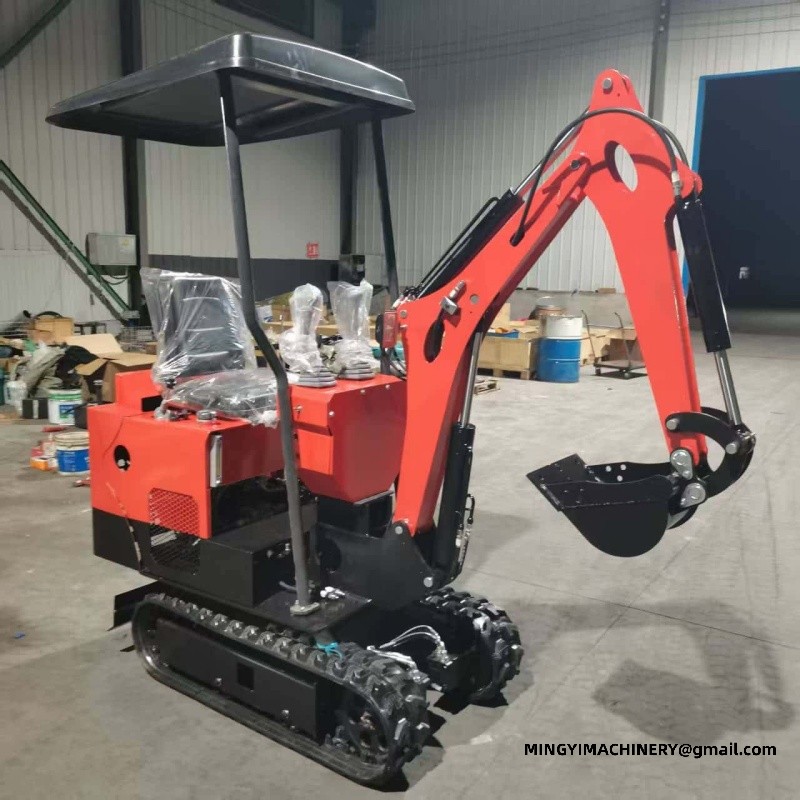
Reference specification — mini excavator range 12W 13W 15W 20-2L Operating weight 1200 kg (2645.55 lb) 1300 kg (2866.01 lb) 1400 kg (3086.47 lb) 1900 kg (4188.78 lb) Transport size (L×W×H) 2200 × 930 × 2250 mm 2200 × 930 × 2250 mm 2200 × 930 × 2250 mm 2600 × 1300 × 2344 mm Max digging depth 1630 mm (64.17 in) 1630 mm (64.17 in) 1630 mm (64.17 in) 2100 mm (82.68 in) Max digging height 2750 mm (108.27 in) 2750 mm (108.27 in) 2750 mm (108.27 in) 2880 mm (113.39 in) Max dumping height 1960 mm (77.17 in) 1960 mm (77.17 in) 1960 mm (77.17 in) 2100 mm (82.68 in) Max digging radius 2900 mm (114.17 in) 2900 mm (114.17 in) 2900 mm (114.17 in) 3215 mm (126.57 in) Max digging distance 2100 mm (82.68 in) 2100 mm (82.68 in) 2100 mm (82.68 in) 2460 mm (96.85 in) Minimum turning radius 1300 mm (51.18 in) 1300 mm (51.18 in) 1300 mm (51.18 in) 1587 mm (62.48 in) Travel speed 3 km/h (1.86 mph) 3 km/h (1.86 mph) 3 km/h (1.86 mph) 5 km/h (3.11 mph) Gradeability 30° 30° 30° 30° Fuel consumption 1-1.3 L/h (0.264—0.343 gal) 1-1.3 L/h (0.264—0.343 gal) 1-1.3 L/h (0.264—0.343 gal) 2-3 L/h (0.528—0.793 gal) Fuel tank capacity 10 L (2.64 gal) 10 L (2.64 gal) 10 L (2.64 gal) 16 L (4.23 gal) Hydraulic oil tank 16 L (4.23 gal) 16 L (4.23 gal) 16 L (4.23 gal) 18 L (4.76 gal) Dozer blade lift height 180 mm (7.09 in) 180 mm (7.09 in) 180 mm (7.09 in) 180 mm (7.09 in) Dozer blade drop depth 210 mm (8.27 in) 210 mm (8.27 in) 210 mm (8.27 in) 210 mm (8.27 in)
LINE ( ID ): mingyicn
Night work and lighting on mini excavator for digging along walls
Work lamps should cover the working area and the travel path separately, since a beam set for loading usually leaves the route dark.
A lighting check belongs at the start of every night shift, together with a look at the warning beacon and the brake lights.
Related pages
offset boom mini excavator · how to choose mini excavator attachments · mini excavator for straight trenches · PRODUCTS









