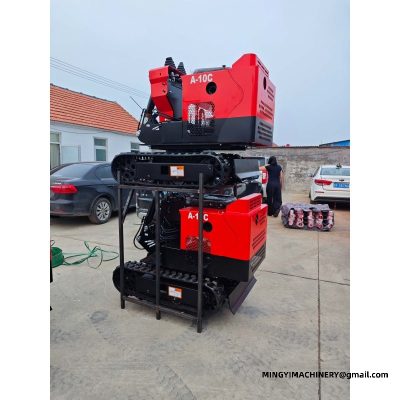
Choosing attachments is a matching exercise. An implement that is right for one machine may be too heavy, too slow or too demanding on flow for another, and getting it wrong shortens the life of both.
MINGYI supplies attachments for its mini excavators as a matched set, so the tool and the machine are specified to work together. Choosing well is about matching the tool to the machine, not about buying the largest set available.
Matching an attachment to a machine
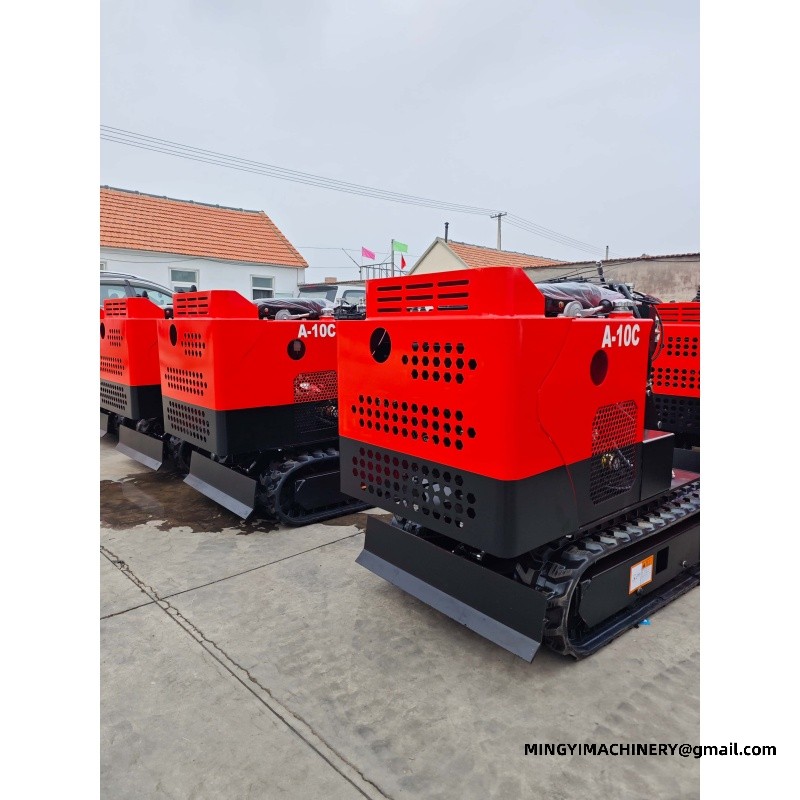
Weight, hydraulic flow and mounting are the three things that have to line up. An attachment outside the machine's flow range will not perform as intended however good it is.
A quick coupler simplifies changing between tools and is usually the first attachment worth adding.
Building a useful set
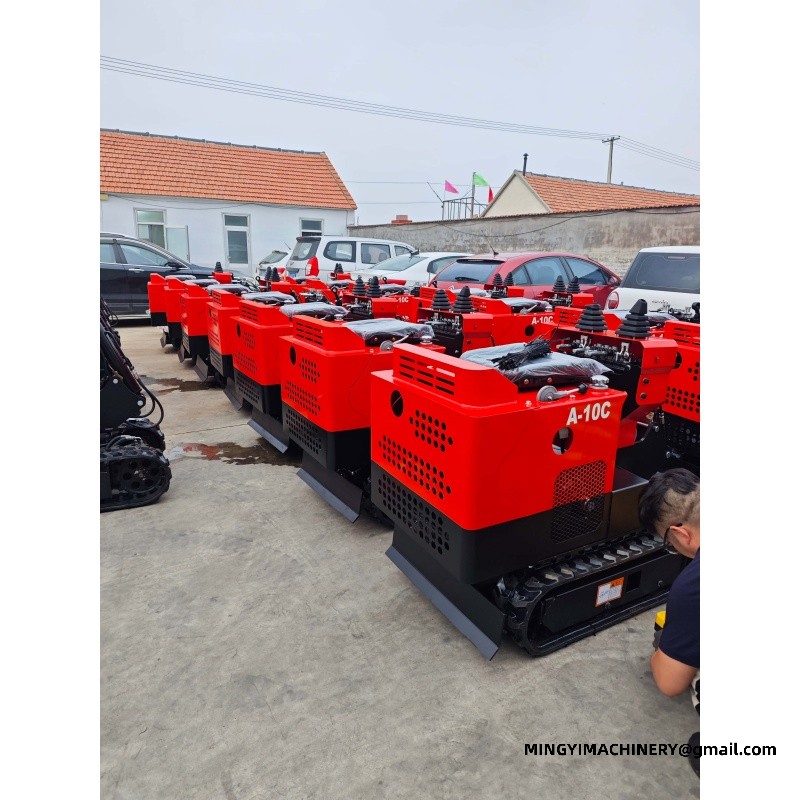
Most owners settle on two or three buckets, one powered tool for the work they do most, and a handling attachment such as a thumb or grab.
Adding tools gradually as the work demands them keeps the investment tied to jobs that actually come in.
Send MINGYI the model you run and the work you want to cover, and we will confirm which attachments match it.
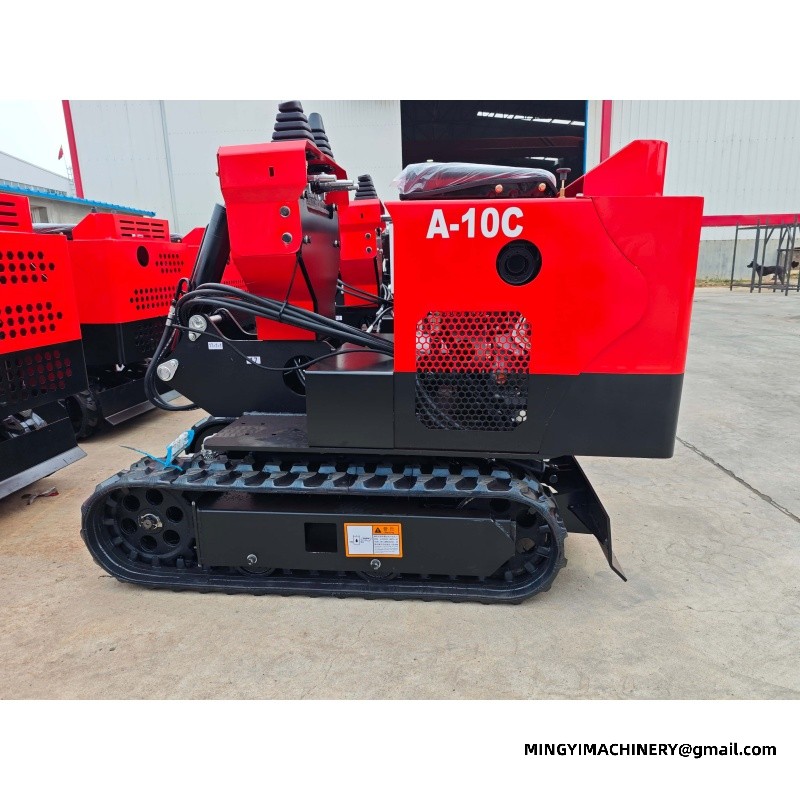
E-mail : Boom configuration for this class of machine A swing boom lets the machine dig parallel to its tracks without repositioning, which is what makes trenching beside a wall or a fence practical. On the unit in daily use this is often the option that decides whether a job is possible at all. Detachable boom sections are used where transport length matters. A machine of this size that has to travel on a standard trailer can be built so the arm comes off for the road and goes back on at the site. Lifting and material handling with a how to choose mini excavator attachments Stability changes with reach. A load the equipment on site handles close in becomes a different proposition at full extension, so the working radius belongs in the plan before the lift rather than during it. Ground condition under the machine is part of every lift. Soft or uneven support is the common factor in handling incidents, and checking it takes less time than recovering the machine itself that has settled. Parts, service and support for how to choose mini excavator attachments Engine parts availability usually drives the engine choice. The model in question built with an engine the local network already carries is serviced from stock rather than from an international order. Remote support is handled by video. The machine in that duty fault can often be diagnosed on a walk-around call with the panel open, which is faster than waiting for a visit and avoids shipping a part that is not needed. Interior and light demolition with how to choose mini excavator attachments Interior demolition is an access and a weight question. The unit on the job that fits through a doorway and works on a suspended floor does jobs that would otherwise be done by hand or by a larger machine that cannot enter. Breaking out a floor slab, a wall footing or a concrete step is routine work for a machine built for the work with a breaker. The machine is small enough to work inside and heavy enough to run the tool at a practical rate. Trenching work with how to choose mini excavator attachments Service trenches are the most common reason the equipment in service is hired. Water, sewage, cable and gas runs are narrow, shallow and often close to existing services, which is exactly the work a full-size machine cannot do safely. Trench quality depends on the bucket width and the operator, not on machine size. This class of machine with a narrow bucket and a swing boom cuts a clean run along a boundary without disturbing the ground either side of it. Working on slopes and uneven ground with how to choose mini excavator attachments Slope work is a stability question before it is a traction question. Knowing the gradient the unit in daily use is rated for, and working across rather than straight up where the ground allows, removes most of the risk. Planning the direction of travel helps. Working so that the A machine of this size is stable under load and not required to turn on a slope is a decision made before the job starts, not a correction made during it. Municipal and public works with how to choose mini excavator attachments Municipal crews work on streets, footpaths and parks where the public is present. The equipment on site is specified because it occupies little space, works inside a small exclusion zone and can be moved on a standard trailer. Noise and surface protection matter on public work. The machine itself on rubber tracks across paving, with a sealed cab for the operator, suits the conditions better than a larger tracked machine. Daily checks and maintenance on the model in question Track tension is the item most often neglected. The machine in that duty run with slack tracks wears the undercarriage and can throw a track on a turn; run too tight, the same components wear from the other direction. Greasing is the second item. The slew ring, the boom and arm pins and the bucket linkage on the unit on the job take grease daily in dusty work, and the intervals shorten further when the machine is used in water or mud. Hiring versus owning a machine built for the work Availability is part of the decision. Owning the equipment in service means it is there on the day the ground is ready; hiring means competing for the same machine at the same time as everyone else in the season. Ownership brings obligations that hiring does not. Storage, servicing, insurance and an operator are the items to set against the hire rate before deciding which way this class of machine should be supplied. Working near live services with the unit in daily use The risk on utility work is not machine power but machine placement. A machine of this size that fits the working width leaves the surrounding ground undisturbed, which keeps the trench stable and the reinstatement small. Utility crews specify the equipment on site with a narrow bucket and good visibility for exactly this reason: the machine has to stop at the service, not at the edge of the operator's view. Operator technique for the machine itself Output on a compact machine comes from placement rather than power. An experienced operator keeps the model in question working inside the swing arc, positions once and digs a full run instead of repositioning for every bucket. Stability is the third. The machine in that duty working across the tracks rather than over the corners keeps the machine steady and the undercarriage loaded evenly, which shows up as track life at the end of the season. Specifying the unit on the job against a job list The practical way to specify is to write the job list first: the narrowest access, the deepest trench, the heaviest tool and the surfaces the machine must cross. A machine built for the work is then matched to those four numbers. Buyers who skip this step either over-buy or under-buy. The equipment in service specified only from machine size tends to arrive without the coupler, the circuits or the track type the work actually needs. Quick coupler practice on this class of machine Couplers are specified early because they affect the arm and the hydraulic kit. Adding one to the unit in daily use after delivery means new pins, new hoses and a fitment session; adding it at build time is a line on the sheet. For a fleet that shares attachments between machines, a common coupler standard matters more than the coupler brand. A machine of this size that picks up the same tools as the larger machines keeps the rack usable across the yard. Engine options behind the equipment on site Two buyers can order the same the model in question and receive different engines. The decision is rarely about peak power; it is about which parts counter is closest to the site and which engine the local mechanic already knows. Engine choice is also an emissions and documentation question for some markets. Listing the available units with the machine itself enquiry lets the factory confirm what can be supplied and documented for the destination country. Specification data for the machine in that duty The figures below are the factory figures for the models most often matched to the unit on the job. They are the numbers to check against the site: the depth the work needs, the reach from one position, and the width of the narrowest point on the route in. Every value shown is as built for a machine built for the work; options such as cab, side swing or a telescopic undercarriage change the transport dimensions and are confirmed at order stage. Keeping a service record for the equipment in service A written record is worth more than a good memory. Dates, hours and the parts fitted on this class of machine turn a guess about the next service into a fact, and they are the first thing a buyer asks to see. Fuel, oil and fluid quality for the unit in daily use Most engine trouble starts with what went into the tank. Clean fuel, stored properly and filtered before it reaches a machine of this size, prevents more downtime than any other single habit an owner can adopt. Undercarriage selection is a ground question, not a preference question. The equipment on site running on finished paving needs rubber; the same machine on demolition rubble or rock wears rubber quickly, so steel with rubber blocks becomes the better answer over a full season. Track type changes what the machine can cross and what it leaves behind. Buyers specify rubber for lawns, driveways and municipal work, and steel with rubber blocks for sites where sharp material would cut a rubber belt in a week.
Reference specification — mini excavator range 13W 15W 09L 12L Operating weight 1300 kg (2866.01 lb) 1400 kg (3086.47 lb) 1100 kg (2425.08 lb) 1200 kg (2645.55 lb) Transport size (L×W×H) 2200 × 930 × 2250 mm 2200 × 930 × 2250 mm 2300 × 720 × 1870 mm 2200 × 930 × 2250 mm Max digging depth 1630 mm (64.17 in) 1630 mm (64.17 in) 1400 mm (55.12 in) 1700 mm (66.93 in) Max digging height 2750 mm (108.27 in) 2750 mm (108.27 in) 2800 mm (110.24 in) 2600 mm (102.36 in) Max dumping height 1960 mm (77.17 in) 1960 mm (77.17 in) 1880 mm (74.02 in) 1800 mm (70.87 in) Max digging radius 2900 mm (114.17 in) 2900 mm (114.17 in) 2490 mm (98.03 in) 2900 mm (114.17 in) Max digging distance 2100 mm (82.68 in) 2100 mm (82.68 in) 2000 mm (78.74 in) 2300 mm (90.55 in) Minimum turning radius 1300 mm (51.18 in) 1300 mm (51.18 in) 1400 mm (55.12 in) 1450 mm (57.09 in) Travel speed 3 km/h (1.86 mph) 3 km/h (1.86 mph) 3 km/h (1.86 mph) 3 km/h (1.86 mph) Gradeability 30° 30° 30° 30° Fuel consumption 1-1.3 L/h (0.264—0.343 gal) 1-1.3 L/h (0.264—0.343 gal) 1-1.3 L/h (0.264—0.343 gal) 1-1.3 L/h (0.264—0.343 gal) Fuel tank capacity 10 L (2.64 gal) 10 L (2.64 gal) 8 L (2.11 gal) 10 L (2.64 gal) Hydraulic oil tank 16 L (4.23 gal) 16 L (4.23 gal) 16 L (4.23 gal) 16 L (4.23 gal) Dozer blade lift height 180 mm (7.09 in) 180 mm (7.09 in) 180 mm (7.09 in) 180 mm (7.09 in) Dozer blade drop depth 210 mm (8.27 in) 210 mm (8.27 in) 210 mm (8.27 in) 210 mm (8.27 in)
LINE ( ID ): mingyicn
Wear limits and replacement points on how to choose mini excavator attachments
Every wearing part has a measurable point where it should come off rather than be watched, and that point is published by the manufacturer.
Uneven wear usually points at alignment, pressure or a driving habit rather than at the part itself.
The decision to stop using a part is easier to make during a scheduled check than in the middle of a job.
Related pages
mini excavator with earth auger · mini excavator for footings and drainage · mini excavator for kerb and gutter work · PRODUCTS









