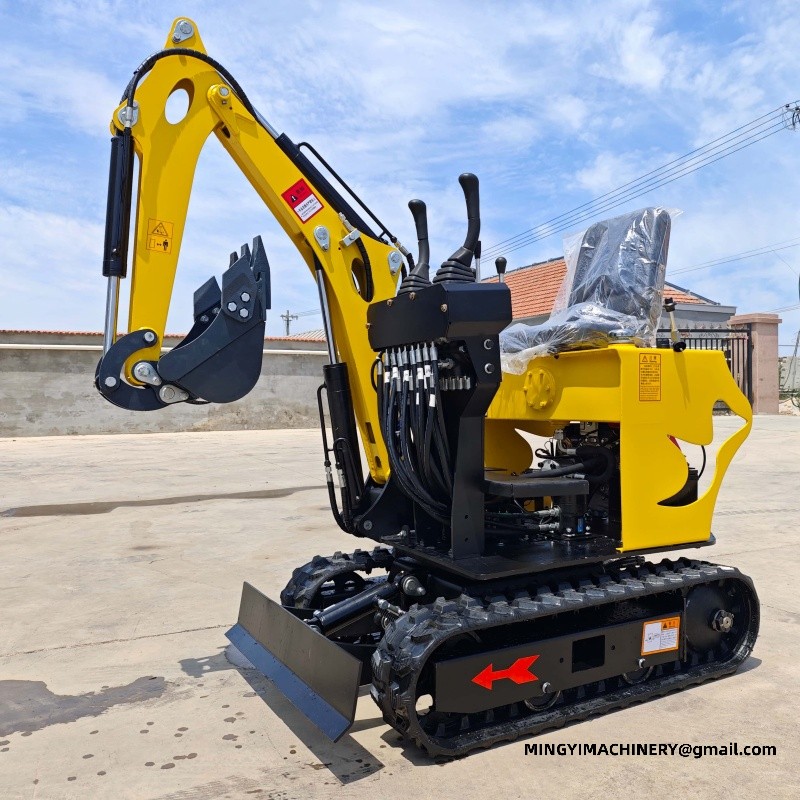
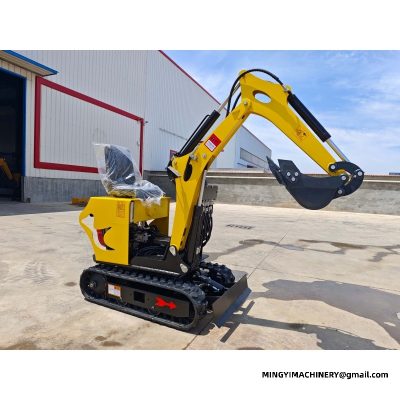
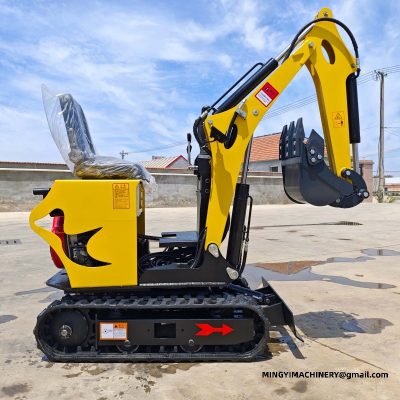
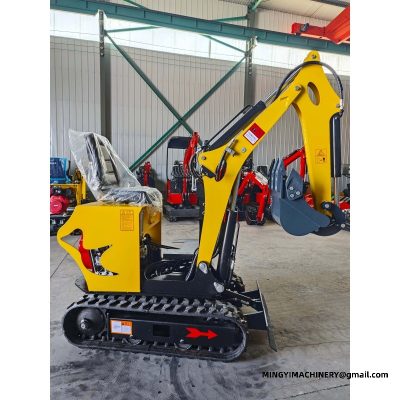
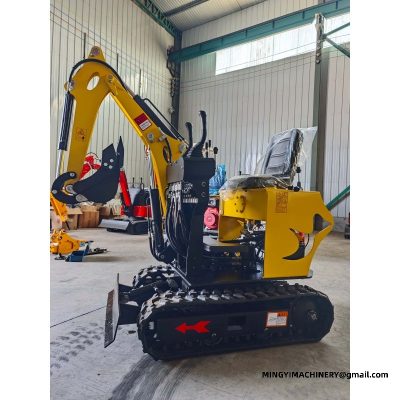
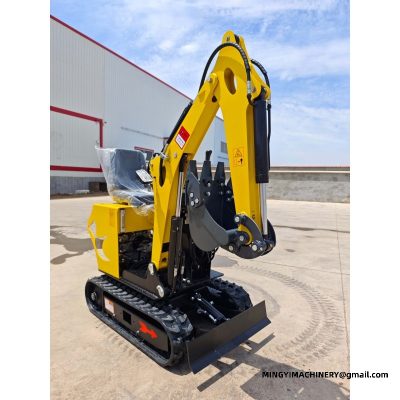
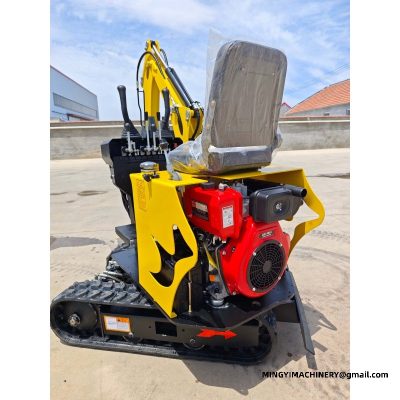
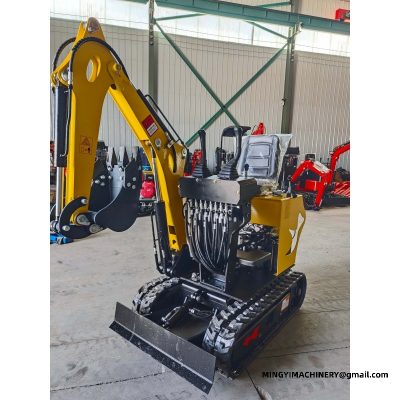
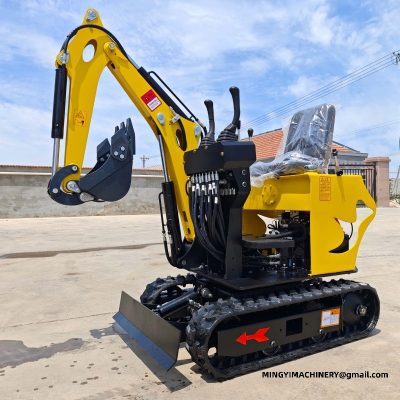
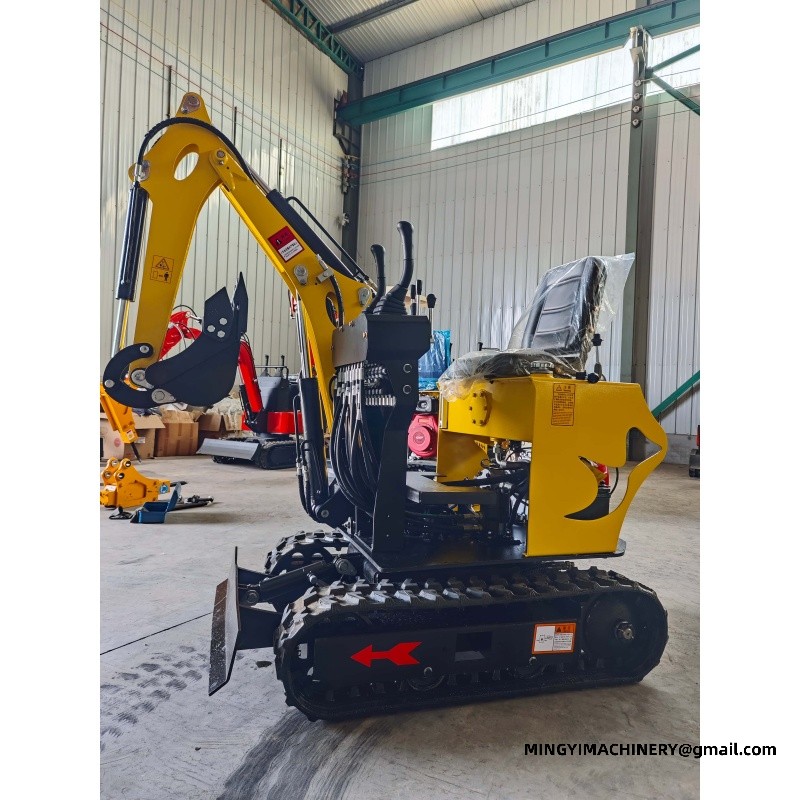
Where a machine is built decides how it performs after year one. MINGYI manufactures mini excavators in China with a controlled process covering fabrication, hydraulic assembly, track fitting and pre-delivery testing, so that machines arrive ready to work.
Our production covers the full 08, 12 and 18 model series, with machines built to the specification each buyer orders.
From fabrication to pre-delivery test
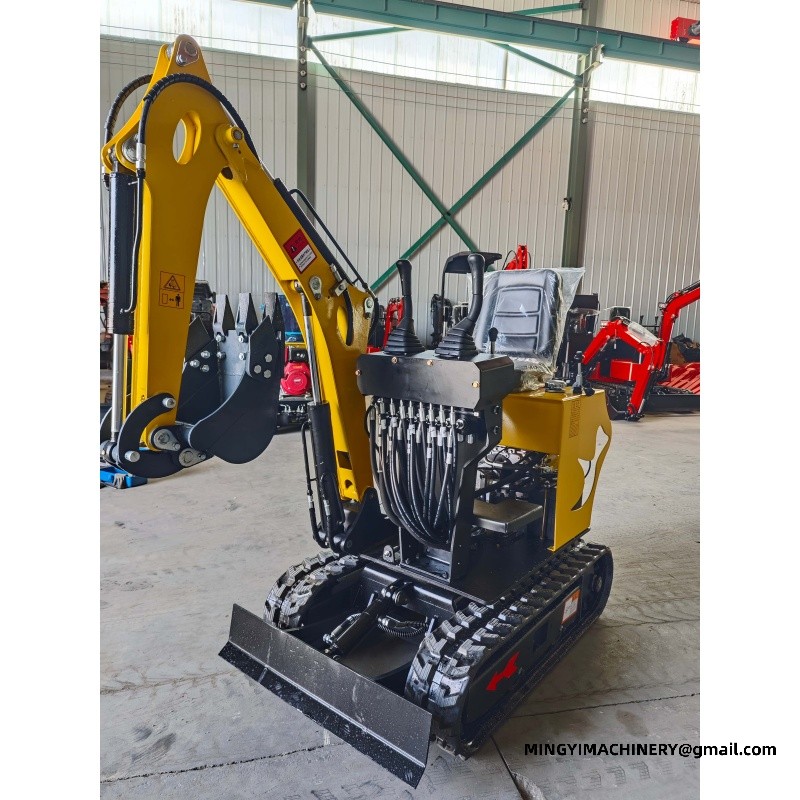
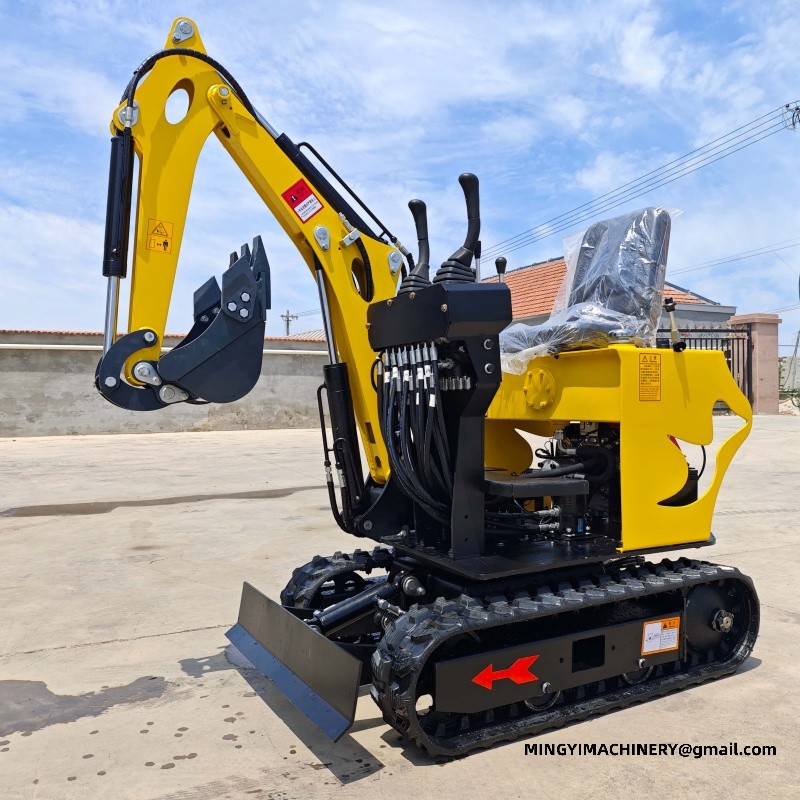
Boom and arm structures, chassis and operator platforms are fabricated and welded in house, then assembled with matched hydraulic components. Each machine is built against a specification that records the engine family, track type, operator station and attachment interface, so the delivered machine matches the order.
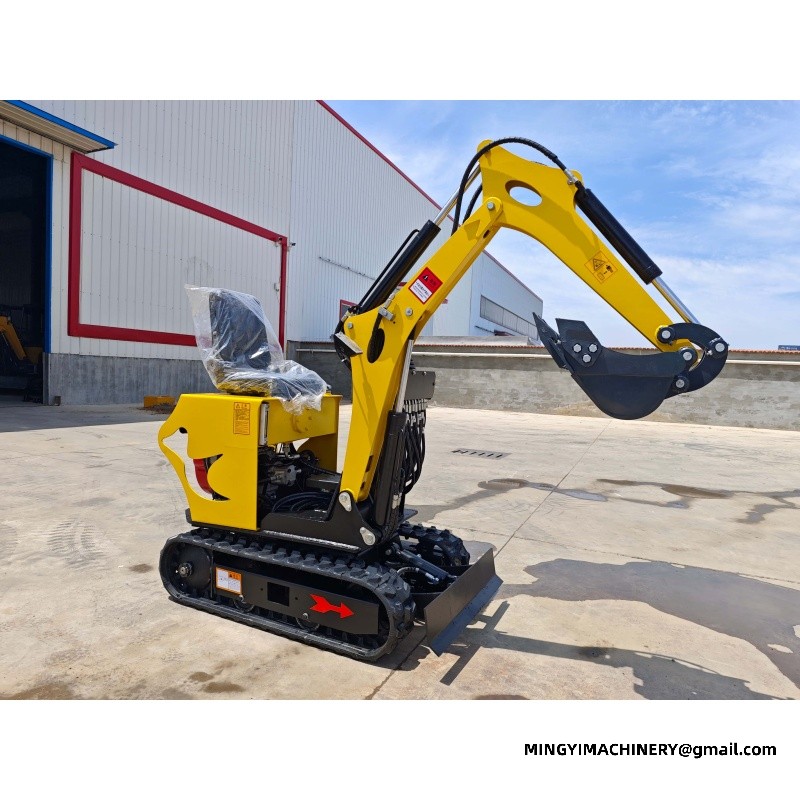
Before dispatch every machine is run through a functional check of hydraulics, swing, tracking and attachment engagement.
Build-to-order and OEM work
Because the machines are assembled to order, buyers can specify engine family, track type, canopy or cab, quick coupler type and attachment set. OEM production is available for dealers who need machines under their own brand and specification.
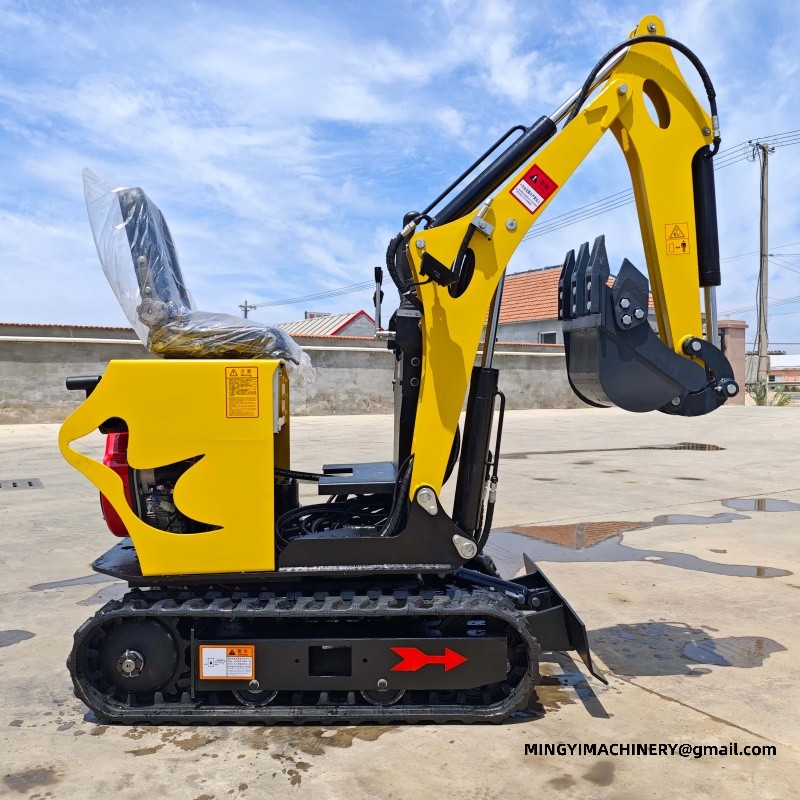
Production and quality steps
• In-house fabrication of boom, arm, chassis and platform
• Matched hydraulic components and factory set-up
• Track fitting with rubber or steel track options
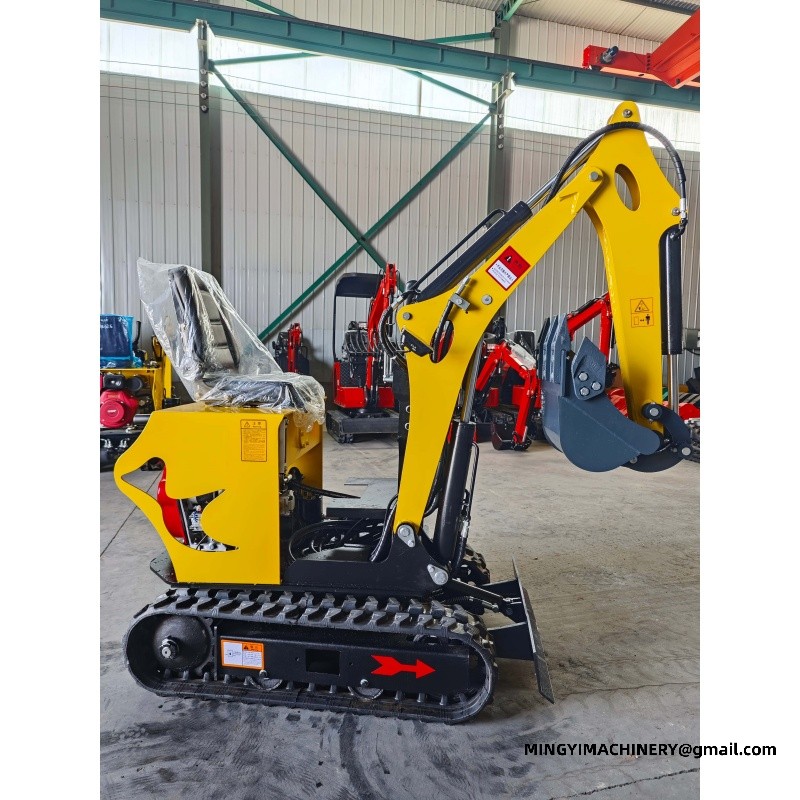
• Functional testing before dispatch
• Build-to-order specification and OEM production
Tell us the specification you require and the quantities you plan and we will confirm production lead time and build options.
Matching mini excavator factory production to ground conditions Hard and abrasive ground reverses the specification. On rock, demolition rubble or sharp gravel, steel tracks with rubber blocks on this class of machine survive conditions that cut a rubber belt quickly. Mixed sites are common and argue for a compromise specification. Most buyers choose rubber for the unit in daily use and accept the wear, unless the majority of the work is on material that will damage it. Boom configuration for mini excavator factory production Extended and offset boom configurations change reach and working range. A machine of this size with a longer arm reaches further but lifts less at full extension, so the specification is set against the deepest and furthest point on the job list. Detachable boom sections are used where transport length matters. The equipment on site that has to travel on a standard trailer can be built so the arm comes off for the road and goes back on at the site. Operator technique for mini excavator factory production Output on a compact machine comes from placement rather than power. An experienced operator keeps the machine itself working inside the swing arc, positions once and digs a full run instead of repositioning for every bucket. The second habit is tool discipline. Running the model in question with the right bucket width for the trench means less spoil, less reinstatement and a cleaner job than a wide bucket and a lot of trimming. Landscaping and ground care with mini excavator factory production Landscape contractors use the machine in that duty for planting holes, pond excavation, grading and retaining work. The machine is light enough to cross finished lawn and narrow enough to work between established trees. On soft landscape work the surface is the constraint. The unit on the job on rubber tracks crosses turf without stripping it, which is why the same jobs are not given to a wheeled machine. Working a mini excavator factory production through the seasons Seasonal planning smooths the workload. Machines that are busy for a few months and idle for the rest benefit from a service slot in the quiet period, and a machine built for the work prepared in the off-season starts the busy months reliably. Heat and dust are as limiting as rain. Air intake condition and cooling cleanliness decide how the equipment in service behaves in a dry season, and both are checked in a minute rather than repaired later. Attachments that turn this class of machine into several machines Attachment lists are best written before delivery. Specifying the unit in daily use with the tools the job list needs avoids the work and delay of adding hydraulics later, and a quick coupler makes the swap a few minutes instead of a workshop job. Most of the daily variety on a machine of this size comes from the attachment rack rather than from the machine itself. Bucket, breaker, auger, ripper, rake and grab cover the large majority of the work a contractor will see. Working the equipment on site in confined spaces Confined sites are decided by dimensions. Overall width, tail swing and the space needed to work the arm are what let the machine itself operate inside a building, between walls or in a courtyard. Ventilation is the other indoor constraint. Running the model in question inside a closed structure needs air movement, and that is a planning item rather than something to discover after the first hour. Noise, dust and working near occupied buildings Work near housing or occupied premises brings constraints that open sites do not. Start times, exhaust condition and how often the machine in that duty needs to reverse are the practical limits that neighbours notice. Dust control is often part of the same conversation. Water, timing and work sequence reduce what leaves the site, and agreeing them in advance keeps the unit on the job working rather than stopped after a complaint. Trailering and moving a machine built for the work Transport weight and width decide whether a machine needs a specialist haulier. The equipment in service sized to travel on a standard plant trailer behind a suitable vehicle moves with the crew rather than on a scheduled low loader. Loading practice matters as much as the numbers. This class of machine is driven up ramps under its own power with the boom lowered and the tracks aligned, and secured at the points the manufacturer specifies. Canopy or enclosed cab on the unit in daily use A canopy keeps the machine light and the operator aware of the surroundings, which suits short jobs in warm weather. A fully enclosed cab is specified where rain, dust or cold are part of the working year, and it can be added to a machine of this size as a retrofit rather than only at build time. Enclosure also changes noise and dust exposure. A sealed cab on the equipment on site keeps dust out on dry sites and lets the machine work through weather that would otherwise stop a canopy machine for the day. Engine options behind the machine itself Power unit selection is settled against the service network the buyer already uses. MINGYI offers Kubota D722, Kubota D902, YANMAR, Changchai, Laidong, Runtong, YARMAX, Youpu 2V80 and Youpu 195, so a fleet running one brand of engine can keep the same filters, the same parts supplier and the same mechanic. Two buyers can order the same the model in question and receive different engines. The decision is rarely about peak power; it is about which parts counter is closest to the site and which engine the local mechanic already knows. Road and paving work for the machine in that duty Patching and reinstatement favour a machine that can work in a lane closure. The unit on the job occupies less road than a full-size excavator, which reduces the traffic management needed and the length of the closure. Breaking out a failed slab and backfilling the same hole in one visit is normal work for a machine built for the work. The breaker and the bucket come off the same coupler, so the road is reopened the same day. Daily checks and maintenance on the equipment in service Daily maintenance on this class of machine is a short list: engine oil level, coolant, track tension, hydraulic oil level and a look at the hoses. Ten minutes at the start of the shift prevents most of the failures that stop a machine. Track tension is the item most often neglected. The unit in daily use run with slack tracks wears the undercarriage and can throw a track on a turn; run too tight, the same components wear from the other direction. Specification data for a machine of this size The figures below are the factory figures for the models most often matched to the equipment on site. They are the numbers to check against the site: the depth the work needs, the reach from one position, and the width of the narrowest point on the route in. These are the reference figures for the machine itself. MINGYI confirms the final build sheet, including engine and attachment choices, against the destination and the job list before production. A function check before the machine goes to work is worth the hour. Running through the controls, the travel and the attachment circuit on the model in question confirms it is set up as specified and ready for the site. Documentation should arrive with the machine. Parts list, service schedule and any certificates for the machine in that duty are what the workshop needs later, and they are much easier to obtain at delivery than in month six.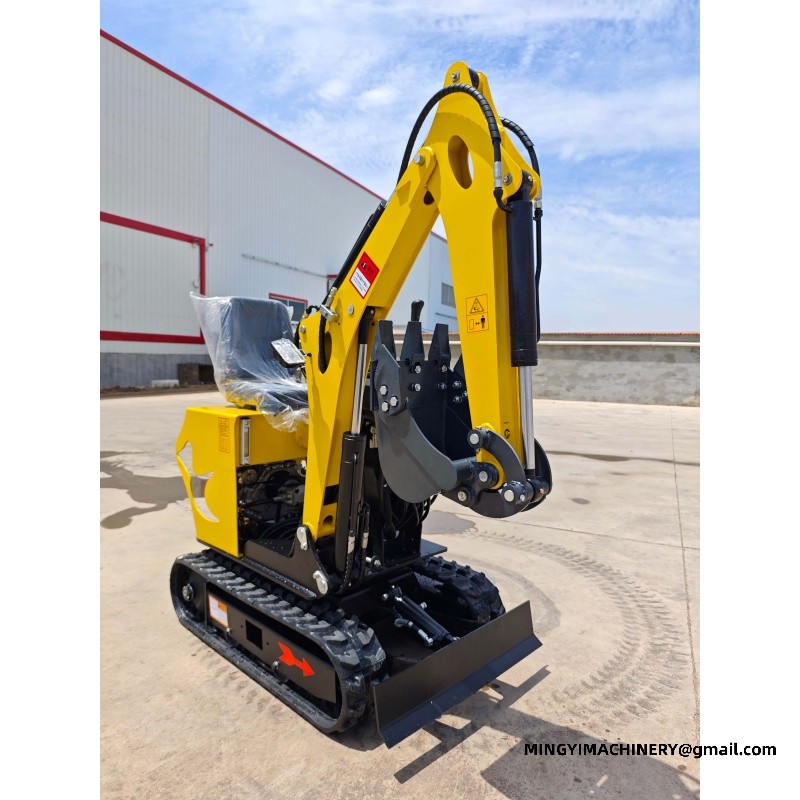
Reference specification — mini excavator range 09W 20-1WL 12L 25L Operating weight 1100 kg (2425.08 lb) 1900 kg (4188.78 lb) 1200 kg (2645.55 lb) 2200 kg (4850.17 lb) Transport size (L×W×H) 1800 × 750 × 1970 mm 2550 × 1100 × 2200 mm 2200 × 930 × 2250 mm 3000 × 1300 × 2700 mm Max digging depth 1250 mm (49.21 in) 1800 mm (70.87 in) 1700 mm (66.93 in) 2300 mm (90.55 in) Max digging height 2800 mm (110.24 in) 2820 mm (111.02 in) 2600 mm (102.36 in) 3100 mm (122.05 in) Max dumping height 1700 mm (66.93 in) 2050 mm (80.71 in) 1800 mm (70.87 in) 2050 mm (80.71 in) Max digging radius 2570 mm (101.18 in) 3050 mm (120.08 in) 2900 mm (114.17 in) 3900 mm (153.54 in) Max digging distance 1869 mm (73.58 in) 2300 mm (90.55 in) 2300 mm (90.55 in) 3100 mm (125.05 in) Minimum turning radius 1000 mm (39.37 in) 1450 mm (57.09 in) 1450 mm (57.09 in) 1800 mm (70.87 in) Travel speed 3 km/h (1.86 mph) 5 km/h (3.11 mph) 3 km/h (1.86 mph) 7 km/h (4.35 mph) Gradeability 30° 30° 30° 30° Fuel consumption 1-1.3 L/h (0.264—0.343 gal) 2-3 L/h (0.528—0.793 gal) 1-1.3 L/h (0.264—0.343 gal) 2-3 L/h (0.528—0.793 gal) Fuel tank capacity 8 L (2.11 gal) 16 L (4.23 gal) 10 L (2.64 gal) 16 L (4.23 gal) Hydraulic oil tank 16 L (4.23 gal) 18 L (4.76 gal) 16 L (4.23 gal) 18 L (4.76 gal) Dozer blade lift height 180 mm (7.09 in) 180 mm (7.09 in) 180 mm (7.09 in) 230 mm (9.06 in) Dozer blade drop depth 210 mm (8.27 in) 210 mm (8.27 in) 210 mm (8.27 in) 280 mm (11.02 in)
Q. How are your mini excavators produced?
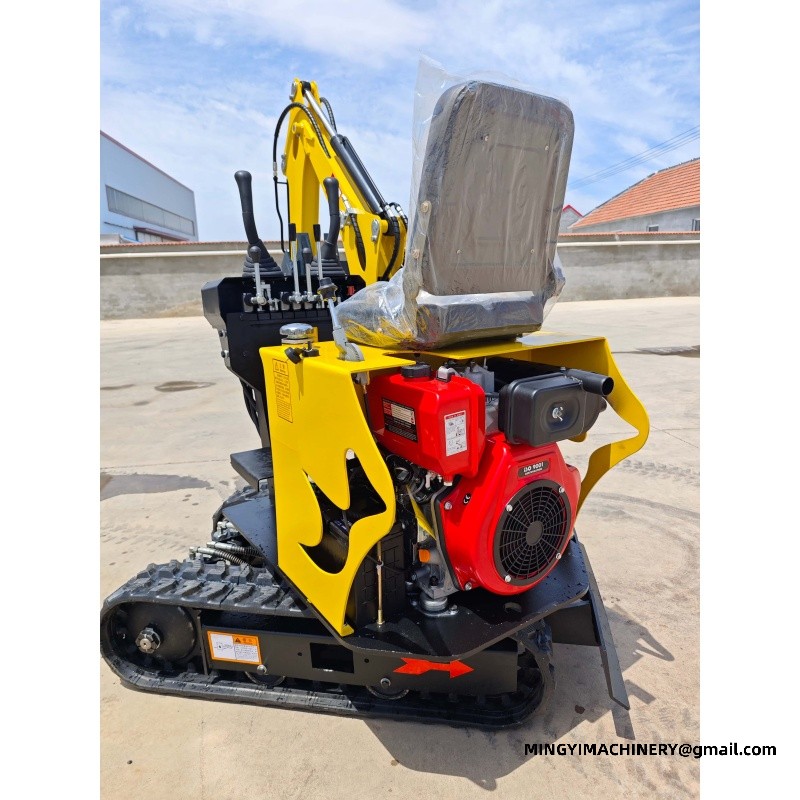
A. Machines are built to order rather than taken from stock, so the model, engine family, track type and attachment set are all fixed by the buyer. MINGYI builds the 08, 12 and 18 models on compact crawler chassis in its own factory in China.
Q. Why does build to order matter?
A. It means the machine arrives matching the work it was bought for, instead of a stock specification that has more on it than the buyer needs or less than the job requires. It also allows colour and decals for dealers and fleets.
Q. Can I see the machine before it ships?
A. Yes. Photographs of the finished machine and its attachments are taken before the container is loaded, so the buyer can confirm the build against the order before the machine leaves. Ask for this when the order is placed.
Cold weather and winter care for the unit on the job
Starting is only the first problem. Until a machine built for the work reaches working temperature the hydraulic response is slower and the seals are stiffer, and warming the machine before asking for full output avoids unnecessary strain.
Hot, humid and dusty conditions around the equipment in service
Heat and dust shorten service intervals rather than machine life. In these conditions the filters on this class of machine need attention more often, and the cooling surfaces need to be kept clear to hold the working temperature.
E-mail : sales@mingycn.com
LINE ( ID ): mingyicn
Related pages
small excavator job site photo · mini excavator attachment application · rubber track digger for soft ground work · PRODUCTS









