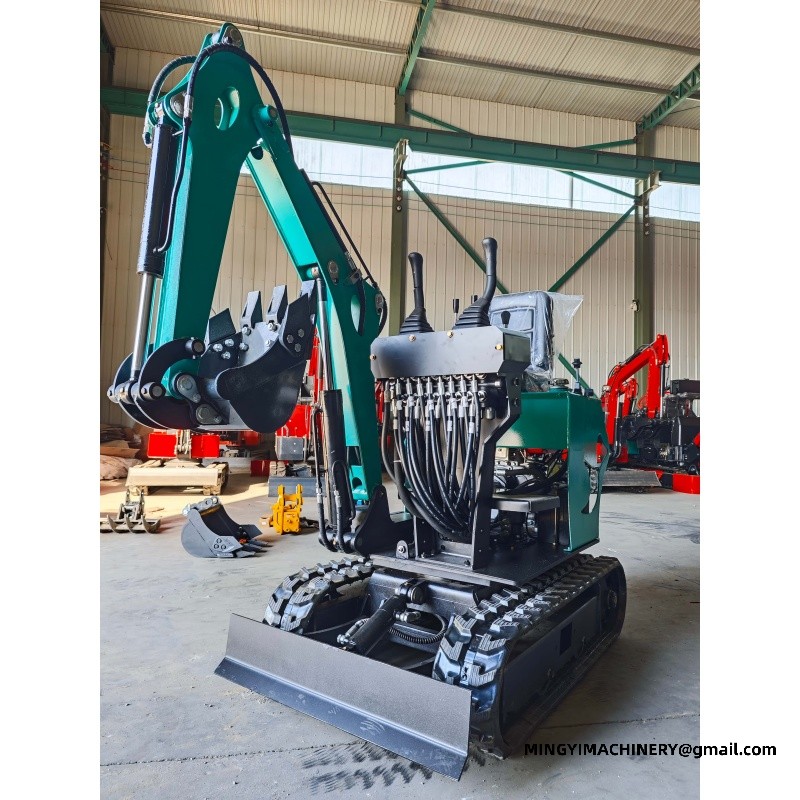
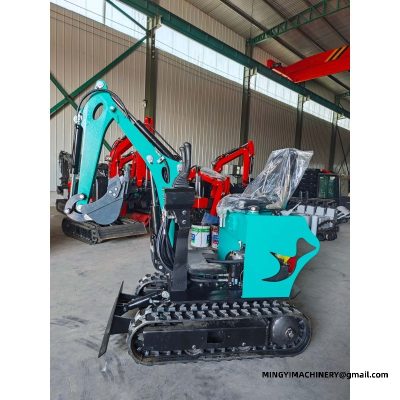
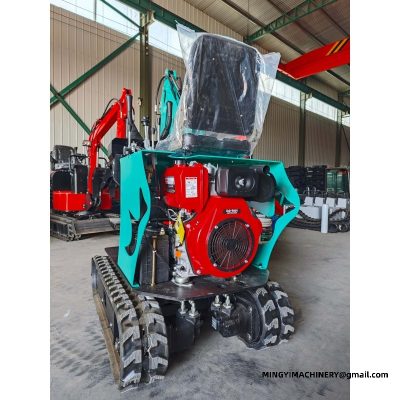
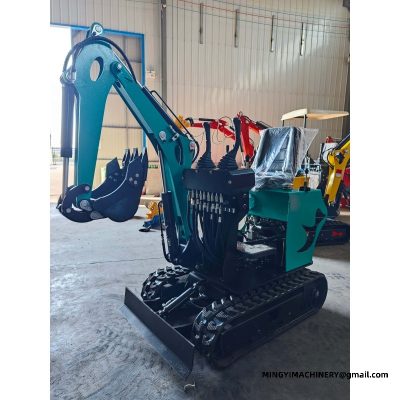
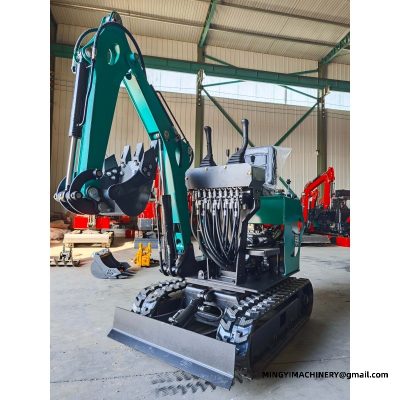
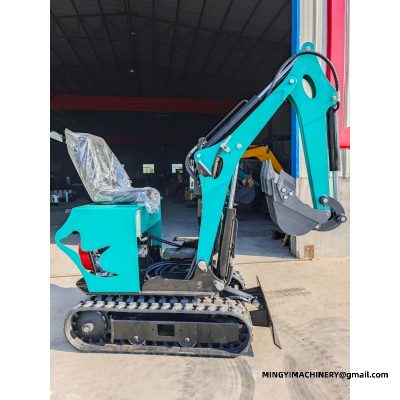
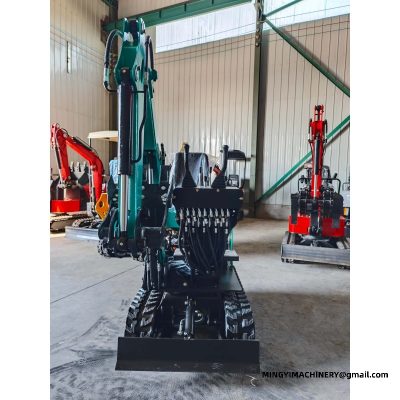
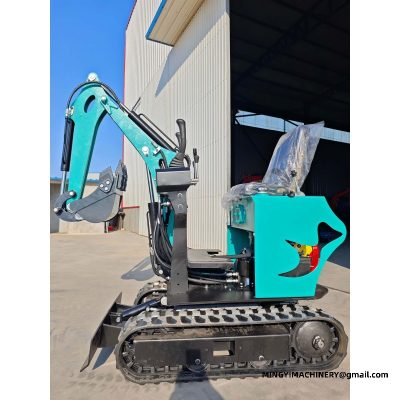
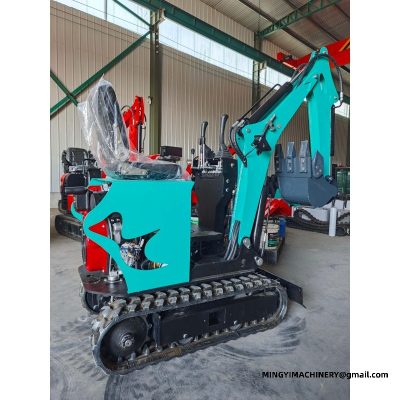
Landscaping puts different demands on an excavator than construction does. The work is precise rather than deep, the surfaces are finished rather than rough, and the machine is judged by the state it leaves the ground in. That defines which machine and which attachments are best suited.
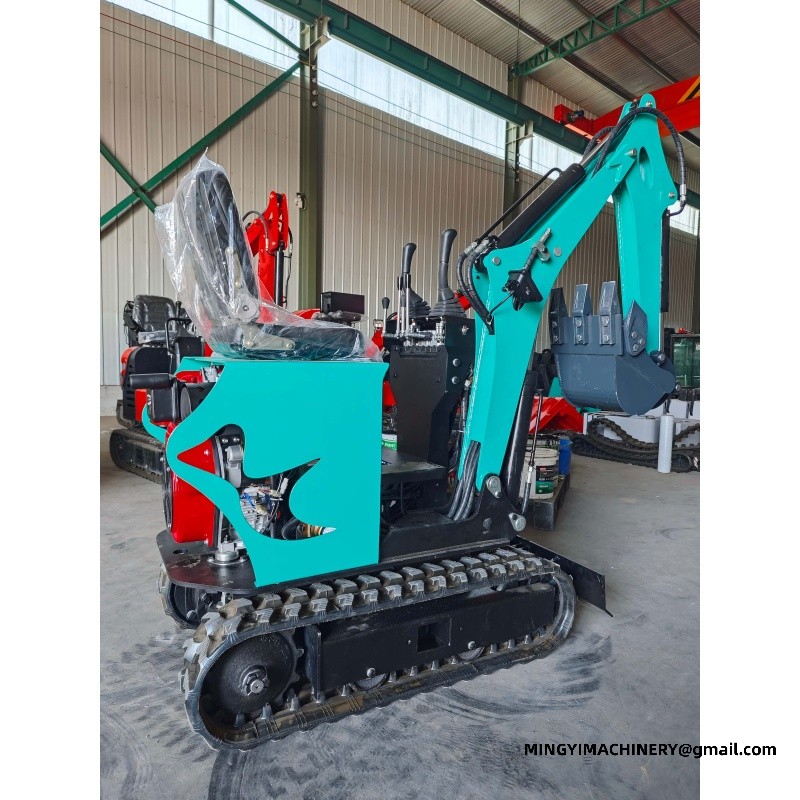
For landscaping work the MINGYI range is usually specified on rubber tracks, in the one-tonne to 2.5 tonne classes, with a bucket, rake and auger set.
What landscaping asks of the machine
The machine has to cross turf, paving and driveways without marking them, work with a small bucket to tight lines, and be able to handle and place material as well as dig it out. Precision matters more than digging depth: a level trench for irrigation or edging is a different requirement from a deep service trench.
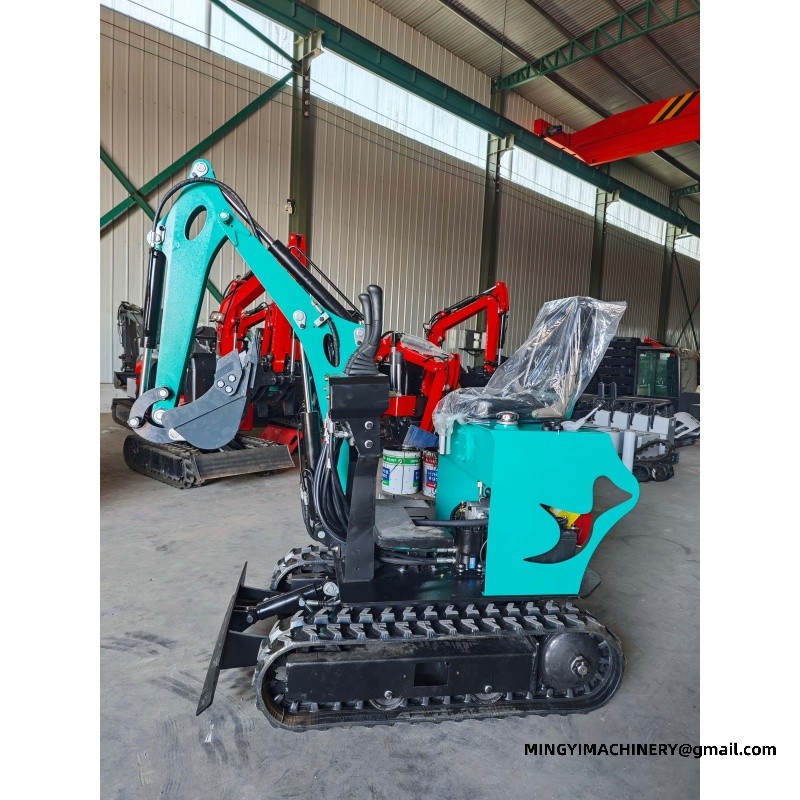
Rubber tracks are the central choice. They allow the machine onto the finished garden, which is often the difference between a machine-assisted job and one dug by hand.
The attachments that pay for themselves
A narrow bucket handles trenches and planting lines. An auger opens planting and post holes at a set diameter. A multi-tooth grass rake and a lawn mower cover vegetation clearance, and a thumb bucket or front forks allow stone, logs and paving to be handled and placed without manual lifting.
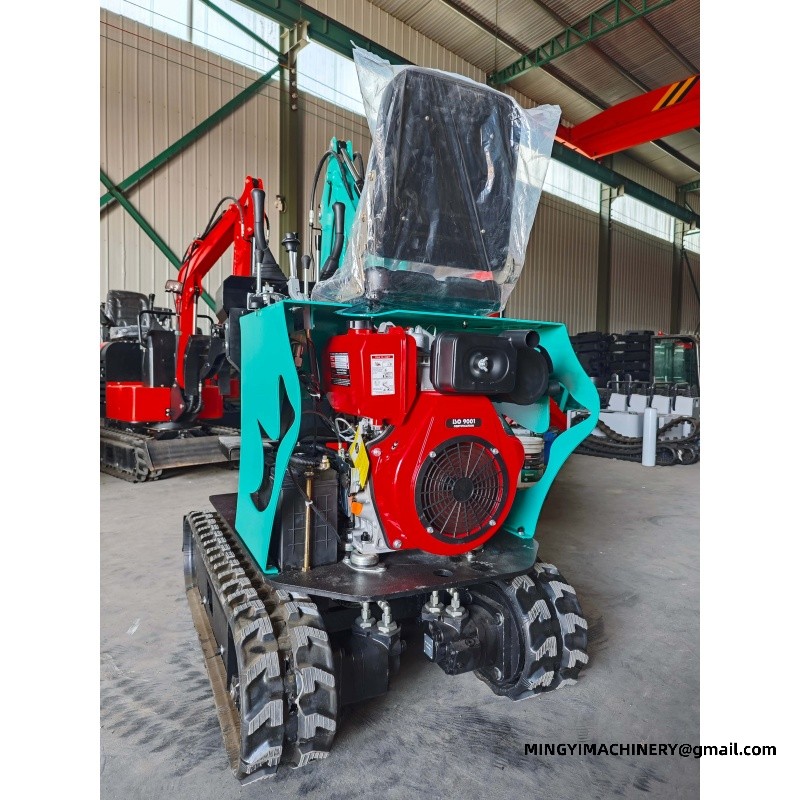
Landscaping specification
• Rubber tracks for turf and paving protection
• Narrow and tilting buckets for precise trench lines
• Auger for planting, post and fence holes
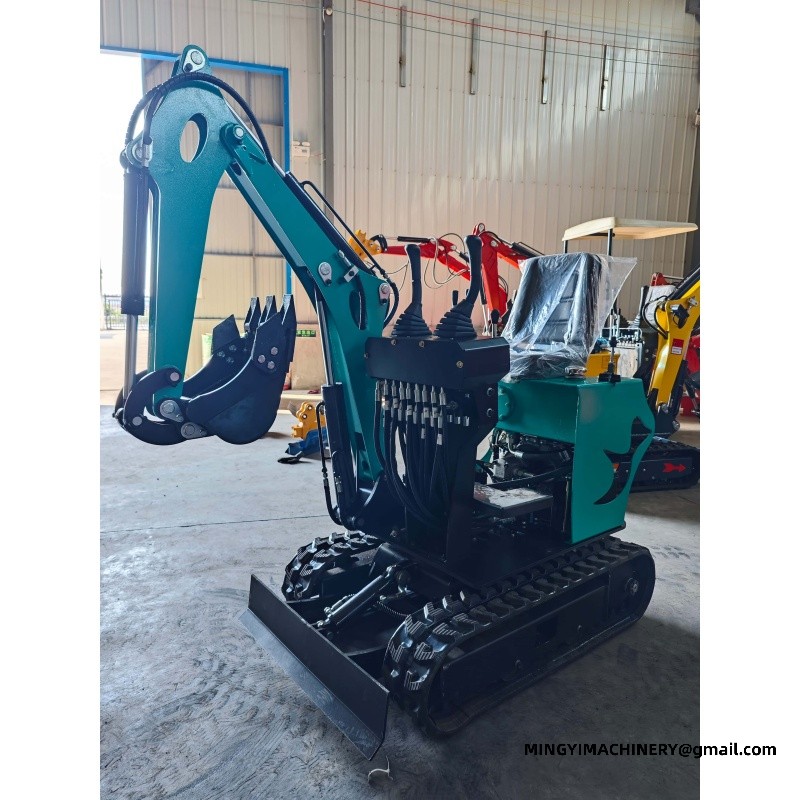
• Grass rake and mower for vegetation work
• Thumb bucket or forks for material handling
Tell us the surfaces you work on and the landscaping tasks you need to cover and we will configure the machine for them.
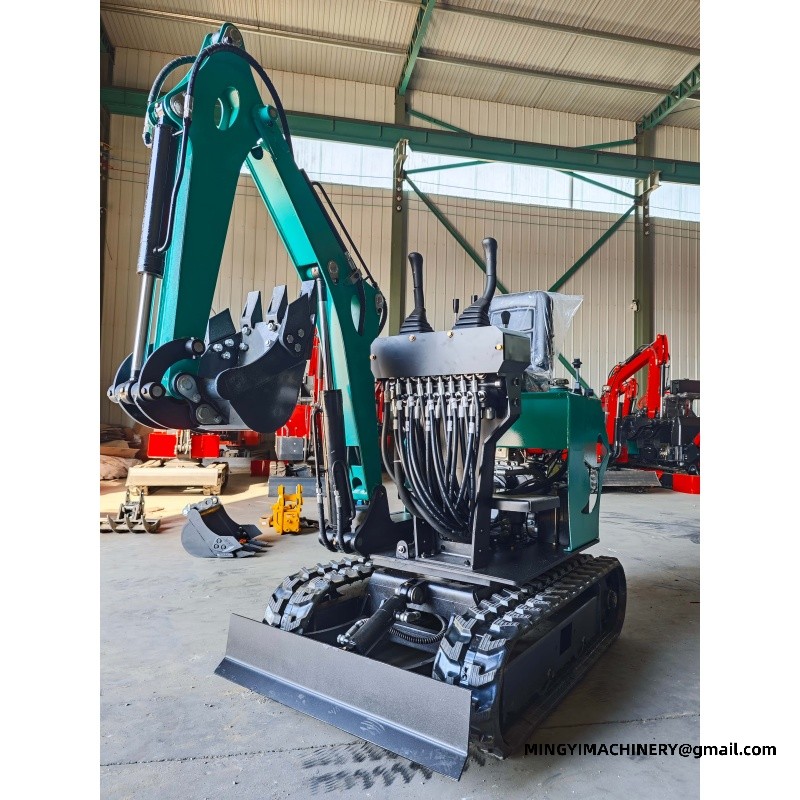
OEM and fleet customisation of best mini excavator for landscaping Customisation also covers the specification sheet. A fleet buyer may want every unit in daily use delivered with the same coupler, the same engine and the same tool kit so training and parts stock stay simple. Documentation can be prepared to suit the importer. Manuals, parts books and decal sets for this class of machine can be supplied with the buyer's own branding where the order size justifies it. Canopy or enclosed cab on a best mini excavator for landscaping The cab decision follows the climate and the hours. Operators working a full shift in a machine of this size benefit from a sealed cab with wipers and heating; operators stepping on and off every few minutes usually prefer the canopy for the visibility and the quick exit. Enclosure also changes noise and dust exposure. A sealed cab on the equipment on site keeps dust out on dry sites and lets the machine work through weather that would otherwise stop a canopy machine for the day. Specifying best mini excavator for landscaping against a job list Buyers who skip this step either over-buy or under-buy. The machine itself specified only from machine size tends to arrive without the coupler, the circuits or the track type the work actually needs. Useful information to send with an enquiry includes working width, required digging depth, ground conditions and the attachment set. Those four items let the factory specify the model in question that fits rather than a generic build. Municipal and public works with best mini excavator for landscaping Municipal crews work on streets, footpaths and parks where the public is present. The machine in that duty is specified because it occupies little space, works inside a small exclusion zone and can be moved on a standard trailer. Drainage repair, tree planting, footway reconstruction and cemetery work are all within the range of the unit on the job. The jobs are small individually and continuous across the year. Operator technique for best mini excavator for landscaping Output on a compact machine comes from placement rather than power. An experienced operator keeps a machine built for the work working inside the swing arc, positions once and digs a full run instead of repositioning for every bucket. Stability is the third. The equipment in service working across the tracks rather than over the corners keeps the machine steady and the undercarriage loaded evenly, which shows up as track life at the end of the season. Getting this class of machine through a narrow gap The first question on most job lists is whether the machine can reach the work at all. The unit in daily use is chosen against the narrowest point on the route - a garden gate, a doorway, a gap between two walls - because a machine that arrives and then cannot pass loses a day, not an hour. Access decides the machine before output does. With a machine of this size the limiting dimension is usually the widest point on the way in, so measuring the gate, the corridor and the turning space first saves a wasted delivery and a second visit. Orchard, vineyard and farm use of the equipment on site Ditching, fertilising and drainage on farmland suit the machine itself because the work is spread over a large area in short bursts. The machine travels behind a pickup and works where it stops. Farms also use the model in question for general maintenance - clearing a watercourse, repairing a track, loading a spreader. One carrier with a few attachments covers most of the jobs that would otherwise wait for a contractor. Quick coupler practice on the machine in that duty A quick coupler is the single option that changes how a machine is used day to day. Fitted to the unit on the job, it turns an attachment change from a two-person workshop job into a task the operator does alone in minutes. For a fleet that shares attachments between machines, a common coupler standard matters more than the coupler brand. A machine built for the work that picks up the same tools as the larger machines keeps the rack usable across the yard. Export packing and shipping of the equipment in service Machines leave the factory prepared for container or flat rack shipment. This class of machine is normally shipped with the attachment set and the spare parts list agreed in advance so the container is planned once. Export documentation, decals and paint are settled before packing. Asking for them with the unit in daily use order avoids a second handling session and keeps the machine on the booked vessel. Parts, service and support for a machine of this size Engine parts availability usually drives the engine choice. The equipment on site built with an engine the local network already carries is serviced from stock rather than from an international order. Remote support is handled by video. The machine itself fault can often be diagnosed on a walk-around call with the panel open, which is faster than waiting for a visit and avoids shipping a part that is not needed. Hiring versus owning the model in question Availability is part of the decision. Owning the machine in that duty means it is there on the day the ground is ready; hiring means competing for the same machine at the same time as everyone else in the season. Ownership brings obligations that hiring does not. Storage, servicing, insurance and an operator are the items to set against the hire rate before deciding which way the unit on the job should be supplied. Noise, dust and working near occupied buildings Work near housing or occupied premises brings constraints that open sites do not. Start times, exhaust condition and how often a machine built for the work needs to reverse are the practical limits that neighbours notice. Enclosure and machine condition both reduce noise. The equipment in service with intact panels, sound mounts and a maintained exhaust is measurably quieter than the same machine with loose guards, and the difference matters on restricted sites. Specification data for this class of machine Buyers comparing the unit in daily use usually start from four numbers - weight, digging depth, reach and transport width - because those are the ones that decide whether the machine can be delivered and whether it can do the job once it is there. Every value shown is as built for a machine of this size; options such as cab, side swing or a telescopic undercarriage change the transport dimensions and are confirmed at order stage. Two buyers can order the same the machine itself and receive different engines. The decision is rarely about peak power; it is about which parts counter is closest to the site and which engine the local mechanic already knows. Engine choice is also an emissions and documentation question for some markets. Listing the available units with the equipment on site enquiry lets the factory confirm what can be supplied and documented for the destination country.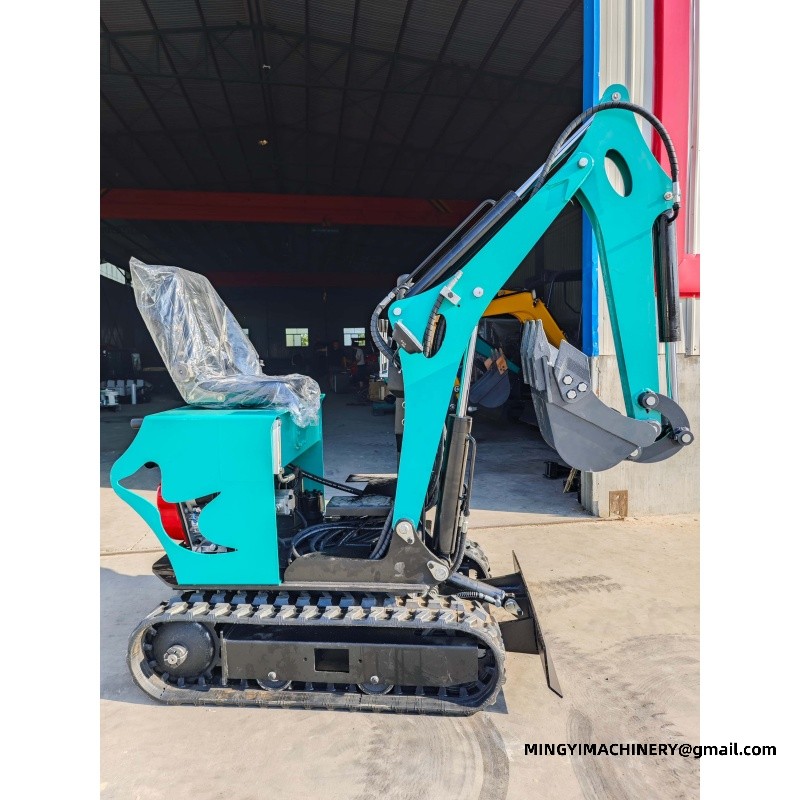
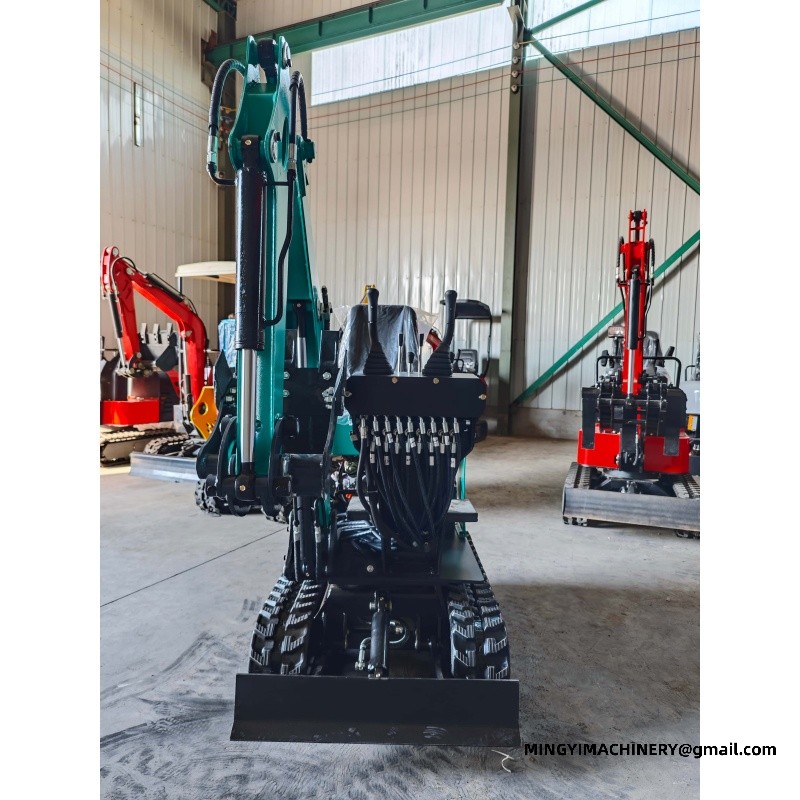
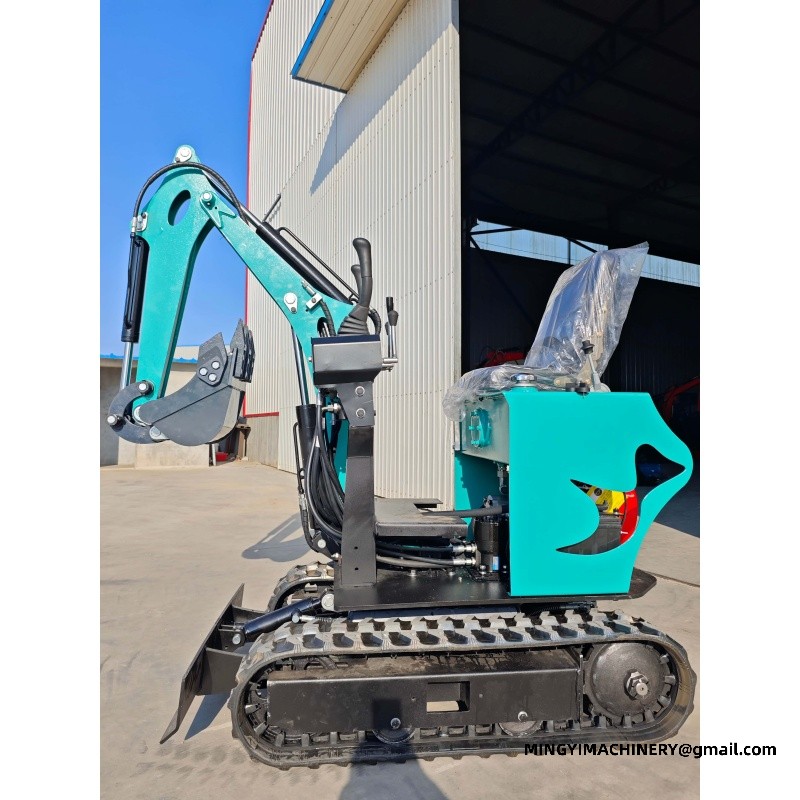
Reference specification — mini excavator range 09W 13W 20-1WL 30-2W Operating weight 1100 kg (2425.08 lb) 1300 kg (2866.01 lb) 1900 kg (4188.78 lb) 2700 kg (5952.48 lb) Transport size (L×W×H) 1800 × 750 × 1970 mm 2200 × 930 × 2250 mm 2550 × 1100 × 2200 mm 3000 × 1100 × 2700 mm Max digging depth 1250 mm (49.21 in) 1630 mm (64.17 in) 1800 mm (70.87 in) 2200 mm (86.61 in) Max digging height 2800 mm (110.24 in) 2750 mm (108.27 in) 2820 mm (111.02 in) 3000 mm (118.11 in) Max dumping height 1700 mm (66.93 in) 1960 mm (77.17 in) 2050 mm (80.71 in) 2000 mm (78.74 in) Max digging radius 2570 mm (101.18 in) 2900 mm (114.17 in) 3050 mm (120.08 in) 3800 mm (149.61 in) Max digging distance 1869 mm (73.58 in) 2100 mm (82.68 in) 2300 mm (90.55 in) 3050 mm (120.08 in) Minimum turning radius 1000 mm (39.37 in) 1300 mm (51.18 in) 1450 mm (57.09 in) 1750 mm (68.9 in) Travel speed 3 km/h (1.86 mph) 3 km/h (1.86 mph) 5 km/h (3.11 mph) 7 km/h (4.35 mph) Gradeability 30° 30° 30° 30° Fuel consumption 1-1.3 L/h (0.264—0.343 gal) 1-1.3 L/h (0.264—0.343 gal) 2-3 L/h (0.528—0.793 gal) 2-3 L/h (0.528—0.793 gal) Fuel tank capacity 8 L (2.11 gal) 10 L (2.64 gal) 16 L (4.23 gal) 16 L (4.23 gal) Hydraulic oil tank 16 L (4.23 gal) 16 L (4.23 gal) 18 L (4.76 gal) 20 L (5.28 gal) Dozer blade lift height 180 mm (7.09 in) 180 mm (7.09 in) 180 mm (7.09 in) 230 mm (9.06 in) Dozer blade drop depth 210 mm (8.27 in) 210 mm (8.27 in) 210 mm (8.27 in) 280 mm (11.02 in)
Q. What makes a mini excavator good for landscaping?
A. Three things: low ground pressure, a quick coupler and a tooling set that covers both soft and hard landscaping. MINGYI machines in the 1.5 to 2.5 tonne class on rubber tracks are the usual match, because they work on finished ground without leaving ruts.
Q. Which model suits a landscaping business?
A. The 12 and 18 models are the common choice, because they cover footing, drainage and planting work while still fitting through a garden gate. The 08 model suits work that is almost entirely within established gardens and very tight access.
Q. What tooling should a landscaper start with?
A. A bucket set, a quick coupler and an auger covers most landscaping work, with a breaker added if the business takes on paving and small demolition. Tell us the mix of work you expect and MINGYI will propose the tooling that earns its keep first.
Moving the model in question between sites
Travel time is not working time, and it should be planned as its own item. The hours spent moving the machine in that duty between jobs are hours not worked, and a trailer that matches the machine reduces them every single trip.
Later additions and retrofits on the unit on the job
Most additions are easier to plan than to add. Hydraulic services, mounting brackets and electrical capacity on a machine built for the work are build items, and deciding them at the specification stage is far easier than doing it later.
E-mail : sales@mingycn.com
LINE ( ID ): mingyicn
Related pages
mini excavator size for small projects · mini excavator for farm owners · hydraulic mini excavator for ditching · PRODUCTS









