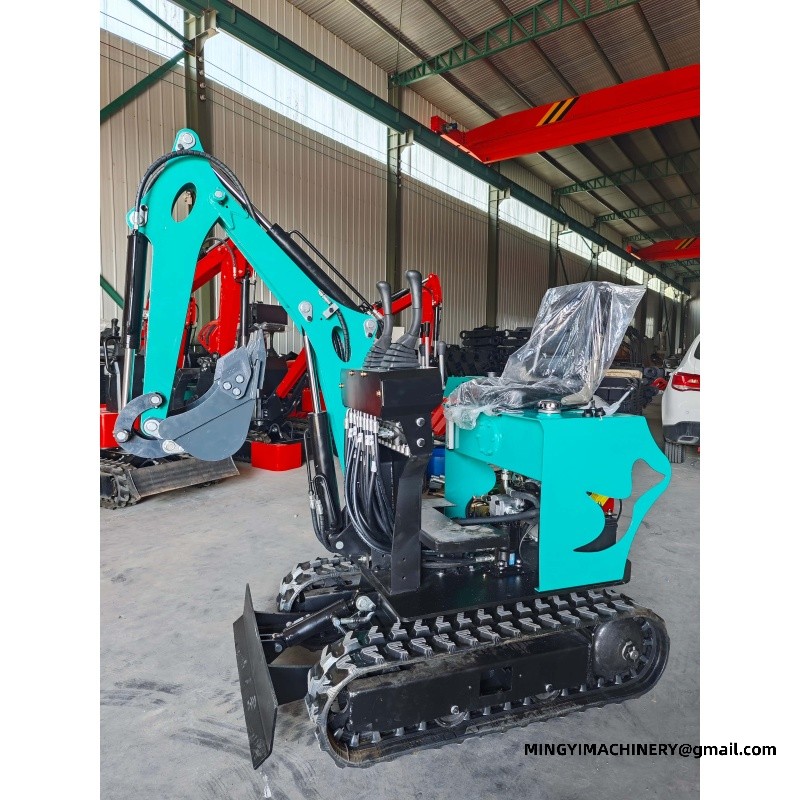
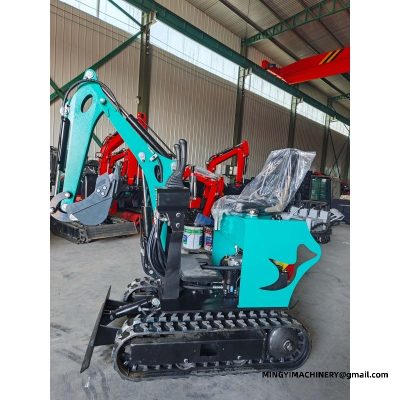
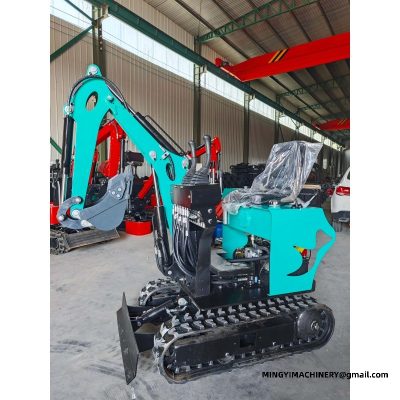
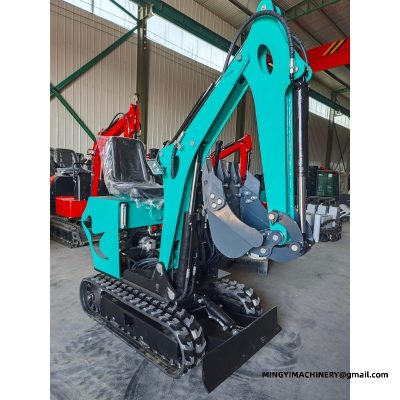
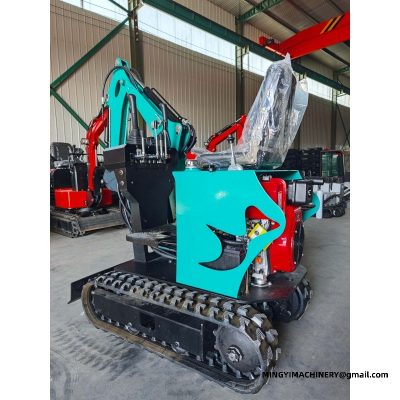
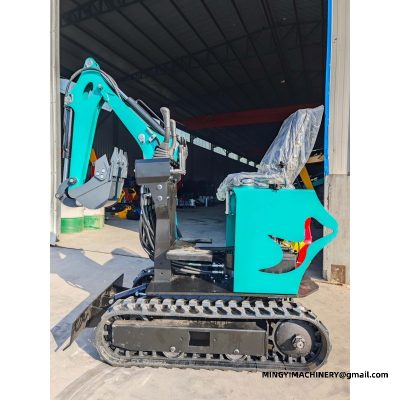
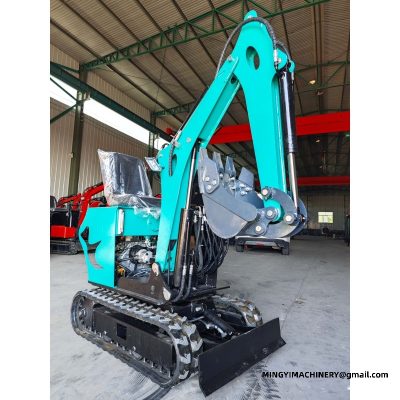
Farm owners buy a compact excavator because the work is constant and the machine is always needed: drainage, ditches, fencing, clearing buildings and yards, and handling material. A hire machine would be on site most of the year, which is why owning often makes more sense.
MINGYI mini excavators are used on farms and smallholdings across the one-tonne to 3 tonne classes.
The work a farm machine gets through
Field drainage and ditch maintenance come first, along with cleaning out culverts and watercourses. Fencing follows, with an auger opening post holes quickly. Then the general work: clearing yards and livestock buildings, moving material around the farm, and opening trenches for water and power to outbuildings.
Because the machine is compact, it works inside barns, along field allowances and in yards where larger plant cannot turn — and it can be moved between locations on a farm trailer.
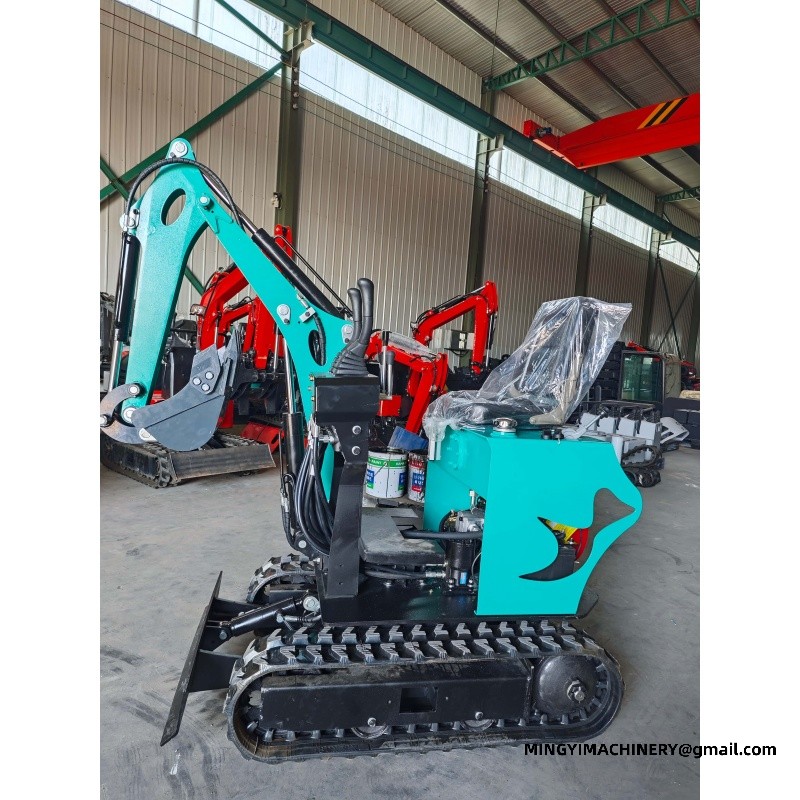
Specifying for farm conditions
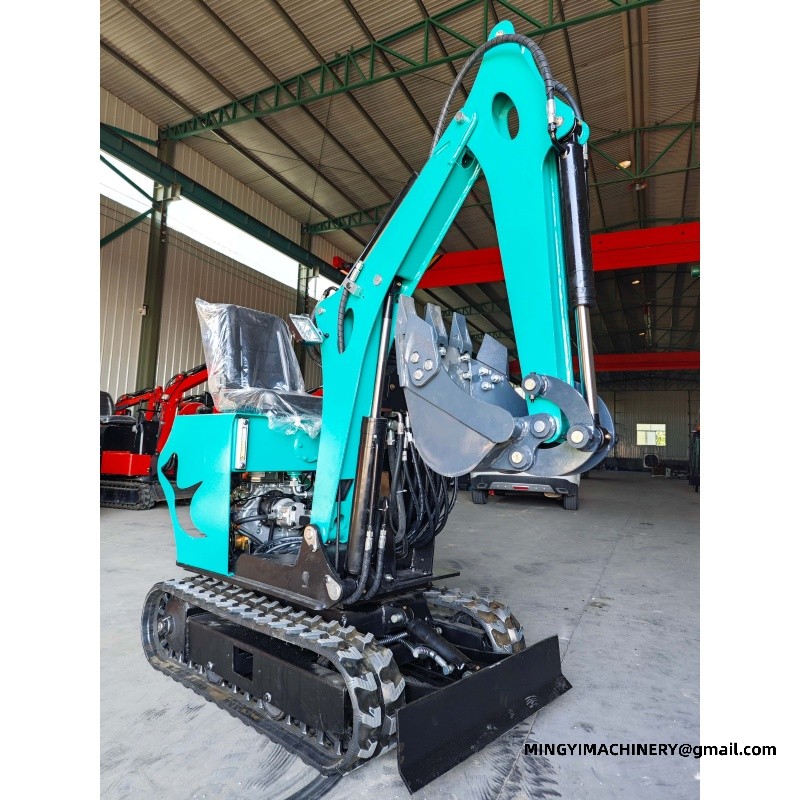
Rubber tracks are the usual choice where the machine crosses yards, tracks and pasture, and they protect concrete surfaces. A canopy version gives visibility and low transport height for working around buildings; a cab version suits longer shifts in poor weather.
Engine family matters on a farm, where the machine may be far from a dealer. Choosing a family with local parts support keeps the machine working.
Farm applications
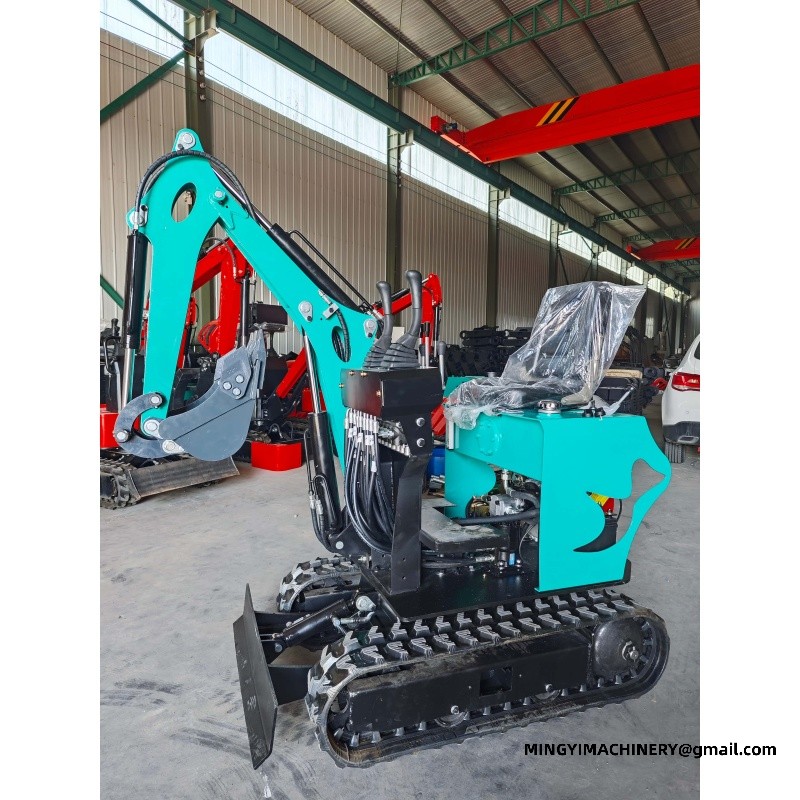
• Field drainage and ditch maintenance
• Culvert, watercourse and yard clearance
• Fencing and gate post holes with an auger
• Livestock building and yard work
• Water and power trenches to outbuildings
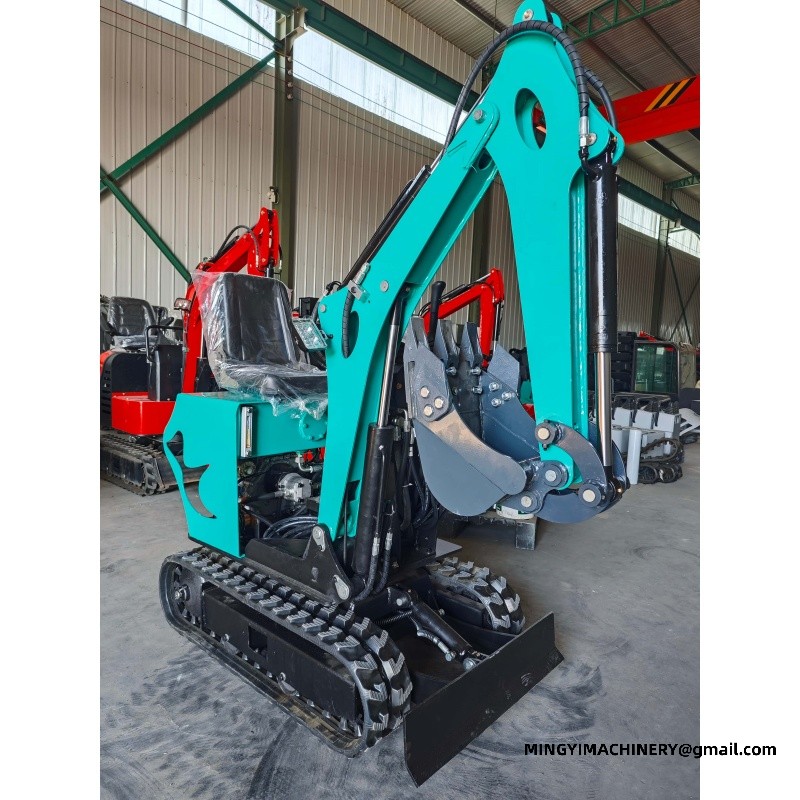
Tell us the jobs you need to cover and how the machine will be kept and serviced, and we will recommend a specification.
Boom configuration for mini excavator for farm owners Extended and offset boom configurations change reach and working range. This class of machine with a longer arm reaches further but lifts less at full extension, so the specification is set against the deepest and furthest point on the job list. Detachable boom sections are used where transport length matters. The unit in daily use that has to travel on a standard trailer can be built so the arm comes off for the road and goes back on at the site. Running mini excavator for farm owners in a rental fleet Rental fleets buy for utilisation, not for a single job. A machine of this size with a quick coupler and a common attachment standard is hired more often because it suits more of the calls that come in. The specification that rents best is usually the simplest one to explain at the counter. The equipment on site with rubber tracks, a canopy and a coupler covers the majority of weekend and short-term hires. Trailering and moving mini excavator for farm owners Transport weight and width decide whether a machine needs a specialist haulier. The machine itself sized to travel on a standard plant trailer behind a suitable vehicle moves with the crew rather than on a scheduled low loader. Detachable components reduce transport length. The model in question built with a removable arm section or a folding step fits a shorter trailer and may avoid an oversize movement permit. What owners should plan for beyond the mini excavator for farm owners The useful comparison is demand per working hour, not demand per machine. The machine in that duty that works more hours a year spreads its standing takes over more output, which is why utilisation usually matters more than the invoice figure. Downtime is the hidden line item. The unit on the job waiting on a part earns nothing while it stands, so parts availability and service access belong in the plan as much as fuel does. Municipal and public works with mini excavator for farm owners Drainage repair, tree planting, footway reconstruction and cemetery work are all within the range of a machine built for the work. The jobs are small individually and continuous across the year. Noise and surface protection matter on public work. The equipment in service on rubber tracks across paving, with a sealed cab for the operator, suits the conditions better than a larger tracked machine. Working on slopes and uneven ground with this class of machine Slope work is a stability question before it is a traction question. Knowing the gradient the unit in daily use is rated for, and working across rather than straight up where the ground allows, removes most of the risk. Ground that looks level often is not. A machine of this size crossing a filled trench, a soft edge or a hidden void behaves differently from one on undisturbed ground, and those are the places worth walking before driving. Daily checks and maintenance on the equipment on site Daily maintenance on the machine itself is a short list: engine oil level, coolant, track tension, hydraulic oil level and a look at the hoses. Ten minutes at the start of the shift prevents most of the failures that stop a machine. Greasing is the second item. The slew ring, the boom and arm pins and the bucket linkage on the model in question take grease daily in dusty work, and the intervals shorten further when the machine is used in water or mud. Working the machine in that duty in confined spaces Confined sites are decided by dimensions. Overall width, tail swing and the space needed to work the arm are what let the unit on the job operate inside a building, between walls or in a courtyard. Ventilation is the other indoor constraint. Running a machine built for the work inside a closed structure needs air movement, and that is a planning item rather than something to discover after the first hour. Canopy or enclosed cab on the equipment in service A canopy keeps the machine light and the operator aware of the surroundings, which suits short jobs in warm weather. A fully enclosed cab is specified where rain, dust or cold are part of the working year, and it can be added to this class of machine as a retrofit rather than only at build time. Enclosure also changes noise and dust exposure. A sealed cab on the unit in daily use keeps dust out on dry sites and lets the machine work through weather that would otherwise stop a canopy machine for the day. Getting a machine of this size through a narrow gap The first question on most job lists is whether the machine can reach the work at all. The equipment on site is chosen against the narrowest point on the route - a garden gate, a doorway, a gap between two walls - because a machine that arrives and then cannot pass loses a day, not an hour. Contractors who buy the machine itself normally have one job in mind that nothing else reaches. The purchase order follows the access measurement, not the other way round, and the build sheet is then settled around it. Lifting and material handling with the model in question Lifting with a machine built to dig needs a plan. The load, the radius and the ground under the unit on the job all matter, and the safe figure is the one on the chart rather than the one that looks possible. Stability changes with reach. A load the machine in that duty handles close in becomes a different proposition at full extension, so the working radius belongs in the plan before the lift rather than during it. Attachments that turn a machine built for the work into several machines The base machine is a carrier; the tool on the end of the arm decides the task. The equipment in service fitted with a toothed bucket digs, and the same machine with a breaker, an auger or a grab does work that would otherwise need a second unit on site. Attachment lists are best written before delivery. Specifying this class of machine with the tools the job list needs avoids the work and delay of adding hydraulics later, and a quick coupler makes the swap a few minutes instead of a workshop job. Specification data for the unit in daily use The figures below are the factory figures for the models most often matched to a machine of this size. They are the numbers to check against the site: the depth the work needs, the reach from one position, and the width of the narrowest point on the route in. Every value shown is as built for the equipment on site; options such as cab, side swing or a telescopic undercarriage change the transport dimensions and are confirmed at order stage. Auxiliary hydraulic lines are what let a machine drive a tool rather than only a bucket. The machine itself specified with the right circuits and flow runs a breaker or an auger without an add-on power pack bolted to the frame. Hydraulic specification is easier to settle at build time than to correct later. The model in question delivered without auxiliary lines can still dig, but every additional tool becomes a retrofit project.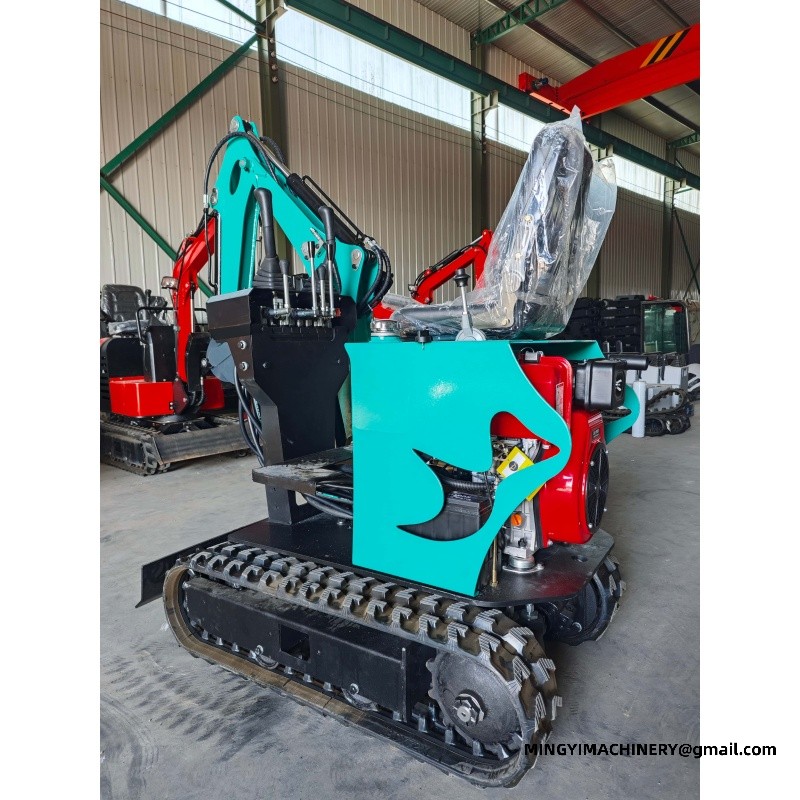
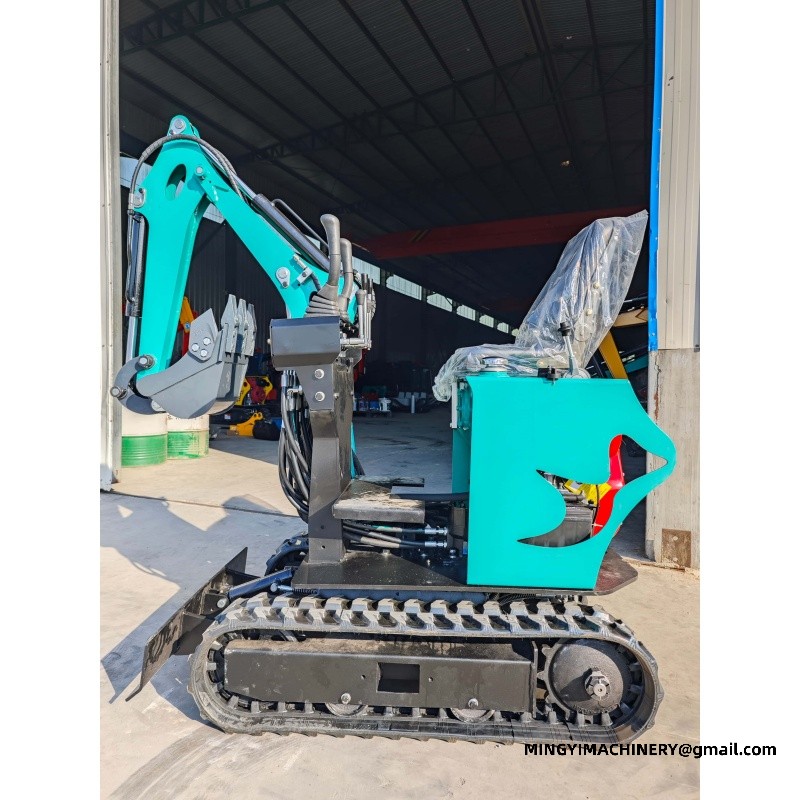
Reference specification — mini excavator range 12W 20-1WL 09L 15L Operating weight 1200 kg (2645.55 lb) 1900 kg (4188.78 lb) 1100 kg (2425.08 lb) 1400 kg (3086.47 lb) Transport size (L×W×H) 2200 × 930 × 2250 mm 2550 × 1100 × 2200 mm 2300 × 720 × 1870 mm 2200 × 930 × 2250 mm Max digging depth 1630 mm (64.17 in) 1800 mm (70.87 in) 1400 mm (55.12 in) 1700 mm (66.93 in) Max digging height 2750 mm (108.27 in) 2820 mm (111.02 in) 2800 mm (110.24 in) 2750 mm (108.27 in) Max dumping height 1960 mm (77.17 in) 2050 mm (80.71 in) 1880 mm (74.02 in) 1960 mm (77.17 in) Max digging radius 2900 mm (114.17 in) 3050 mm (120.08 in) 2490 mm (98.03 in) 2900 mm (114.17 in) Max digging distance 2100 mm (82.68 in) 2300 mm (90.55 in) 2000 mm (78.74 in) 2300 mm (90.55 in) Minimum turning radius 1300 mm (51.18 in) 1450 mm (57.09 in) 1400 mm (55.12 in) 1450 mm (57.09 in) Travel speed 3 km/h (1.86 mph) 5 km/h (3.11 mph) 3 km/h (1.86 mph) 3 km/h (1.86 mph) Gradeability 30° 30° 30° 30° Fuel consumption 1-1.3 L/h (0.264—0.343 gal) 2-3 L/h (0.528—0.793 gal) 1-1.3 L/h (0.264—0.343 gal) 1-1.3 L/h (0.264—0.343 gal) Fuel tank capacity 10 L (2.64 gal) 16 L (4.23 gal) 8 L (2.11 gal) 10 L (2.64 gal) Hydraulic oil tank 16 L (4.23 gal) 18 L (4.76 gal) 16 L (4.23 gal) 16 L (4.23 gal) Dozer blade lift height 180 mm (7.09 in) 180 mm (7.09 in) 180 mm (7.09 in) 180 mm (7.09 in) Dozer blade drop depth 210 mm (8.27 in) 210 mm (8.27 in) 210 mm (8.27 in) 210 mm (8.27 in)
Q. What can a mini excavator do on a farm?
A. Drainage and ditch work, clearing and muck handling, repair of tracks and farm buildings, and orchard or terrace work where a wheeled tractor cannot be driven. The compact crawler base keeps ground pressure low on soft and sloped ground.
Q. Which model suits a farm?
A. The 08 and 12 models cover most farm work, because the tasks are short and often in confined positions, and they can be moved behind a small trailer. A larger model is worthwhile where the farm also does bulk excavation.
Q. What tooling makes sense on a farm?
A. A bucket set for drainage and general work, plus an auger if fencing or planting is part of the routine. A quick coupler is what lets one machine cover those tasks instead of tying up a machine per job.
Fuel, oil and fluid quality for the machine in that duty
The specification for oil is written for a reason. Using the grade and the change interval set for the unit on the job keeps the engine and the hydraulic system inside the range they were designed for.
Documents that travel with a machine built for the work
A clear parts book saves more time than any other document. When the equipment in service needs a replacement, the illustration and the part number are what turn a phone call into a shipment instead of a description.
E-mail : sales@mingycn.com
LINE ( ID ): mingyicn
Related pages
mini excavator for landscape grading · mini excavator for construction companies · mini excavator sourcing program · PRODUCTS









