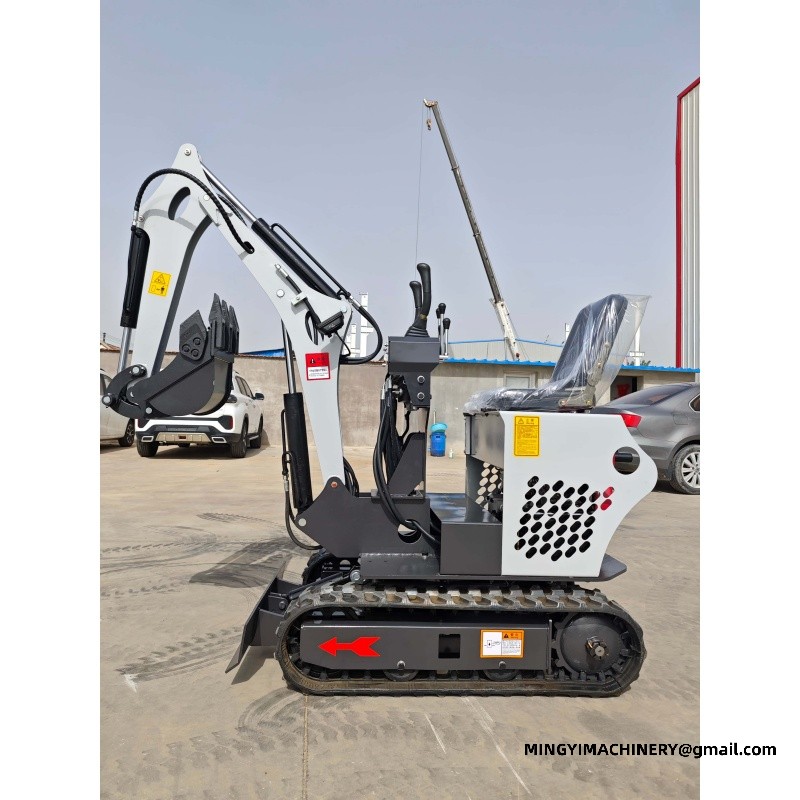
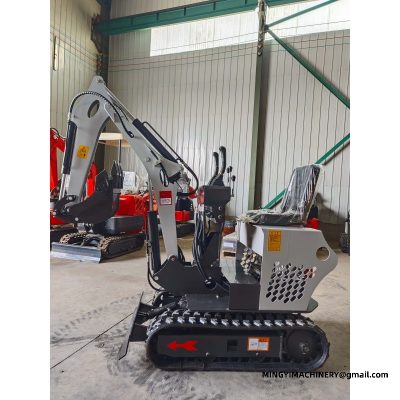
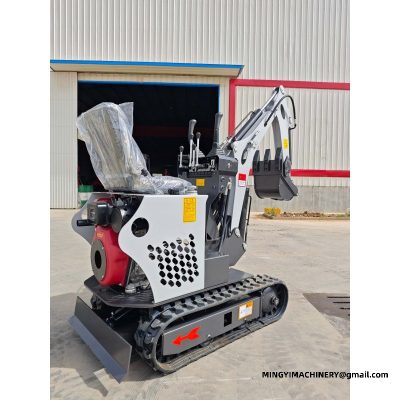
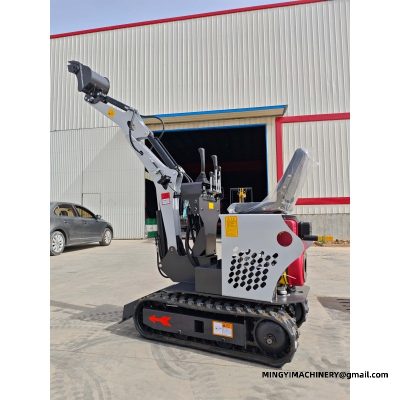
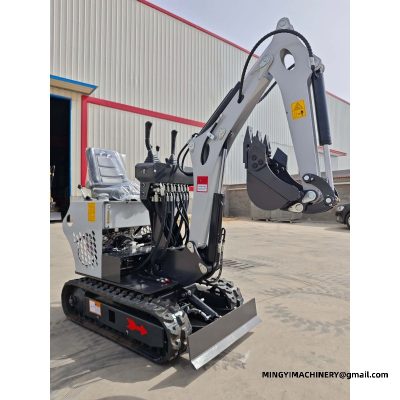
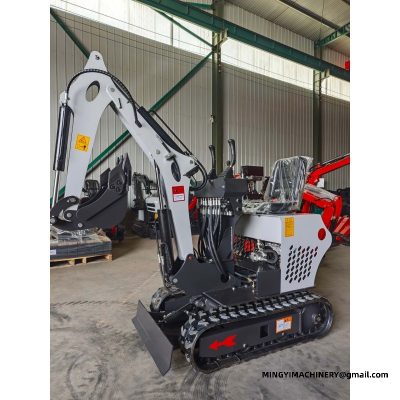
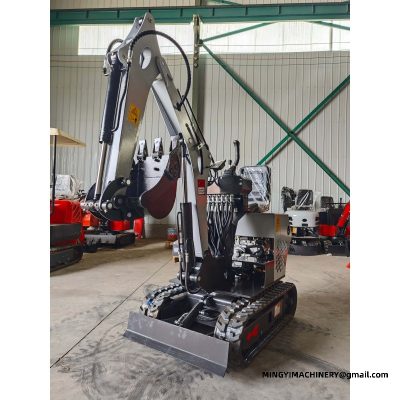
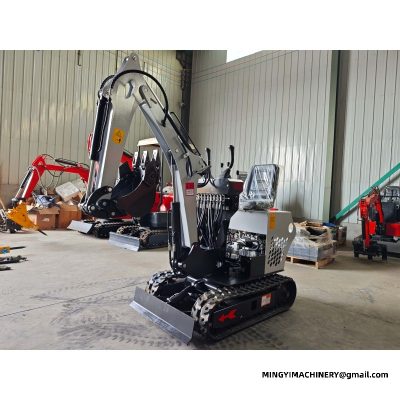
Landscaping is one of the few trades where the machine has to leave the site looking better than it found it, and that expectation shapes what a contractor needs from an excavator.
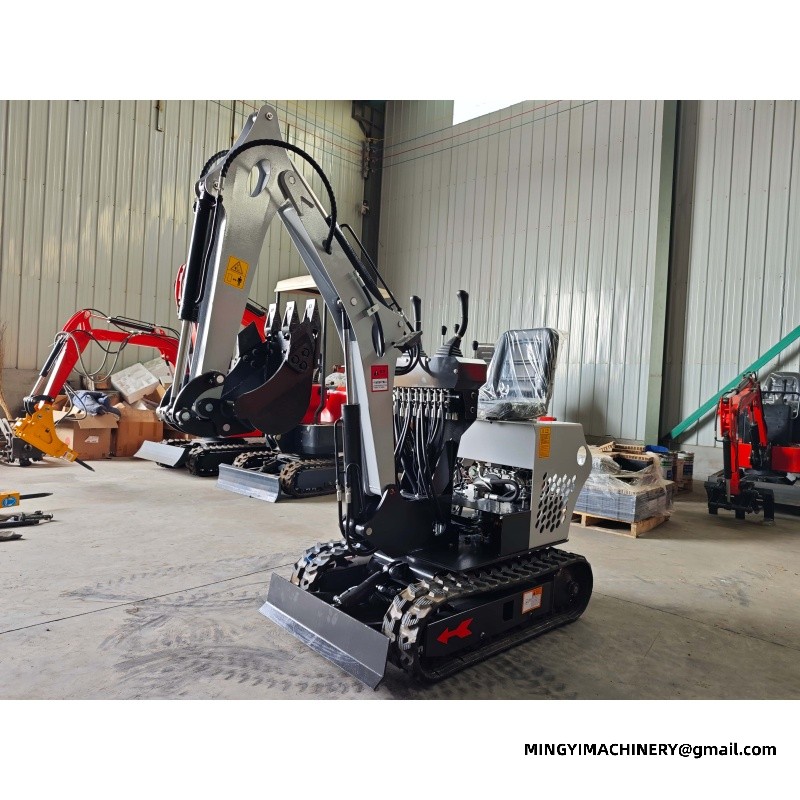
A landscaping contractor's mini excavator has to be gentle on finished ground, precise enough to grade, and versatile enough to cover a wide range of garden and grounds work. Landscape grading is the stage between excavation and planting, and it decides whether the levels hold.
Gentle on the ground
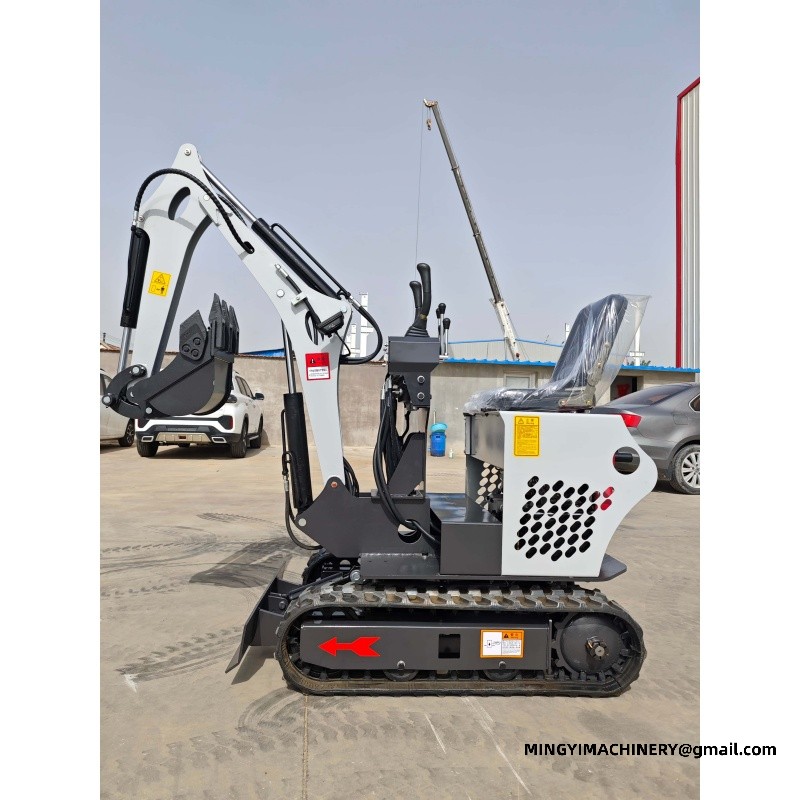
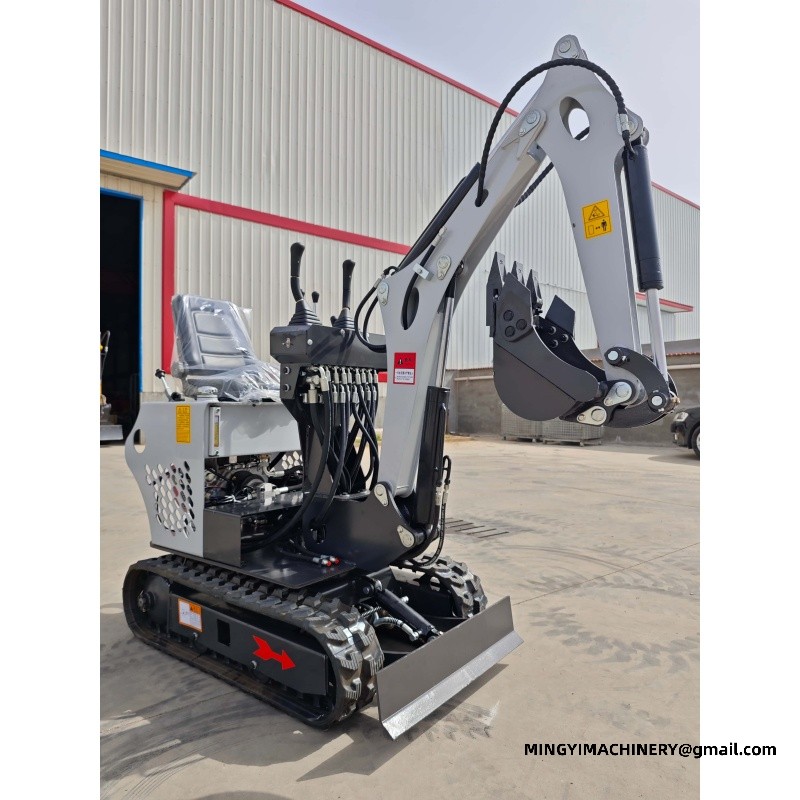
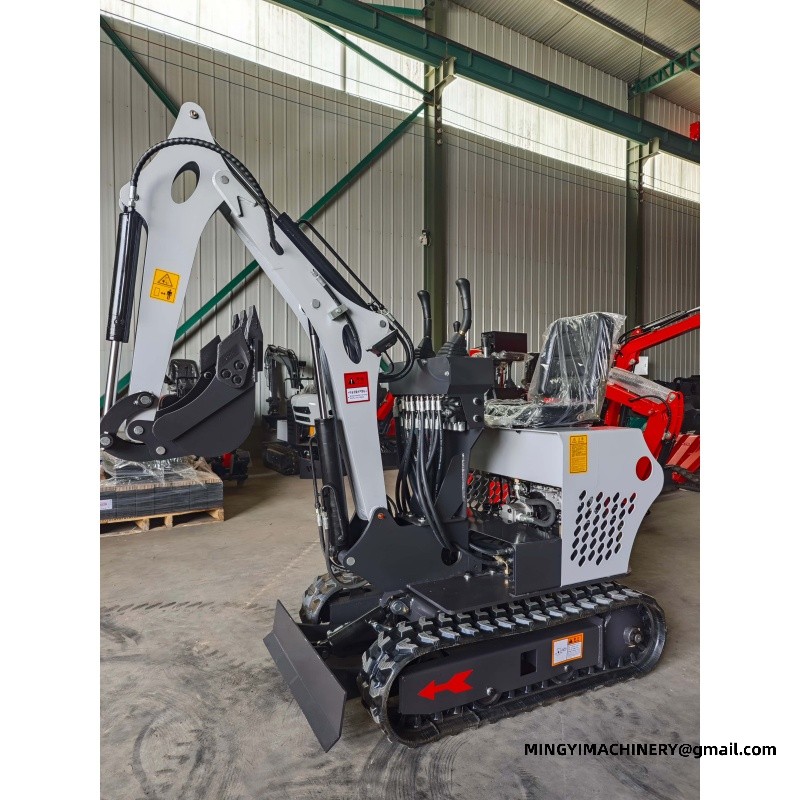
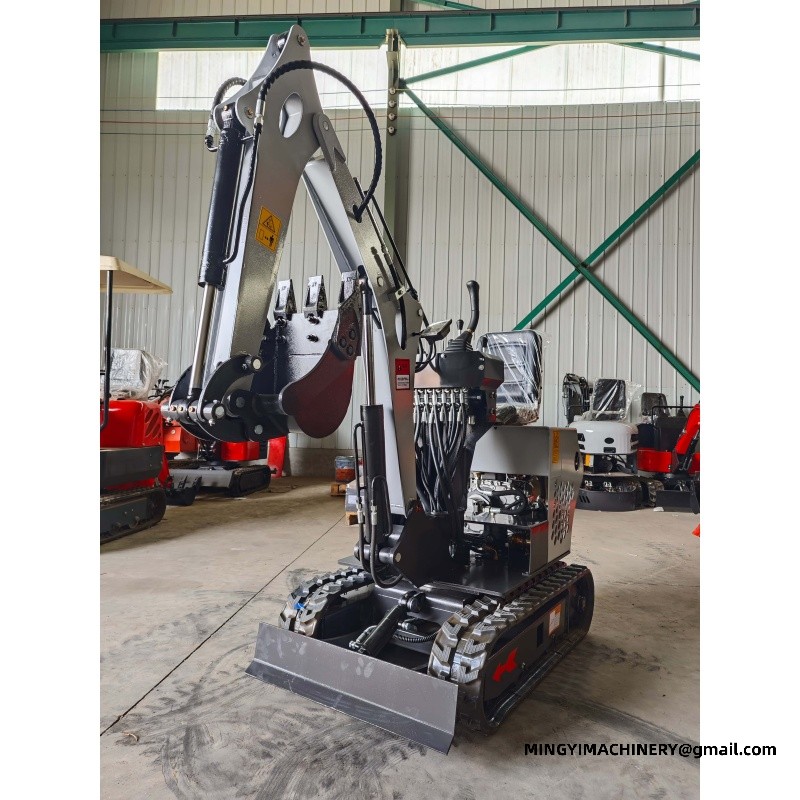
Rubber tracks and a light machine are what allow access across lawns, driveways and paving without a trail of damage behind the machine.
Low ground pressure also means the machine can work on soft ground after rain, when a heavier machine would simply sink.
Precise enough to finish
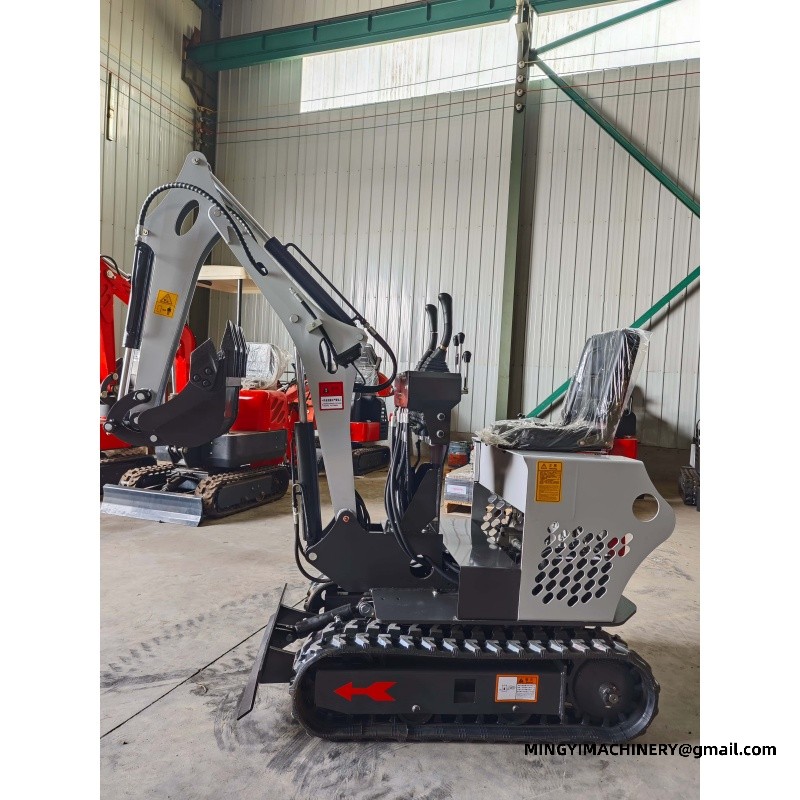
Fine hydraulic metering and a grading bucket let the operator set levels and slopes from the seat, reducing the hand work that follows the machine.
For planting and fencing, an auger gives clean, consistent holes without disturbing the surrounding ground.
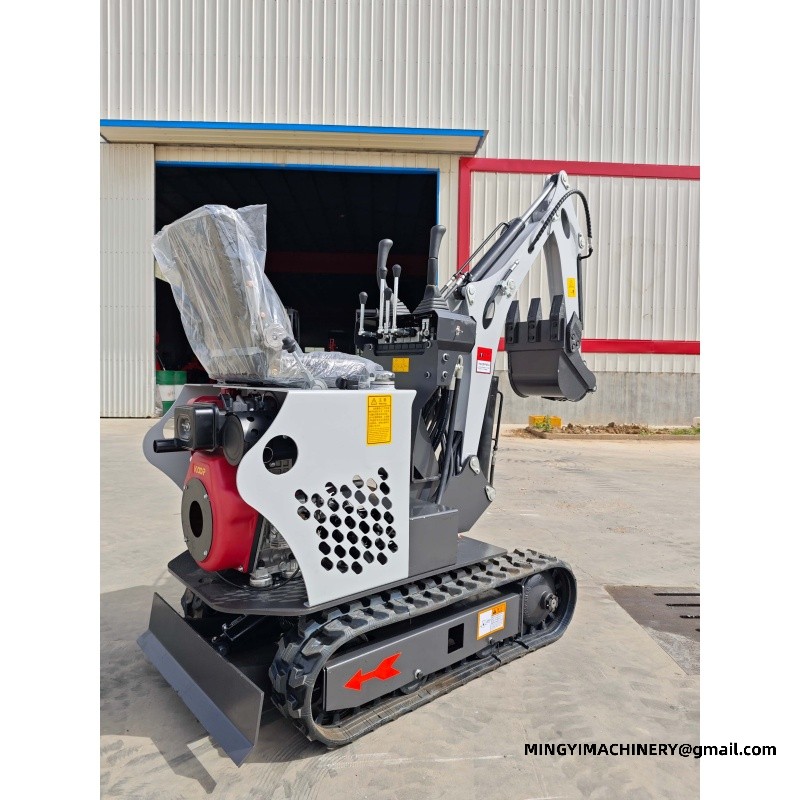
MINGYI can advise on the machine and attachment set that suits landscaping work; tell us the jobs you cover and the ground you work on.
E-mail : Working this class of machine through the seasons Seasonal planning smooths the workload. Machines that are busy for a few months and idle for the rest benefit from a service slot in the quiet period, and the unit in daily use prepared in the off-season starts the busy months reliably. Heat and dust are as limiting as rain. Air intake condition and cooling cleanliness decide how a machine of this size behaves in a dry season, and both are checked in a minute rather than repaired later. Lifting and material handling with a mini excavator for landscape grading Lifting with a machine built to dig needs a plan. The load, the radius and the ground under the machine itself all matter, and the safe figure is the one on the chart rather than the one that looks possible. Ground condition under the machine is part of every lift. Soft or uneven support is the common factor in handling incidents, and checking it takes less time than recovering the equipment on site that has settled. Working near live services with mini excavator for landscape grading Digging near water, gas and cable is a precision job. The model in question is used here because the operator can work in short controlled cuts and because the machine can be positioned without driving over the run being exposed. The risk on utility work is not machine power but machine placement. The machine in that duty that fits the working width leaves the surrounding ground undisturbed, which keeps the trench stable and the reinstatement small. Track choice for mini excavator for landscape grading Rubber tracks suit paved and landscaped ground because they spread the machine weight and leave the surface intact. Steel tracks with rubber blocks are specified where the ground is rougher or the working day is longer, and the choice can be made per machine rather than accepted as a factory default. Track type changes what the machine can cross and what it leaves behind. Buyers specify rubber for lawns, driveways and municipal work, and steel with rubber blocks for sites where sharp material would cut a rubber belt in a week. Specifying mini excavator for landscape grading against a job list The practical way to specify is to write the job list first: the narrowest access, the deepest trench, the heaviest tool and the surfaces the machine must cross. The unit on the job is then matched to those four numbers. Useful information to send with an enquiry includes working width, required digging depth, ground conditions and the attachment set. Those four items let the factory specify a machine built for the work that fits rather than a generic build. Quick coupler practice on mini excavator for landscape grading A quick coupler is the single option that changes how a machine is used day to day. Fitted to the equipment in service, it turns an attachment change from a two-person workshop job into a task the operator does alone in minutes. Couplers are specified early because they affect the arm and the hydraulic kit. Adding one to this class of machine after delivery means new pins, new hoses and a fitment session; adding it at build time is a line on the sheet. Noise, dust and working near occupied buildings Work near housing or occupied premises brings constraints that open sites do not. Start times, exhaust condition and how often the unit in daily use needs to reverse are the practical limits that neighbours notice. Dust control is often part of the same conversation. Water, timing and work sequence reduce what leaves the site, and agreeing them in advance keeps a machine of this size working rather than stopped after a complaint. Interior and light demolition with the equipment on site Interior demolition is an access and a weight question. The machine itself that fits through a doorway and works on a suspended floor does jobs that would otherwise be done by hand or by a larger machine that cannot enter. Dust, debris clearance and floor loading all argue for a compact machine indoors. The model in question spreads its weight over a wider track footprint than a wheeled machine of similar capacity. Running the machine in that duty in a rental fleet The specification that rents best is usually the simplest one to explain at the counter. The unit on the job with rubber tracks, a canopy and a coupler covers the majority of weekend and short-term hires. Fleet buyers also weigh transport. A machine built for the work that a customer can tow on a normal licence and a standard trailer is a hire that does not need a delivery truck, which changes how often it goes out. Export packing and shipping of the equipment in service Export documentation, decals and paint are settled before packing. Asking for them with the unit in daily use order avoids a second handling session and keeps the machine on the booked vessel. Buyers who import regularly plan the spare parts with the machine. This class of machine ordered with a wearing-parts kit arrives ready to work rather than ready to wait for the first service interval. Daily checks and maintenance on a machine of this size Daily maintenance on the equipment on site is a short list: engine oil level, coolant, track tension, hydraulic oil level and a look at the hoses. Ten minutes at the start of the shift prevents most of the failures that stop a machine. Track tension is the item most often neglected. The machine itself run with slack tracks wears the undercarriage and can throw a track on a turn; run too tight, the same components wear from the other direction. Operator technique for the model in question The second habit is tool discipline. Running the machine in that duty with the right bucket width for the trench means less spoil, less reinstatement and a cleaner job than a wide bucket and a lot of trimming. Stability is the third. The unit on the job working across the tracks rather than over the corners keeps the machine steady and the undercarriage loaded evenly, which shows up as track life at the end of the season. Parts, service and support for a machine built for the work Support after delivery is a parts question. Wearing items for the equipment in service - filters, belts, track components, bucket teeth and pins - are the items a buyer should plan to hold before the first service interval. Engine parts availability usually drives the engine choice. This class of machine built with an engine the local network already carries is serviced from stock rather than from an international order. Matching the unit in daily use to ground conditions Hard and abrasive ground reverses the specification. On rock, demolition rubble or sharp gravel, steel tracks with rubber blocks on a machine of this size survive conditions that cut a rubber belt quickly. Mixed sites are common and argue for a compromise specification. Most buyers choose rubber for the equipment on site and accept the wear, unless the majority of the work is on material that will damage it. Orchard, vineyard and farm use of the machine itself Orchard and vineyard work is carried out between rows. The model in question with a narrow chassis and a swing boom works down the row without damaging the trees, which is the reason a full-size machine is not used at all. Farms also use the machine in that duty for general maintenance - clearing a watercourse, repairing a track, loading a spreader. One carrier with a few attachments covers most of the jobs that would otherwise wait for a contractor. Specification data for the unit on the job Buyers comparing a machine built for the work usually start from four numbers - weight, digging depth, reach and transport width - because those are the ones that decide whether the machine can be delivered and whether it can do the job once it is there. Every value shown is as built for the equipment in service; options such as cab, side swing or a telescopic undercarriage change the transport dimensions and are confirmed at order stage. Keeping a service record for this class of machine A written record is worth more than a good memory. Dates, hours and the parts fitted on the unit in daily use turn a guess about the next service into a fact, and they are the first thing a buyer asks to see. Handover and getting familiar with a machine of this size Operators who come from a different machine need a short conversion. The controls on the equipment on site follow the usual pattern, but the response, the sightlines and the stopping distance are learned by doing rather than by reading. Trench quality depends on the bucket width and the operator, not on machine size. The machine itself with a narrow bucket and a swing boom cuts a clean run along a boundary without disturbing the ground either side of it. Depth control matters more on service work than speed. The model in question working beside live services is chosen because it can be placed precisely and stopped instantly, which is what the job actually requires.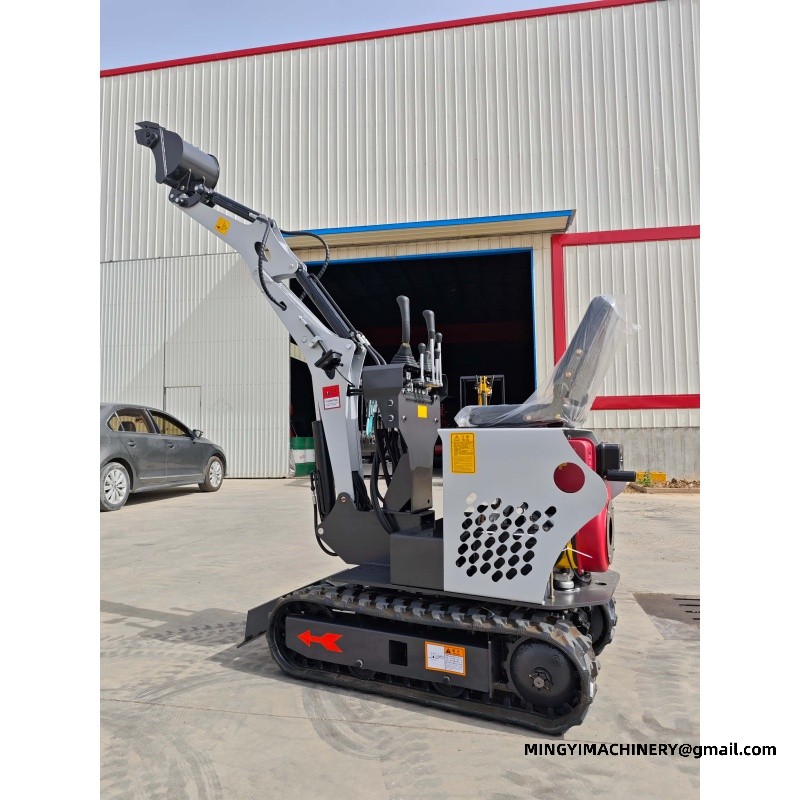
Reference specification — mini excavator range 09W 12W 20-1W 15L Operating weight 1100 kg (2425.08 lb) 1200 kg (2645.55 lb) 1800 kg (3968.32 lb) 1400 kg (3086.47 lb) Transport size (L×W×H) 1800 × 750 × 1970 mm 2200 × 930 × 2250 mm 2550 × 1100 × 2200 mm 2200 × 930 × 2250 mm Max digging depth 1250 mm (49.21 in) 1630 mm (64.17 in) 1800 mm (70.87 in) 1700 mm (66.93 in) Max digging height 2800 mm (110.24 in) 2750 mm (108.27 in) 2820 mm (111.02 in) 2750 mm (108.27 in) Max dumping height 1700 mm (66.93 in) 1960 mm (77.17 in) 2050 mm (80.71 in) 1960 mm (77.17 in) Max digging radius 2570 mm (101.18 in) 2900 mm (114.17 in) 3050 mm (120.08 in) 2900 mm (114.17 in) Max digging distance 1869 mm (73.58 in) 2100 mm (82.68 in) 2300 mm (90.55 in) 2300 mm (90.55 in) Minimum turning radius 1000 mm (39.37 in) 1300 mm (51.18 in) 1450 mm (57.09 in) 1450 mm (57.09 in) Travel speed 3 km/h (1.86 mph) 3 km/h (1.86 mph) 5 km/h (3.11 mph) 3 km/h (1.86 mph) Gradeability 30° 30° 30° 30° Fuel consumption 1-1.3 L/h (0.264—0.343 gal) 1-1.3 L/h (0.264—0.343 gal) 2-3 L/h (0.528—0.793 gal) 1-1.3 L/h (0.264—0.343 gal) Fuel tank capacity 8 L (2.11 gal) 10 L (2.64 gal) 16 L (4.23 gal) 10 L (2.64 gal) Hydraulic oil tank 16 L (4.23 gal) 16 L (4.23 gal) 18 L (4.76 gal) 16 L (4.23 gal) Dozer blade lift height 180 mm (7.09 in) 180 mm (7.09 in) 180 mm (7.09 in) 180 mm (7.09 in) Dozer blade drop depth 210 mm (8.27 in) 210 mm (8.27 in) 210 mm (8.27 in) 210 mm (8.27 in)
LINE ( ID ): mingyicn
Related pages
mini excavator for construction companies · mini excavator for building contractors · mini excavator build to order production · PRODUCTS









