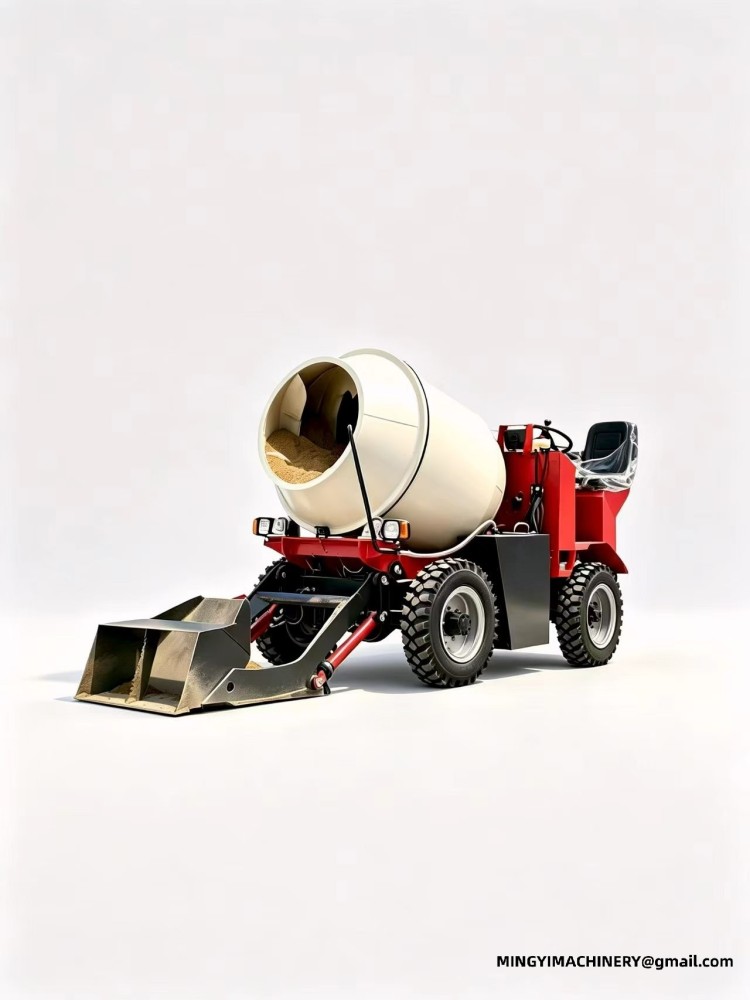
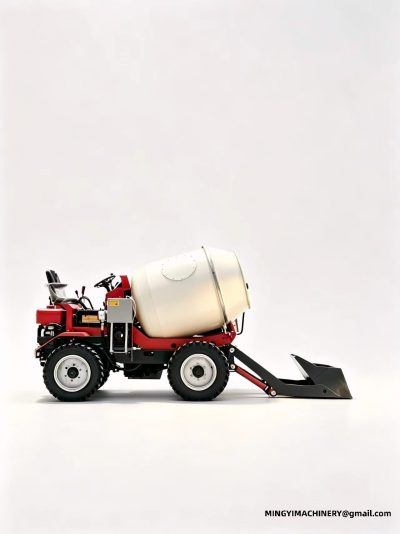
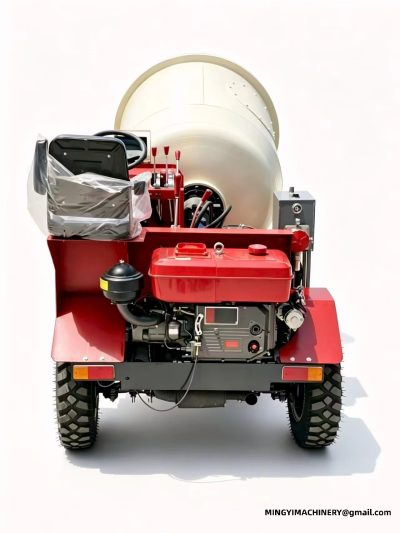
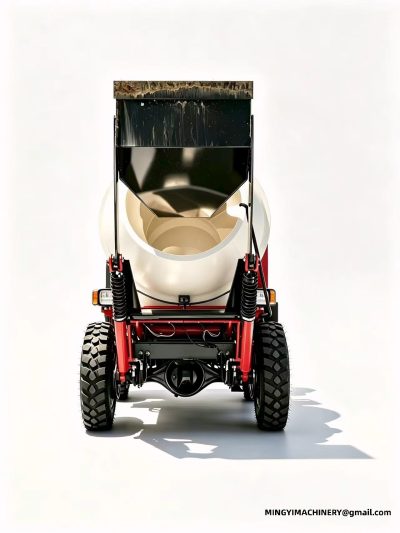
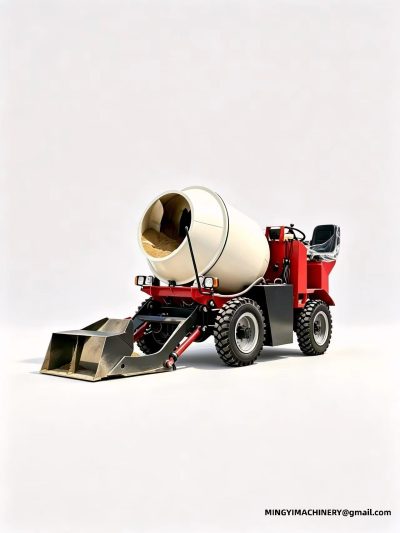
Buy the drum for the pour, the chassis for the ground. The two halves of a mini diesel self loading concrete mixer spec sheet answer different questions: 0.8 m³ and 1,500 kg describe what a batch is; the 4WD transmission, 204 mm of clearance and 28° of steering angle describe where that batch can travel. This page reads both halves in tunnel work.
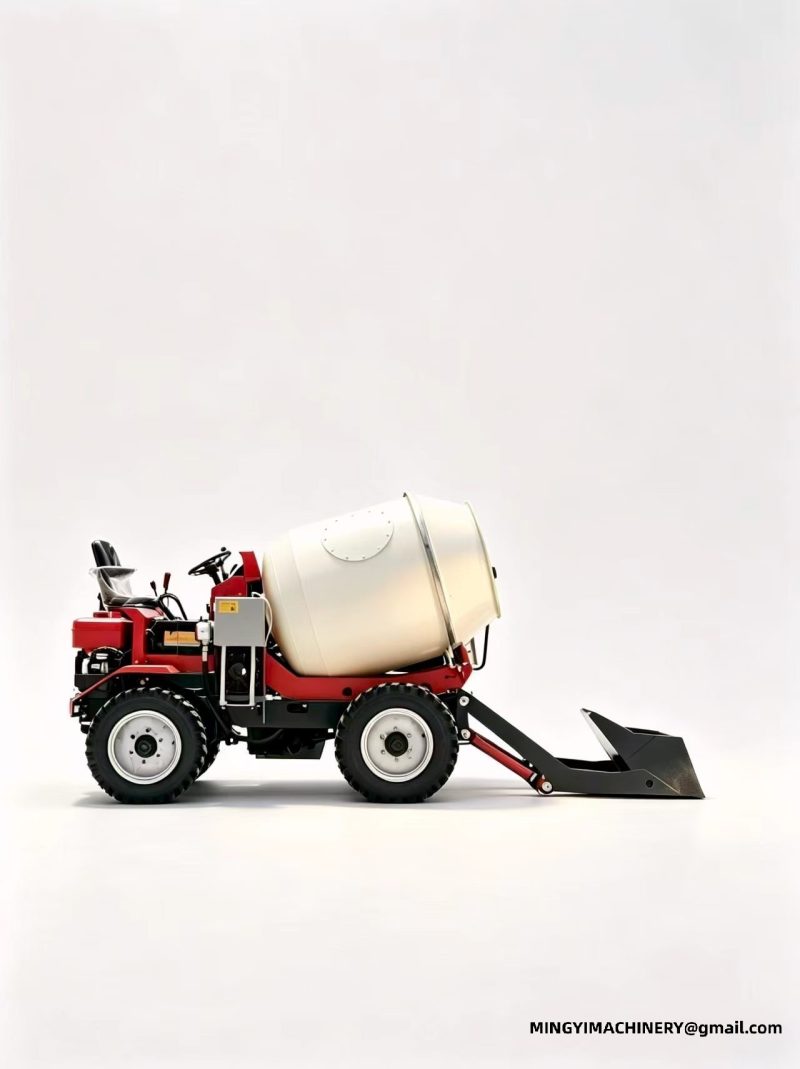
Confirm the specification in writing against the published table: 0.8 m³ capacity, 1,500 kg rated load, 4WD transmission, 25 hp single-cylinder diesel, the 130 front axle and 212 rear steering axle, and hydraulic power steering. Ask what is standard and what is optional in the build you are buying.
A short commissioning routine protects the warranty and the pour schedule alike. Most early faults reported on exported machines trace to skipped first-service basics rather than to the machine itself.
A transit mixer delivers volume from a plant; this machine delivers independence from a plant. For large continuous pours the transit wins outright. For small pours beyond the plant's radius — in tunnel work under clearance a transit mixer cannot enter — the transit's minimum charges and queue time make it the dearer option.
Plant-and-pump is a different scale of project: continuous output, trained crews, real setup effort. The self-loading mixer serves the segment below it — work too small to amortise a pump mobilisation, too far for plant supply, too continuous for hand mixing.
Load, mix, drive, discharge, return — one person runs the entire loop, and the controls are arranged so the sequence needs no second pair of hands. On small crews that is not a luxury; it is the difference between pouring today and waiting for a bigger gang.
The loop also teaches pace. A new operator charges; an experienced one settles into the rhythm the cycle actually allows, and by the second week the experienced operator is ahead — fewer spills, fewer re-batches, in tunnel work, no injuries.
| Reference specification — 0.8 m³ 4WD self-loading concrete mixer | |
|---|---|
| Rated load | 1,500 kg |
| Rated capacity | 0.8 m³ |
| Overall dimensions (L x W x H) | 3,500 x 1,600 x 2,200 mm |
| Front tyre size | 8.25-16 |
| Rear tyre size | 7.50-16 |
| Minimum ground clearance | 204 mm |
| Steering angle | 28° |
| Turning dimension (outer tyre) | 2,464 mm |
| Maximum travel speed | 24 km/h |
| Transmission | 4WD |
| Gears | 3 forward / 1 reverse + travel gear |
| Front axle | 130 drive axle |
| Rear axle | 212 selectable 4WD steering axle |
| Engine | single-cylinder diesel / 25 hp |
| Steering | hydraulic power steering |
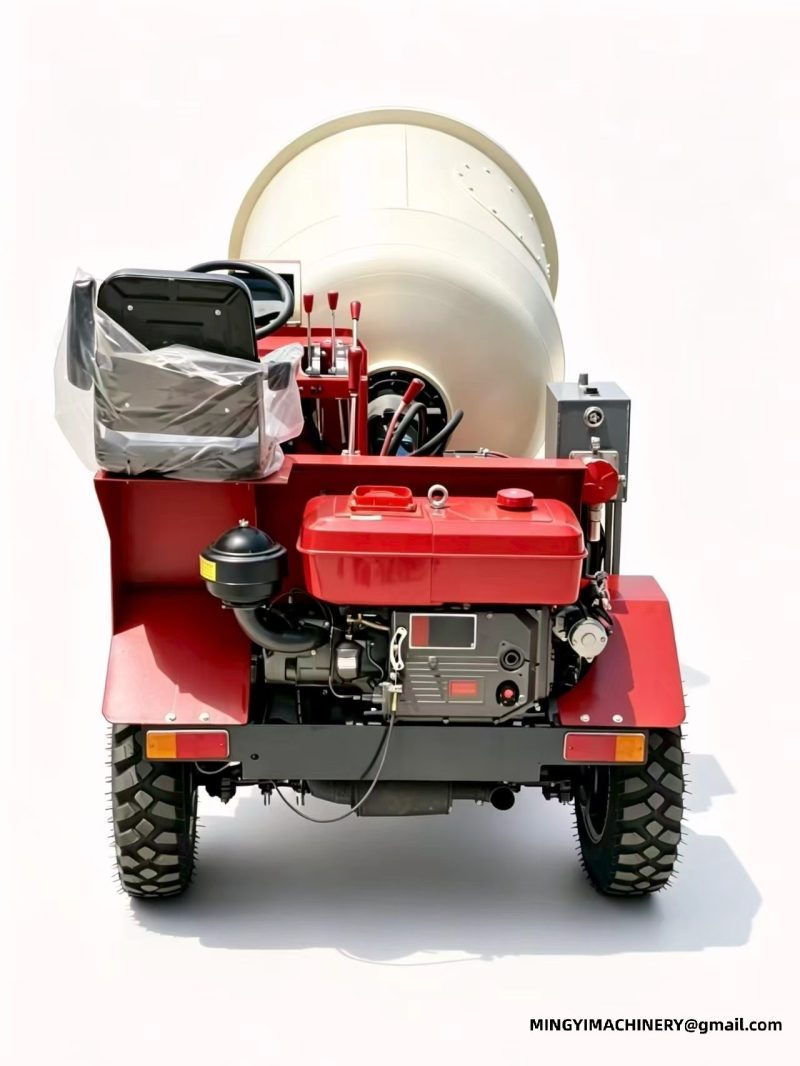
Inside the drum, rotation does the mixing; reversed rotation with the drum tipped does the discharging. The geometry is old and proven, and on a machine with hydraulic control the operator sets drum angle and speed from the seat without leaving the cab position.
Consistency comes from a fixed recipe and a fixed routine: the same bucket counts, the same water measure, the same mixing time. Because the shovel weighs each scoop the same way and the drum turns each batch the same way, the machine rewards crews that work to a recipe with batches that finish identically.
Drive goes to all four wheels — four-wheel drive through a 130 front drive axle, with the 212 rear axle selectable for four-wheel-drive steering. On firm ground two driven wheels would do, but site concrete rarely sits on firm ground. Wet spoil, sand, loose fill and grass all reward traction at every corner, which is what the 4WD transmission buys.
Four-wheel drive also changes how the machine fails — or rather, how rarely. Wheels that share the work share the wear, and a chassis that is never bogged is a chassis that never needs towing out of a pour in tunnel work.
Measure the machine in hours, not in days. A drum that cycles every few minutes earns more in a short shift than a machine that waits between batches, and the hour meter is the honest tally of both. The published speed and gears exist to keep the cycle tight, not to make the machine fast.
Utilisation is the quiet number that decides payback. A machine used four hours a day beats an identical machine used one hour a day and parked the rest, and the difference is almost entirely waiting — for cement, for the finishers, for the next bay.
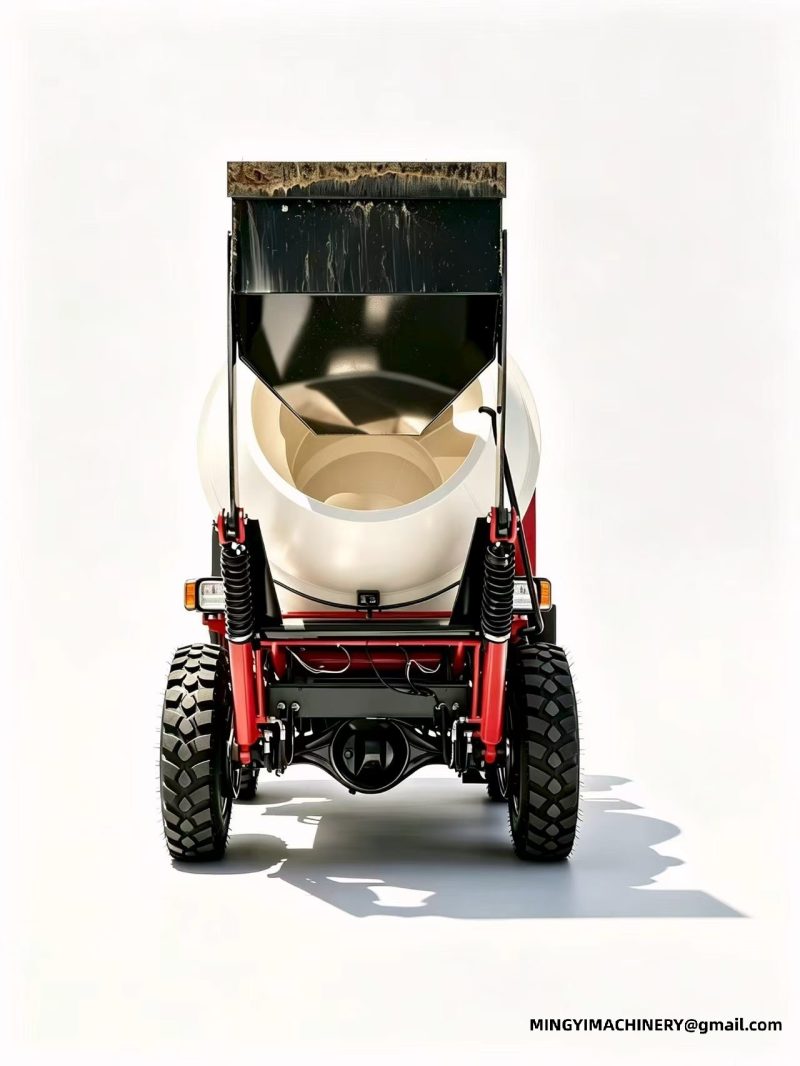
The machine earns its place wherever concrete is needed in small, repeated batches away from a batching plant: in tunnel work under clearance a transit mixer cannot enter. The common thread is distance — too far from the plant for ready-mix to be economical, too continuous for hand mixing.
In tunnel work, the machine usually pays for itself within the first season of such work. The measure is boring and honest: batches delivered where hand-mixing would have stalled, and pours that finished inside their weather window.
The control set is small — key start, gears, shovel levers, drum controls, steering — and a careful new operator works productively inside a day. The training that matters is judgement: slopes, loads, people, and the discipline of the wash-out.
Write them on the machine, not in the office. The habits that survive are the ones the operator sees at the start of every shift.
Steering is hydraulic power steering acting with the 28° rear-axle steer. The wheel is light under a full drum, the steering response stays predictable at crawl speeds, and the machine holds a straight line under load without fighting the operator.
2,464 mm at the outer tyre is the figure that decides where the machine can work. It turns inside estate gateways, between fence posts, along canal towpaths and through basement ramps that stop ordinary site trucks.
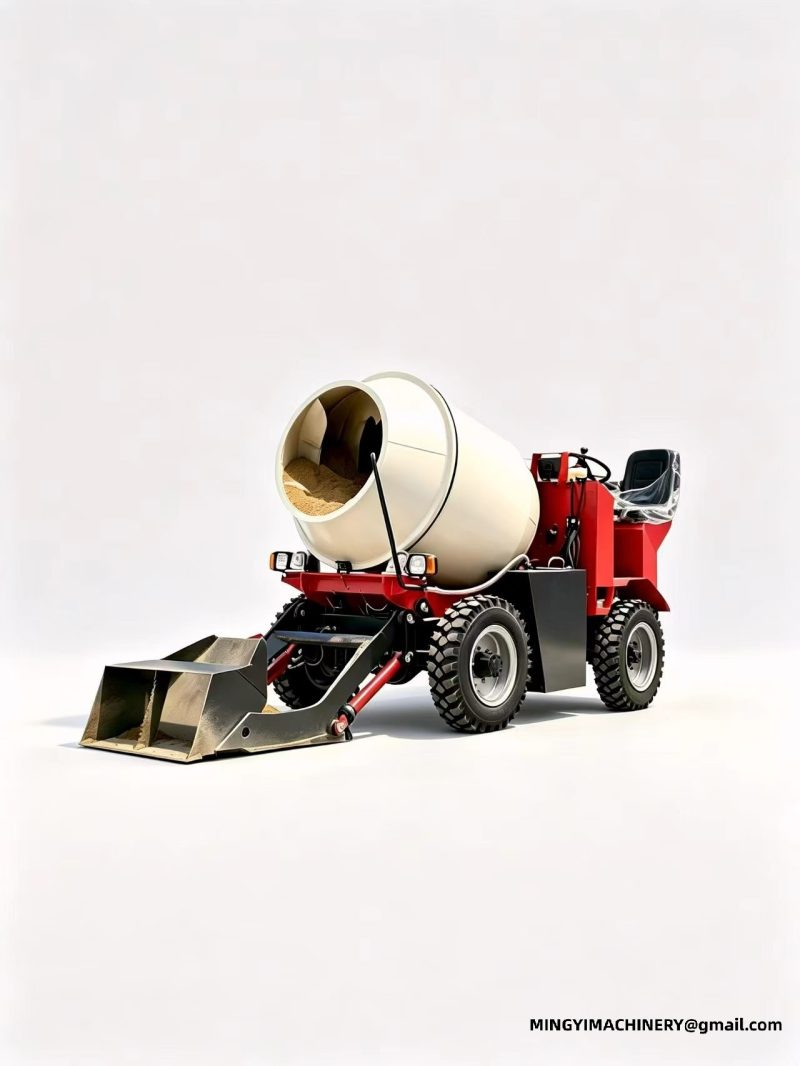
The drum is recipe-agnostic: lean foundation mixes, richer masonry mixes, and paving batches all turn the same way and discharge the same way. The machine's contribution is uniformity, not chemistry — the recipe is the engineer's, the repetition is the drum's.
The discipline that varies by season is the survey: in tunnel work, the ground that holds in March may not hold in November, and the turning circle decides nothing if the approach has turned to mud.
The break-even between owning and hiring is the number of batch-days, not the specification tag. A contractor with steady small-pour work crosses it in weeks; a contractor with one trench a month never does. The machine suits the first profile and politely declines the second.
The machine's resale case is its simplicity: a buyer can see the drum, the axles and the engine in a walk-round, and the service book tells the rest. Machines with records, straight shovels and clean drums sell within days in most markets.
Wet concrete moves. Cornering hard, braking sharply or crossing a slope swings 0.8 m³ of liquid load to one side, and the machine's stability depends on the operator not inviting that. The low drum mount and the wide stance help; the operator's right foot finishes the job.
The discharge point concentrates people and machine in one small area — the operator tipping, the spotter barrowing, the crew placing. The safe pattern is a fixed standing spot, a spoken signal for stop, and a rule that the drum never turns while anyone stands in the discharge arc.
The machine-specific parts — drum blades, shovel pins, hydraulic seals — travel by shipment from the supplier, and the engine and axle patterns travel by the nearest agricultural network. Between them, little that breaks on this machine needs a wait measured in weeks.
The first week sets the machine's tone. Commission it properly — turn the engine by hand, prime the hydraulics, run the drum empty — then let a new operator feel the 28° steer and the 2,464 mm circle without a live load aboard.
How much concrete does the mini diesel self loading concrete mixer mix per batch?
The drum mixes 0.8 m³ per batch, and the chassis carries 1,500 kg while doing it. Batch size and payload were drawn to match, so a full drum never overloads the machine.
How much ground clearance does the mini diesel self loading concrete mixer have?
204 mm under the axles. That clears ruts, rubble and standing water of that depth, and the low build is deliberate — it keeps the centre of gravity down under a raised drum.
What should I check on day one with a mini diesel self loading concrete mixer?
Fluids, tyre pressures, drum rotation both directions, shovel lift, steering full lock, and the wash-out routine before the first batch sets. The commissioning checklist in the manual covers each.
What gradient can the mini diesel self loading concrete mixer handle loaded?
Site ramps and graded ground in low gear. There is no published gradeability figure, so treat sustained loaded climbs as a test question for the supplier, not an assumption.
Is the mini diesel self loading concrete mixer electric start?
Yes — key electric start, with a decompression lever as the manual fallback. Healthy battery practice keeps the starting method reliable across seasons.
Can the mini diesel self loading concrete mixer work at night?
With site lighting, yes — the workflow does not change. The operator's visibility of the shovel arc and the discharge zone is the item to solve, not the machine.
My mini diesel self loading concrete mixer steering whines when cold — is that normal?
It is the sound of thick hydraulic oil, not a fault. Warm the circuit with light cycling before the first shovel lift; persistent noise when warm, however, needs a hose or suction check.
What servicing does the mini diesel self loading concrete mixer need?
A five-minute daily walk-round — oil, fuel, air, hydraulics, tyres, drum — plus weekly greasing of shovel pins and steering linkage, and oil changes by the hour meter.
A mixer that reaches the pour, mixes to a recipe and washes out on time is a mixer that earns for a decade. The habits in this page effort minutes a day; the machine they protect takes far more to neglect.
Planning the season around the concrete mixer
Downtime is simplest when it is planned. Booking the service for this class of machine in the quiet part of the season takes nothing from the schedule, while the same work in the busy weeks gives up a day of output every time.
Keeping a service record for the unit in daily use
Service history also protects the warranty position. Evidence that a machine of this size was maintained at the specified intervals and with the specified fluids settles questions that would otherwise be argued.
Cold weather and winter care for the equipment on site
Starting is only the first problem. Until the machine itself reaches working temperature the hydraulic response is slower and the seals are stiffer, and warming the machine before asking for full output avoids unnecessary strain.
Hot, humid and dusty conditions around the model in question
Heat and dust shorten service intervals rather than machine life. In these conditions the filters on the machine in that duty need attention more often, and the cooling surfaces need to be kept clear to hold the working temperature.
Pre-delivery inspection before the unit on the job leaves the shop
Inspection is a list, not a glance. Before a machine built for the work is released the fluid levels, belt tension, electrical connections and safety decals are each ticked off, and anything that fails stays in the shop rather than travelling with the machine.
A second operator for the equipment in service
A machine that only one person can use is a single point of failure. Training a second operator on the concrete mixer takes a day and removes the dependency that otherwise governs holidays, illness and busy weeks.
Contact MINGYI Machinery for the current self-loading concrete mixer specification, export packing and a formal specification for your market. E-mail: sales@mingycn.com | LINE (ID): mingyicn
Wheeled Diesel Self-Loading Mixer: Tyres and Traction · Self Loading Concrete Mixer Truck: From Pile to Pour · small 4WD waste dumper for mining and quarry work · Mini Self-Loading Concrete Mixer









