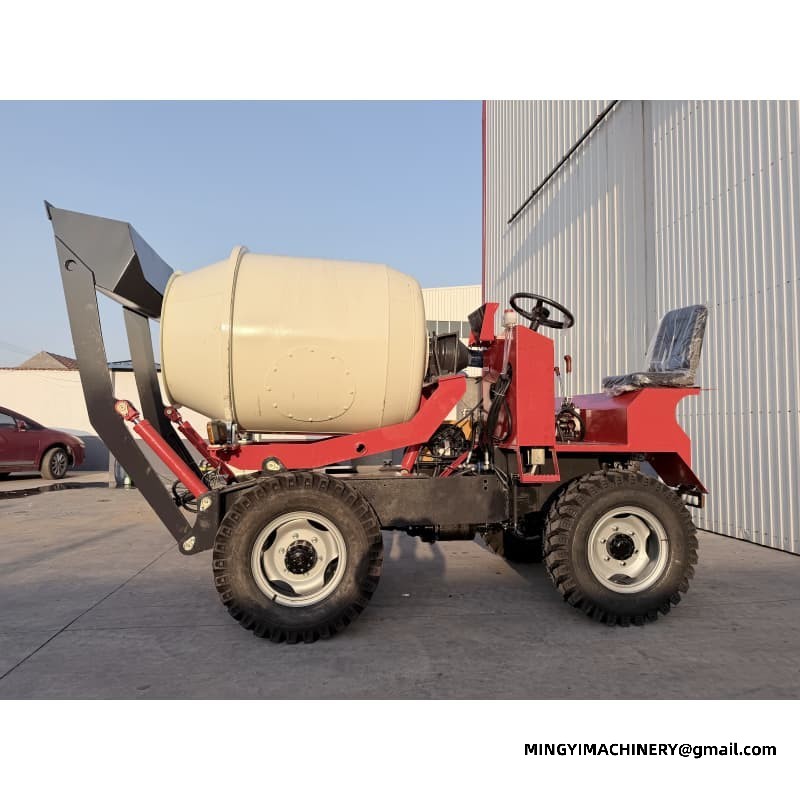
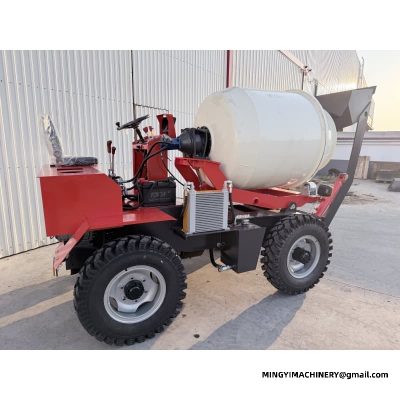
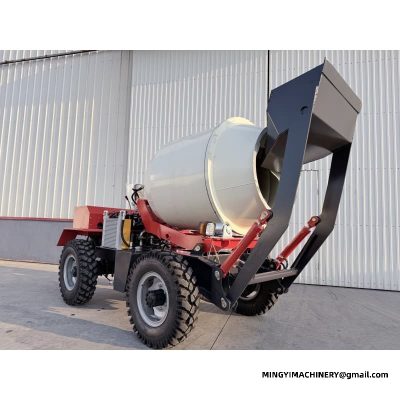
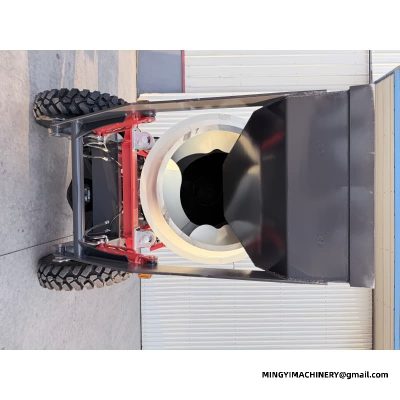
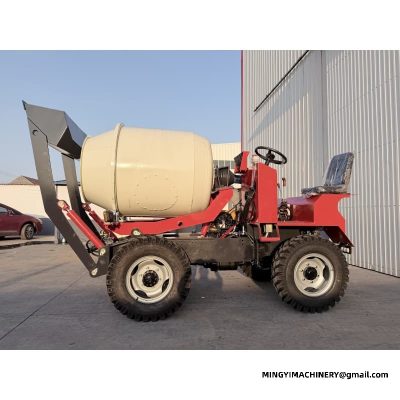
Rough Terrain Concrete Mixer, 4WD Self Loading Mixer, Off-Road Mixer
Buy the drum for the pour, the chassis for the ground. The two halves of a rough terrain concrete mixer spec sheet answer different questions: 0.8 m³ and 1,500 kg describe what a batch is; the 4WD transmission, 204 mm of clearance and 28° of steering angle describe where that batch can travel. This page reads both halves on plantation work.
At 1,600 mm wide the machine threads standard double gates with room for its mirrors, which is the whole reason the envelope was drawn that way. Estate lanes, compound doors, orchard rows and basement entries all accept it where ordinary site trucks stop at the street.
Below ground, the ramp matters as much as the ceiling: grade, surface and the turn at the bottom. A machine that descends well and cannot turn at the bottom is a machine that will need reversing back up with a full drum.
Ready-mix is the simpler source per cubic metre when a plant is close and the pour is large. Beyond that radius, minimum-load charges, queue time and the stiffening in the drum flip the arithmetic, and batching on plantation work from stockpiled aggregate wins.
Ready-mix that returns to the plant is paid for anyway; batches mixed on site stop when the pour stops. That flexibility is worth real money on the small, lumpy pours on plantation work, where ordering to a schedule always ends with either a shortage or a surplus.
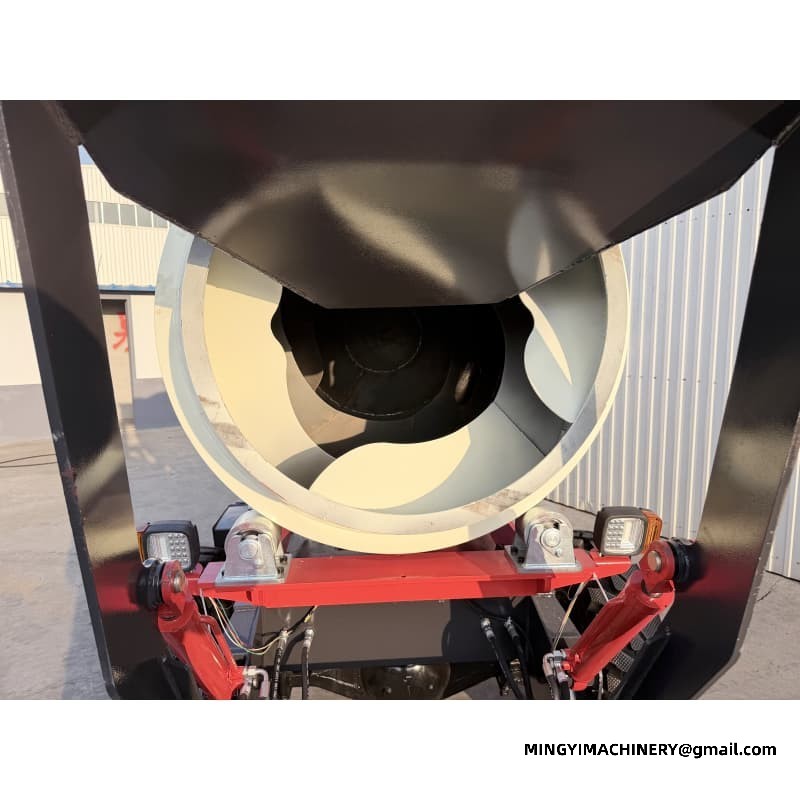
The drum takes 0.8 m³ per batch, and the chassis carries 1,500 kg while doing it. Those two figures together describe the machine's whole working day: load, mix, move a short distance, discharge, and come back for the next batch. A crew that pours post-hole and shed-base concrete in small, frequent quantities is exactly the customer this size was drawn around.
Honest sizing starts from the biggest continuous element on plantation work. If that element needs more than the drum can supply, either batch with two machines or break the pour into planned bays. The 1,500 kg rating keeps the chassis within itself either way.
| Specification extract — 0.8 m³ 4WD self-loading concrete mixer | |
|---|---|
| Rated load | 1,500 kg |
| Rated capacity | 0.8 m³ |
| Overall dimensions (L x W x H) | 3,500 x 1,600 x 2,200 mm |
| Front tyre size | 8.25-16 |
| Rear tyre size | 7.50-16 |
| Minimum ground clearance | 204 mm |
| Steering angle | 28° |
| Turning dimension (outer tyre) | 2,464 mm |
| Maximum travel speed | 24 km/h |
| Transmission | 4WD |
| Gears | 3 forward / 1 reverse + travel gear |
| Front axle | 130 drive axle |
| Rear axle | 212 selectable 4WD steering axle |
| Engine | single-cylinder diesel / 25 hp |
| Steering | hydraulic power steering |
Many fleets run both: transit for the big slabs near town, self-loader for the long tail of small work everywhere else. The two machines rarely compete for the same batch.
There is also a hybrid pattern worth naming: the self-loader feeds a static pump or a crane skip on bigger jobs, batching at the rate the placing crew sets. The machines are complements more often than competitors.
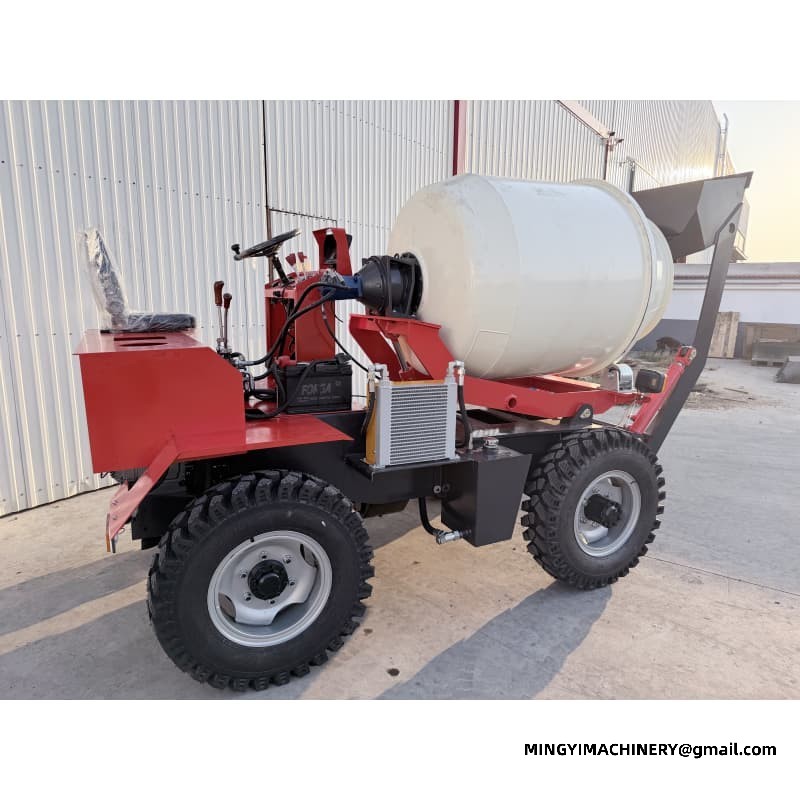
Drive goes to all four wheels — four-wheel drive through a 130 front drive axle, with the 212 rear axle selectable for four-wheel-drive steering. On firm ground two driven wheels would do, but site concrete rarely sits on firm ground. Wet spoil, sand, loose fill and grass all reward traction at every corner, which is what the 4WD transmission buys.
On plantation work, access decides everything, and a tight turning circle is the difference between driving to the pour and barrowing the last fifty metres. The 3,500 x 1,600 x 2,200 mm footprint was drawn around exactly those gateways.
204 mm of clearance under the axles is the machine's ground rule. It clears ruts, rubble and standing water of that depth, and it does not clear more. The low build is what keeps the centre of gravity down under a raised drum, so the number is a design trade, not a deficiency.
When a slope cannot be avoided, the preparation is worth more than the nerve: walk it first, clear the loose material, and commit in one steady low-gear attempt. Stopping halfway up a grade with 0.8 m³ aboard is the situation the planning exists to prevent.
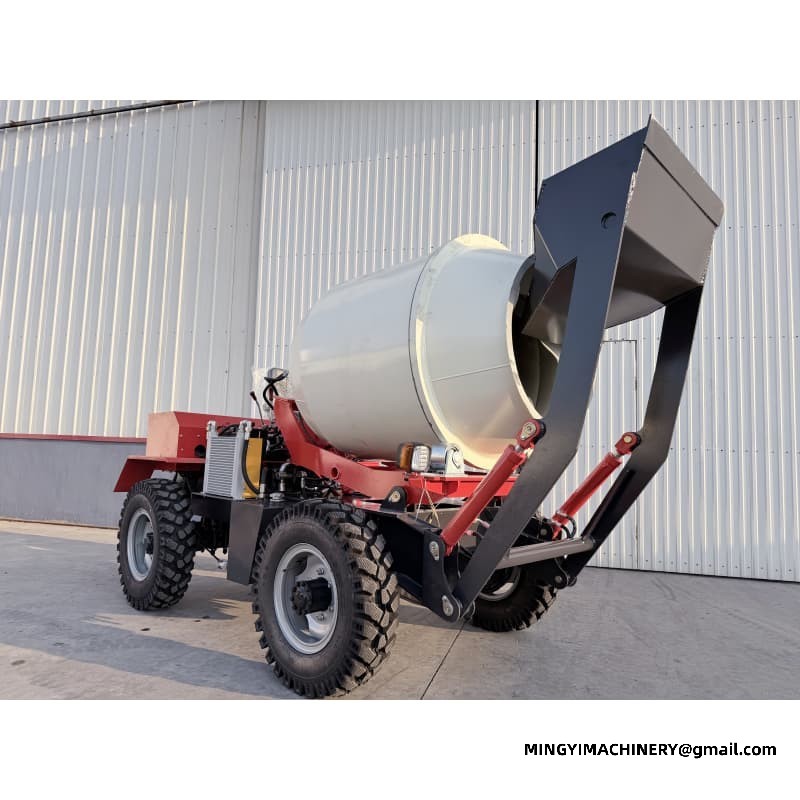
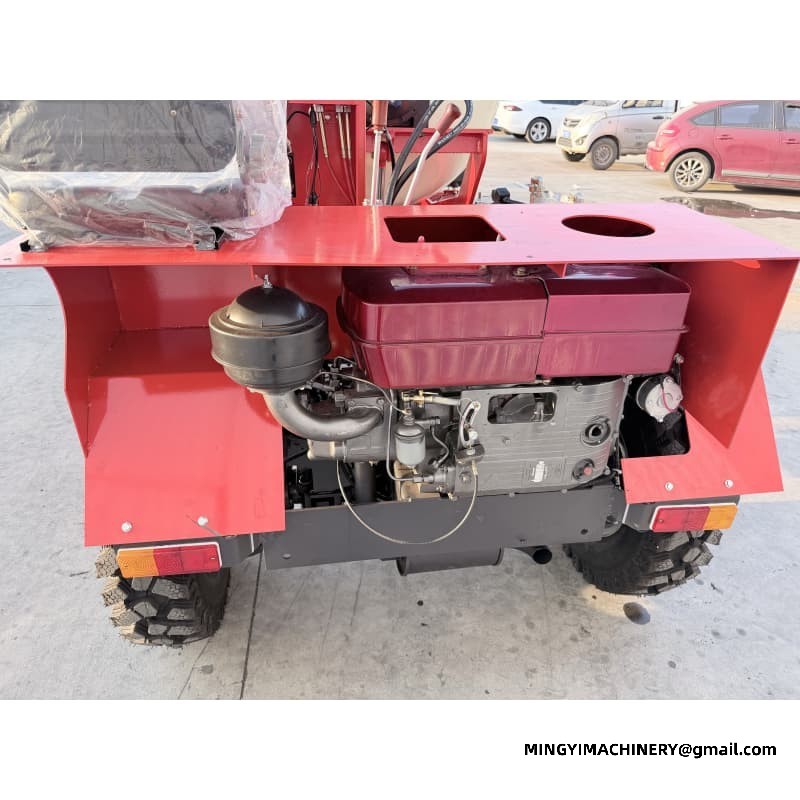
The hydraulic circuit drives the power steering, the drum rotation and the shovel hydraulics from one pump off the single-cylinder diesel. Three consumers, one source — which is why the engine's health and the oil's cleanliness are the same subject on this machine.
Oil changes on schedule effort little; contamination failures effort a week. The machines that last are the ones whose operators wipe every filler cap before opening it, every time.
On a well-run machine the chassis and drum outlast several sets of consumables: shovel pins and bushings, drum blades, tyres, belts, hoses and filters are the renewal cycle. The single-cylinder diesel is the long-life heart, and its overhaul parts are stocked wherever single-cylinder diesels are common.
Resale in most markets is quick for this class — demand from small contractors keeps specifications firm. Keeping the service book on plantation work is worth more at resale than any polish.
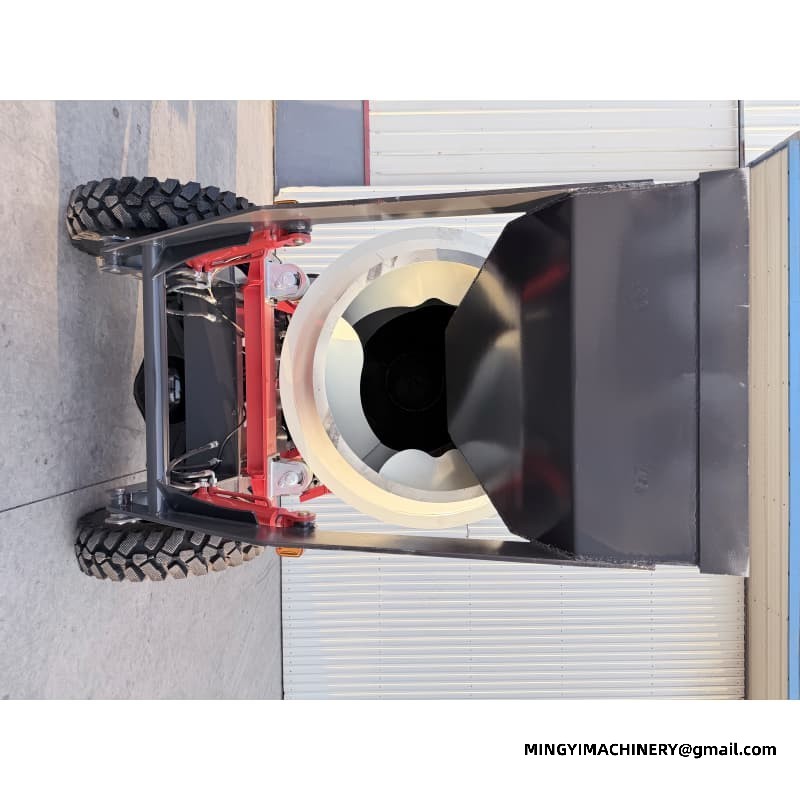
Heat shortens everything: the workability window, the wait between batches, the time a finisher has. In hot seasons the drum works slightly smaller batches, water is measured colder and exactly, and aggregate stockpiles are kept shaded where possible so the mix does not start hot.
Rain turns routes into the machine's worst case: 204 mm of clearance and agricultural tyres carry a full drum across wet ground only as well as the ground allows. Fill the ruts, gravel the standing spots, and plan pours away from the day's worst weather rather than through it.
The gearbox gives three forward gears, one reverse and a separate travel gear, with a top speed of 24 km/h. On site the machine lives in first and second; the travel gear exists to move between jobs on a road without holding up traffic.
Reverse also serves the stockpile: backing toward the pile with the shovel leading keeps the loading line short and the machine's nose pointed at the next haul. Operators who plan their turnarounds move more concrete per hour than operators who rush.
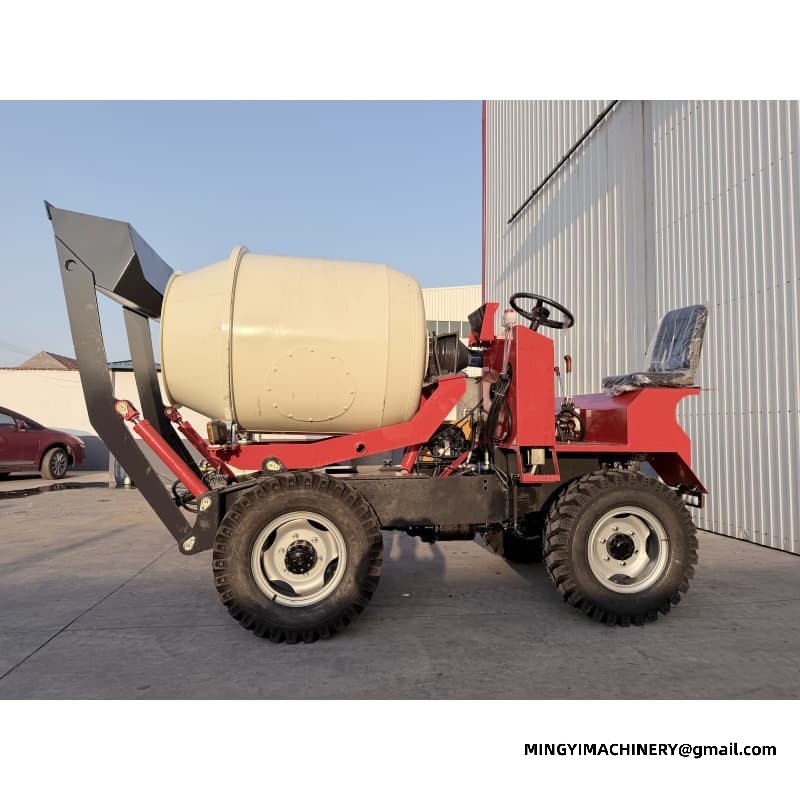
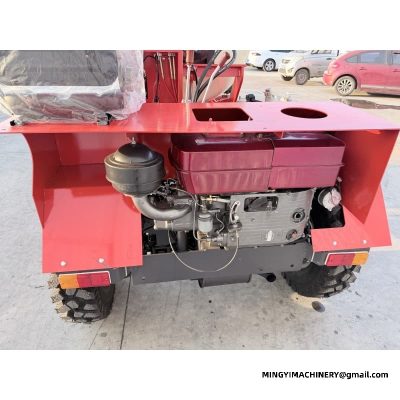
Power comes from a single-cylinder diesel rated at 25 hp. It drives the transmission, the drum and the hydraulics, and it does so with the mechanical directness that makes small site machines easy to keep alive: no electronics to fail, no dealership lock-out, one cylinder to know by heart.
Starting is electric from a key, with a decompression lever as the manual fallback. Cold mornings ask for the lever and a little patience; the engine itself asks for nothing more than clean fuel and a serviced air filter.
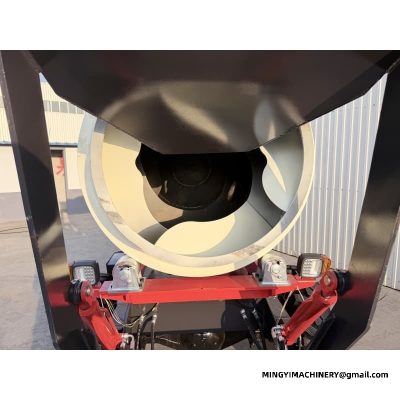
Inside the drum, rotation does the mixing; reversed rotation with the drum tipped does the discharging. The geometry is old and proven, and on a machine with hydraulic control the operator sets drum angle and speed from the seat without leaving the cab position.
Concrete waits for nobody. The drum must be washed before the residue stiffens, and on a self-loader the routine is simple: rinse the drum, spin it with clean water, dump the wash-out away from the stockpile, and leave the blades clean for the next batch.
Where the mix changes through a day — a lean base, a richer top — the machine carries the change as easily as the material, provided the crew keeps the recipe card current. Switching batches is a scoop count and a water measure, not a machine adjustment.
The discipline that varies by season is the survey: on plantation work, the ground that holds in March may not hold in November, and the turning circle decides nothing if the approach has turned to mud.
Can the rough terrain concrete mixer cross a small culvert or slab on site?
If the structure is engineered for the machine's axle loading, yes. Unverified culverts, covers and basements deserve a check before the wheels arrive, not after.
How do you clean the rough terrain concrete mixer drum?
Rinse and spin the drum with clean water after the last pour of the day, dump the wash-out away from the stockpile, and leave the blades clean. A drum washed daily keeps its full 0.8 m³.
What should I check on day one with a rough terrain concrete mixer?
Fluids, tyre pressures, drum rotation both directions, shovel lift, steering full lock, and the wash-out routine before the first batch sets. The commissioning checklist in the manual covers each.
How many people does it take to run the rough terrain concrete mixer?
One. Load, mix, drive and discharge are all run from the seat; the crew handles only cement bags, the water measure and, at some pours, a barrow at the discharge end.
Can a rough terrain concrete mixer replace ready-mix concrete?
For small, repeated pours beyond a plant's economical radius, yes — batching on site avoids minimum-load charges and part-load waste. Large continuous pours still belong to ready-mix.
How should a rough terrain concrete mixer be stored between jobs?
Washed, fueled, drum cracked to drain, battery tended, tyres off bare ground if the stand is long. The machine that is stored properly starts on plantation work without a service call.
Do I need a vibrator with a rough terrain concrete mixer?
For structural work, yes — a poker vibrator belongs with the pour regardless of how the concrete arrived. The machine supplies placement; compaction is a separate duty.
Why choose a rough terrain concrete mixer over more labour?
Because wages recur weekly and the machine does not. One operator with the shovel-and-drum loop replaces a barrow chain, and the batches come out more consistent than hand mixing ever was.
A mixer that reaches the pour, mixes to a recipe and washes out on time is a mixer that earns for a decade. The habits in this page effort minutes a day; the machine they protect takes far more to neglect.
Hot, humid and dusty conditions around the concrete mixer
Dust is the enemy of every rotating joint. Keeping the radiator and the air intake of this class of machine clean, and cleaning them before they are blocked rather than after, is what separates a machine that lasts from one that overheats.
Reading the early symptoms on the unit in daily use
Temperature and pressure are the two things worth watching. A machine of this size that runs hotter than it used to, or whose pressure has drifted, is reporting a problem that is still simple to fix.
Moving the equipment on site between sites
A machine that works on one site still has to reach the next. The overall dimensions and the operating weight of the machine itself decide what trailer or truck is needed, and that decision belongs before the job is booked.
Fuel, oil and fluid quality for the model in question
Contamination is easier to prevent than to cure. Keeping the filler caps sealed, the funnels clean and the containers closed around the machine in that duty is unglamorous work that shows up as reliability later.
A second operator for the unit on the job
Shared machines need shared habits. Two operators on a machine built for the work should do the same daily checks in the same order, because the check that one person skips is the check that eventually matters.
Commissioning the equipment in service on site
Transport shakes things loose. A short check of the concrete mixer after the crate is opened, covering the same points the pre-delivery inspection covered, is the most useful insurance available on delivery day.
Contact MINGYI Machinery for the current self-loading concrete mixer specification, export packing and a formal specification for your market. E-mail: sales@mingycn.com | LINE (ID): mingyicn
Diesel Self Loading Concrete Truck: Between Sites at 24 km/h · Front Loading Concrete Mixer: The Shovel Does the Loading · custom size off road dumper for mining and quarry work · Mini Self-Loading Concrete Mixer









