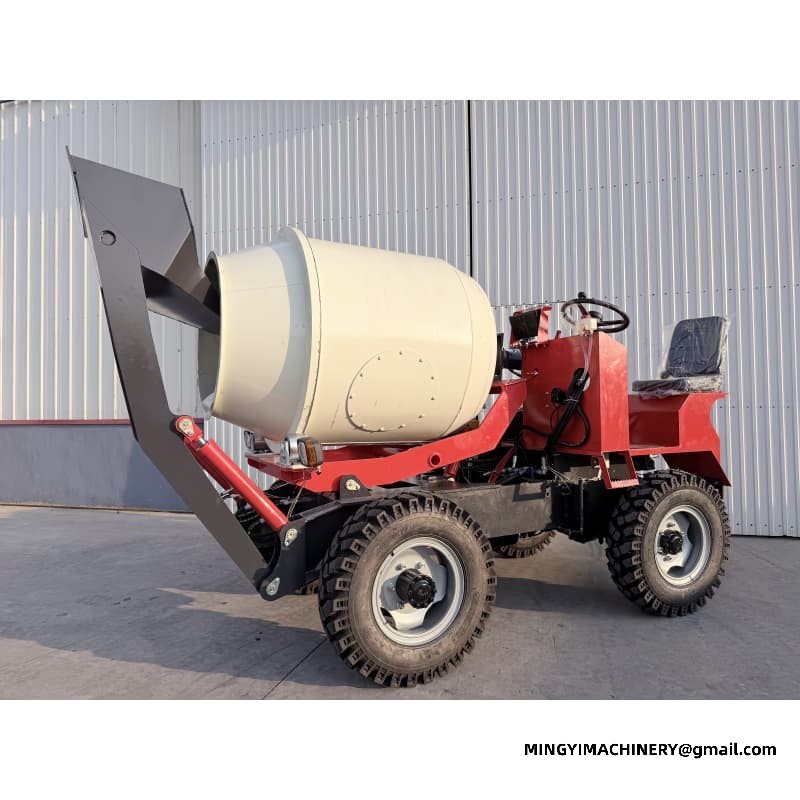
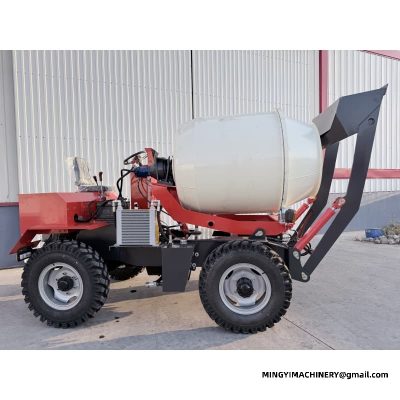
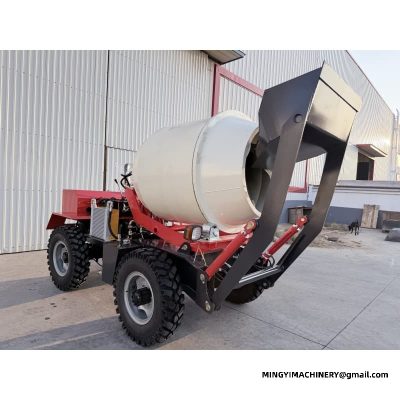
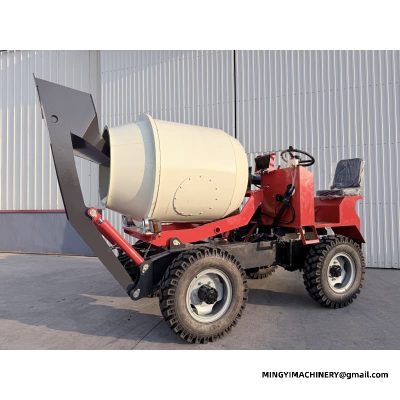
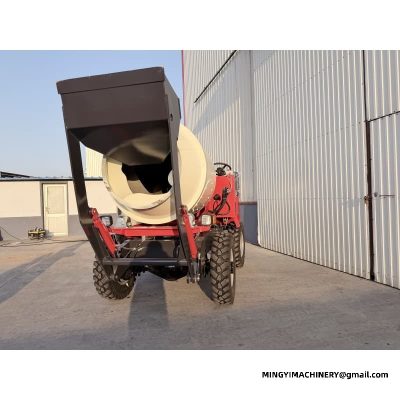
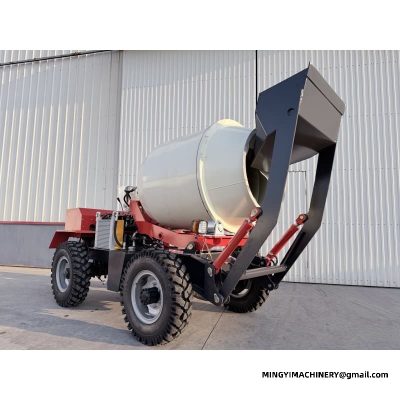
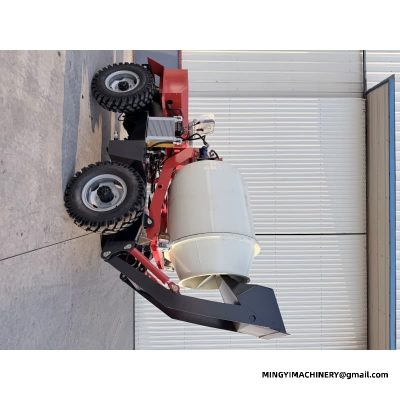
Small Road Construction Mixer, Canal Paving Machine, Rural Paving Mixer
The published table on a small road construction mixer is short, and every line on it is a decision. 0.8 m³ capacity, 1,500 kg rated load, 3,500 x 1,600 x 2,200 mm overall, 4WD through a 130 axle with a 212 steering axle behind. This page takes those lines one at a time and reads them the way a crew meets them: loading, mixing, hauling and discharging in a small precast yard.
Hire saves the capital and the storage; ownership saves the weekly rate and the waiting. For the user whose in a small precast yard batching one mould load at a time recurs, the owned machine is usually the simpler one by the second season.
The decision turns on continuity of work more than on specification. A contractor who pours most weeks owns with confidence; one who pours once a season hires with relief, and neither is wrong for the other's job.
Measure the machine in hours, not in days. A drum that cycles every few minutes earns more in a short shift than a machine that waits between batches, and the hour meter is the honest tally of both. The published speed and gears exist to keep the cycle tight, not to make the machine fast.
Service against hours, not against weeks. Oil, filters and greasing key off the meter, and a machine worked hard in a season reaches its first major check sooner than one worked occasionally — the meter tells the truth either way.
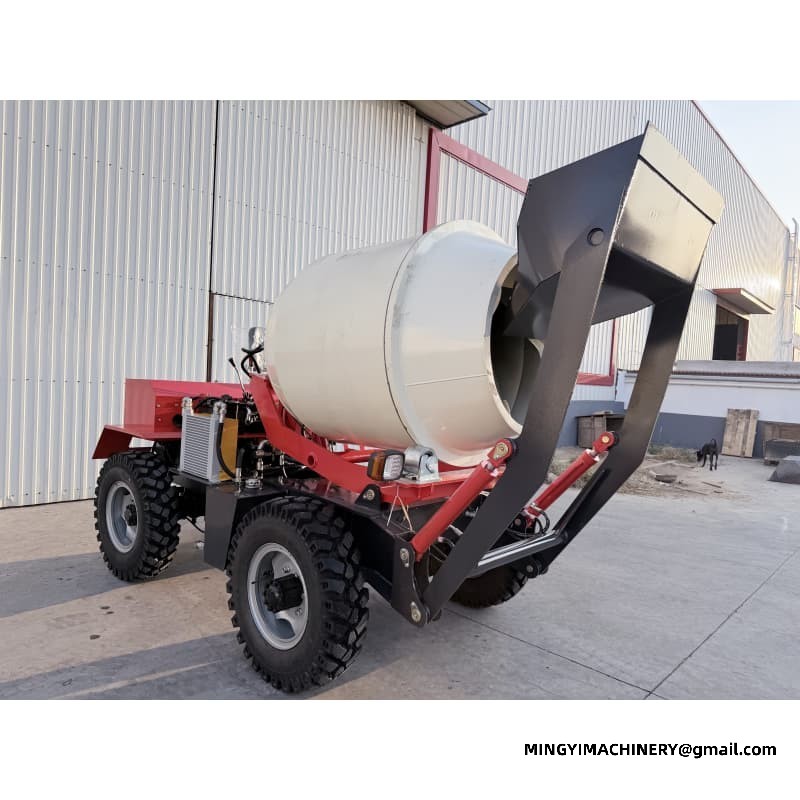
The operator profile is one person, but the people around the machine change by the hour. The mixer serves a foundation crew, a masonry crew and a patching gang in sequence, each with the recipe it needs and the standing spot it wants. The single seat is the reason the machine suits small contractors who cannot spare a second hand.
The hire argument is simplest of all: one machine, one trained person, one service book. A fleet built on that simplicity spends its money on work, not on complexity it will later have to support.
| Published build data — 0.8 m³ 4WD self-loading concrete mixer | |
|---|---|
| Rated load | 1,500 kg |
| Rated capacity | 0.8 m³ |
| Overall dimensions (L x W x H) | 3,500 x 1,600 x 2,200 mm |
| Front tyre size | 8.25-16 |
| Rear tyre size | 7.50-16 |
| Minimum ground clearance | 204 mm |
| Steering angle | 28° |
| Turning dimension (outer tyre) | 2,464 mm |
| Maximum travel speed | 24 km/h |
| Transmission | 4WD |
| Gears | 3 forward / 1 reverse + travel gear |
| Front axle | 130 drive axle |
| Rear axle | 212 selectable 4WD steering axle |
| Engine | single-cylinder diesel / 25 hp |
| Steering | hydraulic power steering |
Heat shortens everything: the workability window, the wait between batches, the time a finisher has. In hot seasons the drum works slightly smaller batches, water is measured colder and exactly, and aggregate stockpiles are kept shaded where possible so the mix does not start hot.
The wet-season spares list grows by two items: extra air filters and a can of water dispersant for the electrics. Machines that work monsoons year after year in a small precast yard are machines whose crews plan for it.
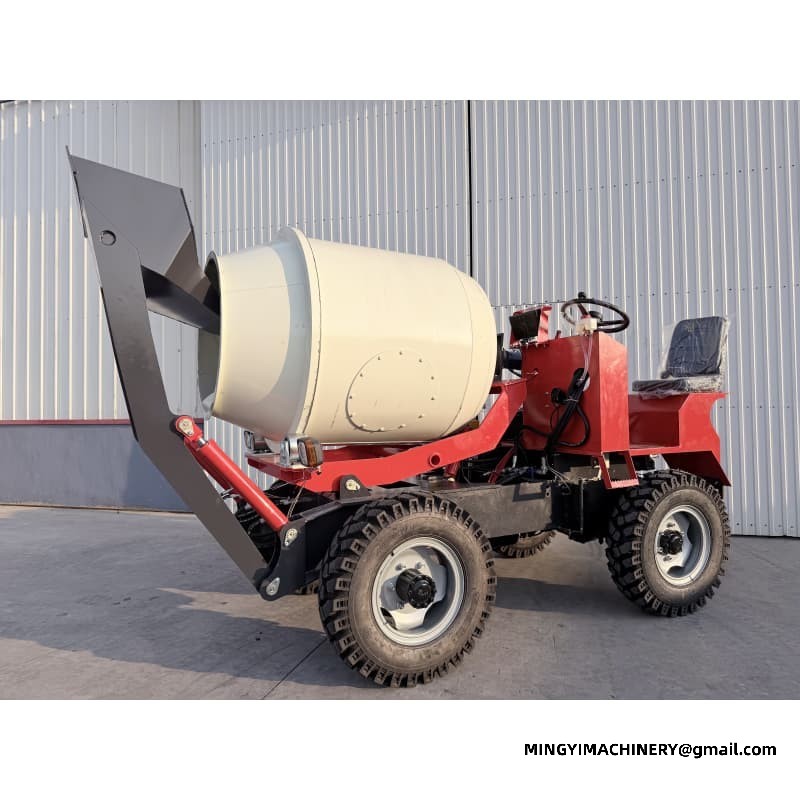
The machine earns its place wherever concrete is needed in small, repeated batches away from a batching plant: in a small precast yard batching one mould load at a time. The common thread is distance — too far from the plant for ready-mix to be economical, too continuous for hand mixing.
There are jobs this machine should not win: continuous slab pours that outrun 0.8 m³ per batch, sites with reliable ready-mix supply, and work at heights or reaches no wheeled mixer can serve. Recommending it into those jobs creates the kind of customer every builder dreads.
24 km/h is not fast and should not be. The machine carries 1,500 kg of wet concrete high on a short wheelbase, and the gearing keeps those loads sedate. Crews that respect the speed keep the concrete in the drum and the machine on its wheels.
First gear is for loading position and the worst ground; second covers most site hauls; the travel gear belongs on the public road between sites. Reverse plus the steered rear axle does the positioning, because the shovel leads and the operator wants to back toward a pour with the drum already pointing at it.
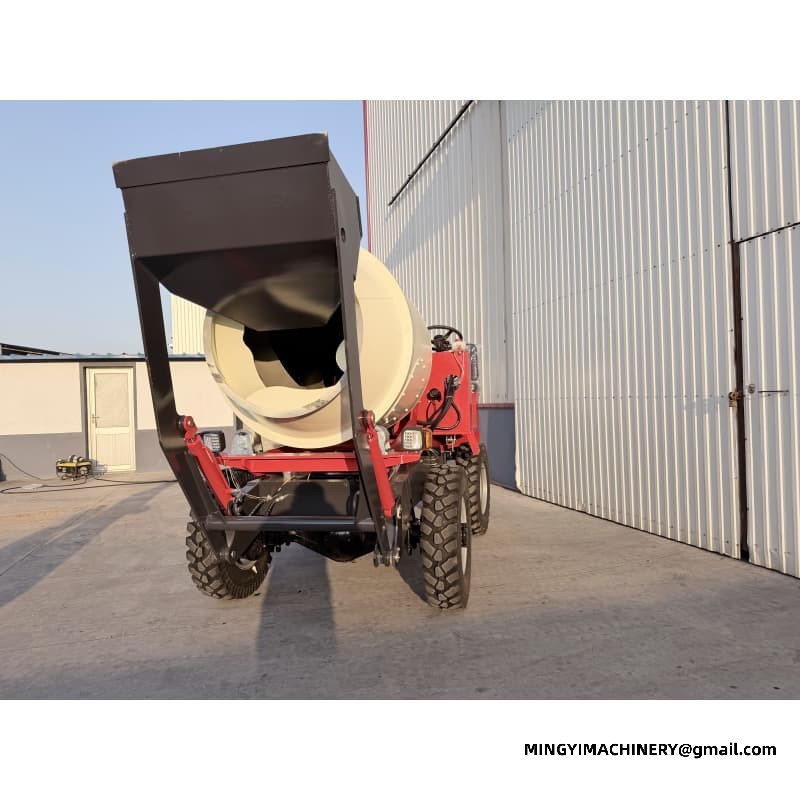
Keep the parts book and the order history together. The second order, placed a year later for a blade or a seal, is a two-minute email when the reference numbers are at hand and a half-day search when they are not.
The first week sets the machine's tone. Commission it properly — turn the engine by hand, prime the hydraulics, run the drum empty — then let a new operator feel the 28° steer and the 2,464 mm circle without a live load aboard.
Steering is hydraulic power steering acting with the 28° rear-axle steer. The wheel is light under a full drum, the steering response stays predictable at crawl speeds, and the machine holds a straight line under load without fighting the operator.
What the machine does — reach the pour under its own power, mix to a recipe, place precast batch concrete without a second handling — it does inside those limits, and crews that learn the limits plan around them instead of against them.
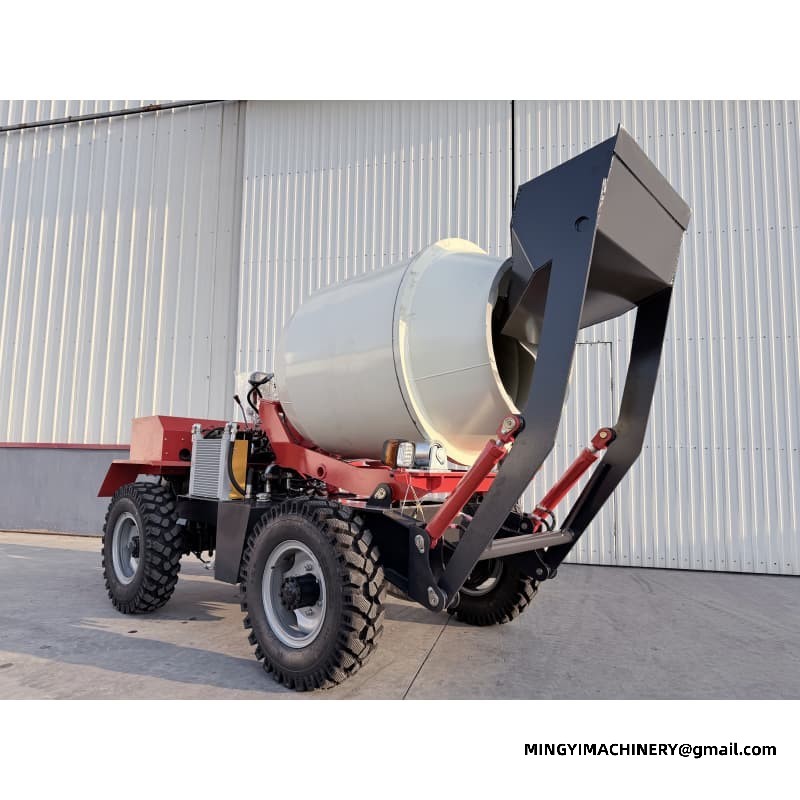
Where the mix changes through a day — a lean base, a richer top — the machine carries the change as easily as the material, provided the crew keeps the recipe card current. Switching batches is a scoop count and a water measure, not a machine adjustment.
Lean foundation mixes and richer masonry mixes turn the same way and discharge the same way; the drum's job is uniformity, not chemistry. The recipe stays the engineer's, and the repetition stays the drum's.
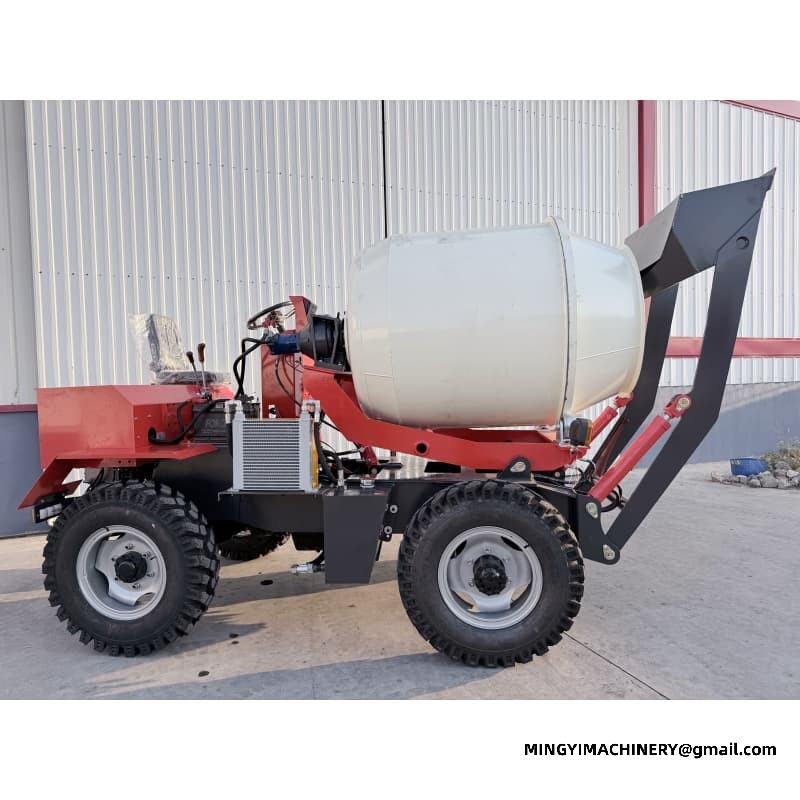
The front tyres are 8.25-16 and carry the drive under a full drum; the rears are 7.50-16 and steer. The heavier front fitment matches the heavier front duty — drive torque plus a loaded drum sitting between the axles.
Both sizes are common agricultural fittings, which means tubes, tyres and repairs exist in every market the machines serve. A spare front tyre and a puncture kit travel with many fleets; on remote work the kit is not optional.
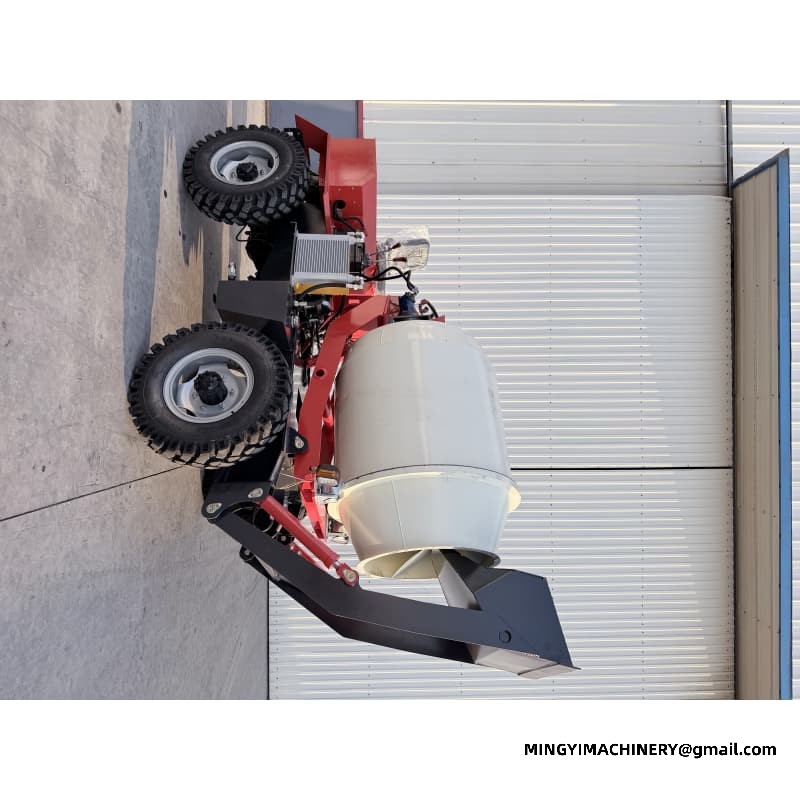
25 hp is modest by highway standards and exactly right for this duty. The machine's work is short, heavy efforts — loading, climbing, tipping — and a small diesel spends most of its day loafing between them, which is where fuel economy and engine life both come from.
A single-cylinder diesel of this size burns a few litres an hour, runs on the same diesel as everything else on site, and services with filters and oil a general mechanic stocks. None of that is glamorous; all of it matters in a small precast yard, where the nearest dealer is a day away.
Let the first day end early, clean and unhurried. Operators trained calmly in a small precast yard keep the habits; operators trained in a rush learn shortcuts instead.
The first week should include one empty drum deliberately: let the new operator feel the 28° rear steer, the 2,464 mm circle and the stopping distance without a live load aboard. Familiarity earned empty arrives safely loaded.
Ready-mix is the simpler source per cubic metre when a plant is close and the pour is large. Beyond that radius, minimum-load charges, queue time and the stiffening in the drum flip the arithmetic, and batching in a small precast yard from stockpiled aggregate wins.
Crews converting from hand-mixing should expect the savings to arrive in two waves: the obvious one in labour, the quieter one in rework, because batches mixed to a recipe need less patching, less remedial finishing and fewer disputes in a small precast yard.
How often should the small road construction mixer air filter be cleaned?
Far more often than the book says in dry conditions. Check it daily by restriction indicator or torch; a blinded filter takes power on every shovel lift.
What gradient can the small road construction mixer handle loaded?
Site ramps and graded ground in low gear. There is no published gradeability figure, so treat sustained loaded climbs as a test question for the supplier, not an assumption.
What is the delivery time for a small road construction mixer?
It varies with build schedule and sailing dates, so confirm current lead time when you request the specification — the same message that fixes the specification fixes the date.
Can the small road construction mixer work in the rain?
The machine tolerates rain; the route is usually the limit. At 204 mm of clearance with agricultural tyres and 4WD it crosses wet ground that stops two-wheel machines — provided the standing spots hold.
Is the small road construction mixer suitable for plant-hire fleets?
It is a natural hire asset: simple controls, single-operator working, and a specification small fleets can describe to any customer in one page.
How fast does the small road construction mixer travel?
Top speed is 24 km/h with three forward gears, one reverse and a separate travel gear. Site work stays in low gears; the travel gear exists for moving between jobs.
Can the small road construction mixer be towed behind a pickup?
On a braked tag trailer rated for the machine's weight, yes — the 3,500 x 1,600 x 2,200 mm footprint was drawn for it. Lash at the chassis, chock the wheels, fold the shovel to travel order.
How many small road construction mixer machines fit in a container?
That depends on the container and the packing format, so confirm the loading plan at specification. The 3,500 x 1,600 x 2,200 mm envelope is what makes the packing conversation easy.
Small pours, distant sites and awkward access are exactly where this machine was drawn to work. Where the job matches that shape, the published table is all the sales argument needed.
Documents that travel with the concrete mixer
Documentation should match the machine that was actually built. The sheet supplied with this class of machine records the configuration as delivered, because the generic catalogue description is not what the customer needs when ordering a part.
Moving the unit in daily use between sites
Travel time is not working time, and it should be planned as its own item. The hours spent moving a machine of this size between jobs are hours not worked, and a trailer that matches the machine reduces them every single trip.
Commissioning the equipment on site on site
Transport shakes things loose. A short check of the machine itself after the crate is opened, covering the same points the pre-delivery inspection covered, is the most useful insurance available on delivery day.
A second operator for the model in question
A machine that only one person can use is a single point of failure. Training a second operator on the machine in that duty takes a day and removes the dependency that otherwise governs holidays, illness and busy weeks.
Fuel, oil and fluid quality for the unit on the job
Fluid quality is a storage problem before it is a machine problem. Water and sediment in a drum will find the injection system of a machine built for the work eventually, and a settling period is nothing compared with a pump.
Handover and getting familiar with the equipment in service
The first day with a new machine sets the pattern for the next five years. Handover for the concrete mixer covers the control layout, the daily check points and the limits the operator needs to know before the first real load is lifted or carried.
Contact MINGYI Machinery for the current self-loading concrete mixer specification, export packing and a formal specification for your market. E-mail: sales@mingycn.com | LINE (ID): mingyicn
Self Loading Cement Mixer: What Automatic Really Means Here · China Self Loading Concrete Mixer Manufacturer: Build Notes · 4WD Agricultural Transport Vehicle for mining and quarry work · Mini Self-Loading Concrete Mixer









