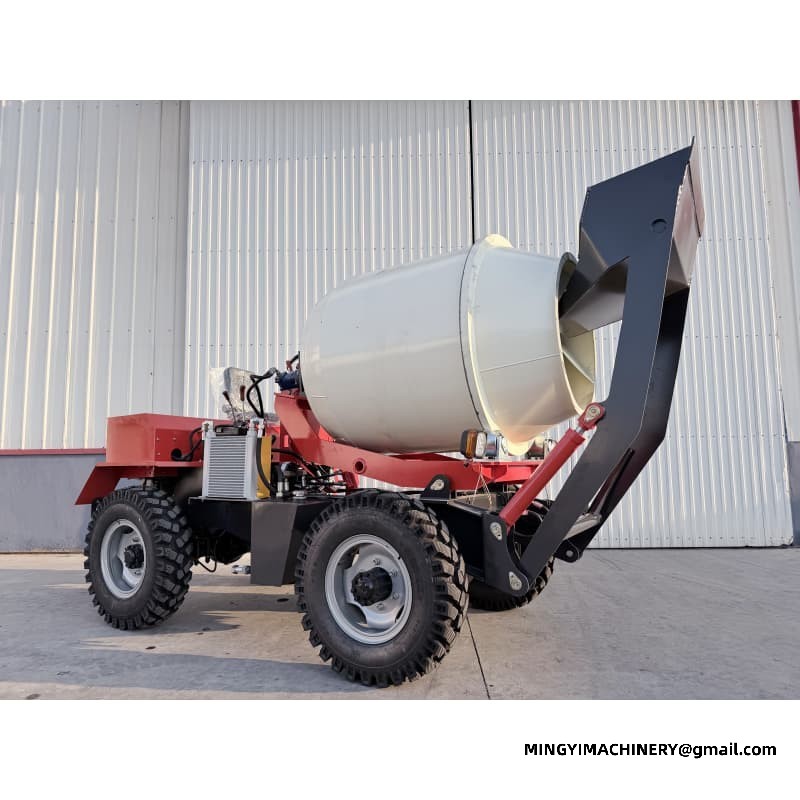
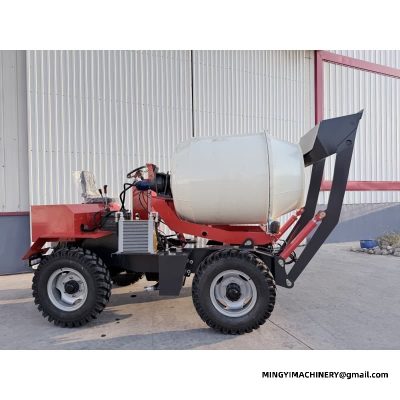
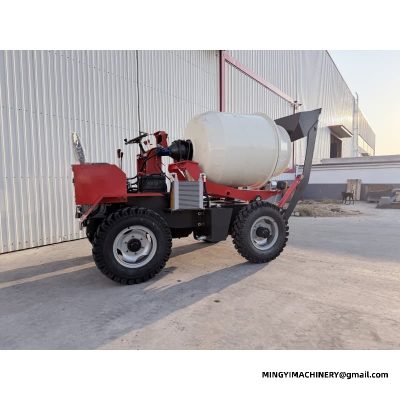
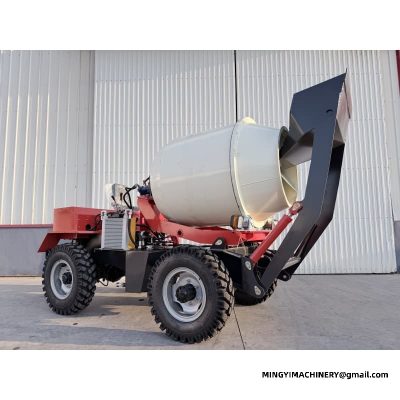
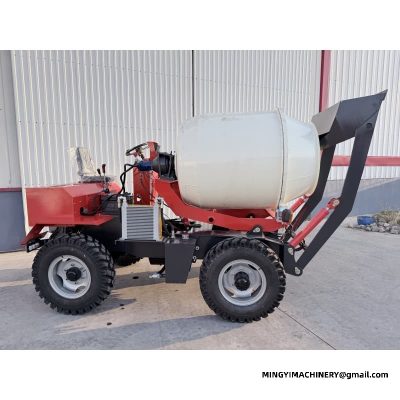
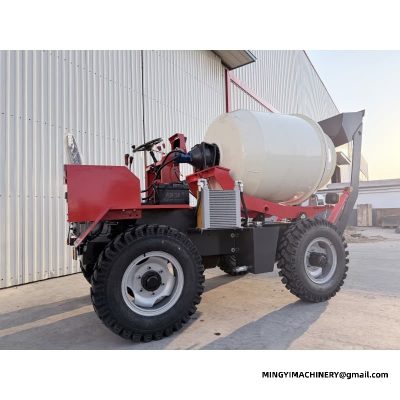
Automatic Self Loading Cement Mixer, Auto Feeding Mixer, Auto Batching
Access decides concrete work before capacity does. A transit mixer that cannot reach the pour is a plant on the street; a automatic self loading cement mixer at 3,500 x 1,600 x 2,200 mm overall and 2,464 mm of turning circle drives to where the formwork is. This page follows the machine on a building site from the stockpile to the discharge point and reads each published figure along the way.
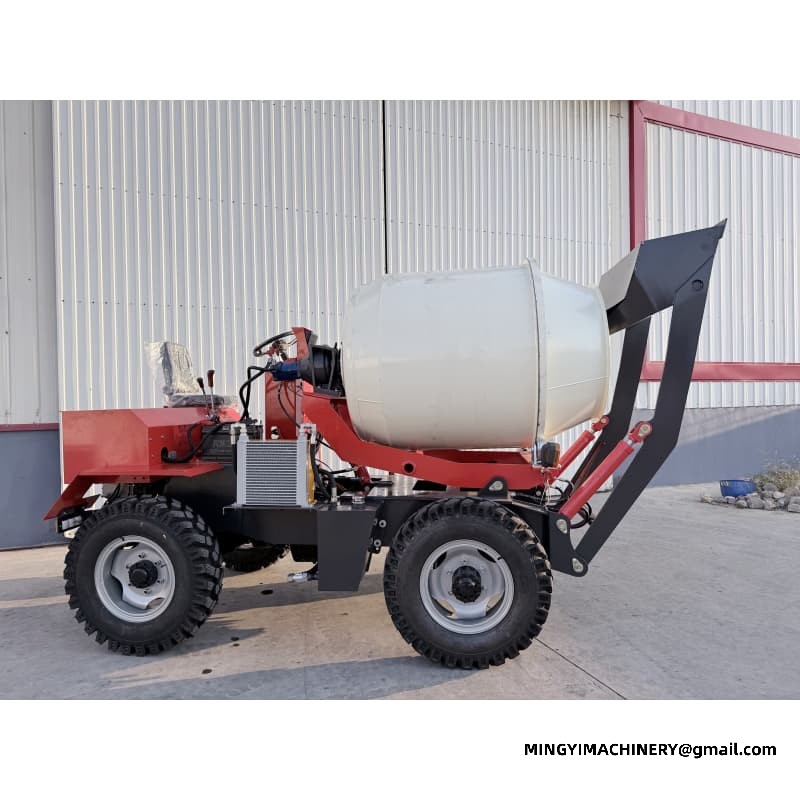
At 1,600 mm wide the machine threads standard double gates with room for its mirrors, which is the whole reason the envelope was drawn that way. Estate lanes, compound doors, orchard rows and basement entries all accept it where ordinary site trucks stop at the street.
On congested slabs the machine drives between formwork lines, ducts and starter bars that leave gaps narrower than most vehicles. The short wheelbase and steered rear axle let the operator place a discharge point within barrow range of anywhere the wheels can stand.
Confirm the specification in writing against the published table: 0.8 m³ capacity, 1,500 kg rated load, 4WD transmission, 25 hp single-cylinder diesel, the 130 front axle and 212 rear steering axle, and hydraulic power steering. Ask what is standard and what is optional in the build you are buying.
Order the spares kit against the parts manual's own numbers and file the correspondence with the manual. When the second order goes in a year later on a building site, the reference numbers make it a two-minute email.
Load, mix, drive, discharge, return — one person runs the entire loop, and the controls are arranged so the sequence needs no second pair of hands. On small crews that is not a luxury; it is the difference between pouring today and waiting for a bigger gang.
A single operator controls every input, which makes quality easier to police, not harder. One recipe, one water measure, one mixing time — and every batch of foundation and plinth concrete comes out the same because the same person made the same decisions each cycle.
| Specification extract — 0.8 m³ 4WD self-loading concrete mixer | |
|---|---|
| Rated load | 1,500 kg |
| Rated capacity | 0.8 m³ |
| Overall dimensions (L x W x H) | 3,500 x 1,600 x 2,200 mm |
| Front tyre size | 8.25-16 |
| Rear tyre size | 7.50-16 |
| Minimum ground clearance | 204 mm |
| Steering angle | 28° |
| Turning dimension (outer tyre) | 2,464 mm |
| Maximum travel speed | 24 km/h |
| Transmission | 4WD |
| Gears | 3 forward / 1 reverse + travel gear |
| Front axle | 130 drive axle |
| Rear axle | 212 selectable 4WD steering axle |
| Engine | single-cylinder diesel / 25 hp |
| Steering | hydraulic power steering |
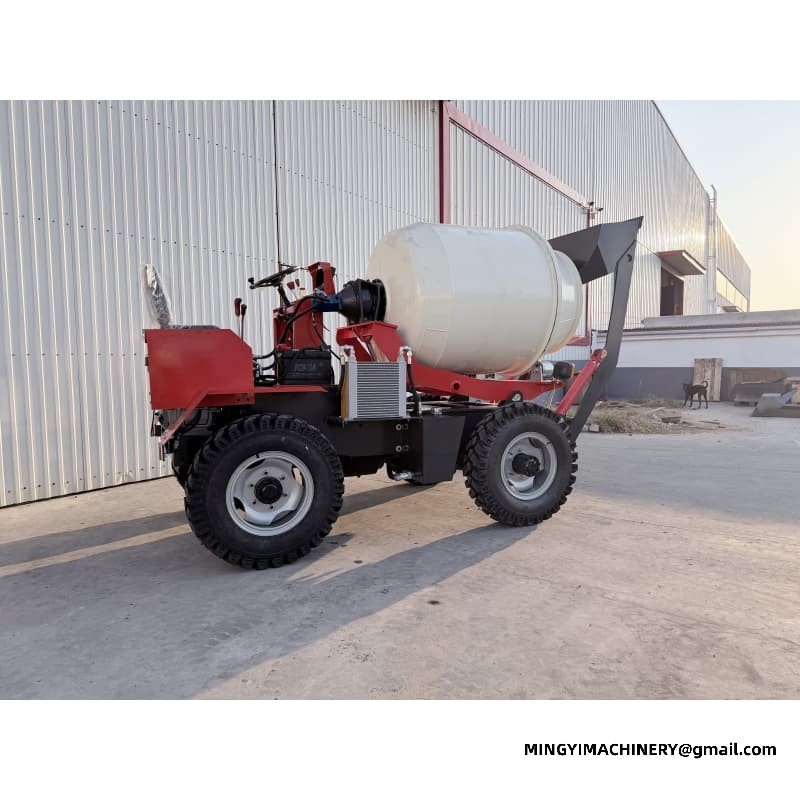
Discharge lands where the operator aims it. That single fact shapes the whole workflow on a building site: the drum pours into a barrow, a bucket or straight to formwork, and the crew never moves concrete twice.
Consistency comes from a fixed recipe and a fixed routine: the same bucket counts, the same water measure, the same mixing time. Because the shovel weighs each scoop the same way and the drum turns each batch the same way, the machine rewards crews that work to a recipe with batches that finish identically.
Hire saves the capital and the storage; ownership saves the weekly rate and the waiting. For the user whose on a building site feeding foundations one hopper at a time recurs, the owned machine is usually the simpler one by the second season.
Ownership's quiet effort is the inputs — cement, aggregate, water — that must be on hand before the drum can turn. plan them with the machine from day one, because an idle drum takes money while it earns nothing.
On a building site, that single-operator loop is the economic argument. Labour is the biggest recurring effort on small concrete work, and the shovel removes most of it. Cement, water and aggregate are the only inputs the crew still handles by hand.
A tidy pile also protects the mix. Contamination from ground spoil is the usual cause of weak batches on sites that store material directly on soil; a hardened standing area takes little and keeps foundation and plinth concrete honest from the first scoop.
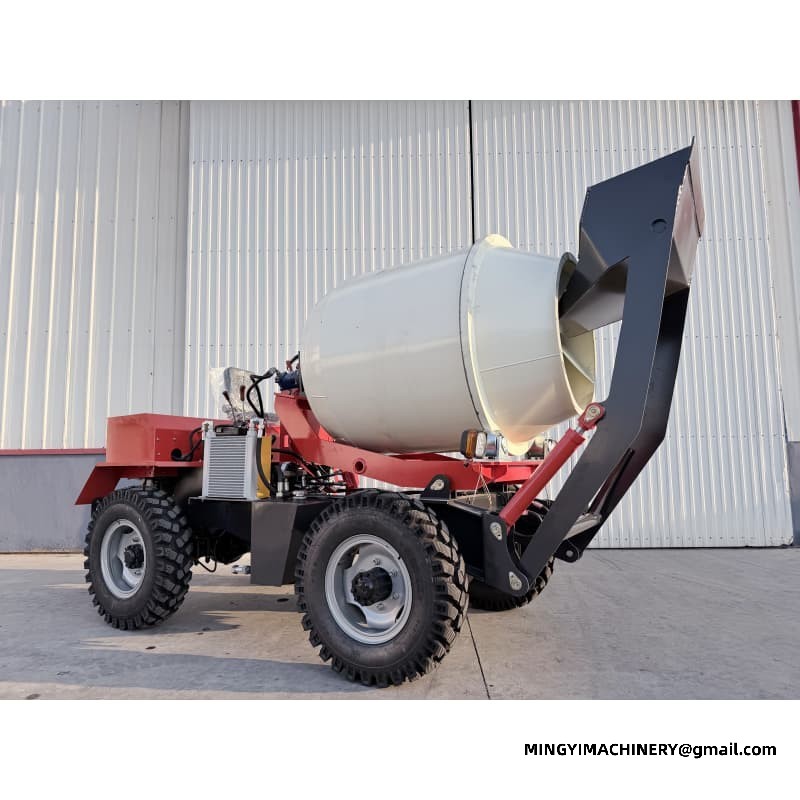
The machine will reproduce whatever recipe it is given, faithfully and all day. That is its quality promise and its quality risk: a correct recipe repeated gives uniform strength, and a careless one repeated gives uniform trouble.
Where the work is structural, test properly. The machine's uniformity makes test results meaningful — hand-mixed scatter hides problems that drum-mixed consistency exposes while they are still simple.
Read the two clusters against your site, not against the brochure. The figure that decides the sale is usually the smallest one: turning circle, clearance or width, whichever your worst gateway on a building site happens to be. The big numbers sell the machine; the small ones qualify it.
Bore, stroke and emission figures matter less than the parts supply behind them. Ask the supplier for the engine's own reference numbers, not just the mixer's, and the first filter change becomes a two-minute order rather than a search.
On larger sites the profile widens: an operator plus a spotter at the discharge, plus whoever feeds the cement and measures the water. The machine still needs one trained person; it simply stops needing a barrow chain behind them.
A typical small outfit pairs the machine with two or three labourers — one on cement, one at the discharge with a barrow, one finishing. Three people and one machine outproduce a six-person hand-mixing line, and the comparison is the reason the machine exists on a building site.
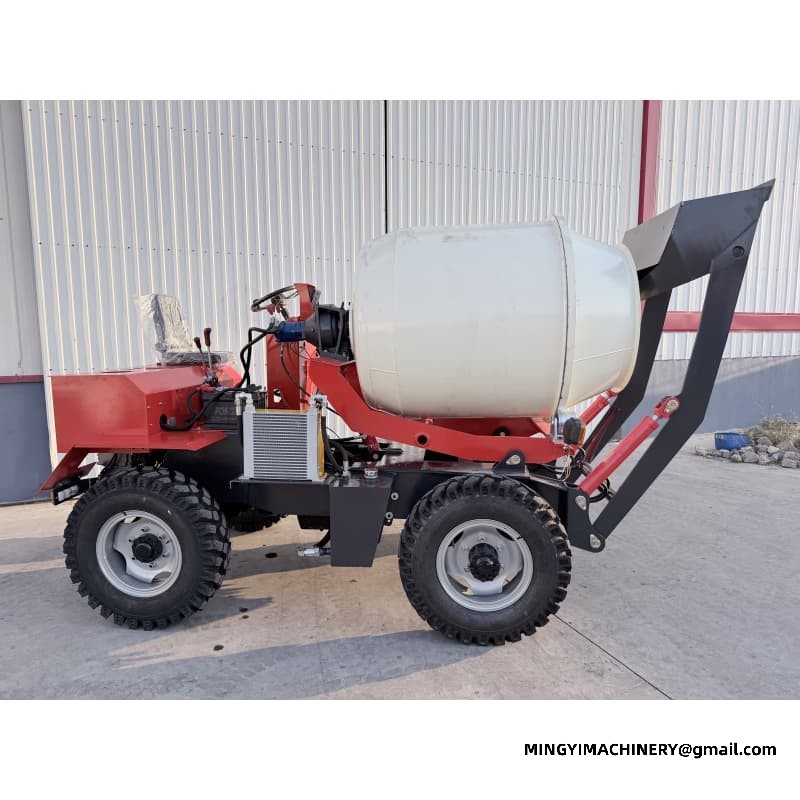
The machine itself copes well — the single-cylinder diesel is air-cooled territory and dust, not heat, is its enemy. Filter checks are the hot-season habit that matters on a building site.
Aggregate temperature is the hidden variable in hot-weather concrete: stockpiles in the sun can carry the mix temperature past the design window before the drum spins. Shade, sprinkling and morning batching are the simple answers.
0.8 m³ is not a big drum by transit-mixer standards, and that is the point. Batches this size stay workable from drum to formwork without additives or rush, on a building site, where the distance from mixing point to pour is measured in metres rather than kilometres.
The practical advice is to plan pours around the cycle rather than around the clock. A crew that knows each batch of foundation and plinth concrete takes a predictable interval can keep formwork continuously fed, which matters more on cold joints than raw volume ever does.
The rules are short: slow through turns, gentle on the stops, drum level in transit and nobody riding on a machine built for one. Every accident report on mixers of this class starts with one of those rules broken.
Gloves, boots and eye protection are not paperwork at the discharge end — wet cement is caustic, and the crews who treat it that way on a building site never spend an evening with cement burns.
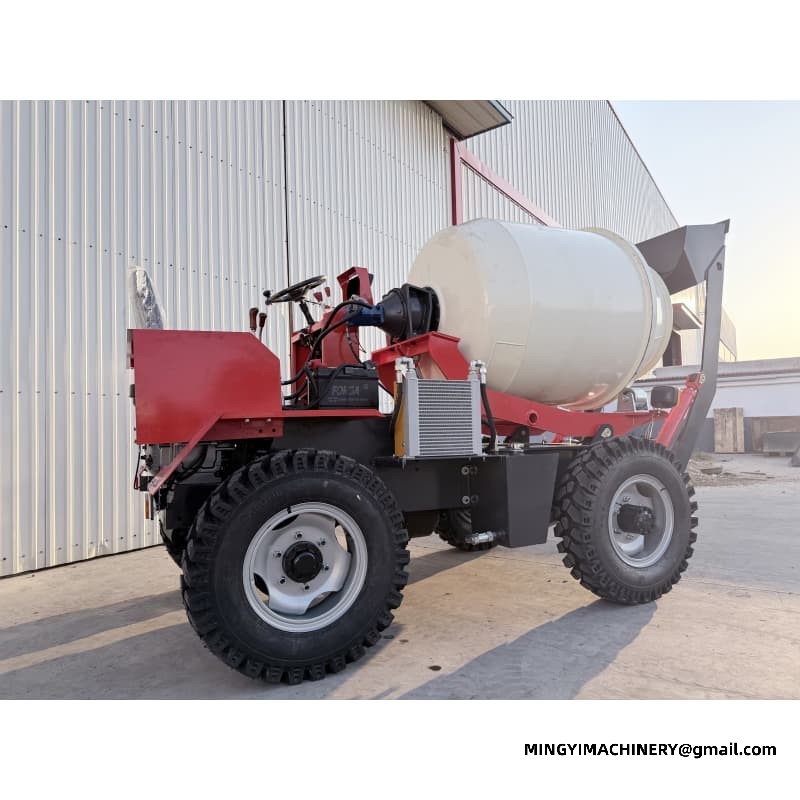
Keep the parts book and the order history together. The second order, placed a year later for a blade or a seal, is a two-minute email when the reference numbers are at hand and a half-day search when they are not.
Document the commissioning in the service book. The checklist protects the warranty and gives the next operator a known starting point, and the habit takes nothing the moment it is begun.
Steering is hydraulic power steering acting with the 28° rear-axle steer. The wheel is light under a full drum, the steering response stays predictable at crawl speeds, and the machine holds a straight line under load without fighting the operator.
Every limit here has a workaround worth knowing: a 2,464 mm circle cannot fit, but a three-point turn can; 204 mm of clearance will not ride a boulder, but a boarded path will. The machine rewards a crew that thinks in routes rather than in straight lines.
Is the automatic self loading cement mixer four-wheel drive?
Yes. Transmission is 4WD — four-wheel drive through a 130 front drive axle, with the 212 rear axle selectable for four-wheel-drive steering. Rear drive is selectable, so the machine runs light on hard standing and engages all four wheels when the ground turns soft.
Will the automatic self loading cement mixer start in cold weather?
Electric key start with a decompression lever as the manual fallback. Warm the hydraulics and cycle the drum gently on cold mornings before the first loaded batch.
How big is the automatic self loading cement mixer?
3,500 x 1,600 x 2,200 mm overall — short enough for a site trailer, narrow enough for a standard double gate, low enough to containerise without special handling.
A automatic self loading cement mixer hydraulic hose burst mid-pour — what now?
Contain the spill, replace with the correct rating, and refill with clean filtered oil. This is exactly why hoses and clamps belong in the spares kit that travels with the machine.
How do you keep batches consistent in a automatic self loading cement mixer?
A fixed recipe: the same scoop count, the same measured water, the same mixing time. The machine repeats whatever routine it is given, on a building site included.
Can the automatic self loading cement mixer use site sand and gravel straight from the ground?
From a clean stockpile on hardened standing, yes. Straight from contaminated ground, no — soil in the mix is the classic cause of weak site concrete.
Does the automatic self loading cement mixer have power steering?
Yes — hydraulic power steering, working with the 28° rear-axle steer. The wheel stays light under a full drum and predictable at crawl speed.
Where should automatic self loading cement mixer wash-out water go?
Into a designated wash-out pit or settling area, never into drains or against the stockpile. Cement-laden water is a controlled waste on most sites.
Measure the gateway, time the cycle, write the recipe — three small exercises that turn the published specification into a working plan for your site.
Commissioning Self Loading Cement Mixer: What Automatic Really Means Here on site
Transport shakes things loose. A short check of Self Loading Cement Mixer: What Automatic Really Means Here after the crate is opened, covering the same points the pre-delivery inspection covered, is the most useful insurance available on delivery day.
Cold weather and winter care for Self Loading Cement Mixer: What Automatic Really Means Here
Starting is only the first problem. Until Self Loading Cement Mixer: What Automatic Really Means Here reaches working temperature the hydraulic response is slower and the seals are stiffer, and warming the machine before asking for full output avoids unnecessary strain.
Packing, loading and shipment of Self Loading Cement Mixer: What Automatic Really Means Here
How a machine travels decides how it starts on arrival. Securing Self Loading Cement Mixer: What Automatic Really Means Here against movement, protecting the exposed cylinders and keeping the battery and fluids in the right state for the voyage all belong to the packing list.
Wear items and spares worth holding for Self Loading Cement Mixer: What Automatic Really Means Here
Holding spares is about downtime rather than the shelf itself. The question for Self Loading Cement Mixer: What Automatic Really Means Here is not how large the part is but how long the machine sits while it is found, and a small shelf answers that better than a fast courier.
Documents that travel with Self Loading Cement Mixer: What Automatic Really Means Here
The machine is only half of what arrives. The parts book, the service schedule and the declarations that come with Self Loading Cement Mixer: What Automatic Really Means Here are what let the owner register, insure and maintain it without a second round of emails.
Contact MINGYI Machinery for the current self-loading concrete mixer specification, export packing and a formal specification for your market. E-mail: sales@mingycn.com | LINE (ID): mingyicn
China Self Loading Concrete Mixer Manufacturer: Build Notes · Wheeled Self Loading Concrete Truck: 8.25-16 and 7.50-16 · 4x4 Forestry Log Carrier for mining and quarry work · Mini Self-Loading Concrete Mixer









