China Self Loading Concrete Mixer Manufacturer, Factory Direct Mixer, Supplier
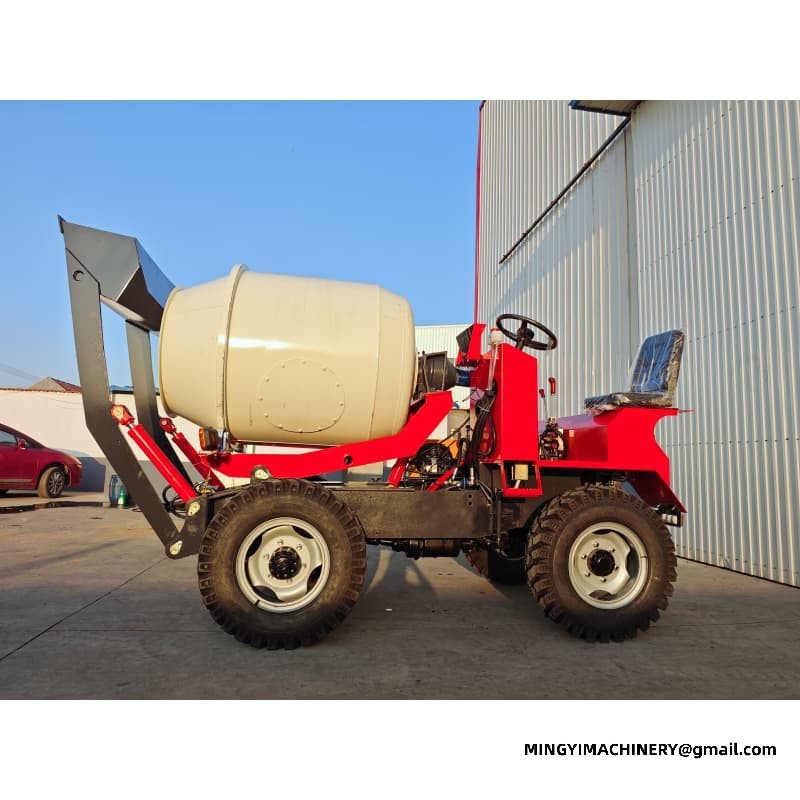
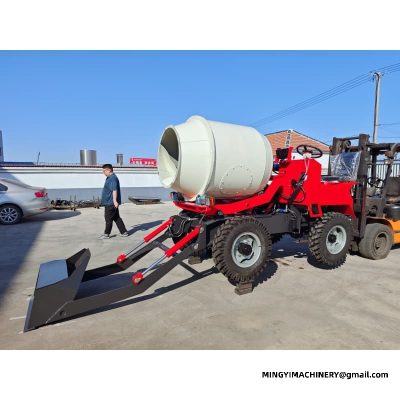
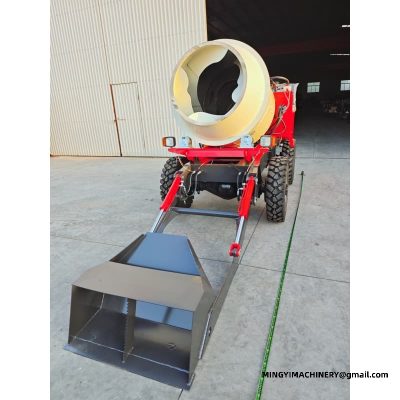
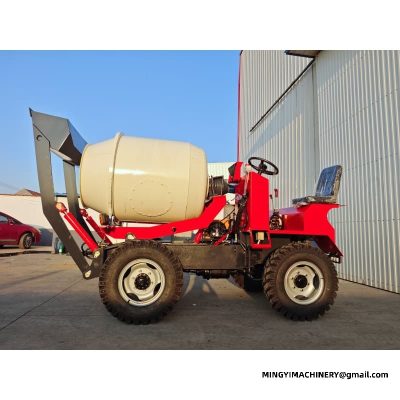
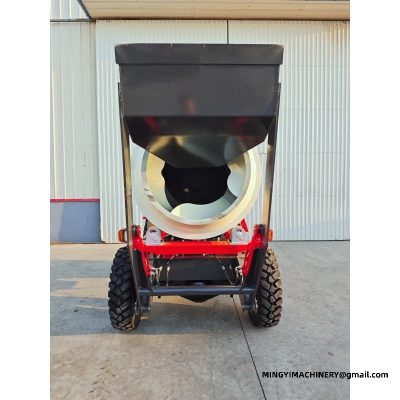
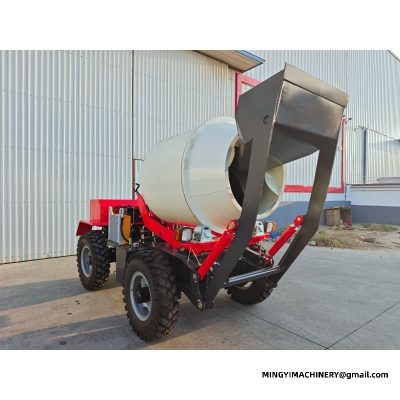
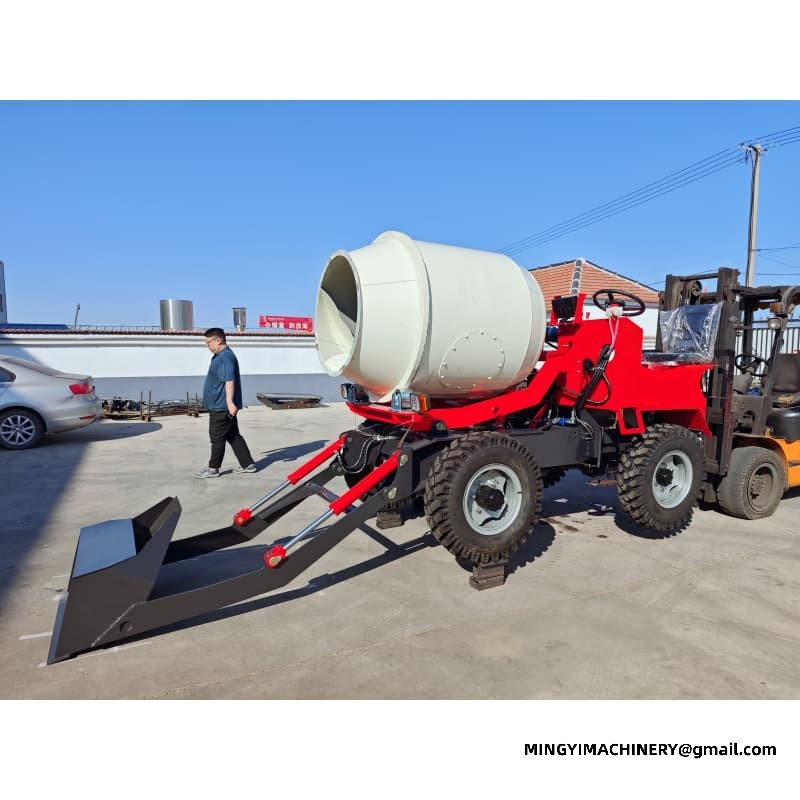
Small pours, repeated all day, are a logistics problem. The china self loading concrete mixer manufacturer answers it with a 0.8 m³ drum, a front shovel and four driven wheels — four-wheel drive through a 130 drive axle with a 212 steering axle behind. This page reads the specification the way an estimator would: what each batch contains, what the cycle takes in time, and where the machine's limits honestly sit.
Engine oil and fuel, air restriction, hydraulic level, drum cleanliness, tyres and wheel nuts, lights and mirrors. That walk-round takes five minutes and catches nearly everything that becomes lengthy when missed.
Fleets that run paper this way on a building site also spot the early trend: a filter that keeps clogging or a seal that keeps weeping is telling the crew something before it fails on a pour day.
Many fleets run both: transit for the big slabs near town, self-loader for the long tail of small work everywhere else. The two machines rarely compete for the same batch.
The hand-fed mixer still wins where volumes are tiny and access is narrower than 1,600 mm — but that allowance is narrow, and it closes every time wages rise.
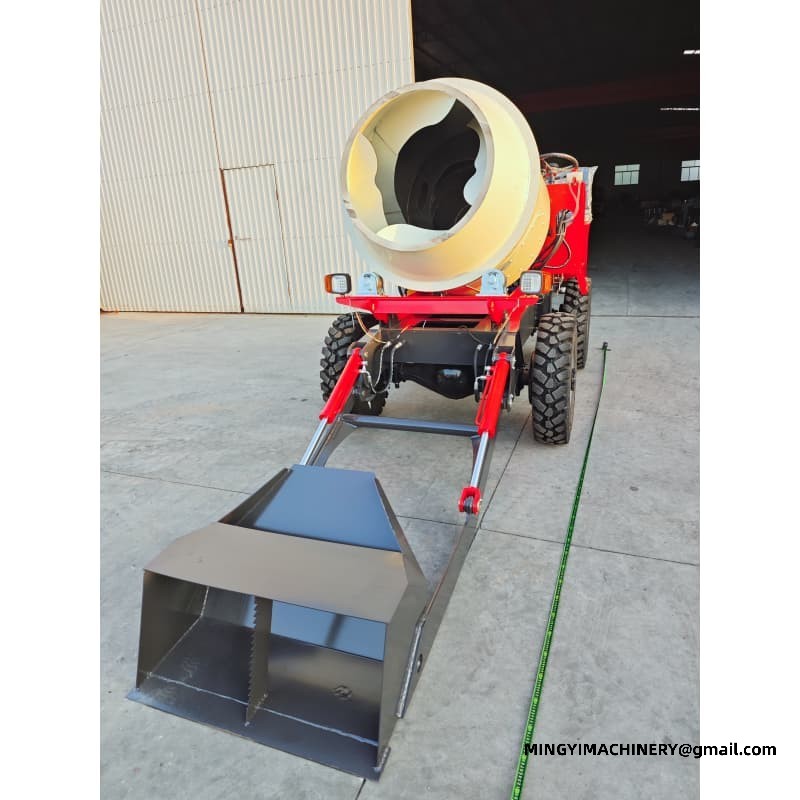
Load, mix, drive, discharge, return — one person runs the entire loop, and the controls are arranged so the sequence needs no second pair of hands. On small crews that is not a luxury; it is the difference between pouring today and waiting for a bigger gang.
The risk arrives when crews rotate through the seat. A laminated recipe card, a marked water container and a fixed scoop count effort nothing and survive any change of operator.
| Reference specification — 0.8 m³ 4WD self-loading concrete mixer | |
|---|---|
| Rated load | 1,500 kg |
| Rated capacity | 0.8 m³ |
| Overall dimensions (L x W x H) | 3,500 x 1,600 x 2,200 mm |
| Front tyre size | 8.25-16 |
| Rear tyre size | 7.50-16 |
| Minimum ground clearance | 204 mm |
| Steering angle | 28° |
| Turning dimension (outer tyre) | 2,464 mm |
| Maximum travel speed | 24 km/h |
| Transmission | 4WD |
| Gears | 3 forward / 1 reverse + travel gear |
| Front axle | 130 drive axle |
| Rear axle | 212 selectable 4WD steering axle |
| Engine | single-cylinder diesel / 25 hp |
| Steering | hydraulic power steering |
The width is the number that opens the most doors. At 1,600 mm the machine goes through standard double gates and between formwork lines that stop wider equipment, and it does so with a full drum because the drum sits inside the envelope, not above it.
Inside a container, the machine anchors to the floor at four points and the shovel secures against a hardwood block — the shipping agent's standard practice, and worth confirming in the packing photos before the container doors close on a building site.
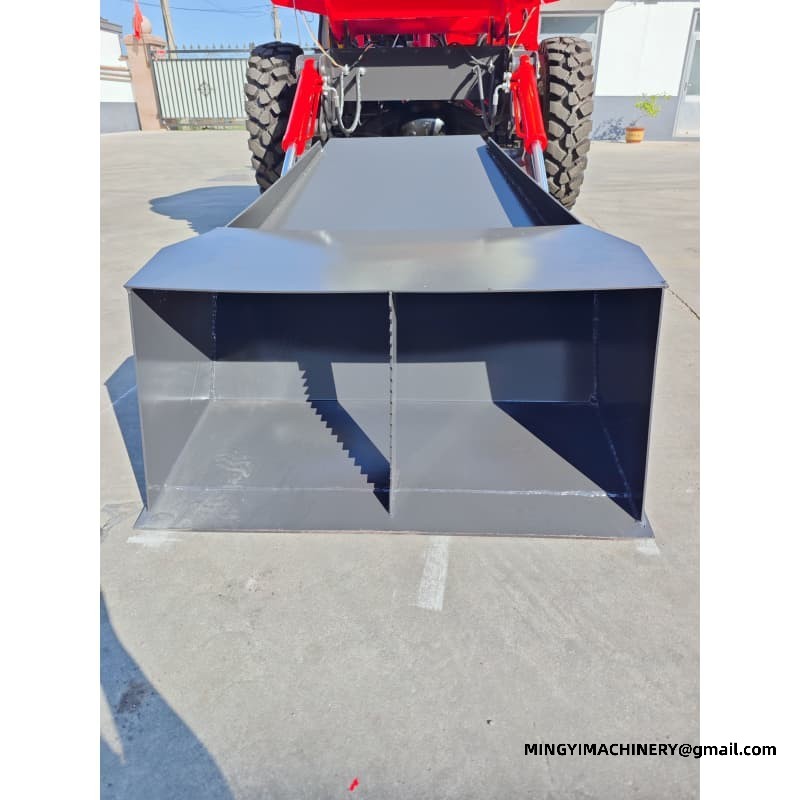
On a building site, the difference shows on the first wet morning. A two-wheel-drive machine spins and needs towing; this one keeps moving under its own traction with a full 1,500 kg in the drum circuit. Traction is capacity — a mixer that cannot reach the pour has none.
Four-wheel drive also changes how the machine fails — or rather, how rarely. Wheels that share the work share the wear, and a chassis that is never bogged is a chassis that never needs towing out of a pour on a building site.
On larger sites the profile widens: an operator plus a spotter at the discharge, plus whoever feeds the cement and measures the water. The machine still needs one trained person; it simply stops needing a barrow chain behind them.
The crew's skill matters more than its size. A crew that learns the recipe, the cycle and the wash-out keeps the machine busy; a crew that improvises keeps it stopped. The machine amplifies either habit.
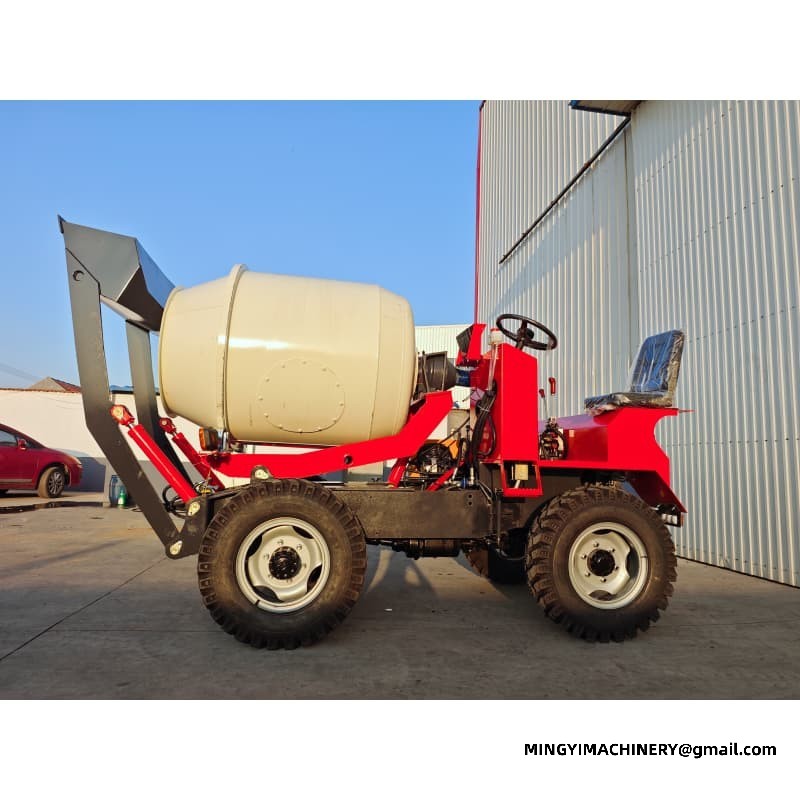
The rules are short: slow through turns, gentle on the stops, drum level in transit and nobody riding on a machine built for one. Every accident report on mixers of this class starts with one of those rules broken.
The discharge point concentrates people and machine in one small area — the operator tipping, the spotter barrowing, the crew placing. The safe pattern is a fixed standing spot, a spoken signal for stop, and a rule that the drum never turns while anyone stands in the discharge arc.
The arithmetic is simple enough for a whiteboard — batches per bay, cycles per hour, and the standing spot for each. Ten minutes of planning on a building site buys a full day of continuous placement.
Where a site has many small elements — bases, posts, patches — the machine's flexibility shines: mix for the first, place, then travel to the second without waiting on anyone's schedule but the drum's.
The machine itself copes well — the single-cylinder diesel is air-cooled territory and dust, not heat, is its enemy. Filter checks are the hot-season habit that matters on a building site.
Cold slows hydration, and concrete placed cold needs protection more than it needs heat. Batch normally, place before mid-afternoon, and cover the work — the machine's role is to keep the pour moving before the light goes.
The machine earns its place wherever concrete is needed in small, repeated batches away from a batching plant: on a building site keeping masonry crews supplied with mortar. The common thread is distance — too far from the plant for ready-mix to be economical, too continuous for hand mixing.
The right-size test is simple. If the work consumes concrete in drum-sized lots, at several points, over more than a few days, the machine fits. Outside that shape, other tools are simpler and better.
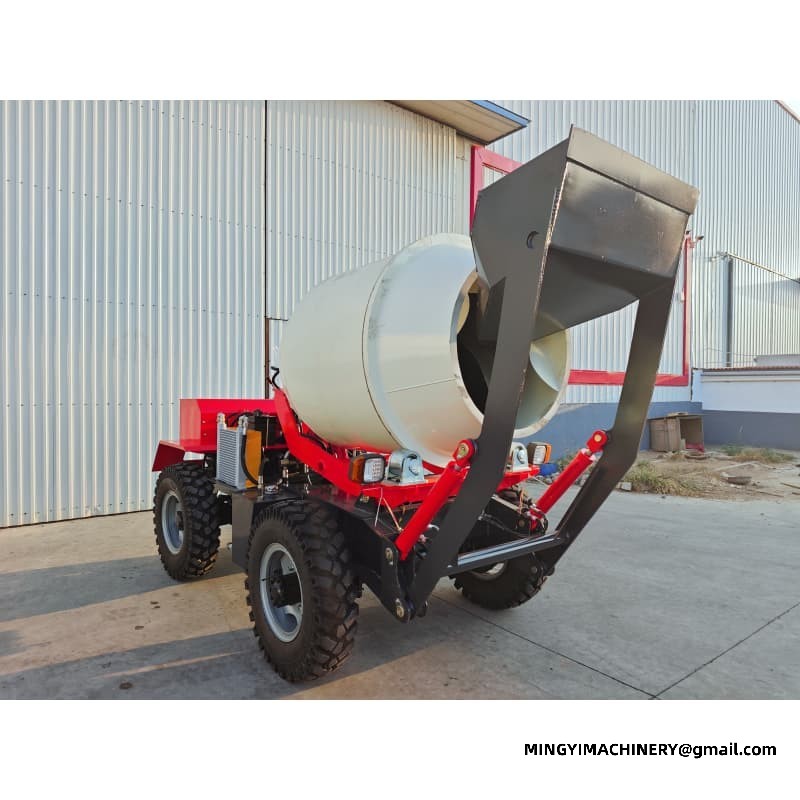
On a building site, that single-operator loop is the economic argument. Labour is the biggest recurring effort on small concrete work, and the shovel removes most of it. Cement, water and aggregate are the only inputs the crew still handles by hand.
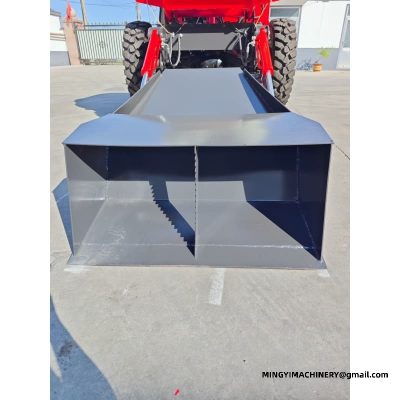
On sites that move the pile daily, a plate or a spreader keeps the loading face flat, and the shovel thanks you for it. Flat faces give full scoops; full scoops give predictable batches and a drum that reaches 0.8 m³ without a second bite.
The machine sits squarely in that second case. Small, repeated pours, distant supply, awkward access — work where a transit mixer either refuses the job or charges for the wasted capacity of a part-load.
The comparison also holds when ready-mix is available but the pour is small: a part-load minimum pays for concrete nobody placed, while a drum batches exactly what the formwork needs and stops when it stops.
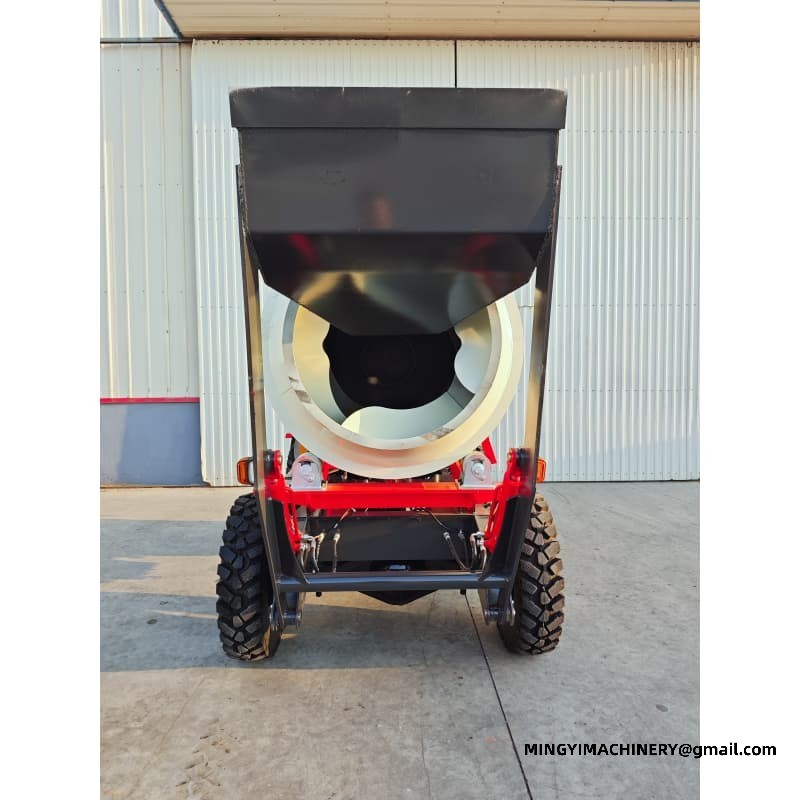
Discharge lands where the operator aims it. That single fact shapes the whole workflow on a building site: the drum pours into a barrow, a bucket or straight to formwork, and the crew never moves concrete twice.
The failure mode is improvisation — an extra scoop here, a splash of water there. Batches of mortar and screed batches mixed by eye vary, and the variation shows up as strength scatter in the finished work. A written recipe taped beside the controls takes nothing and fixes most of it.
Read the ground before the first trip of the day on a building site. A route that crossed easily yesterday may have a new trench, a spoil heap or a flooded patch overnight, and 204 mm gives the operator a plain number to judge it against.
Pressure discipline matters on soft ground. Tyres run too hard cut into wet surfaces and lose the footprint that floats the machine; run at correct pressure, the four contact patches plus 1,500 kg of payload stay within what most prepared sites bear.
Where the mix changes through a day — a lean base, a richer top — the machine carries the change as easily as the material, provided the crew keeps the recipe card current. Switching batches is a scoop count and a water measure, not a machine adjustment.
The machine suits the small structural pour and the non-structural one beside it — bases, posts, paths, kerbs — all in 0.8 m³ batches the crew handles without a second plant. It should decline the continuous slab, where supply wins outright.
Why does my china self loading concrete mixer manufacturer lose traction on wet ground?
Check tyre pressures first, then whether rear four-wheel drive is actually engaged. The 212 axle must be selected in — running two-wheel on soft ground is the usual cause.
Can the china self loading concrete mixer manufacturer work in hot weather?
Yes — keep the air filter checked, shade the aggregate stockpile where possible, and batch slightly smaller so each load is placed inside the shortened working window.
What records should a china self loading concrete mixer manufacturer keep?
Service receipts, engine hours and a small logbook for handovers. The record doubles as the service history the resale market pays for.
Can a china self loading concrete mixer manufacturer supply a full slab pour?
Only small slabs, and only with the pour broken into bays that match the drum's rhythm. Continuous large pours outrun 0.8 m³ per batch and belong to plant supply.
What servicing does the china self loading concrete mixer manufacturer need?
A five-minute daily walk-round — oil, fuel, air, hydraulics, tyres, drum — plus weekly greasing of shovel pins and steering linkage, and oil changes by the hour meter.
How long does it take to train a china self loading concrete mixer manufacturer operator?
A careful new operator works productively within a day. The controls are few; the judgement worth training is slopes, loads and the wash-out habit.
china self loading concrete mixer manufacturer or a small hand-fed drum mixer?
The self-loader replaces the shovel line feeding a hand mixer and hauls the batch to the pour under its own power — one operator does the work of a barrow chain.
What warranty does the china self loading concrete mixer manufacturer carry?
Warranty terms are stated with the contract, so get them in writing — scope, duration and the parts-and-service arrangement for your market. Keep the commissioning checklist; it protects the claim.
The machine's arithmetic is short: 0.8 m³ per batch, 1,500 kg of payload, four driven wheels and one operator. Weighed against the labour it replaces and the ready-mix charges it avoids, the purchase decision is the smallest line on the page.
Wear items and spares worth holding for China Self Loading Concrete Mixer Manufacturer: Build Notes
A spares list should follow the duty cycle. A China Self Loading Concrete Mixer Manufacturer: Build Notes working every day in abrasive dust consumes filters and cutting edges far faster than the same machine used once a week, and the shelf should be stocked for the harder case.
Commissioning China Self Loading Concrete Mixer Manufacturer: Build Notes on site
Commissioning is where the specification meets the ground. The settings chosen for China Self Loading Concrete Mixer Manufacturer: Build Notes are confirmed against the actual site, and the working pattern is adjusted before the machine is asked for a full day.
Reading the early symptoms on China Self Loading Concrete Mixer Manufacturer: Build Notes
The symptom is usually not at the fault. A hydraulic function that has become sluggish on China Self Loading Concrete Mixer Manufacturer: Build Notes may point to a filter, a relief setting or a pump, and starting with the simple checks avoids the wrong guess.
Handover and getting familiar with China Self Loading Concrete Mixer Manufacturer: Build Notes
A good handover covers the awkward cases, not just the easy ones. Starting China Self Loading Concrete Mixer Manufacturer: Build Notes on a slope, turning in a confined space and recovering from soft ground are the situations an operator should meet first with someone beside them.
Packing, loading and shipment of China Self Loading Concrete Mixer Manufacturer: Build Notes
The paperwork matters as much as the packing. Serial numbers, dimensions and weights recorded for China Self Loading Concrete Mixer Manufacturer: Build Notes at loading are the same figures the destination needs, and a mismatch here loses more days than the voyage itself.
Contact MINGYI Machinery for the current self-loading concrete mixer specification, export packing and a formal specification for your market. E-mail: sales@mingycn.com | LINE (ID): mingyicn
Wheeled Self Loading Concrete Truck: 8.25-16 and 7.50-16 · Self Loading Concrete Mixer: What the Specification Really Means · 4WD Water Tank Vehicle for mining and quarry work · Mini Self-Loading Concrete Mixer









