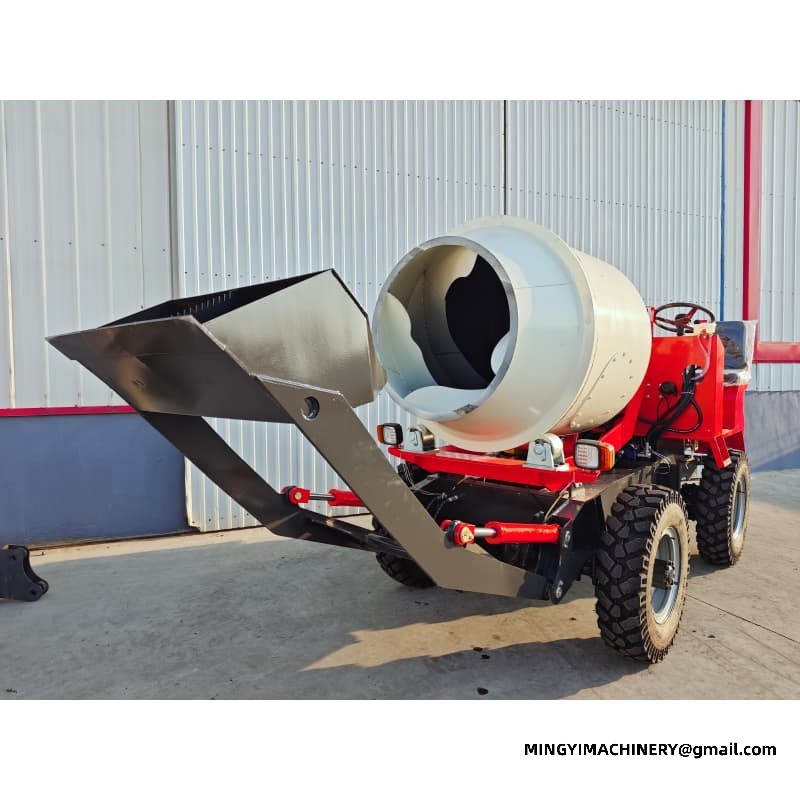
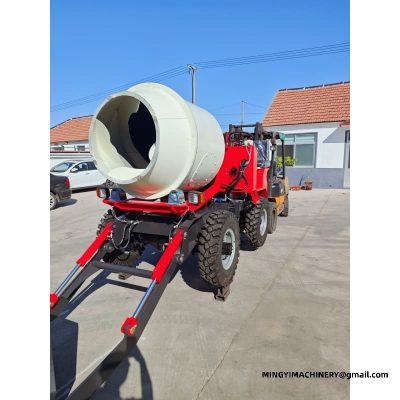
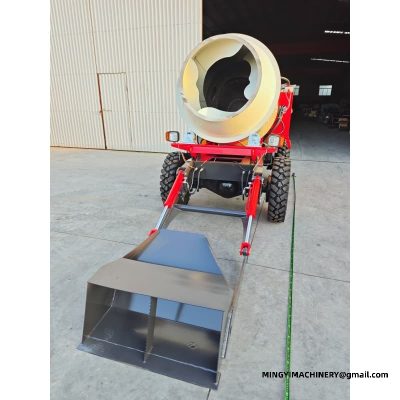
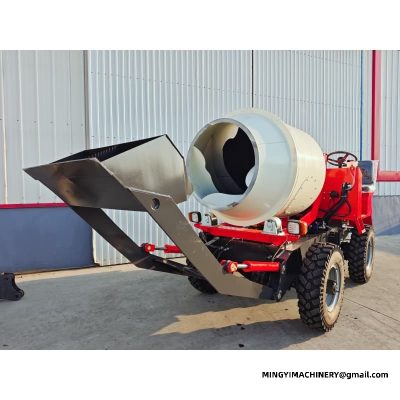
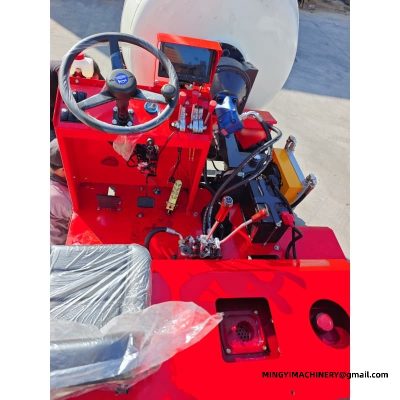
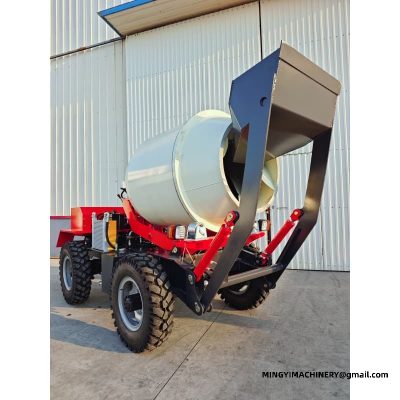
Wheeled Self Loading Concrete Truck, Wheel Type Mixer, Pneumatic Tire Truck
Buy the drum for the pour, the chassis for the ground. The two halves of a wheeled self loading concrete truck spec sheet answer different questions: 0.8 m³ and 1,500 kg describe what a batch is; the 4WD transmission, 204 mm of clearance and 28° of steering angle describe where that batch can travel. This page reads both halves on rural road work.
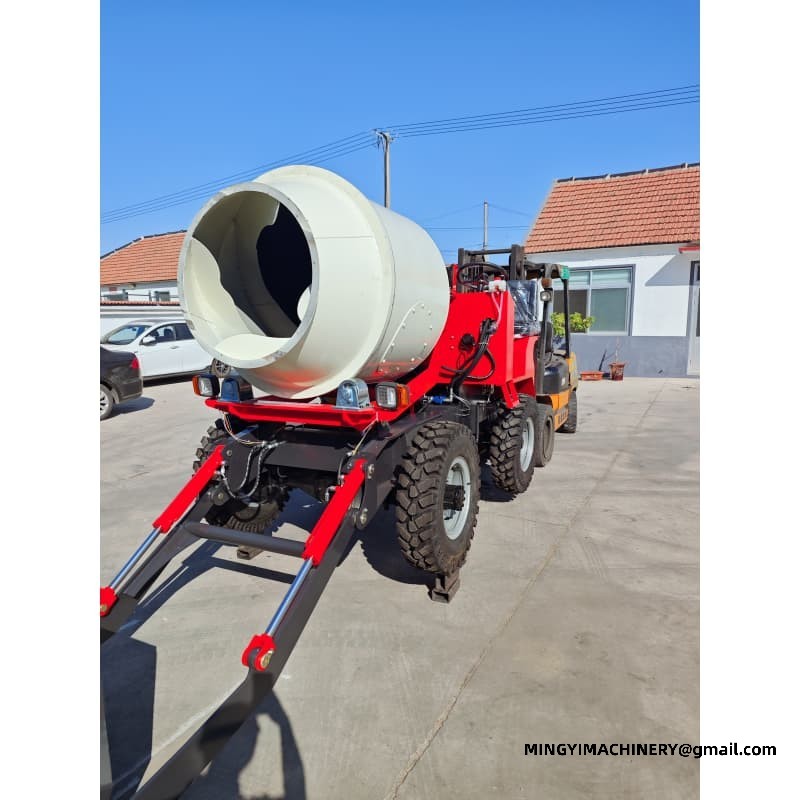
At 1,600 mm wide the machine threads standard double gates with room for its mirrors, which is the whole reason the envelope was drawn that way. Estate lanes, compound doors, orchard rows and basement entries all accept it where ordinary site trucks stop at the street.
Protect the services anyway. Boarding over exposed ducts and marking headroom limits takes an hour and prevents the kind of strike that turns a concrete pour into a claim.
Ask for photographs of the actual unit and its serial plate, not brochure images. The machine is simple enough that a five-minute video call at handover — controls, drum, shovel, axles — answers more than a week of messages.
Agree the acceptance test before the deposit: drum turns both ways, shovel lifts and holds, steering reaches full lock, and the machine travels in every gear. Thirty minutes at handover prevents the kind of dispute that outlives the purchase.
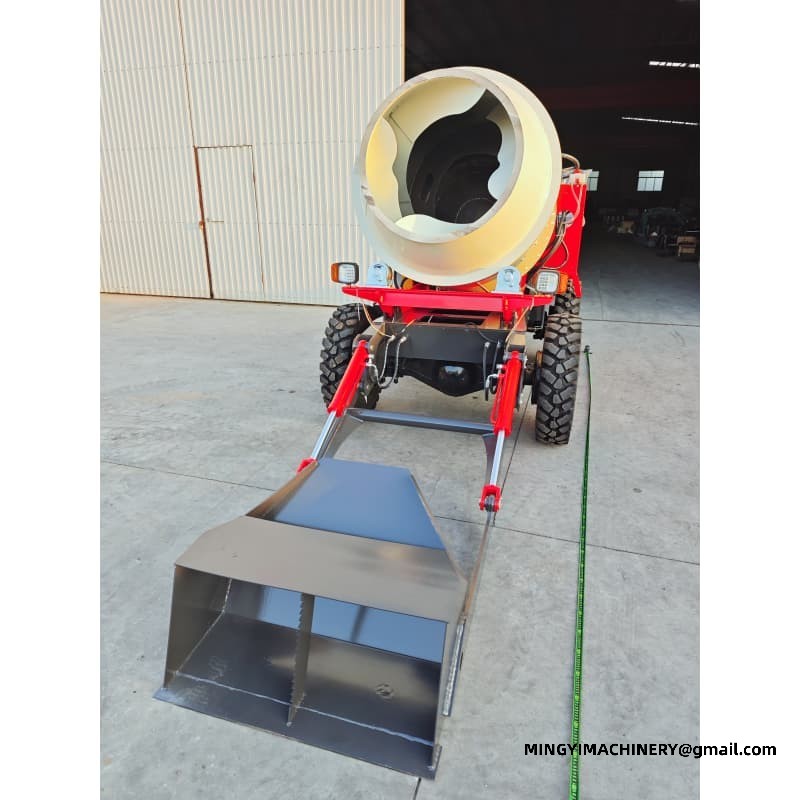
The width is the number that opens the most doors. At 1,600 mm the machine goes through standard double gates and between formwork lines that stop wider equipment, and it does so with a full drum because the drum sits inside the envelope, not above it.
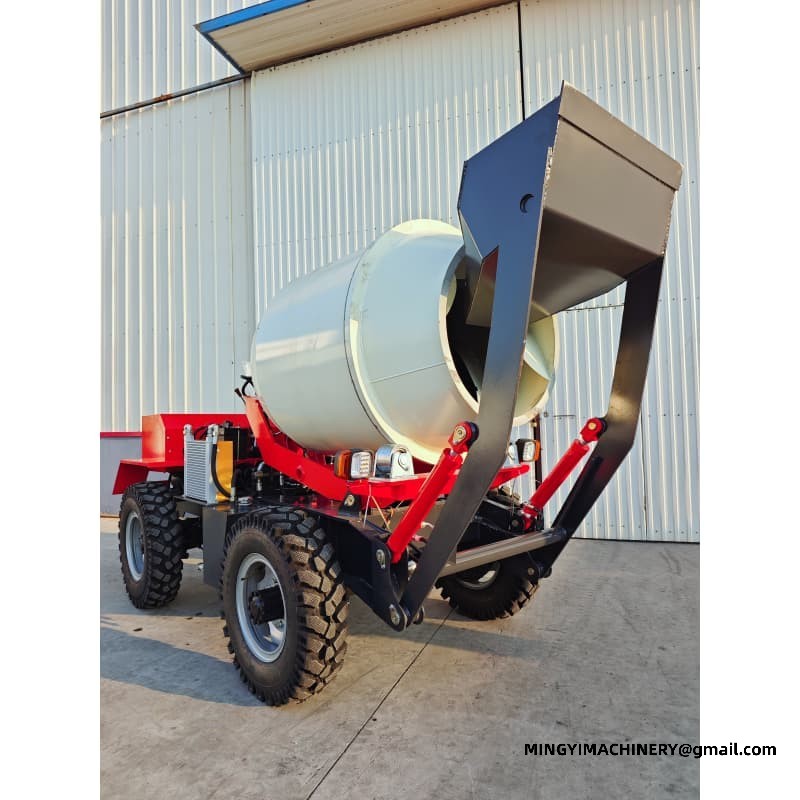
The frame carries 1,500 kg of payload over a short, wide stance, with the drum mounted low and between the axles rather than overhanging. That geometry is why a machine this size can carry wet concrete at all: the load stays inside the wheelbase where the chassis was drawn to take it.
| Published build data — 0.8 m³ 4WD self-loading concrete mixer | |
|---|---|
| Rated load | 1,500 kg |
| Rated capacity | 0.8 m³ |
| Overall dimensions (L x W x H) | 3,500 x 1,600 x 2,200 mm |
| Front tyre size | 8.25-16 |
| Rear tyre size | 7.50-16 |
| Minimum ground clearance | 204 mm |
| Steering angle | 28° |
| Turning dimension (outer tyre) | 2,464 mm |
| Maximum travel speed | 24 km/h |
| Transmission | 4WD |
| Gears | 3 forward / 1 reverse + travel gear |
| Front axle | 130 drive axle |
| Rear axle | 212 selectable 4WD steering axle |
| Engine | single-cylinder diesel / 25 hp |
| Steering | hydraulic power steering |
25 hp is modest by highway standards and exactly right for this duty. The machine's work is short, heavy efforts — loading, climbing, tipping — and a small diesel spends most of its day loafing between them, which is where fuel economy and engine life both come from.
The spares argument is the strongest one. Injector, nozzle, liners, bearings — parts for engines of this pattern are stocked in every agricultural town on several continents. A mixer that waits a week for a part is a mixer that has stopped being useful.
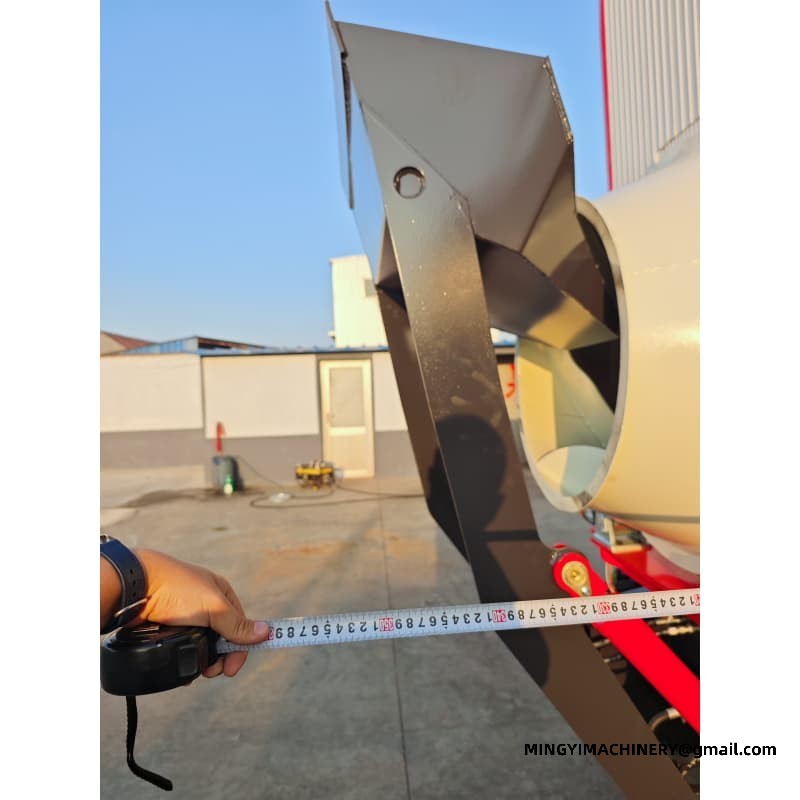
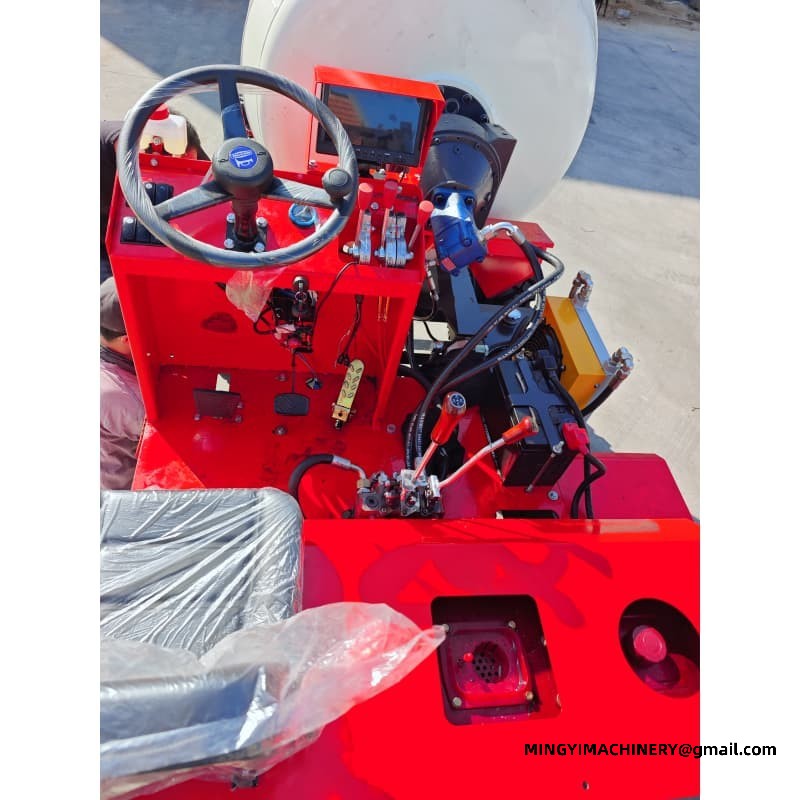
The hydraulic circuit drives the power steering, the drum rotation and the shovel hydraulics from one pump off the single-cylinder diesel. Three consumers, one source — which is why the engine's health and the oil's cleanliness are the same subject on this machine.
Hydraulic oil thickens in the cold, and a cold system asked to lift a shovel or spin a loaded drum answers slowly and wears quickly. The warm-up is short — a few minutes of light cycling — but skipping it is how seals, pumps and hoses are ruined in winter.
Write the survey down and compare it with the published envelope before committing. Crews that skip this step discover the constraint with a full drum aboard, on rural road work — the lengthy way to learn a number.
Agree the standing spot and the stop signal with the crew before the first batch. Ten minutes of positioning planning beats an hour of manoeuvring once the pouring starts.
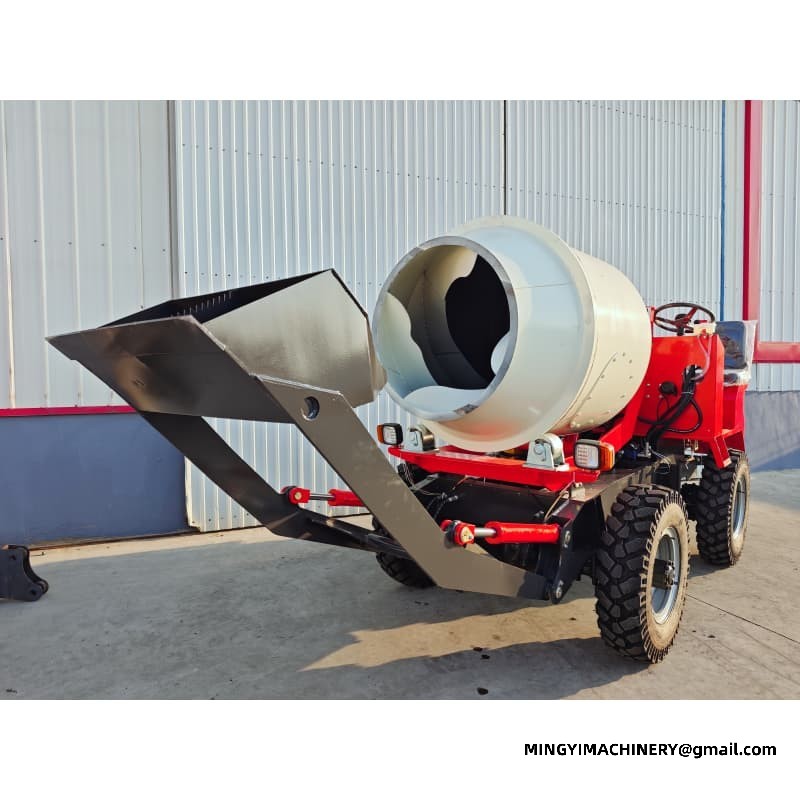
The machine will reproduce whatever recipe it is given, faithfully and all day. That is its quality promise and its quality risk: a correct recipe repeated gives uniform strength, and a careless one repeated gives uniform trouble.
Keep a few cubes from the important pours even on small jobs — a shoebox-sized mortar tin makes a serviceable mould in a pinch, and six months later the evidence settles every argument about the batch.
The machine earns its place wherever concrete is needed in small, repeated batches away from a batching plant: on rural road work pouring culverts and kerbs between villages. The common thread is distance — too far from the plant for ready-mix to be economical, too continuous for hand mixing.
Between those edges sits a wide country of work — on rural road work pouring culverts and kerbs between villages — where the machine is simply the correct answer, and the crew that owns one plans around having it rather than around doing without it.
Keep the parts book and the order history together. The second order, placed a year later for a blade or a seal, is a two-minute email when the reference numbers are at hand and a half-day search when they are not.
Keep the order history with the parts book. The second order — a blade, a seal, a hose — placed a year later is a two-minute email when the references are at hand, and a half-day search when they are not.
Let the first day end early, clean and unhurried. Operators trained calmly on rural road work keep the habits; operators trained in a rush learn shortcuts instead.
Measured water, counted scoops, timed drum, slow turns, low shovel in transit, wash-out before the break. Six habits cover nearly all of the machine's reliability and every one of its safety rules.
Wet seasons ask for drier batches and firmer ground; dry seasons ask for the opposite, plus shaded stockpiles so the mix does not start hot. The machine adapts through its recipe and its route, and neither asks anything of the drum but consistent turning.
The discipline that varies by season is the survey: on rural road work, the ground that holds in March may not hold in November, and the turning circle decides nothing if the approach has turned to mud.
Discharge lands where the operator aims it. That single fact shapes the whole workflow on rural road work: the drum pours into a barrow, a bucket or straight to formwork, and the crew never moves concrete twice.
Aggregate quality feeds consistency too. Graded pile, clean stock, dry cement storage — the drum can only mix what it is given, and crews that protect their materials on rural road work find the machine generous in return.
On rural road work, that single-operator loop is the economic argument. Labour is the biggest recurring effort on small concrete work, and the shovel removes most of it. Cement, water and aggregate are the only inputs the crew still handles by hand.
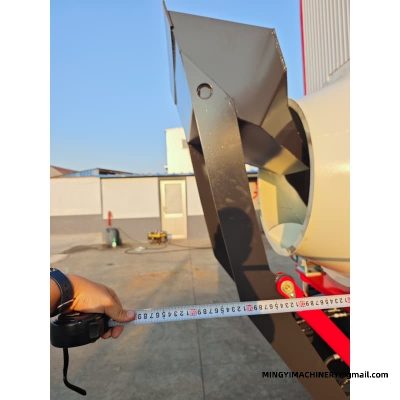
The shovel is sized for this class of machine. It handles sand, gravel and coarse aggregate freely, and it will lift bagged cement if the crew breaks bags in first. It is not a demolition tool, and forcing it into compacted or oversized material shortens a working day quickly.
24 km/h is not fast and should not be. The machine carries 1,500 kg of wet concrete high on a short wheelbase, and the gearing keeps those loads sedate. Crews that respect the speed keep the concrete in the drum and the machine on its wheels.
The gear that surprises new operators is the travel gear's absence from site work. Under load, low gears keep the hydraulic pressure available for the drum and shovel; flogging third on rural road work starves both and heats the machine for no gain.
Does the wheeled self loading concrete truck have a cab or canopy?
The machine is an open station by design — short, low and simple. Confirm with the supplier what weather protection options exist for your market before ordering.
How much concrete does the wheeled self loading concrete truck mix per batch?
The drum mixes 0.8 m³ per batch, and the chassis carries 1,500 kg while doing it. Batch size and payload were drawn to match, so a full drum never overloads the machine.
How many labourers does a wheeled self loading concrete truck replace?
Commonly the two-to-four people of a hand-mixing and barrow chain, depending on the haul. The honest number comes from timing your own crew's cycle against the machine's.
What is the rated load of the wheeled self loading concrete truck?
Rated load is 1,500 kg, carried over a short wheelbase with the drum mounted low between the axles on rural road work.
Is a wheeled self loading concrete truck the same as a pan mixer?
No. A pan mixer blends in a stationary vertical pan; this machine mixes in a rotating drum and carries the batch to the point of placement. For dispersed small pours, the drum type wins.
How often do wheeled self loading concrete truck shovel pins need greasing?
Weekly under normal work, daily in dust or mud. Grease is simple; the pins and bushings it protects are the shovel's whole wearing life.
Does the wheeled self loading concrete truck drum rust out?
Not if it is washed daily and left clean. The drum that dies young is the drum that sleeps with concrete in it — the heel holds moisture against the steel all season.
Do I need a vibrator with a wheeled self loading concrete truck?
For structural work, yes — a poker vibrator belongs with the pour regardless of how the concrete arrived. The machine supplies placement; compaction is a separate duty.
A mixer that reaches the pour, mixes to a recipe and washes out on time is a mixer that earns for a decade. The habits in this page effort minutes a day; the machine they protect takes far more to neglect.
Reading the early symptoms on Wheeled Self Loading Concrete Truck: 8.25-16 and 7.50-16
The symptom is usually not at the fault. A hydraulic function that has become sluggish on Wheeled Self Loading Concrete Truck: 8.25-16 and 7.50-16 may point to a filter, a relief setting or a pump, and starting with the simple checks avoids the wrong guess.
Fuel, oil and fluid quality for Wheeled Self Loading Concrete Truck: 8.25-16 and 7.50-16
Contamination is easier to prevent than to cure. Keeping the filler caps sealed, the funnels clean and the containers closed around Wheeled Self Loading Concrete Truck: 8.25-16 and 7.50-16 is unglamorous work that shows up as reliability later.
Later additions and retrofits on Wheeled Self Loading Concrete Truck: 8.25-16 and 7.50-16
An added function should pay for itself quickly. Whether Wheeled Self Loading Concrete Truck: 8.25-16 and 7.50-16 gains a different bucket, a hydraulic service or a protection package, the test is the number of days a year it is actually used.
Wear items and spares worth holding for Wheeled Self Loading Concrete Truck: 8.25-16 and 7.50-16
A spares list should follow the duty cycle. A Wheeled Self Loading Concrete Truck: 8.25-16 and 7.50-16 working every day in abrasive dust consumes filters and cutting edges far faster than the same machine used once a week, and the shelf should be stocked for the harder case.
Commissioning Wheeled Self Loading Concrete Truck: 8.25-16 and 7.50-16 on site
The machine should be introduced to the site as well as the operator. Walking the route Wheeled Self Loading Concrete Truck: 8.25-16 and 7.50-16 will take, noting the soft spots and the turns, prevents the kind of first-day incident that has nothing to do with the machine.
Contact MINGYI Machinery for the current self-loading concrete mixer specification, export packing and a formal specification for your market. E-mail: sales@mingycn.com | LINE (ID): mingyicn
Self Loading Concrete Mixer: What the Specification Really Means · Small Capacity Self Loading Mixer: Why 0.8 m³ Fits the Pour · 4x4 Garbage Transport Vehicle for mining and quarry work - working range and access · Mini Self-Loading Concrete Mixer









