Tunnel Self Loading Concrete Truck, Low Clearance Mixer, Underground Digger
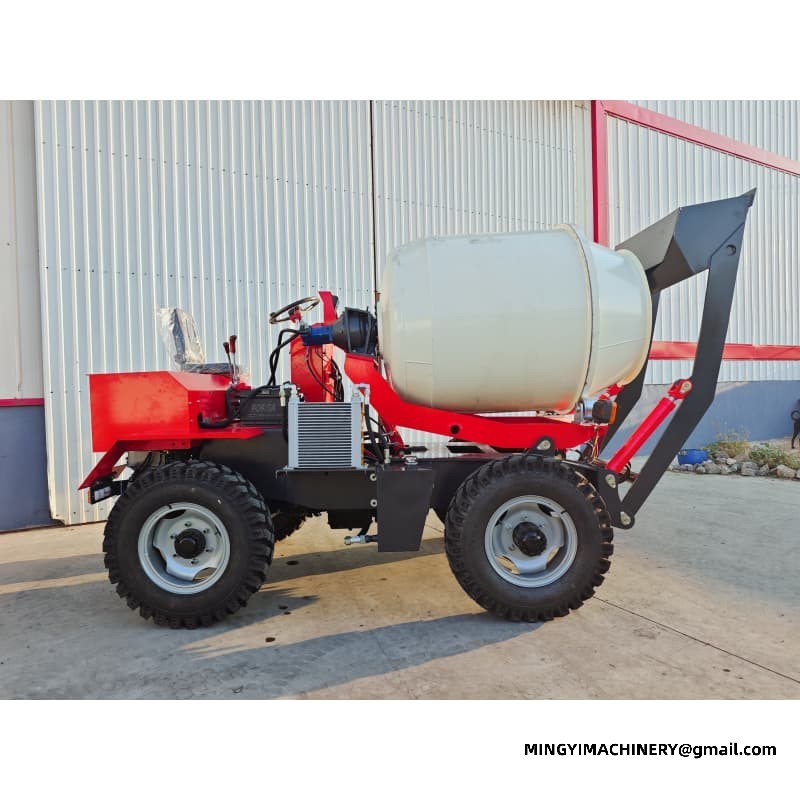
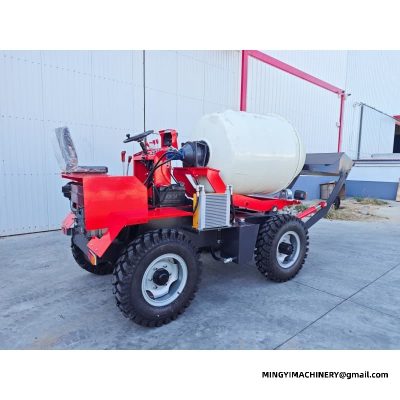
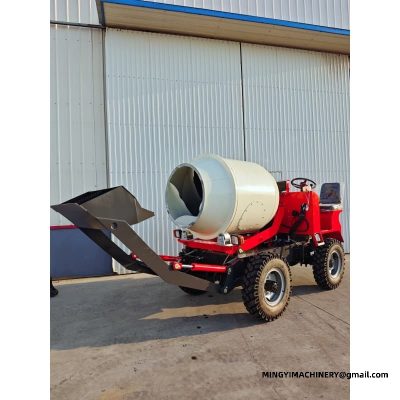
Access decides concrete work before capacity does. A transit mixer that cannot reach the pour is a plant on the street; a tunnel self loading concrete truck at 3,500 x 1,600 x 2,200 mm overall and 2,464 mm of turning circle drives to where the formwork is. This page follows the machine on pole lines from the stockpile to the discharge point and reads each published figure along the way.
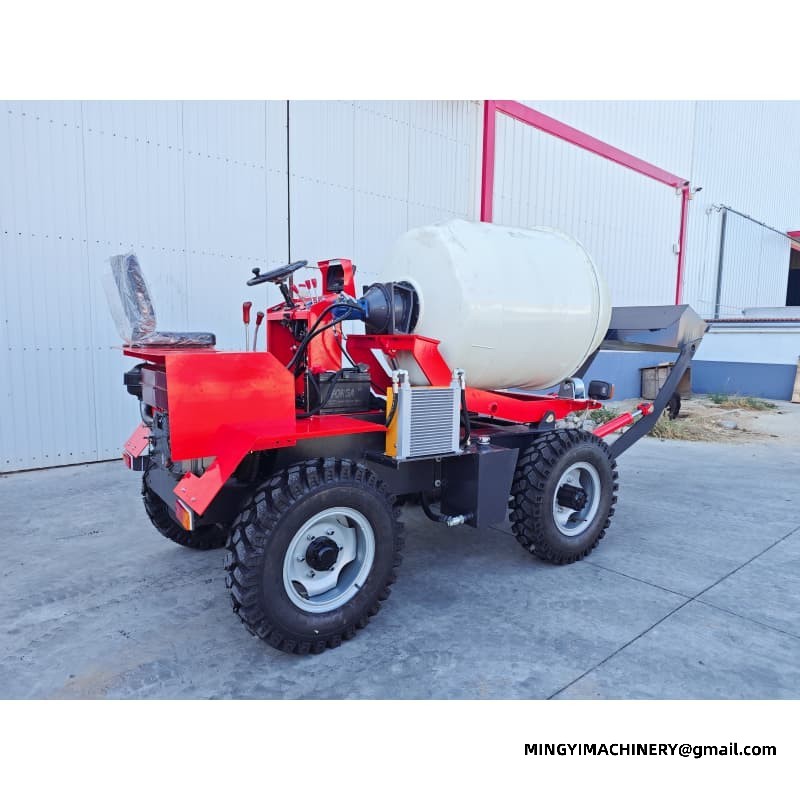
0.8 m³ is not a big drum by transit-mixer standards, and that is the point. Batches this size stay workable from drum to formwork without additives or rush, on pole lines, where the distance from mixing point to pour is measured in metres rather than kilometres.
Small structural work — columns, bases, tie beams, garden retaining walls — consumes concrete in units close to 0.8 m³, which is why the drum size and the common pour size match so well. Large slabs are a different animal and want continuous supply; a single machine cannot hold that rhythm alone.
The height figure hides a detail worth checking on hire fleets and after modifications: the envelope assumes the shovel down and the drum level. A raised shovel adds materially to the length, and crews loading onto trailers should measure in travel order.
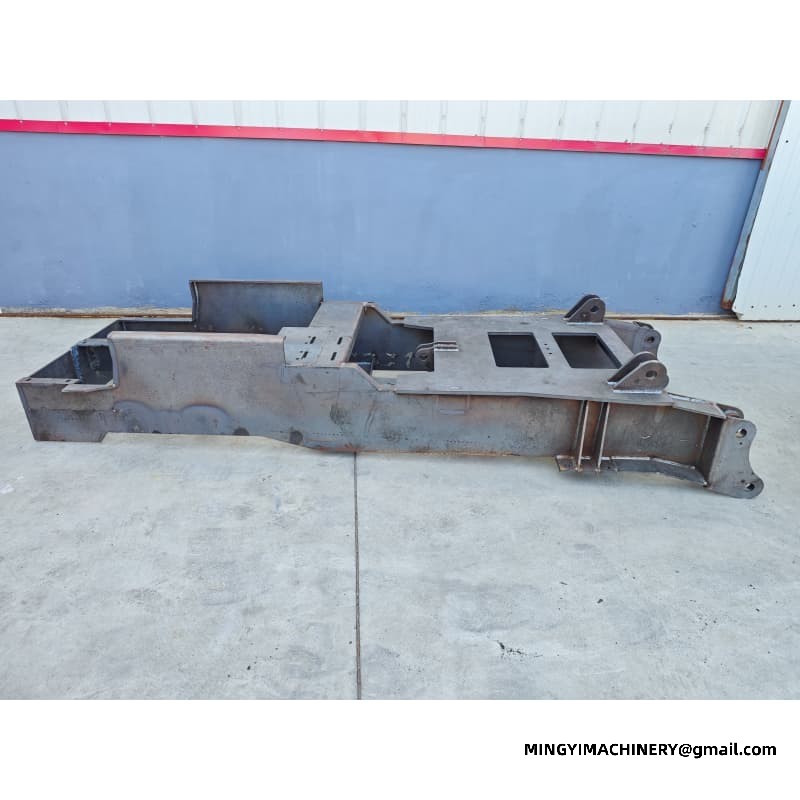
Inside a container, the machine anchors to the floor at four points and the shovel secures against a hardwood block — the shipping agent's standard practice, and worth confirming in the packing photos before the container doors close on pole lines.
On pole lines, the difference shows on the first wet morning. A two-wheel-drive machine spins and needs towing; this one keeps moving under its own traction with a full 1,500 kg in the drum circuit. Traction is capacity — a mixer that cannot reach the pour has none.
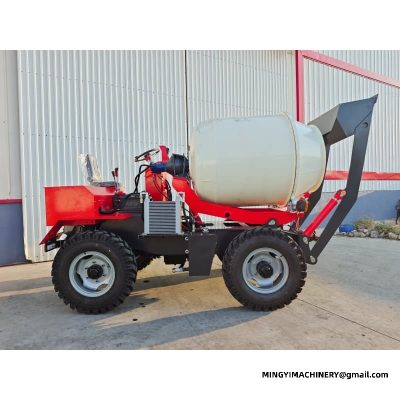
The front axle is a 130 drive axle; the rear is a 212 axle that steers and can be selected into four-wheel drive. The split is deliberate: the front pulls the loaded machine, the rear steers it through a 28° angle and adds drive when the surface turns soft.
| Published build data — 0.8 m³ 4WD self-loading concrete mixer | |
|---|---|
| Rated load | 1,500 kg |
| Rated capacity | 0.8 m³ |
| Overall dimensions (L x W x H) | 3,500 x 1,600 x 2,200 mm |
| Front tyre size | 8.25-16 |
| Rear tyre size | 7.50-16 |
| Minimum ground clearance | 204 mm |
| Steering angle | 28° |
| Turning dimension (outer tyre) | 2,464 mm |
| Maximum travel speed | 24 km/h |
| Transmission | 4WD |
| Gears | 3 forward / 1 reverse + travel gear |
| Front axle | 130 drive axle |
| Rear axle | 212 selectable 4WD steering axle |
| Engine | single-cylinder diesel / 25 hp |
| Steering | hydraulic power steering |
The machines that age well are washed and greased on schedule; the machines that age badly are the ones where wash-out slipped and dust won. Nothing exotic — just the daily five minutes, kept.
Engine hours are the honest odometer. A machine with records, steady hours and its original axles holds value strongly in the second-hand market, because the next owner can see what they are buying.
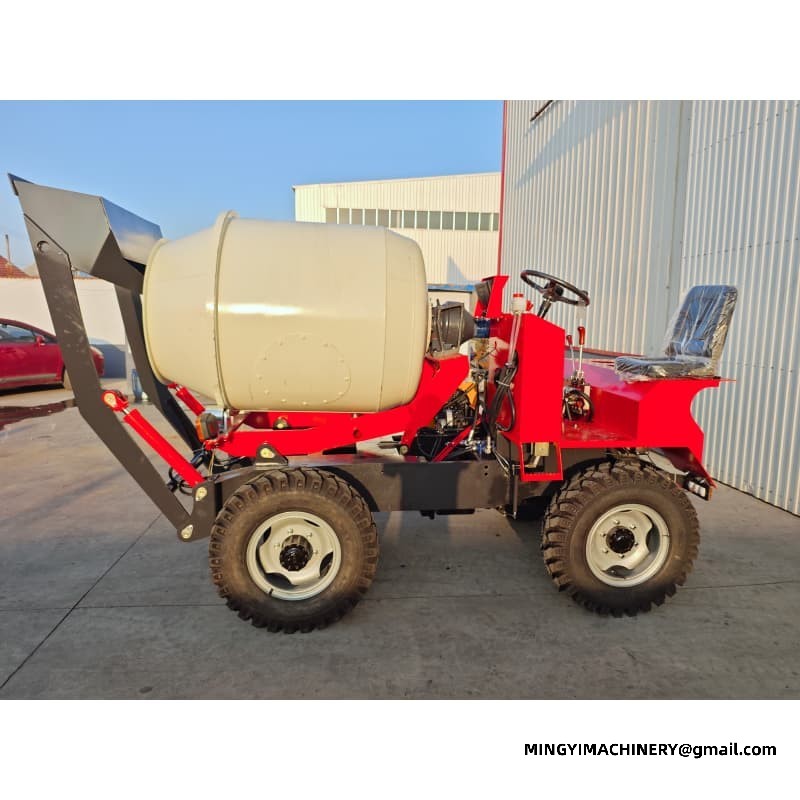
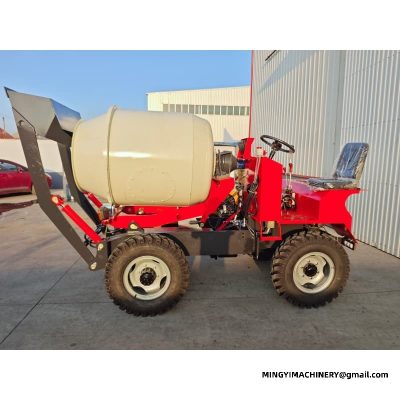
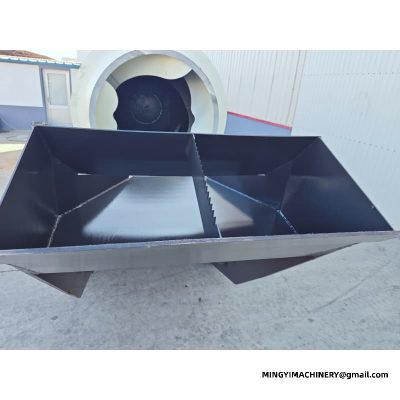
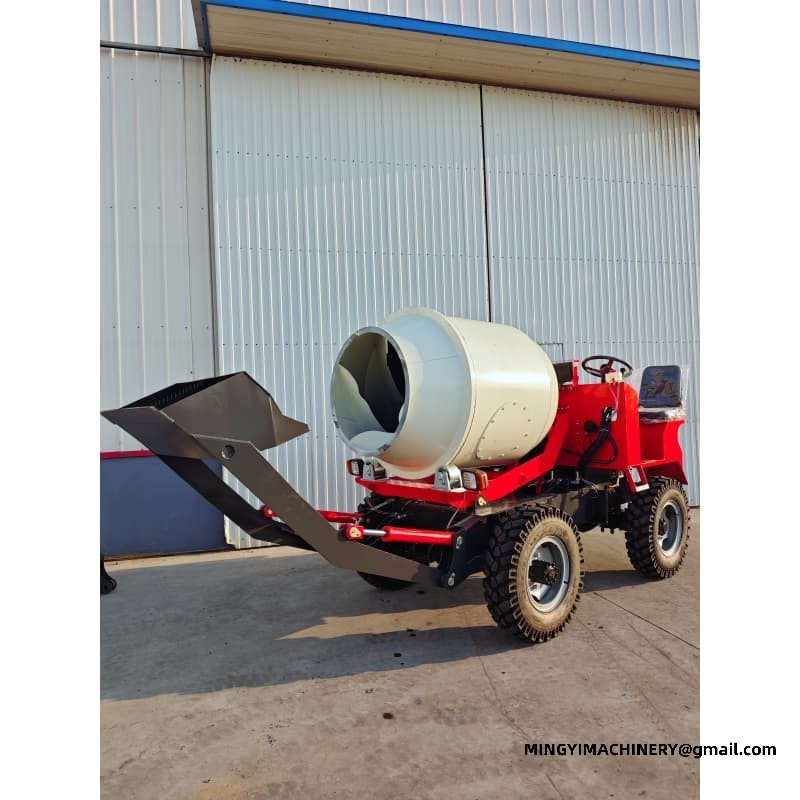
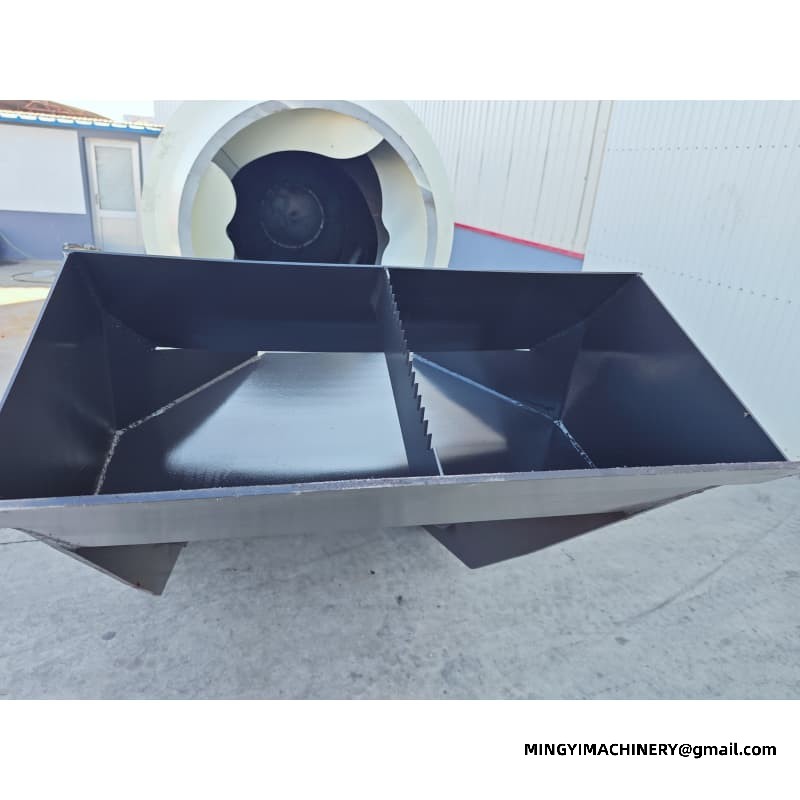
The shovel's geometry deserves a sentence of its own: it loads from in front of the drum, so the machine stands facing its stockpile and drives away facing the pour. No reversing into position, no second alignment, and the whole cycle on pole lines keeps one direction of travel.
A tidy pile also protects the mix. Contamination from ground spoil is the usual cause of weak batches on sites that store material directly on soil; a hardened standing area takes little and keeps pole-setting concrete honest from the first scoop.
Seat position is part of the safety case: the open station puts the operator's eyes at drum height, with the shovel arc and the discharge point both in view. Machines that hide their own working parts invite the guesses that cause injuries.
A lifting shovel commands a exclusion zone whether or not the site paints one. Nobody stands within the shovel's arc; nobody rides a load; nobody walks under a raised bucket — even briefly, even empty.
Rural road work, irrigation canals, farm buildings, village housing and small precast all sit inside that band. Each needs pole-setting concrete in quantities a plant would refuse and a shovel alone would take all day to supply.
On pole lines, the machine usually pays for itself within the first season of such work. The measure is boring and honest: batches delivered where hand-mixing would have stalled, and pours that finished inside their weather window.
A supplier worth keeping answers the cycle question — 0.8 m³ per batch, travel time, placing rate — rather than quoting a discount. The relationship that outlasts the warranty is the one built on specification and parts, not on specification alone.
The first week sets the machine's tone. Commission it properly — turn the engine by hand, prime the hydraulics, run the drum empty — then let a new operator feel the 28° steer and the 2,464 mm circle without a live load aboard.
Wet seasons ask for drier batches and firmer ground; dry seasons ask for the opposite, plus shaded stockpiles so the mix does not start hot. The machine adapts through its recipe and its route, and neither asks anything of the drum but consistent turning.
Lean foundation mixes and richer masonry mixes turn the same way and discharge the same way; the drum's job is uniformity, not chemistry. The recipe stays the engineer's, and the repetition stays the drum's.
Keep the pairs matched left to right and the pressures even, because uneven fronts put the machine slightly out of square and the steering fights it all day. Tyres are the simplest component to treat well and the most lengthy to ignore.
Tyres read like a logbook. Shoulder wear from kerb-cutting turns, centre wear from over-pressure, chunking from rock and rubble — each pattern names its cause. A five-minute look at the tread on pole lines tells the operator more about the week's routes than any complaint from the crew.
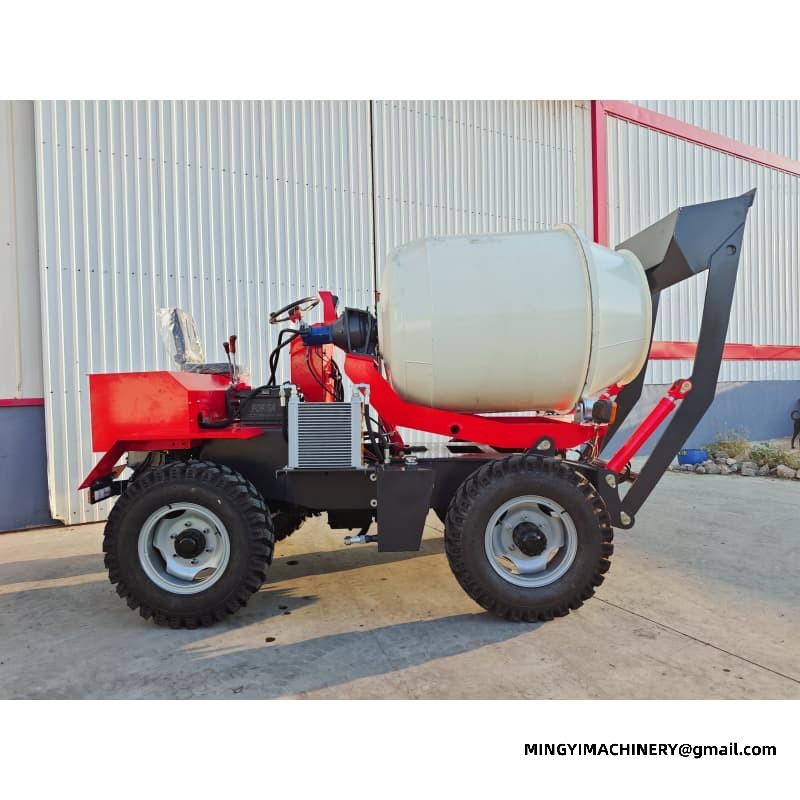
The machine sits squarely in that second case. Small, repeated pours, distant supply, awkward access — work where a transit mixer either refuses the job or charges for the wasted capacity of a part-load.
Ready-mix that returns to the plant is paid for anyway; batches mixed on site stop when the pour stops. That flexibility is worth real money on the small, lumpy pours on pole lines, where ordering to a schedule always ends with either a shortage or a surplus.
The gear pattern also gives the machine its manners: low gears hold back a loaded drum on descents without riding the brakes, and the travel gear keeps engine speed economical on road sections. Good gearing is invisible until it is missing.
First gear is for loading position and the worst ground; second covers most site hauls; the travel gear belongs on the public road between sites. Reverse plus the steered rear axle does the positioning, because the shovel leads and the operator wants to back toward a pour with the drum already pointing at it.
Most sites need a little ground work before the machine earns its keep: grade the haul, fill the ruts, gravel the standing spots, and protect any services in the working line. An hour with a shovel and a bag of hardcore keeps the 4WD honest and the drum moving.
Stand the machine where the finishing crew already is, not where it would be convenient to park. A discharge point within barrow reach of the formwork is worth more than a flat, tidy spot fifty metres away, because the last metres are where hand-mixed batches lose their workability.
Ownership's real takes are the visible ones: the machine, the spares kit, the fuel, and the operator's time. None is hidden, none is large, and all survive a spreadsheet. The effort that surprises new owners is the working capital tied in stockpiled aggregate and cement — the inputs, not the machine.
The machine's resale case is its simplicity: a buyer can see the drum, the axles and the engine in a walk-round, and the service book tells the rest. Machines with records, straight shovels and clean drums sell within days in most markets.
Can the tunnel self loading concrete truck be shipped knocked down?
Ask at specification — packing format is a commercial option, and the answer depends on your market's import rules and your assembly capability. Confirm what is stated before the deposit.
How do you clean the tunnel self loading concrete truck drum?
Rinse and spin the drum with clean water after the last pour of the day, dump the wash-out away from the stockpile, and leave the blades clean. A drum washed daily keeps its full 0.8 m³.
How much ground clearance does the tunnel self loading concrete truck have?
204 mm under the axles. That clears ruts, rubble and standing water of that depth, and the low build is deliberate — it keeps the centre of gravity down under a raised drum.
Will the tunnel self loading concrete truck start in cold weather?
Electric key start with a decompression lever as the manual fallback. Warm the hydraulics and cycle the drum gently on cold mornings before the first loaded batch.
Why does my tunnel self loading concrete truck lose traction on wet ground?
Check tyre pressures first, then whether rear four-wheel drive is actually engaged. The 212 axle must be selected in — running two-wheel on soft ground is the usual cause.
Why do tunnel self loading concrete truck wheel nuts need checking?
Rough ground loosens them. The daily walk-round includes a nut check for the same reason it checks the drum — small things caught early never become pour-day failures.
Is 24 km/h fast enough for a tunnel self loading concrete truck?
For the job, yes — the machine carries wet concrete high on a short wheelbase, and the gearing keeps those loads sedate. Road moves between sites use the travel gear.
What tyres does the tunnel self loading concrete truck use?
8.25-16 at the front and 7.50-16 at the rear, agricultural-pattern tyres that grip soft ground and shrug off stones on pole lines.
Measure the gateway, time the cycle, write the recipe — three small exercises that turn the published specification into a working plan for your site.
Storage and long idle periods for Tunnel Self Loading Concrete Truck: 2,200 mm of Height
Rubber, seals and hoses age whether the machine works or not. Keeping Tunnel Self Loading Concrete Truck: 2,200 mm of Height out of direct sun and off damp ground slows that, and running it briefly at intervals keeps everything moving.
Moving Tunnel Self Loading Concrete Truck: 2,200 mm of Height between sites
Securing the load is not optional. Lashing Tunnel Self Loading Concrete Truck: 2,200 mm of Height at the points intended for it, checking the tension before the vehicle moves and rechecking after the first kilometres is standard practice rather than extra care.
Later additions and retrofits on Tunnel Self Loading Concrete Truck: 2,200 mm of Height
Most additions are easier to plan than to add. Hydraulic services, mounting brackets and electrical capacity on Tunnel Self Loading Concrete Truck: 2,200 mm of Height are build items, and deciding them at the specification stage is far easier than doing it later.
Handover and getting familiar with Tunnel Self Loading Concrete Truck: 2,200 mm of Height
A good handover covers the awkward cases, not just the easy ones. Starting Tunnel Self Loading Concrete Truck: 2,200 mm of Height on a slope, turning in a confined space and recovering from soft ground are the situations an operator should meet first with someone beside them.
Contact MINGYI Machinery for the current self-loading concrete mixer specification, export packing and a formal specification for your market. E-mail: sales@mingycn.com | LINE (ID): mingyicn
Farm and Plantation Concrete Mixer: Posts, Sheds and Paths · Export Standard Self Loading Mixer: Shipping and Commissioning · 4WD construction dumper Europe with hydraulic tipping body · Mini Self-Loading Concrete Mixer









