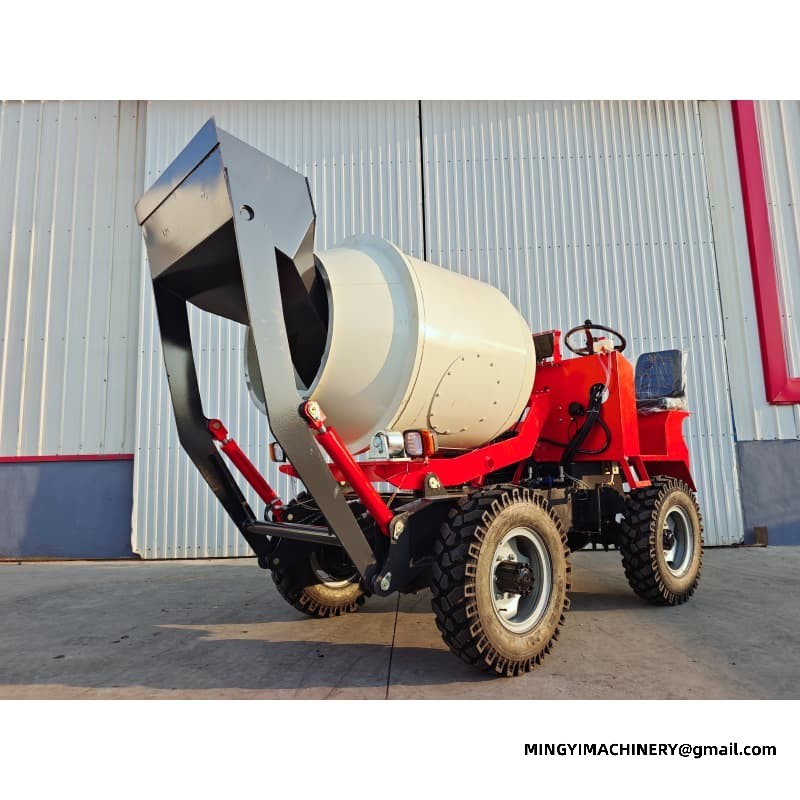
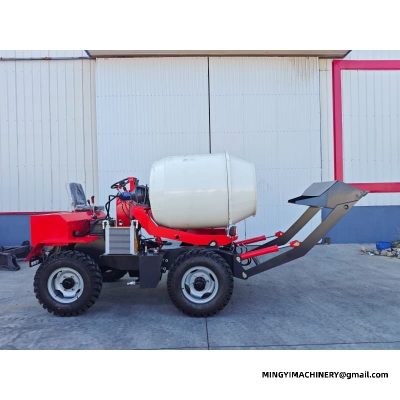
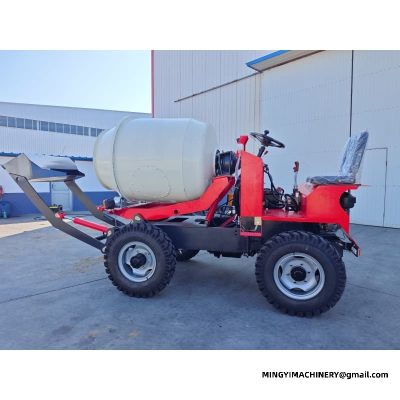
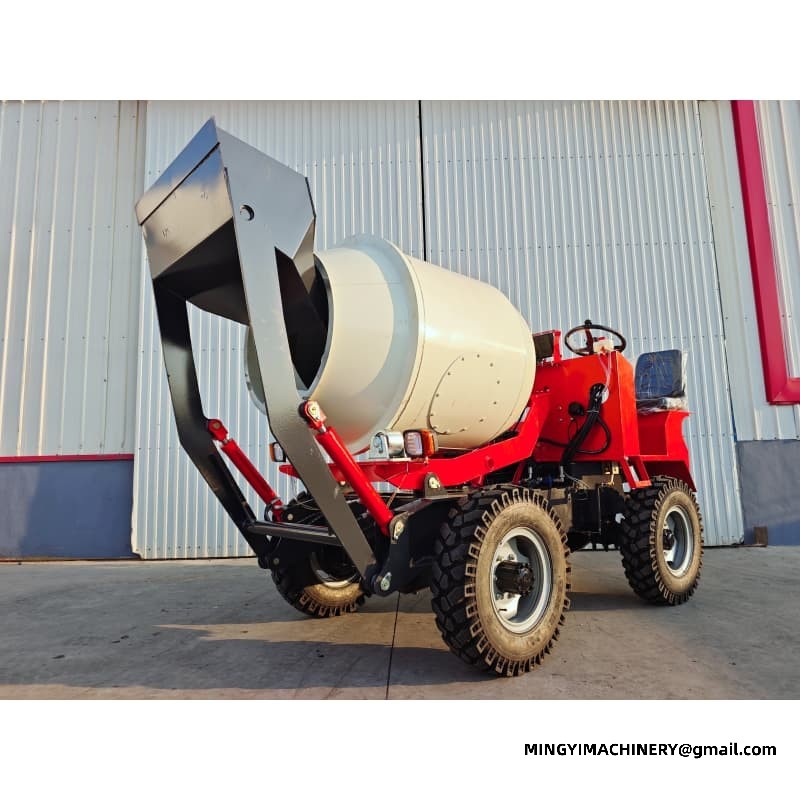
4WD Self Loading Concrete Mixer, 4x4 Self Loader Truck, Four Wheel Drive Mixer
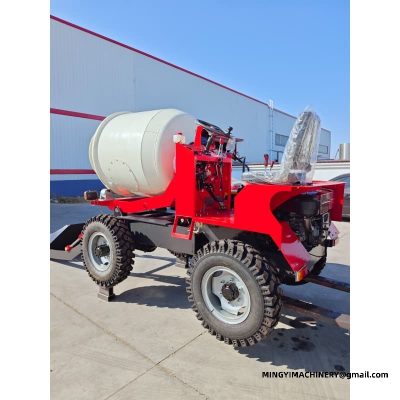
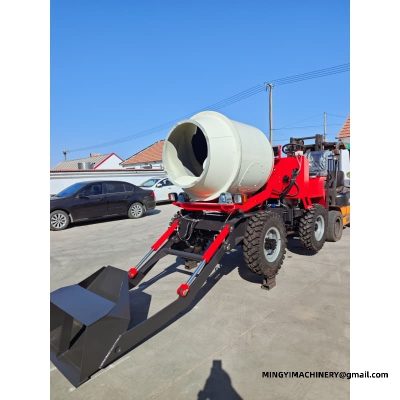
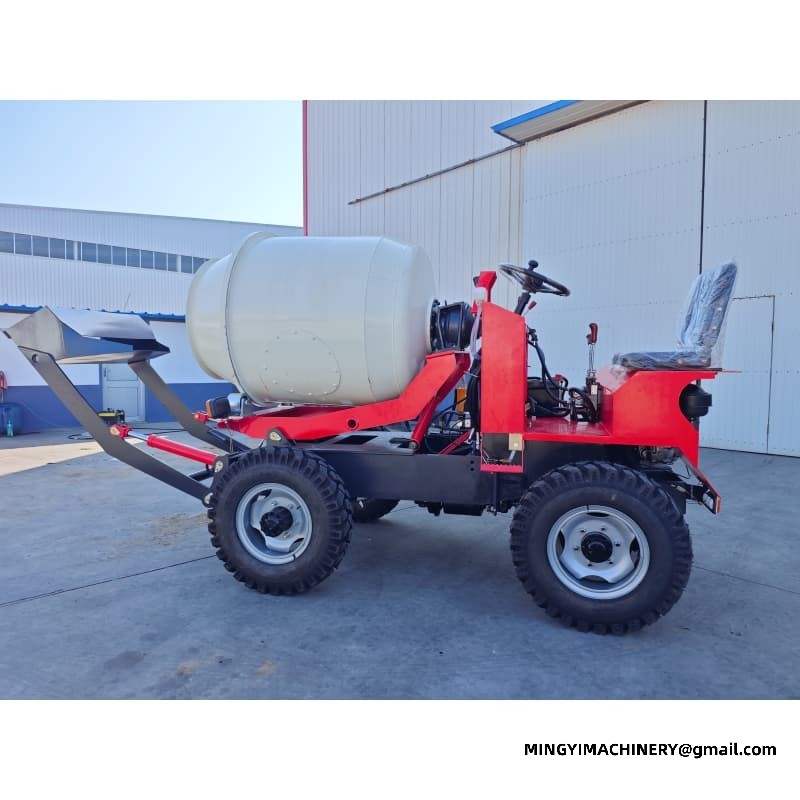
One operator, one drum, one shovel — that is the whole machine. Conventional site concreting splits the job across a loader, a mixer and a barrow chain; the 4wd self loading concrete mixer folds it into a single 25 hp 4WD chassis. This page works through what the published specification means in practice on canal work, starting with the shovel and ending at the discharge.
Agree the acceptance test before the deposit: drum turns both ways, shovel lifts and holds, steering reaches full lock, and the machine travels in every gear. Thirty minutes at handover prevents the kind of dispute that outlives the purchase.
At 3,500 x 1,600 x 2,200 mm the machine ships in a standard container without disassembly beyond lashing. On arrival: check the drum and shovel for transit damage, turn the engine by hand before first start, prime the hydraulic system, and run the drum empty before the first batch.
There is also a hybrid pattern worth naming: the self-loader feeds a static pump or a crane skip on bigger jobs, batching at the rate the placing crew sets. The machines are complements more often than competitors.
Against a hand-fed drum mixer, the comparison is labour: the self-loader replaces the shovel line that feeds the small mixer, and it moves the batch to the pour under its own power. One operator does what a barrow chain of four or five does, with fewer batches lost to delay.
Ownership's real takes are the visible ones: the machine, the spares kit, the fuel, and the operator's time. None is hidden, none is large, and all survive a spreadsheet. The effort that surprises new owners is the working capital tied in stockpiled aggregate and cement — the inputs, not the machine.
The decision turns on continuity of work more than on specification. A contractor who pours most weeks owns with confidence; one who pours once a season hires with relief, and neither is wrong for the other's job.
| Reference specification — 0.8 m³ 4WD self-loading concrete mixer | |
|---|---|
| Rated load | 1,500 kg |
| Rated capacity | 0.8 m³ |
| Overall dimensions (L x W x H) | 3,500 x 1,600 x 2,200 mm |
| Front tyre size | 8.25-16 |
| Rear tyre size | 7.50-16 |
| Minimum ground clearance | 204 mm |
| Steering angle | 28° |
| Turning dimension (outer tyre) | 2,464 mm |
| Maximum travel speed | 24 km/h |
| Transmission | 4WD |
| Gears | 3 forward / 1 reverse + travel gear |
| Front axle | 130 drive axle |
| Rear axle | 212 selectable 4WD steering axle |
| Engine | single-cylinder diesel / 25 hp |
| Steering | hydraulic power steering |
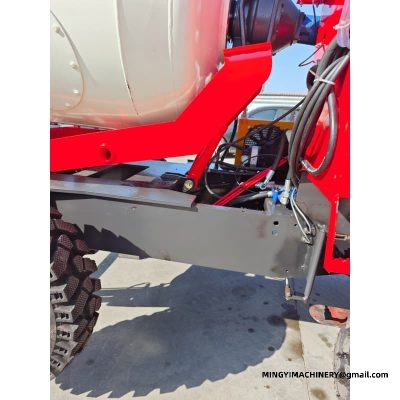
The design is deliberately conventional. Open-centre hydraulics of this pattern are understood by every agricultural mechanic, and hoses, seals and spool valves are stock items almost everywhere the machines are sold.
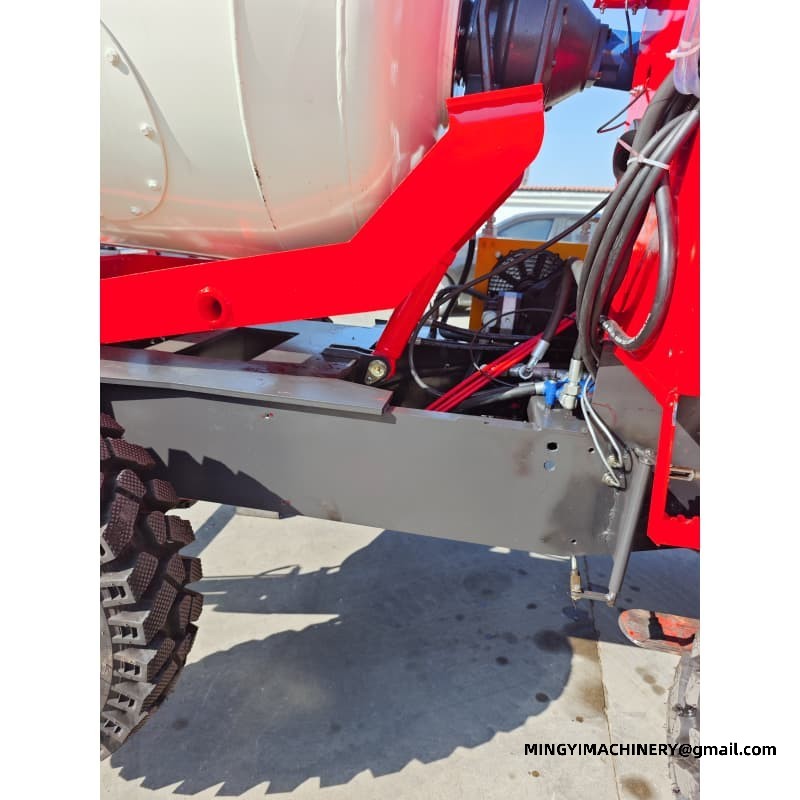
Hydraulic oil is the system's blood, and dust is its disease. Sites on canal work are hard on breathers and quick couplings, so the daily check includes oil level, breather condition and a glance for weeping fittings before dust welds itself into the film.
Most sites need a little ground work before the machine earns its keep: grade the haul, fill the ruts, gravel the standing spots, and protect any services in the working line. An hour with a shovel and a bag of hardcore keeps the 4WD honest and the drum moving.
The survey is not paperwork; it is the first batch. Measure the gate, the turn and the ground while the machine is still on the truck, and the 2,464 mm turning circle and 204 mm clearance become numbers you have already checked rather than surprises you meet with a full drum.
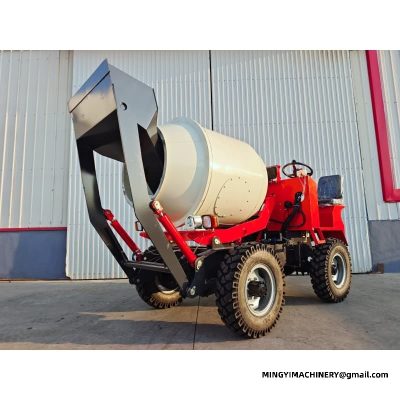
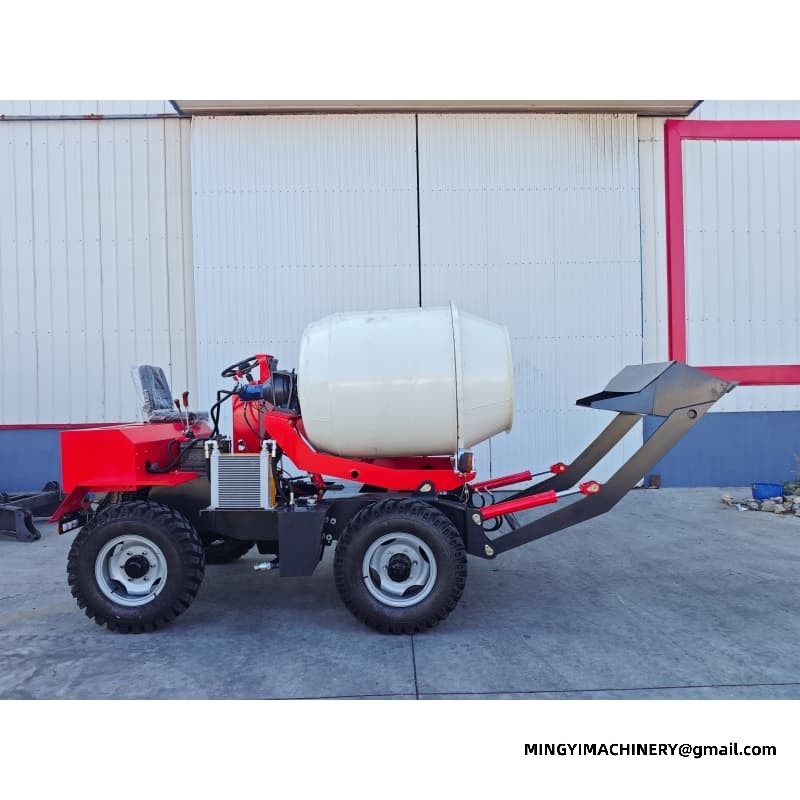
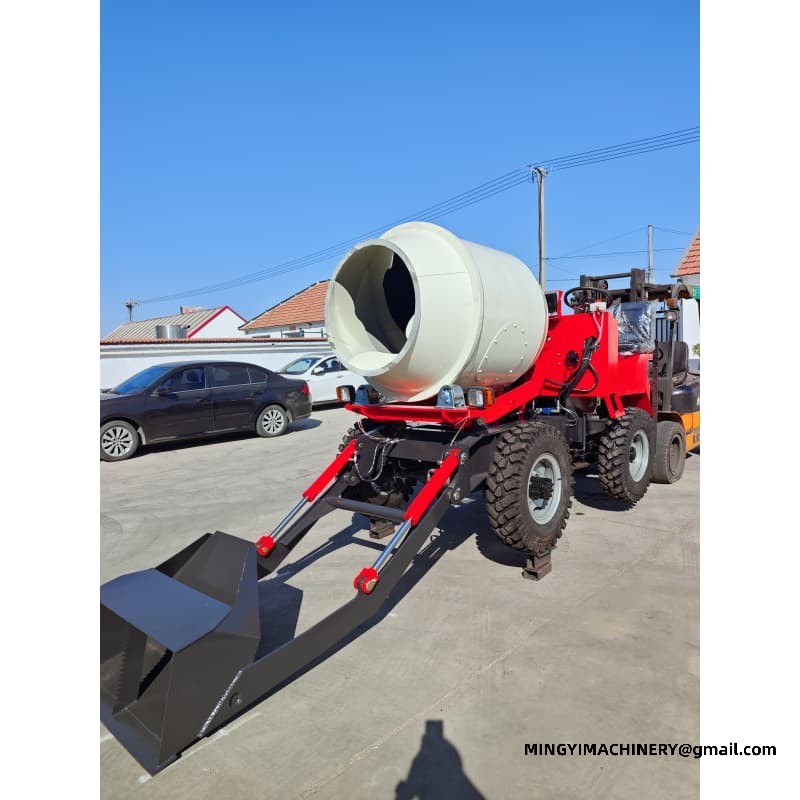
The shovel's geometry deserves a sentence of its own: it loads from in front of the drum, so the machine stands facing its stockpile and drives away facing the pour. No reversing into position, no second alignment, and the whole cycle on canal work keeps one direction of travel.
The discipline that keeps it healthy: scoop shallow, drop into the drum rather than onto its rim, and keep the shovel clean before park-up. Operators who treat it gently on canal work get years from it; operators who use it as a dozer replace pins and bushings far sooner.
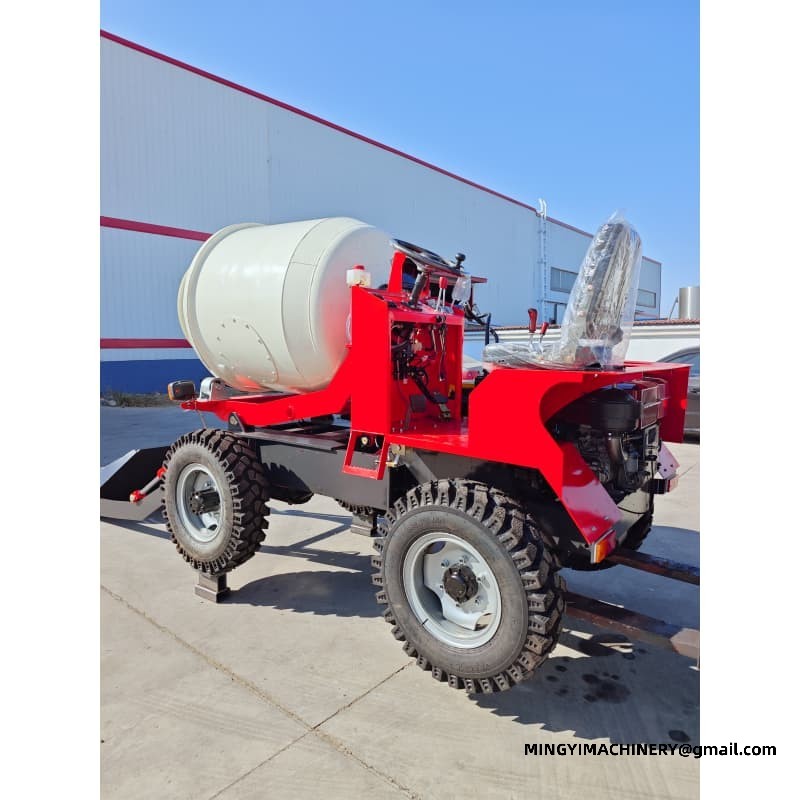
The engine line — single-cylinder diesel, 25 hp — is a maintainability statement more than a performance one. Single-cylinder diesel of this pattern is serviced anywhere, started by a mechanic who has seen one before, and rebuilt on a bench. A higher number would not help a machine that works where dealerships are days away.
Bore, stroke and emission figures matter less than the parts supply behind them. Ask the supplier for the engine's own reference numbers, not just the mixer's, and the first filter change becomes a two-minute order rather than a search.
Seat position is part of the safety case: the open station puts the operator's eyes at drum height, with the shovel arc and the discharge point both in view. Machines that hide their own working parts invite the guesses that cause injuries.
Gloves, boots and eye protection are not paperwork at the discharge end — wet cement is caustic, and the crews who treat it that way on canal work never spend an evening with cement burns.
Build the plan around the standing spot rather than the drum: a machine that parks once and serves a bay from one position outserves a machine that shuttles. Positioning time is the only time the drum spends doing nothing.
Where a site has many small elements — bases, posts, patches — the machine's flexibility shines: mix for the first, place, then travel to the second without waiting on anyone's schedule but the drum's.
The discipline that varies by season is the survey: on canal work, the ground that holds in March may not hold in November, and the turning circle decides nothing if the approach has turned to mud.
Lean foundation mixes and richer masonry mixes turn the same way and discharge the same way; the drum's job is uniformity, not chemistry. The recipe stays the engineer's, and the repetition stays the drum's.
The gear pattern also gives the machine its manners: low gears hold back a loaded drum on descents without riding the brakes, and the travel gear keeps engine speed economical on road sections. Good gearing is invisible until it is missing.
Plan the standing spot before the first batch, not after. A machine that has rehearsed its approach discharges in a minute; a machine improvising each approach spends more time manoeuvring than mixing over a shift.
Report faults honestly and in time. A small hydraulic weep described in a photograph reaches the right seal before it becomes a failed hose on a pour day, and crews that communicate get parts that fit the first time.
The first week sets the machine's tone. Commission it properly — turn the engine by hand, prime the hydraulics, run the drum empty — then let a new operator feel the 28° steer and the 2,464 mm circle without a live load aboard.
Fix the mix design for canal lining concrete once, write it down, measure the water, count the scoops, time the drum — and the batches on canal work will be more consistent than most hand-mixed concrete has ever been.
Where the work is structural, test properly. The machine's uniformity makes test results meaningful — hand-mixed scatter hides problems that drum-mixed consistency exposes while they are still simple.
Power steering also matters at the end of a shift. A loaded machine manoeuvring all day on a manual system tires the operator into mistakes; the hydraulic system keeps the last batch as controlled as the first.
Every limit here has a workaround worth knowing: a 2,464 mm circle cannot fit, but a three-point turn can; 204 mm of clearance will not ride a boulder, but a boarded path will. The machine rewards a crew that thinks in routes rather than in straight lines.
How long do 4wd self loading concrete mixer belts last?
By condition, not calendar: cracks, glazing or flutter say replace. A spare set travels in the first spares kit for good reason.
Can the 4wd self loading concrete mixer work in hot weather?
Yes — keep the air filter checked, shade the aggregate stockpile where possible, and batch slightly smaller so each load is placed inside the shortened working window.
How long does a 4wd self loading concrete mixer last?
With the daily wash-out kept and greasing on schedule, the chassis and drum outlast several sets of consumables, and the single-cylinder engine overhauls on parts stocked in most agricultural towns.
Does the 4wd self loading concrete mixer drum rust out?
Not if it is washed daily and left clean. The drum that dies young is the drum that sleeps with concrete in it — the heel holds moisture against the steel all season.
How should a 4wd self loading concrete mixer be stored between jobs?
Washed, fueled, drum cracked to drain, battery tended, tyres off bare ground if the stand is long. The machine that is stored properly starts on canal work without a service call.
Is a bigger drum always better than a 4wd self loading concrete mixer?
No. Bigger drums ride on bigger chassis that lose the gateway, the low height and the single-operator economy. Size the drum to the pour, not to the brochure.
How many 4wd self loading concrete mixer machines fit in a container?
That depends on the container and the packing format, so confirm the loading plan at specification. The 3,500 x 1,600 x 2,200 mm envelope is what makes the packing conversation easy.
Will the 4wd self loading concrete mixer fit through a garden gate?
At 1,600 mm wide it passes standard double gates with room for mirrors. Measure the narrowest point and the turn immediately inside it before delivery.
Nothing on this page is complicated, and that is the point: a 0.8 m³ drum, a shovel, four driven wheels and a routine. Crews that keep the routine keep the machine earning on canal work for years.
Cold weather and winter care for 4WD Self Loading Concrete Mixer: 130 Axle, 212 Steering
Cold exposes weak batteries, thick oil and water in the fuel. Preparing 4WD Self Loading Concrete Mixer: 130 Axle, 212 Steering for winter means the right grade of oil, a battery in good condition and fuel that will not wax in the tank overnight.
Handover and getting familiar with 4WD Self Loading Concrete Mixer: 130 Axle, 212 Steering
Familiarisation is not the same as reading the manual. Sitting on 4WD Self Loading Concrete Mixer: 130 Axle, 212 Steering, working through the controls at low speed and learning where the machine balances takes an hour, and that hour is what keeps the first week uneventful.
Wear items and spares worth holding for 4WD Self Loading Concrete Mixer: 130 Axle, 212 Steering
Wear items are predictable once the machine has settled in. After the first service interval the pattern on 4WD Self Loading Concrete Mixer: 130 Axle, 212 Steering is visible, and the parts that were replaced become the parts that are kept.
Documents that travel with 4WD Self Loading Concrete Mixer: 130 Axle, 212 Steering
The machine is only half of what arrives. The parts book, the service schedule and the declarations that come with 4WD Self Loading Concrete Mixer: 130 Axle, 212 Steering are what let the owner register, insure and maintain it without a second round of emails.
Commissioning 4WD Self Loading Concrete Mixer: 130 Axle, 212 Steering on site
The machine should be introduced to the site as well as the operator. Walking the route 4WD Self Loading Concrete Mixer: 130 Axle, 212 Steering will take, noting the soft spots and the turns, prevents the kind of first-day incident that has nothing to do with the machine.
Contact MINGYI Machinery for the current self-loading concrete mixer specification, export packing and a formal specification for your market. E-mail: sales@mingycn.com | LINE (ID): mingyicn
0.8m3 4WD Concrete Truck: Full Table, Honest Limits · Small Diesel 0.8m3 Concrete Mixer: litres, Filters and Life · factory direct 4x4 off road dumper with hydraulic tipping body · Mini Self-Loading Concrete Mixer









