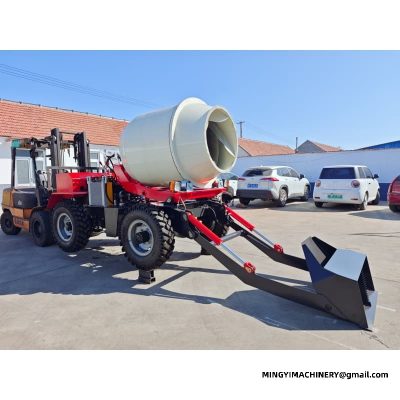
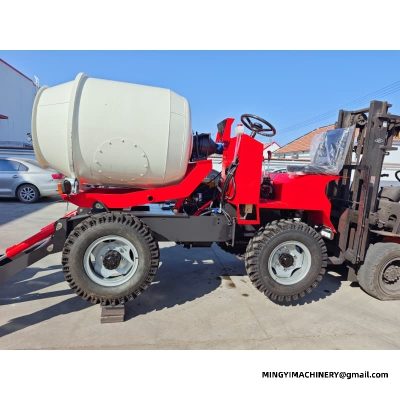
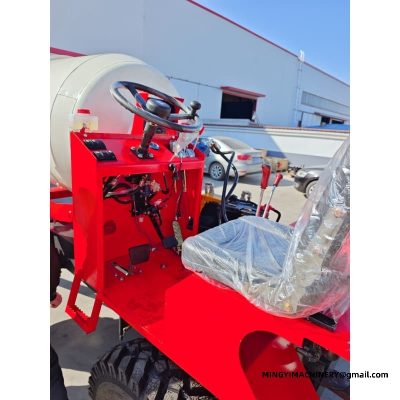
0.8m3 Rough Terrain Concrete Mixer, Off-Road 0.8m³ Self Loader, 4WD Site Mixer
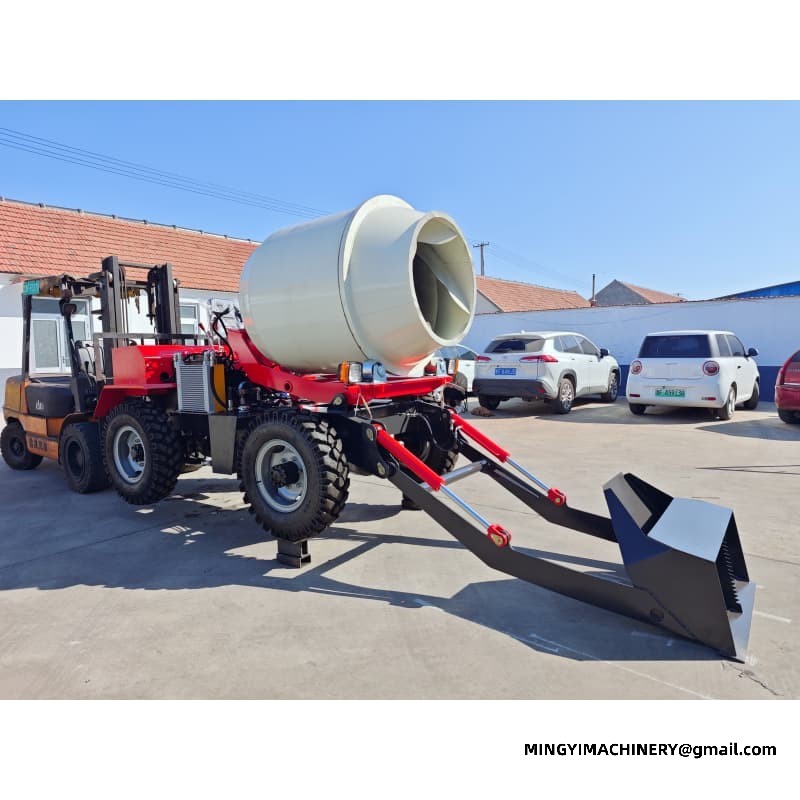
Access decides concrete work before capacity does. A transit mixer that cannot reach the pour is a plant on the street; a 0.8m3 rough terrain concrete mixer at 3,500 x 1,600 x 2,200 mm overall and 2,464 mm of turning circle drives to where the formwork is. This page follows the machine in tunnel work from the stockpile to the discharge point and reads each published figure along the way.
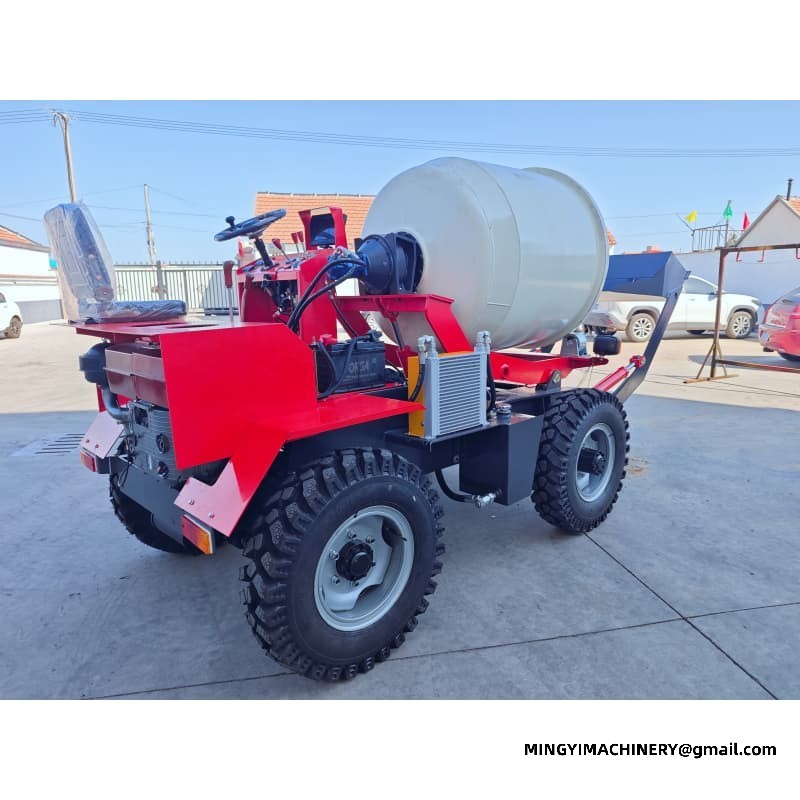
Keep additions within the machine's published limits. A chute that adds reach also adds discharge height; a skip that adds capacity also adds the weight the chassis must carry. The 1,500 kg rating still governs the lot.
Discharge aids only earn their place if they keep the drum's output where the crew already is. A chute that lands the concrete two metres closer to the formwork saves more time than a longer chute that lands it in the wrong place.
Agree the acceptance test before the deposit: drum turns both ways, shovel lifts and holds, steering reaches full lock, and the machine travels in every gear. Thirty minutes at handover prevents the kind of dispute that outlives the purchase.
A sensible first spares kit travels with the machine: filters for engine and hydraulics, a set of belts, hose clamps, a drum blade or two, shovel pins and bushings, and lamp bulbs. Everything on the list is small, simple and exactly what stops work in tunnel work when it fails unstocked.
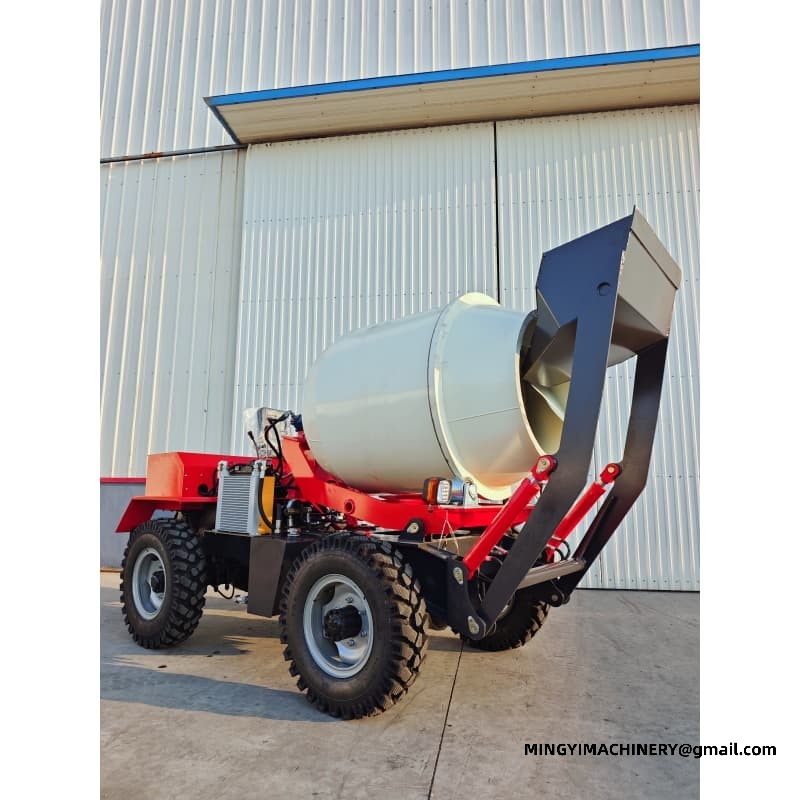
In tunnel work, the difference shows on the first wet morning. A two-wheel-drive machine spins and needs towing; this one keeps moving under its own traction with a full 1,500 kg in the drum circuit. Traction is capacity — a mixer that cannot reach the pour has none.
In tunnel work, access decides everything, and a tight turning circle is the difference between driving to the pour and barrowing the last fifty metres. The 3,500 x 1,600 x 2,200 mm footprint was drawn around exactly those gateways.
| Reference specification — 0.8 m³ 4WD self-loading concrete mixer | |
|---|---|
| Rated load | 1,500 kg |
| Rated capacity | 0.8 m³ |
| Overall dimensions (L x W x H) | 3,500 x 1,600 x 2,200 mm |
| Front tyre size | 8.25-16 |
| Rear tyre size | 7.50-16 |
| Minimum ground clearance | 204 mm |
| Steering angle | 28° |
| Turning dimension (outer tyre) | 2,464 mm |
| Maximum travel speed | 24 km/h |
| Transmission | 4WD |
| Gears | 3 forward / 1 reverse + travel gear |
| Front axle | 130 drive axle |
| Rear axle | 212 selectable 4WD steering axle |
| Engine | single-cylinder diesel / 25 hp |
| Steering | hydraulic power steering |
Most sites need a little ground work before the machine earns its keep: grade the haul, fill the ruts, gravel the standing spots, and protect any services in the working line. An hour with a shovel and a bag of hardcore keeps the 4WD honest and the drum moving.
Mark the discharge point before the pour, not during it. A standing spot within barrow reach of the formwork is worth more than a tidy spot metres away, because the last metres are where batches lose their workability.
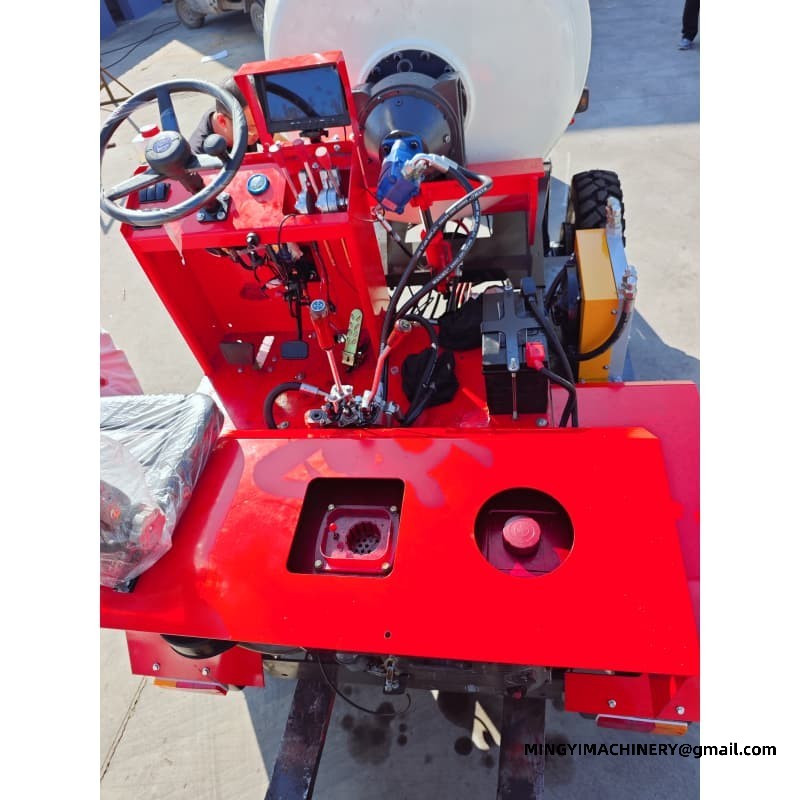
The engine line — single-cylinder diesel, 25 hp — is a maintainability statement more than a performance one. Single-cylinder diesel of this pattern is serviced anywhere, started by a mechanic who has seen one before, and rebuilt on a bench. A higher number would not help a machine that works where dealerships are days away.
A line worth pausing on is the gear set — 3 forward, 1 reverse and a travel gear — because it tells you how the machine splits slow, strong work from the road run between sites. The travel gear is not for the load; it is for the empty road, and the distinction keeps the box alive.
On larger sites the profile widens: an operator plus a spotter at the discharge, plus whoever feeds the cement and measures the water. The machine still needs one trained person; it simply stops needing a barrow chain behind them.
On sites where the machine is the only powered plant, its operator becomes the pace-setter for everyone else. Crews learn to time their work to the drum, and the site finds its rhythm around one machine rather than fighting several.
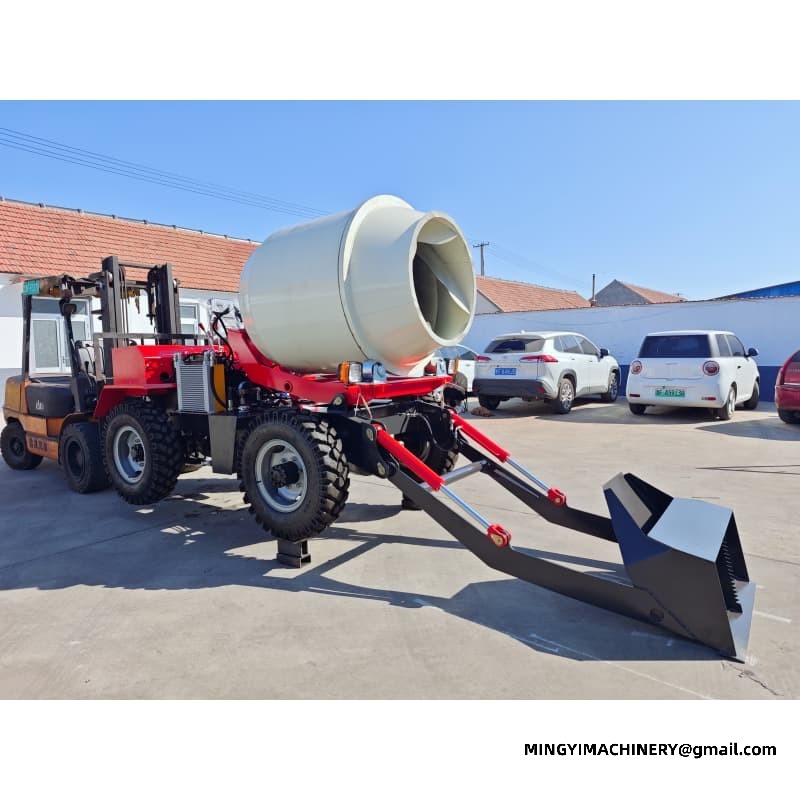
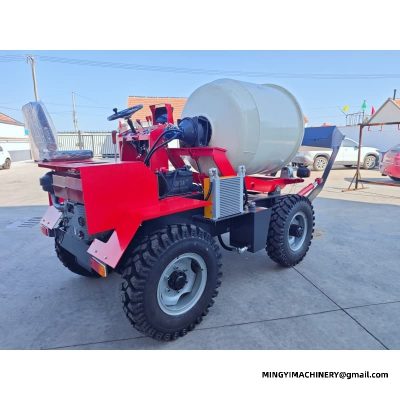
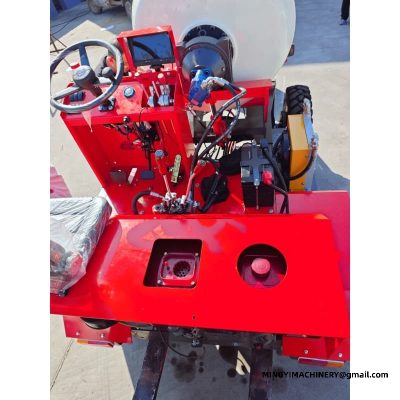
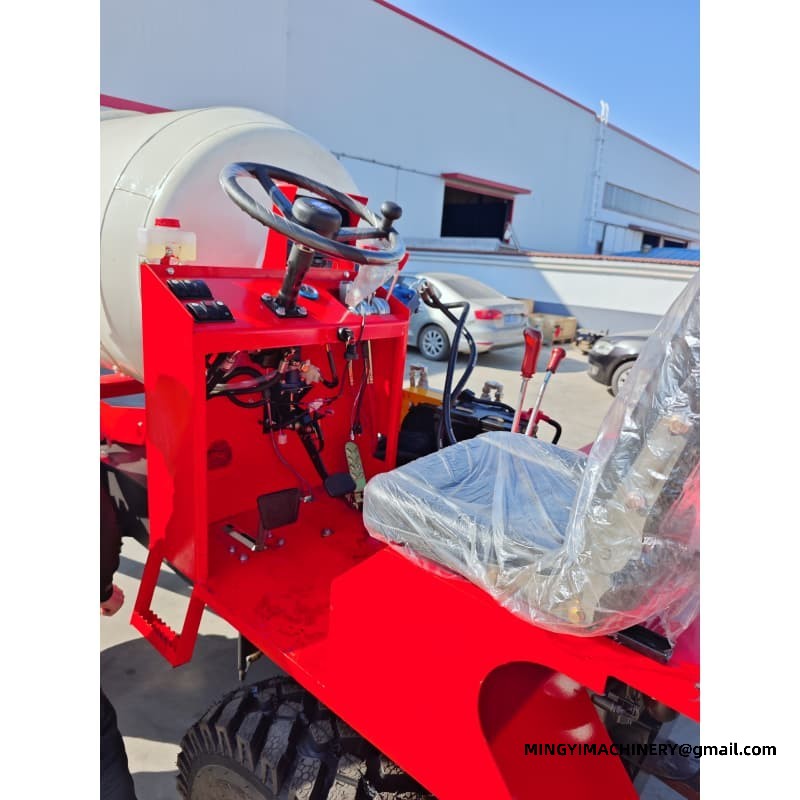
Seat position is part of the safety case: the open station puts the operator's eyes at drum height, with the shovel arc and the discharge point both in view. Machines that hide their own working parts invite the guesses that cause injuries.
The discharge point concentrates people and machine in one small area — the operator tipping, the spotter barrowing, the crew placing. The safe pattern is a fixed standing spot, a spoken signal for stop, and a rule that the drum never turns while anyone stands in the discharge arc.
The gear pattern also gives the machine its manners: low gears hold back a loaded drum on descents without riding the brakes, and the travel gear keeps engine speed economical on road sections. Good gearing is invisible until it is missing.
Reverse also serves the stockpile: backing toward the pile with the shovel leading keeps the loading line short and the machine's nose pointed at the next haul. Operators who plan their turnarounds move more concrete per hour than operators who rush.
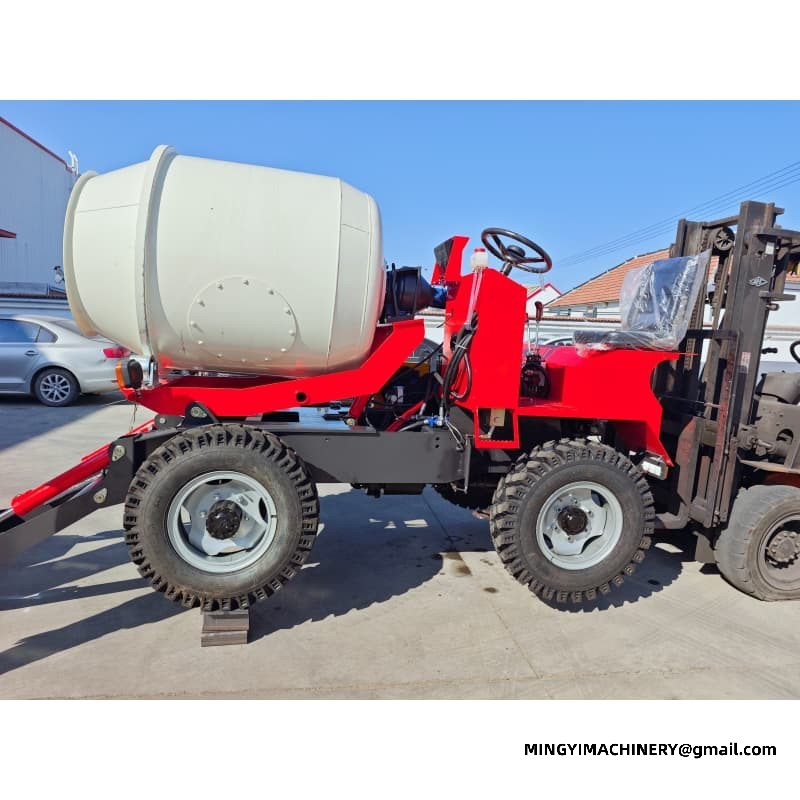
Steering effort drops to nothing at crawl speed, which is precisely when a loaded machine needs precision. The 28° rear steer responds proportionally, so the wheel's first inch means a small correction and the last inch means the full lock.
Measure the narrowest point on the route before the machine arrives in tunnel work — the figure turns an access argument into a five-second check. Crews that skip the measurement discover the constraint with a full drum aboard, which is the lengthy way.
Keep the pairs matched left to right and the pressures even, because uneven fronts put the machine slightly out of square and the steering fights it all day. Tyres are the simplest component to treat well and the most lengthy to ignore.
Rotate fronts left-to-right when wear diverges, and keep the spare mounted and pressured rather than buried in the yard. A flat tyre takes minutes; a flat tyre with no spare takes a pour in tunnel work.
The shovel reaches a pile close to the front wheels, so the stockpile layout decides how fast a batch assembles. Keep aggregate and sand within a shovel's reach of the machine's standing position and the drum fills in seconds rather than minutes.
On sites that move the pile daily, a plate or a spreader keeps the loading face flat, and the shovel thanks you for it. Flat faces give full scoops; full scoops give predictable batches and a drum that reaches 0.8 m³ without a second bite.
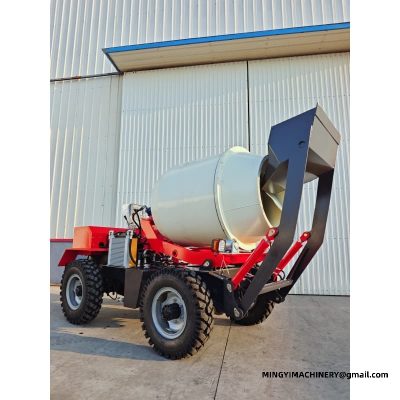
Because rotation and tilt are hydraulic, the operator can hold a partial discharge — trickle into a barrow, stop, move, resume — which no hand-cranked drum offers. That control is worth as much as the 0.8 m³ itself on pours with fussy geometry.
Aggregate quality feeds consistency too. Graded pile, clean stock, dry cement storage — the drum can only mix what it is given, and crews that protect their materials in tunnel work find the machine generous in return.
Cement count, aggregate count, water measure, drum time — four numbers per mix design, and every crew member should be able to recite them. The machine's repeatability turns those four numbers into strength rather than into hope.
Water is where site-mixed concrete usually dies. Extra water makes a stiff mix easy and weak; the drum will happily hide the sin until the cube test does not. A measured water container and a workability target agreed with the crew solve most of it.
Aggregate temperature is the hidden variable in hot-weather concrete: stockpiles in the sun can carry the mix temperature past the design window before the drum spins. Shade, sprinkling and morning batching are the simple answers.
Cold slows hydration, and concrete placed cold needs protection more than it needs heat. Batch normally, place before mid-afternoon, and cover the work — the machine's role is to keep the pour moving before the light goes.
Is the 0.8m3 rough terrain concrete mixer four-wheel drive?
Yes. Transmission is 4WD — four-wheel drive through a 130 front drive axle, with the 212 rear axle selectable for four-wheel-drive steering. Rear drive is selectable, so the machine runs light on hard standing and engages all four wheels when the ground turns soft.
What gradient can the 0.8m3 rough terrain concrete mixer handle loaded?
Site ramps and graded ground in low gear. There is no published gradeability figure, so treat sustained loaded climbs as a test question for the supplier, not an assumption.
Can the 0.8m3 rough terrain concrete mixer drive on public roads?
It travels at 24 km/h in the road gear between sites. Registration and lighting requirements differ by market, so confirm local rules before regular road use.
Is a second-hand 0.8m3 rough terrain concrete mixer a good buy?
A machine with hours, records and an honest drum beats a simple one with neither. Check for a heel in the drum, worn shovel pins and cracked hoses — three tells that predict the next season's takes.
Can a 0.8m3 rough terrain concrete mixer work underground or in tunnels?
At 2,200 mm high it fits low-clearance work a transit mixer cannot enter. Enclosed spaces also require planned ventilation for the diesel exhaust — put it in the method statement.
What is the turning circle of the 0.8m3 rough terrain concrete mixer?
2,464 mm at the outer tyre, from the 28° steering angle. Measure your tightest gateway against that figure before the machine arrives.
How much water should a 0.8m3 rough terrain concrete mixer batch take?
Whatever the mix design specifies — measured, not splashed. Extra water makes a stiff mix easy and weak; a marked container beside the controls solves most site water discipline.
Will the 0.8m3 rough terrain concrete mixer fit through a garden gate?
At 1,600 mm wide it passes standard double gates with room for mirrors. Measure the narrowest point and the turn immediately inside it before delivery.
Measure the gateway, time the cycle, write the recipe — three small exercises that turn the published specification into a working plan for your site.
Cold weather and winter care for 0.8m3 Rough Terrain Mixer: Ground Rules Before the Pour
Winter is hard on rubber and on seals as much as on the engine. Parking 0.8m3 Rough Terrain Mixer: Ground Rules Before the Pour under cover, keeping the tracks or tyres off standing water and checking the hoses for cracking are all part of the season.
Hot, humid and dusty conditions around 0.8m3 Rough Terrain Mixer: Ground Rules Before the Pour
Humidity attacks the parts that are not used. Storage in a damp climate means 0.8m3 Rough Terrain Mixer: Ground Rules Before the Pour needs the exposed metal protected and the machine run regularly, because standing still does more damage than working.
Packing, loading and shipment of 0.8m3 Rough Terrain Mixer: Ground Rules Before the Pour
The paperwork matters as much as the packing. Serial numbers, dimensions and weights recorded for 0.8m3 Rough Terrain Mixer: Ground Rules Before the Pour at loading are the same figures the destination needs, and a mismatch here loses more days than the voyage itself.
Wear items and spares worth holding for 0.8m3 Rough Terrain Mixer: Ground Rules Before the Pour
The parts that stop a machine are rarely the parts that are hardest to find. Filters, belts, seals and the ground engaging tools on 0.8m3 Rough Terrain Mixer: Ground Rules Before the Pour are easy to hold and slow to replace, which is why they belong on the shelf rather than on an order.
Fuel, oil and fluid quality for 0.8m3 Rough Terrain Mixer: Ground Rules Before the Pour
The specification for oil is written for a reason. Using the grade and the change interval set for 0.8m3 Rough Terrain Mixer: Ground Rules Before the Pour keeps the engine and the hydraulic system inside the range they were designed for.
Contact MINGYI Machinery for the current self-loading concrete mixer specification, export packing and a formal specification for your market. E-mail: sales@mingycn.com | LINE (ID): mingyicn
Front Loading 0.8m3 Concrete Mixer: Shovel Discipline · Hydraulic Tipping 0.8m3 Mixer: The Discharge Arc · articulated dump truck on rough terrain with hydraulic tipping body · Mini Self-Loading Concrete Mixer









