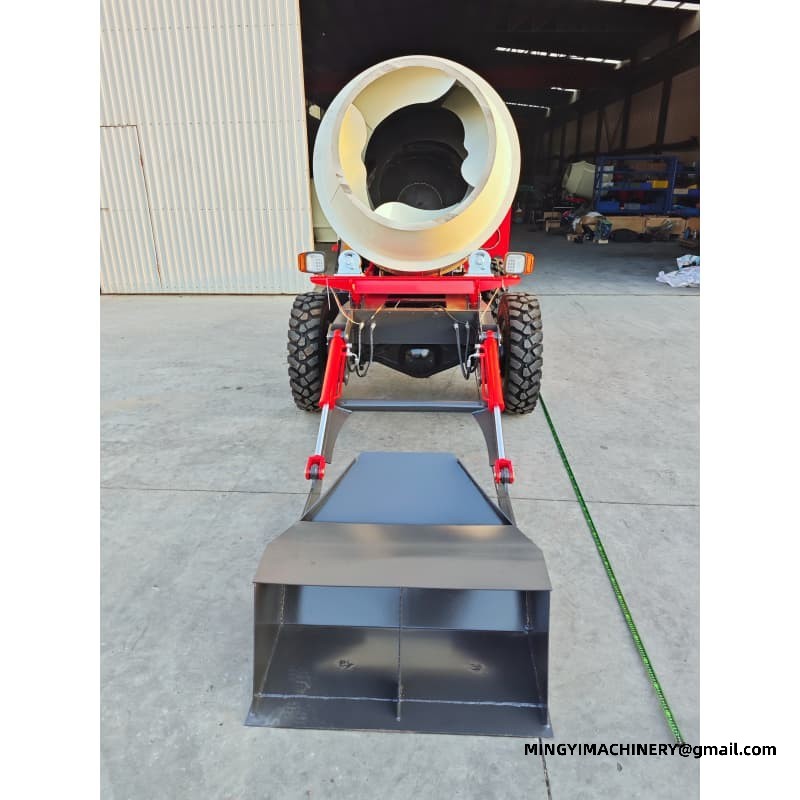
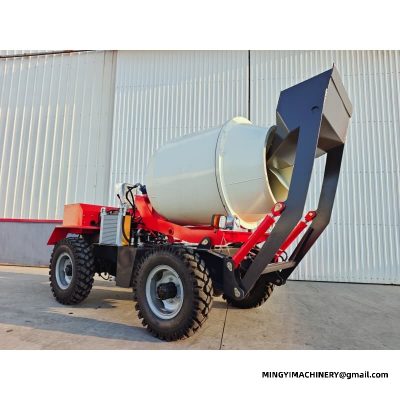
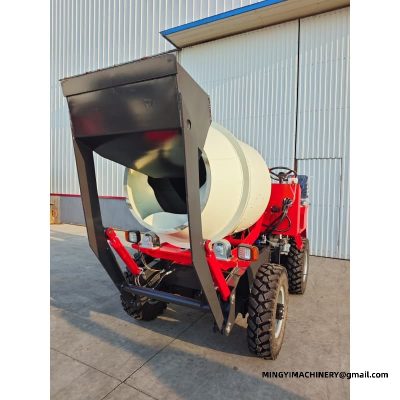
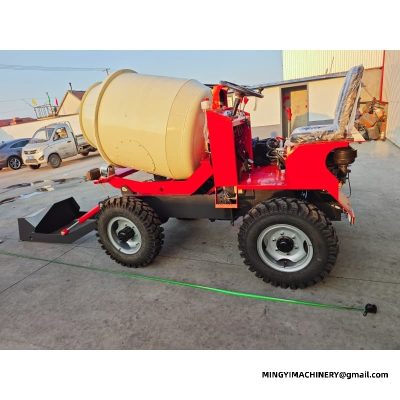
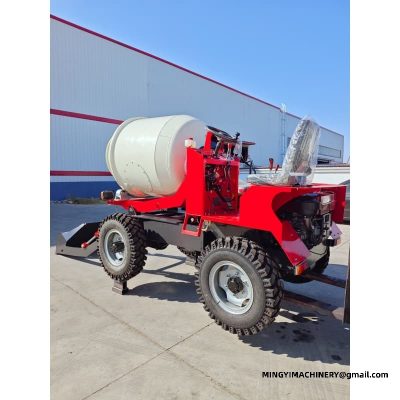
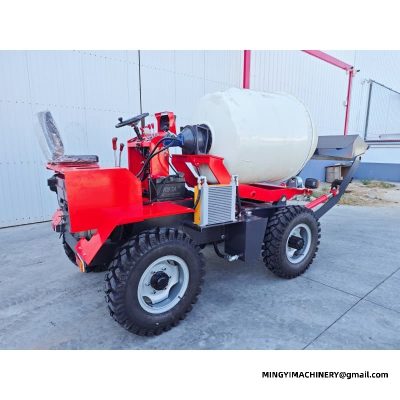
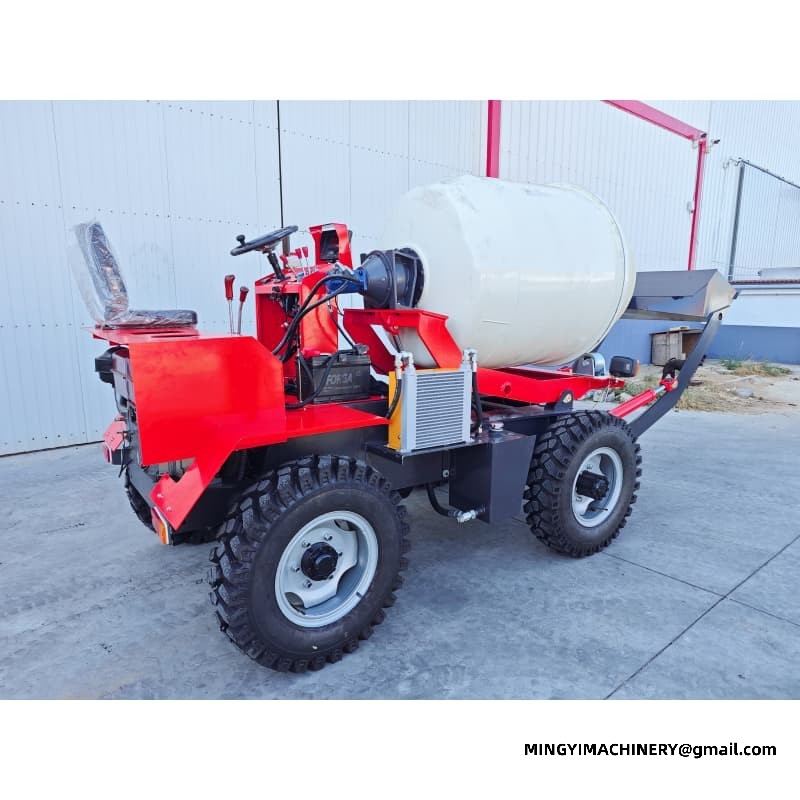
Mini 0.8m3 Self Loading Concrete Truck, Micro 0.8m³ Mixer, Compact Self Loader
Every figure on the mini 0.8m3 self loading concrete truck table earns its keep somewhere specific. The 0.8 m³ drum matters at the formwork; the 8.25-16 tyres matter halfway across a wet site; the 25 hp single-cylinder diesel matters at the fuel bowser and at the mechanic who knows it by heart. This page connects each published number to the moment in a small precast yard a crew actually feels it.
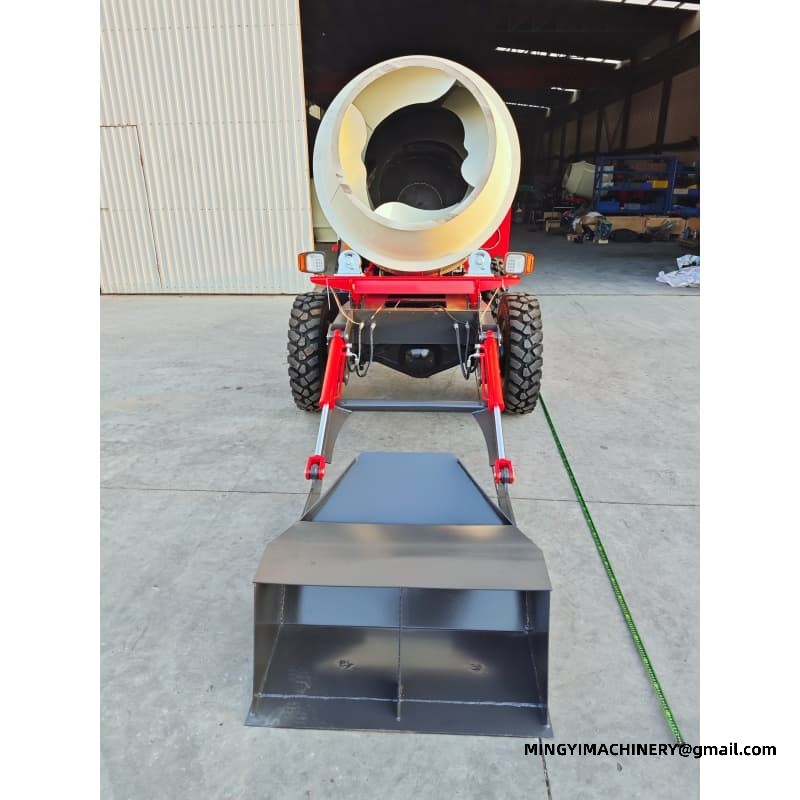
Measure the narrow gate before delivery in a small precast yard — width, height bar, and the turn immediately inside it. The 2,464 mm turning circle handles the inside turn; the measurement turns hope into a plan.
Below ground, the ramp matters as much as the ceiling: grade, surface and the turn at the bottom. A machine that descends well and cannot turn at the bottom is a machine that will need reversing back up with a full drum.
Agree the acceptance test before the deposit: drum turns both ways, shovel lifts and holds, steering reaches full lock, and the machine travels in every gear. Thirty minutes at handover prevents the kind of dispute that outlives the purchase.
Buying the kit with the machine also proves the supply chain before it is needed. Ask the supplier to specification parts by the same reference numbers as the manual, so the second order places itself.
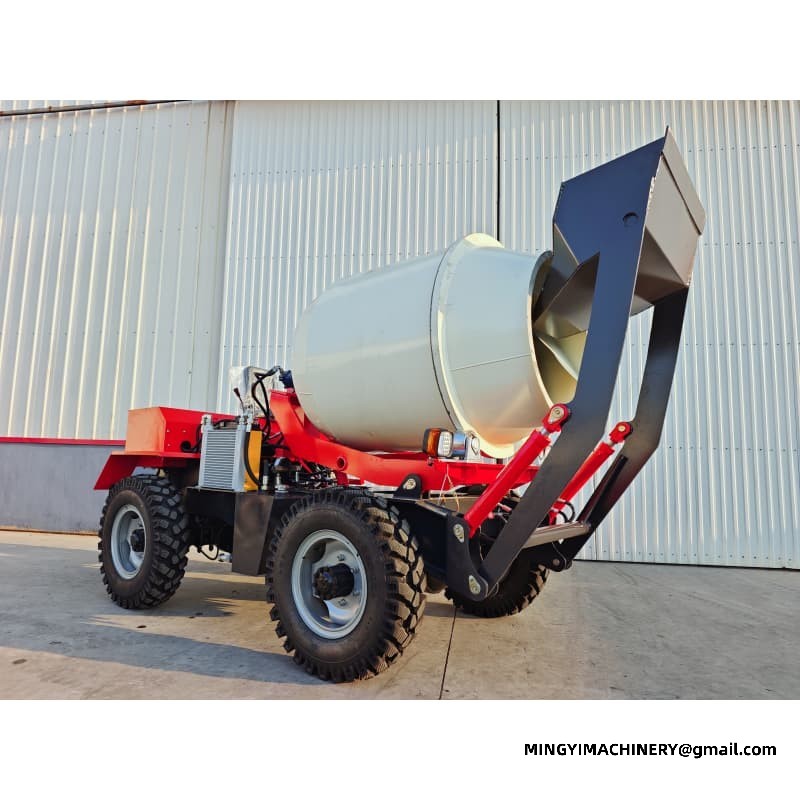
Put the two figures side by side and the machine's day writes itself: 0.8 m³ mixed, 1,500 kg carried, repeated until the pour is fed. Nothing in the specification is bigger than the job needs, and nothing the job needs is missing from the specification.
Where a pour sits between the two — big for one machine, small for a plant — the answer is scheduling rather than hardware: bays, joints and timing turn a 0.8 m³ drum into a continuous supply. The 1,500 kg chassis makes the repeated trips practical in fuel and in wear.
| Reference specification — 0.8 m³ 4WD self-loading concrete mixer | |
|---|---|
| Rated load | 1,500 kg |
| Rated capacity | 0.8 m³ |
| Overall dimensions (L x W x H) | 3,500 x 1,600 x 2,200 mm |
| Front tyre size | 8.25-16 |
| Rear tyre size | 7.50-16 |
| Minimum ground clearance | 204 mm |
| Steering angle | 28° |
| Turning dimension (outer tyre) | 2,464 mm |
| Maximum travel speed | 24 km/h |
| Transmission | 4WD |
| Gears | 3 forward / 1 reverse + travel gear |
| Front axle | 130 drive axle |
| Rear axle | 212 selectable 4WD steering axle |
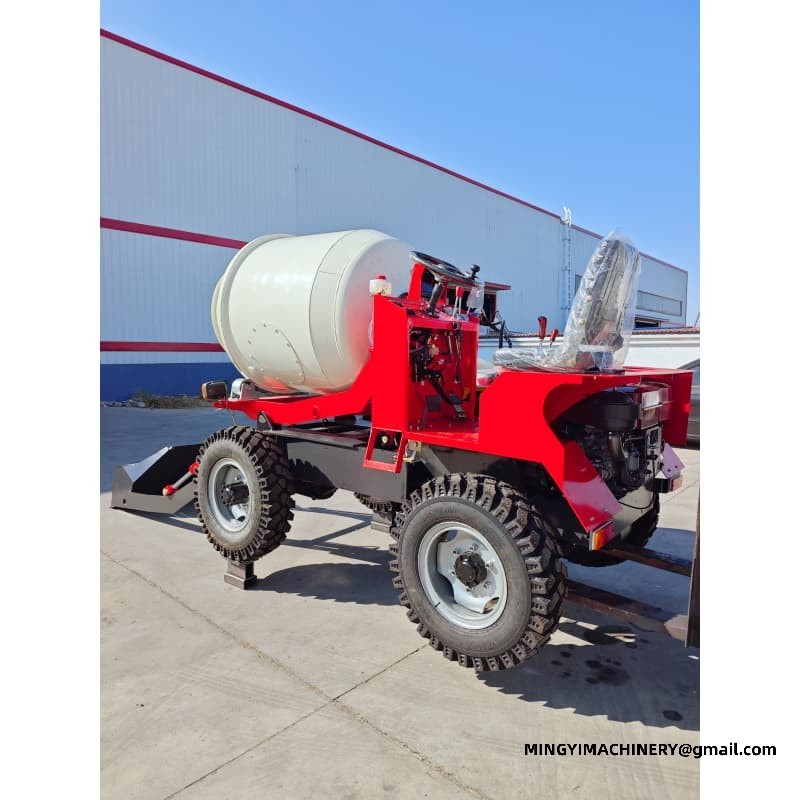
| Engine | single-cylinder diesel / 25 hp |
| Steering | hydraulic power steering |
The drum wash-out belongs here too — it is listed in the drum section but it is a daily item, not a weekly one. A machine parked clean in a small precast yard is a machine that starts the next morning without arguments.
None of it needs a workshop. Every item is reachable with the hand tools that travel on the machine, which is the quiet advantage of a design drawn for places without garages.
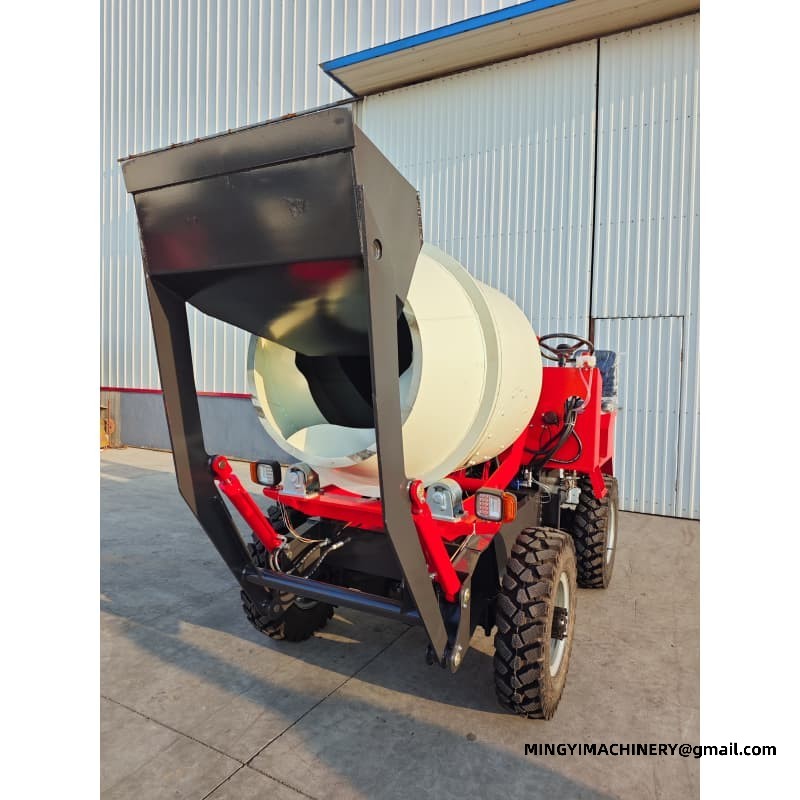
At 3,500 x 1,600 x 2,200 mm, the machine loads onto a tag trailer behind a light truck or ships one per small container. For plant hire fleets and export buyers that footprint is money: no escort, no low-loader, no special port handling.
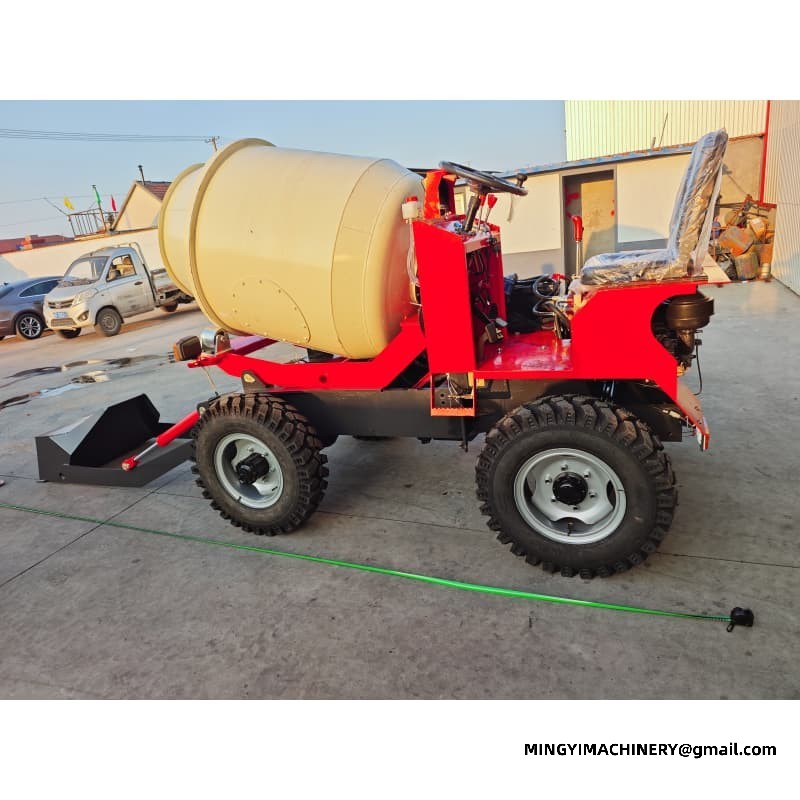
The frame carries 1,500 kg of payload over a short, wide stance, with the drum mounted low and between the axles rather than overhanging. That geometry is why a machine this size can carry wet concrete at all: the load stays inside the wheelbase where the chassis was drawn to take it.
204 mm also sets the maintenance floor: axle drain plugs, the gearbox sump and the hydraulic filter all live above that line, and none of them wants to meet a rock. The clearance is a working figure, not a styling choice.
A loaded drum raises the centre of gravity, and every slope question follows from that. The machine handles site ramps and graded ground at crawl speed in low gear; it is not a slope specialist, and cross-slopes with a full drum deserve a slower, straighter line than empty running.
Board over exposed ducts and mark headroom limits. The machine crosses most ground in a small precast yard; it crosses a buried cable only once, and the second time is a strike.
Agree the standing spot and the stop signal with the crew before the first batch. Ten minutes of positioning planning beats an hour of manoeuvring once the pouring starts.
Build the plan around the standing spot rather than the drum: a machine that parks once and serves a bay from one position outserves a machine that shuttles. Positioning time is the only time the drum spends doing nothing.
Between crews, the drum's rinse cycle doubles as the handover boundary — the second crew starts from a clean drum and a known recipe, in a small precast yard, and neither crew inherits the other's setting grout.
Aggregate temperature is the hidden variable in hot-weather concrete: stockpiles in the sun can carry the mix temperature past the design window before the drum spins. Shade, sprinkling and morning batching are the simple answers.
Starting aids the operator more than the engine: warm the hydraulics, cycle the drum gently, and let the first batch of the morning be the test batch. Machines wintered properly start in a small precast yard without drama.
First gear is for loading position and the worst ground; second covers most site hauls; the travel gear belongs on the public road between sites. Reverse plus the steered rear axle does the positioning, because the shovel leads and the operator wants to back toward a pour with the drum already pointing at it.
Because discharge happens over the front, the natural approach is to back in: reverse toward the formwork, stop square, tip, and drive away forward without a second manoeuvre. One reverse gear is all this needs, and the 28° rear steer makes the approach line easy to correct.
There is also a hybrid pattern worth naming: the self-loader feeds a static pump or a crane skip on bigger jobs, batching at the rate the placing crew sets. The machines are complements more often than competitors.
Plant-and-pump is a different scale of project: continuous output, trained crews, real setup effort. The self-loading mixer serves the segment below it — work too small to amortise a pump mobilisation, too far for plant supply, too continuous for hand mixing.
Seat position is part of the safety case: the open station puts the operator's eyes at drum height, with the shovel arc and the discharge point both in view. Machines that hide their own working parts invite the guesses that cause injuries.
End-of-shift safety is part of the same discipline: shovel down, drum rinsed, keys out, parking brake set, and the machine parked where tomorrow's first light will show it to everyone. Most site strikes happen to parked plant, not working plant.
Bore, stroke and emission figures matter less than the parts supply behind them. Ask the supplier for the engine's own reference numbers, not just the mixer's, and the first filter change becomes a two-minute order rather than a search.
The 130 front drive axle and 212 rear steering axle are named because they are standard agricultural patterns, and that naming is part of the durability case. Bearings, seals, hubs and crown wheels for both exist wherever tractors are sold.
plan the inputs with the machine, not after it. A drum that sits idle because the cement ran out is a drum that takes money while earning none, and the discipline of stocking ahead is part of owning well.
The decision turns on continuity of work more than on specification. A contractor who pours most weeks owns with confidence; one who pours once a season hires with relief, and neither is wrong for the other's job.
Can two mini 0.8m3 self loading concrete truck machines work one pour?
Yes, with separated standing spots and staggered cycles — it is the standard answer for pours that outrun one drum but still sit below plant scale.
How does the mini 0.8m3 self loading concrete truck discharge the concrete?
The drum reverses and tips hydraulically, discharging over the front to a barrow, bucket or straight into formwork. The operator aims the pour from the seat.
How long does a mini 0.8m3 self loading concrete truck last?
With the daily wash-out kept and greasing on schedule, the chassis and drum outlast several sets of consumables, and the single-cylinder engine overhauls on parts stocked in most agricultural towns.
What paperwork comes with a mini 0.8m3 self loading concrete truck shipment?
Commercial invoice, packing list, and the shipping documents your market requires — confirm the exact set at specification so customs clears without surprises.
Is a mini 0.8m3 self loading concrete truck the same as a pan mixer?
No. A pan mixer blends in a stationary vertical pan; this machine mixes in a rotating drum and carries the batch to the point of placement. For dispersed small pours, the drum type wins.
Can the mini 0.8m3 self loading concrete truck charge a concrete bucket or skip?
Yes, where the skip sits within the discharge arc at %s height discipline allows. The drum pours into barrows, buckets or formwork without a second handling.
Where should the mini 0.8m3 self loading concrete truck stand during a pour?
On a rehearsed standing spot with the discharge arc clear and a spoken stop signal agreed. Ten minutes of positioning planning saves an hour of manoeuvring in a small precast yard.
Where should mini 0.8m3 self loading concrete truck wash-out water go?
Into a designated wash-out pit or settling area, never into drains or against the stockpile. Cement-laden water is a controlled waste on most sites.
The figures above answer the questions buyers ask most; the daily habits answer the rest. Between them, they describe a machine that is deliberately simple and deliberately durable.
Later additions and retrofits on the concrete mixer
Most additions are easier to plan than to add. Hydraulic services, mounting brackets and electrical capacity on this class of machine are build items, and deciding them at the specification stage is far easier than doing it later.
Commissioning the unit in daily use on site
Transport shakes things loose. A short check of a machine of this size after the crate is opened, covering the same points the pre-delivery inspection covered, is the most useful insurance available on delivery day.
Fuel, oil and fluid quality for the equipment on site
The specification for oil is written for a reason. Using the grade and the change interval set for the machine itself keeps the engine and the hydraulic system inside the range they were designed for.
Cold weather and winter care for the model in question
Cold exposes weak batteries, thick oil and water in the fuel. Preparing the machine in that duty for winter means the right grade of oil, a battery in good condition and fuel that will not wax in the tank overnight.
Keeping a service record for the unit on the job
Patterns show up in the record before they show up in the machine. Rising oil consumption or a filter that keeps blocking on a machine built for the work is obvious on paper long before it becomes a failure on site.
Wear items and spares worth holding for the equipment in service
Wear items are predictable once the machine has settled in. After the first service interval the pattern on the concrete mixer is visible, and the parts that were replaced become the parts that are kept.
Contact MINGYI Machinery for the current self-loading concrete mixer specification, export packing and a formal specification for your market. E-mail: sales@mingycn.com | LINE (ID): mingyicn
0.8m3 Mobile Batching: Batching to Demand, Not to Schedule · China 0.8m3 4WD Mixer Manufacturer: What Ships, What Serves · forestry dumper with log grab for mining and quarry work · Mini Self-Loading Concrete Mixer









