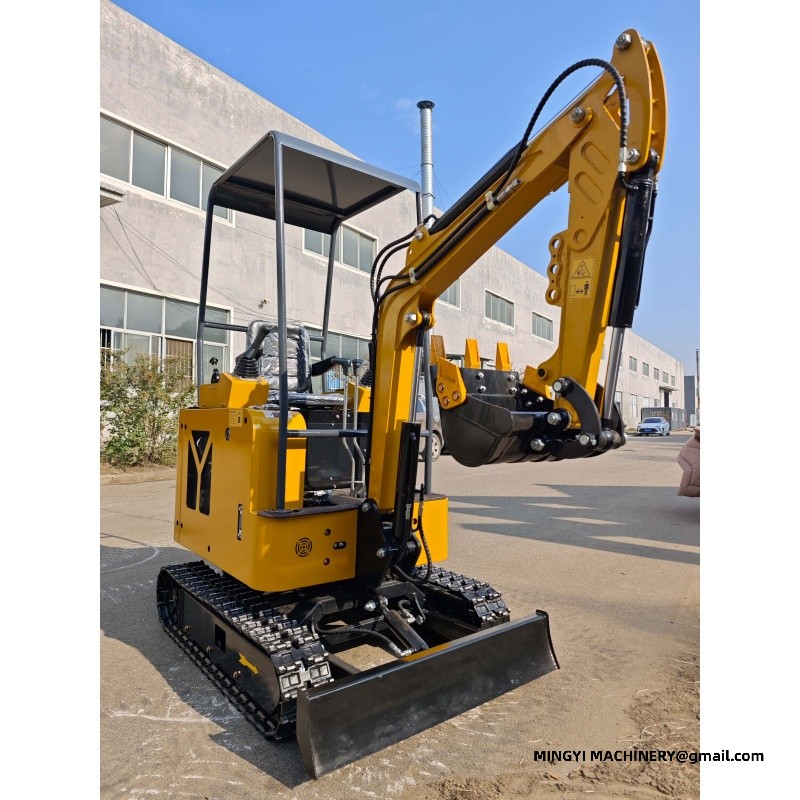
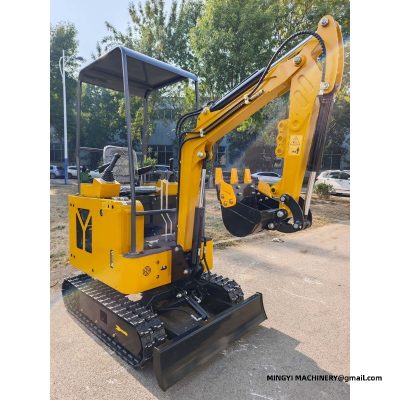
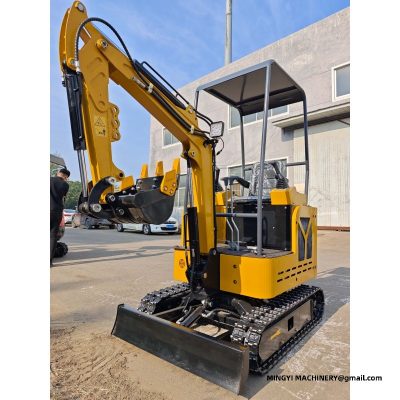
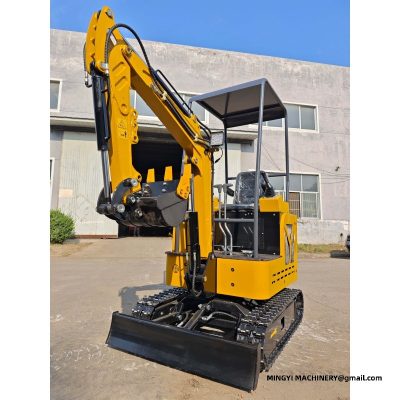
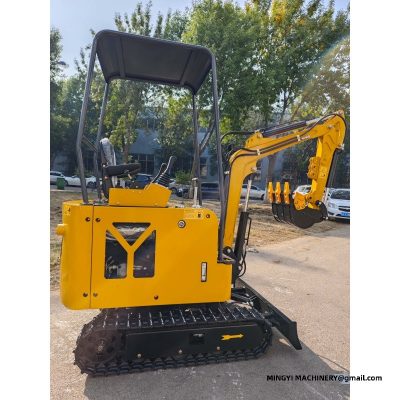
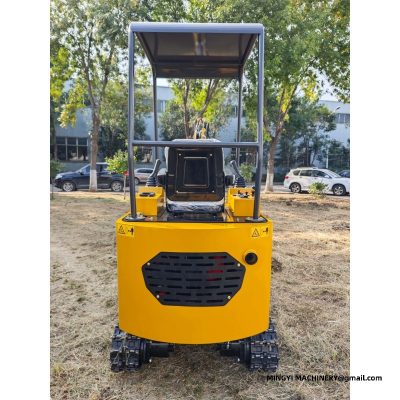
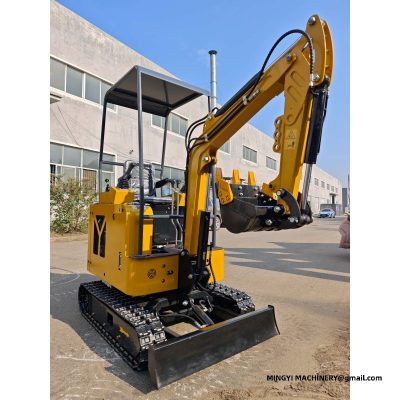
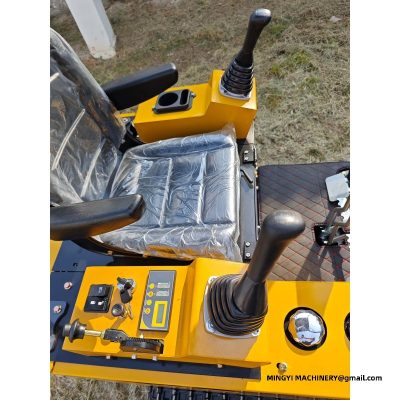
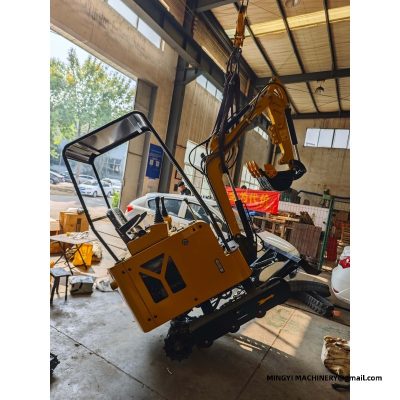
Trenching is the job most mini excavators spend their life doing, and it is the job that punishes a poorly matched machine. MINGYI mini excavators are set up for cable runs, water and sewer lines, gas pipes and drainage, in places where a full-size machine cannot reach.
The narrow chassis, close-coupled swing geometry and fine hydraulic metering let an operator cut a straight, consistent trench along kerbs, garden edges and building footings.
What makes a good trenching mini excavator
A narrow bucket keeps trench width tight and spoil volume low, which matters when the spoil has to go back in. Fine joystick control gives a level trench bottom for pipe bedding, and a tilting bucket lets the operator dress a batter without climbing out.
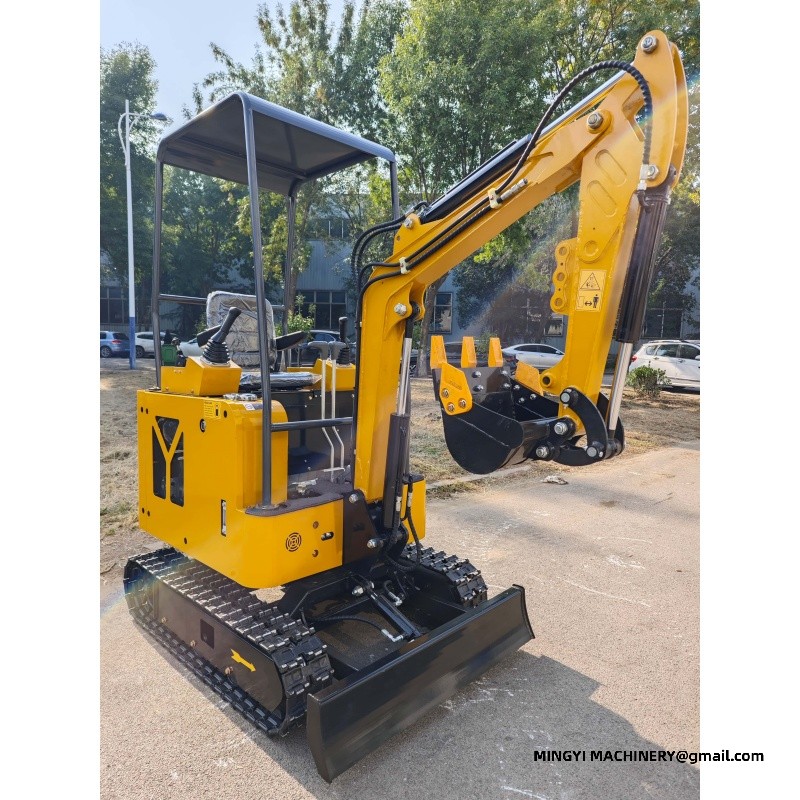
Swing boom geometry lets the machine trench parallel to a wall or fence line while the tracks stay clear of the excavation, so the trench edge stays intact.
Tracks, ground and reinstatement
Rubber tracks are the usual choice where the trench crosses lawns, driveways or finished paving, because they leave the surface substantially undisturbed. Steel tracks with rubber blocks are preferred on hard ground and long runs where track wear matters more than surface finish.
Trenching attachments
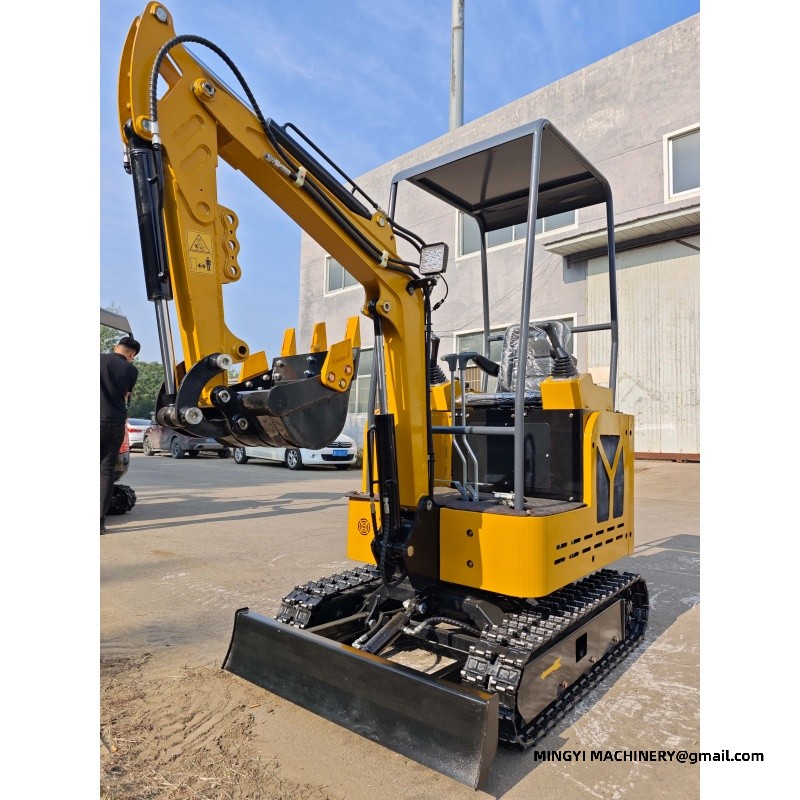
• Narrow trenching bucket for tight-width runs
• Auger / screw drill for post holes and service crossings
• Breaker hammer for rock, concrete and hard asphalt
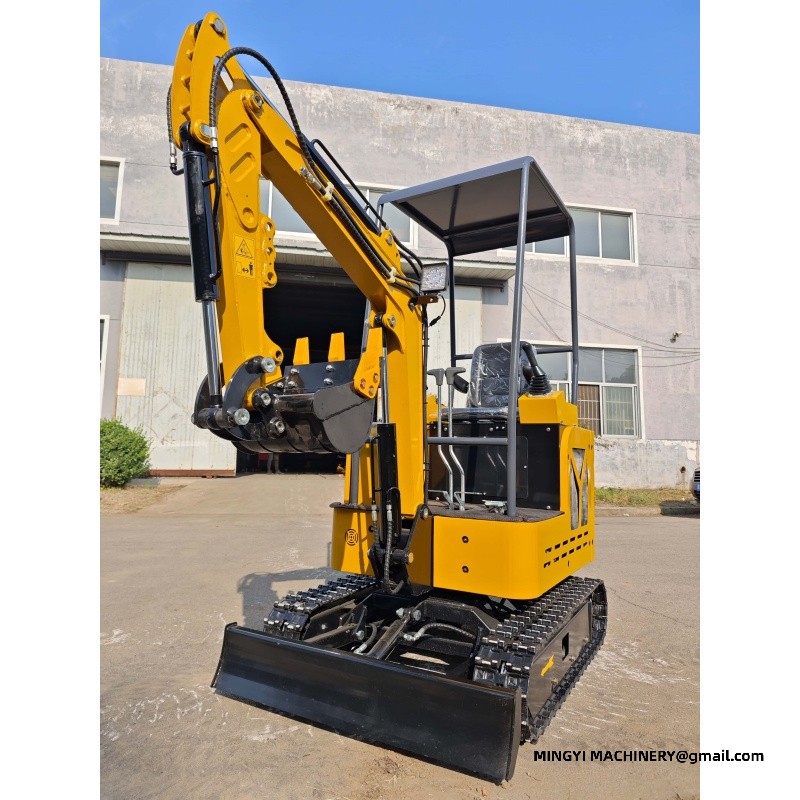
• Tilting bucket for battering and trench wall trimming
• Thumb bucket for lifting pipe and reinstating stone
Give us the trench depth, pipe diameter and ground conditions and we will recommend the model and bucket width that keeps your trench clean and your spoil volume down.
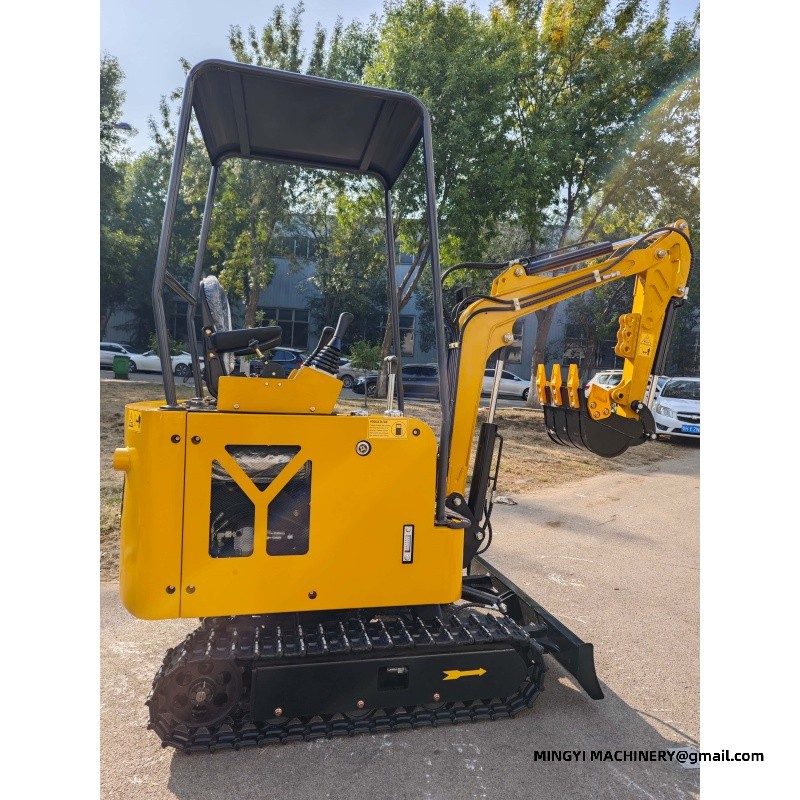
Hiring versus owning a mini excavator for trenching The choice follows the hours. Work that fills a few weeks a year is usually better hired, while this class of machine that would be on site most weeks starts to justify ownership once the transport and booking time is counted. Availability is part of the decision. Owning the unit in daily use means it is there on the day the ground is ready; hiring means competing for the same machine at the same time as everyone else in the season. Export packing and shipping of mini excavator for trenching Machines leave the factory prepared for container or flat rack shipment. A machine of this size is normally shipped with the attachment set and the spare parts list agreed in advance so the container is planned once. Export documentation, decals and paint are settled before packing. Asking for them with the equipment on site order avoids a second handling session and keeps the machine on the booked vessel. Matching mini excavator for trenching to ground conditions Soft ground is a flotation problem, not a power problem. The machine itself on wide rubber tracks crosses lawn, sand and cultivated soil that would stop a narrower machine or a wheeled unit of the same capacity. Hard and abrasive ground reverses the specification. On rock, demolition rubble or sharp gravel, steel tracks with rubber blocks on the model in question survive conditions that cut a rubber belt quickly. Working a mini excavator for trenching in confined spaces Confined sites are decided by dimensions. Overall width, tail swing and the space needed to work the arm are what let the machine in that duty operate inside a building, between walls or in a courtyard. Clearance above matters as much as around. Door heights, pipework and overhead services set the limit for the unit on the job indoors, and measuring them first avoids a machine that arrives and cannot be used. Daily checks and maintenance on mini excavator for trenching Daily maintenance on a machine built for the work is a short list: engine oil level, coolant, track tension, hydraulic oil level and a look at the hoses. Ten minutes at the start of the shift prevents most of the failures that stop a machine. Track tension is the item most often neglected. The equipment in service run with slack tracks wears the undercarriage and can throw a track on a turn; run too tight, the same components wear from the other direction. Municipal and public works with this class of machine Municipal crews work on streets, footpaths and parks where the public is present. The unit in daily use is specified because it occupies little space, works inside a small exclusion zone and can be moved on a standard trailer. Drainage repair, tree planting, footway reconstruction and cemetery work are all within the range of a machine of this size. The jobs are small individually and continuous across the year. Acceptance checks when the equipment on site arrives Delivery day is the best time to find a problem. Checking the specification against the order, the fluid levels, the fasteners and any transport damage while the model in question is still on the trailer is faster than claiming later. A function check before the machine goes to work is worth the hour. Running through the controls, the travel and the attachment circuit on the machine itself confirms it is set up as specified and ready for the site. Engine options behind the machine in that duty Power unit selection is settled against the service network the buyer already uses. MINGYI offers Kubota D722, Kubota D902, YANMAR, Changchai, Laidong, Runtong, YARMAX, Youpu 2V80 and Youpu 195, so a fleet running one brand of engine can keep the same filters, the same parts supplier and the same mechanic. Two buyers can order the same the unit on the job and receive different engines. The decision is rarely about peak power; it is about which parts counter is closest to the site and which engine the local mechanic already knows. Trailering and moving a machine built for the work Loading practice matters as much as the numbers. The equipment in service is driven up ramps under its own power with the boom lowered and the tracks aligned, and secured at the points the manufacturer specifies. Detachable components reduce transport length. This class of machine built with a removable arm section or a folding step fits a shorter trailer and may avoid an oversize movement permit. Noise, dust and working near occupied buildings Enclosure and machine condition both reduce noise. The unit in daily use with intact panels, sound mounts and a maintained exhaust is measurably quieter than the same machine with loose guards, and the difference matters on restricted sites. Dust control is often part of the same conversation. Water, timing and work sequence reduce what leaves the site, and agreeing them in advance keeps a machine of this size working rather than stopped after a complaint. Lifting and material handling with the equipment on site Lifting with a machine built to dig needs a plan. The load, the radius and the ground under the model in question all matter, and the safe figure is the one on the chart rather than the one that looks possible. Ground condition under the machine is part of every lift. Soft or uneven support is the common factor in handling incidents, and checking it takes less time than recovering the machine itself that has settled. Interior and light demolition with the machine in that duty Interior demolition is an access and a weight question. The unit on the job that fits through a doorway and works on a suspended floor does jobs that would otherwise be done by hand or by a larger machine that cannot enter. Dust, debris clearance and floor loading all argue for a compact machine indoors. A machine built for the work spreads its weight over a wider track footprint than a wheeled machine of similar capacity. Specification data for the equipment in service Where this class of machine is being specified for a job list, the table below gives the factory figures that matter most: what the machine weighs, how deep and how far it works, and what it measures on a trailer. Every value shown is as built for the unit in daily use; options such as cab, side swing or a telescopic undercarriage change the transport dimensions and are confirmed at order stage. A canopy keeps the machine light and the operator aware of the surroundings, which suits short jobs in warm weather. A fully enclosed cab is specified where rain, dust or cold are part of the working year, and it can be added to a machine of this size as a retrofit rather than only at build time. The cab decision follows the climate and the hours. Operators working a full shift in the equipment on site benefit from a sealed cab with wipers and heating; operators stepping on and off every few minutes usually prefer the canopy for the visibility and the quick exit.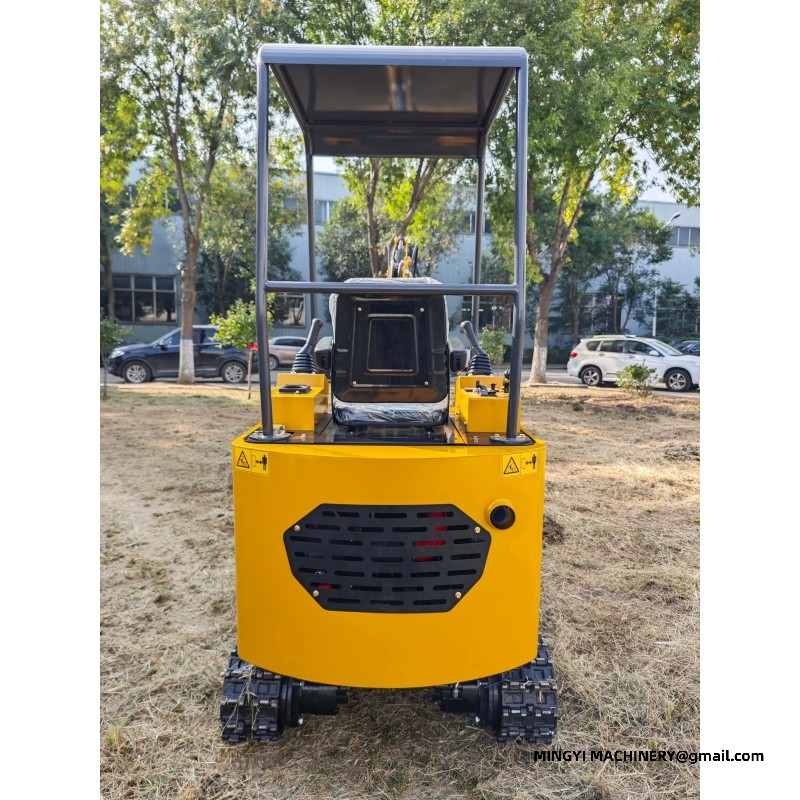
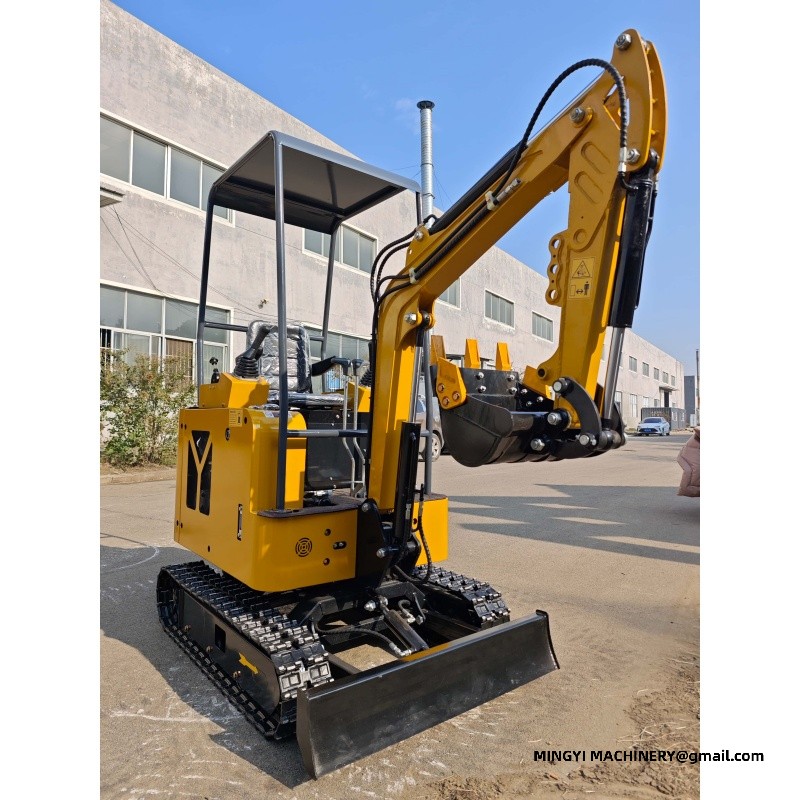
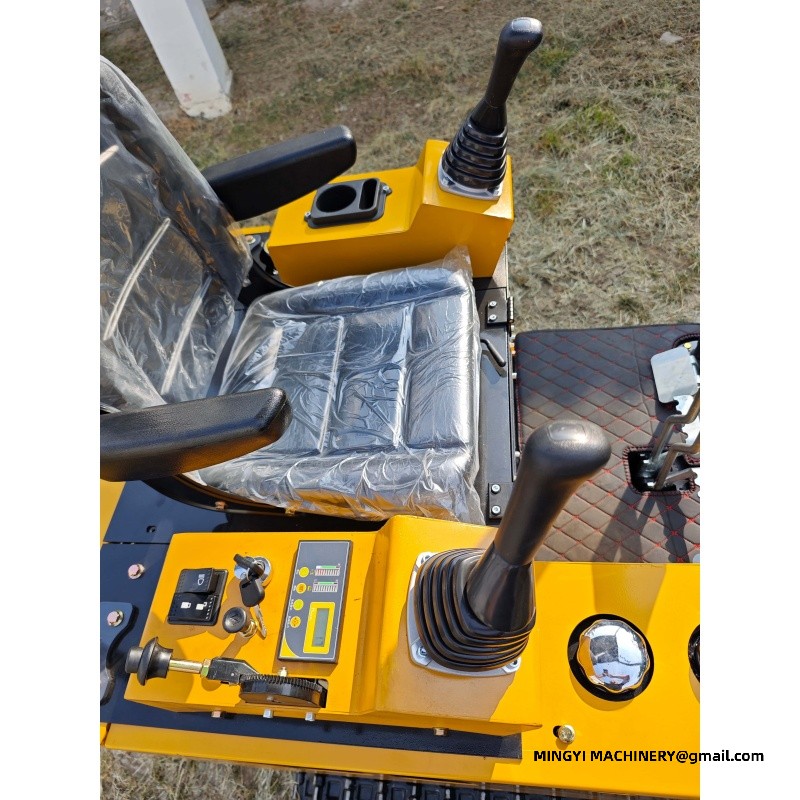
Reference specification — mini excavator range 15W 20-3W 30-1W 09L Operating weight 1400 kg (3086.47 lb) 1900 kg (4188.78 lb) 2900 kg (6393.41 lb) 1100 kg (2425.08 lb) Transport size (L×W×H) 2200 × 930 × 2250 mm 2550 × 1100 × 2200 mm 3000 × 1250 × 2780 mm 2300 × 720 × 1870 mm Max digging depth 1630 mm (64.17 in) 1800 mm (70.87 in) 2200 mm (86.61 in) 1400 mm (55.12 in) Max digging height 2750 mm (108.27 in) 2820 mm (111.02 in) 3400 mm (133.86 in) 2800 mm (110.24 in) Max dumping height 1960 mm (77.17 in) 2050 mm (80.71 in) 2400 mm (94.49 in) 1880 mm (74.02 in) Max digging radius 2900 mm (114.17 in) 3050 mm (120.08 in) 4000 mm (157.48 in) 2490 mm (98.03 in) Max digging distance 2100 mm (82.68 in) 2300 mm (90.55 in) 2800 mm (110.24 in) 2000 mm (78.74 in) Minimum turning radius 1300 mm (51.18 in) 1450 mm (57.09 in) 2000 mm (78.74 in) 1400 mm (55.12 in) Travel speed 3 km/h (1.86 mph) 5 km/h (3.11 mph) 5 km/h (3.11 mph) 3 km/h (1.86 mph) Gradeability 30° 30° 30° 30° Fuel consumption 1-1.3 L/h (0.264—0.343 gal) 2-3 L/h (0.528—0.793 gal) 2-3 L/h (0.528—0.793 gal) 1-1.3 L/h (0.264—0.343 gal) Fuel tank capacity 10 L (2.64 gal) 16 L (4.23 gal) 16 L (4.23 gal) 8 L (2.11 gal) Hydraulic oil tank 16 L (4.23 gal) 18 L (4.76 gal) 20 L (5.28 gal) 16 L (4.23 gal) Dozer blade lift height 180 mm (7.09 in) 180 mm (7.09 in) 420 mm (16.54 in) 180 mm (7.09 in) Dozer blade drop depth 210 mm (8.27 in) 210 mm (8.27 in) 210 mm (8.27 in) 210 mm (8.27 in)
Q. What size mini excavator is best for trenching?
A. The size follows the trench, not the other way round: depth and width set the model, and the access decides whether that model can reach the position. A narrow bucket on a mid size compact machine covers most cable, pipe and drainage runs.
Q. How do I dig a trench at a consistent depth?
A. Trench quality comes from the bucket width and the machine's stability rather than from size alone. A bucket matched to the trench width and a machine that holds position give a consistent line and depth, and a swing boom helps along walls.
Q. Do you supply trenching buckets?
A. Yes, bucket width is part of the tooling list. Tell us the trench width, the depth and the ground and MINGYI will include the matching bucket and teeth in the specification, with a quick coupler where the machine changes tools.
Hot, humid and dusty conditions around the machine itself
Heat and dust shorten service intervals rather than machine life. In these conditions the filters on the model in question need attention more often, and the cooling surfaces need to be kept clear to hold the working temperature.
Wear items and spares worth holding for the machine in that duty
The parts that stop a machine are rarely the parts that are hardest to find. Filters, belts, seals and the ground engaging tools on the unit on the job are easy to hold and slow to replace, which is why they belong on the shelf rather than on an order.
Reading the early symptoms on a machine built for the work
Machines rarely fail without warning. A change in sound, a slower function or a new leak on the equipment in service is the machine saying something early, and listening then takes a fraction of the time that waiting does.
E-mail : sales@mingycn.com
LINE ( ID ): mingyicn
Related pages
mini excavator for utility work · mini excavator for digging near services · mini excavator supply for fleets · PRODUCTS









