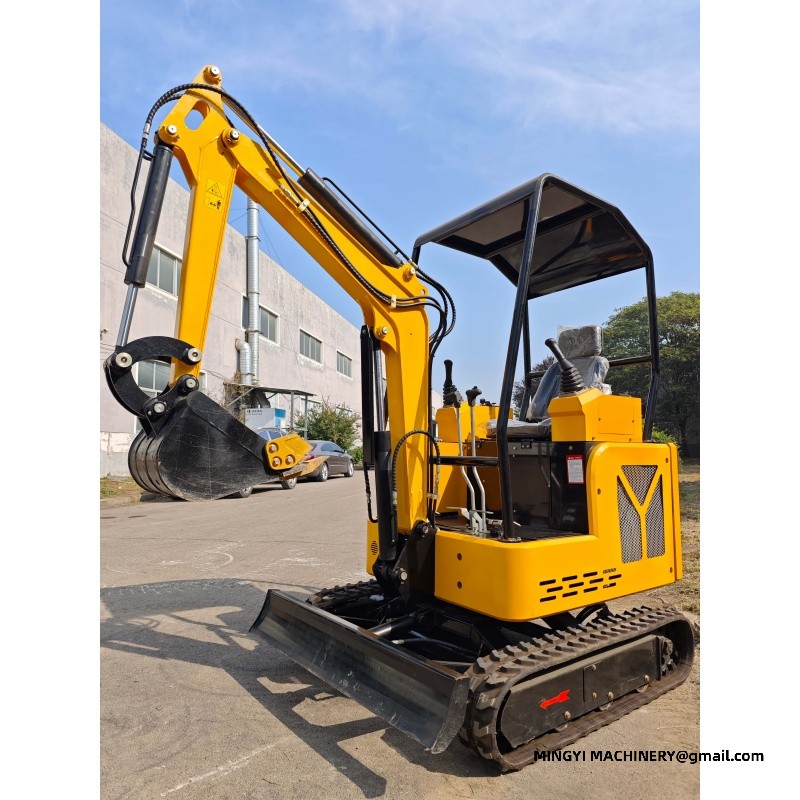
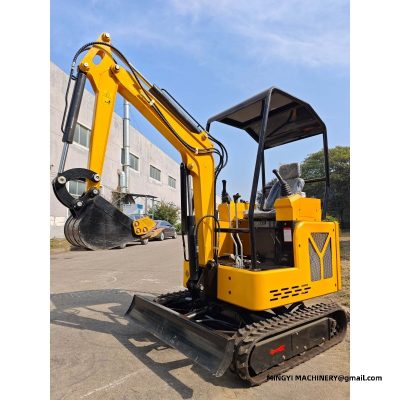
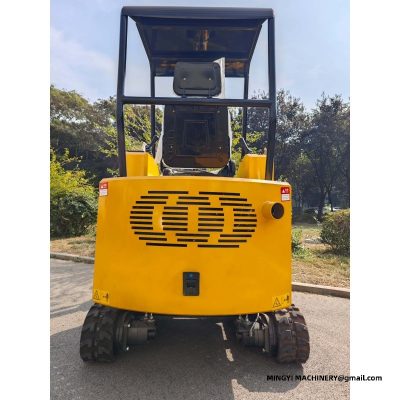
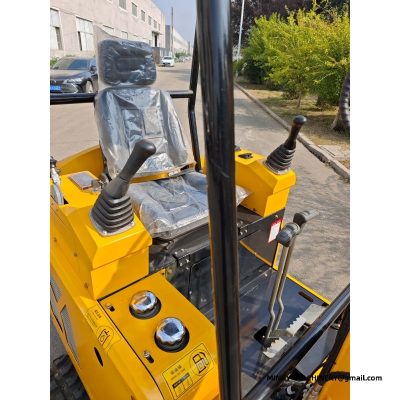
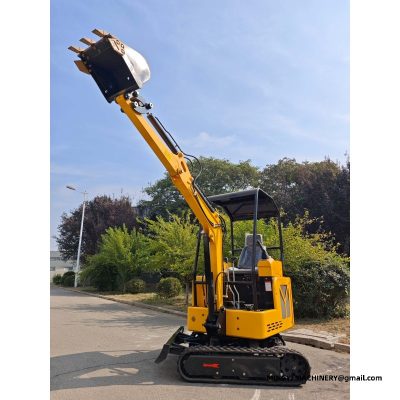
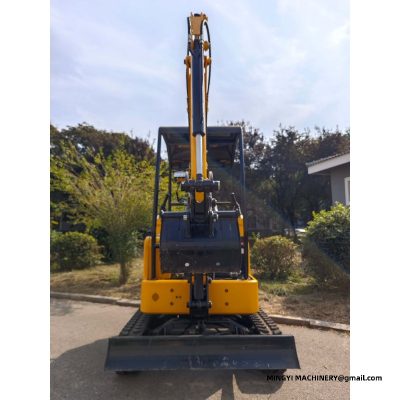
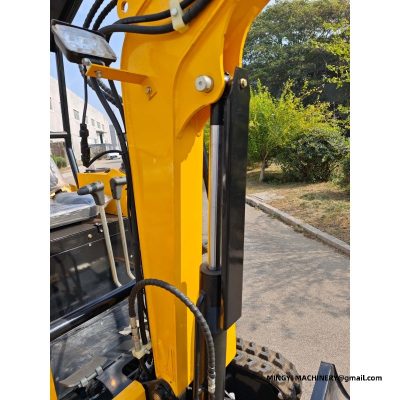
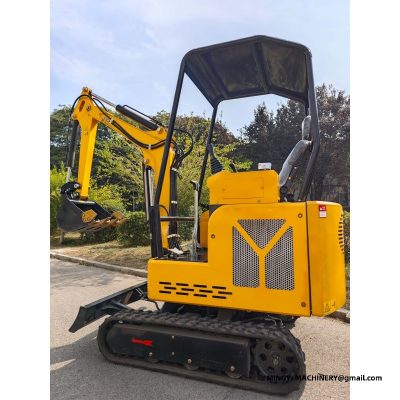
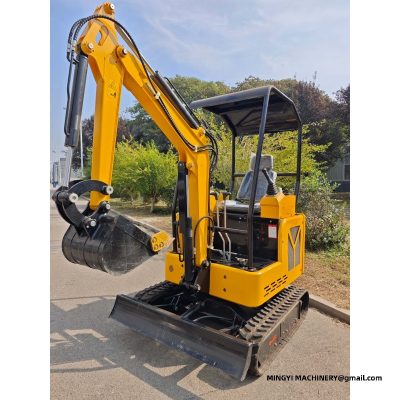
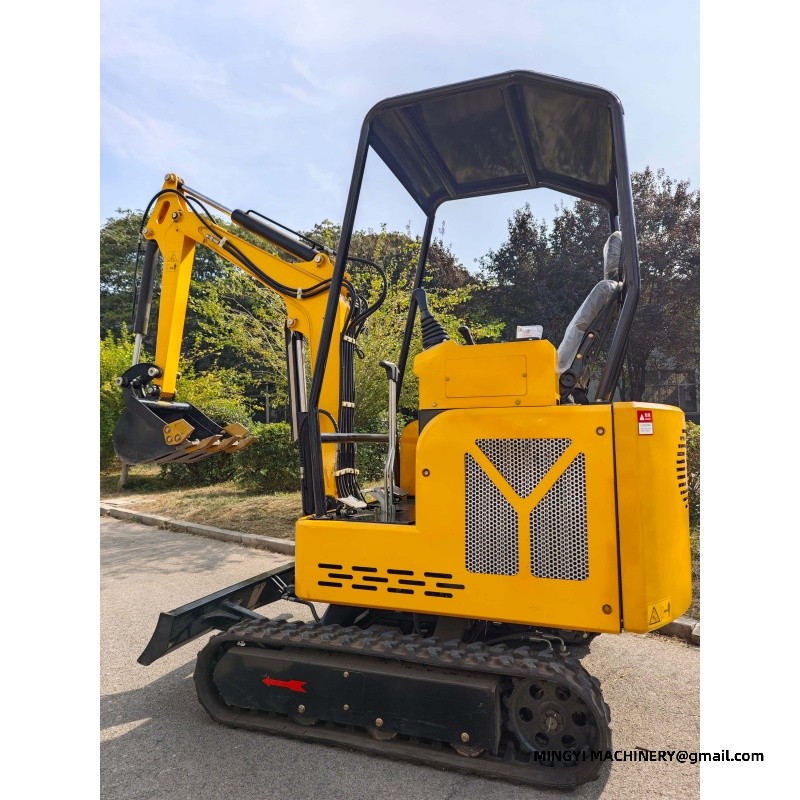
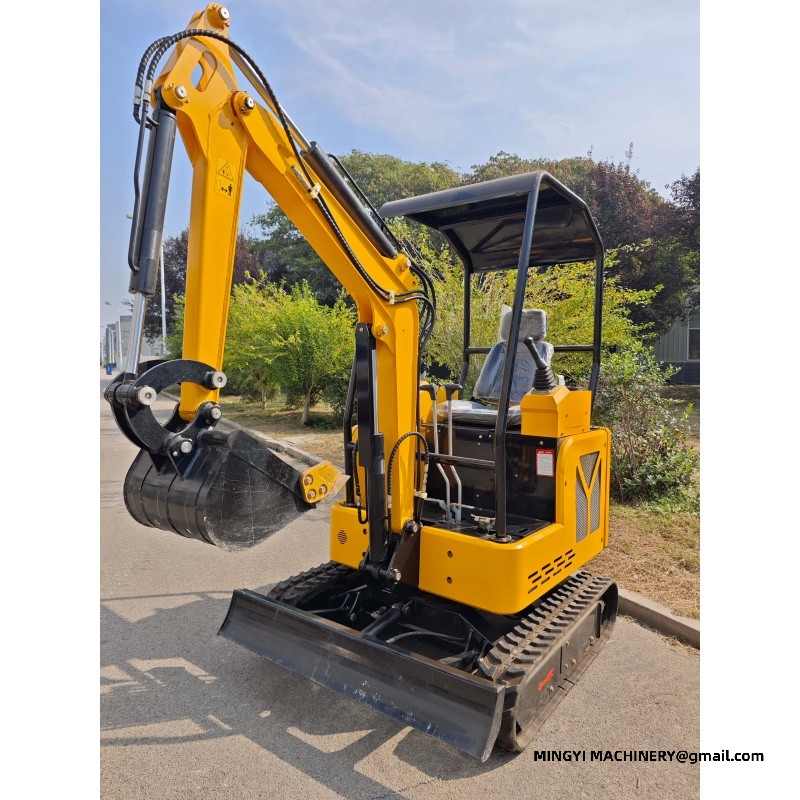
A canopy gives the operator overhead protection without closing the machine in. On sites where the machine works beside a spotter, under a low bridge or inside a building, an open-station canopy is often the practical choice.
MINGYI mini excavators can be supplied with a canopy across the 08, 12 and 18 model series.
What a canopy gives you
The canopy provides a protective roof over the operator platform, guarding against falling spoil, branches and light debris while keeping the operator fully visible to those on the ground. Visibility is a genuine safety advantage on busy sites: the operator can see hand signals and the machine can be seen by others.
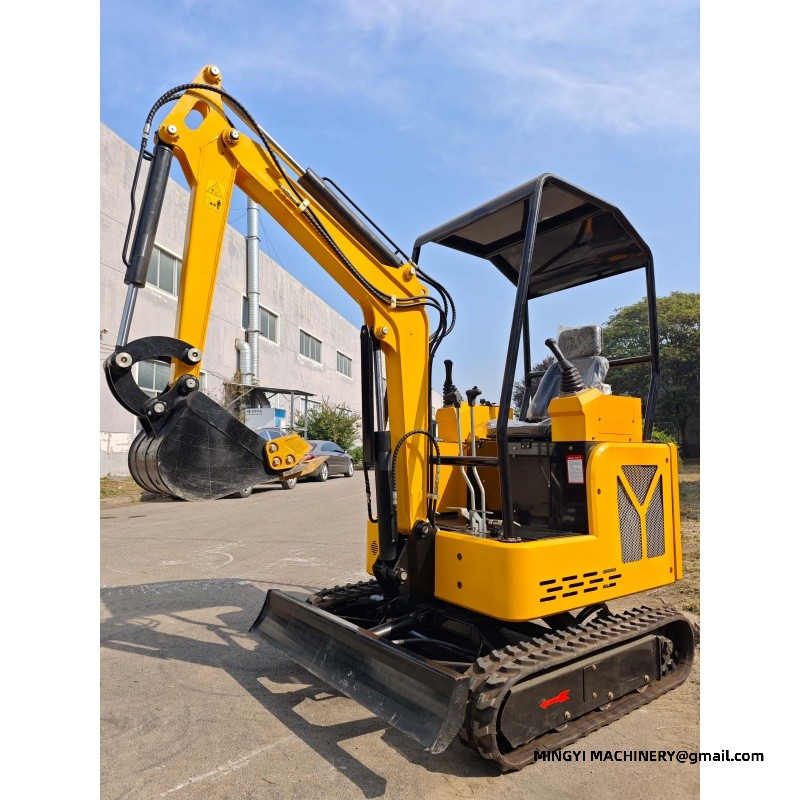
Overall machine height is also lower than a full cab version, which matters for work inside buildings, under overhangs and when loading onto a low trailer.
Where canopy machines are used
Hire fleets, landscapers and interior contractors frequently specify canopy machines because the operator works short cycles in the open air rather than sitting for long shifts. When protection from rain, heat or airborne dust becomes the priority, the same machine can be ordered with a cabin instead.
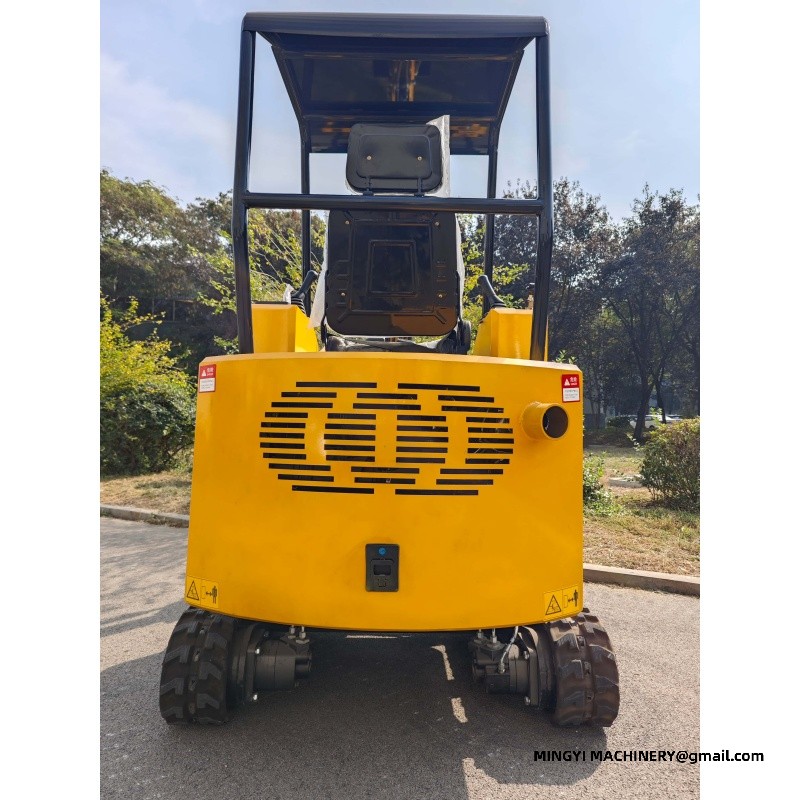
Canopy characteristics
• Overhead protection without enclosing the operator
• Full visibility of signals and of the bucket at work
• Lower transport height than a cab version
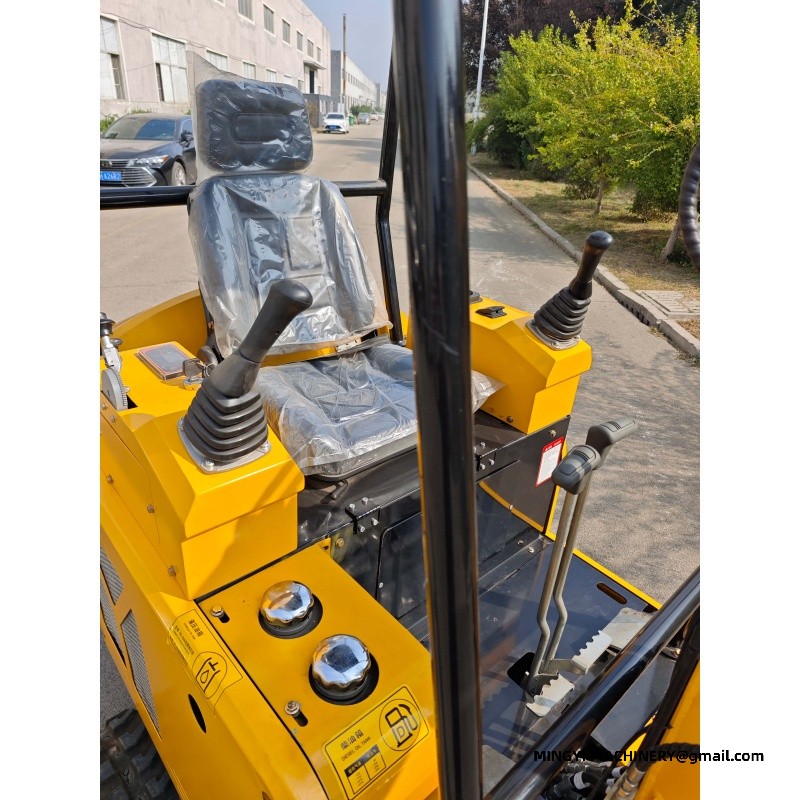
• Simple, low-maintenance open operator station
• Available on the same base machine as the cab option
Tell us where the machine will work and how long the operator shifts are, and we will advise between canopy and cabin.
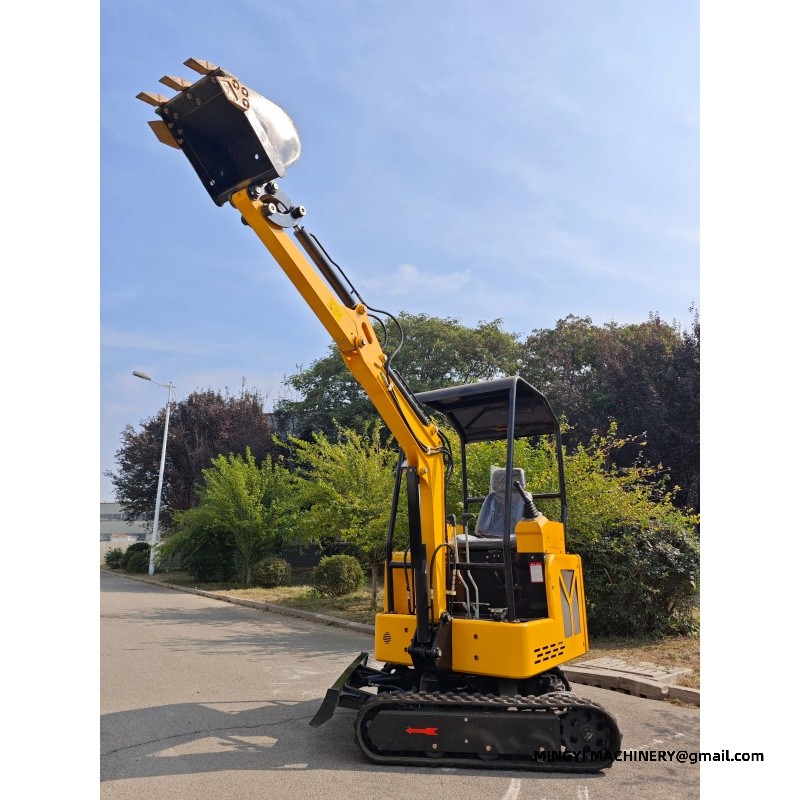
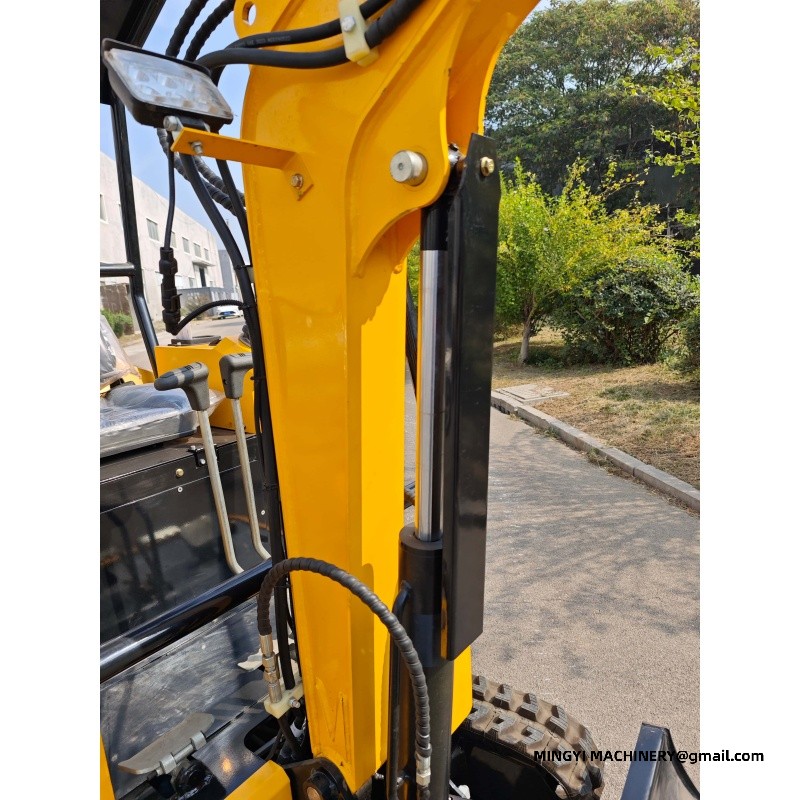
Operator technique for mini excavator with canopy Output on a compact machine comes from placement rather than power. An experienced operator keeps this class of machine working inside the swing arc, positions once and digs a full run instead of repositioning for every bucket. The second habit is tool discipline. Running the unit in daily use with the right bucket width for the trench means less spoil, less reinstatement and a cleaner job than a wide bucket and a lot of trimming. Working a mini excavator with canopy in confined spaces Clearance above matters as much as around. Door heights, pipework and overhead services set the limit for a machine of this size indoors, and measuring them first avoids a machine that arrives and cannot be used. Ventilation is the other indoor constraint. Running the equipment on site inside a closed structure needs air movement, and that is a planning item rather than something to discover after the first hour. Daily checks and maintenance on mini excavator with canopy Daily maintenance on the machine itself is a short list: engine oil level, coolant, track tension, hydraulic oil level and a look at the hoses. Ten minutes at the start of the shift prevents most of the failures that stop a machine. Track tension is the item most often neglected. The model in question run with slack tracks wears the undercarriage and can throw a track on a turn; run too tight, the same components wear from the other direction. Landscaping and ground care with mini excavator with canopy Landscape contractors use the machine in that duty for planting holes, pond excavation, grading and retaining work. The machine is light enough to cross finished lawn and narrow enough to work between established trees. On soft landscape work the surface is the constraint. The unit on the job on rubber tracks crosses turf without stripping it, which is why the same jobs are not given to a wheeled machine. Hydraulic circuits on a mini excavator with canopy Flow and pressure are matched to the tool, not to the machine size. Asking for the attachment list first means a machine built for the work leaves the factory with circuits that suit the heaviest tool the buyer intends to run. Hydraulic specification is easier to settle at build time than to correct later. The equipment in service delivered without auxiliary lines can still dig, but every additional tool becomes a retrofit project. Matching this class of machine to ground conditions Soft ground is a flotation problem, not a power problem. The unit in daily use on wide rubber tracks crosses lawn, sand and cultivated soil that would stop a narrower machine or a wheeled unit of the same capacity. Hard and abrasive ground reverses the specification. On rock, demolition rubble or sharp gravel, steel tracks with rubber blocks on a machine of this size survive conditions that cut a rubber belt quickly. Export packing and shipping of the equipment on site Machines leave the factory prepared for container or flat rack shipment. The machine itself is normally shipped with the attachment set and the spare parts list agreed in advance so the container is planned once. Export documentation, decals and paint are settled before packing. Asking for them with the model in question order avoids a second handling session and keeps the machine on the booked vessel. Lifting and material handling with the machine in that duty Lifting with a machine built to dig needs a plan. The load, the radius and the ground under the machine built for the work all matter, and the safe figure is the one on the chart rather than the one that looks possible. Ground condition under the machine is part of every lift. Soft or uneven support is the common factor in handling incidents, and checking it takes less time than recovering the unit on the job that has settled. Interior and light demolition with the equipment in service Interior demolition is an access and a weight question. This class of machine that fits through a doorway and works on a suspended floor does jobs that would otherwise be done by hand or by a larger machine that cannot enter. Dust, debris clearance and floor loading all argue for a compact machine indoors. The unit in daily use spreads its weight over a wider track footprint than a wheeled machine of similar capacity. Running a machine of this size in a rental fleet The specification that rents best is usually the simplest one to explain at the counter. The equipment on site with rubber tracks, a canopy and a coupler covers the majority of weekend and short-term hires. Fleet buyers also weigh transport. The machine itself that a customer can tow on a normal licence and a standard trailer is a hire that does not need a delivery truck, which changes how often it goes out. Engine options behind the model in question Power unit selection is settled against the service network the buyer already uses. MINGYI offers Kubota D722, Kubota D902, YANMAR, Changchai, Laidong, Runtong, YARMAX, Youpu 2V80 and Youpu 195, so a fleet running one brand of engine can keep the same filters, the same parts supplier and the same mechanic. Two buyers can order the same the machine in that duty and receive different engines. The decision is rarely about peak power; it is about which parts counter is closest to the site and which engine the local mechanic already knows. Specifying the unit on the job against a job list Buyers who skip this step either over-buy or under-buy. A machine built for the work specified only from machine size tends to arrive without the coupler, the circuits or the track type the work actually needs. Useful information to send with an enquiry includes working width, required digging depth, ground conditions and the attachment set. Those four items let the factory specify the equipment in service that fits rather than a generic build. Trailering and moving this class of machine Transport weight and width decide whether a machine needs a specialist haulier. The unit in daily use sized to travel on a standard plant trailer behind a suitable vehicle moves with the crew rather than on a scheduled low loader. Loading practice matters as much as the numbers. A machine of this size is driven up ramps under its own power with the boom lowered and the tracks aligned, and secured at the points the manufacturer specifies. Specification data for the equipment on site Where the machine itself is being specified for a job list, the table below gives the factory figures that matter most: what the machine weighs, how deep and how far it works, and what it measures on a trailer. These are the reference figures for the model in question. MINGYI confirms the final build sheet, including engine and attachment choices, against the destination and the job list before production. A swing boom lets the machine dig parallel to its tracks without repositioning, which is what makes trenching beside a wall or a fence practical. On the machine in that duty this is often the option that decides whether a job is possible at all. Extended and offset boom configurations change reach and working range. The unit on the job with a longer arm reaches further but lifts less at full extension, so the specification is set against the deepest and furthest point on the job list.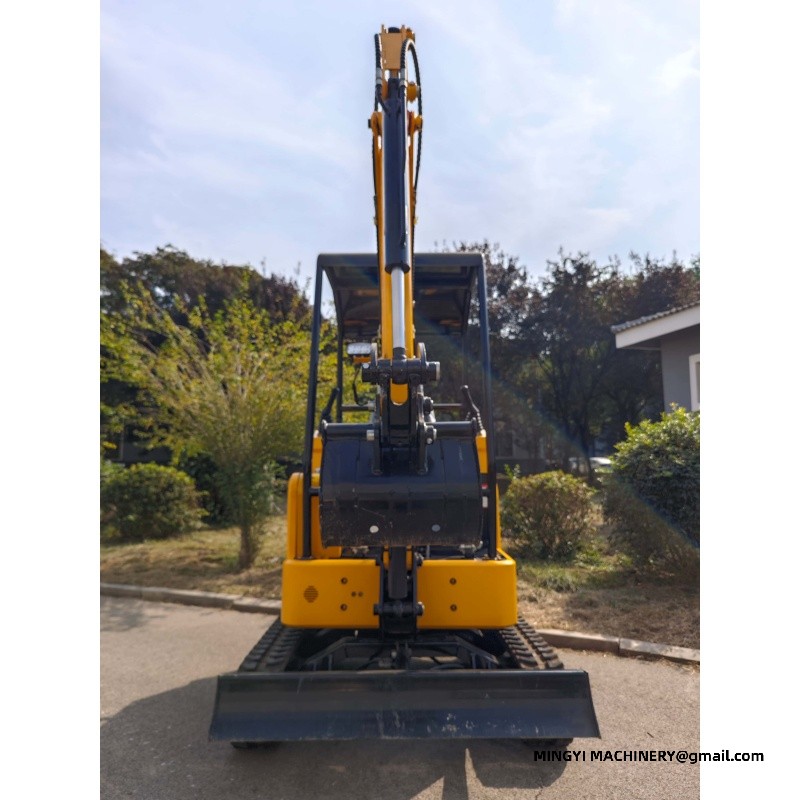
Reference specification — mini excavator range 20-1W 20-1WL 20-3W 30-2W Operating weight 1800 kg (3968.32 lb) 1900 kg (4188.78 lb) 1900 kg (4188.78 lb) 2700 kg (5952.48 lb) Transport size (L×W×H) 2550 × 1100 × 2200 mm 2550 × 1100 × 2200 mm 2550 × 1100 × 2200 mm 3000 × 1100 × 2700 mm Max digging depth 1800 mm (70.87 in) 1800 mm (70.87 in) 1800 mm (70.87 in) 2200 mm (86.61 in) Max digging height 2820 mm (111.02 in) 2820 mm (111.02 in) 2820 mm (111.02 in) 3000 mm (118.11 in) Max dumping height 2050 mm (80.71 in) 2050 mm (80.71 in) 2050 mm (80.71 in) 2000 mm (78.74 in) Max digging radius 3050 mm (120.08 in) 3050 mm (120.08 in) 3050 mm (120.08 in) 3800 mm (149.61 in) Max digging distance 2300 mm (90.55 in) 2300 mm (90.55 in) 2300 mm (90.55 in) 3050 mm (120.08 in) Minimum turning radius 1450 mm (57.09 in) 1450 mm (57.09 in) 1450 mm (57.09 in) 1750 mm (68.9 in) Travel speed 5 km/h (3.11 mph) 5 km/h (3.11 mph) 5 km/h (3.11 mph) 7 km/h (4.35 mph) Gradeability 30° 30° 30° 30° Fuel consumption 2-3 L/h (0.528—0.793 gal) 2-3 L/h (0.528—0.793 gal) 2-3 L/h (0.528—0.793 gal) 2-3 L/h (0.528—0.793 gal) Fuel tank capacity 16 L (4.23 gal) 16 L (4.23 gal) 16 L (4.23 gal) 16 L (4.23 gal) Hydraulic oil tank 18 L (4.76 gal) 18 L (4.76 gal) 18 L (4.76 gal) 20 L (5.28 gal) Dozer blade lift height 180 mm (7.09 in) 180 mm (7.09 in) 180 mm (7.09 in) 230 mm (9.06 in) Dozer blade drop depth 210 mm (8.27 in) 210 mm (8.27 in) 210 mm (8.27 in) 280 mm (11.02 in)
Q. What is a machine built for the work used for?
A. The open canopy is the choice for work where headroom, ventilation and low overall height matter: indoor demolition, basement work, greenhouses and hot climate sites. It keeps the operator protected from falling material while leaving the machine low enough to enter buildings.
Q. Is a canopy machine simpler than a cab machine?
A. Yes, the canopy build is the lower effort option on the same chassis, which is one reason it is common on machines used for indoor and agricultural work. The difference is in the operator station, not in the digging equipment.
Q. Can a canopy machine work outdoors in rain?
A. It can, but the operator is exposed, so productivity in wet weather is lower than with an enclosed cab. If most of your work is outdoors in poor weather, order the cab instead, or specify a machine that can be used in both conditions.
Commissioning the equipment in service on site
The first hour on site should be slow. Before this class of machine is put to work the fluid levels are rechecked after transport, the fasteners are gone over and the machine is run light so that anything loosened in transit shows up early.
Cold weather and winter care for the unit in daily use
A cold start is easier when the machine is prepared the night before. The routine that keeps a machine of this size working through winter is mostly a matter of fuel, battery and patience in the first ten minutes of the day.
E-mail : sales@mingycn.com
LINE ( ID ): mingyicn
Related pages
mini excavator with cabin · zero tail swing mini excavator · mini excavator with grapple bucket · PRODUCTS









