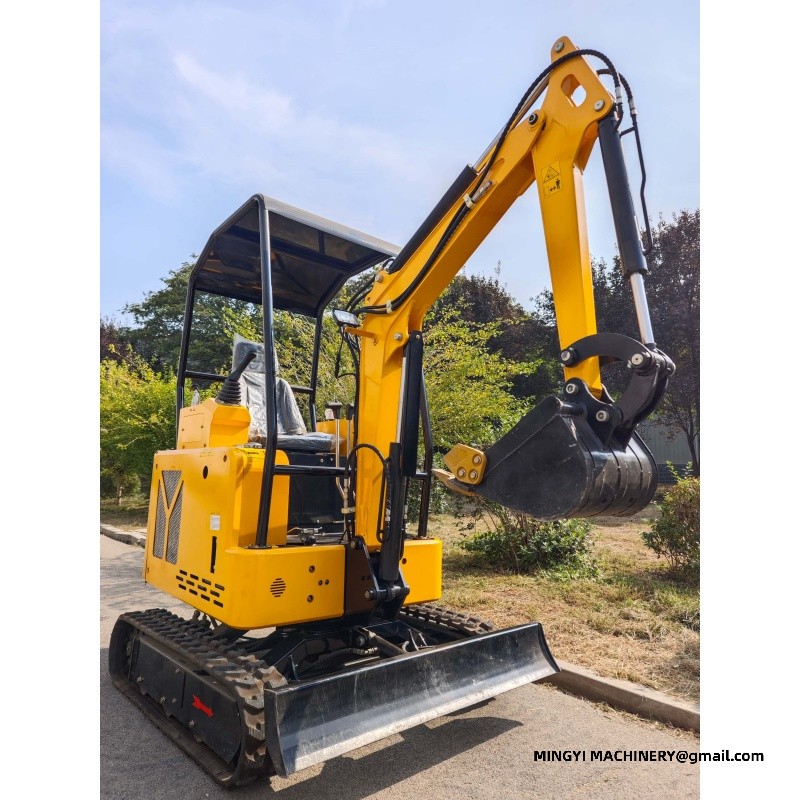
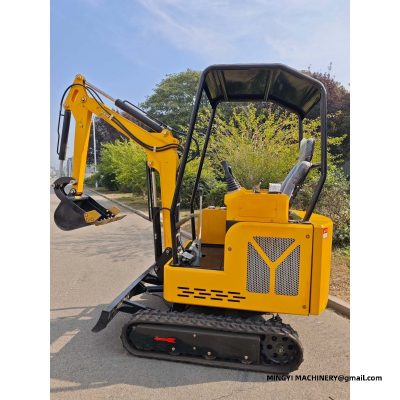
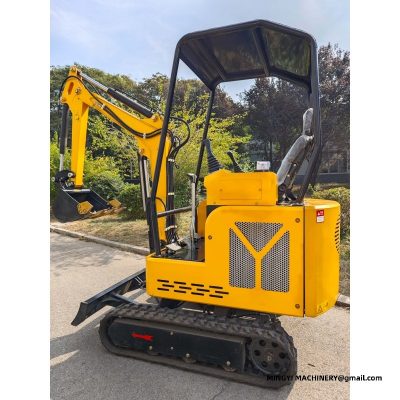
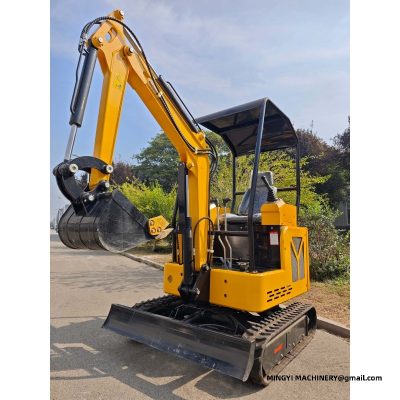
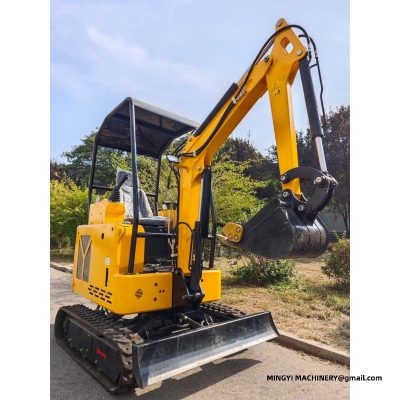
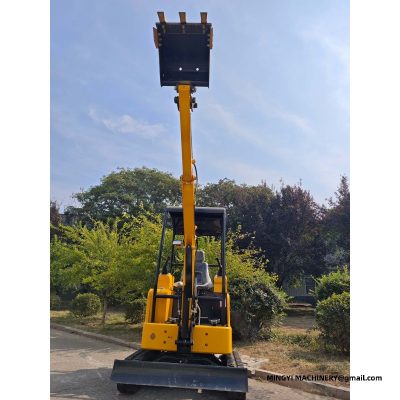
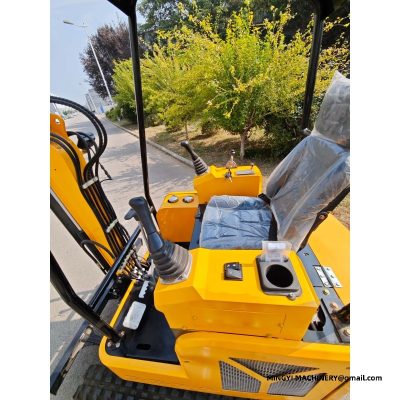
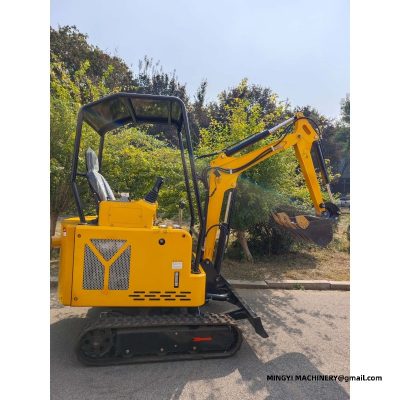
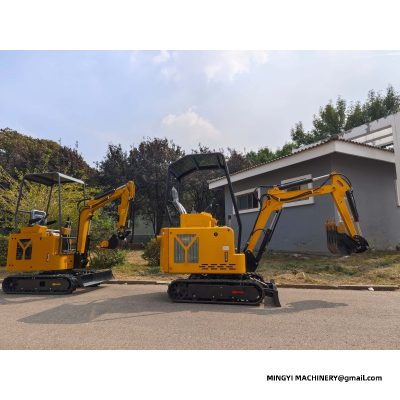
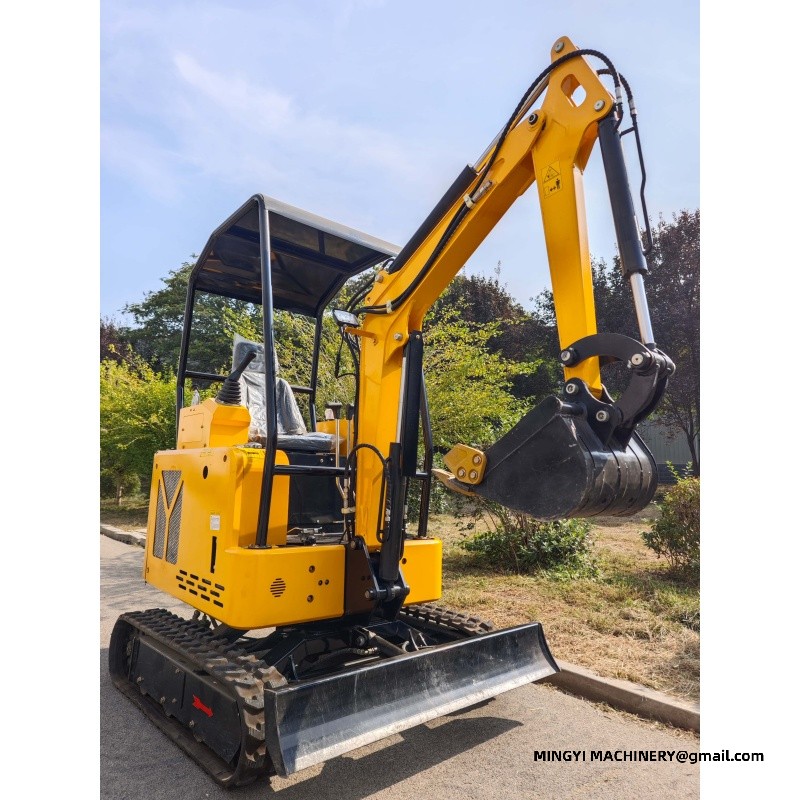
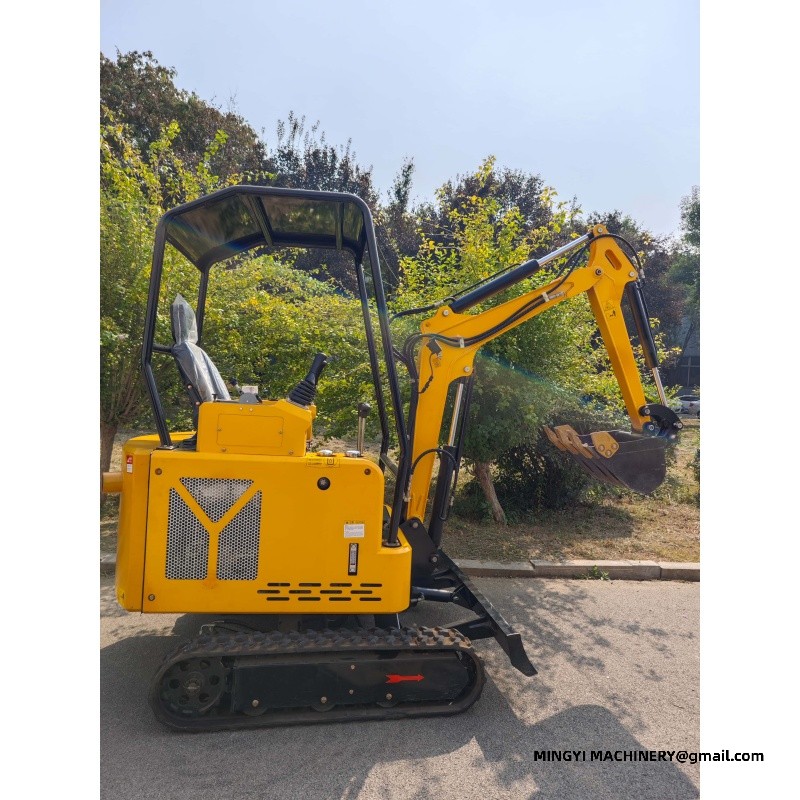
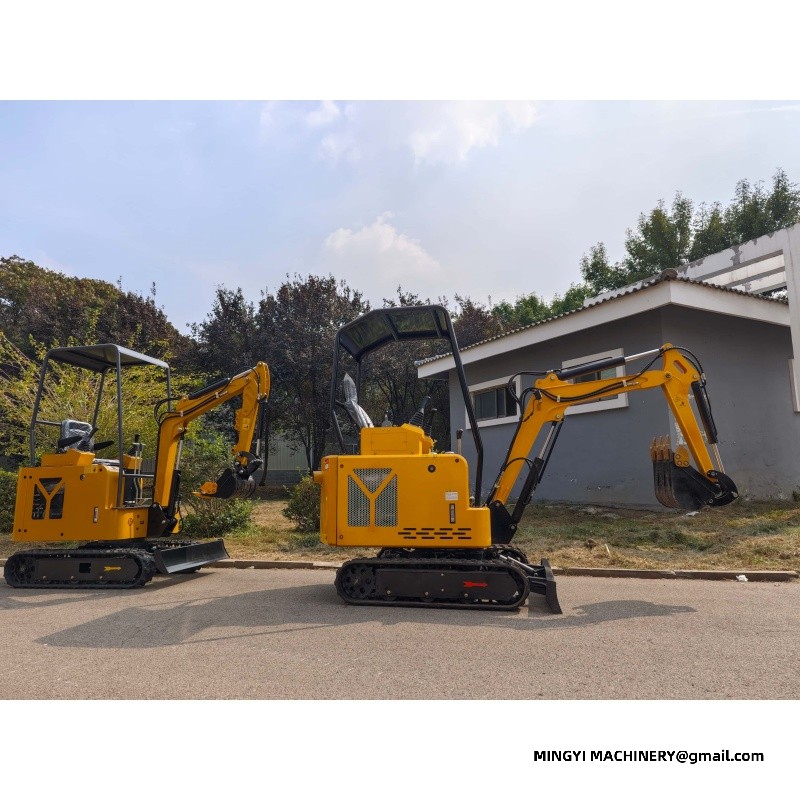
Zero tail swing means the rear of the upper structure stays within the width of the tracks as the machine slews. Nothing overhangs the undercarriage, so the machine can turn and work hard against a wall, a fence line or a traffic lane without the counterweight swinging into it.
MINGYI mini excavators use a close-coupled swing geometry that keeps the tail inside the track footprint across the model range.
Why the tail matters more than the bucket
On a confined site the limiting factor is usually not digging force but where the machine can physically point. A conventional tail swing machine needs clear space behind it to slew; in a narrow service strip, an alley or against a boundary wall that space does not exist.
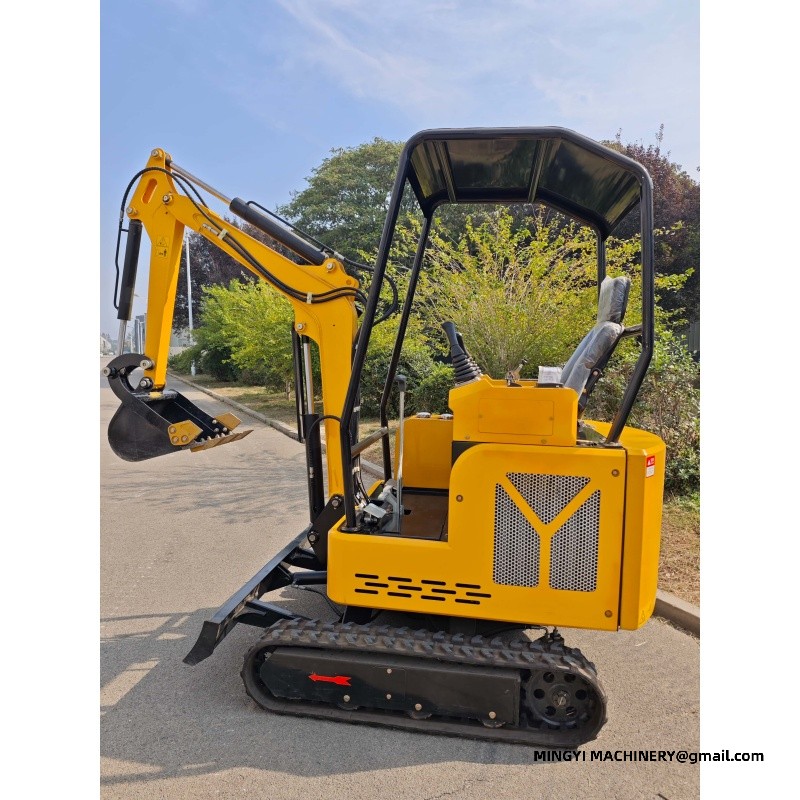
With the tail inside the tracks, the machine can work parallel to a wall, slew through 180 degrees in a corridor barely wider than the undercarriage, and track down an alley without removing gates or fences.
Working beside traffic and structures
Because nothing overhangs the rear, the machine can be positioned with the tracks against the kerb and still slew fully, which keeps the upper structure clear of the running lane. The same geometry protects walls, glazing and scaffolding on refurbishment sites.
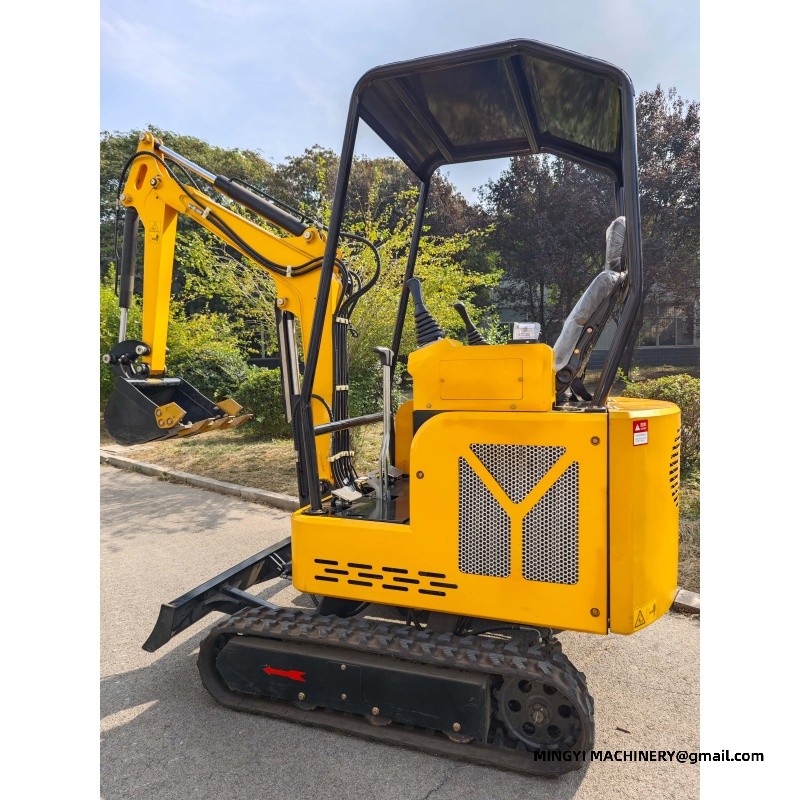
Zero tail swing advantages
• Full slewing in corridors only as wide as the machine
• No rear counterweight entering a traffic lane or wall
• Safe operation along boundaries, fences and glazing
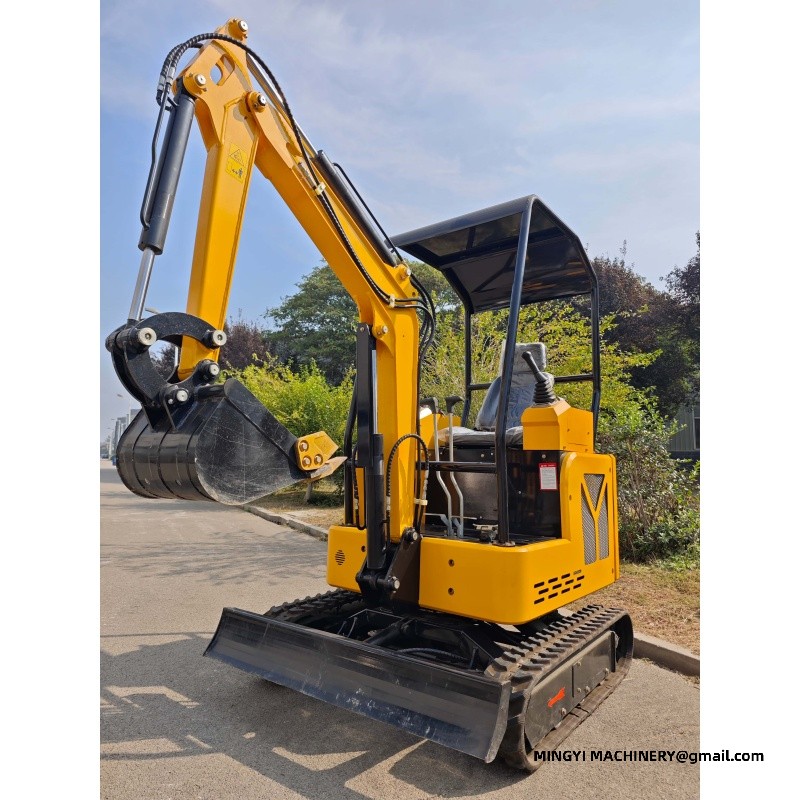
• Easier positioning in basement and interior work
• Reduced need for banksmen and temporary barriers
Tell us the narrowest point the machine has to pass or work in and we will confirm the swing envelope.
Attachments that turn zero tail swing mini excavator into several machines The base machine is a carrier; the tool on the end of the arm decides the task. This class of machine fitted with a toothed bucket digs, and the same machine with a breaker, an auger or a grab does work that would otherwise need a second unit on site. Most of the daily variety on the unit in daily use comes from the attachment rack rather than from the machine itself. Bucket, breaker, auger, ripper, rake and grab cover the large majority of the work a contractor will see. Trailering and moving zero tail swing mini excavator Transport weight and width decide whether a machine needs a specialist haulier. A machine of this size sized to travel on a standard plant trailer behind a suitable vehicle moves with the crew rather than on a scheduled low loader. Detachable components reduce transport length. The equipment on site built with a removable arm section or a folding step fits a shorter trailer and may avoid an oversize movement permit. Hydraulic circuits on a zero tail swing mini excavator Auxiliary hydraulic lines are what let a machine drive a tool rather than only a bucket. The machine itself specified with the right circuits and flow runs a breaker or an auger without an add-on power pack bolted to the frame. Flow and pressure are matched to the tool, not to the machine size. Asking for the attachment list first means the model in question leaves the factory with circuits that suit the heaviest tool the buyer intends to run. Working a zero tail swing mini excavator through the seasons Weather decides which days are productive. Rain turns some ground unusable and cold changes how the machine in that duty starts and warms up, so planning the wet months around maintenance is more useful than planning around output. Heat and dust are as limiting as rain. Air intake condition and cooling cleanliness decide how the unit on the job behaves in a dry season, and both are checked in a minute rather than repaired later. Lifting and material handling with a zero tail swing mini excavator Stability changes with reach. A load a machine built for the work handles close in becomes a different proposition at full extension, so the working radius belongs in the plan before the lift rather than during it. Ground condition under the machine is part of every lift. Soft or uneven support is the common factor in handling incidents, and checking it takes less time than recovering the equipment in service that has settled. Orchard, vineyard and farm use of this class of machine Orchard and vineyard work is carried out between rows. The unit in daily use with a narrow chassis and a swing boom works down the row without damaging the trees, which is the reason a full-size machine is not used at all. Ditching, fertilising and drainage on farmland suit a machine of this size because the work is spread over a large area in short bursts. The machine travels behind a pickup and works where it stops. Operator technique for the equipment on site The second habit is tool discipline. Running the machine itself with the right bucket width for the trench means less spoil, less reinstatement and a cleaner job than a wide bucket and a lot of trimming. Stability is the third. The model in question working across the tracks rather than over the corners keeps the machine steady and the undercarriage loaded evenly, which shows up as track life at the end of the season. Running the machine in that duty in a rental fleet Rental fleets buy for utilisation, not for a single job. The unit on the job with a quick coupler and a common attachment standard is hired more often because it suits more of the calls that come in. The specification that rents best is usually the simplest one to explain at the counter. A machine built for the work with rubber tracks, a canopy and a coupler covers the majority of weekend and short-term hires. Noise, dust and working near occupied buildings Work near housing or occupied premises brings constraints that open sites do not. Start times, exhaust condition and how often the equipment in service needs to reverse are the practical limits that neighbours notice. Enclosure and machine condition both reduce noise. This class of machine with intact panels, sound mounts and a maintained exhaust is measurably quieter than the same machine with loose guards, and the difference matters on restricted sites. Hiring versus owning the unit in daily use Availability is part of the decision. Owning a machine of this size means it is there on the day the ground is ready; hiring means competing for the same machine at the same time as everyone else in the season. Ownership brings obligations that hiring does not. Storage, servicing, insurance and an operator are the items to set against the hire rate before deciding which way the equipment on site should be supplied. Landscaping and ground care with the machine itself Grass cutting heads, rakes and tillers extend the model in question into ground care. The same carrier that digs a border in spring can cut and clear the same area later in the season. On soft landscape work the surface is the constraint. The machine in that duty on rubber tracks crosses turf without stripping it, which is why the same jobs are not given to a wheeled machine. Track choice for the unit on the job Undercarriage selection is a ground question, not a preference question. A machine built for the work running on finished paving needs rubber; the same machine on demolition rubble or rock wears rubber quickly, so steel with rubber blocks becomes the better answer over a full season. Track type changes what the machine can cross and what it leaves behind. Buyers specify rubber for lawns, driveways and municipal work, and steel with rubber blocks for sites where sharp material would cut a rubber belt in a week. Specification data for the equipment in service Buyers comparing this class of machine usually start from four numbers - weight, digging depth, reach and transport width - because those are the ones that decide whether the machine can be delivered and whether it can do the job once it is there. These are the reference figures for the unit in daily use. MINGYI confirms the final build sheet, including engine and attachment choices, against the destination and the job list before production. Track tension is the item most often neglected. A machine of this size run with slack tracks wears the undercarriage and can throw a track on a turn; run too tight, the same components wear from the other direction. Greasing is the second item. The slew ring, the boom and arm pins and the bucket linkage on the equipment on site take grease daily in dusty work, and the intervals shorten further when the machine is used in water or mud.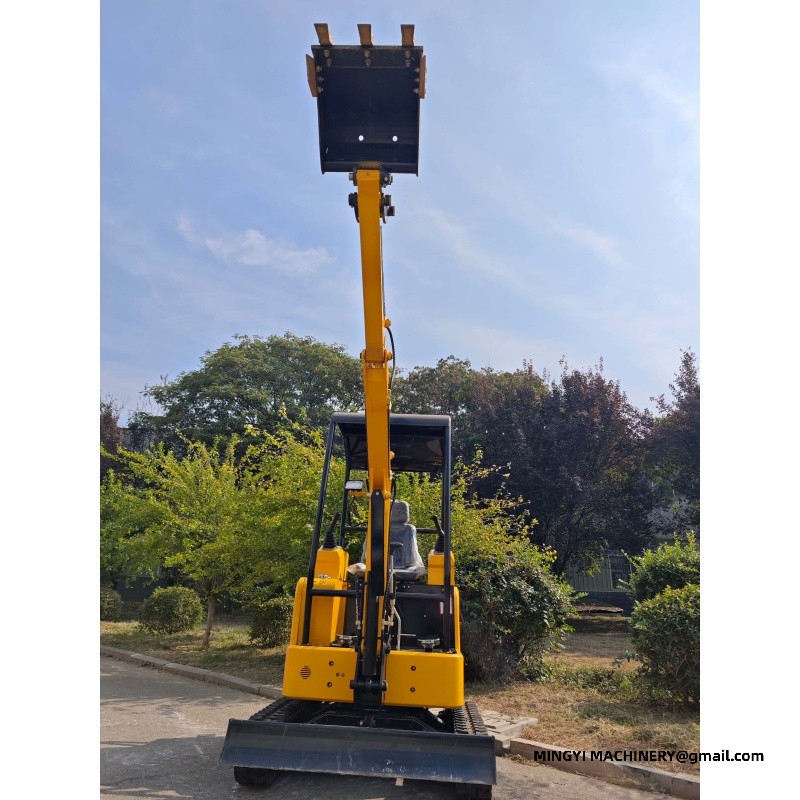
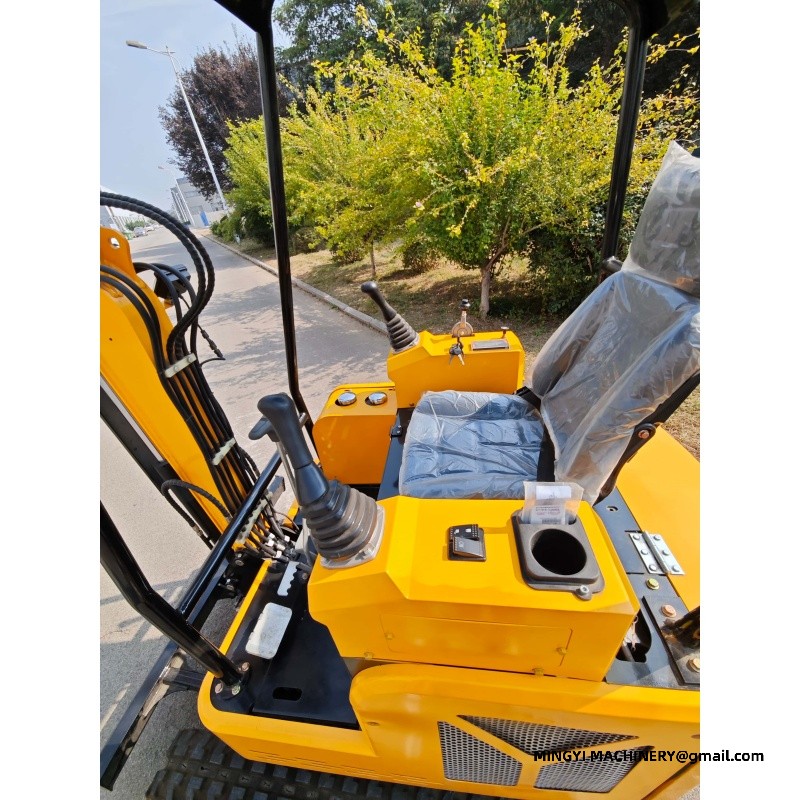
Reference specification — mini excavator range 12W 13W 15L 20-2L Operating weight 1200 kg (2645.55 lb) 1300 kg (2866.01 lb) 1400 kg (3086.47 lb) 1900 kg (4188.78 lb) Transport size (L×W×H) 2200 × 930 × 2250 mm 2200 × 930 × 2250 mm 2200 × 930 × 2250 mm 2600 × 1300 × 2344 mm Max digging depth 1630 mm (64.17 in) 1630 mm (64.17 in) 1700 mm (66.93 in) 2100 mm (82.68 in) Max digging height 2750 mm (108.27 in) 2750 mm (108.27 in) 2750 mm (108.27 in) 2880 mm (113.39 in) Max dumping height 1960 mm (77.17 in) 1960 mm (77.17 in) 1960 mm (77.17 in) 2100 mm (82.68 in) Max digging radius 2900 mm (114.17 in) 2900 mm (114.17 in) 2900 mm (114.17 in) 3215 mm (126.57 in) Max digging distance 2100 mm (82.68 in) 2100 mm (82.68 in) 2300 mm (90.55 in) 2460 mm (96.85 in) Minimum turning radius 1300 mm (51.18 in) 1300 mm (51.18 in) 1450 mm (57.09 in) 1587 mm (62.48 in) Travel speed 3 km/h (1.86 mph) 3 km/h (1.86 mph) 3 km/h (1.86 mph) 5 km/h (3.11 mph) Gradeability 30° 30° 30° 30° Fuel consumption 1-1.3 L/h (0.264—0.343 gal) 1-1.3 L/h (0.264—0.343 gal) 1-1.3 L/h (0.264—0.343 gal) 2-3 L/h (0.528—0.793 gal) Fuel tank capacity 10 L (2.64 gal) 10 L (2.64 gal) 10 L (2.64 gal) 16 L (4.23 gal) Hydraulic oil tank 16 L (4.23 gal) 16 L (4.23 gal) 16 L (4.23 gal) 18 L (4.76 gal) Dozer blade lift height 180 mm (7.09 in) 180 mm (7.09 in) 180 mm (7.09 in) 180 mm (7.09 in) Dozer blade drop depth 210 mm (8.27 in) 210 mm (8.27 in) 210 mm (8.27 in) 210 mm (8.27 in)
Q. What is the machine itself?
A. One whose rear does not project beyond the tracks as the machine slews. That means it can turn beside a wall, in a lane or between structures without the rear counterweight making contact with anything.
Q. When do I need zero tail swing?
A. Wherever the machine works against a boundary, in a single lane or in an enclosed yard. On those sites a conventional machine either cannot turn safely or has to be repositioned constantly, which takes more time than the feature takes to specify.
Q. Does zero tail swing reduce the machine's capability?
A. It changes the machine's layout rather than removing capability, and the digging equipment still follows the model chosen. Tell us the working positions and the access width and MINGYI will confirm whether this layout is the right one.
Planning the season around the model in question
Seasonal work rewards a machine that can change duty. Through the year the machine in that duty may move from one task to another, and the attachment list should be chosen for the whole year rather than for the first job.
Keeping a service record for the unit on the job
Patterns show up in the record before they show up in the machine. Rising oil consumption or a filter that keeps blocking on a machine built for the work is obvious on paper long before it becomes a failure on site.
E-mail : sales@mingycn.com
LINE ( ID ): mingyicn
Water, mud and recovery planning for zero tail swing mini excavator
Wading to the hub, the track frame or the axle line is a limit rather than a target, and it is printed in the manual for a reason.
Greasing before and after wet work pushes water out of the pins, and it is the single habit most worth keeping through a muddy season.
Related pages
swing boom mini excavator · mini excavator attachments · mini excavator with post hole auger · PRODUCTS









