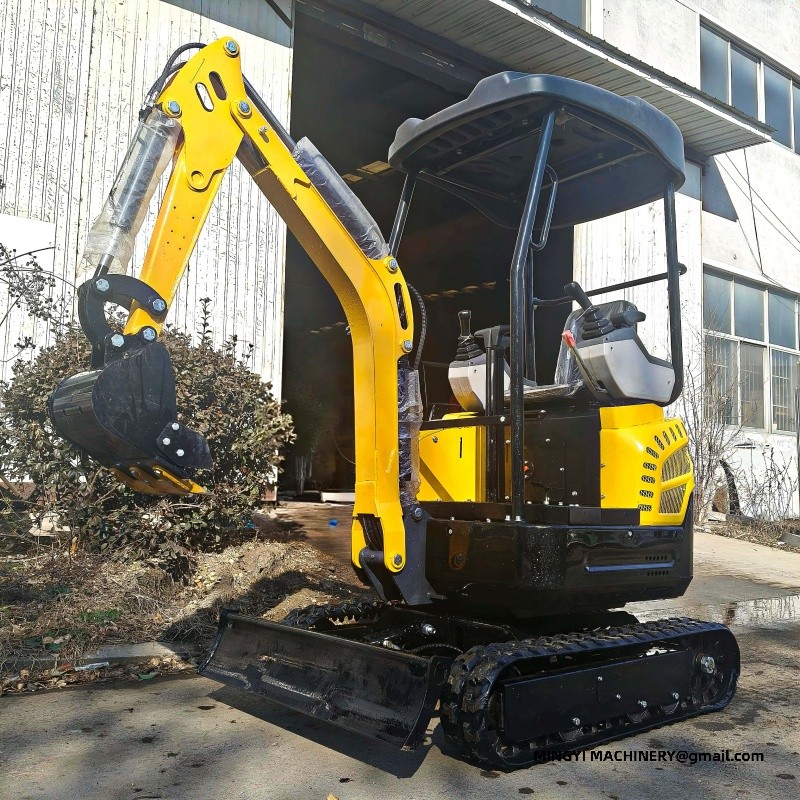
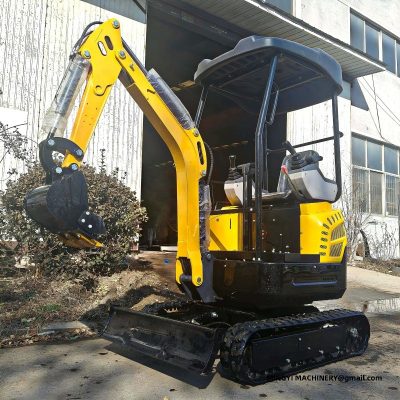
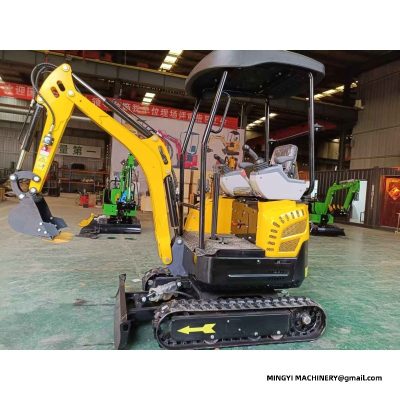
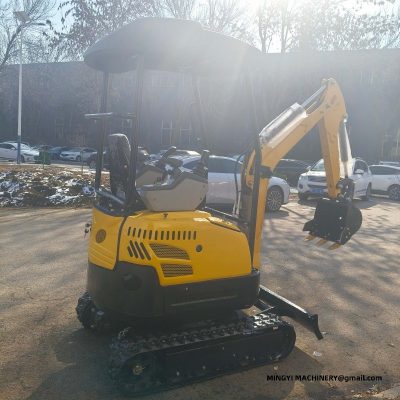
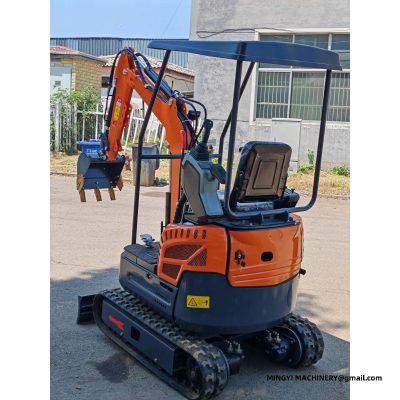
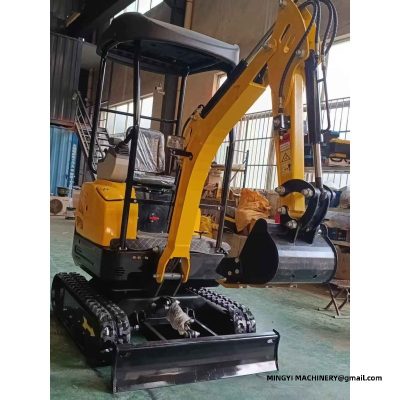
Mingyi Machinery manufactures mini excavators in China and sells them directly to buyers and distributors overseas. The machines are built in the 08, 12 and 18 model series, covering the compact classes used for construction, municipal, landscaping and agricultural work.
Buying from the manufacturer means the specification is set by the order rather than by what happens to be in stock.
What we actually build
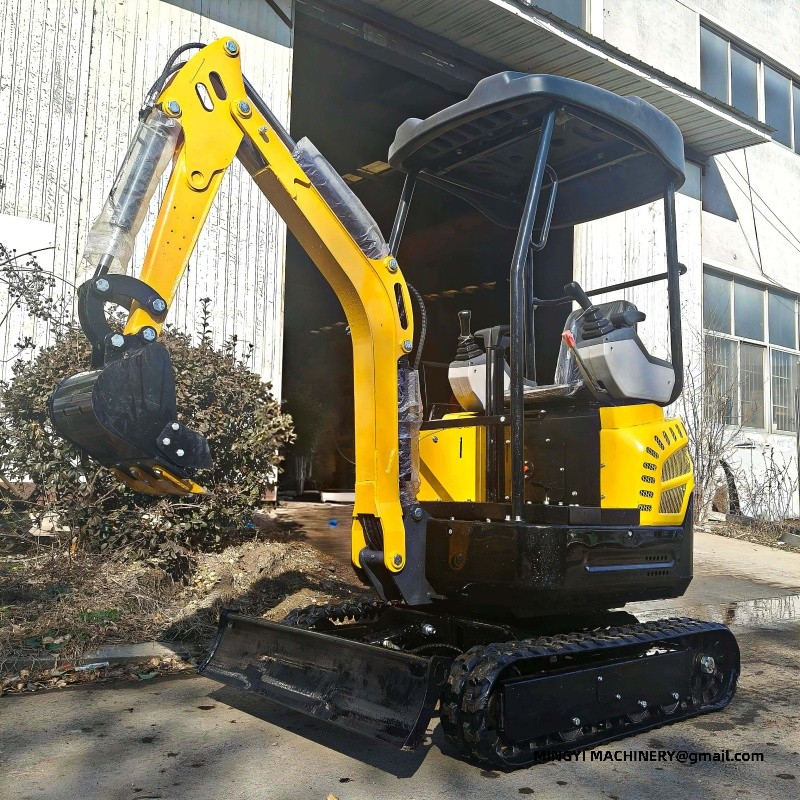
Our production covers compact crawler excavators with rubber or steel tracks, canopy or cab operator stations, and a common quick-change attachment interface. Engine options across the range include Kubota D722 and D902, YANMAR, Changchai, Laidong, Runtong, YARMAX and Youpu units.
The attachment range is manufactured and supplied alongside the machines: buckets, tilting and thumb buckets, breaker hammers, crusher hammers, augers, grass rakes, lawn mowers, front forks and quick-change heads.
Working with a manufacturer rather than a trader
Buying direct gives access to the build specification, the ability to make changes before dispatch, and a direct line for parts and technical questions afterward. For distributors and rental fleets this also means machines can be built to a house specification rather than an off-the-shelf configuration.
Manufacturer capability
• In-house fabrication and assembly
• Build-to-order specification
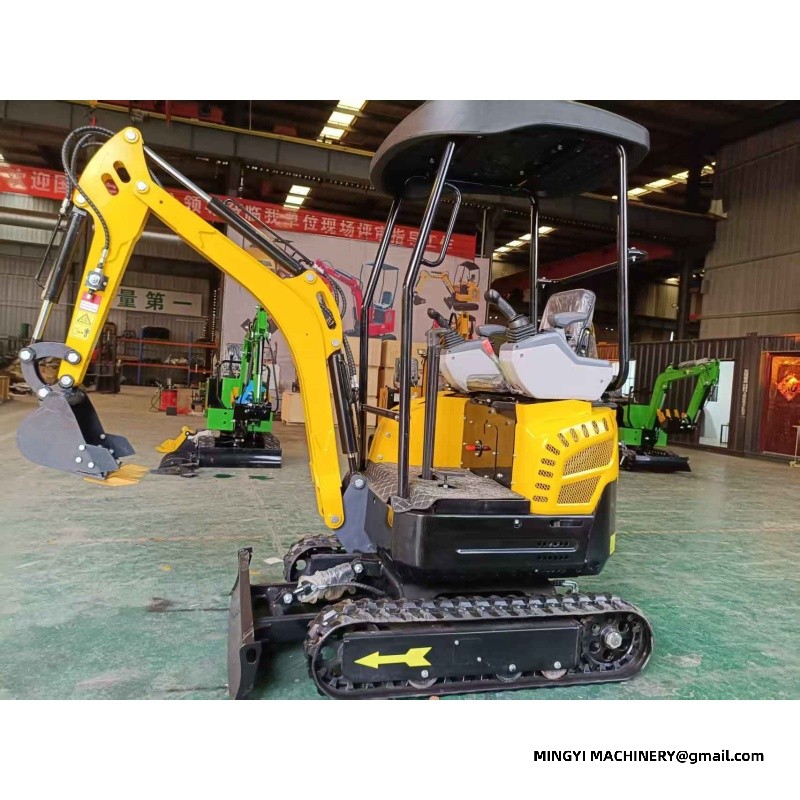
• Common attachment interface across the range
• OEM production for distributors and fleets
• Direct technical and parts support
Tell us the specification and quantities you need and we will confirm what can be built and when.
Getting mini excavator manufacturer through a narrow gap Access decides the machine before output does. With this class of machine the limiting dimension is usually the widest point on the way in, so measuring the gate, the corridor and the turning space first saves a wasted delivery and a second visit. Contractors who buy the unit in daily use normally have one job in mind that nothing else reaches. The purchase order follows the access measurement, not the other way round, and the build sheet is then settled around it. Hydraulic circuits on a mini excavator manufacturer Flow and pressure are matched to the tool, not to the machine size. Asking for the attachment list first means a machine of this size leaves the factory with circuits that suit the heaviest tool the buyer intends to run. Hydraulic specification is easier to settle at build time than to correct later. The equipment on site delivered without auxiliary lines can still dig, but every additional tool becomes a retrofit project. Quick coupler practice on mini excavator manufacturer Couplers are specified early because they affect the arm and the hydraulic kit. Adding one to the machine itself after delivery means new pins, new hoses and a fitment session; adding it at build time is a line on the sheet. For a fleet that shares attachments between machines, a common coupler standard matters more than the coupler brand. The model in question that picks up the same tools as the larger machines keeps the rack usable across the yard. Track choice for mini excavator manufacturer Rubber tracks suit paved and landscaped ground because they spread the machine weight and leave the surface intact. Steel tracks with rubber blocks are specified where the ground is rougher or the working day is longer, and the choice can be made per machine rather than accepted as a factory default. Track type changes what the machine can cross and what it leaves behind. Buyers specify rubber for lawns, driveways and municipal work, and steel with rubber blocks for sites where sharp material would cut a rubber belt in a week. Specifying mini excavator manufacturer against a job list Buyers who skip this step either over-buy or under-buy. The machine in that duty specified only from machine size tends to arrive without the coupler, the circuits or the track type the work actually needs. Useful information to send with an enquiry includes working width, required digging depth, ground conditions and the attachment set. Those four items let the factory specify the unit on the job that fits rather than a generic build. Acceptance checks when a machine built for the work arrives Delivery day is the best time to find a problem. Checking the specification against the order, the fluid levels, the fasteners and any transport damage while the class of machine is still on the trailer is faster than claiming later. A function check before the machine goes to work is worth the hour. Running through the controls, the travel and the attachment circuit on the equipment in service confirms it is set up as specified and ready for the site. Attachments that turn the unit in daily use into several machines Attachment lists are best written before delivery. Specifying a machine of this size with the tools the job list needs avoids the work and delay of adding hydraulics later, and a quick coupler makes the swap a few minutes instead of a workshop job. Most of the daily variety on the equipment on site comes from the attachment rack rather than from the machine itself. Bucket, breaker, auger, ripper, rake and grab cover the large majority of the work a contractor will see. Noise, dust and working near occupied buildings Enclosure and machine condition both reduce noise. The machine itself with intact panels, sound mounts and a maintained exhaust is measurably quieter than the same machine with loose guards, and the difference matters on restricted sites. Dust control is often part of the same conversation. Water, timing and work sequence reduce what leaves the site, and agreeing them in advance keeps the model in question working rather than stopped after a complaint. Boom configuration for the machine in that duty A swing boom lets the machine dig parallel to its tracks without repositioning, which is what makes trenching beside a wall or a fence practical. On the unit on the job this is often the option that decides whether a job is possible at all. Extended and offset boom configurations change reach and working range. A machine built for the work with a longer arm reaches further but lifts less at full extension, so the specification is set against the deepest and furthest point on the job list. Interior and light demolition with the equipment in service Interior demolition is an access and a weight question. This class of machine that fits through a doorway and works on a suspended floor does jobs that would otherwise be done by hand or by a larger machine that cannot enter. Dust, debris clearance and floor loading all argue for a compact machine indoors. The unit in daily use spreads its weight over a wider track footprint than a wheeled machine of similar capacity. Canopy or enclosed cab on a machine of this size The cab decision follows the climate and the hours. Operators working a full shift in the equipment on site benefit from a sealed cab with wipers and heating; operators stepping on and off every few minutes usually prefer the canopy for the visibility and the quick exit. Enclosure also changes noise and dust exposure. A sealed cab on the machine itself keeps dust out on dry sites and lets the machine work through weather that would otherwise stop a canopy machine for the day. Parts, service and support for the model in question Engine parts availability usually drives the engine choice. The machine in that duty built with an engine the local network already carries is serviced from stock rather than from an international order. Remote support is handled by video. The unit on the job fault can often be diagnosed on a walk-around call with the panel open, which is faster than waiting for a visit and avoids shipping a part that is not needed. Export packing and shipping of a machine built for the work Machines leave the factory prepared for container or flat rack shipment. The equipment in service is normally shipped with the attachment set and the spare parts list agreed in advance so the container is planned once. Export documentation, decals and paint are settled before packing. Asking for them with the this class of machine order avoids a second handling session and keeps the machine on the booked vessel. Working the unit in daily use through the seasons Weather decides which days are productive. Rain turns some ground unusable and cold changes how a machine of this size starts and warms up, so planning the wet months around maintenance is more useful than planning around output. Seasonal planning smooths the workload. Machines that are busy for a few months and idle for the rest benefit from a service slot in the quiet period, and the equipment on site prepared in the off-season starts the busy months reliably. Specification data for the machine itself Buyers comparing the model in question usually start from four numbers - weight, digging depth, reach and transport width - because those are the ones that decide whether the machine can be delivered and whether it can do the job once it is there. Every value shown is as built for the machine in that duty; options such as cab, side swing or a telescopic undercarriage change the transport dimensions and are confirmed at order stage. Customisation also covers the specification sheet. A fleet buyer may want every machine built for the work delivered with the same coupler, the same engine and the same tool kit so training and parts stock stay simple. Documentation can be prepared to suit the importer. Manuals, parts books and decal sets for the unit on the job can be supplied with the buyer's own branding where the order size justifies it.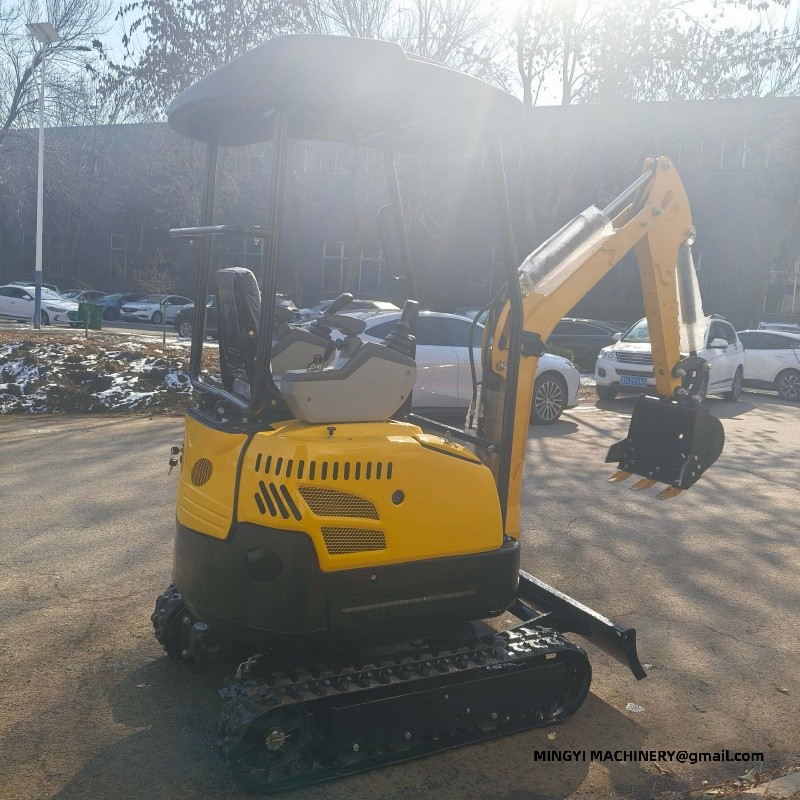
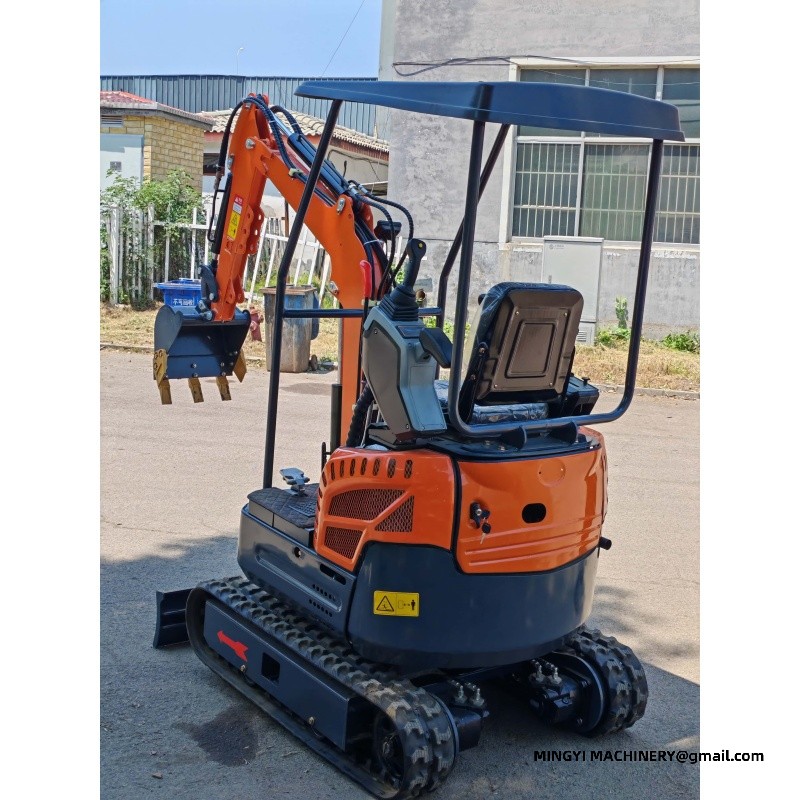
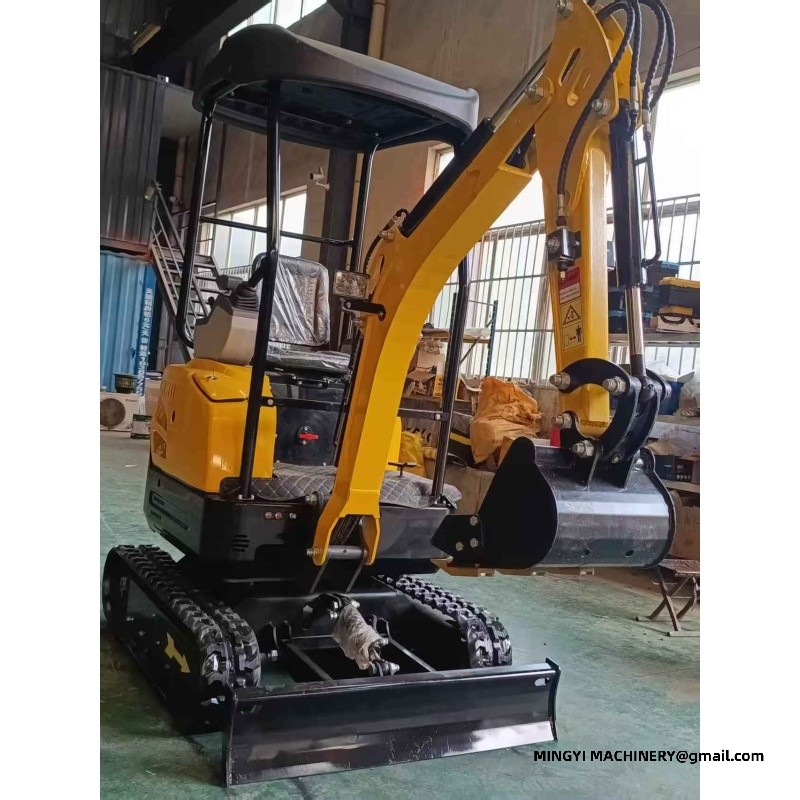
Reference specification — mini excavator range 09W 15W 20-1WL 30-2L Operating weight 1100 kg (2425.08 lb) 1400 kg (3086.47 lb) 1900 kg (4188.78 lb) 2400 kg (5291 lb) Transport size (L×W×H) 1800 × 750 × 1970 mm 2200 × 930 × 2250 mm 2550 × 1100 × 2200 mm 2800 × 1500 × 2500 mm Max digging depth 1250 mm (49.21 in) 1630 mm (64.17 in) 1800 mm (70.87 in) 2200 mm (86.61 in) Max digging height 2800 mm (110.24 in) 2750 mm (108.27 in) 2820 mm (111.02 in) 2900 mm (114.17 in) Max dumping height 1700 mm (66.93 in) 1960 mm (77.17 in) 2050 mm (80.71 in) 2100 mm (82.68 in) Max digging radius 2570 mm (101.18 in) 2900 mm (114.17 in) 3050 mm (120.08 in) 3330 mm (131.1 in) Max digging distance 1869 mm (73.58 in) 2100 mm (82.68 in) 2300 mm (90.55 in) 2700 mm (106.3 in) Minimum turning radius 1000 mm (39.37 in) 1300 mm (51.18 in) 1450 mm (57.09 in) 1555 mm (61.22 in) Travel speed 3 km/h (1.86 mph) 3 km/h (1.86 mph) 5 km/h (3.11 mph) 7 km/h (4.35 mph) Gradeability 30° 30° 30° 30° Fuel consumption 1-1.3 L/h (0.264—0.343 gal) 1-1.3 L/h (0.264—0.343 gal) 2-3 L/h (0.528—0.793 gal) 2-3 L/h (0.528—0.793 gal) Fuel tank capacity 8 L (2.11 gal) 10 L (2.64 gal) 16 L (4.23 gal) 16 L (4.23 gal) Hydraulic oil tank 16 L (4.23 gal) 16 L (4.23 gal) 18 L (4.76 gal) 18 L (4.76 gal) Dozer blade lift height 180 mm (7.09 in) 180 mm (7.09 in) 180 mm (7.09 in) 230 mm (9.06 in) Dozer blade drop depth 210 mm (8.27 in) 210 mm (8.27 in) 210 mm (8.27 in) 280 mm (11.02 in)
Q. Are you the equipment in service?
A. Yes. MINGYI manufactures compact crawler excavators in China and builds the 08, 12 and 18 models to order. Buying from the manufacturer means the specification question goes to the production side rather than to an intermediary.
Q. What can a manufacturer do that a reseller cannot?
A. Build to specification. Colour, decals, engine family, track type and attachment set can all follow the buyer's requirement, and a machine that is not standard can still be produced because it is being built rather than taken from stock.
Q. Can you supply both single machines and fleets?
A. Yes. Single machines are built to order and shipped, and dealer or fleet orders are loaded as mixed containers so that several sizes arrive together with a parts allowance.
Pre-delivery inspection before this class of machine leaves the shop
A machine should be inspected while it is still on our floor rather than after it lands. For the unit in daily use that means the engine is run to temperature, the hydraulics are cycled through full travel, and every function is checked against the build sheet before the crate is closed.
Packing, loading and shipment of a machine of this size
The paperwork matters as much as the packing. Serial numbers, dimensions and weights recorded for the equipment on site at loading are the same figures the destination needs, and a mismatch here loses more days than the voyage itself.
E-mail : sales@mingycn.com
LINE ( ID ): mingyicn
Related pages
Add a fully enclosed cab to a small excavator · retrofit cab for mini excavators · narrow space mini excavator · PRODUCTS









