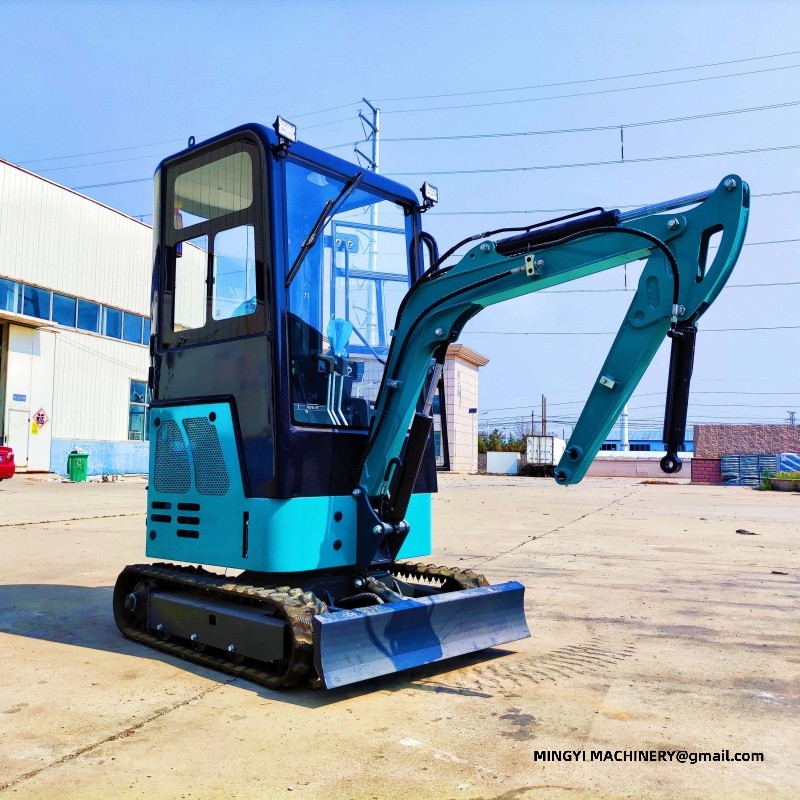
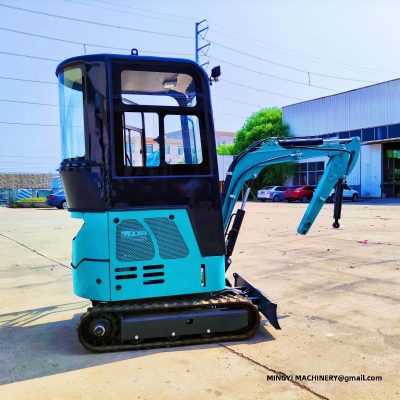
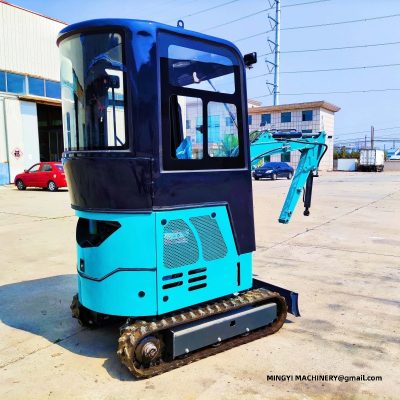
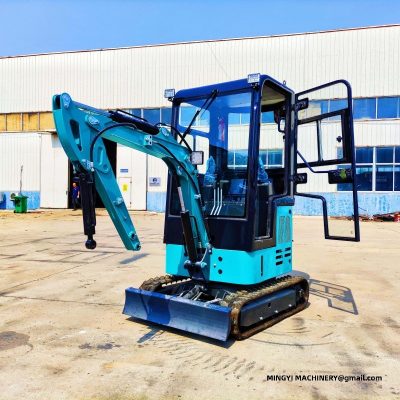
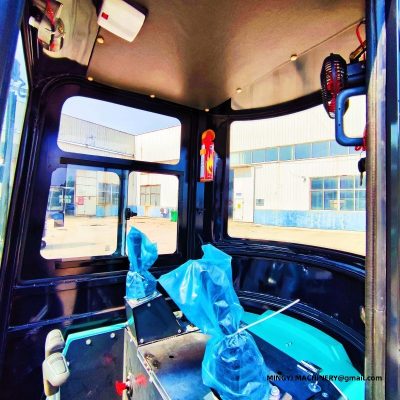
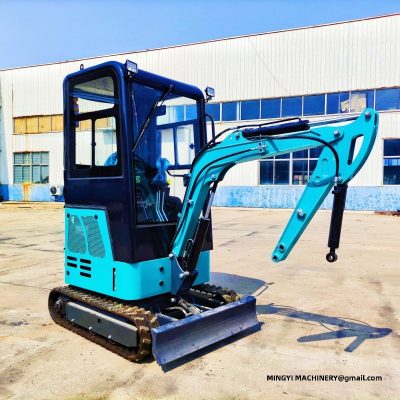
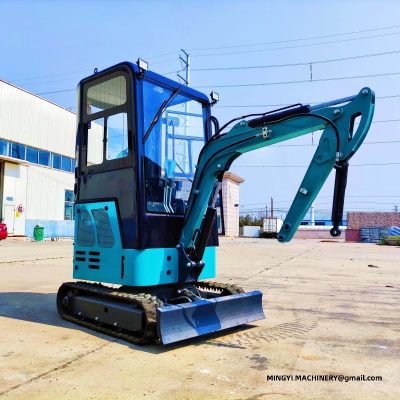
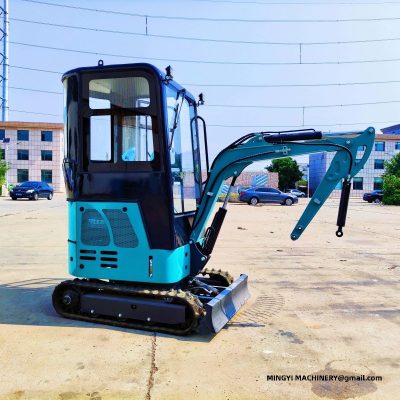
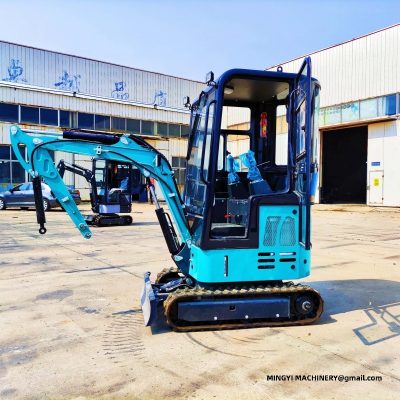
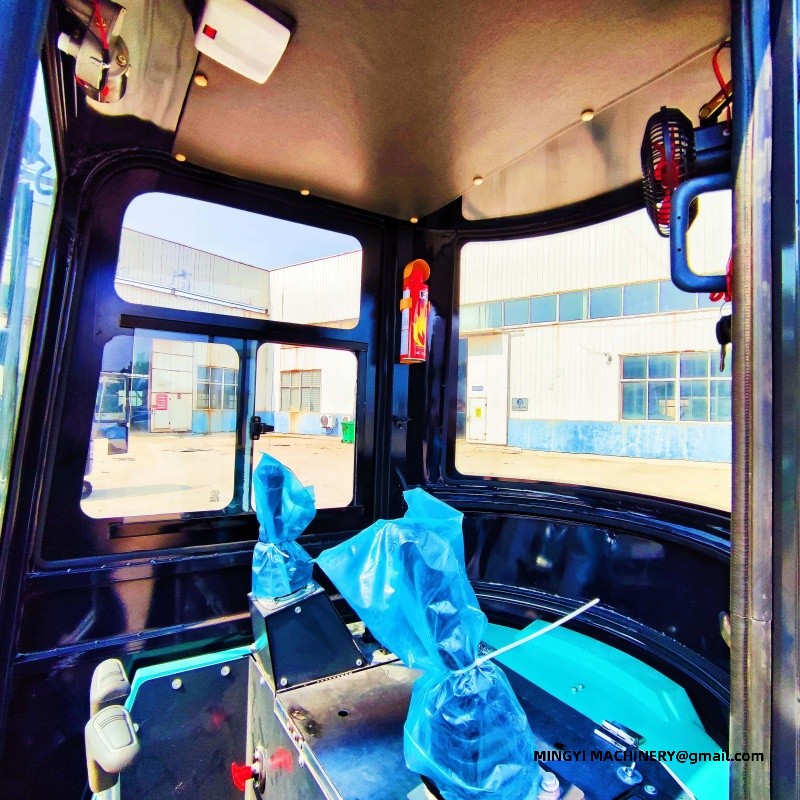
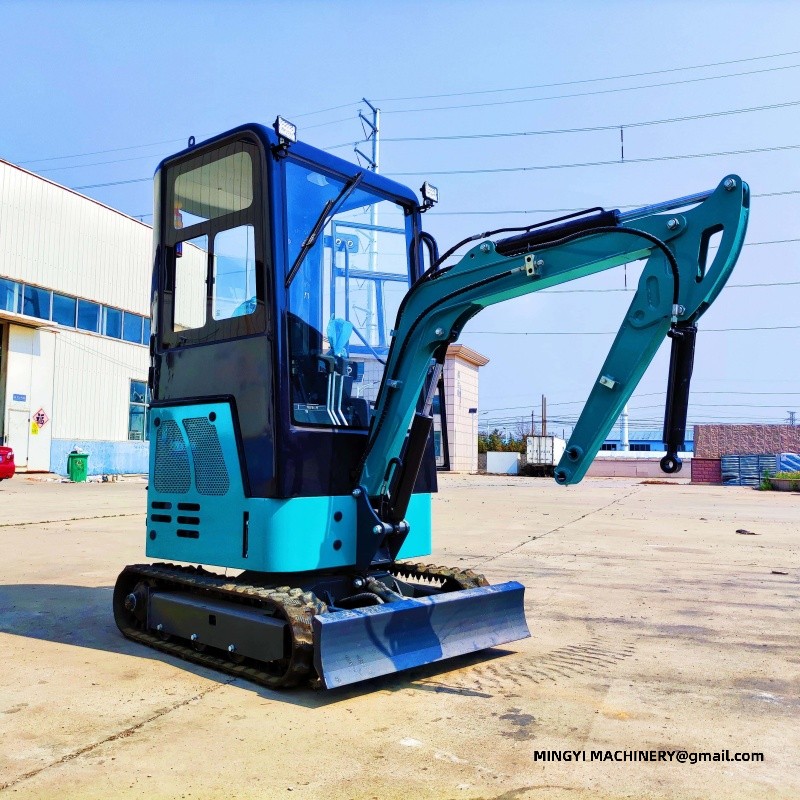
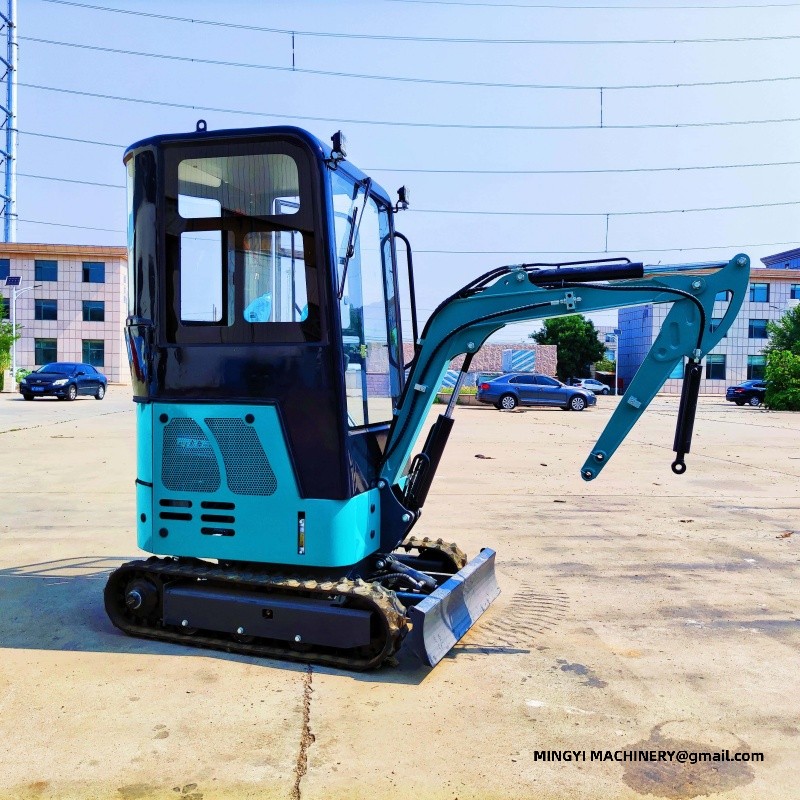
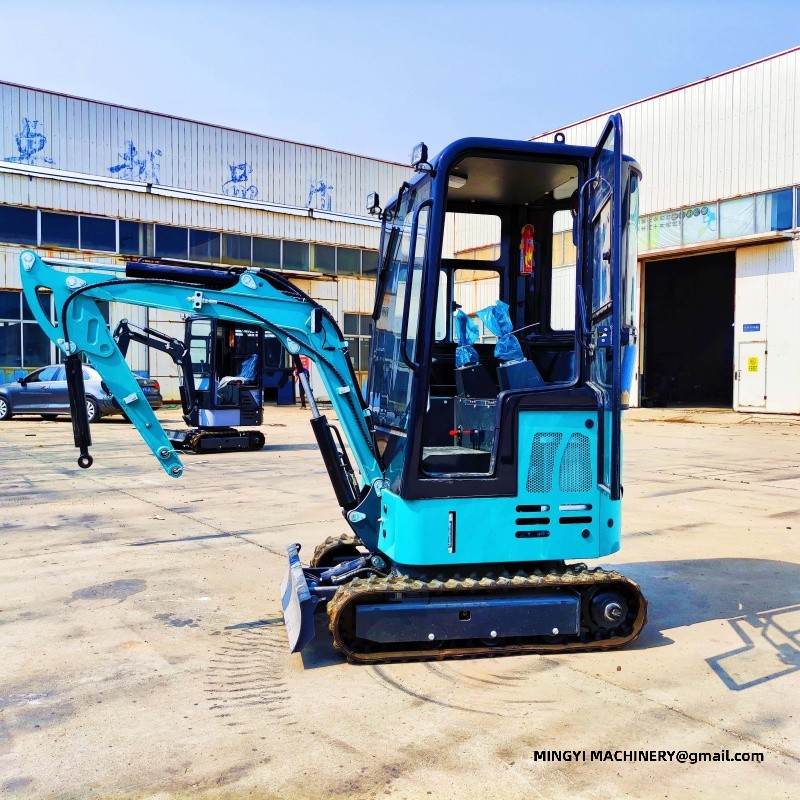
Adding a cab to a small excavator changes what the machine can be used for. Once the operator is enclosed, the machine can work through rain, wind, dust and cold, and shift length stops being limited by the weather.
MINGYI mini excavators can be supplied with an enclosed cab across the range.
What changes with an enclosed cab
The most immediate change is the working season. A canopy machine is ruled out when the operator would be exposed to rain, dust or cold for a full shift; a cab machine is not. On sites where the excavator has to work continuously through poor weather, that decides whether the machine is usable at all.
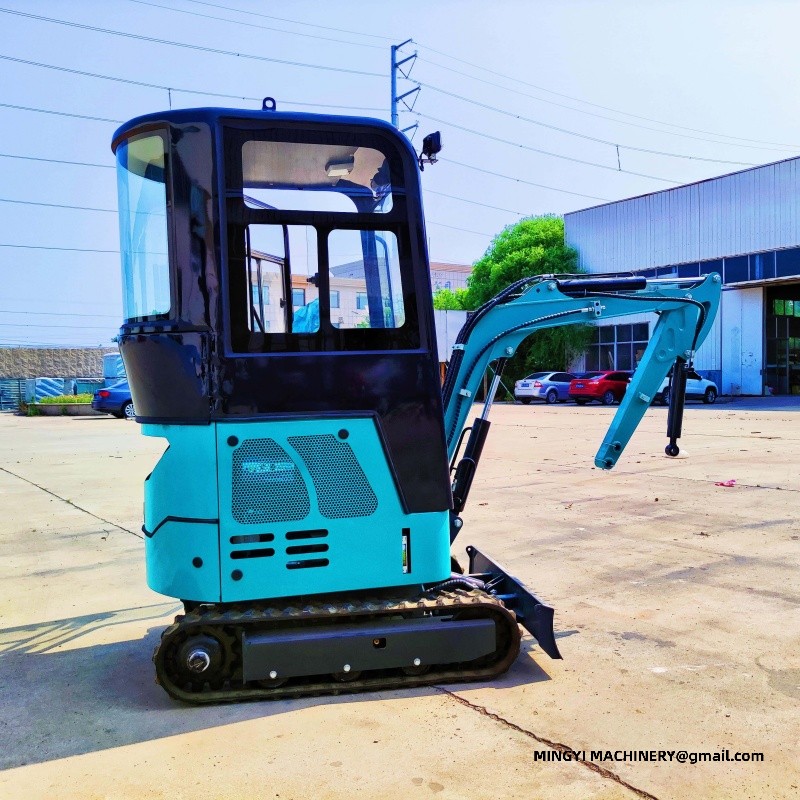
The second change is operator performance. An operator who is dry, out of the wind and not breathing dust works more accurately and for longer, which shows in the trench, the grading and the number of corrections needed.
Canopy or fully enclosed
Canopy machines remain the right choice where visibility of signals matters most, where the operator works short cycles in the open, or where a low transport height is needed. A fully enclosed cab is chosen where the operator sits on the machine for a full shift, or where dust and weather are constant.
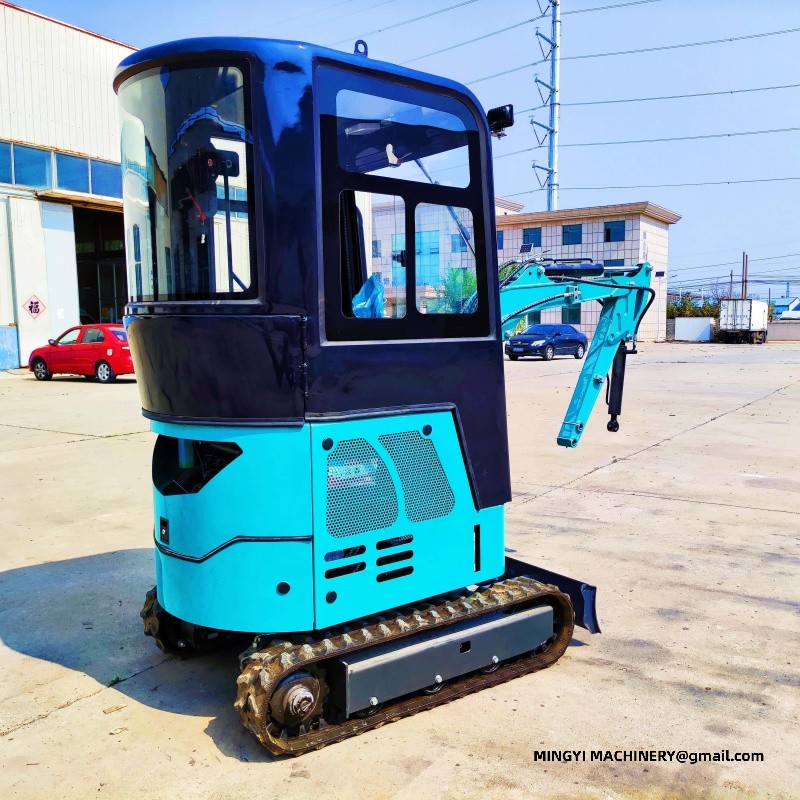
Enclosed cab advantages
• Working through rain, dust, wind and cold
• Full-shift comfort rather than short cycles
• Reduced noise exposure for the operator
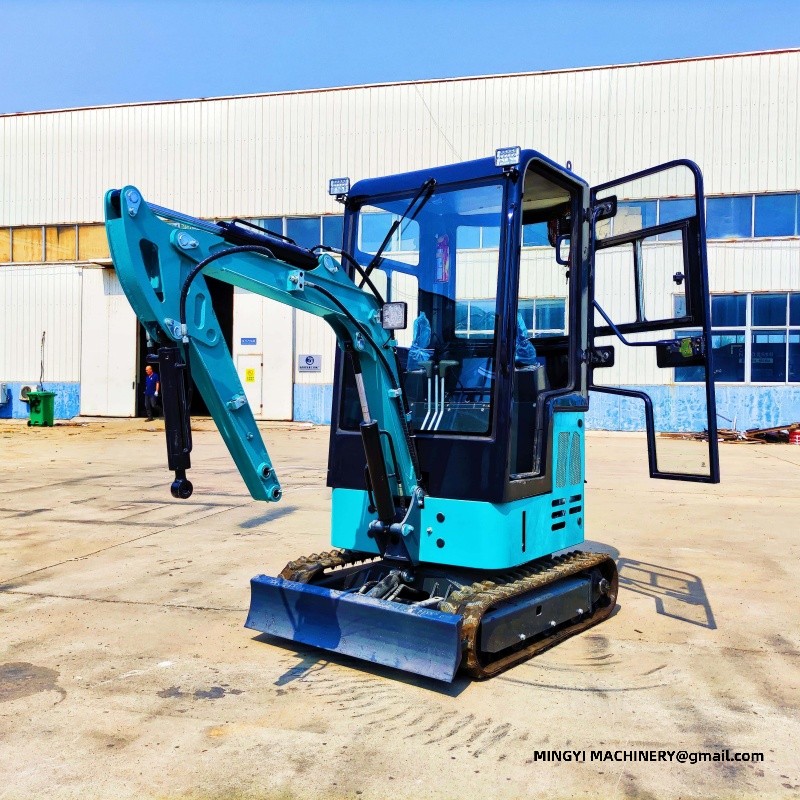
• More consistent accuracy over a long shift
• Available on the same base machine as the canopy version
Tell us the site conditions and how long the operator spends on the machine and we will advise on the cab specification.
Matching Add a fully enclosed cab to a small excavator to ground conditions Soft ground is a flotation problem, not a power problem. This class of machine on wide rubber tracks crosses lawn, sand and cultivated soil that would stop a narrower machine or a wheeled unit of the same capacity. Mixed sites are common and argue for a compromise specification. Most buyers choose rubber for the unit in daily use and accept the wear, unless the majority of the work is on material that will damage it. Track choice for Add a fully enclosed cab to a small excavator Undercarriage selection is a ground question, not a preference question. A machine of this size running on finished paving needs rubber; the same machine on demolition rubble or rock wears rubber quickly, so steel with rubber blocks becomes the better answer over a full season. Track type changes what the machine can cross and what it leaves behind. Buyers specify rubber for lawns, driveways and municipal work, and steel with rubber blocks for sites where sharp material would cut a rubber belt in a week. Getting Add a fully enclosed cab to a small excavator through a narrow gap The first question on most job lists is whether the machine can reach the work at all. The equipment on site is chosen against the narrowest point on the route - a garden gate, a doorway, a gap between two walls - because a machine that arrives and then cannot pass loses a day, not an hour. Access decides the machine before output does. With the machine itself the limiting dimension is usually the widest point on the way in, so measuring the gate, the corridor and the turning space first saves a wasted delivery and a second visit. Municipal and public works with Add a fully enclosed cab to a small excavator Municipal crews work on streets, footpaths and parks where the public is present. The model in question is specified because it occupies little space, works inside a small exclusion zone and can be moved on a standard trailer. Drainage repair, tree planting, footway reconstruction and cemetery work are all within the range of the machine in that duty. The jobs are small individually and continuous across the year. Specifying Add a fully enclosed cab to a small excavator against a job list The practical way to specify is to write the job list first: the narrowest access, the deepest trench, the heaviest tool and the surfaces the machine must cross. The unit on the job is then matched to those four numbers. Buyers who skip this step either over-buy or under-buy. A machine built for the work specified only from machine size tends to arrive without the coupler, the circuits or the track type the work actually needs. Landscaping and ground care with the equipment in service Landscape contractors use this class of machine for planting holes, pond excavation, grading and retaining work. The machine is light enough to cross finished lawn and narrow enough to work between established trees. On soft landscape work the surface is the constraint. The unit in daily use on rubber tracks crosses turf without stripping it, which is why the same jobs are not given to a wheeled machine. Daily checks and maintenance on a machine of this size Daily maintenance on the equipment on site is a short list: engine oil level, coolant, track tension, hydraulic oil level and a look at the hoses. Ten minutes at the start of the shift prevents most of the failures that stop a machine. Track tension is the item most often neglected. The machine itself run with slack tracks wears the undercarriage and can throw a track on a turn; run too tight, the same components wear from the other direction. Working on slopes and uneven ground with the model in question Ground that looks level often is not. The machine in that duty crossing a filled trench, a soft edge or a hidden void behaves differently from one on undisturbed ground, and those are the places worth walking before driving. Planning the direction of travel helps. Working so that the unit on the job is stable under load and not required to turn on a slope is a decision made before the job starts, not a correction made during it. Canopy or enclosed cab on a machine built for the work A canopy keeps the machine light and the operator aware of the surroundings, which suits short jobs in warm weather. A fully enclosed cab is specified where rain, dust or cold are part of the working year, and it can be added to the equipment in service as a retrofit rather than only at build time. The cab decision follows the climate and the hours. Operators working a full shift in this class of machine benefit from a sealed cab with wipers and heating; operators stepping on and off every few minutes usually prefer the canopy for the visibility and the quick exit. Hiring versus owning the unit in daily use Ownership brings obligations that hiring does not. Storage, servicing, insurance and an operator are the items to set against the hire rate before deciding which way a machine of this size should be supplied. Specification data for the equipment on site Where the machine itself is being specified for a job list, the table below gives the factory figures that matter most: what the machine weighs, how deep and how far it works, and what it measures on a trailer. Every value shown is as built for the model in question; options such as cab, side swing or a telescopic undercarriage change the transport dimensions and are confirmed at order stage. The choice follows the hours. Work that fills a few weeks a year is usually better hired, while the machine in that duty that would be on site most weeks starts to justify ownership once the transport and booking time is counted. Availability is part of the decision. Owning the unit on the job means it is there on the day the ground is ready; hiring means competing for the same machine at the same time as everyone else in the season.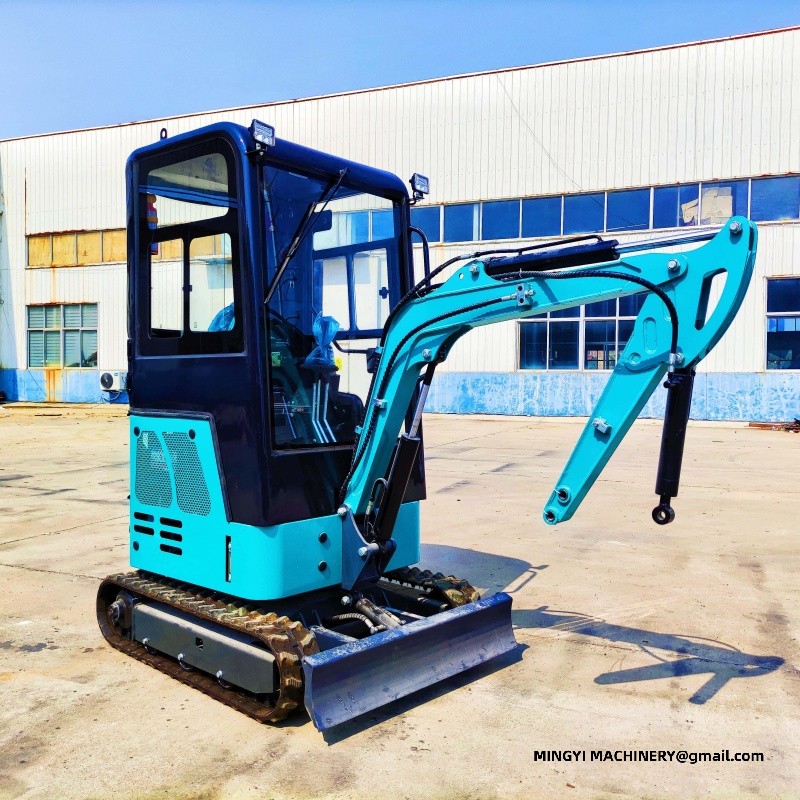
Reference specification — mini excavator range 12W 09L 12L 15L Operating weight 1200 kg (2645.55 lb) 1100 kg (2425.08 lb) 1200 kg (2645.55 lb) 1400 kg (3086.47 lb) Transport size (L×W×H) 2200 × 930 × 2250 mm 2300 × 720 × 1870 mm 2200 × 930 × 2250 mm 2200 × 930 × 2250 mm Max digging depth 1630 mm (64.17 in) 1400 mm (55.12 in) 1700 mm (66.93 in) 1700 mm (66.93 in) Max digging height 2750 mm (108.27 in) 2800 mm (110.24 in) 2600 mm (102.36 in) 2750 mm (108.27 in) Max dumping height 1960 mm (77.17 in) 1880 mm (74.02 in) 1800 mm (70.87 in) 1960 mm (77.17 in) Max digging radius 2900 mm (114.17 in) 2490 mm (98.03 in) 2900 mm (114.17 in) 2900 mm (114.17 in) Max digging distance 2100 mm (82.68 in) 2000 mm (78.74 in) 2300 mm (90.55 in) 2300 mm (90.55 in) Minimum turning radius 1300 mm (51.18 in) 1400 mm (55.12 in) 1450 mm (57.09 in) 1450 mm (57.09 in) Travel speed 3 km/h (1.86 mph) 3 km/h (1.86 mph) 3 km/h (1.86 mph) 3 km/h (1.86 mph) Gradeability 30° 30° 30° 30° Fuel consumption 1-1.3 L/h (0.264—0.343 gal) 1-1.3 L/h (0.264—0.343 gal) 1-1.3 L/h (0.264—0.343 gal) 1-1.3 L/h (0.264—0.343 gal) Fuel tank capacity 10 L (2.64 gal) 8 L (2.11 gal) 10 L (2.64 gal) 10 L (2.64 gal) Hydraulic oil tank 16 L (4.23 gal) 16 L (4.23 gal) 16 L (4.23 gal) 16 L (4.23 gal) Dozer blade lift height 180 mm (7.09 in) 180 mm (7.09 in) 180 mm (7.09 in) 180 mm (7.09 in) Dozer blade drop depth 210 mm (8.27 in) 210 mm (8.27 in) 210 mm (8.27 in) 210 mm (8.27 in)
Q. Can a cab be added to a mini excavator after purchase?
A. The operator station is decided at order stage on the MINGYI 08, 12 and 18 models, because the canopy and the enclosed cab are different builds on the same crawler chassis. If a machine is already in service and you want a cab, send us the model and working hours and we will advise on the parts available for that chassis.
Q. What does a cab change about the machine?
A. An enclosed cab raises overall height, adds weight at the operator station, and changes how the machine works in rain, cold and heavy dust. The open canopy keeps headroom and airflow for indoor and low-structure work. Both options sit on the same compact crawler chassis, so the digging performance does not change.
Q. Which is the better choice for my site?
A. Work indoors, under low beams or in hot climate and the open canopy is usually the better fit, because it keeps headroom and ventilation. Work outdoors in rain, cold or heavy dust and the enclosed cab keeps the operator productive through a full shift. Tell us the site conditions and we will recommend the build.
Keeping a service record for a machine built for the work
A written record is worth more than a good memory. Dates, hours and the parts fitted on the equipment in service turn a guess about the next service into a fact, and they are the first thing a buyer asks to see.
Moving this class of machine between sites
Loading is where most damage happens. Ramps, angle of approach and the condition of the ground under them matter more than the machine when the unit in daily use is being loaded, and a careful driver is worth more than a fast one.
Later additions and retrofits on a machine of this size
Later changes are easier when they were anticipated. Asking for the extra hydraulic circuit or the heavier mounting plate on the equipment on site at build time adds little and leaves the option open.
E-mail : sales@mingycn.com
LINE ( ID ): mingyicn
Electrical system and battery care on Add a fully enclosed cab to a small excavator
Battery condition follows the charging system, so the belt, the connections and the electrolyte are checked together rather than separately.
Jump starting is a recovery rather than a repair, and the reason for the flat battery is worth finding the same day.
Additional wiring for work lamps, beacons or a radio should be fused and routed away from hot and moving parts.
Related pages
retrofit cab for mini excavators · mini excavator exporter · low fuel consumption mini excavator · PRODUCTS









